

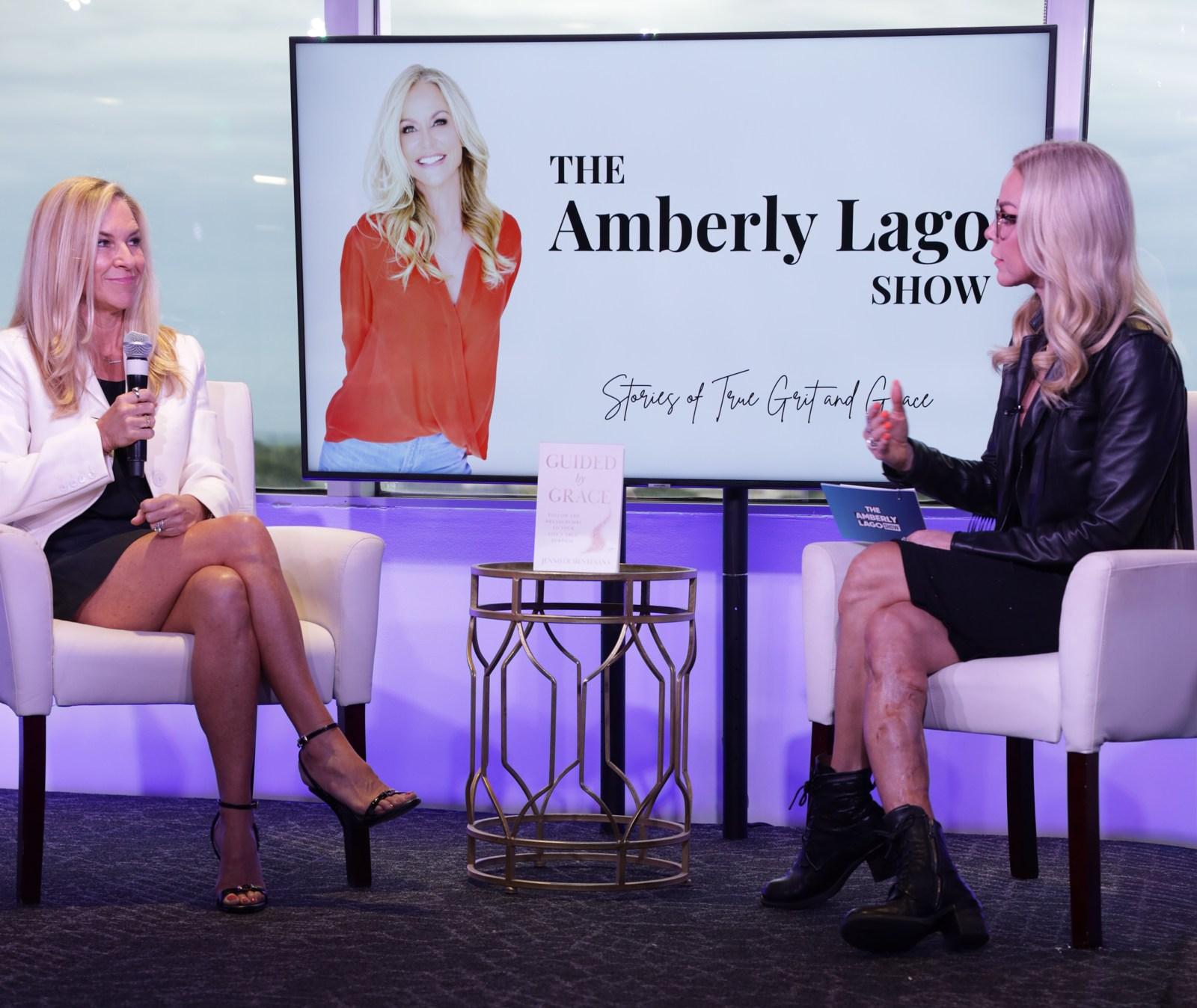
Season 6, Episode 311
Leadership Begins with Alignment with Karlton Butts
A conversation with Alignment with Karlton Butts

About This Episode
Welcome back to another episode of The Amberly Lago Show! Today I'm sitting down with Karlton Butts, bestselling author of The Soundtrack of Leadership, lawyer, engineer, musician, and leadership expert, for a powerful conversation about resilience, mindset, leadership, culture, alignment, and creating high-performing teams.
Karlton's story is an incredible reminder of how adversity can completely change the direction of our lives. While in college and pursuing his love of music, Karlton contracted a severe case of meningococcal meningitis and spent nearly two weeks in the hospital fighting for his life. The experience gave him a completely new perspective and made him ask a powerful question: What am I capable of if I truly make the most of this second chance?
That mindset changed everything. Karlton shifted his focus academically, studied electrical engineering, earned a NASA scholarship, worked on artificial intelligence and robotics at McDonnell Douglas, explored business at Harvard, and eventually pursued law. His journey shows why opportunities rarely just fall into our laps. We have to be willing to take initiative, work for them, and keep moving forward even when life changes the plan.
We also talk about Karlton's philosophy of choosing positivity in the face of adversity. We can't control every challenge life throws at us, but we can control how we respond. Whether it's a major health crisis or simply getting a flat tire on the way to an important commitment, Karlton believes resilience comes from staying resourceful, intentional, and focused on the next step.
And one of my favorite parts of this conversation is how Karlton connects his lifelong passion for music to effective leadership. In The Soundtrack of Leadership, he compares a successful organization to a great band. Everyone may play a different role, but the best results happen when the entire team understands the mission, listens to one another, knows when to lead, and stays in rhythm toward the same goal.
We dive into workplace culture, team building, communication, company values, self-doubt, attitude, and hiring the right people. Karlton explains why true alignment begins with clarity around mission, values, and purpose and why individual growth ultimately strengthens the entire organization.
If you're a business owner, entrepreneur, leader, or anyone navigating an unexpected chapter, this episode is a reminder that setbacks don't have to stop your momentum. Stay positive, surround yourself with the right people, get clear on your purpose, and keep moving forward.
We Discuss
-
Karlton's journey from aspiring musician to engineer, lawyer, author, and leadership expert
-
Surviving meningococcal meningitis and receiving a second chance at life
-
How adversity can change your priorities and reveal what you're capable of
-
Taking initiative instead of waiting for opportunities to find you
-
Karlton's experiences with NASA, McDonnell Douglas, AI, engineering, business, and law
-
Why resilience is about how you respond to circumstances you can't control
-
Choosing positivity when negativity is all around you
-
Finding the root cause of a negative workplace culture
-
Surrounding yourself with people who lift you up
-
The connection between music, teamwork, and effective leadership
-
Why a business team should operate like a great band
-
Creating alignment around mission, values, and purpose
-
The importance of clarity, communication, accountability, and knowing your role
-
Attitude, behavior, perception, and skills as foundations for individual growth
-
How self-doubt and limiting perceptions can hold people back
-
Why attitude can matter more than skill when building a team
-
Creating a culture where people can work in rhythm and perform at their best
Timestamps
00:00 Preview: what a great band can teach us about leadership and teamwork
01:00 Introduction to Karlton Butts and The Soundtrack of Leadership
03:00 Karlton's lifelong passion for music and his dream of becoming a rock star
06:00 Contracting spinal meningitis in college and fighting for his life
10:00 How surviving meningitis gave Karlton a new perspective on life
13:00 Changing direction, studying electrical engineering, and discovering his potential
16:00 NASA, McDonnell Douglas, artificial intelligence, and creating your own opportunities
19:00 Why you have to be proactive about creating the life and career you want
21:00 Staying positive and resourceful when life doesn't go according to plan
24:00 How negativity affects individuals, relationships, and workplace culture
27:00 Finding the root cause of a negative company culture
29:00 Why surrounding yourself with positive people matters
30:00 The Soundtrack of Leadership, team alignment, mission, values, communication, attitude, and building a team that works in rhythm.
To Connect with Karlton Butts
Instagram @karltonbutts
Learn More About Karlton Karlton Butts on Google
To Connect with Me: New and Exciting!!
Every episode, the whole archive is searchable! Look for a moment, or ask a question and get an answer drawn straight from the episodes, with the clips it came from.
Bring Me to Your Next Event
Looking for a keynote speaker who will inspire your audience with practical tools for resilience, joy, and meaningful connection? Learn more about booking Amberly for your next conference, corporate event, or leadership retreat:
Get Your FREE Joy Playbook
Ready to spark more joy in your everyday life? Download Amberly's free Spark More Joy Playbook and discover simple, actionable practices to help you build resilience and embrace more joy, no matter what life brings.
Download Your FREE Gratitude Journal
Start cultivating a daily gratitude practice with Amberly's free downloadable Gratitude Journal.
Download the Gratitude Journal
Let's Connect
LinkedIn: linkedin.com/in/amberlylago Instagram: @amberlylagomotivation
Watch the Podcast on YouTube
Catch full video episodes and exclusive content on YouTube:
Amberly Lago Motivation on YouTube
Read My Books
Discover Joy Through the Journey and True Grit & Grace and find more resources to help you live an unstoppable life:
Join the Waitlist for My Mastermind
Enjoying the Show?
Be sure to subscribe, follow, and leave a review! Your support helps us reach more people who need a little more hope, resilience, joy, and encouragement. Every review makes a difference, and we're so grateful you're part of this community.
Full Transcript
How did you bridge the rhythm and the soundtrack and relate it to leadership and become such an incredible leader like you are?
The book really talks about sort of the dynamics of a band and parallels that to what happens in an office, you know, with a leadership team and in a business. And there are a lot of things that happen in a band that you can see the parallel between being able to listen to your bandmates, choosing a band. I mean, I start with sort of the making of a band. So when you're starting a band, kind of like when you're starting a company, you want to surround yourself with other people, other band members, in order to fulfill whatever mission you want. You know, I'm going to be a rock band, R and B band, or country band. And so you find bass player and a drummer and a guitar player and a singer, you know, and they all have different roles, but you want them to all be aligned as to what music you're going to play. Well, it's no different in business. If you're putting together a team, you. You know, they're going to have different roles. Accounting, business, legal, whatever. It might be technical, but you all want them to align. You want them to align so you can produce the best music, best results. Well, it's the same thing in business. If you want to make sure everyone knows their role, they're all following the same goal, which could be like a song if you. They know what the song is, they're clear as to what, when they're supposed to, and also understand how you all work together. Sometimes different departments take the lead, depending on the project. There's so many parallels of getting with the band that I think that's sort of what inspired me to write the book. My passion for music as well made it easy to write a book like this.
Hey there. Thank you so much for tuning in to the Amberly Lago show. I have one of my new friends here with us today. We met in New York. We were both on the NASDAQ with our books. I have Carlton Butz here. He is the bestselling author of the Soundtrack of Leadership and y', all, he wears many hats. I'm talking lawyer, engineer. He teaches all kinds, tech world. We were sitting here talking before we started recording, and there's so much that I'm learning now that I can't wait to share. I think we might take the show in a totally different direction, but we're going to be diving into not only leadership, but some grit, some resilience, alignment, culture, performance, sustainable growth, and really how to lead with clarity in the moments that matter most. So, Carlton, thank you for being here.
Thank you for having me. Amberly, this is wonderful.
Oh, my goodness. Well, I'm so happy to have you here. And you made it. You are one determined person. Flat tire in the rental car. Found another ride. Got here on time early, mind you.
Yep, yep.
And I was saying, from the moment I met you, I was like, I like this guy. I got to have you on the show. When we met in New York, there's just something about you and your energy, and I'm not surprised that you are a total rock star. What you've overcome and what you do with all the different hats that you wear. So thank you for making it to Dallas, Texas, to be on the show.
Well, it's an honor to be on the show with you. And when I met you in New York, I saw your energy and I saw you were just bigger than life. And I had a chance to read your book as well. You were so nice to exchange books with me. And this is especially after listening to your book, the audiobook. This is truly a pleasure for me because there's so many things I heard in your book that are just amazing about your life, your story, your energy, your resilience, all of that. Amazing.
Well, thank you so much. And I mean, I am so impressed with all that you do in your book and all that you've done. And I don't know if my husband's going to hear this episode, but he always gives me a hard time because he knows that I like rock stars. And. And in fact, my ex husband was a total. He played well all his side of the family, they're all musicians, but he played guitar and was total rock star. And so my husband always gives me a hard time because he's like, I know you like those rock stars. But then you were. We were sitting here talking. I'm like, wait, we got to record this? Because everything that you were sharing, I was like, oh, my goodness, what you've been through. Something that completely kind of shifted your perspective on life during college. Yeah. You survived what could have been a near death accident or not accident, but situation. Can you take us back to the moment in college when you got really sick and kind of maybe a lesson that you learned from that that has helped you to become the person that you are today?
Yeah, well, absolutely. Well, you talk about rock stars, man. As a kid, I wanted to be a rock star. That's what I want to do. The first. My first interaction with music, you Know, I sang in a choir as a kid. Like, you know, you grow up and you listen to the music your parents play, or like, I have two older brothers, My older brother would play music, and I just was drawn to it, and that's what I wanted to do. And so when I went to the college, you know, getting my education, I played in a few bands because that's what I wanted to do. And one night, we played one of the biggest parties on campus, and we actually played at a fraternity house, and I was going home after that. And. And prior to that, there's been some news reports about a breakout of spinal meningitis at high school, not that far away from campus. And I didn't know anything about spinal meningitis at that point. I didn't even, you know, because it never. I never heard anybody who had it, so I didn't even really know what it was. And so. But I go home that night, and I developed really bad headaches the next morning. This one. What could that be? You know, maybe we were out late. We were having fun. You know, sometimes you get the headaches, you know, after a night of partying and things. But. But this was different. And it was. Was something that I'm like, this doesn't feel right. But I took some Tylenol, thinking it would just go away. You know, when you're in college and you're. You think you're indestructible, you can do anything you want to do. So I was so fortunate to. Some of my friends saw me, and they're like, wow, you look horrible. My temperature went up.
You're like, you look.
Oh, yeah, you look awful. You know how your friends can be, right? So I'm thinking out there just. But I. I knew I'm stubborn, you know, and so I kind of knew it was bad, but my stubbornness was kind of like, I'll get through this. I could do everything. You know, this is not going to hold me down.
Yeah.
But it got to the point where they took me to the infirmary, and I. I went in there, and the doctors looked at me, and they initially thought I was dehydrated. And I was like, okay, well. And then they said, well, let's, you know, let's put you on a sucrose and water IV to help cure your hydration issue. And so they did that, and they come back about an hour later, and, well, then they took blood. And then shortly after that, they come back and they say, well, we think you have diabetes because your sugar levels are so High in your blood. And I said, well, does it have anything to do.
But you're giving me embarrassing sugar.
Exactly. You've been shooting sugar in my veins for the last hour. So I'm thinking. So I said that, and they kind of looked at each other like, okay, we'll be back in a few minutes.
So I don't understand that, though, why they. And we were talking about that, like, they did that to me in the hospital. I go. And I'm like, no, I am not eating any carbs. I'm eating all protein because I don't want my numbers to go up for my sugar level. And they're giving you an IV of sugar?
Yeah, they're giving that IV of sugar. So they came back shortly after that, and they're like, well, the good news is you don't have diabetes. And I was like, I knew that. The bad news is we don't know what you have. So they gave me a bottle of a pill, bottle full of penicillin, and they said, if you start feeling worse, they gave me a list of symptoms. And if you have these symptoms, then, you know, page me, because I think they had an idea what it could be, especially in the outbreak and so.
Especially if they're sending you home.
Pencil. Exactly. So I started, you know, after a couple hours, all those symptoms were there, and I'm popping it like Pez candy. And so I, you know, I ended up going to. Actually took the bus, if you believe it or not, because, like, three o' clock in the morning. So I took the school bus and went to the hospital because after I paid the doctors, like, meet me at the emergency room. So I went to the emergency room and lo and behold, they did spinal taps and. And they diagnosed it as spinal meningitis.
And I didn't realize how you could even get it. You said it's airborne.
Airborne, yeah. And so it's. As a matter of fact, it's. And it's highly contagious when it's. When it's airborne. But you have to be, I guess, an active carrier of it for it to be. And actually, actually after I got through it, all of my friends and people that around me had to take medicine because they were just to keep them from getting. Yeah, yeah. And I made a lot of friends that way, too, because the medicine turns your bodily fluids orange, like bright orange. So my friends weren't too happy about that.
Oh, my goodness. But also with spinal meningitis, I know people that have had their hands, their feet amputated or die yeah.
And I had meningococcal meningitis. And it was. It was a pretty aggressive strain of it. And I had doctors coming in every morning, actually twice a day, checking me for lesions, skin lesion, rashes. And one time they thought there might be one. And by then, I knew what meningitis was. I knew what it could be. You know, how difficult it be. My parents came down immediately, and I was in respiratory isolation for a while. And it was tough. I mean, I had an iv, you know, sucrosal water, IV in one arm, penicillin the other arm. And I was pretty much fighting for my life. My body was shutting down. I mean, it was affecting my eyesight. Light was bothering me. My temperature was through the roof. None of the painkillers work. They gave me. They gave me every painkiller you could think. And I'm banging. I'm like, this is not gonna give me more. Give me more. And so they. None of it worked. And the ones. It's funny, some medicine, some painkillers just make you hallucinate. They don't necessarily make you feel better, get rid of the pain. It's just like, you know, I'm now hallucinating.
And also, we all react differently to different medications. We do. You know, thankfully, I knew that I was allergic to morphine when I had my motorcycle accident because they. And I was conscious because they were putting an IV and getting me, and I said, wait, what are you giving me? And they said, morphine. And I said, you can't. I'm allergic. But, yeah, we all react there. How long were you in the hospital?
I was, man, almost two weeks. When I remember it was.
Did you have any side effects after?
No, I was. I don't think I did. Although my friends would joke with me and say, you know, if I forgot something or said something, you know, off color, they're like, oh, yeah, that's probably the effects of spinal meningitis.
But, yeah.
But no, I didn't really feel anything. I was fortunate. I got through it. The doctors were great, and. But it really gave me a whole new perspective on life, because when I was going through it and when it first started, I didn't realize how deadly it was.
Yeah.
And once I got through and talked to the doctors, and that's when I realized, okay, this is. This was really serious, and I almost didn't make it. I was very fortunate that if my friends didn't take me to the infirmary room when they did, I probably would have been dead. Yeah. And it gets to the Point where it's irreversible or they have to start amputating. And, you know, no one obviously wants that. So I was. I was lucky that I had great friends. We know how good great friends are and throughout our lives, and they saved me that day 100%.
And it gave you a new perspective and probably a new lease on my.
Completely new lease on my.
Maybe, you know, when we're younger. Yes. We think, oh, we're indispensable. We can do any. You know, I think some of the things I did when I was younger. How did that change you as far as, like, what your goals were in life? Did you still want to be a rock star? Did you go on tour? On concert? Like, what happened?
No, it's. Well, part of. I have to thank my mom for a lot of what she did. It was after the whole, you know, going through the meningitis. The day I got. The day after I got out of the hospital, I had a German midterm. I was taking German at the time and.
What can't you do? Well, German lawyer, engineer. Like, you are amazing.
Just don't ask me to speak German. We'll be. But. But it was. But, you know, I came out of the hospital and the professor was like, well, you have to take the exam.
And I'm like, you're like, I just got a hospital, dude.
Exactly. And not only that, you know, the news, you know, they're reporting meningitis outbreak on the. On campus. I was the. I was the guy. I was the. I was the Big outbreak on the campus. Every outcome.
You're, like, alive.
Yeah, I was on the news. Yeah. It's like, you know, did you hear the news about meningitis? That was me. But they didn't. They were like, we can't treat you any differently. You gotta take the exams.
Oh, my God.
So I ended up having to withdraw from. Because a lot of the professors took that position. And I just. I didn't want any special. I just wanted a few extra days to study because I've been fighting for my life in the hospital. So it, you know, my mom was like, you know what? They're not really accommodating or at least helping you. I mean, you just went through a very tragic event. So she ended up saying, I'm taking you out of this school. I'm gonna send you to a school where your brother was going to. And so.
And where was that?
So that was in North Carolina. North Carolina State University. And it was so. And I decided to do completely different Track I decided to do electrical engineering. He was elect. My brother was an electrical engineering student there. So I said, I'll do electrical engineering. And because he knew the dean, it was great because the dean was so nice to me when I transferred, partly because the relationship he had with my brother. But it really changed my perspective in a sense that, okay, I have another chance now. And as much as I love music and it's my passion, I really do have to figure out a career path.
Yeah.
And I always say I took. It's hard to be a rock star. I mean, there's so many people who aspire to be a rock star. But I realized at that point I really did have to apply myself academically. And I did really well. I started getting straight A's and in electrical engineering. And it was just. You learn so much about yourself after you go through that tragedy because you're sort of put to the test. You're like, I have another lease on life here, so let me see what I can do. Let me see what I'm capable of. And live every day like it's your last, because you don't know. And when you go through those tragedies, you just don't know. You know, I got past meningitis, but there could be something else around the corner that could really, you know, could be even worse than what I went through with that. So with that sort of new perspective, I did. I was at my first year. I ended up getting a NASA scholarship. And I worked at NASA doing amazing. It was. It was pretty awesome. But it was partly because I. I busted my butt and I was. I said, doing really well in school. And then the next summer, I. I gave up getting McDonnell Douglas scholarship, ended up working in St. Louis on the F18 fighter assembly line. And it was just doing artificial intelligence robotics back then, that is.
What year was that?
So this was back in 88 and 89 or when I was in. McDonnell Douglas. Yeah. And it was. And I took it. But the thing is, one of the things I learned that I think it really stayed with me, it. You get advice along the way, which is, you know, helps you sort of keep things in perspective. But, you know, I realized that you have to be proactive in getting whatever you want. It's not like these opportunities just sort of fell in my lap. Yeah, I actually went, you know, I found out about the NASA scholarship and I applied for it and. And communicated. Whoever I could communicate at the university that would help me get into the program. Same thing with McDonnell Douglas. They. They Actually had a job fair. But I. I went and I talked to the representative there from McDonnell Douglas, and we hit it off. She's still one of my great friends to this day. And it was. It absolutely changed my life. And then even when I was in doing the internship at McDonnell Douglas, I had an opportunity to go to Harvard. They have something called graduate. It's a graduate school summer venture and management program is what they call it. And so you take classes for a week on campus at Harvard Business School. And that gave me an idea, sort of what business school would be like. And while I was there, I had an opportunity. I almost thought I wanted to go to law school. So I talked to some of the professors there in the law school and some of the deans, and they convinced me that maybe law school was going to be in my future. Wow.
And I love that you say you have to work for it. You really do. You feel you have that. I think that stubbornness can be good. I. Because it will you. It gives you that determination. But I've gotten myself in trouble with a little bit too much stubbornness. But you've definitely got grit and resilience, for sure. And your hard work puts you where your blessings can find you. But also, it's just the way that you show up. It's the way you show up and you're like. I mean, even, like today, here you are, dfw. Get a flat. You're in a parking lot, figuring out the rental car to cut. It's.
It's.
And you still made it.
Yeah. Well, the two things I've always tried to keep in my head is no matter what life gives you, stay positive and keep moving. Positivity attitude is a very big part of life. And no matter. Life's going to throw you challenges, things that you didn't anticipate, but you. It's how you respond to them that matters because you can't control what's going to happen. I couldn't control that I was getting a flat tire today, but I could either be mad and whine about it, or, you know, just say, okay, I still need to get to my appointment. I can't miss the Emberley Lago show, so can't miss that.
I would have come, picked you up. I'll be right there.
I appreciate that. But you. But you have to be resourceful and say, you know what? I'm not happy this happened, but I got to figure out a way to get through it. And I was very fortunate that a really good friend of mine Came to the rescue. So you've got some good friends.
But it shows a lot about you that the kind of person that you are.
Well, thank you.
But how do you stay positive?
So I. I try to look at, you know, sort of the glass half full with everything. And there are days. And look, there are days. We all have good and bad days. Right. You have those days where you're like, man, this is tough. And, you know, I'm pushing hard and I'm working hard to try to get through it. And sometimes you're like, I need a break. You know, I've been pushing so hard to get and. But I'm like, I get nowhere being negative. To me, there's no positive. There's no end game with being negative.
It's just the end. You feel bad, the other people around you feel bad.
And honestly. And it's a downward spiral. It can be very dangerous if you stay negative because life's going to keep reinforcing the negativity. You turn on the news, you see stuff that's negative. You walk outside, you see stuff that's negative. You talk to people and all they do is complain about negativity and things in their life that aren't going great. Because sometimes you can absorb that and say, well, and live in a life of negativity because it's all around you. But if you are conscious and you're intentional and say, you know what? I know negativity is going to be around me. There's nothing I can do about that. What I can do is change me. I can choose to be positive when things are negative, and that's a choice we all should make. But I always choose positivity. No matter how bad things are, you always choose positivity because again, the alternative will not get you to a positive result. If you're negative, it's not going to get you where you want to be.
Yeah.
And it affects people around you, like you said.
Yeah. And you talk to a lot of companies, a lot of executives. What would you say to, let's say a, there's an organization that brings you in because their culture is negative or they're on a downward spiral. How would you go in and shift that?
Well, you have to look at the symptoms and you have to look at what the root of the problem are. I mean, because you don't know where that negativity is coming from. Right. So the way you solve negativity is find out the source. Why is everybody negative? You know, is it a mean boss? Is it the Numbers aren't very good, People aren't aligned, People are burned out, people are unhappy. There's no clarity in the organization. A lot of that can lead to people being negative because. And, you know, I don't know if you've been in organizations where once things start to get negative, that's where all the gossiping starts. Everybody.
And I. You know what I have to say, like, I don't want that. And in my inner circle, I've actually, like, sorry, you're not a good fit. Like, if there's somebody. Because you have a beautiful garden, if there's one weed, pretty soon that weed just starts to spread.
Absolutely.
So you gotta pluck out the weed out of your garden.
Yes, you do. Yeah. And surround yourself with positive people. You know, if you. I always like to say, I don't like drama. It's. I've met people, I'm sure you probably know some people where their life is drama, and some people live in a world of drama. It's almost like they need the drama to survive.
Yeah. And I don't know if they even realize. I mean, yes, sometimes drama happens in our lives, but absolutely, I don't want drama.
Exactly.
And.
Well, the thing is, we have our own drama. Right. There's things that we're dealing with, challenges, and, you know, it's family or friends or work or whatever it might be. And so you already have your own drama. It's like, I don't need other people's drama to bring me down. What I need are positive people to lift me up. And so I always try to surround myself with people who are positive, people who have energy, people who. Cause they're all going through stuff too. But it's kind of like collectively we're making a choice to lift each other up and to be positive and help each other succeed. You know, one of the things that. About music that I love, that just been sort of connecting it really. There's been part of me my whole life is being able to connect with people, you know, with. If you're on stage and you're playing in a band, you can connect with the audience, but you also want to connect with friends. You want to connect with people in a positive way. So that connection can. Can help you, especially in a time of need. You can connect with somebody deeply and they're there to help you. Kind of like when you have a flat tire on the highway and you call a friend and he comes to pick you up. That's. That's. We have a connection and it's a very positive one. And I try to connect with people in that way where they'll be willing to do something like that and be happy to do it for you. Yeah.
How did you bridge the rhythm and the soundtrack and relate it to leadership and become such an incredible leader like you are?
Well, thank you. Well, you know, the dynamics of a bit. Well, there's a lot of different things, but the book really talks about sort of the dynamics of a band and parallels that to what happens in an office, you know, with a leadership team and in a business. And there are a lot of things that happen in a band that are. So it's. You can see the parallel between whether it's listening, being able to listen to your bandmates, choosing a band. I mean, I start with sort of the making of a band. So when you're starting a band, kind of like when you're starting a company, you want to surround yourself with other people, other band members, in order to fulfill whatever mission you want. You know, I'm going to be a rock band, R and B band or country band. And so you find bass player and a drummer and a guitar player and a singer, you know, and they all have different roles, but you want them to all be aligned as to what music you're going to play. You're playing the same songs, you're playing in the same key. You know, all of that is really important. Well, it's no different in business. If you're putting together a team, you know, they're going to have different roles. Accounting, business, legal, whatever. It might be technical, but you all want them to align. You want them to align so you can produce the best music, best results, reach whatever goals you're trying to reach as you can, and when you're able to have them align. And I found that with music, good bands sound really good because they practice together. They're aligned, they're in the same key. They know there's. There's clarity. They know exactly where they're playing. They know exactly what they're doing. They know exactly what their roles are. They know when they come in with a guitar solo or drum solo, whatever it might be. Well, it's the same thing in business.
Yeah.
If you want to make sure everyone knows their role, they're all following the same goal, which could be like a song if you. They know what the song is. They're clear as to what. When they're supposed to or what they're supposed to do, who's accountable for what they're supposed to do. And Also understand how you all work together. Sometimes different departments take the lead. Depending on the project, you know, might lead with, you know, with the finance team, just seeing if it's viable from, from a finance standpoint, then maybe it might go to the technical team where they start developing the idea. So there's so many parallels of getting with the band that I think that's sort of what inspired me to write the book. My passion for music as well made it easy to write a book like this.
Yeah, you can say, I love that you're so passionate about the music and it's so true about the alignment and also alignment with yourself, like what your values are, what your beliefs, because that's going to help you attract the right people.
Absolutely. And I'm glad you brought that up. You know, one of the things I start with, with any company I work with, I, you know, I call it harmony to me is what sort of equates to alignment. And you know, if you listen to a choir, you listen to a band or listen to an orchestra, you know, harmony is so critical because everyone's aligned and musically. But what I found in a lot of organizations when I start working with them is the alignment comes to mission, values and purpose. I talk about this a lot in the book. There's been surveys where you can talk to survey, go into a company and say how many of you know what the mission of your company is? You'd be surprised how many people don't even know the mission of the company. They don't know what the mission statement is. And I say, well, what are the values? Give me two values. One value that you all collectively agree on and you aspire to. What is that one value that you cherish as an organization that guides you all in your decision making, how you, you, your decision making, how you work with clients, how you deal with customers, and how you treat each other.
And by the way, this is so good for business owners, whether it's a company or you're a business owner and you have 1, 2, 3, 10 employees. Because I have had it in my business where there weren't the same values and it did not work.
Doesn't work.
It did not work at all. I was like, oh, no, no, no, no.
Yeah, yeah.
You don't treat people that way.
You don't treat people that way. It really is. And a lot of companies don't think about this upfront. And as you're talking, I love that you also brought up the fact it could just be a business owner. You know, it all Starts with us, the individual.
Yeah.
And you know, the four areas I tend to work with individuals on is attitude, behavior, perception and skills. And the reason why I picked those four is, you know, we all have bad behaviors. You know, we all. The attitude we talked about earlier, you know, some people have a negative attitude and that can affect the team. When you're trying to all pull together towards a shared goal, skills, maybe you don't have certain skill, maybe you're horrible in time management or there's other things that you're just not good at. But if you did get good at, then it could help you and can help the team as well. And then perceptions are really, can be really debilitating in a sense that you don't believe you're smart enough, you're not good enough or I can't do this, that's too hard. There's things that we all, and we all do it. I mean we all have self doubt. Yeah, right. But that self doubt can keep you from reaching your potential. And so a lot of times, you know, you want to try to work with people to unlock those areas. If there's a bad behavior, procrastination, I'm late for meetings all the time. I can't figure out how to get, you know, you fix those. And a lot of goes to what I was saying before. You identify the core issue, you know, what is the root of the problem and you try to help them get better in those areas as an individual. That way when they show up for the team, it magnifies the impact right in the success. Especially if you're trying. This is what I try to do when I work with teams. If you can unlock those little areas in each individual in ways that are aligned with the goals of the organization, imagine how much, how powerful that is. You've now unlocked areas, you've identified blind spots that you can fill. You find gaps in the organization that you can change. You find out ways that people can work better together, communicate better together. The effect is liberal.
I change a bad attitude though, like that's hard because I had someone that I would actually rather hire. Someone that had a great, has a great attitude, but they don't necessarily, necessarily have the skills. And I could teach them the skills, they got a great attitude rather than somebody who might have the skills but their attitude is crappy.
Well, first of all, you don't hire those people.
Yeah, I was like, it doesn't work, it doesn't work.
But no matter how much you try to hire the perfect person, every time you can talk to anybody who's hired people in their life. No one has 100%, you know. Right. Of hiding the curve.
I think my team is.
Maybe you do, Right. And now I've gone through a lot of people, and that's my point, is it takes you. You have to go through a lot of people to get the team. Now, once you have the team, it's great. You're like, I finally have the people that I trust. Like, they trust me. And we work so well together. We're rhythm. But you have to. You know, you can interview somebody and bring them in and think they're going to work out. And a lot of times they don't. You know, maybe there's greater interviews.
They fool you.
They fool you. Exactly. So they might have positive attitude in the interview. Once they get in the door, that attitude can change. Now and again, you find out why the attitude is what it is. Maybe they stepped in something or like, ooh, the culture here is bad.
Yeah.
Or. Yeah. Or my boss is, you know, I don't like my boss, or whatever it might be. And that could change their attitude. But again, if you get to the root of the problem, if you could fix the root of the problem, that attitude can change to a positive attitude. They say, you know what? Before, we really didn't have any direction as a team, but now we do. So now I'm back in. I'm all in again. Okay. My attitude's positive now. Now that I know, I feel comfortable we're gonna accomplish the goals that we set to accomplish. But, yeah, sometimes people fool you, and it's tough to. It's hard to find this.
Yeah. I just read my daughter's resume, by the way.
Ooh.
And I was like, wow, I wish that you actually did this for my company. No, they. She had to do, like, they. At school. They had to do, like, a mock interview and come up with the resume and all this. And I was like, reading the resume. I was like, first of all, you got my company name wrong. Like, I was like, honey, I was telling my husband, honey, look at this. This is what she says she does. But, yeah, I was like, wow. And my husband goes, where'd you get all that? On chat GPT. And did she.
Did you use ChatGPT? Do you know?
I don't know. But she's very. She's a really. She's super smart, very good writer, and very creative. She's going to be good at whatever she sets out to do because she's just. She works when she loves Something, she can work hard at it and do it. And I have. I've wanted her to work with me for a long time because she's so great, and she's going to make a good. She's going to be a good entrepreneur. Because I. I remember I was doing some campaign and I'm like, I really need you to take a picture of me, right? She's like, I'll do it for 20 bucks. And I was like, okay, here, let's do the photo shoot. She took a picture. I was like, oh, not that. Can you do it? She goes, it's another 20 bucks.
And I'm like, that's hilarious.
She is something else. Like, something else. So lawyer, like, you wear all these hats. Tell me what you're working on now.
So I'm building. So I have a company called Matatry where I work with leaders. I work with companies, organizations, individuals to really help them improve performance in a variety of different ways. Kind of like what I talked about before, whether it's an individual. You know, a lot of leaders go through challenges running a company, and it's not easy to do. And there are a lot of times where you were looking for someone to sort of help give you some guidance, help you on the bad days, help you through the good days, really help you navigate all of the challenges that it is to run a business and to really effectively run a team. So I work with individuals in that capacity. I also work with companies that are looking to improve their. Really improve their performance and productivity, even unlock additional revenue and find out ways to do that by improving the performance of the team. So that's primarily. But I speak, I do workshops, I write books, I even play guitar a little bit now. Now and then.
Oh, that's awesome.
I'm giving a keynote next month and I've been asked to perform, so we'll see.
That is awesome. I love that you will perform. I have a friend, I just actually talked to him this morning and he DJs. He does keynotes and he throws his DJing in there. And it's like. I was like, that's so cool. Yeah, I totally think you should walk out there with your guitar.
It depends on the audience, I'll tell you. There was a time I had one speaking gig that actually was here in Texas, too. It was in Plano, big conference, and I was all ready to perform a song in front of him. And I asked my friend who had attended the conference several years back, and he's like, nah, I wouldn't do that. He's like, this is not the audience. He's like, I know the audience that's going to be in the room. He said, you shouldn't do that. And he was right. Once I got there and I actually started to give my talk, and he was 100% right not to do it. So it just depends on the crowd. In this particular case, they've asked me to perform, and what I like to do sometimes is find other talent in their organization and we all play a song together.
That is awesome.
Yeah. Because it's very memorable. I've been in situations where you see your colleagues do something fun and engaging or they have a talent. You didn't know.
Yeah.
And you're like, oh, my God, I didn't know she could sing like that.
No, I did. Yeah.
But it makes it that much more memorable because it is somebody you know. And actually, it's a great opportunity to bond with your, you know, with your team. You know, I always say you should, you know, you work with people, but you have to really get to know who they are. Get to know who they are, what they like, what they dislike. You know, find out who they are as a person, what motivates and inspires them. It's amazing. Once you hear what they can do, and not only could that help them in their role in your company, you might not know. Wow. So. And so is a good writer. Maybe we can use them in some of the projects we have that need writing, some good writing, whether it's copy for marketing or whatever it might be. Or maybe somebody's really good at social media and they can offer some help in that area. But I think once you get to know who they are and what they like to do, then you can figure out how they could be successful in your organization. And that's what you want. You want everybody in your team to succeed because the result of that is success for your organization.
Yeah.
So you do whatever you can to try to. To try to get them there.
Yeah. Well, it's just like my executive assistant. She is amazing, and she is so creative and really good, and she loves organizing things. And I need a grad. I needed a graduation card. I was like, you know what? I was trying to figure this out in Canva, and I'm just not good at it. So she's amazing and she loves doing it, but it's those little things that it makes not only my business, but my personal stuff better, too. That's amazing.
It's so important. Even if it's the skill, they don't Currently have. But you. They're already on your team. You already trust them, you like them, you want them to be successful. There may be something they want to learn to help improve the team or to help the team get better in some way. I always encourage that, you know, and sometimes, like, I've been in roles, I've been hired for a certain role, but I had aspirations to do something else or at least add to what I was doing. And I was proactive in reaching out. I was at a law firm, and I reached out to a managing partner in a group that I wanted to work in and talked to him and he was like, sure, I'll give you work in this group, because it was something I wanted to do. It was wonderful. I think, again, you allow them to grow and you give them all the support and resources they need to go within your organization. You already like them, trust them, so why not help. Help their career a little bit too?
Yeah. Well, I love that you go after what you want. Like, you are not afraid to work for it. To put your. But you're such a great community. Cater to. What. What are some mistakes you think that leaders make when they're trying to scale?
Well, I think, oh, it's like drinking through a fire hose sometimes when you're scaling. I mean, if you're successful enough where you're. You have revenue coming in, you're like, all right, you know, it's time to grow sometimes. And we were talking about. I'll give just one example, like hiring. You know, when you're scaling, you need to add more bodies, typically. And so you might not stick to your standards when you hire.
That's a mistake that I made. I was kind of desperate at one point, and I let some of the red flags that I saw, but I was like, oh, no, I think they're good. Yeah, I gotta go. I gotta go.
Yeah, right. And kind of like what you said before, if you compromise your values so you don't bring people in who are aligned, you're just like, look, I want bodies to do the job. But you really didn't vet out whether they are truly aligned with what you're trying to do. And, you know, then scaling can be hard because now you. I mean, either way, you have to manage people, but it makes it harder when you have to manage people that aren't pulling in the same directions. And as you add more people who aren't pulling in the same direction, it's chaos. And as a leader, there's so many things on your plate that you have to do. The last thing you want to do is have to deal with that issue as well. Yeah, it's like I have to manage these people. I have to get the best out of them. It's really difficult. And so I think they make a mistake by compromising some of them. It may take you a little longer to find that right person, but maybe, you know, go through the process and try to find the right people for your team. It will. Not only does it save you people leaving, you know, just so it's better for attention to do it that way, but also you get a better performing team that wants to be there.
It saves time, it saves money.
Absolutely.
Is there a test or any kind of assessment that you suggest people do when hiring or taking.
You know, there's a lot of assessments out there that. That people. I don't tend to use those. No, but I. What. One of the things I tell companies, like when I used to interview back in the day, sometimes you could tell that all the people that you're interviewing with, they haven't talked to each other. The questions they're asking the interviewee, like me, or they're all over the place. Or sometimes I'll show up to their office to interview and they're seeing my resume for the first time because they're busy. They're like, oh, they'll pull out my resume. Oh, you tell me about yourself. And then they ask very generic questions. Where do you see yourself in five years? So why do you want to work here? You know, And I could tell they're just winging it because they didn't put in any time or effort to really understand collectively as a team, what questions are important to us that align with mission values and purpose. Get together with. Spend 20 minutes with the people that are going to interview, be aligned. You can all look at their resume together and say, okay, what stands out in the resume? What are things we want to ask about on the resume? What are we really looking for in this role? Define the person you're looking for. Kind of like to find that avatar. Right. Who's our perfect candidate? And then you craft questions to get the answers. You need to see if they match who your perfect candidate might be and make sure everyone who's interviewing is interviewing for that same, you know, with the same questions, and they're trying to get the same answers. And there's. You can see discrepancies in the answers. You can see if they, you know, some people might tell one person one thing, and they'll tell somebody else. The other thing.
Yeah.
And that can uncover them trying to, you know, all this look good for the interview. And I'll just tell them what they want to hear. Maybe sometimes they forget what they told. One for. You can compare notes. It's a great way of sort of vetting out whether this person truly is the right person for your team. So I would, you know, I see some people use assessments. That's great. But there's no substitute for looking at somebody in the eye and working with your team saying, okay, this is what we really are looking for. This is our mission. This is our values. It's on purpose. These are the questions we're going to ask. And we're all going to be focused on making sure we get the answers we want from that candidate to make sure it's a great hire.
Yeah. That's so smart. That's the mistake I made when hiring. I wasn't really crystal clear clarity on what my avatar was for the person that I needed. And as soon as I got crystal clear with that and what mattered most and what my values were, and it was important to what their values were, that's when I started hiring the right people.
Yeah, There you go. Yeah. Sometimes it takes a little while to get there, but once you get there, it's important to make sure you maintain that way of interviewing people again. You want the best people for your team.
Yeah. I love that you talk about so much how alignment is so important. It's critical.
It really is.
For your business, for your team. Yeah. That's amazing. Well, gosh, I can talk to you all day.
I know.
You're amazing. I knew that when I first met you. That's why I was like. I mean, we met quite a few people that day. And I was like, when are you going to be in Dallas? I want you to be on the show. You're amazing. So where can people hire. Where can people find you to hire you to come speak to their organization, first of all. And then also where can people. What's the best place to get your book?
Sure. So Carlton with a K. So K A R, L, T O N Speaks. If you go there, it has everything you need about me, the services I offer. And so that's a great place, I think, for people to start. And then as far as the book, it's available on Amazon, Kindle, paperback, hardcover. We have the audiobook now on Spotify and Audible. I narrated it myself as well, kind of like you did. And with your book, just. I told you before how wonderful your audiobook Was.
Well, I need to listen to your audiobook because I love audiobooks too. I like having the actual, actual hardcover book, but I like. I like listening to books. I'm the same way. And Game Changers did your book right?
Was it Game Changers? They're amazing.
Yeah. Oh, yeah.
Aren't they great?
I love Chris.
Yeah, Chris is amazing. It's everyone on their team. I mean that. I've never gone through an experience like that where the customer, sir, just the people are just so genuinely nice.
They love what they do.
They love what they do. They're so genuinely helpful.
They're amazing.
They really are. I couldn't recon recommend them more. They are first class all the way.
Yeah. If you want an introduction, just let me know because I love Chris and I will be happy to introduce you. So email me DM me. And you know what, if you found, you know, value, which I'm sure you did, especially if you're a leader or you have an organization or you're a new business owner, please tag us. And I love when you tag me on social media and share this with someone who needs to really get this book, the soundtrack of leadership. I'm always looking to be a better leader and learn from you. So thank you so much.
Absolutely.
Thank you. And yeah, thank you for coming out and with a flat tire and everything, for being here and being on the show. You're amazing.
Well, thank you very much. And it was worth it. I said I couldn't miss this for anything. You're amazing. I'm so honored to be here.
It's fun. I just want to hang out with you more.
I know.
And thank you for tuning into the show. It's because of you that this show is a top 1% podcast. And I appreciate you being here. Thank you for being here and I'll see you next week.
Pain to purpose to joy.
Never Miss a Conversation
New episodes drop regularly. Subscribe on your favorite platform and never miss a conversation.