

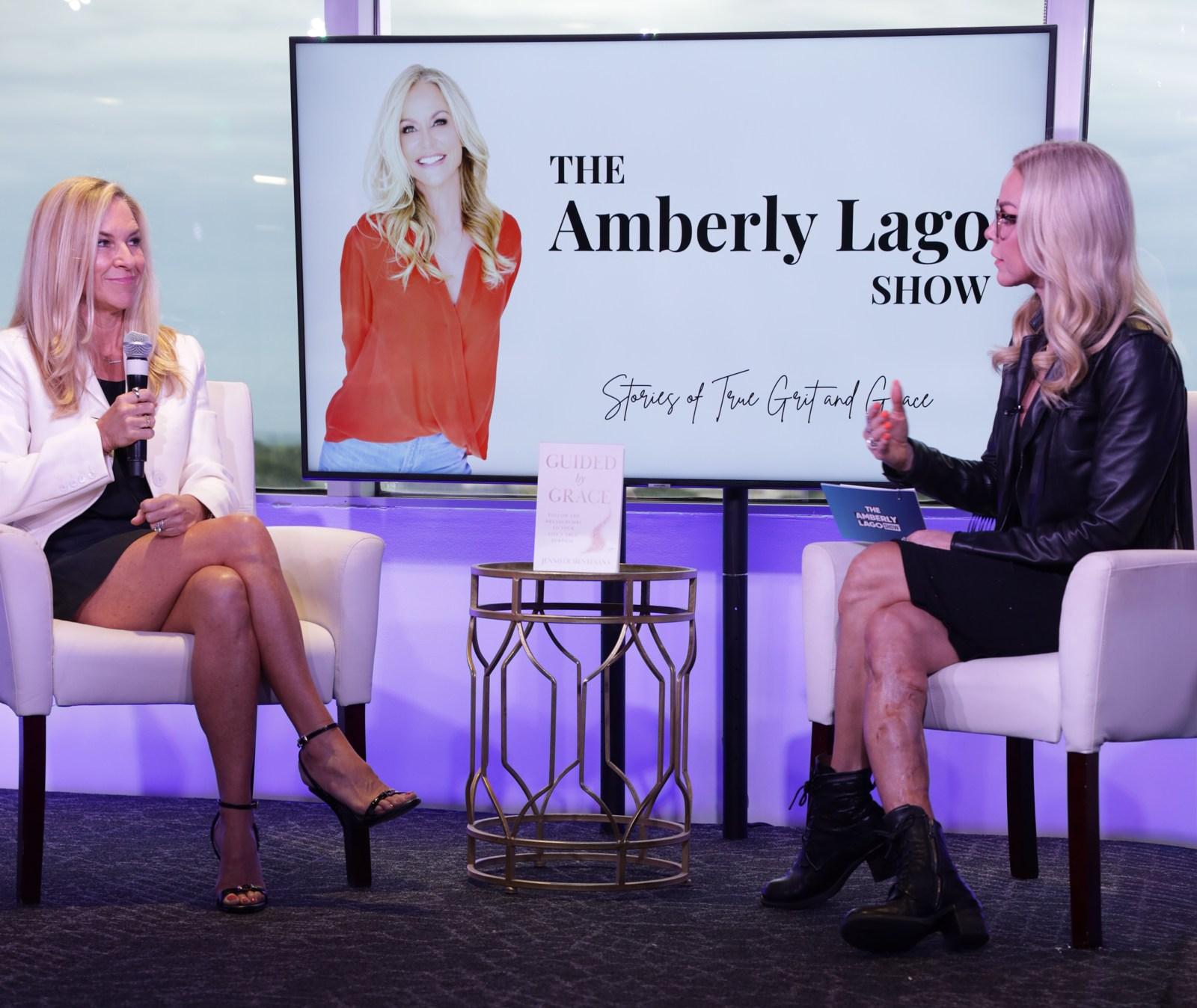
Season 2, Episode 89
Coming Clean and Breaking the Trauma Cycle with Peter Estévez
A conversation with Peter Estévez

About This Episode
"I am not a problem; I have a problem."
I love hearing powerful stories of recovery, healing, and resilience. That's what this podcast is all about. So when I invited my friend Peter on the show to tell his story and share his wisdom, I knew it would be a good conversation.
Peter O. Estévez was born in Mexico City, Mexico and migrated to the United States at the age of 10. Peter is an entrepreneur and partner in several companies in the energy, gas and oil sector in Mexico. Peter is a philanthropist and an advocate for recovery and mental health, as well as author of From Lies To Riches. He is also the host of the top-rated podcast "Coming Clean."
In this episode, Peter shares the power we each have to heal from trauma and addiction, break the cycle, and become the best versions of ourselves.
Here's what you will learn:
- What it was like moving to Texas from Mexico as a child (3:05)
- How to work through the trauma of abuse (12:27)
- How Peter stopped the self sabotage and healed "the little boy" through therapy (17:24)
- Where the journey to recovery starts (24:47)
- The power of committing to break the cycle of trauma (31:53)
- How our daily rituals are different depending on who we are (38:31)
- The importance of representation in the self development space (45:14)
Screenshot your favorite part and post to your IG story and tag me @amberlylagomotivation and @peteroestevez so we can see and repost to our stories!
Follow Peter
Your Unstoppable Life Mastermind is coming June 26th! We will work to help you activate your highest potential, so that you can live the life you deserve!! Apply now and let us know you are ready for greatness! Hiitide Book Club: I am excited to share that registration for the True Grit and Grace Book Club is now OPEN!!! Register here!
Unlock your highest potential and start living the life you deserve!
Read the True Grit and Grace book here and learn how you can turn your tragedies into triumphs!
Thank you for joining us on the True, Grit, & Grace Podcast! If you find value in today's episode, don't forget to share the show with your friends and tap that subscribe button so you don't miss an episode!
You can also head over to amberlylago.com to join my newsletter and access free downloadable resources that can help you elevate your life, business, and relationships!
Want to see the behind the scenes and keep the conversation going? Head over to Instagram @amberlylagomotivation!
Audible @True-Grit-and-Grace-Audiobook
Full Transcript
Welcome to True Grit and Grace, a podcast designed to empower you to claim your resilience and thrive through life's challenges. I am Amberly Lago, a mindset coach, fitness expert, and bestselling author. Each week, I'll dive deep with the world's brightest thought leaders and elite performers to share tangible tools and practical advice to inspire you to keep your eyes on the prize and forge ahead. So get ready to conquer your fears, heal any trauma, lead with your heart, and elevate your life with grit and grace.
Hello and welcome to the True Grit and Grace podcast. Today on the show, I have someone who has become a dear friend, brother, and sobriety of mine. A true inspiration. His experience, his strength, his wisdom, his hope that he shares is changing lives. He's a philanthropist, he's an entrepreneur, and he's got a new book coming out that I can't wait to get into. He's leading a big summit and doing so many things. He's really changing lives in a huge way. So, Peter, welcome to the show. I'm so grateful to have you here, Amberly.
Thank you. Thank you for the opportunity. I'm honored to be here.
Well, I tell you what I learned about you because of your podcast. You've got this amazing podcast and it's called Coming Clean. And you've had huge guests on Tim's Story. Natasha Grano, I think you had her on. I. I didn't get to listen to that one yet. Forbes, Riley. And did you have Rich Roll on your show, too?
I have not had Rich Roll on
my show, but I had Robin Sharma, Dean Graciosi, Paul Meltzer, Steven Cotner, and the list goes on and on and on and on.
We have and.
And you are king of clubhouse. Can we just say that like you are. People just, like, love hearing you on Clubhouse, including me. And I love shar of struggles to success. And I'm really touched by your story because here you are, this successful entrepreneur. You have all these businesses. Besides making an impact in the personal development world, you really help people and have a passion for helping people with mental health and recovery. And there aren't a lot of successful businessmen and entrepreneurs that really openly share their story. And it's, I think now more than ever with what is going on in the world, we need people like you to step up and share that. You know, we all go through some struggles. So I would love to talk a little bit about how you got to be where you are today because you are so successful. And I love that you are in Texas. I Will have to come visit you in Houston sometime. But you moved to the United States when you were only 10 years old. And I wanted to ask you, that's a very, you know, big part of your life to move to a different country. Did you speak English when you first moved here?
Absolutely not. You know, as you, as you just mentioned, you know, I moved with my parents and my 12 siblings. I was 10 years old.
I didn't realize there was 12.
Absolutely 13, including myself.
Okay.
So we were a family of 15 and we moved to San Antonio, Texas, into a small frame, two bedroom, one bath home. The girls slept in one room, mom and dad slept in another room, and the boys slept in sleeping bags in the living room.
And, you know, my parents brought us
to America and to pursue the American dream.
But we didn't realize at the time
that the dream could also become a
nightmare, you know, especially the dream.
I'm sorry, you said the dream could
what be easily become an eyemare, you know, My father was born in Houston, Texas. Met my mother when he was 18 years old. Mom was 15 years old. My father was an orphan that had been taken back to Mexico, where his parents were from. By an end, after both his, he lost both his my grandparents.
And in very young, you know, they
got married, they started having children, children having children. And father for a while tried to make a life in Mexico. And it was very, very difficult. The more children they had, the harder he got. So their solution was for father to work in America and send the money back home, which was typical of many poor immigrant families. But after 13 children, and a lot of young children at that, I'm number eight, so there was seven behind me. They were under the age of 10 at the time. So you can imagine my mom racing that many children on her own when
my father living in America, although he
gave us a much better quality of life in Mexico because you can stretch the dollar farther in Mexico. It was very, very difficult emotionally for the family unit as a whole. So my father made the decision, my parents made the decision to bring us to America in the pursuit of a better life and the family to be together.
Wow. But sleeping in sleeping bags and
all
that you probably had to do to help take care of the family. How old were you when you started working? Did you have to help?
Absolutely, absolutely. That is, you know, my parents came from the generation that the children were assets. You know, there were another source of income for the family. And so probably by the age of 11, 12 years old, I already had a paper Roth worked at the local convenience store, you know, did odd jobs in the neighborhood, and that was over. And aside from the fact that my parents often were crop pickers, you know, so we traveled. The family traveled to Florida to pick oranges or travel to Illinois to pick apples. It was a way of life. We were so poor. I often say that we couldn't afford
to drink, but I knew that.
I knew that where I came from was not who I was. I knew that was just a temporary passage in my life. It was a temporary spot that I was destined for something greater and bigger.
I didn't know what he was, and
I didn't know how I was going to get there, but I never felt that I was stuck there.
Well, how old were you when you realized, I want more. I want more out of life? I want. I have these big dreams. And did you share that with other people? Because I think a lot of times, like, I knew from the time I was a little girl that I wanted more. I come from a big family, too. I started working at age 13, and it was kind of the same where we were assets, we helped with a family where it's different a lot of times now where kids are a little entitled, they are handed a lot. They don't learn the work ethic that maybe you were raised with. And so did you share with other people that you had these big dreams to do more? Because a lot of times when you share. I know when I shared my big dreams and I came from a small town that people are like, yeah, right, good luck with that. And they laughed at me. They kind of mocked my dreams. Did you share your big dreams with others? And if so, how did that.
How did you know Very, very early
on, Amberly, what I learned down, what I learned after being in recovery for 22 years, where I learned after diving deep into understanding mental health and addiction and recovery, I learned that a lot of those patterns very early on was me trying to escape from my reality, from the poverty, from the dysfunction of my home, from. From the sexual abuse, emotional abuse, of physical abuse, from all the dysfunction that was going on in my home. Obviously, when you have two uneducated parents, children raising children, there's a lot of dysfunction. There's a lot of poverty. There's lack of education, there's lack of information, there's lack of resources. So what I learned very early on is that I just wanted to escape my reality. So my reality started escaping that reality by the imaginary friends that we built up as young kids. Right? A vision of something bigger than what was right in front of me.
You know, I realized very early on
that we were different as a family. You know, when you come to America and you see the neighborhood that you live in and the average family is 2.5 children, and there's 13 of you at home, you know that there's some sort of dysfunction, okay. When your parents have a broken car, you know, there's hemming down clothes, there's lack of resources available at your home. And you see that your neighbor, that your neighbors live a little bit better. You see that your neighbors bring you hand me downs. You see that your neighbors treat you differently. You know there's something different, okay?
And I knew.
I didn't know what was missing, but I knew what I had was not normal. And I knew that that's not what I wanted for me moving forward. So did I share my dreams and my goals? No. But I did start escaping, you know, escaping into creating imaginary life, creating imaginary dream. Imaginary dreams. And then that led into also alcoholism. You know, all the isms that we follow, we want to escape our reality and we pursue something besides what we. What is in front of us in order to feel different about ourselves. And that's what I look for. So at some point I realized that that was my way of escaping. That escaping led me to be able to look at the world completely different and know that there was other things available to me aside from what was right in front of me. So I started emulating my neighbors. They had a little bit better car, they had a little bit better house. I knew there was something better and different than what we had. I just did not know how I was going to get it. But I knew that the answer was not inside of my immediate environment.
Okay, I want to. I want to touch on something you said, the dysfunction, the sexual abuse. Because there's not a lot of men that I think more and more now are. But you talk about the sexual abuse. Did you turn to alcohol to numb those feelings out? Do you think that's one of the reasons you started drinking?
Oh, absolutely.
You know, and I had spoken about
this publicly, and this is not a judgment on my father. This is not a judgment on family. It's just a reality. And I want to preface that by saying that my story is not unique. My story is a story of many. And I don't share my story because I'm broken or I'm looking for pity. I share my story because I'm falling complete. And I share my story in service. I share my story as a possibility for Others to be able to open up about their own stories, to be able to know, to give them permission to know that you don't have to live in silence, that we are, as seekers, are secrets. And that was a generation that existed then and still exists in many communities.
Little by little, the more we talk
about this, the more that we become outspoken about what has happened in our lives. We also allow to dismantle those cycles of dysfunction that have been permeating in communities and generations after generations. So, yes, for me, I wanted to escape the fact that I knew that my father was abusing my sisters. I wanted to escape the fact that we lived in despair, poverty. I wanted to escape the fact that I was being sexually abused by one of my brothers. I wanted to escape that reality. You know, I want to tell you something, Amberly. I don't feel broken, and I don't feel pity for myself.
I know you don't. It shows, I mean, your energy and everything you do. And I really appreciate that you share this because you have healed from it. And I know there are so many layers to it. Me being sexually abused as well, it was one of the hardest things to write about in my book. But I appreciate that you start it with, I share this for others, that you're sharing your experience because you're giving others hope, and you're giving them kind of the roadmap map to keep moving forward and let all those feelings rise to the surface so they know they can get through it. So I so appreciate you sharing that part of it, but it's got to be hard going through knowing your sisters are being abused as well. That's one thing that I never really talked about, but I worried about because I moved from home at a really young age. I was like, I am out of here. It didn't feel. It never felt safe. And so. But I worried about my sisters and my brother. My sister and my brothers. Did you have that. That feeling of responsibility to take care of your sisters, or how did you manage those feelings?
You know, absolutely.
I think.
I think in Naylee, every survivor of a sword is also a protector. Right? So, you know, I think in Naylee, we know that our circumstances are unique, and when there's dysfunctional or abuse, not only is. It's not only singled out to all individual dysfunction, and abuse usually permeates throughout the household. So I think when I was able to get out into the world, to really have the ability to make money, to start a business, to start a company, I wanted to bring everybody along with me. I wanted to bring my sisters and my brothers and all of my siblings, and I wanted to show them a different pathway. You know, I think subconsciously what I was trying to do, I wanted to show them other opportunities so we can start breaking the cycles, okay? Because I think what held us hostage to that type of environment was not my parents. It was the ignorance, the lack of information, the lack of education, the lack of knowledge, the lack of understanding, the lack of emotional intelligence.
So how did you start educating yourself and seeing that there were more opportunities and just really developing, you know, your mind, body and spirit to get out of that? Who did you turn to? Did you have a mentor?
You know, it took a very, very long time.
I was first introduced to Tony Robbins
in the 80s when I entered the real estate business and my then partner, Francis P. Moran, too. He and I took our office staff to a Tony Robbins seminar. That was my first introduction to Tony Robbins. But me coming from a culture that was very backwards or personal development was completely unknown to it was like, oh, that's too woo woo bullshit. You know, you can't just up and down on the stage and get motivated. That shit doesn't work. You know, I came from the mentality old school. You got to work hard, you got to sweat, you know, a lot of that social conditioning that we are may believe that things have to be a certain way. And I was following in those patterns. Okay? I will tell you that some of my greater assets were also some of my greatest handicaps very early on. You know, my character defects and my shortcomings became survivor skills, and they work for me to a certain point. But then you get to a point in life where they stop working for you, okay?
So, you know, out of my poverty, I found purpose.
Out of my lack of resources, I found resourcefulness.
Okay?
Out of ignorance, I found opportunities. Because it made me curious about learning and wanting more and being creative and becoming resourceful. But I also had not healed the broken little boy. You know, I found a way to be able to become successful, to make a lot of money in the real estate business by the age of 24, to go from being completely broke to having over 150 agents, taking a company that was selling 12, $15 million a year in sales to over $100 million a year in sales from, you know, 300 units to over 1,000 units per year. And did that consistently for many, many years and really, really founded a niche in the marketplace. But wherever I went, there I was. I kept taking that broken little boy into the boardroom. Into the marriage, into the partnerships, into the relationships. So I would sabotage my own success because I didn't feel worthy of who I was. I had a tremendous case of imposter syndrome that kept sabotaging every relationship, every success, every opportunity because I kept bringing the voice.
Little boys, abused little boy, the poor little boy.
I kept the poor me into adulthood and I needed to make a shift. I needed to make a physical, mental, emotional and spiritual shift into realizing that I needed to get into that little boy, heal him and let him go.
Ok, well how do you start to heal that little boy? Because what you're sharing so many people go through and they don't even realize that why they're sabotaging and why they, you know, kind of get, they kind of stall out and they need something to help them, give them gas to move forward. But it is so much about healing that, that little boy. How old were you when you realized I need to heal? There are layers in there, like stuff that I've suppressed that I need to heal in order to grow and, and feel better mentally, spiritually and physically. How old were you when you got sober?
Oh, you know, I knew intellectually at
some point as opportunities started coming to me and I see my life changing and I go from living in a two bedroom, one bath home less than 900 square feet to living into a 14,000 square foot home in an exclusive community, in a country club community. I'm somebody in society, I'm a member of my community. And I began to see that my patterns and behaviors were not in alignment with who I was becoming. So I knew that there was something wrong with me. I knew, I always felt that as. So my first step was actually going into therapy and trying to find a solution to my healing.
Ok. And from therapy, you know, after,
to be perfectly honest with you, on my fifth marriage, fifth marriage, I did sit fine.
Well, thank you for sharing that because you know what? This, I'm on my third marriage and I used to like, my husband would mention it at a dinner party or something and say, oh this is our third marriage, if this doesn't work out, then I'm done. And I was like, oh my gosh. I had like a little bit of shame about this is my third marriage. But you know what, thank you for sharing that because you know, we learn and if we are not working on ourselves, then like you said, we bring that broken little boy or that broken little girl into the marriage and we don't know how to properly communicate or manage our emotions and we sabotage so thank you for saying that. There are a lot of people listening. I'm sure they're like, okay, so everybody goes through struggles. It's tough. But you were on your fifth marriage now?
I was my fifth. Fifth marriage. I had a six month old son, my son Alec. Andre and I done it again. I went to a Halloween party with my wife. At the time, we drank too much. I don't remember what happened. I was inappropriate to the host of the party. You know, when I drank, I became very promiscuous and I had one of those embarrassing incidents in a country club community where everybody knows each other and everybody starts talking about each other. Next morning I get the phone call about, how do you feel? Well, you know, a little hangover. Well, do you remember what happened? No, I don't. Okay.
And that's the worst.
The story was recanted to me. You know, my alcohol drinking had gone completely out of control. I was drinking until I passed out because the reality is that the more success I got, the less I like myself because I didn't feel worthy of it.
I wanted your insides didn't match your outsides. And that's where.
Absolutely, absolutely. I still had that broken 6 year old poor Mexican kid that migrated to the United States and feel that he was not deserving of what was happening right before his eyes. And he wanted to sabotage it in a way because he felt dirty, guilty, shameful, embarrassed. Okay, not worth you. After the incident, I talked to my wife and she said, Peter, you've done this too many times. Peter takes action. You do something about your drinking, I'm divorcing you. You know, she was on our second marriage. She had two children from a private relationship. She had never witnessed that kind of drinking behavior. Ok. At the time I knew she loved me. We had a six month old son and I could see that everything around me was everything I always wanted, but yet I was sabotaging it. So I went straight to my therapist, I was 38 years old. And told my therapist what was going on. And he said, peter, you have one of the most acute cases of alcoholism I ever seen.
Wow.
How did that make you feel when that, when he said that, how did that make you feel?
You know what, Amberly? I don't know and I don't remember
because the reality is that I feel so broken.
I don't think anything that he could have told me was going to hurt me anymore. I thought I was damaged were goods. What I didn't realize, I thought I was a problem. What I hadn't realized is that I had a problem that had a solution.
Okay?
And all this time, I thought that
the problem, that's where you find hope. That's why I asked you, how did you feel? Because when I finally realized, ooh, I have a problem, was the first time that I was like, oh, but there's hope because there's a solution. And when I first I was sober, I waited until I was about six months sober to tell my daughter, my oldest daughter, who was away at college, that I was going to a recovery program. And she cried and she said, is that what it is? Oh, thank goodness there's a solution, you know? And so she even heard hope because there's like, oh, okay. Well, once you accept and admit you got a problem, something's going on. Then like your wife said, are y' all still married?
Ex wife now.
Okay, I thought y' all were ex, But. But she really said it. You've got to take action.
Yes, you did.
You went to therapy.
So straight from my therapy meeting, okay, my therapist, Dr. John Worsham, he actually looked at the yellow pages. You know, this is when we still had those big old fat books. Yellow pages, he said, this is where this meeting is at. I suggest that you go straight from here. And sure enough, I was there. For 11:30 meeting, I did what a typical alcoholic in denial does. I case a parking lot. I wanted to make sure that there wasn't anybody I knew that I didn't break cars. You know, all that crazy, right?
Yes, yes.
Everybody.
Everybody knew I was a drunk, but
I was embarrassed to find out that I was going into a recovery.
Yeah.
Let me tell you, I relate to that, because I was hiding my drink in. And I went from hiding my drinking to hiding going to recovery. And I did the exact same thing. I went to this place. It was the scariest thing I think I've ever done. I watched these women walking into a room, and I was like, this must be the place. And I remember walking in and sitting in between a nun, like, she was dressed like a nun and a cowgirl and thinking, where the hell am I? And how did a good girl like me end up in a place like this? You know? But I was looking around, and the thing is, everybody there is there for the same reason. But you don't realize that when you first go.
Absolutely, absolutely. And I walk into the meeting, and the first two people that I run into is a federal judge that I knew and the owner of a major NBA team. Okay, That I also knew. So I'll walk into there. And I see this and I say, okay, that almost. Almost like, believe it or not, in a sick way, it was almost like a sign of relief. It was like, I'm not the only one.
Okay, there's your hope right there.
There was my hope. My hope was born right there because I knew the judge and I knew the other individual, and I knew that they were successful and I knew that they had issues, but they were dealing with it. And that gave me the ability to realize that I could become a functioning member of my community, that I could become whole and complete. That was my first opening to hope. That was the end of it. That was. My last drink, was October 31, 2000, and I've been sober ever since. That's where my journey to recovery started. Now, my journey to transformation didn't start till many years later. Ok. But that is a monumental moment because I think that the very first thing that needs to happen, we need to surrender. Ok. And a lot of times we confuse surrender with giving up. And really what surrender is is giving in and giving in to the permission that there's a possibility for us to
find healing within ourselves.
And when I was able to allow myself to find the healing within me, I open every possibility to be able to become a better individual. In 2008, I was facing the crisis of the real estate crisis, the economic crisis. I was losing properties left and right. My mother died, my wife asked me for a divorce, and six months later, my father passes away.
Oh, my goodness.
And it was the very first time that I was confronted with a tremendous amount of loss, loss, heavy loss in my life. And I had one of those come to Jesus meetings with myself that said, there's something that has to change about me. I cannot continue to be the person that I am, and I cannot continue to bear the kind of pain that I'm bearing on myself and I'm bearing on others. And I remember googling, what do I need to do to become a better person?
Wow.
And this was in 2008, you talked about Christina Ammet Lakiani. Okay. The first thing that popped up was Mindvalley.
Okay.
Yeah, yeah, I'm gonna have her on the show, too.
Yeah.
And isn't it amazing? Like, Google. First of all, I google. I googled recovery when I first got sober. I like, I googled and found meetings. And so it's amazing what you can do when you have the willingness to. You want to get better, you want your life to change. So you found Mindvalley.
I found Mindvalley, found the platform. And the very first person that I saw on the platform was Pastor Michael Beckwick from Los Angeles. And he was coming up on giving a course. So I took his course and then I took James Quick course and then I took Alyssa Nichols course and run a wash course. And I just continue on that journey. And I noticed that I was learning, I was learning basic human skills, emotional intelligence that I had never tapped into before. You know, I came from a very old, outdated system of education that did not teach me anything, that had given me zero value, that had numbed me to just exist in this world. And for the very first time, I was actually being able to feel my feelings, see my feelings and realize that I was not a problem. I had a problem and there was a solution. And the solution lay right within me if I was willing to change and make the changes. You know, here I am raising my son as a single father. At the time he was 7 years old. And I am beginning to mirror a lot of my childhood trauma into my son. I'm beginning to see my son have a lot of the same physical issues that I was having as a young boy. He's gaining weight. He gained 50 pounds over a six month period. He's in his room gaming. He doesn't want to have any contact with me, with anybody in the world. He's angry at the world because his parents are going through a divorce and his life has completely shifted. So I was inflicting the same kind of pain that my parents had inflicted me, just in a different economic scale. Pain is pain is pain is pain. Dysfunction is dysfunction. Dysfunction is dysfunction. So abuse is. Abuse is. Abuse is abuse. It doesn't matter how we masquerade it, how we cover it up, if we don't heal it, we're going to repeat the cycle. And I made a commitment from that point forward that I was breaking the cycles of dysfunction that have permeated in my family moving forward, and that my son was not going to repeat those cycles, that he was going to be able to become a healthy member of society and be able to offer the best of himself to the world, to his family, to his children, and to generations moving forward. And that is where my mission and
my passion was born.
To be able to create a platform that allows me an opportunity to share my story. But not because it's unique, but because
my story is a story of many of us.
Yes. And you know what? Your, your passion comes through, your energy comes through, and everything you do, whether it's your podcast or it's your Clubhouse. And I remember when we first met, you were saying that you were on Clubhouse for hours. And so I think, I feel that your why is so big. It's your driving force that keeps you going. And just for you to acknowledge that, oh, my gosh, I am repeating these cycles with my son. You were seeing it because some of us, we get so caught up in the daily grind or we get things get busy, we get successful or whatever, we don't stop to look at what's really going on and what's really important so that you had the awareness to see your son and decide, I am breaking the cycle. I want him to be healthy mentally, spiritually and physically. I want him to be a contributing, you know, person in society and do good is huge on your part. And now, how old is your son now? Is he in? He's like 20, right? Oh, he just turned 21, right?
21 years old. He just turned 21.
Y' all went to Vegas.
We went to Vegas. He is a junior in college. He is in the Dean's honor roll. He has a 4.0 GPA. He's an incredible, incredible human being. He's a kind young boy. He's loving, caring, happy, joyous. He's free. He is free because I gave him my freedom, okay? You know, my parents unconsciously, rather unconsciously, permeated all their issues into me, okay? But I had the responsibility of breaking those issues and not contaminating my son with those issues, you know?
Well, you chose to be the victor of your life instead of the victim. Because some people get caught up in. Well, all these things happen to me. I come from a low income family. I struggled my whole life and they. They stay in that. And you chose to not do that.
And I would rather consider myself a champion for change rather than a victor, okay? And I tell you why.
A champion for change, I love that.
Absolutely. And I tell you why, Amberly. My parents, my grandparents, my great grandparents, their parents and great great grandparents did not have the opportunity to do what I'm doing, but I have a responsibility to do it for them, okay? I honestly and truthfully believe that my parents gave me the best that they could. My father didn't intentionally abuse my sisters. My father didn't intentionally take us into a cycle of poverty. My father did not intentionally have 13 children. He just did not know any better. And I truly believe that he tried his best, okay? His best may not have been good enough in society, okay? But I don't have to repeat that cycle. I can break his cycle. And every cycle moving forward. And I can create a brand new legacy, a legacy that my parents, my grandparents, my great grandparents, and every generation before me and after me can be proud of. And that is what I am committed to do. Ok? I am not just committed to break the cycle. I am committed to make a difference, to make an impact and to change generations moving forward. You know, and that's. I am very passionate about it and I'm very passionate. I spent a lot of time in clubhouse because I have a commitment to impact 100 million people by December 31, 2028. Okay? And the only way that I can do that is by sharing my story in service and allowing other people to wake up and share their stories as well and identify, educate, and empowers others to go out there and do the same thing that I am doing. Because that is the only way that we are able to break cycles by creating a movement. We cannot create a cycle. We cannot break a cycle by talking about it. We have to break a cycle by creating movement and offering solutions.
Well, I wanted to ask, how do. I mean, I know you have the big purpose and I love the passion that you have. Are there days where you feel drained? How do you keep your energy up so you can be of service? Because I know you have a new book coming out and it's 13 steps for a healthy life. It's coming clean, 13 steps for a Healthy Life. But to keep up, I mean, you've got several businesses, you're always on the go, you're interviewing people as well as being interviewed on other podcasts. But what are some things that are non negotiables in life that you do every day in order to continue to be of service and to continue this passionate lifestyle and being a champion for change? What are some of the things that you do?
Thank you, Everly, for that question. Because I think that the most important thing that I have learned in my journey to personal development is the fact that there's five core pillars in every human being. Physical, mental, emotional, spiritual and financial. And when we are able to take care of those five pillars, we are able to operate from a state of flow. We are present. We are not time traveling. I am not thinking about the past or the future. I am here, right here with Amberly, having an incredible conversation. And I am present. I am completely present. And I am operating from a state of flow.
There are no distractions.
I am not operating from the defense. I'm in complete offense. You know, there's nothing that is attacking me. There's Nothing I need to be repelling, okay? My life is managed and organized. And it's managed and organized because I tend to those five pillars each and every day. And there are non negotiable through a series of powerful practices. What are those powerful practices? Before you and I got into this interview, I've been up by five o' clock in the morning, I already exercise, I ready one for my walk, I already read, I already prayed, I already meditated, I already done my gratitude list, I already journaled three pages, okay? Those are my powerful practices. They enforce those five pillars in my life. The physical, the mental, the emotional, the
spiritual, the financial, okay?
So when I am able to tend to those things, I don't do what my parents did, ok? My parents operated from a state of survival. They were in consistent, persistent state of survival. When you operate from a state of survival when your life is disorganized, you can't think, you can't create.
Yeah, that's so true. You can't be in a state of feeling creative or flow or at ease and have serenity. When you're in that state, whether you know, you're thinking about oh gosh, I should have done this, or worried about something or anxious about the future. I feel like you can get resentful, you can get edgy, you're not in harmony. So it might sound like a lot to do all the things that you just named, but the difference it makes in your day, in your life, in your impact and just your ability to change other lives is. It's incredible. So it's worth getting up at five in the morning to do those things. I know I feel like a better person when I can do those things. There are some days that I slip and I forget to do something and I wonder why do I feel like this? Why do I feel so discombobulated? And then I'm like, okay, I need to start my day over or I just need to pause and take time to listen. Because I feel like the answers for things are always within us. But it's taken that time to pause and really listen instead of just go, go, go, go, go. So do you do that practice every day?
Every single day. And that's been my practice for the last 12 years and that has completely, completely shipped shift in my life. You know, you said something a minute ago, it sounds like a lot of things, but I used to spend more time taking care of problems, addressing problems, living in chaos, okay, Drinking, okay, managing and juggling a whole bunch of screw ups that I used to Create.
Oh, it was so much work.
Yes.
When you have to juggle so many lies, so much deception, so much chaos. Okay, you are exhausted. You are completely, completely exhausted. Zero, zero creativity. I operate from a single state of consciousness, okay, where my subconscious and my conscious are in complete alignment. I don't need to be asking my subconscious for permission to do this, okay? I already have trained my mind, my soul, my body, my spirit to be able to be in alignment with each other to where I am able to operate from a single state of consciousness, which gives me the credit, the clarity to be operating for a state of creativity, from a state of present and from a state of flow. And that makes your life so much simpler. Yes. I invested two hours early in the morning to do everything else, OK? But by 3 o' clock in the afternoon, I have done a full day of work and I have accomplished more than most people accomplish in a week and sometimes some people in a month, okay? So your productivity level gets so much higher that you don't even realize it because I am operating everything that I was seeking when I was getting drunk, okay? I was seeking to be in a state of high. Well, I am in a state of high with my endorphins, with my serotonin, with my dopamine, with my oxytocin, okay? It is my body producing everything that I need to be the most productive, clear person that I need to be, okay? I don't need coffee or I don't need drugs or I don't need alcohol or I don't need the ego to be fed in order for me to be feel better about myself.
I love coffee.
I do too.
I love coffee. But yeah. Now, I wanted to ask you, how much sleep do you get?
I'm very regimental about my sleep as I am about everything else. I try to sleep eight to nine hours a day. And let me tell you something, okay? My good friend Robin Sharman has a 5am Club, okay?
I have his book. I actually spoke at an event with him called Powerful you. And we had our. It was the first time I met him and we had our, our book signing set up side by side. He is one of the most genuine, nicest people I've ever met.
He's an incredible human being. But everybody has their go tos or rituals, their beliefs, their systems that are offered to everybody, okay? I don't believe that there's a particular system that is tailored, that is exclusive to anyone. I think that we have to be able to identify our DNA, our body chemistry, our biology, our needs Individually. Okay. So I said today 5 o'.
Clock.
I said today, 5 o' clock because I had an interview at 8 o' clock in the morning from somebody in London that I wanted to interview 8 o' clock in the morning in order to be in their time schedule. OK. But I don't necessarily have to get up at 5 o' clock in the morning every day. Okay.
I think that's important to share. Thank you for saying that. Because so many people think, okay, if I do these five things, if I wake up at five, then everything's going to be magical. But it really is up to each individual. So if you're listening, figure out what works for you. Like you said, you know, exercise is different. Some people like to work out for 30 minutes, others like to work out for 10. And they fit it all in, in like a hit or, you know, weight trainer, whatever it is. I think it's really important to take different ideas and then make it your own.
Absolutely. You know, I follow, I follow the 5am Club for a long time. I read Robin's book, I did what he applied and I realized that some things for me were harder, some were easier. I adopted some of them and I discarded some of the others that did not fit my belief system, my DNA, my biology. Okay. And it's the same thing that we have to do. We have to experiment with ourselves and see what feels good, what makes it, what changes us, what makes us feel, you know, if a ritual becomes too much work, then it's not good for
you and we won't stick to it.
You won't stick to it. Okay.
It has to feel good. And that's the same that I have told my clients because I've been in the fitness and wellness industry for 25 years. I've trained clients. And if it's not fun, I think life has to be fun. It has to spark joy. So if it's not fulfilling to you, if you don't see a positive change from it, you're not going to stick to it. It's just going to feel like work. So you have to figure out how to make it. For me, I think how to make it fun or see results from it.
For sure, Absolutely.
It's not any different than a diet. Diets don't work because you have to restrain your, yourself, you have to, you know, you have to know if you do everything in moderation, everything works for you. Okay. So you know, the same thing with my daily rituals. I do my daily rituals and sometimes I may get up at five Other days I may get up at seven. You know, there's many of times that I travel all the time. I am constantly traveling and commuting between Houston, Mexico City and Los Angeles. Okay. There's a lot of times I get up at 3 o' clock in the morning and you're going to find me doing other than my exercise, my rituals on the plane, you know, that two hour flight or that three hour flight. I read, I journal, I pray, I meditate, I do.
I love being on the plane. I just got back from Florida. I love it. I think it is because I am like, ok, I am up in the air, I have time to. The distractions are away and I can. That's when I love to write. That is when I like to write my thank you cards. That is when I like to journal. That's when. And it reminds me that we just need to quieten the noise on the outside and the distractions so we can really tap into what's inside of us all along. And so I love that you say, you know, you can take it anywhere if you get up at 3 in the morning, then do your meditation on the plane if you're traveling. And I'm so glad to be traveling again. It's heaven.
Absolutely.
And when you come to la, I have to see you. I want to take you out to lunch. I think it'd be so fun.
Oh, I would love that. I would love that. I was actually there last week, week, a couple of times in fact. I flew out of lax. I took that red eye on on Thursday night. So I left there at midnight, 12:45 and I got.
So you were coming in or flying out when I was coming in?
Yeah, absolutely. And I'm actually going to be there next week. I'm doing a Keith Ferrassi podcast interview. So I'm going to be there.
So that's awesome.
Well, you know what?
You incredible some. I mean, I love Tim's story. I'm actually interviewing Tim on the show tomorrow. You have some incredible guests on your show, your podcast, y' all check out his podcast. Seriously, it's one of my favorite podcasts. Not just because you've got incredible guests, because you care and you're such a good interviewer and it shows in everything that you do. So check out his podcast, Coming Clean. It's like top rated and it's very inspiring for me to see what you've done with your show. And now you have a new book coming out. When is your book coming out?
Absolutely. From lies to riches 13 steps to a healthy life. OK. And we are going to release it during the personal, you know, the Leadership and Personal Development Global Summit.
And that's in July.
That's in July. July right now, our target dates, July 8th, 9th and 10th. And I'm going to release a book. Officially, my book release will be during the summit. It is the first ever Leadership and Personal Development summit produced by Latinos. Okay. For Latinos and all. Our whole panel is Latino speakers.
That's incredible.
And there's a reason I'm doing that, Amberly. Something that is very dear to my heart, you know, when I, when I enter the personal development space. And I want you to know something. I don't do this. I don't monetize any of this stuff. I do this stuff because it's my passion. It's something that I want to do, something that I want to give back to my community, you know, but when I started going to different conferences, different motivational events, I noticed that I was one of the few brown people in the room and I have yet to see a brown skinned person on the stage. Okay. And I say that only for a reason. You know, it's very hard for my, for me to be able to make an impact in my culture, my community if I don't have people that look like them that they can identify with. Okay, sure. Gary Vee's making an impact. Ryan Cardone is making an impact. Evan Carmichael is making an impact. Dan Fleishman is making an impact. Tim Storey is making an impact. And a lot of those great, incredible thought leaders that have been so grateful that they have been so gracious with their time and afforded me their time on the podcast, podcasts and on conversations. But the six year old little Peter, okay, that is in his house with his 12 siblings or four siblings or five siblings or the little Maria that is in her house with her parents and they have no education. They need somebody that looks like them that they can identify with. You know,
I couldn't agree more. You know, I just got back from Florida where I did a mastermind and, and I was supposed to be taken to a house that they had rented for me before I went to the big mansion that the mastermind was in and something happened with our house. So on the plane I wore my Johnny Cash T shirt and my jeans with holes in the knees and I was going to go change before I went to the house to give a talk and I didn't have that opportunity. Lesson learned. I need to dress nicer on the plane. But you Know what? I'm so glad I didn't because I had one of the ladies approach me and she came up in tears and she happened to be from Texas, actually. And she said, you know, Amberly, you changed me so much. She said, seeing you show up to speak, dressed how you were dressed, she said, now there's somebody I can relate to. There's somebody I can learn from. She said, if you would have shown up looking like this, because this was the second day of the Mastermind and I was all dressed up really nice. She goes, if you would have showed up dressed like this, I wouldn't have heard your message. Because the little girl in me who was picked on by my beautiful sister and told I would be nothing and I would do nothing in my life had a block where I wouldn't listen to people like you.
That creates a wall.
Yeah. And so you are so brilliant to bring these people together to have someone to relate to. That's incredible. And how many speakers are you having at your event?
It's a total of eight speakers and we actually putting together a celebrity panel as well. You know, people that are known within the community, including talking to Tim's story about being part of the, of the guest appearance panel. So I'm very, very excited. It's one of. It's one of the first kind is monumental, is history in the making. It's never been done before, and I'm very excited to be able to champion this cause.
Well, you know what, you'll. I will have the link for that in the show notes. So if you're listening now, I will have the links to Peter's podcast, his website, his summit, because I think it's amazing that you're putting together. I know that you were telling me before we started interviewing what this stage looks like and you are going big. You're not going for, oh, let's reach 3,000 people. You're like, no, it's going to be hundreds of thousands of people impacted. So I'm really excited about this and your book. At the same time, I wanted to ask you how long you've been writing your book.
You know, my book has been a five year project.
Thank you for sharing that.
Okay.
Absolutely. It's been a five year project and I can tell you something, and I'm glad it's taking me that long because the book has morphed into who I am today as well. When I started writing the book, I was still that broken young boy with a lot of healing to do, and I was still casting blame and shame on other people. And I was not taking responsibility for a lot of my actions and my behavior. And as time has passed and I have healed and I have grown, I have evolved, I. I also have a different set of eyes. I have a different vision, I have a different perspective. And I realized also what my responsibility was as being part of the story. You know, I think a lot of times in traumatized circumstances, we are either the perpetrator, the victim, the participant, the survivor. Okay. The victor, or the advocate. Okay. Or ultimately the champion. And I have gone through every single one of those phases, and I have chosen to be the champion today. But I had to go through those faces to recognize them, to acknowledge them, to change, and to make an impact.
Wow. You are a change maker. And I can't wait to read the 13 steps that you're giving. Can you give us just a couple, a few of some of those steps? I know you've mentioned a lot already, but just a few before we leave. So something that somebody can do who's struggling, they're listening to this and they're like, yeah, I want to change my life. I want to transform my life, But I just don't know where to start or how to do it. Like, what can they do right now, starting today, to start that transformational journey?
You know, I think the very first thing that we all need to acknowledge is that there's five pillars that each and every single ones deal with on a daily basis. Okay? The physical, our body, the mental, our mind, the spirit, connection to God, to a higher power, to whatever you want to talk, okay? The emotional, our feelings, our relationships.
Okay?
And of course, the financial, okay? And if we start curating how we treat each one of those areas, okay? If they become your lover, your best friend, okay? Somebody that you care to each and every day, that you curate a life around them that is guarded, that it protects them, that he takes care of them, that he helps them heal. Okay? That's the very, very first step. I had to acknowledge those areas, and I had to love each one of those areas of myself in order for me to be able to appreciate them and take care of them on a daily basis. And probably the best thing that you can do is when I was asked to journal, when I was first told to journal. You know, we have a tendency of wanting to complicate things. Or journal. You know, you want to go buy a beautiful binder and a beautiful book?
Look at my journal.
No, look at my journal.
Okay.
Look.
Yes. Okay, you can buy. Yes, you can buy A box of this for 20 of 25 of these books for less than 10 bucks at office Depot. Okay?
And, you know, it's so funny.
We have matching ones.
And I just write.
I just write.
Just write whatever. You know, sometimes I don't know where to start. And I write. I don't know where to start. Okay? Just to simply. The minute I write, I write. I don't know where to start.
The next thought comes in, and the next thought comes in, and the next thought. What is the power journaling?
It's very cathartic. Writing. My book was cathartic.
Therapeutic. Therapeutic. You are taking those thoughts, okay? You are taking them out of your brain. You're putting them on page paper, okay? And you are either given them power or dismantle them. You are beginning to understand yourself for who you are, how you think. You begin to see the patterns of behaviors. You begin to see your actions. I would say that the best thing has ever happened to me was a power journaling.
Okay?
You don't have to do everything that I do on a regular basis. Adapt one, get used to it. Adapt another one. Get used to it. Adapt another one. And before you know it, you are having so much fun living a better life. Okay. And feeling so good about yourself that it becomes secondhand. They become powerful practices. They become rituals, you know, they become part of your life. They become your temple. And you want to tend to them because you appreciate who you are and who you are becoming.
Yeah.
You know, it's so much about being your own best friend, knowing that you are there for yourself and being your best cheerleader instead of letting that inner critic take over. So I could talk to you all day. I love learning from you. I do. I just. I love all that you share. And thank you so much for being on the show. Tell people where's the best place they can find you to listen to your incredible podcast and to find more information about your upcoming book and. And the summit. I will be watching that summit for sure. You know, my husband's Cuban, so I'm even going to make sure he watches it. So. Yeah. So where's the best place people can find you?
You know, I'm everywhere in social media. I'm very, very active in social media.
Yeah, you are.
My Instagram and my Facebook handles are PeterOesteves. And of course, a podcast handle is at Coming Clean Podcast. And my website is Peter O. Estevez or Coming Clean Podcast. And you can Google me, you can find me on Twitter, you can find me on Pinterest, you can find me on LinkedIn, you can find me on TikTok, you can find me everywhere. We're very active in social media and again, it's not because we're trying to look for fame, it's because we're trying to make an impact.
Oh, you're amazing. And y' all check them out on Clubhouse because you do some incredible rooms with some other thought leaders on Clubhouse. So I'm always there to cheer you on and I'm so grateful for you. I hope to see you when you visit LA sometime soon. And thank you for being on the show y'. All. If you so much of what Peter said really touched my heart, but if there was a favorite part that you listened to, please take a screenshot of it and tag me at Amberly lagomotivation or the podcast is True Grit Grace Handle. And of course tag Peter too. So we love that you listened. Thank you for dropping in and taking the time. I know you've got busy schedules, but the fact that you are listening here means so much. So thank you again, Peter for being on and I hope to see you really soon.
Thank Amberly.
Thanks so much for joining us this week on True Britain Grace Podcast. If you like it, please rate it or share it with your friends. That would help too. If you're not not yet on the newsletter list, come over to Amberly Lago.com
and jump on it.
While you're there, you can grab a free downloadable gratitude journal and you might just want to check out my book or even check out my monthly motivational membership. Thanks again for tuning in and we'll see you next week.
Sam.
Pain to purpose to joy.
Never Miss a Conversation
New episodes drop regularly. Subscribe on your favorite platform and never miss a conversation.