

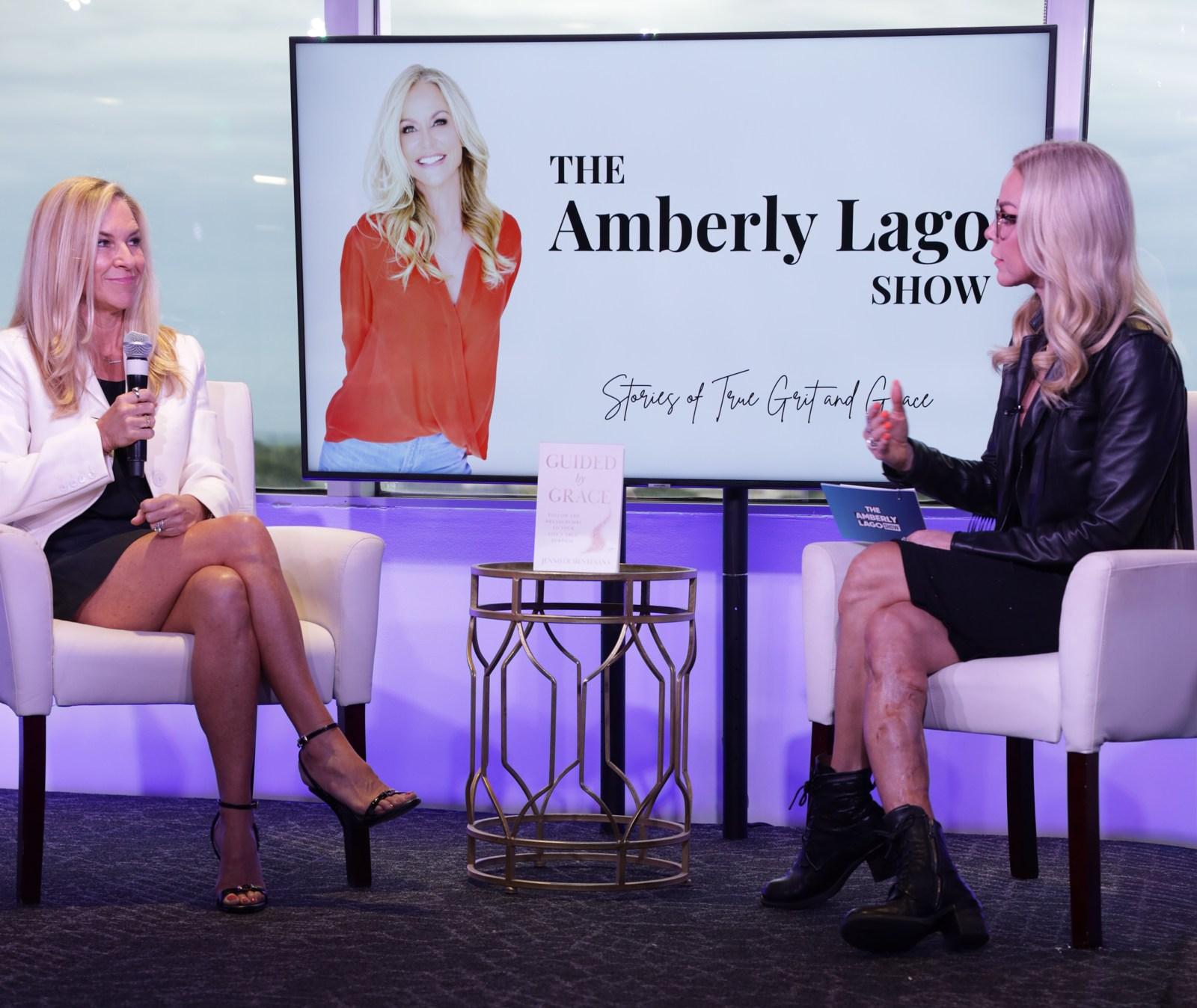
Season 2, Episode 86
Think Like a Girl and Discover Your Confidence with Dr. Tracy Alloway
A conversation with Dr. Tracy Alloway

Watch This Episode
About This Episode
"When you need a break, take a break."
Have you ever doubted your ability to handle your life because of how you perceive yourself? Has stress felt overwhelming when you've compared yourself to others? Has being a woman ever felt like a disadvantage? I am so glad you are going to hear Dr. Tracy's wisdom on all of this.
Dr. Tracy Alloway is an award-winning psychologist and her research on memory and the brain was highlighted in Newsweek as a big idea. She is the author of 15 books and over 100 scientific articles. She has been featured on BBC, Good Morning America, the Today Show, Forbes, Bloomberg, The Washington Post, Newsweek, and many others. Dr. Alloway is also a consultant for documentaries, ABC/NBC and the CW affiliates, AMC TV, and the World Bank.
In this episode, Tracy shares so many helpful tips and insights into how we can change our perspective on stress, embrace the power of thinking like a girl, and harness the power of gratitude to increase our resilience.
Here's what you will learn:
- What interested Tracy in researching women's psychology (2:31)
- The inspiration for writing a book about her experiences (9:31)
- How social media can help develop our empathy (14:16)
- Why dark chocolate can aid in memory (18:52)
- How your perception of stress can help you manage stress (21:38)
- The truth about power posing (25:26)
- The relationship between gratitude and burnout (32:06)
- How the romantic part of the brain is different for men and women (37:49)
Screenshot your favorite part and post to your IG story and tag me @amberlylagomotivation and @drtracyalloway so we can see and repost to our stories!
Follow Tracy
Links mentioned in this episode:
Your Unstoppable Life Mastermind is coming June 26th! We will work to help you activate your highest potential, so that you can live the life you deserve!! Apply now and let us know you are ready for greatness! Hiitide Book Club: I am excited to share that registration for the True Grit and Grace Book Club is now OPEN!!! Register here!
Unlock your highest potential and start living the life you deserve!
Read the True Grit and Grace book here and learn how you can turn your tragedies into triumphs!
Thank you for joining us on the True, Grit, & Grace Podcast! If you find value in today's episode, don't forget to share the show with your friends and tap that subscribe button so you don't miss an episode!
You can also head over to amberlylago.com to join my newsletter and access free downloadable resources that can help you elevate your life, business, and relationships!
Want to see the behind the scenes and keep the conversation going? Head over to Instagram @amberlylagomotivation!
Audible @True-Grit-and-Grace-Audiobook
Full Transcript
Welcome to True Grit and Grace, a podcast designed to empower you to claim your resilience and thrive through life's challenges. I am Amberly Lago, a mindset coach, fitness expert, and bestselling author. Each week, I'll dive deep with the world's brightest thought leaders and elite performers to share tangible tools and practical advice to inspire you to keep your eyes on the prize and forge ahead. So get ready to conquer your fears, heal any trauma, lead with your heart, and elevate your life with grit and grace.
Hi and welcome back to the True Grit and Grace podcast. I'm Amberly Lago and today's guest I have been so excited to bring on the show. I have so many questions for her. I have Dr. Tracy Alloway here with us. She's an award winning psychologist, professor, author. She has an amazing TED Talk that you all have to go check out. She's published 15 books and over 100 scientific articles on the brain and memory. Dr. Alloway shares her insights about the brain with Fortune 500 companies and her research has been used in the New York Times, Wall Street Journal, Forbes, and Bloomberg. You just had an article come out today that I was reading this morning. I love the name of her newest book, think Like a Girl. She teaches women how they can boss up, step up, and realize that their unique brains, what their brains are capable of. So, Dr. Tracy Alloway, thank you for being here. Welcome to the show.
Thank you so much for having me. I've been so excited all weekend about doing this with you.
Oh, well, I have to. You know, before we started recording, I was like, I've been stalking you. I've been watching your YouTube videos and all your interviews and you're constantly on the news with these awesome tips that you give. And I love the title of your new book because so often we hear things like, I mean, I've heard things my whole life about, oh, you throw like a girl, or you punch like a girl, or you fight like a girl. And I remember years ago when I'm not that into politics, but when Hillary Clinton was running for president, my mom even said, I don't think we could have a female president because, you know, us females were just so emotional. And I was like, mom, that's not true. And so I'm so first of all curious to know about your research that you've done and what led you to writing this latest book because I think we need now more than ever to step up as women and know that we are so unique. So what is the research you've done a little bit. Can you tell us a little bit about that?
Yeah, really motivated. I was motivated by a lot of what you said. Every time I would speak and I would hear people come up and a lot of women would either self deprecate, like, you know, if you compliment them, oh, I mean, I am good at my job, but, you know, someone else is better or I could be better myself. And so there was always this level of self deprecation, all these myths. Just like you mentioned your mom saying, well, we are emotional if we make decisions. And.
Well, and I did that right before we started interviewing. I showed me, I showed you my fish tank, my daughter's fish tank that looks like tea. And so I was like, showed you how I had to move because you said, your top looks nice on you. I'm like, yeah, but thank you. But look, so you're so right.
Yeah. And as a scientist, the more I would begin to read research on the brain and our behaviors and how we think, I began to notice that a lot of times it's this broad brushstroke, this one size fits all, like, oh, well, we all act this way. But even in my own lab, I saw these nuances start popping up that they are these slight differences and sometimes they're motivated by the biases like you just mentioned. These biases, these myths that I call in the book that we believe, are we emotional when we make this decisions? If we think we are, that's going to drive our decision making process. But is that really how our brain is wired? And I wanted to look under the hood and explore some of these myths to see how true or false they may be.
Well, I love that you actually do something or you have like these tips to if you are making decisions from, you know, being in an emotional place and you're making a decision, can you share with us some tips that you suggest doing if you feel like you're, you know, making decisions from your emotions?
Yes. This is actually one of my favorite ones because it came right out of my research lab and we were looking at decision making and we're all faced with decisions, small decisions every day, sometimes large decisions. And we know that in the brain we have two pathways when we make a decision. We have what's called a hot decision making center and that relies on the amygdala, which is our brain's emotional center. Then we have what's called a cold decision making center, where our rational brain steps in our prefrontal cortex where we're able to think big picture look at all the pieces and make a decision. Women are typically, as you just mentioned a bit earlier, typically understood to be emotional when we make decisions. As I began to look at the research and even in my own lab, I found two very interesting things. First of all, when women are perceived at making an emotional decision, it's because they're motivated to protect. They don't want to cause harm. So the way I looked at it in my lab is using something called the trolley dilemma. And this has made its way into popular media. There's some TV shows that have talked about it. You have this trolley, this train hurtling towards you. It's going to kill five people. You can save the day, but someone has to be sacrificed as a result. What will you do? Save five, sacrifice one or so on. A lot of times women are perceived as saying, I can't do this, it's too difficult. And that's perceived as a weakness. But actually, research is showing that women have a hard time making these decisions because we are so wired to protect, we don't want to cause harm to anyone. So it's actually coming from a really powerful place. But I found that in my lab we can flip the switch. So let's say you're offered a job in a new city, you have to move. And this desire to protect, we don't want to cause harm kicks in. We don't want to hurt our boss, we don't want to leave our team that we've built up over the years. What's going to happen? And so we're so and gross thinking about people around us that we forget to think about. How could we benefit professionally from this decision? And so if you are in that position and you need to flip the switch, I found that if you stick your hand in a bucket of ice, you can flip the switch.
You're kidding me.
No, it's fantastic. And the reason it works is because your hand in a bucket of ice is what scientists call a physical stress. There's lots of research to show that our cortisol, a stress hormone, will rise. We report feeling more stressed just for one minute of a hand in an ice bucket. And what the brain does is it sees that threat, that stress, and it overloads our amygdala. Amygdala says, I got to kick into gear, fight, flight, freeze, what do I do? And this frees up our cold decision making center, our rational decision making center, and allows you to kind of step back and think, well, what would I like to do in this position? What's the best decision for me, that's not considering the emotional pieces at play here.
That is so interesting. I had a question for you because I have constant chronic pain from a disease called complex regional pain syndrome. A lot of times the pain is pretty bad, and I feel like I'm in fight or flight. And sometimes I even feel like when I lay down at night, my nervous system is almost shot. Is there something that you can do for your brain to get out of that fight or flight? There's. I mean, I know. Look, I am an adrenaline junkie. I love adrenaline, and I think that's one of the reasons I love speaking on stage. I get that adrenaline rush and I feel no pain, like the pain's gone. But is there a way to, like, control your adrenaline to where you have good adrenaline versus bad adrenaline, where you're just constantly on overload of fight or flight? Is there a way to do that?
Yeah, there is a difference between acute pain, which is what the ice bucket does, versus chronic pain, which is what you're describing. Of course, I'm sure you know that research shows too chronic pain can be debilitating. But in contrast, acute pain can be that kickstart for other decisions. From a therapeutic perspective, chronic pain research has showed that things like hypnosis, where we actually look at our mental state, can be really powerful because a lot of pain is subjective. When you have an accident, the first thing they ask you is when. Rate your pain on a scale of 1 to 10. So it's not so much that you can look at a physical symptom and say, what's your pain? It's really to the individual that says, this is a 10 for me, but for someone else, it could be a five. And so really looking a lot from showing how the mind is coping with that or how the brain is coping with that can make a huge difference for chronic pain sufferers like that.
I love that you said that with hypnosis because I think that so much of being resilient with whatever we're going through starts with our brain and our mindset and, you know, and the difference between some people might experience that as a 10 versus someone else might say, oh, it's a three. I can keep going, but I am definitely going to try that ice thing. I want to try that next time I'm making a decision. I wanted to ask about your. Think like a girl. I can't wait for my daughter to read this book as well. When you were writing your book, first of all, I'm always curious to know how long it took somebody to write the book, And I'm amazed. You wrote 15 books. So how long did it take you to write your book?
I wrote it in a few months.
Oh, my gosh.
Are you serious?
It's because it was during COVID so, you know, there wasn't a lot going on, which was both a blessing and a curse. A blessing in that time was on my side. It was difficult in that I'm. I'm very social, and I love the kind of feedback I get. So sometimes I would be at a coffee shop and I could be writing, and someone would say, what are you doing? And I could say, well, you know what I'm talking about happiness, what makes you happy? And then you can kind of get a sense. What are people really interested in? You know, I don't want to talk about a piece of science or research that doesn't resonate with the reader. I want them to say, yeah, well, you know, when I think of happiness, I think X or here's what my challenges to happiness might look like. And then I can say, well, how does this map onto the science? And how can we, you know, create a message or narrative that's interesting to the reader? So being in a pandemic was tricky in that respect, but thankfully, social media has been fantastic. I did a lot of fun polls where I got to ask my followers how they responded. We did fun things like personality with attraction. We looked at risk taking and how people perceive risk, and all of that made its way into the book. So I tried to be a little creative, but thankfully, I did have that time as well to write during. During the pandemic last year.
Well, speaking of social media, and then we'll get back to your book. I loved your TED Talk because you give, like, a whole different perspective on social media, and you look at the good parts of social media, and it sounds like you really utilized social media in the best way for your book. With the polls and asking your audience. I think that makes a huge difference. And for me, social media was incredible because I feel so connected to my audience. I was able to sell out of books in every city that I went to on my book tour. And I'm not saying that to pat myself on the back. I'm saying that is I've built genuine, meaningful connections. And then when I went to that city, I finally got to meet those people in person. So I love the power of social media and how it builds empathy, as you say, and connection. But I also have to make myself and my daughter take A break from it and unplug and go out. But I would love for you to share a little bit of the good things about social media that you have found through your research.
Yeah, well like you mentioned, one of the pieces of research that's published was looking specifically at empathy and I was also looking at narcissism because at the time when I was conducting this study there was a lot of pushback on social media, that this is a brand new platform or new, relatively new platform and it was giving everyone, it was a meritocracy, first of all, so everyone had the same access to that platform. And second of all, we had a chance to present our identity the way in which we would like the world to see us. And so some consider that to be a more narcissistic approach. And I really wanted to look a little bit more. Is this really true? And you know, a healthy self image is obviously a very positive thing and I think even the way we perceived narcissism has shifted. I'm a professor at a university and I get a chance to talk with young college students and it is fantastic to hear their perception of traditional narcissism scale. So when we talk about research, we think of narcissism. It's measured by things like I'm important, I have great self worth, I'm good at things. And a lot of them would read these statements and so we explore, we have these discussions and a lot of the students would read them and say, you know what, these are like positive mantras. I say this to myself to kind of boost myself up if I'm having a bit of a lull and so on. So they had a completely different perspective. It wasn't self aggrandizing, it wasn't meant to put down anyone else at their own expense. It was really just a positive way to view themselves. But specifically in my research I found that with social media the more we, I was able to identify users by what I call active versus passive. So passive users are the ones that, you know, maybe get sucked in a black hole where you're just sort of scrolling mindlessly, go to bed at 10 and all of a sudden it's 2 in the morning and you've just kind of kept going up and up. That's the more passive engagement. The active engagement would be where, you know, you may, you may leave a little comment like congrats, this is fantastic, way to go. So proud of you and you know, cheering for you. And I found that the active engagers showed higher levels of empathy Again, using psychological surveys to measure the way in which we connect and feel empathetic. So having access to other people's perspective allowed us to adopt what they could be going through. So, you know, you may see a friend maybe once every few months, and you might think, well, why didn't they say hi? They seemed a little standoffish. But then on social media, you could have a little sneak peek behind the scenes. You say, wow, they're going through a tough time. I hadn't realized that I can reach out. Maybe I can offer to take them out for coffee. And this kind of connection that you may not get face to face allows you a chance to develop a sense of empathy. And we know empathy is a learned skill. It's not something we're born with, which I think, you know, sometimes it's a misconception. We think, like extroversion. You're either empathetic or you're not. But it's like a language we have to be taught, the language of empathy. We have to learn how to nod and say, yeah, I understand what you're saying. I'm sorry you're going through that. Oh, I'm happy for you. I'm sharing your joy. And that is a learned skill. And I know, you know, a lot of schools are teaching the social emotional connection now, but certainly social media, I found, can actually activate and encourage us.
Wow, I love that. Well, I have to brag here for a minute. My daughter, who just turned 13, actually, I got to get used to that. She just turned 13.
Congratulations.
Thank you. Another teenager. I have one older one, and now I got another one going through the teens at school. They gave awards for different things and best grades, best this, that. She got an award for most empathy at school. That melted my heart. I was like, I will take that over straight A's any day, because I just want her to be kind and be a good person. And I think it's interesting that you. Because a lot lately people say how bad social media is, but I find that there are good things. And I know with the community that I have, there are days when I've been kind of down and just connecting with my social media family. I'm like, okay, I got this. I can do this. And from that, I've been able to create a support group that I do on Clubhouse, and people that I've met on Instagram that have the same nerve disease, we all meet on Fridays. And that's because of the social media and empathy, as you say. So I love that. When I saw Your TED Talk. I was like, oh, finally something good. And I love the mascot you had on stage with you too.
There was another study again, I found that social media can actually improve memory. And here again, you know, I want to be have this caveat that you know, for your listeners too, that social media is like food. It's like a tool. You know, you have to have that balance. And like you mentioned earlier, if you're finding it's too much or you need a break, then take that break. It's like we don't eat food 24 7. We eat it when our body needs it. And it's the same with social media too. But I found that it can also be a benefit for our memory.
And that's, I'm telling you, that is what I need is to really help my memory because I feel like you should see my desk. I've got post it notes that remind me every morning when I get up, I write down what my priorities are. When I go to bed at night, I do like a brain dump and write it down so I don't have to think about it. But I know that you have a memory app that you are right, you've got an app and I want to try that out. Will it help improve your memory? Tell me about that a little bit.
Right. So it was recently released. It's called the AWMA Working Memory Assessment and it's all based on scientific research from the last decade plus from my own lab where first of all, you can take a memory assessment and you get a profile based on both your verbal memory as well as your visual memory. And I think that's really important. A lot of my early research career was in education and we know there are huge differences where you can have strengths and weaknesses in different areas. So knowing that can make a big difference. Should you be saying things to yourself or should you be writing it down so you can visualize that? And I think knowing that your strengths is important and it compares your profile to others in your same age bracket. But a second part of that app is a memory tip component where I've collected 50 different scientifically based memory tips, all in your five senses. So for taste, you have all kinds of foods that studies show can actually improve memory. And I give specific amounts. So dark chocolate is a great example. The flavonoids in dark chocolate are known to improve memory and I talk about how.
So I need to go eat chocolate, just dark chocolate.
So if your Easter egg hunt involved milk chocolate, it may be less beneficial for your memory. Tasty but not so memory beneficial.
Okay, then. I heard you say in one of your interviews about peppermint oil.
Yes.
Does that help with your memory?
It does. So that's. I use that under the smell base sense. And what? Peppermint oil and rosemary oil. Both of them activate a memory neurotransmitter called acetylcholine. And we know that colon is one of the first things to start deteriorating when we get older. And that's what's linked to Alzheimer's, dementia, and so on. And so peppermint and rosemary both actually activate acetylcholine, that memory neurotransmitter in your brain. So I'll tell my students, if you're studying, put a little dab or put it in your diffuser, and that will increase your alertness and help you retain the information that you're reading.
Oh, that's awesome. Now I have some essential oils, and a lot of time I'll put them in my palms and just take a breath. I'm out. But you have inspired me to buy more. And then I love that there is actual research that tells people how they remember things better. For me, I know it's when I'm a visual, when I see something, so that's why I like to write it out and I see it. And I also think I learned dancing that way more. I was a dancer, and to see somebody do the steps, I would have to stand behind them and see it a certain way and. And then I could remember it. So I think it's important to know how you learn how you remember things and then stick to that. Can you strengthen other ways of your memory, or should you stick to the same way that you remember the best?
Your memory is plastic, but it's also spread all throughout our brain. So our memory draws on your language center. So that's why sometimes you may forget someone's name. That whole tip of the tongue phenomenon, when you're looking at them, you're like, oh, we met just last week. Why can't I remember your name? And that's your memory, but it's trying to recall from the language center of your brain. Or you could be looking at a road, thinking, do I turn left here or right here? That's looking at the spatial parts of your brain. So it's important to try to work on. And that's why the tips are by your senses, so you can actually strengthen all of those areas. So memory isn't housed in one specific area of your brain per se, but same with motor skills. There's a whole tip section looking at action. What can you do to move your body to improve your memory?
And I love that you said it's plastic so we can expand that. There is hope. For me, there is hope that things can get better. Yeah. For everybody listening, there is hope. Because I feel like, you know, there is a lot of stress right now for some people, but it is all how we look at stress. And you actually, I listened to one of your interviews about stress too, which was incredible. You know what it was? I think that was on YouTube and you talk about stress and how to lessen your stress. Can you share a little? Just it was a quick tip and I was like, oh, that's so awesome. Yeah.
Is this the perception of stress?
Is that the one?
Yeah.
This was a really fascinating study too. So they asked people two questions. They said, think over the last year, on a scale of 1 to 10, rate how stressful an event was that happened. So maybe you had to move, maybe, you know, something with your job, family, whatever that might be. So you might rate that an 8 out of 10 because you weren't expecting it. The second question is rate your perception of that stress. So maybe your job didn't work out as you planned. So you rated that as an 8 out of 10, but your perception was it wasn't that stressful because I had this passion to make pottery and now I have all this time to be able to pursue it, to develop this. And I'm selling the pieces on Etsy, doing really well. So your perception of stress may be 2 out of 10. Where the actual stress is, is 8 out of 10. And so what the researchers found, they did a 10 year study, a longitudinal study with 30,000 plus people, and they found the perception of stress, not the actual stress, made all the difference. So if you can. Again, it's like we were talking earlier, how do you frame that situation? If you can frame it in a positive way, you can actually increase your physical lifespan, not just your mental health. But also they found that people were less likely to suffer strokes, heart diseases, cardiovascular problems, just by simply having a lower perception of stress. And so the quick tip and one that I talk about in the book is to change one word instead of saying yes, but say yes and yes. And I get to pursue my passion. Yes. And I get to spend more time with my family.
I love that just changing one word can change so much. I do that all the time with instead of saying, oh, I have to go to the store, I'm like, I get to go to the store. It was a long time ago. I couldn't even get out of the bed because of being.
Getting.
I was in the hospital. So I'm like, I get to go to the store. Just changing one word like that is. Is so it makes such a huge difference, and it's our perception of things and that we have the ability to shift our perception and our perspective like that.
Absolutely.
Now, back to your book. I really wanted to ask you about. There's a study about Cornell, about how women underestimate their capabilities and men overestimate them. And it makes me think about, like, you know, I can look in the mirror and go, oh, gosh, I'll pick myself apart. Oh, I didn't get my hair blown out. These jeans look tight. Oh, my skin. Whatever. I will pick myself apart. And my husband can stand in front of the mirror, and he will. He will actually say this. Damn, I look good. The ladies love me. And I'm just like, so why is that? And that's not. I know it's not just me and my husband. I know there's somebody listening out there that's like, yeah, that's going on in my household, too. Why does that happen? And how can I shift that?
Sure. Well, that study you mentioned, they actually talked about how if men had 60% of the qualifications for a job, they felt more confident to apply for that job. But women believe that they had to have 100% of those qualifications before they felt confident enough to apply. And so I think we take the same outside the workplace to everyday life like you're talking about. One quick tip that I talk about is to actually increase your confidence by power posing a Wonder Woman pose where you put your hands.
I was sitting like that just a minute ago.
Right, right. And that's another tip. So a kind of. The first is studies show that by just standing like this. So let's say you have to give a talk, and maybe you're nervous, so you're not really sure. Two minutes in this Wonder Woman, really. The study showed it actually reduces your cortisol level, which is your stress hormone, and it boosts your confidence as well. So it has that cognitive and physiological benefit if you can't kind of do that. Another study found that just how you sit in a chair. So they ask people to slouch, kind of lean back in their chair.
Yeah, you can feel it.
You can feel it.
You can feel it. I catch myself. I'm like, okay, sit up straight. Yeah.
And the straighter. The people in the study set up the More positive abilities about themselves. They rated. So, you know, back to the example you gave about looking at yourself in the mirror. Maybe try looking at yourself with that power pose, you know, shoulders back. And you may think you may say the same thing your husband is saying to you.
You know what? I am going to say it next time in the mirror and I'm going to look at him and say that. I mean, in my power pose. I. Yes. It's so interesting though. I think that so often I'm an overcoming perfectionist, and a lot of times I'm like, oh, no, I don't like the way that looks. This needs to be changed this before I will, like, let something out there, whether it's a post or a newsletter or a blog or a blurb or whatever it is. Whereas a lot of times they're just like, yep, put it out there. Yep, do it. And done is better than perfect, I think the saying goes, you know, so just. Just doing it. Well, in your book, you talk about how women can really utilize their unique brain qualities to help them in the workplace. And I think we need that more than ever. Can you talk a little bit about how can we utilize our brains as women if we think a little bit different, you know, to utilize it in the workplace?
Yeah. So another study that I had done was I was looking at leadership styles, and again, sometimes the misconception is that we're born as one type of leader and not another. And I was actually speaking to a woman just a couple weeks ago, and she said, yeah, I used to think of myself as this very male, like, leader. And these were her words, you know, and one research, I was actually looking at women who were adopting what they called masculine traits, so needing to always be right, you know, being loud, being the center of attention. She was saying, yeah, I thought that's what I should be too, to be a good leader. Two things from that. The first is another study found that when women adopt those types of styles, their male counterparts actually perceive them to be weaker leaders.
Wow.
There's a backlash. It wasn't resulting in what they hoped. People were actually looking at them and saying, I don't think that they're a strong leader. They're coming off as an ineffective leader. So that was the first thing. And then for my own lab, I found out.
Why is that, though? Because it wasn't authentic or.
Exactly. So they were perceived as not being authentic. But again, when I was researching this book, so many forums, discussion boards were saying the same thing. Women were saying, well, I thought I Had to dress like a man. I thought I had to walk like I had to talk, you know, to be a good leader in the workplace. And it doesn't come across authentic. And so I wanted to put that to the test to strip away the kind of what we look like. How do we act as a leader? And there are two styles. There's what we call a transactional style, which is gold. Or I got a deadline. We're going to meet a team versus transformative, relational. Let's all chip in. Group collaborative. And one style is not right or wrong. It's really what the situation requires. So if the situation requires a deadline that you have to work towards, then that transactional leader is important. Conversely, if you need more ideas, you need that creativity. A collaborative or transformative approach is valuable. Now, what I found in my research is that when women adopted a transactional style exclusively, they reported feeling more stress and higher levels of burnout. So if they said, look, I have to be this goal driven, tough, masculine type leader, that was not authentic. So not only were they perceived as weak leaders by their group, they themselves were reporting more stress and higher levels of burnout compared to when they said, I need to evaluate what is the situation calling for as a leader.
Wow, that's so interesting, because when I first started the support group, which I love, Clubhouse for that. Are you on Clubhouse?
Not yet.
Not yet. Well, when you're there, I'll be stalking you there, too. Yeah, I'm not there as much as I was when the app first came out, but I love it that we can meet there and hold, like, a space for each other. But I had told them in the beginning, I was like, you know, I've created a club called True Grit and Grace Club, and we're here to meet, but I can't do it on my own. I need all of y' all to. We're going to collaborate. I held space and would lead the group, and I had doctors come in and speak to the group on the panel and all. It's been awesome. And this last week was the first time that I was stuck out somewhere where I didn't have great reception. And I was able to open up the meeting, but I kept losing reception, and I was able to text a few people, and they were great. Everybody collaborated and they held a beautiful space. And I thought, that's great teamwork. That is where the magic happens, I think. Because I do think that, you know, right now there is a lot of burnout. Some people through Covid got busy, and some people Were bored out of their minds. And I think that burnout, if you're trying to do it all and go, goal, goal, goal, goal, and not finding joy in the journey, you can get burnout. Is there anything you suggest for people to do so they don't get burnout?
I think a lot of the research, again, shows that gratitude makes such a big difference that it can actually rewire the way in which our brain is activating. And so they've done research where they look at writing a gratitude journal, and it's the three to one ratio for every negative thing. And it's important to talk about the not so great things about your day. And as a licensed psychologist, I always ask my clients, give yourself. Is it 5 minutes, 10 minutes? Say the emotion. Are you angry? Are you frustrated? Are you sad? You know, are you fearful? Say the emotion. Allow yourself to express it. No apology, no caveat, just have it. But when that time is up, what are you going to do then? Be an active participant. Have those three positive things. Fine, I was sad because this is. This is. But now here are my three positive things that I'm grateful for today. And so it's that balance, that 3 to 1 ratio that research has found really beneficial. So if you are experiencing burnout, allow yourself to say, well, I'm feeling stressed because these things are happening. And you don't have to say, don't apologize. Say, yeah, but I shouldn't feel stressed. Or, I get it. Everyone just say it. I'm stressed because this is happening. And allow yourself to have that emotion with no apology. But when your timer is up, it's almost like, you know when you lock yourself in the bathroom from your kids because you want that quiet few minutes that's your 5, 10 minutes.
They always find you in there, too.
I have boys. They do this.
My daughter slid her phone underneath the door. I'm like, are you videoing me now? Yeah, yeah, but that. I love that. So three to one, though.
Exactly. And so make sure that after that, you have your three positive things actually say out loud. And there's a power to that, to hearing your own voice. And this is. You know, they call this, like, the distant self, where it's almost like you're like, when you talk to a friend, you always give great advice to a friend, but we never take our own good advice. And this is kind of that way, to take your own good advice. You're saying, you know, hey, Tracy, here are three good things that you're going to do today. Three things you're grateful For. And that articulation, that saying it out aloud triggers something different in your brain, registers differently in your brain.
Oh, it does. Gratitude is really alchemy. It changes our thinking and puts our focus on what we do have. And then, you know, I think it helps me too, that I have an accountability partner. And so we text each other every single morning and start our day with listing three things that we're grateful. So it really focuses us both to start our day with gratitude. But in the workplace, what are some more things that women can do to utilize their brain? If you could give, like, the one main tip that women can start doing, like right now, to utilize their brains in the most impactful way possible, what would that be?
Sure. That relies on emotion. So one of the chapters, I talk about empathy and whether we're hardwired to feel more empathetic or not. And I have a little quiz where you're shown eyes. It's called the eye test, and it's not my own. Another researcher came up with it. And how efficient or effective are we at reading the emotion? Just if you're looking at a pair of eyes, just like that. And women tend to score better at that. But part of that is a learned experience. We learn to play as a group more than a hierarchy, and so we learn to read those emotions a lot better. But in the workplace, the one tip is that it is a typo because there's something called ruinous empathy where we want so much to consider someone else's feelings that we don't give a helpful feedback to, whether it's a peer or a group members and so on. We just think. And this was, you know, I did a great interview with a female CFO from Zendesk, and, you know, first time that she was there was a female in the role, and she received her own feedback where a head told her, you need to learn how to give feedback, you know, you need to. To stop being so nice. And she thought, no, it's good to be nice. And that's where some researchers talk about ruinous empathy. We have to be mindful that we're not ruining a productive work environment because we're so consumed with wanting to be empathetic too. So empathy is powerful, like we talked about. But in the workplace, we need to balance that with that productivity. And what can I share in a nice way? There's no need to be rude about it, but what can I share with my team to help us work better together, too?
Yeah. And I think it is so much how you communicate that. But let me tell you, I like when people give it to me straight up. I even tell, you know, my team that I love, you know, everybody that I get to work with. And I always tell any new person that comes on, I'm like, I want you to tell me when I am doing something wrong or it's terrible, or I could improve on it. I want you to be completely honest with me. Just give it to me straight, you know, because I want to know. I want to. I want to grow and get better. So I appreciate when people are nice, but I do. I want to improve. So I think just being honest about it is. And I think guys, a lot of times have an easier time of just laying it on straight. Well, I know my husband does. My husband is a former. I mean, he's retired now, but he used to be a lieutenant commander with a highway patrol. And there was no. There wasn't much of that empathy going. There was. It was very straightforward. And that's how he is with me sometimes. Do you think that your book is meant for men, too? Is it something that men would benefit from reading?
I think so. Not just because it could help them understand their partner, the mother, their sister, their daughters better, but also because there are many sections in the chapters that I talk about how the male brain is, too. So the happiness chapter is a great example. I had a huge study, a few thousand people in it, and I looked at the men and women and what were some of the buffers that protect us against experiencing depressive symptoms, depressive thoughts. And it's very different for men and women. It's important to know that, too. Really. The goal of the book was to create an awareness. Well, how's your brain working? So that we could have an appreciation. What can we appreciate and what can we act, knowing what we know about our brain?
Well, I think it would be great for men to read this book just so they could know their partners better and their daughters better. I think that's a good idea. And then you also talk about, in the book about the romantic part of your brain. How's that different for women than it is men? Because I know for me, like I might always say, honey, we need a little romance. Things like, the romance is over. We've been married, you know, 15, 16 years.
Right.
Romance is. I'm like, no, I need romance. How's that different for men and women? I mean, I'm not sure all men and women, but for the most part, yeah.
And that's again, another example of a chapter where I Look at both sides. There's amazing research showing that even when they look at couples that have been married 20 years plus, that when they put them in a brain scanner and they showed them a photo that they were asked to bring in a photo of their loved ones, looking at that photo for 30 seconds activated that same rush of dopamine, you know, that feel good hormone as they saw for a couple that was just in love, really, it's incredible. So it's not anything that dies out from a neurological perspective. Maybe, you know, you don't act on it as much. Maybe there's, you know, not that behavior like the flowers or the dinners or whatever, but our brain responds very similarly as these couples in the first few months of a relationship or, you know, that attraction, that same dopamine spike just from looking at a photo of a loved one and, and they were asked to think of an event, a non sexual event with their loved one. 30 seconds is all it took to see that rush of dopamine into the brain. Another way to do that is another tip that I give in the book is called the positive illusory effect. So sometimes when you've with your partner, you might think again, they're doing this, oh, they left their dirty dish here. They didn't pick this up or whatever.
But this, oh, that never happens over here.
But it's almost like that. It's called the rose colored glasses, if you, you know, a more friendly, less science y term. But it's this idea that in order for relationship to flourish, you have to adopt these rose colored glasses. You look at your partner and you're like, they are the best looking person in the room. They are amazing because of these things and that they found that, that focus. And again, this, this mindset that we talked about earlier that when people in relationships adopt these rose colored glasses effects, they reported more satisfaction and more happiness in that partnership.
I often think, I wonder if that's why like, you know, we start to lose our vision a little bit. It's not so crisp and clear. And I'm like, you know, it's probably good that my husband can't see very well because he doesn't see all the wrinkles or the blemish. Like I'm like, oh, I like that. Yeah. So that along with rose colored glasses, I love. Now y' all who are listening, everybody that's listening and you're, you're really taken in a lot of what she's saying. We're just going over a few parts of the book. I mean, you have 10, like, at least 10 main parts where you detail exactly how you can be uniquely, like, use your brain in unique ways. And so go check out her book. And I just want to know what was your favorite part of the book that you wrote?
That's a great question. I would say the happiness chapter. I feel like, you know, our mental health is so important, and I came to that awareness late in life. I grew up in Malaysia, and I write in the book that no one ever asked me if I was happy. You know, you're asked, were you a good. Are you a good girl? Are you listening to your parents? Are you a good sister? Are you doing well in school, studying hard? No one really talks about happiness in that culture. And obviously that may have changed now, but certainly when I was growing up. And so to think about happiness is so, so critical because our mental health is so important. And really just I love being able to share the research in that chapter. I love being able to be, you know, a little vulnerable, even in that chapter about my own journey, points at which happiness was a struggle for me. And, you know, this whole idea of happiness is a choice. Is it really a choice? And where does the science say? And is it that easy from a personal perspective? And how. I had a chance to apply some of the tips that I share in the chapter, too.
Yeah. And you know what? I think that we are responsible. We manufacture happiness because we can't control circumstances, but we can control how we respond to them. And I love what you were saying about happiness. I actually have a sticky note right here on my computer that says joy for the journey. Because I am all about finding. Finding the joy in the moments. It is not necessarily about that next big event or the next big book, but really finding joy in the journey. And I'm so much about happiness. I mean, my oldest daughter, I'm so proud of her. She just got. She's a smart one, like you. She's a researcher, and she is just got accepted into Yale for medical school.
Congratulations. That is fantastic.
Thank you. She's a hard worker, but as a mom, of course I'm proud. But my first question to her was, I said, well, are you happy? Because I just want to make sure she's happy. I want more than anything, more than any degree or boyfriend or job or title anything. I want her to be happy and kind, but happy happy. Because you're right, so much matters. It starts in our mindset and with our mental health. And so I think that's so important. And I can't wait to read that chapter. I've pre ordered my book and I'm like, when's it coming? I can't wait to read it. I just wanted to ask one more question. Well, first of all, where can people find the book?
Bookstores everywhere. Amazon, Barnes and Noble Books, A million, your local bookstore. Everywhere.
Okay, and then what is your website? Traceyalloway.com okay, and then I see you on Instagram, I follow you there and see your stories there. And I love that you post your interviews. But the question I wanted to ask you is you've written 15 books. Which book that you've written? First of all, which one was your favorite and which one was the most difficult to write?
That's a good question. I'm really excited about Think Like a Girl because this is definitely a book that, you know, I wish I had when I was younger. You know, there's so many myths that we hear as women that we say to ourselves. And I really, I'm really excited about this book. The hardest book is probably the most surprising. I wrote a children's book series called Special needs Superpowers where I wanted to celebrate the memories, superpowers of children with autism, adhd, anxiety. Again, as a licensed psychologist, I see these beautiful young children come into my clinic and you hear the stories and they're there because they have needs, but they also have these incredible strengths. And I wanted them to see themselves in these stories of, of how they had this super memory, in this instance here, the super photographic memory for children with dyslexia, this amazing long term memory in children with autism, this laser focus in children with adhd. And I wanted to celebrate that in the books. But yeah, so that was challenging because I'd never written children's books before, but I'm excited about those as well.
Wow, you are incredible. You're amazing. I'm so grateful we had this conversation. Y' all go check her out on Instagram today. You have your article in your bio. She's got a great article out right now, but her Instagram is Dr. Tracy Allaway on Instagram tracyallaway.com and everything will be in the show notes. So if you're listening to this and you're jogging or you're in your car, don't worry, you can go to the show notes and you can find her book her. Well, we'll do the Think like a Girl book. I'm excited for that one too. Just because really, when someone had told me one time, oh, you punch like a girl, I was like, yeah, that's right. I punch like a girl.
I love it. I love it.
So I just thank you for being here with us and sharing your wisdom. I've been looking forward to this for a long time, so thank you.
Likewise. Such an honor to finally meet you. Thanks again.
Thanks.
Thanks so much for joining us this week on True Grit and Grace Podcast. If you like it, please rate it or share it with your friends.
That would help too.
If you're not yet on the newsletter list, come over to amberlylogo.com and jump on it. While you're there, you can grab a free downloadable gratitude journal. And you might just want to check out my book or even check out my monthly motivational membership. Thanks again for tuning in and we'll
see you next week.
Pain to purpose to joy.
Never Miss a Conversation
New episodes drop regularly. Subscribe on your favorite platform and never miss a conversation.