

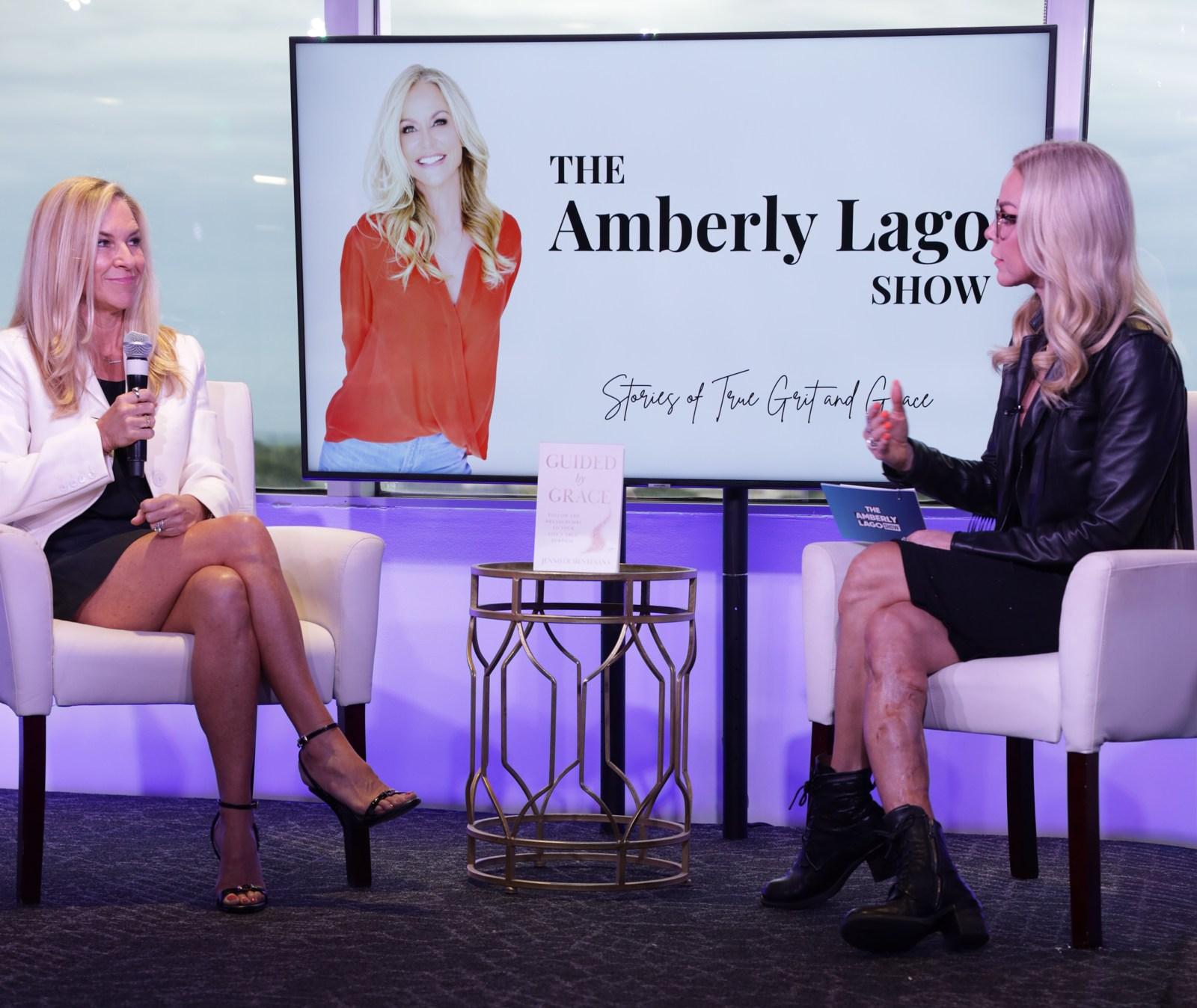
Season 1, Episode 26
The Power of Resilience with Dr. Taryn Marie
A conversation with Dr. Taryn Marie

About This Episode
If you really want to be more resilient, here ya go!
Here's what you will learn:
- 5 things to strengthen your resilience in the face of adversity
- Finding the courage to get out of an abusive relationship
- The new rules of resilience
- Ways to rest when you are anxious and overwhelmed
- The power of gratitude and generosity
- Guarding our mindset AND mindset hacks
- Focusing on endless possibilities
- What contributions we can give to others and the planet
Every time I talk with my friend Dr. Taryn, I feel better about my life and myself. Her positivity is contagious and her heart is pure gold. In today's episode, she shares her wisdom and expertise as she discusses the 5 practices she uses with her clients to build resilience.
Dr. Taryn Marie is the Chief Resilience Officer (CRO) and a corporate executive at a global Fortune 50 company. She is an executive coach, keynote speaker, author, Mom, athlete, international traveler, and philanthropist.
Her work at Resilience Leadership is all about supporting people in recognizing their worth and value, believing in themselves, appreciating their inherent strengths, recognizing their skills and talents, and teaching them to be more resilient so they can reach their full potential.
If you enjoyed this episode if would mean the world to me to see your feedback through a rating a review on Apple Podcasts.
Get in touch with Dr. Taryn:
Resources
Unlock your highest potential and start living the life you deserve!
Read the True Grit and Grace book here and learn how you can turn your tragedies into triumphs!
Thank you for joining us on the True, Grit, & Grace Podcast!
If you find value in today's episode, don't forget to share the show with your friends and tap that subscribe button so you don't miss an episode!
You can also head over to amberlylago.com to join my newsletter and access free downloadable resources that can help you elevate your life, business, and relationships!
Want to see the behind the scenes and keep the conversation going? Head over to Instagram @amberlylagomotivation!
Full Transcript
Welcome to True Grit and Grace, a podcast designed to empower you to claim your resilience and thrive through life's challenges. I am Amberly Lago, a mindset coach, fitness expert, and best selling author. Each week I'll dive deep with the world's brightest thought and elite performers to share tangible tools and practical advice to inspire you to keep your eyes on the prize and forge ahead. So get ready to conquer your fears, heal any trauma, lead with your heart, and elevate your life with grit and grace.
Hello, welcome back to the True Grit and Grace podcast. And as you know, we are all about resilience and I love sharing tips and tools on resilience with you. So today's guest couldn't be more perfect because she is the queen of resilience. Right here on the Show, I have Dr. Taryn Marie. She has done a pre and post doctorate in neuropsychology. She is the chief Resilience Officer at Resilience Leadership. She's an executive coach, keynote speaker, author, she's a podcast host, she's a philanthropist, she's a mom, she's an athlete. What doesn't she do really? But she's really right now, especially with what we're going through on a mission to support others in appreciating their strengths, to reach their full potential and really leverage their resilience to live a life of purpose. And so Dr. Taryn Marie Shiera is just such a dear friend of mine. I love you, girl. Thank you so much for being on the show. Welcome to the show.
Got a mutual admiration society going here. Yeah, I know.
We get to get in, we start talking, we get on the phone and we just can't stop talking. I could talk to you all day.
Same. I had to apologize to your husband the other day. Cause he couldn't, you know, he was calling. That was one more thing. One more thing. Please tell them I'm sorry.
Well, one of our mutual friends introduced us and it was like we instantly connected. And I love all that you share. And the first time before I ever got to talk to you on the phone, I watched one of your interviews and I was just like, my jaw was dropped the whole time because I was in such awe of you and what you share and you're so freaking brilliant. I just hang on your every word. So can you please tell everybody who's listening, like, how you even got started, how you became the chief resilience officer, like, this is what you do for a living. It's your passion. And you're fortunate you get to do and live your passion. So can you tell us how you got started and got to be where you are today?
Yeah, I would love to. So I'm going to tell the story in two ways. There's a story that I typically tell, and I'll tell you that story. And then there's also several more personal stories. And, you know, it's interesting. I was talking to someone the other day. You know, he was looking through my background and he said, were you so interested in resilience? Because when I was a competitive swimmer in high school, I was pretty good. I wasn't bad. I was going to like states and, you know, maybe thinking about nationals. And then the summer before my senior year of high school, I was diagnosed with thoracic outlet syndrome. My arms started going numb in swim practice. You know what it's like when your arm goes numb or your leg goes numb? It's like no matter what you do, you just, like, you just can't move it. And it's pins and needles. And so I just feel my arms going numb in practice. And that really, for a long time, was the end of my swim career, you know, as I knew it. And I had an exploratory surgery at Johns Hopkins in 2005 and was able to get back some of the vascularization in my arms through that surgery. So I'm back to swimming open water races. Wow.
I have to connect you with my friend Brian Mineo, who has been on the episode. I think he's like episode number eight or something. I don't know. I'll check. But he does open water swimming. He keeps trying to get me out in the water because that's a whole other ball game of swimming.
Yeah, it is. So I went from being a really promising swimmer and swimming for a decade to after my senior year, I had to completely stop. And the thing with thoracic outlet syndrome is I'll take my pulse for you. If you took my pulse down here, like resting, you know, you could have my pulse and if you put my arm up over my head before I had surgery, my pulse would completely disappear. So it's completely cutting off the vascularization to my arms and hands when I was swimming. And so, you know, he said, was the reason that you became interested in resilience because you went through this hard time? And I thought, I don't think so. But, you know, maybe I have to think about it, right? And then I thought about, I'm going to sound like a real hard luck case for a minute, you know, but then I thought about always knowing that I had some kind of, like, learning disability that made things harder for me. I was in a really lowest reading group until I was in third grade. Well, I was diagnosed with dyslexia.
Me too. I mean, I wasn't diagnosed with dyslexia, but I was in a lower reading group. And I just read my book for audible, and I swear I was like, maybe I have dyslexia. I can't even read my own book. I swear. I don't know.
I think that process not to over normalize it, because we can over normalize things, right? There are times in life where we want the grit and the grace of people saying, we know you had a hard time. Right. It's like when you have kids, really digressing for a moment. But it's like when you have kids and you're up all night, and then your friend comes to you, and they're like, yeah, I know that must be hard. I just got a puppy. And you're like, you know, so, yeah, puppy.
Okay.
And, you know, I used to get so mad about that. Like, oh, puppy's not the same. But, you know, as humans, we want to relate to each other. We want to relate to each other. And so my friend who has the puppy isn't trying to say, my life isn't hard. She just wants to. Or he wants to say, whoever. I understand. You know, I get it, right? So when I say, oh, I know what that's like, because. So my whole point is, I don't want to say that your whole experience wasn't difficult. And I think reading an entire book out loud for long days on end is taxing for anyone whether you have a learning experience.
Okay. Okay. So I'm. Okay.
I just want to say.
Okay, thank you. I feel better.
Good.
We'll see how it sounds, though. Okay.
This is all about.
So, you guys, this is why we talk for hours on end. Because we do this. So I'm gonna be quiet. So you can just go.
I hope you won't be quiet. So I went through graduate school, and I did the whole thing. And, you know, I had a learning disability the whole time I had a stalker in high school, you know, which we can talk more about if we want to. That.
Yeah. Because we've talked about this on the phone, but I've been stalked before, and it's really scary.
It's really scary.
You don't ever feel saf. You're always looking over your shoulder for me. I got to the point where I wouldn't leave my house. The curtains were always drawn. And then I didn't even feel safe in my own home. So, yes, please talk about that, because there's going to be somebody listening that is going through that experience right now, and they need to know how you got through it.
Yeah, good. I'll definitely talk about that. It took a long time for me to talk about that. You know, if I finished sort of the first line of questioning. And then, you know, I was also in a first marriage with my initial husband, and that marriage was abusive. And so I think for so many of us, we don't just face one challenge in our lives. In fact, if somebody gave us just one challenge, we'd probably be like, great, I can nail this, right? But I love Amberly. What you talk about wasn't just about you being in a motorcycle accident. It was about, then, the 34 surgeries that you went through and how you lost so much of who you'd been before, and you lost your livelihood for a period of time and you had to rebuild, right? So we go through these constellations of challenges, these complex challenges where it's not just one thing, one moment where we say, ah, because I'm in the lowest reading group or because it's scary for me to read out loud, or because I have this weird vascular diagnosis and I, you know, want to be a competitive swimmer, I become resilient, right? It's a continuum. It's facing a host of things.
It is.
And, you know, adversity doesn't discriminate. Doesn't matter who you are. We all go through hard times. And I think it's when we can get out of that mindset of, oh, it's only me. I'm the only one going through this. Why me? Instead of knowing that we all go through hard times.
That's right. Yeah. And I think it's so easy to ask ourselves that question where we say, why me? Right? Why is this happening? Why me? And then there's a professional surfer, and I forget his name. You might know who it is, Amberly. But he was surfing and got hit by a wave in a way that made him become paraplegic and he couldn't surf anymore. And he said, you know, I was asking myself, why me? Why me? And then one day I said, why not me? Right? Like, sure, we don't want bad things to happen to us, but the idea is that none of us are immune from challenge, Right? And so, you know, for me, lots of challenges in my life, which I am now Comfortable talking about. I hid them for a long time, which was. I think it was. It was a disservice to myself because I was keeping part of myself back. And it was a disservice to other people because I was demonstrating a picture of who I was that wasn't helpful. That said to other people, you need to be flawless and perfect in order to achieve. And so I think when we hold back the challenges that we faced and we don't share those with people openly, we send this message that we create an impossible standard.
Yeah. And you know what? Nobody's perfect. Well, I don't know anybody that's perfect. And people can't relate to other people who haven't gone through something. And when you finally meet somebody who has been in an abusive relationship, you go, oh, yeah, okay. We get each other, because I've been there, too. You meet someone who's been through a terrible divorce, you're like, oh, I've been there. I've done that, too. We connect on a deeper level. You know, our stories may be different, but there's that common thread where we can connect, and it's a stronger bond. And so I think it's important that you share at first with people who you really trust, because that's important, too. Not to just go, oh, let me just share all my stuff with everybody. Because there is a lot of healing before, for me anyway, there was a lot of healing and a lot of crawling into my little cave to heal and going to therapy and reading books and a lot of journaling before I could be open and talk about some things that I've been through.
Yeah, I think that's exactly right. You know, something that's been meaningful for me is I remember hearing Alice Siebold, the author, on npr. Gosh, it's probably been close to a decade and a half ago now, right when she wrote the Lovely Bones. Do you remember that book, the Lovely Bones? Yeah. And they made it into a movie. So beautiful. The Lovely Bones, about a girl. It's a bit gruesome, actually. Oh, there's a really beautiful story of healing with her family. It's about a girl who goes missing, and she's actually, I'm not giving away anything to your listeners. If you haven't seen the movie, this is a parent early on. But she's killed by a serial killer, and she goes to heaven and she watches her family from heaven. And that's what the book's about, is what happens to her family as she looks down on them from heaven. And Alice Sebold wrote another book, which was her own memoir, called Lucky, which was about her own rape and the rape of other women that she knew. And her personal experience, of course, as it does, influenced, you know, her in the writing of this novel, of this, you know, fiction book, the Lovely Bones. And I remember her being on NPR and them sort of saying, well, you know, isn't this writing cathartic for you? And I think a lot of people say that to me, too, when I'm writing, and I say, you know, writing is cathartic. That's true. But cathartic writing doesn't necessarily have a place or a space face in public consumption. Right. Like, if I'm going to write an article about one of the challenges or many of the challenges that I've been through, I'm in a place now, to your point, where I've done my own work, I've done my healing, and now I'm trying to write a compelling story now I'm trying to tell you the story in a way that you can relate to it. You know, I'm not telling the story to figure it out or to heal because I've already done so much of my own healing. And I think it's important for your listeners, for people listening, you know, that if you're thinking about telling a story, a resilient story, or a story of your own vulnerability, you know, for the first time that were early in your process of healing, if you will, I think it's important to choose people that you believe have earned the right to hear that.
That's powerful.
Thank you.
Yeah, I love that way of looking at it. Yeah. Because you are vulnerable if you're sharing a story where you've overcome something or sometimes when you're still struggling through something. So I like that.
Yeah. So choosing people who have earned the right to hear your resilience story or to hear your story of vulnerability, because those people's reaction to us. Right. And to you early on, it's powerful. Right. I mean, how we feel about ourselves and that story often hinges on how do those first couple people that we tell that story react. Right. And I always say if somebody doesn't react well, a parent, a sibling, you know, don't let that stop you. Right.
Yes. I couldn't agree.
The next person who you think has earned the right, because there are people who are going to have the capacity to support you. And if someone doesn't react well, it's not. Not about you, even though it feels like it's about you, it's about their capacity and where they are in this moment to be able to support you.
That's such great advice. Because it is hard when you open up and share something that maybe is scary for you or you're not sure how to handle it. And you go to someone and they don't do anything. Sometimes when they don't do anything is even worse because it makes you feel that you're not worthy enough to be cared for.
That's right. You know, it sends a message about our worth or our value. Right. Or if some, you know, if we feel ashamed, what happened? You know, I felt ashamed for such a long time that when I was getting my master's degree, I realized I had post traumatic stress disorder, that I met all of the diagnostic criteria in the DSM iv. That and I felt so ashamed that I had this mental health, you know, diagnosis right. Where I felt ashamed that the person that I was married to, you know, initially had been physically abusive to me. Like that was my fault. And so the initial people that we go to, I think oftentimes color how we feel about our story or ourselves when we first get the courage to do that. But then let me ask you, how
do you find the courage, speaking on abusive relationships? How do you find the courage if there's someone out there listening? Because it is so common, more common than we probably even realize. And I don't know the statistics, but of people that are in abusive relationships, whether it's verbally abusive or physically abusive, and sometimes verbally abusive is harder than the physical abuse. I mean, I've been both. And sometimes that verbal abuse is a little harder to get over. How did you find the courage to get out of an abusive relationship? Because I know for me there was a lot of shame there. I was scared, very scared. I didn't want anybody to know. How did you get out of that?
Yeah, gosh. What I've got to say is a precursor is for people who have not been in an abusive relationship from the outside looking in, it is so hard to understand how the person who is call it receiving the abuse. Right. And sometimes it goes both ways too. But oftentimes there's one person who is I'll call the aggressor. Right. And in my case it was very clear that very one sided in terms of the aggression. And it's so hard to think like how could anyone think that's their fault? You know, and I get that, I get that perspective. And yet also having been on the inside of one of those relationships, looking out, it's like the easiest thing to believe in an abusive relationship, that it's your fault. And, you know, why is that? I think as humans, we love to believe that we have a span of control. You know, we love to believe that we can impact our environment in meaningful and positive ways. And we can. And so I think when we're in a relationship with someone where they are abusive towards us, they are, you know, unkind, they are demeaning, they're degrading, whether it's physically abusive or emotionally abusive. I think our little human brain's so well meaning with the little brains, but, you know, I think it's our way of trying to control our environment and say, well, if it's my fault, if I'm the common denominator, then I should be able to create change. I should be able to make this better. I have agency or control in some way to try to change this. And so for a long time, or
just things will be different.
Yes, that's right. Yep. Because then, you know, I say this with all due respect, but I think people that are abusive, in my experience, it was with a man, they're a lot like Alzheimer's patients. And I mean this with all due respect, but, like, you know, when someone has Alzheimer's, right, they have these moments of lucidity where, like, things are really clear, you know, and all the kind of fog clears away and you really do feel like you've got that person back for a moment. And that also happens. I believe it happened in my relationship. Right. In abusive relationships, where he would have these moments of lucidity where he would cry and he would understand how he had hurt me and, oh, my God, how could he ever hurt someone that he loved so much? And he would be so embarrassed and so shattered, you know, that he had ever done that. And I would think, yes, you know, I got through to your point. It's going to get better, it's going to change, and then it doesn't, you know, so there's also continuous belief, right, that things will get better, you know, and for me, I was in graduate school at the time, and, you know, what happened was at home, I felt that he saw me as a sort of an abject failure. Right. I like to talk about, like, you know, in a sentence, right. If it was sort of not blank enough. Right.
Always that way. I remember with my ex, I was so skinny, I was like, I looked anorexic and probably was borderline anorexic at the time because I was like, well, I'm not skinny enough. And I remember being so thin, I knew that I was way too thin. And I remember one day he had gone off on, you know, just yelling at me. And I looked, I said, well, I won't ever be thin enough, will I? And he goes, no, you won't. That was a gift. Because it was like, okay. He actually admitted it. I will never be enough. Whatever it is, it'll never be enough. I can never fill the hole that he has. And he will never stop trying to control me and blaming me for things that I never entered my mind to do. And so I think it's a very common thing. And most of the time it boils down to the same thing of you will never be enough.
Not enough.
And so I was like, try to prove myself. Try to be better. Try to do more. Try to be a better mom. Try to praise him more. Try to look pretty. Try to fit in the little box that he wanted me to fit in. And it was prison. It was hell. And I would rather be. I remember by myself as a single mom, not knowing how I was going to pay my rent for this tiny little apartment. I had lost everything, all my savings, my car, my first motorcycle, everything. And I remember being the happiest I had been in a long time because I was free.
That's so powerful.
They're not going to change. We have to keep doing the best for ourself. And that does build resilience. When you can take a step forward every day and say, I'm going to have a little bit of courage to stand up for myself. I'm going to have some courage to get out of this, or maybe that day it's just courage to pick up the phone and call somebody and ask them for help. That's huge. If we can ask for help.
Yeah.
So you coach people and you work with leaders. You don't just work one on one with people, coaching them. You work with companies, corporations, and you teach leaders how to be resilient. And I would love to know the process. Like, if you go in and you say, okay, because I know you have five things that you teach people on how to be resilient and strengthen their resilient. Because I talk a lot about resilience. I am just dying to know. I listened to one of your interviews and I was like, okay, I can't wait to get to the point of what she says about what are those five things? And I'm like, oh, so I'm dying to hear them and share it with the audience about what are the things that we can do every day. Because right now, you know, I'm not sure this podcast won't air for a little while. And I pray to God that we are out of where we are right now. Right now, when we're recording, y', all, we are quarantined. We're stuck inside. My office is in my little home office right now. I was telling Dr. Taran, I've got sticky notes all over the house. Recording. Please be quiet, family. Recording. And process. And I hope that we're through this quarantine, but good Lord, all of us are going to need some tips, as many tips as we can to be resilient, because there are going to be a lot of us that are going to have to reinvent ourselves. We're going to have to pull up our bootstraps. We are going to have to get gritty and get through this. And I would love to know how we can do that. Tell us.
Yeah, absolutely. So I think part of this goes back to the question that you were asking earlier, which is, what was sort of that moment when I got interested in resilience? And despite the challenge that I've faced personally, I like to say that it was really my patients that taught me about resilience, my brain injury and spinal cord injury patients, people that had sustained a neurological injury that taught me about resilience in the first place. Because what we saw was they were coming in to the outpatient clinic after we'd seen them in the er, the icu, and we made a determination about what their prognosis was going to be, and then we'd see them in the outpatient clinic, and they'd be doing better than we thought. Not as well as we thought. Right. But, like, rarely were we really kind of, like, hitting that target, right. Of, like, giving people accurate information. And so, you know, what we did is we mined a whole bunch of data in this academic teaching hospital, and we looked at, you know, how different kind of demographic factors, if you will, influence people's rehabilitation outcomes. Right? And so we found things like if you have a neurological injury, if you have brain injury or spinal. Spinal cord injury, having a dedicated caregiver, you know, somebody who's keeping track of all the information, make sure you take your medication, get you to your appointments, right. That dramatically enhances. Right. Kind of the positive trajectory of your rehabilitation. Whereas if you've got small children in the home, Right. We all know those of us that have had or have small children in the home, they take a lot of work. Right? And so that often kind of diverts resources away from the person.
Okay, but I have to ask you. So for me it was the opposite.
Okay, tell me more.
Okay, so for me, not completely the opposite, but I have an incredible husband who basically was my caregiver when I came home from the hospital.
Oh, see, I always wanted to know this about your story. I don't know this about your story yet. Yeah, well, I didn't know where you were in life when the injury happened.
Yeah, we were newlyweds and I had a two year old. We got pregnant on our honeymoon. So Ruby had just turned two month before. And I was in the hospital the first time for about three and a half months. And when I got out, my husband became my caretaker for a little while because I had Ruby, who's 2, even though she was a little bit of a handful. And my oldest daughter was a teenager at the time. She was 15. And that is what actually helped me. It's what got me up in the morning. There would be days I'm like, I don't know how I'm going to get through the day. I'm in so much pain. How am I going to do this? And I would just hear her little voice and I'm like, okay, I got this. Whatever it takes. When I was in the hospital, I couldn't see her because I was in icu. But they said, if you can sit up in your wheelchair, we'll be able to roll you out. You can go see your daughter. So that was my motivation, that was my inspiration. That's what pushed me, pulled me through. So I think it can go both ways. Yes, it's hard work, but that's work. And that purpose is what I needed to get me going and get me out of my bed. And they're my biggest inspiration.
Yeah, I love that. What an incredible story.
But I think to what you're saying is like, yeah, if we have the help and support and yeah. To get us through it, does it makes a difference, the positive support?
And after I was working in the hospital and I completed my education and my fellowships, I thought like, okay, so this is so interesting. Right? Someone has a neurological injury and then we kind of know, like, what are the facilitative factors that are going to help them heal. Right. And create a more positive. Call it rehabilitation. And then, you know, we also knew a lot about the factors that detracted from people's rehabilitation. And I started to think, well, what about the rest of us? Right. Because, you know, based on what we were Saying earlier, we all experience challenge, and not just one challenge in our life or even just one challenge at a time, right? And so I started to think about this concept of resilience, and I thought, well, that sounds really powerful. I want to know more about that. So I looked it up in the dictionary, as you do, right? And I couldn't understand it. You know something? The definition was kind of circular, and it said, to be resilient is to demonstrate resilience, you know? And I thought, well, what does that mean? What are the tangible ways that we harness this concept? And so I started doing qualitative research, right? As someone who sort of grown up on psychology and neuropsychology and research, and I thought, well, let me just start doing qualitative research. And so I started asking people really simple. But what I thought was a really powerful question, which is, think of a time when you've effectively addressed a challenge. You know, what did you do to effectively address that challenge? Do you want to answer that question?
I love that. Yeah. Well, I know for me.
Yeah. Tell me.
I had to do it. Wasn't just, okay, I was stuck in the hospital bed. I went from being this elite athlete, owning a business and having a successful business at that, to all of a sudden, I'm in a bed with bed sores. I'm completely bedridden, and I'm being told that I'll be in pain for the rest of my life and it'll never be the same. I'll be permanently disabled. I was crushed. I was devastated. And it wasn't just what I had to do physically to learn to walk again, but it was what I had to do mentally and spiritually. And it was a long process. And I had to really first get down on my knees and pray and ask for a higher power to help me through it. And I know a lot of people are like, oh, I don't have a higher power. I don't believe in that. I believe that there's something bigger than me. I couldn't do it on my own mentally. I had to start doing things to shift my mindset, to really shift my perception, the way I viewed things, and started focusing on what I could do and what I did have instead of what I couldn't do and what I didn't have. So I got grateful. I counted my blessings, whether you call it, you know, hunting for things to be grateful for or looking for the silver lining. I wrote in my journal every day a list of things I was grateful for. I prayed I physically had to Have a lot of endurance. And I had to get gritty and I had to first suck up the pain and just continue to cowgirl up every single day. But then I had to learn to acknowledge and embrace my pain. You can't keep sucking it up because your pain will always show up and it demands to be heard. So I had to really learn to listen and accept, and then I can take action steps to move forward. And so it's a long process. And the thing is, it's not just that I did those things and I'm fine and I'm great. Everything's good. I have to wake up every single day and be willing to do the work. And I always say your hard work puts you where your blessings can find you. And it takes a tribe of people to help you along the way. Because I couldn't do it on my own. I needed accountability. I needed cheerleaders, man. Like people to be like, girl, you got this. Keep going. Girl, you got it. Because there will be plenty of people that will try to pull you down, even though they may not mean to along the way. But I had plenty of friends that would come over and their own way and looking from their perception and they would say, oh, God, what are you going to do? You can't be a trainer anymore. I don't know how you're going to be a mom. You can't even walk. What are you going to do? And you have to have a solid foundation so you can combat those kind of comments and my own craziness that I had going on in my head. Limiting beliefs. And so I believe that's something I have to do every day is the minute you have those limiting beliefs, what can you do to combat that? And so it's a process every day. It's getting up and showing up for yourself every day.
I love that. Just. Wow. I feel like every single thing you said was like a little nugget of gold.
Thank you.
Yeah. Everything that you've done is so powerful. I was really struck by your point around. It's not once and for all.
Right.
It's not like you're.
And I'm still learning, and I'm still learning. And that's why I was excited to have you on, because I love learning, especially from you. You've studied this. Yeah. So I'm like, okay, let's hear it.
Let's hear it. Yeah.
Yeah. Because you've interviewed a ton of people and asked them what they did. What is the most common answer that you got? Or what is something that you can say that percentage wise, most people said that they did this specific thing to be resiliency.
It's a really good question. I haven't looked at my data in that way because it's qualitative, right? It's about, you know, coding the qualitative data, not quantitative, you know, where they filled out a survey. But what I can tell you is in your story, I heard all five. You said all five of the practices. So I'll take them back. Really? Yeah. You hit all five.
Oh, did I leave the one important one out that I always leave out, which is rest.
Well, you didn't care because that's what
I always leave out. And I'm telling you, the universe screams it at me all the time. Places, things I do. My husband, because I teach pacer, which is perspective, acceptance, community endurance. And I had to make sure I wanted to call it pace. But rest is so important for resilience because we have to allow that time to recover. And I'm usually full throttle, man. I just want to go. I just want. I have friends that call me the Energizer Bunny. I just want to go. And people are like, how do you live in chronic pain? And I'm so passionate about life and supporting others to achieve their goals that I love going. And so my husband was always like, r. Amberly, you left out the R of pain. Horseback riding and the instructor were all on horseback. And the horseback rider is screaming, we're on the beach. And he's screaming, slow down, Amberly, slow down. And I'm like, everywhere. Go. Amberly, slow down. When I just recorded my audible book. Excuse me, could you slow down please?
Just listen.
So did I leave out that part?
You might have, you might have just glossed over it initially when you went through, but we came back and we really on it in a big way. We're learning, right? We're learning. Yeah, we keep learning. There's so many things I want to say. What I'll say quickly before I say the practices is rest is so profoundly important. And you know, I think we're in the midst of this coronavirus pandemic. And you know, here in Philadelphia, we're starting week two of going from non essential businesses and schools, you know, to only life sustaining businesses. And now today was the first day of the lockdown, right? Where you're supposed to be at home and not go out.
And it's weak too. Doesn't it feel like week five million?
Yeah, like day 837. Captain's log, you know and it's like, yeah, yeah, it's tough. But you know what? We're also hearing about sort of the ancillary positive benefits of this rest, you know? And I know you and I were talking about Jungian psychology and Carl Jung. And Carl Jung had this theory, if you will, of the collective unconscious, right? That we as humans are all collectively intertwined and connected. And one of the ways that we're connected is through this collective unconscious, right? That we all are deeply intertwined. And there's part of me that feels like maybe we all needed, like, a big global timeout, like a reset.
I think we all needed a little. Let's just do a reboot. But you aren't getting it, so we're gonna slowly shut you down a little bit more.
A little bit more now.
No, really, you have to stay home.
And I think your point about rest speaks not only to people individually, but really on a planetary level. I think about all the leaders, right, that I was coach and am coaching and working with. They actually all have the same concern, which is they're all exhausted. They all have way more to do than they can possibly do in a single day. Folks are flying all over the country, all over the world. When we travel, it lowers our productivity. Then they feel behind. There's a zillion emails. Nobody's getting enough sleep. We barely see each other. We don't have time to eat all the things. And so that rest and that coming back to center and finally having time for ourselves, you know? And you and I talked about, too, kind of going back to the abusive relationship piece. You know, what happens in abusive relationships. One of the ways that the person who's the aggressor controls, right, in an abusive relationship. And I'm very intentional, right, about not using the words victim and things like that, because I think, you know, language is power, and language creates our environment. But the person who's the aggressor in their relationship, you know, they control things by making your world really small and, you know, crowding out essentially the other kind of positive relationships and hobbies and experiences. And I know, for me, like, my own life was, in a way, I was being, like, abusive to myself in my life.
We talked about that, and it's so true.
I was crowding out of my own life, the life, you know, I wasn't cooking for my family because I was too exhausted or I didn't have time. So we were doing takeout. And every day I was thinking through, I'll only sleep four hours, and then I can get all this other work done, and I'd either be exhausted or sleep through my alarm and feel behind. But there was no in between. Right.
Everything you're describing is what I did. I'm like, I was lucky to get six hours. And, you know, I just interviewed Maye Musk today, and we were talking, and I said, yeah, I've been getting up every day. You know, I set my alarm. And she goes, why don't you try not setting your alarm? And I was like, ooh.
You're like, I feel convicted. Maye Musk, well done. You. Well done. Yes.
When Maye Musk talks, I listen.
We take notes.
Yep, that's right. And so I was like, huh? Wow. Yeah, maybe I'll try that. I don't know if I could do that, though. Okay.
Yeah. Baby steps. Baby steps. Just try it as an experiment. I always say when I work with my clients, you know, you don't have to do it every day. We'll just try it. We'll do one time as an expert experiment. Yeah. Okay. So the five practices, real quick. You said all of them. The first one is vulnerability. And, you know, the way vulnerability came up when I was doing my research is allowing our inside self, what we're thinking, what we're feeling, what our internal process is to match the outside self that we're showing to the world. Right? That's how I would define vulnerability.
I love that. That goes with my acceptance. Piece of pacer.
It does. Yeah, it does.
I love talking to you. Keep going, girl.
So it fits with it perfectly, right? And it's this idea. And why is that resilient?
Right?
It's resilient because when we're trying to maintain to selves, when we're trying to maintain how we feel on the inside, and then show the world a different version of ourselves. Right? It takes a lot of energy. Takes a lot of energy to be, you know, incongruent. Right? As we would say in my master. So when you align those two things, you save your energy, which is important, right. When you're in pain or you're going through other challenges. And then the other piece of that is. I think this is really key for us, too, right now, in this, you know, moment of global pandemic and coronavirus is when we allow our inside self to match our outside self. When we show people what's really going on for us, then we can get the help and support and resources that we actually need. Go to people and say, I'm really grappling with something right now. I'm really struggling. And people can come forward and help us. And we know that there are so many times the saddest stories, right, are when people are on the brink of taking their own lives, and there's such a disconnect between what's happening for them internally and what's happening for them externally. And they were just out at a party the night before, you know, and then they take their own life, and people are like, what? And that's a very extreme example. But there is.
Well, that.
My stepmother was that way. She. I lost her five years ago to suicide. And it breaks my heart.
You know, we can be incredibly savvy about hiding this internal part of ourselves. And it's frightening. It's frightening to going back to work.
It's exhausting.
It's also exhausting.
It's exhausting to live a double life. I did it after my accident. I did it for a while, and it is exhausting. And once you accept what's going on, where you are on your journey, it's like, oh, it's a weight off your chest. It's freedom. Because you're like, okay, the gig is up. I don't have to pretend anymore. I can just be me and it's okay now. I can take steps to get better.
That's right. It's a very much like, the truth will set you free moment. A lot of people have said, you know, Taryn, why did you want to tell the truth about your diagnosis of post traumatic stress disorder? And why did you want to tell the truth about, you know, being in this abusive relationship? And. And I said, because I got so tired of hiding. I got so tired of trying to keep part of myself. You know, again, word apropos for where we are right now. Like, I was quarantining part of myself, you know, keeping it sequestered away. So that's vulnerability, which you spoke to. You also spoke to the second practice, which is productive perseverance. So productive perseverance is the intelligent pursuit of a goal. And it kind of has two components to it. One is maintaining the mission. Right. And the other is knowing when we need to pivot and when we need to adjust. And a lot of people ask me, this might be your question, too. You know, how are grit and resilience related to one another? And grit is the maintain the mission kind of half of the practice of productive perseverance. It's staying the course. It's putting our head down. It's going after the thing no matter how hard it gets. Like, when you're trying to, you know, rehabilitate after a really difficult injury. And then there's also course corrections along the way, right? Where we say, you know, what the market's changed or the environment or the landscape. And so I need to adjust and go. Which.
That's what I'm doing right now. It's a lot of pivoting, a lot of change going on right now. And I think a lot of people are really trying to figure things out, like, well, we'll see. We'll see what's going to happen. What's going to happen with clients, with businesses. I know for me, I'm pivoting on my course doesn't feel right. And I think a lot of times we really need to listen to our gut because our gut doesn't lie and listen to that. And this time is a perfect opportunity to be still and listen, to stop and just listen and connect with our soul and our hearts and pivot on some things if we need to pivot.
Yeah. I love everything that you said and what you've done is you've teed up. The third practice for me in the most beautiful way, better than I could have said it, which is the third practice of particularly resilient people is connection. It's first connection with ourselves. Right. Trusting our gut. I love how you said that. Listening to the still, small voice within ourselves, not allowing that to be drowned out.
Right.
And then also the connections. So the internal connections that we have, but then the connections that we have externally. And so, you know, you talked about the communities that you created around you, you know, to support you in the communities that you still have today to support you. And so being able to find that sense of connection to ourselves, to deeply know ourselves and then to also be deeply connected with people outside of us. Right. Who play a supportive role, and there's no kind of reciprocity.
I love that.
Yeah. And now it's more important than ever. I was talking to a couple of friends, and, you know, when you think about survivalism, right. You know, you think about somebody like, out in the woods with, like, some flint, and they're, like, starting a fire and they've got, like, a bow and arrow, like Katniss style from the Hunger Games. Oh, yeah.
We watch Naked and Afraid, that TV show we're all about Naked and fr. Actually, the TV show Survivor, the producers called me to ask me if I wanted to be a contestant on Survivor.
Really? Oh, my gosh. You gotta do it.
No, I was like, hell, no. I spent real life trying to survive for a long time. I do not need to do it. I've been there. I done it. I don't need to be on TV doing it. I did it already. Thank you, but no, thank you. I think I'll sit down at my dinner table and have dinner and not try to hunt my food.
But, yeah, yeah, you'd be so good on that show, though. Seriously, you would clean up. No one would ever vote you off the island.
I don't know. Somebody told me that everybody vote me off. So, no,
I would have an alliance with you. I'd be like, amberly and I are cool. And then I'd find out that I was leaving, but I would never vote you off the island. I like you, girl. Oh, my God. I wouldn't be able to imagine my island without you. Oh.
So I'm taking notes over here. I've got vulnerability.
Wow.
Connection.
Just took notes from Maye Musk, and for me.
Oh, my gosh. Yeah.
I feel so honored. I'm the one.
I'm honored, girl.
May Musk levels. I'm gonna tweet this.
Oh, my God.
Yeah. So for those of you that are keeping track at home or taking notes, we're on practice number four, which you also spoke to, and it's the practice of gradiosity, which is a made up word, because I really wanted to capture what I was hearing from people in my qualitative interviews around the power of gratitude, which you spoke to, and the power of generosity. And, you know, gratitude is all about in the midst of a challenge, being able to see the good in it. There's lots of really good research, as I'm sure you know, and many of the folks listening, that when we keep a gratitude journal like you did, it rewires our brain, right? We have this level of neuroplasticity in our brain where the neurons can rewire and make new connections, and we can even grow new neurons. Say that four times fast.
And.
And so when we have a gratitude journal, we start to look for what's right with the world as opposed to what's wrong with it. And so to be able to see in the midst of our challenge, even if we wouldn't have chosen that challenge, right. I wouldn't choose to have a stalker again and come down with two decades of ptsd. And you wouldn't choose to be in a motorcycle accident and have gone through what you've gone through. But given that that has happened and it can't be reversed, right? Being able to see the good, that's Come from it.
I can sit here and talk to you. I never would have imagined, you know, that I would be doing a podcast. And the best part of my whole journey is the connection and meeting other people. It's the best part, you know? And so as I sat in a dark hospital room, there was a moment when I thought, okay, I have a choice here. I can go down that road of despair, or I can do whatever I can to start thinking differently. And that's when somebody had brought me a little journal to the hospital. I wrote down, and I think, you know, I didn't know this as a kid growing up in the South. You know, you're taught manners. And we always wrote thank you notes for everything we got. If it was a gift or if it was a kind gesture, we always either made a phone call, but we always wrote thank you notes for gifts. And so for me, I had a lot of people that were bringing me food or flowers or gifts to the hospital. And a lot of times I was so drugged up from surgery after surgery after surgery, I would write down in my journal who brought me what because I didn't want to forget to write them a thank you note. And I noticed as I was writing down who came to visit me, what nurse saw me that day, that it was really shifting my thinking to. Instead of staring down at my leg and wondering if today was the day they were gonna cut it off, I was thinking about, wow, isn't it nice that my friend Karen brought me chocolate? And I sure like that Nurse Dorshay. And, you know, wow, look at the view I have out of the hospital room. It's a beautiful day. I don't get to go outside, but I will someday. And, wow, it's so nice that this person brought me flowers. But all of a sudden, I was filled with gratitude. And little by little, it became a practice, and I would write down every single day. And that started out from my mom teaching me to write thank you notes. And so I am big on thank you notes for my kids. If they get gifts, gotta write them a thank you note. And they don't always like doing it, but it teaches them. And in fact, every night, my daughter, we get in bed and cuddle every night. We have a big glass jar that sits on the nightstand, and it says gratitude jar. It's actually my girlfriend has a company called Gratitude Glass Jars, and she actually sent me a jar, and we have it on the nightstand, and we used to talk about what we were grateful for every day before we went to bed. Now we actually write down what it is that we're grateful for and we put this little note in the jar and you go to bed on a positive note. Even though there's crazy stuff going on in the world, what's the best part of the day? We write it down and then we wake up and I get to write my journal. What I'm grateful. So it's really good practice. Even if you don't have a set schedule right now for somebody who's listening and you might not have your usual schedule right now, it's really good to get in that practice of a routine to help you mentally cope with whatever adversity you're going through right now.
I love everything that you shared there. And I would reinforce what you said in two ways. I'd say one, I think gratitude is a way of taking back control of our environment. You know, we're going to feel like for a period of time here that we've lost control of our mobility, which has been a fundamental human right for us in the United States and many other countries around the world. And so, you know, when we engage. And I love how you shared your practice of gratitude because people can do just that. It's not difficult. You don't need anything, right. And it gives us a sense of control back, a semblance of control where we look around and we feel start thinking about what's going right instead of what's going wrong. And to your point earlier, it's also a choice and there's power and choice, right. We also are going to be in a place in a moment where we get to decide how we want to think about what's happening to us, the meaning that we are going to personally make of this situation. And something that I've been talking a lot about is finding purpose in the pause. Because I think when I look at countries like Italy and when I look at other kind of areas of Europe that are a bit of ahead of us on the flattening of this curve, you know, I hope I'm wrong, but you know, we're not talking about two weeks of schools being closed. We're talking about a quarter, right? We're talking about kind of figuring this out for at least 90 days and a lot of kind of high density population areas. And we're going to feel like some of our choices have been taken away. And so our opportunity from a resilience standpoint and from a gratitude standpoint is to say, what choices do I still have and how do I exercise them? And one of Those choices that we have is our mindset. We got to guard our mindset judiciously and making the choice to scan our environment and say, even though I wouldn't have chosen this, what is the good that I can find in it?
Mm.
Because there's plenty of good in it.
There's plenty of good.
Oh, my goodness. I have finally been cooking home cooked meals again. My family's glad. Well, they're glad for now that I'm home. But no, my family's glad because I've been traveling for the past two years.
They're like, look, no one's gonna vote you off the island. We established this earlier.
Oh. But they're happy for now I'm home. My daughter and I have been gardening, we've been playing games. We've been on the floor wrestling. My husband and I work out together. I put together some exercise stuff in the gym or in the garage downstairs. And we made. Also known as the gym, now known as man cave. I've kind of taken over. It's the gym now, but there's a lot of good. And I've been able to take a breath and it's really. I think it's going to do for a lot of people is you said, I love how you said, find purpose in the pause. My girlfriend actually has a pause symbol tattooed on her wrist. And I keep thinking, I gotta get me one of those PAWS tattoos to remind me to pause, to remind me to rest.
This is the rest. This is the rule. Be still.
Be still and really think about what is important to you. What is your purpose? Are you living your purpose? You know, what are you doing to live your purpose? I think we can all take a chance, have a moment to really focus on that.
And I think what's going to come out of this for a lot of us, what I'm hopeful about is, you know, really kind of centers around the fifth practice, which is the practice of possibility. And I think we've all been so busy and all had so much going on and we've been going at this kind of frenetic pace that it's this incredible moment to think about what's possible in our lives. And I know so many people, and I know you know, so many people who are really taking a step back and we're taking stock of our lives and we're taking stock of the way that we live and the food that we eat and the interactions that we have. And we have this, you know, beautiful sort of unanticipated moment to say, is this the way that I want to live my one wild and precious life. This is how I want it to go. Because the possibilities are endless. And think about our own resilience, this practice of possibility, being able to see opportunity where we may not have seen opportunity, or being able to see a way to achieve a goal or get to, you know, a place when an obstacle or a roadblock is thrown up in our path. And it's also about dreaming. You know, I have a good friend, and I think you know him as well, Brian Johnson, who does the Dreamer series. And he's all about helping people achieve their dreams. And, you know, it's really easy to forget about what our dreams were, what we wanted, we wanted to be. And so this idea of purpose in the pause can also be looking at what are the array of possibilities for my life and do I want to keep doing what I've been doing? Because I have a choice and I can do something else. And there's other possibilities, other dreams that maybe toward.
Oh, that's beautiful. Love that. Thank you so much for all that you have shared and for all of you that are listening, you can find her on Instagram ryrenmarie. But I want you to tell everybody where they can get your books, where they can find you the best place to find you. So can you share that with everybody? And it'll be in the show notes too. So if you're listening and you're like, oh, no, I missed that. It'll be in the show notes, don't worry. But could you please tell us?
Yeah.
So right now I think we can all ask ourselves, what is the contribution that each of us can bring forward in this moment? We all have at least one thing that's incredibly valuable to contribute to our friends, our family, our communities, our planet right now as we take this pause with the virus. And, you know, for me, having studied resilience for the last decade, I felt like, you know, wow, there's really no better time to be talking about resilience than where we are right now. And so I'm in the process of publishing a book called the New Rules of Thriving in a Uncertain and Virtual World. So it really takes the five practices of particularly resilient people and applies it to, you know, what happens when things don't go your way or things are really different than what you had imagined. So we're gonna have a pre sale up on my website probably in the next month or so. Ww.resilience with a C. Resilience-leadership.com I'm on Instagram a lot, Facebook quite a bit. And I look forward to seeing you all there. And you'll know it's me because you know, I will have posted something on Amberly's page about what I loved about what she did. You can also find us that way because we're having our online admiration society.
Yeah. I love you, girl. Thank you so much.
Thank you. This was so fun taking the time. I love doing this with you.
Thank you. I just appreciate you sharing your wisdom. And thanks for taking the time to be here and can't wait to share this. Love you.
Love you. And let me just say thank you for creating all of this because you are helping so many people. You know, you having the bravery and the courage to go through what you have gone through and then to somehow. And I don't know how you do this, but I'd like to learn. I'm going to stick around to have the reserve that you have at the end of the day to be able to help as many people as you help. You know, being in pain as you are, I think it's just incredible. And you are such a beacon of hope and light for anyone who's going through anything difficult, anything painful, whether it's emotionally or physically. You're lighting the way for people and you give us all hope that life can get better and we can continue to pursue our dreams and make a difference no matter what happens. So thank you for that.
Thank you so much. Well, I think it helps when you have a purpose in connecting with other people and when you can help someone else and be of service. That is a gift to me. You know, it makes me feel good. So I'm happy to be here. I love doing the podcast, still figuring out technology, to be quite honest with you, so it always scares me a bit. But I'd say jump through those fears. Go for it. Get out of your comfort zone. And I'm doing it. So here we go are. Thank you for your kind words. I appreciate you.
I appreciate you.
Thank you so much for joining us this week on the True Grit and Grace podcast. Don't forget to hit that subscribe button. And it would be so awesome if you rated and maybe left a review. That would help, too. And also I have some exciting news for you. If you are ready to learn a mindset that will get you through any challenge, ready to really transform any limiting beliefs, and finally find the wellness routines that work with your lifestyle and keep your body healthy and thriving, you're in the right place. You're hearing this for all the right reasons, because it's your chance. Your chance to join. Join right now. It's a 12 week course. It's so much fun because we're going to go live in a webinar with plenty of time for Q and A. It's called you'd Unstoppable Life Mastermind. And there's going to be a daily mantra and a like minded community to support you along your way to reach all those goals. So head over to amberly lago.com mastermind and sign up now. Okay. Have a great week and I hope to see you in the Mastermind.
Pain to purpose to joy.
Never Miss a Conversation
New episodes drop regularly. Subscribe on your favorite platform and never miss a conversation.