


Season 1, Episode 56
The Power of Mindfulness with Dr. Shauna Shapiro
A conversation with Dr. Shauna Shapiro
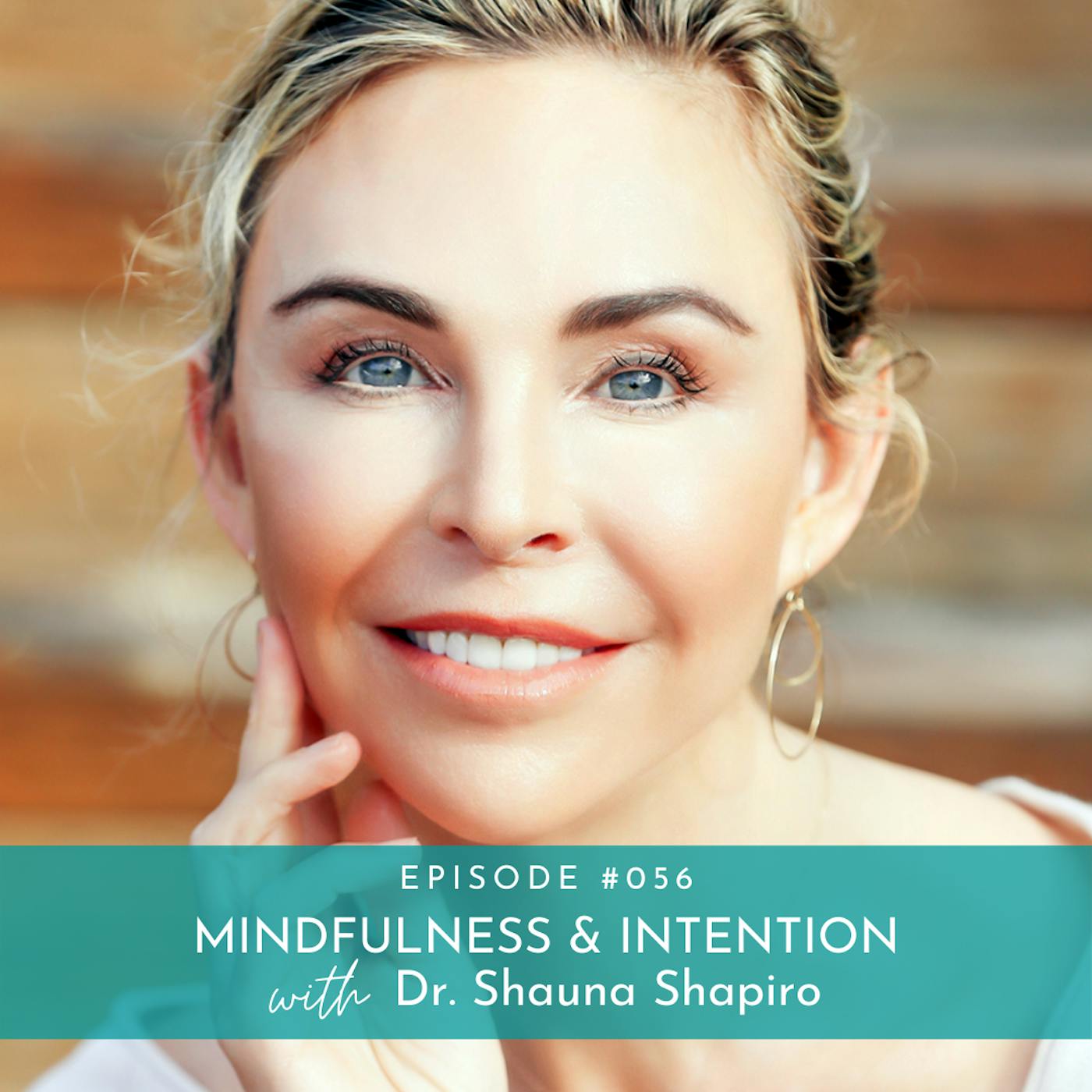
Watch This Episode
About This Episode
"Intention is setting the compass of your heart."
This year has been a test for all of us to keep calm, remain mindful, and listen to our inner wisdom. I knew it would be a powerful to talk with one of the top leaders on mindfulness to help us remember how to do this.
Shauna Shapiro, PhD is a best-selling author, clinical psychologist and internationally recognized expert in mindfulness and self-compassion. She is a professor at Santa Clara University and has published over 150 papers and three critically acclaimed books, translated into 16 languages. Shauna has presented her research to the King of Thailand, the Danish Government, Bhutan's Gross National Happiness Summit, and the World Council for Psychotherapy, as well as to Fortune 100 Companies including Google, Cisco Systems and LinkedIn. Her work has been featured in the Wall Street Journal, Mashable, Wired, USA Today, Dr. Oz, the Huffington Post, and the American Psychologist. Shauna is a summa cum laude graduate of Duke University and a Fellow of the Mind and Life Institute, co-founded by the Dalai Lama. Her TEDx Talk, The Power of Mindfulness, has been viewed over 2 million times.
This conversation will remind you of the core truths about the power of mindfulness. I'm excited for you to re-connect with your own inner peace and set an intention to keep it that way.
Here's what you will learn:
- How Shauna found her calling in mindfulness (2:31)
- The importance of paying attention with kindness (7:41)
- Self-compassion practices to rewire your brain for resilience(13:23)
- The steps to cultivating more gratitude in your life (20:25)
- Shauna walks us through how to shift your perspective (25:52)
- Shauna's three pillars of mindfulness (28:41)
- The magic of five words "Good morning I love you" (33:41)
Get in touch with Shauna:
Mentioned in this episode
Unlock your highest potential and start living the life you deserve!
Read the True Grit and Grace book here and learn how you can turn your tragedies into triumphs!
Thank you for joining us on the True, Grit, & Grace Podcast! If you find value in today's episode, don't forget to share the show with your friends and tap that subscribe button so you don't miss an episode!
You can also head over to amberlylago.com to join my newsletter and access free downloadable resources that can help you elevate your life, business, and relationships!
Want to see the behind the scenes and keep the conversation going? Head over to Instagram @amberlylagomotivation!
Audible @True-Grit-and-Grace-Audiobook
Full Transcript
Welcome to True Grit and Grace, a podcast designed to empower you to claim your resilience and thrive through life's challenges. I am Amberly Lago, a mindset coach, fitness expert, and bestselling author. Each week I'll dive deep with the world's brightest thought leaders and elite performers to share tangible tools and practical advice to inspire you to keep your eyes on the prize and forge ahead. So get ready to conquer your fears, heal any trauma, lead with your heart, and elevate your life with grit and grace.
Hi, I'm Amberly Lago and today on the Show I have Dr. Shawna Shapiro. She's a clinical psychologist and internationally recognized expert in mindfulness and self compassion. She has spent two decades studying the benefits of mindfulness and published hundreds of papers and several critically acclaimed books. Her TEDx talk, the Power of Mindfulness has been viewed by millions and I have to say, it is absolutely one of my favorite TED talks out there. She's a professor at Santa Clara and a fellow of the Mind and Life Institute, co founded by the Dalai Lama. Her book Good Morning, I Love youe, I have it right here. Mindfulness plus self compassion practices to rewire your brain for calm, clarity and joy is a life changer. And I really think it is so needed right now with the challenging and uncertainties and just the challenges in the world that we have right now. So welcome to the show and thank you for being here.
Thank you. Amberly. What a wonderful introduction.
Oh, well, you are amazing. I am so honored to have you here. Before we started recording, I was telling you how I have been listening to some of your talks and having my family listen. I'm like, you got to hear this. It's so good. And I'm not like a great reader. Like, it's hard for me to sit and read unless it's a really good book. And I was telling you before we started recording that your book is one of those that you don't loan out, you just buy it for somebody else because you know you want to keep this and go back to it and touch on it. There are so many good tips and tools. I didn't realize just how much more self compassion I needed in my life until I started reading your book and I was like, oh, it was an eye opener. But first, I love how you have turned a tragedy into a triumph and I would love if you could share just how your journey began because it began at a young age when you were a teenager.
Well, first, thank you so much for all those kind words. The book is really special to me because it really is my life's journey through kind of my personal experience and then through the science. But it started like you said, when I was a teenager. I was 17 and I had spinal fusion surgery. So I had a metal rod put in my spine, and I went from this kind of healthy, active teenager to lying in a hospital bed unable to walk. And I remember, you know, the tremendous amount of rehabilitation and the physical pain.
But what was really hard was the
emotional and mental pain, feeling so alone and isolated and this fear of the future, like, will I ever go to college? Will anyone ever love me? This kind of cascading fears. And it was at that point I discovered mindfulness. And it gave me hope, like, there's a pathway out of this suffering and out of this despair. And as I started practicing, things started to change. And eventually, when I was healthy enough, a few years later, I went to Thailand and went to a monastery for two weeks to really practice meditation and really understand mindfulness. And the experiences I had at that monastery, you know, they're still with me. It's over 20 years ago, but they were so profound that I came back to the US and decided to get my PhD and study mindfulness because I wanted to understand the science behind it. Like, how did it transform me in such a powerful way, not just emotionally, but physically? And that really led to this last 20 some years of being a professor and studying and writing about mindfulness.
Well, I really love that, and I'm a firm believer in, you know, we can change so much of our life, our circumstances. We, you know, we can't always plan things or things don't always go as planned, but we can really transform our life just. Just by the way we think about things. And I have to say, watching your TEDx talk, I laughed when I heard your story about first being with the monks and some of the things that you experienced because, you know, you're like, it's a serious topic and you're talking about mindfulness. But it wasn't so easy at first for you to really practice mindfulness. Will you tell us a story about, like, when you were first learning to be.
I'm so glad you're bringing this up because I don't want to in any way imply that it's easy or that I just kind of naturally started meditating and my life was perfect. It is a struggle and it's challenging. And the story I told is, when I first got to the monastery, I had all these ideas about meditation. Like, I was going to be at peace and immediately blissed out. And my mind would be tranquil. And I sat down to meditate and they gave me the instructions to feel my breath and. And my mind just. It just kept wandering off. I couldn't stay steady. And no matter how hard I tried, it kept flitting into the future of the past. And I really started judging myself. Like, what is wrong with you? You're terrible at this.
You're a fake.
And then I started judging not just myself, but everyone around me, even the sweet monks. I was like, why are they just sitting here? Shouldn't they be doing something?
That's what I was laughing about. I'm like, shouldn't you be doing something?
And luckily, a monk from England arrived who spoke English. And I asked to speak with him because, you know, the rest of the monks spoke mostly Thai. And I'd just been there in silence for five days. And as I shared with this monk my struggles and my frustration and my impatience, he looked at me and he said, oh dear, you're not practicing mindfulness. You're practicing judgment. Impatience, frustration. Then he said these five words that I'll never forget. What you practice grows stronger. What you practice grows stronger. And we know this now with neuroplasticity. Our repeated experiences, our thoughts, our behaviors, our emotions, they shape our brain. So whatever you're practicing is growing stronger. If I'm meditating with judgment, I'm growing judgment. If I'm meditating with frustration, I'm growing frustration. And he helped me understand that mindfulness isn't just about paying attention. It's not just about being present, which is what everyone thinks. It's about how you pay attention. And you have to pay attention with kindness.
Especially now.
Especially now because we hold ourselves to these unrealistic expectations and then we beat ourselves up when we don't live up to them. You know, especially now if you haven't become vegan or you haven't like gotten on an exercise program, or you're not meditating two hours a day, or you're not the perfect mom that you not doing something right. And that's what really struck me when I came back from Thailand and I got my PhD. I became a clinical psychologist and I started working with a lot of different people. I worked with women with breast cancer, and I worked with stressed out college students and high level CEOs. And what most struck me was everyone was talking about the same thing, right? This sense of, I'm not good enough. This judgment, this criticism, this shame. And I knew what they were talking about, you know, I felt it too. And so I really started studying the science of shame. Like, what happens? Do you become better? Do you start exercising more? Do you become a better person if you judge yourself and beat yourself up? No. Shame doesn't work. Shame literally shuts down the learning centers of the brain, and it robs us of the resources we need to make these changes. And that's why I got really interested in self compassion. It wasn't until years after the monastery that I realized mindfulness was about paying attention with this attitude of kindness. And what kindness does is it bathes our system in dopamine. It turns on the learning centers of the brain, it turns on the motivation centers of the brain. So it gives us the resources we need to change. But it's kind of weird, right? You know, you make a mistake or you do something wrong, your first response isn't to be kind. And yet it's. The radically effective response is when I'm kind to myself. For example, if I snap at my son and then I go beat myself up for not being the perfect mom, it actually keeps me locked in that behavior. If I say, you know, sweetheart, darn it, that wasn't how you wanted to act and you're under a bit of stress, and I take a breath and I have compassion for myself, it gives me the energy to go and repair things with him and more importantly, to learn how to do it differently the next time.
Yeah, and, you know, I just had something come up this past week where I was giving a big presentation to all the employees of lax and technology is. You know, I've said this before on the podcast, but it's scary to me because it's all so new. I spent most of my life on the dance floor and the gym floor. And then, you know, I completely changed my career and had to go, oh, and now so many of us are doing things virtually, even the kids are doing, you know, my daughter's doing school virtually. And so I was giving this big presentation, and I'm used to if I have slides, I give it to the event organizer, and all I have to do is click a button. They set everything up. This was. I had to, like, get everything prepared. Then when it came time for me to talk, I was going to share my screen. And lo and behold, the slideshow did not work. And I am telling you, I have beat myself up over and over about that situation to the point where I was like, you know what? Maybe I did. I had such shame about it that I wanted to hide under the covers. And I actually thought, you know, maybe I'm just never going to speak again. Maybe this is it, I'm done. And I thought about what you shared about the kindness and compassion. And I thought, if I had a friend that that happened to, would I be beating her up saying, oh, yeah, you are just not smart enough. Maybe you're just not good enough. You're just not cut out for that. I would not do that. I would be so kind and compassionate and I would see how I could help her. But I wonder why it is we don't do that for ourselves. Like, I know I can beat myself up pretty good. Why is it so hard to practice that with ourselves or for me anyway? It's really hard.
It's not just you, it's all of us. And you made such an important point, which is, and it was so wise of you to think about how would I treat a dear friend who this had just happened to, who is facing this similar thing? And that I found that's kind of the hack, that's how you start to turn toward yourself with kindness, is to start to imagine what would you say to someone you love who was suffering, who was facing the same thing or made the same mistake that you did? And it was interesting. When I first started practicing self compassion, I would kind of imagine like, what would my grandmother say? Or what would my best friend say? And it didn't work at all because I was like, yeah, whatever. But when I imagined what would I say to my best friend, what would I say to a loved one? All of a sudden my heart softened and I was like, oh. And then I could bring that back to myself. So that's really the first step of developing self compassion is first to be mindful of it. Right? So you were mindful, you were in suffering, right?
You felt ashamed.
I was suffering, yeah.
I am suffering.
The second step, though, is to imagine a dear friend in the same place and bring that same kindness to yourself. And it just like, it like flips a switch. And you know, for most of us it's hard and it feels awkward. And so what I say to people is just see if you can bring in like 5% more, you know, 5% more kindness. It doesn't have to be like the whole thing. It's just starting to cultivate that neural pathway of kindness.
Okay, well, there's something. I know you went through a divorce before and you started doing a practice that your yoga teacher, I think it was your yoga teacher that taught you. And that's basically the Book. Good morning. I love you. Can you walk us through that experience, like what you learned and how you got through that process? And is that what inspired you to write the book?
Absolutely. And what I want to make really clear, you'll remember back 20 some years ago, this monk explained to me that mindfulness was about paying attention with kindness. My divorce wasn't until about 15 years later. So I want people to know that it's okay. It's hard. It's hard to really get it. The mind tells such a strong and compelling story that we need to beat ourselves up. And that's really why I bring the science to people, because I want to convince you it's not the way. So my story was after getting divorced. It was a really challenging time. My son was three years old and I was terrified that I had ruined his life and also had just a tremendous amount of judgment and shame that I was a psychologist, I was a professor, I was a meditator. Like, why couldn't I make this work? And during that time, one of my teachers said, I think you need to start carving out these pathways of self compassion. I want you to say, I love you, Shauna, every day. And I was like, no way. It felt so inauthentic, right? And she said, how about just saying, good morning, Shana when you wake up, you know, she said, put your hand on your heart. It releases oxytocin. It's good for you.
So just putting your hand on your heart releases oxytocin.
Just placing your hand on your heart releases oxytocin, which is kind of the feel good hormone when you are breastfeeding, when you are, you know, making love, when, when you're even just when you get a hug, but you can give it to yourself.
Oh, I love that. So many need that right now that aren't even able to be around other people or hug other people. Just put your hand right on your heart. I'm going to walk around doing that all day.
I do. My son rolls his eyes, he's like, oh God, there goes mom again. But there's this comfort of putting your hand on your heart. If you're listening, you might want to try right now. You might as well. It releases oxytocin. So she kind of won me over with the science. Just like, I hope we're winning you over. And so the next morning I woke up and I put my hand on my heart and I took a breath and I said, good morning, Shauna. And it was kind of nice, right? Instead of the avalanche of shame and judgment and fear. I just greeted myself like you would a friend. So I kept practicing. And a couple months later, it was my birthday. And it was my first birthday that I was alone. I didn't have my son or my husband, and I was completely alone. And I remember waking up, I put my hand on my heart to do this practice, and an image of my grandmother came to my mind so strongly. And all of a sudden I said, good morning. I love you, Shauna.
Happy birthday.
It was as if the dam around my heart burst and this love came pouring in. I mean, I get chills.
You're making me cry.
I could feel it, Amber. I felt. I felt my grandmother's love. I felt my mother's love.
I felt my own self love. Really?
I think, beautiful. Wow. And, you know, I wish I could tell everyone, like, it's been a blissful self love journey ever since. And that's not true. There's still judgment and frustration. But what is true is that that neural pathway was established, and I trust it. And I know I can get back there. And so I practice every single day. And, you know, some days I put my hand on my heart and I just. It feels numb or I don't feel anything. Some days I feel awkward. But many days I feel this profound love. And what's been amazing is as it has evolved, it's kind of started to spread out. So I would say, good morning. I love you, Shauna. And then I would send it out to my son, Jackson. And then I would just. Whoever popped into my mind, I would start sending it to them. And over the years, I've shared it with my students and with, you know, with my clients and then with, you know, millions people through the TED Talk. And I get millions.
Millions.
Your.
Your TED Talk is like millions of views. I looked at that, by the way. I was like, oh, my God, it's millions of views. So it's amazing.
And I get these letters from people and from children.
I get these little videos of them saying, good morning, I love you. And these stories of how it's changed people's lives.
And I believe it.
Because whatever you practice grows stronger. And if you're planting these seeds of self love, they're going to grow.
They're going to grow.
Well, I love that. And in your talk, I love that you say, you know, try it tomorrow. Say good morning. And then if you're brave, say, good morning, I love you. And that was powerful. That's so powerful. And that just must fill your heart with joy to get these, you Know, letters that you have changed people's lives.
It's been amazing. Yeah. In fact, I recently got a letter. There was one woman who said she had watched the TED Talk and was at the hospital with her son who was having brain surgery. He was a young, I think, 12 years old. And she said it kind of got them through because she would say it to herself when she was so afraid and so alone, and then she would say it to him. And, you know, she said when they left, left the hospital and in his recovery and he's actually doing much, much better now, she said it's just become a practice in their family. Like, that's the anchor, and it starts their day with this sense of connection and beauty instead of fear.
Yeah. Well, I love that. And I love that you said a couple of things. You said it becomes a practice. And you've also said a couple of times about how it's not easy. It's not something that all of a sudden, you know, you just wake up and you're happy, joyous and free. It's like something that. To practice. And that's the same with, you know, I speak on about resilience a lot, and it's not like it's something that I have to work on every day. We have to. It's kind of like going to the gym. If we want to get stronger, we go to the gym, we lift some weights, work out, get our muscles stronger. It's the same thing I feel like with, with mindfulness. It's something that we have to work on every day and really cultivate that. And you do you talk a lot about the gratitude and how to start cultivating a practice of gratitude or bringing that into your life. I am a firm believer that gratitude is a miracle worker. It has changed my life when I can just focus on gratitude. What would you suggest for someone to do if they feel like they are really suffering? That people just do not understand, they are in so much pain, they feel alone, they do not know how to be grateful because it seems like the world is just negative and horrible. How would you suggest they start to cultivate more gratitude into their life or a practice?
So the first thing I would say, and I think this is one of the most important things, is that no matter what's happened to you, no matter what mistakes you've made, no matter what your current circumstances are, it's never too late to change that. Neuroscience neuroplasticity shows that our brain is constantly changing and we can literally re architect the very fabric of our Consciousness to cultivate greater resilience, greater happiness, greater joy, greater gratitude. And as you said, it's a practice that, you know, I call it mental hygiene. Just like dental hygiene. It's like brush your teeth every day, you know, so we take care of the mind every day. And so for people who are really struggling, which I would say right now is all of us.
Yeah.
The first step before going to gratitude is to acknowledge it, to be mindful of I'm scared or I'm overwhelmed. And the second step, as I mentioned, is to bring that kindness to yourself, just like you would to a dear friend. And then the third step is to think about all the other people in the world right now who might also be scared. Right. Or I often think about all the other mothers right now who are trying to navigate school and the pandemic. And as I was sharing with you, we have for teenagers at home. And so there's a lot going on, and often I feel like I'm not doing it right. Like I'm messing up. I'm not present enough. I'm not. And that's when I pause and I say, sweetheart, you're suffering. Bring kindness. And I think about all the other moms right now who are struggling and who are not feeling good enough, and I send them my compassion, and I just send it out. And all of a sudden, I don't feel so alone. You know, so often we isolate in our suffering, so to feel that more common humanity. And then the gratitude practice really comes from there. Once I've acknowledged my pain, so I'm not stepping over it, or I'm not pretending to be happy, then what I do is in the evening, I practice gratitude, and I have a little gratitude journal. And I just reflect on what are three things from today that really touched me that I'm grateful for. And part of the reason I do it at night is because of the science. I'm a big science person. So what we found is that your mood in the evening and in the morning predicts your health. So those are really important times of day. They actually predict not just your health, but the length of your telomeres, which show physiologically how long you're going to live. I find it really important in the morning to do my good morning, I love you meditation practice, and in the evening to do the gratitude practice just to help reset the mind. They also recently showed a study that says gratitude helps you sleep better. So it's the perfect time to do it before bed. And it's a very simple practice. One of the most important things, though, is not that you're forcing it, but to really, like, be as vivid as possible. So when I feel grateful, for example, my son was laughing this morning and I was in a different room, but it made me so happy just to hear that kind of bubbling up of joy. And so when you feel grateful to just kind of go back to that moment and the more sensory detail you can bring to it, it acts as like a little flag in your memory. It's like, that was important. I'm going to remember that. And it starts to change your chemical soup. Like, it starts to fill you up. Instead of having worry and fear, you have memories of gratitude.
That's so important. And, you know, we do the same thing. Well, in the mornings, I practice gratitude as well. And then I have an accountability partner, one of my best friends. And we text each other every morning what we're grateful, three things we're grateful for. And then at night, when I put my youngest daughter to bed, we talk about, always ask, what was the best part of your day and what are you grateful for? And a lot of times it's really silly stuff that it's just, you know, she's being silly, but at least, like, we have a good giggle and she's kind of getting in the practice of that. But I'm the same. I think that if you say it, it's one thing, but if I can really feel it and really, like you explained vividly feel it. And I think there's something magical about thinking it, saying it, writing it down, it really starts to just become, like you said, a practice. And it is life changing. And you talk a lot about shifting your perspective and can you walk us through, like some of your hacks on how to shift your perspective? Because I think that's something so important. Because we can easily go down the rabbit hole of.
I love that you brought this up. We certainly haven't rehearsed this. This is our first time meeting. But it's exactly where I was just thinking is. The practice I wanted to share is about how to prime your brain to start to look for the good, to start to look for the beautiful. Instead of looking for what we're afraid of or what's going to harm us, we spend most of our time, it's called the negativity bias, focusing on the negative. And so a practice that I've developed pretty recently, just in the last five years, is when I wake up, I'll say, I wonder what magical thing is going to happen today? And I know it sounds a little bit corny or whatnot, but when you do that, what it does is it primes the brain to start to scan your environment for magical things, for good things, for beautiful things. And then you notice, you know, right now I can see the sunlight coming through the trees. You. You begin to notice those things that otherwise you would have just passed over. And so there are practices that help us start to not only do the gratitude practice, but also start to perceive life a little bit differently and think about it. You know, people say that time is our most valuable resource. They are wrong. It is our attention.
Right.
So where do you want to put your attention throughout the day? And what you are doing is you are focusing your attention on what you are grateful for. And that feels very different and looks very different physiologically than if you're focusing on what you're afraid of.
Well, you said something. I can't remember if it was in your TED Talk or another interview that you did. It was something I listened to that really kind of shook me because I like knowing about the science behind. You know, just I'm a feeling person, and I love that you're, like, a science person. You've got, like, scientific proof to back this stuff up, and you've got statistics. And you said that half of the time we're not in the present moment. Like, we are worrying about the future or we're regretting things we did in the past or maybe feeling shameful about some things in the past. And so that means, like, half of our life we're missing because we're not even in the present. And I was like, oh, my gosh, what am I? What have I been thinking of? You know? And I felt the same, like, as a mom, like, I'm not present. Or when my husband says, I already told you that, and I'm like, oh, my gosh, where was I? I didn't even hear it.
I know.
That's scary.
I don't know how we got people to the moon. I mean, the statistic is 46.9, 46.9% of the time. So just about half. Like you said, this is a study done at Harvard with 650,000 data points. Pretty accurate. So about half of our lives, we're literally not present. We're spaced out. And so part of mindfulness is learning how to train and stabilize our attention, Our most valuable resource, right here in this moment where it actually matters. And that's the only chance we have at learning or healing or growing or loving. Happens right here in this Moment.
Yeah. Well, you talk a lot about intention. And I was talking. My husband and I were having a discussion about this last night. I was like, honey, think about intention, attention, and just the difference between those. And is that part of your, like, three pillars of mindfulness?
Yeah. So mindfulness, it's thrown around a lot, this word. It's like, what does it really mean? And so we developed a model of mindfulness that has three key elements. Your intention, your attention, and your attitude and your intention.
It's really kind of like, what's the most important thing?
What do you care most about? Because our attention can be a million different places, and so our intention helps us focus. Oh, yeah. This, my son, right now is the most important thing. Or my husband, or this talk right now. And so our intention, it's like setting the compass of your heart. It says, I want to go in this direction.
I love that. Setting the compass of your heart. Is intention beautiful? Yes, that is beautiful. And you know what? Whenever I am feeling fear or I don't know what to do, or I just flustered, I always focus on what is my intention. And that gets me focused. It gets me out of my head and puts me in my heart. You know, it gets me in my heart. And so I love how you describe that. That's beautiful.
And so the intention is really kind of. It sets the stage for what is possible. It kind of helps get you going in that direction because we forget. We forget why we're doing what we're doing. You know, I remember one time I was away from my son, Jackson. I was teaching in Europe for a couple weeks, and I came home, and it was the longest we'd ever been apart. And I was, like, devastated. I was like, oh, my God, I've ruined our attachment bond. I've been gone way too long. I'm a terrible mom.
But instead of spiraling into shame, I
remembered to set an intention. And I set the intention saying the most important thing right. The compass is reconnect with Jackson. And so the next day, I decided, I'm not going to unpack. I'm not going to check mail. I'm not going to do anything except reconnect with my son. And I asked if he wanted to go to the beach because we both love it. And so he said, sure. So I start packing up all his favorite beach toys and his favorite foods for a picnic. And I'm out at the car, and I'm waving to the neighbors. I'm like, I'm home. And see what a good mom I Am.
Yeah. And, well,
I go back inside and Jackson's like, I don't really feel like going to the beach anymore. And I was like, what? We're gonna go to the beach and I'm gonna show you how much I love you. Damn it. I'd forgotten completely about why I even wanted to. To go to the beach. And so I ran out to this car and I'm packing up the stuff and I'm like, let's go, let's go. And I'm kind of rushing him. And luckily I remembered my intention. What's the most important thing? I just want to reconnect with my son. I don't care if we go to the beach. I don't care if we get there in time for the perfect picnic and sunlight. And I remember walking back over and I sat down next to him on our front porch and he was just sitting there looking at some ants. And we're sitting there for a few moments and all of a sudden his little body began to soften and he leaned his shoulder into my shoulder and I could feel the sun on our backs. That was it. That was the most important thing. But we forget.
Yeah. It's so important. And I think that's going to help too in the future. If I can remember that even if I'm feeling like I'm going to have an argument with my husband or something, I can go, wait a minute, what are my intentions? That's really a good hack right there.
Or if you're giving a talk, or if you're going into a board meeting, or if you're picking a child up from school, it's to pause. It just takes a moment. I work with a lot of corporations right now, and just to teach them, before you start that meeting, pause. In fact, yesterday they were doing the kind of kickoff meeting for a huge company, a startup that has now gone public.
And the CEO asked, can you start
with a three minute meditation?
You know, everyone's there.
It's like you never get everyone from a company in one place. And then when you do, it's really valuable time. And that he had the wisdom to know that that was going to set the trajectory for the whole rest of the meeting.
Wow, that's amazing. And yeah, I always do before I start a talk or even actually before start an interview for the podcast, I try to focus on what is my intention, you know, and I even say a prayer, like I have sticky notes of prayers to get me into what my intention is. So I love that. And then I value speaking of time. I really, truly value your time. And I just have a couple more questions for you. I wondered, because you talk about something with compassion and how to learn to be more compassionate, But I wondered, you know, you see some. Okay, for instance, you have some people that might see somebody fall down and get hurt, and they're suffering, and some people could just walk by and show, like, no feeling, maybe not reach out to that person to help or. And then other people, you can see the compassion. They want to reach out, they want to help, and. And they have, like, empathy. They feel that for that person. Do you feel like people can learn to be more compassionate?
Absolutely. Absolutely. It is definitely a skill that can be practiced. And in fact, they did a study at Harvard, and they showed these fmris of people's brains who meditate. And you can see that the people who are practicing mindfulness, not even compassion practice, but mindfulness practice, the areas of the brain that have to do with empathy and compassion grow bigger and stronger. It's called cortical thickening. And so we've seen that this is something we can cultivate, and it's something I think we all need to be cultivating, especially now in our world. One difference between empathy and compassion that I find fascinating and I just want to share, is that when we feel empathy for someone, and some of us feel it more than others, sometimes it gets overwhelming. And I think, especially now, a lot of people are suffering, and you see and you're like, oh. The key is to turn your empathy into compassion. Empathy lights up the pain centers of our brain. Compassion lights up the protective, positive reward centers. Compassion says, I care about you. I want to help. And it kind of activates us, whereas empathy can overwhelm us. And so when you see a loved one or a friend or family member suffering right now, feel your empathy so you know what's happening, but then move right into the love. I care about you. How can I help?
And that is a place from which
you will not burn out. You will not get overwhelmed.
I love that just by stopping to go, how can I help?
It transfers it. So this was a study done in Tanya Singer's lab in Europe. And what they showed is when you feel empathy, it lights up your pain centers. You're like, ouch, ouch, ouch. You cannot stay there.
You have to use it as a
gateway to transformation into compassion, where you focus on your love and your care and your desire to help. And as soon as you do that, the pleasure centers light up and you're okay.
Wow. That is so interesting. And, you know, I can see where I've done events in the past and I've met people for the first time, a lot of people who have the same nerve disease as me, complex regional pain syndrome. And once I was speaking at a conference and it was 90% of the people that were there have the same nerve disease. And most of them are, you know, with walkers, wheelchairs, canes. It was definitely the empathy I could feel. In fact, I actually started crying when I got up to speak in front of everyone because I wasn't prepared to have that many people in the room that had the same nerve disease. And so I said, how many of you here have been diagnosed with complex regional pain syndrome? 90% of the room raised their hand. And I just, I burst into tears. I think partly because I was like, oh, my gosh, I've never been around this many other people who understand what it feels like. But there has to be a way where I can, if I'm in those situations, to switch, switch that and go right into compassion.
Beautiful.
Exactly.
Well, I just thank you so much for sharing these great mind hacks and great practices that I really feel are not only life changing for just each person, but that we can share with our friends and family as well. And like I said, I love your book. Seriously love your book. Y' all go out and check out Good Morning. Good Morning, I Love you by Dr. Shawna Shapiro. Tell people where they can find you.
You can find me on my website. It's drshawnashapiro.com or on Instagram, Rshana Shapiro. I always respond.
So please, please email me.
I'd love to hear from you.
Yeah. And also, y' all go check out her TED Talk. It is one of the best TED talks I started out with. I won't ruin it and tell everybody, but right away, your first line that you start talking about, I burst into laughter because I was like, oh, my gosh, that was so good because I related to it and then it was a big surprise. So, yeah, it was really excellent. So thank you so much for being here to share your wisdom. And I hope that I either get to Texas to visit you sometime or when you get it back out this way, I'd love to see you.
Thank you so much. This is such a joy.
Thanks so much for joining us this week on True Britain Grace podcast. If you like it, please rate it or share it with your friends. That would help too. If you're not yet on the newsletter list, come over to Amberly Lago.com and jump on it. While you're there, you can grab a free downloadable gratitude journal. And you might just want to check out my book or even check out my monthly motivational membership. Thanks again for tuning in, and we'll see you next week.
Pain to purpose to joy.
Never Miss a Conversation
New episodes drop regularly. Subscribe on your favorite platform and never miss a conversation.