


Season 1, Episode 9
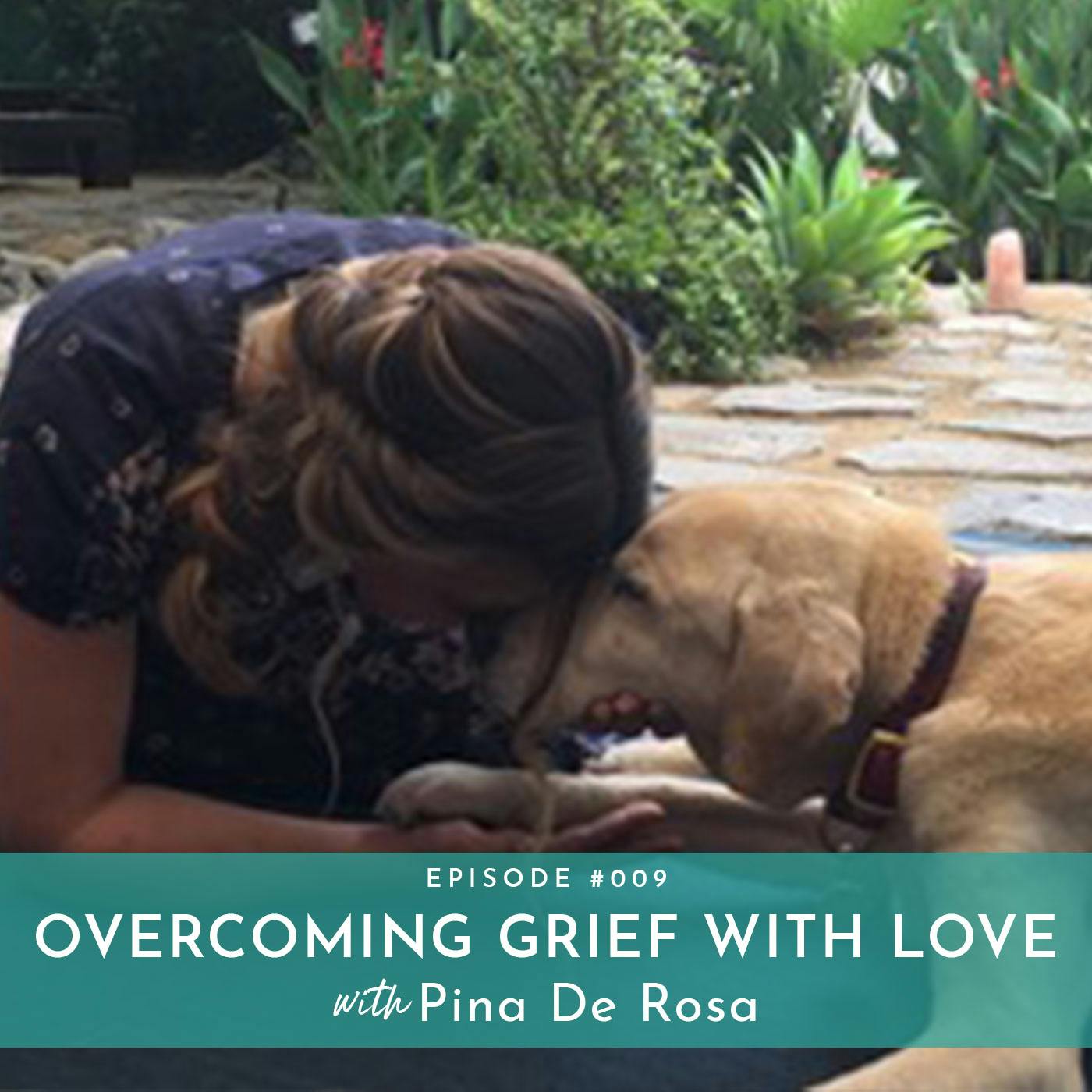
Overcoming Grief with Love with Pina de Rosa
A conversation with Love with Pina de Rosa
Watch This Episode
About This Episode
Grief is like the ocean; it comes in waves, ebbing and flowing. Sometimes the water is calm, and sometimes the water is overwhelming. All we can do is learn to swim. -Vicki Harrison
If you are struggling with any kind of grief, learn how to swim when you listen to this week’s episode where I had the honor of sitting in with Pina De Rosa who shares her experience, strength, and hope.
Whatever the cause of your grief, know that there are healthy ways to cope with the pain in your heart. And in time, ease your sorrow, find new meaning, and little by little let go of your loss…but never of love.
So how do you heal when you’ve experienced grief?
In this episode, Mindset Effectiveness Expert, Pina De Rosa, joins us to talk about how to cope with grief in a healthy way, how you can strengthen your resilience, and turn your private pain into purpose.
Pina De Rosa is a two time TEDx speaker, Award-Winning Producer, Author, and International & High-Performance Coach. She has been designing and delivering engaging keynotes for over 15 years. And has been nominated for the Los Angeles Business Journal Women Making A Difference 8 years in a row (2010-2017).
Pina has experienced grief in her life and having lost 2 dogs in 13 months, she definitely understands the devastation of losing a fur baby. With this experience, she has learned how to overcome adversity and shares her tips and tools with thousands globally. She is a Certified Pet Bereavement Counselor and created Life According to Wellington, bringing food and blankets to the homeless animals living out on the streets.
In this conversation, you will learn helpful coping skills to navigate your deepest heartbreak, how to prepare for the after-care, and some helpful resources to help you along your healing journey.
*If you’re in pain, I want you to know that you don’t have to go through this experience alone. If you know someone who has lost a pet, I encourage you to invite them and go to Pet Bereavement counseling for support. You can access it here PBCS
In This Episode You Will Learn About
- Pina’s journey of healing
- Symptoms of PTSD
- How to feel safe in the world
- How to live with grief
- Finding proper support
- What to say to a friend or anyone who is experiencing grief
- Things that you should do and not do when your friend’s pet passes away
- How to turn your pain into purpose
- The impact of grief
- Ways to let yourself heal
Get in touch with Pina De Rosa
Books that helped Pina coped with her pet loss:
- The Loss of a Pet: A Guide to Coping with the Grieving Process When a Pet Dies by Wallace Sife Ph.D.
- Until We Meet Again, From Grief to Hope After Losing a Pet by Melissa Lyons
- It’s OK That You’re Not OK: Meeting Grief and Loss in a Culture That Doesn’t Understand by Megan Devine
Pina’s TEDx Talk:
- Sniffing Out Cancer: The Making of a Groundbreaking Documentary About Early Cancer Detection
- Choices…Choices…: Pina De Rosa at TEDxPasadena
Resources mentioned in this episode
Additional Resourced from Pina De Rosa
- Pet Bereavement Counseling & Support
- #MissionWellington Philanthropic Legacy
- What does #MissionWellington do?
Thank you for joining us on The Amberly Lago Show!
If you find value in today’s episode, don’t forget to share the show with your friends and tap that subscribe button so you don’t miss an episode!
You can also head over to amberlylago.com to join my newsletter and access free downloadable resources that can help you elevate your life, business, and relationships!
Want to see the behind the scenes and keep the conversation going? Head over to Instagram @amberlylagomotivation!
Full Transcript
Welcome to True Grit and Grace, a podcast designed to empower you to claim your resilience and thrive through life's challenges. I am Amberly Lago, a mindset coach, fitness expert, and bestselling author. Each week I'll dive deep with the world's brightest thought leaders and elite performers to share tangible tools and practical advice to inspire you to keep your eyes on the prize and forge ahead. So get ready to conquer your fears, heal any trauma, lead with your heart, and elevate your life with grit and grace. Hello and welcome to another episode of True Grit and Grace. I'm Amberly Lago, your host and today we are going to talk about different ways to strengthen your resilience. I have a very special guest that I'm so excited to introduce to you today. She is going to show us how we can focus on turning our private pain into public purpose. I have Pina Derosa, who's trained in neurological repatterning and is a two time TEDx speaker. She has been delivering engaging keynotes for businesses and schools for 15 plus years. She's been nominated for the LA Business Journal Women Making a Difference eight years in a row, speaks five languages, yes, five languages. And holds four passports. She's traveled to over 50 countries. She used to get jet lag, but she doesn't anymore. And she's going to tell us her secret to being resilient and not having that jet lag and how she uses the Bye Bye Jet Lag app. Let's say that again. Bye Bye Jet Lag app. I think I need that app.
Not a cure for lack of sleep
though, to bypass jet lag while traveling internationally. Now, as we get into her story a little bit more, we're going to see that she's overcome tremendous adversity and the most recent one literally brought her to shift her career. She's a certified pet bereavement counselor with a blessing of the Association, Pet Loss and Bereavement, as well as the American association of Veterinarian State boards. Having lost two dogs in 13 months, she understands the devastation it is to lose a fur baby and she is grateful to be of service to bereaved pet parents nationwide. If you know someone who's lost a pet today, I want to invite you to go to her petberreivementcounseling.com for support. And don't worry, I'm going to have all the information in the show notes so if you didn't write it down just now, you can go to the show notes to catch ways to go and get support. She also has a philanthropic project bringing food and blankets, which she actually gave that to me to homeless pets living out in the streets. It's called Mission Wellington. And you can see what they do and the pets they help@treatsforpups.com and if you don't follow her on Instagram, go check her out at lifeaccordingtowellington. It's amazing. I follow her there and I am so excited. You're probably like, come on, who is this? So, Pina, hello and welcome to the show. I'm so glad to have you here.
I am honored to be here. And yes, stick to the end. If you want to learn to travel without jet lag. I will give you my secret.
Yes, I need those secrets. Yeah. And before we get started, I just want to tell our listeners how you and I met. We were at a restaurant. It was a beautiful restaurant in Topanga. And it was a busy day. There was lots of people in this restaurant, lots of things going on, celebrations. And we caught each other's eyes from across the room. It was instant connection. And you actually walked over to my table and started talking to me. And we just hit it off. And then we later found out that we wore practically the same outfit for our first TEDx talk.
Yes. Your first TEDx came out like a couple of weeks after we met. And I watched it and it was amazing. Like so well written and shared from the heart and helpful. And I was like, wait, we're wearing exactly the same outfit when I did it seven plus years back.
Yeah.
And then we started finding more and more similarities like we're sister from another mistress. So yes, I'm so grateful to be here.
Your TEDx is amazing. I've actually watched it a few times. I watched it the first time, then I watch it again because there's so much, so many useful tips in how to be resilient just in your TEDx talk because there are so many people that have experienced trauma and the trauma you experienced, how did that TEDx talk help you turn that negative experience into a positive? Can you tell us a little more about that?
That TEDx for me and for anybody who wants to find it. So it's not anything hidden or anything. You can just Google my name in TEDx and it'll come up for me was about being able to give a gift to others and pay it forward. And what I've realized now, you know, I'll be 50 in a couple years. That pretty much every transition in my life, any traumatic experience in my life has been about how do I turn this so that I can pay it forward or be of service with this experience once I heal it and move through it for others as well. So the lesson for me was to move through the pain, the traumatic experience, and being able to pay it forward. I remember my brother two nights before that first headache and I've done a second one since, but I remember that first one. I was hesitating. What am I doing? I don't think I should do because I shared a story.
Tell me, tell us what you were sharing. Because it's something very hard for a lot of people to talk about.
Yeah.
And you shared it with such courage.
To me, I hadn't shared this in 22 years with pretty much anybody, certainly not with my family and close people. So being there on the TEDx stage, sharing it for the first time. I had been sexually assaulted and raped in college and I'd never shared it before because like most people who go through that traumatic experience, we look to what did I do? How can I make sure it never happens again? And I had just moved from Europe, I was born and raised in Italy to the us So I had this thing of if I tell anybody, they're going to send me back home. And then my dream, my vision, my passion for just having moved here to America because this happened like the first semester I was on campus, it will all be taken away. So I can never be this friendly, I can never be this trusting. I can never be this, you know, open. And I became more and more closed down. Not only I gained the freshman 15, I ended up being over 50 pounds. And it was just my way of putting it under the rug and saying, never again. So the TEDx, 22 years later, was my first opportunity to share. And when I was telling my brother I had just done a one last rehearsal and he happened to be in town and he was at the rehearsal and so I was like, what am I doing? I don't think this is a good idea. And I was having second thoughts about having to have this conversation or sharing this from the stage. And he said, well, listen, and I'm paraphrasing my little brother here, but he said so wisely, said, you found what it was for you that you kept bumping up against and you sharing it on that stage. So many other people who can't find theirs may be able to find it by hearing what you're sharing.
Well, I think that a lot of times, you know, I was sexually molested as a child.
Yes, I remember, my gosh.
And I think that for me, I ran from that and I literally ran. And I didn't realize how I was running from it and trying to protect myself. And I wasn't really healing the issue, the underlying issue. And I think a lot of people are stuck and they've been traumatized and they don't know how to get out of that. They don't know how to heal that. What do you think helped you heal that?
Well, I mean, in that TEDx, you know, it's 18 minutes, so I definitely go in depth about it. But in many years later, actually, my first dog, Wellington, bless his soul, I feel like he was very much a healer. I wasn't a dog person. I wasn't looking for dogs. I certainly wasn't into charities about dogs or pet bereavement about dogs. Like, to me, I was traveling too much. There was no time to have an animal and be there for them. But somehow Wellington showed up in my life. He's a big 80 pound goldendoodle and he had a skin condition that we couldn't figure out. And, you know, we're in la, so we have access to so many different vets, but healers. And so this one person said, there's this healer and he's good with skins and he's from India. And I'm like, all right, that's something
you would definitely find in la.
I'm like, take your dog to a
healer that you wouldn't find that in Texas.
No. Or in Italy, where I'm from, I should say. But so when the healer was done working with my buddy, he looked at me and he said, what about you? And I'm like, me, I'm here for my dog and just making sure he's okay and we can help him out. And his second question point blank was, well, what trauma have you had? And so in that moment, I hadn't thought about it in 20 years because it had been literally like a ornaments, Christmas ornaments forgotten in a box somewhere in a basement, dusty, not even labeled. And all the memories came rushing back. But then, you know, I wasn't in my late teens, early 20s. I was now close to 40. And I had different tools. I've been trained in neuro linguistics, programming in repatterning, in accessing the brain. So I was able to start not only processing, but request the level of support that I needed for healing. And Wellington was very much a part of that. So much so that when, you know, for a number of years, him and I were like a team we'd go to college campuses around the country and I'd speak on sexual assault prevention. And that was my job and my passion and my purpose for many, many years. And then when he suddenly passed and there was no goodbye, and it was extremely traumatic, and I developed PTSD on and learning to manage that.
And did you know at the time, like when he died? I know, like, it's so traumatic when you lose a pet. I didn't even know the terminology, really, PTSD until I had it after my motorcycle accident. What are some of the symptoms of that that you experienced?
I was researching because you think someone who's done a couple of TED talks and who has a private practice and helps other people has a few tools to go through lines. And after he passed, nothing was helping. I had so much support from friends and family members. Nothing was helping. Everything that they were saying was making it worse, even though they were trying to help. And what I realized is I had traumatic flashbacks. I had heart palpitations. If I would look at the clock. Like I had visual triggers, so I had to hide clocks and numbers because the minute the clock would stop, start at that particular time that it happened, I would relive the whole thing all over again. And so I started researching it, and I ran into PTSD because I wanted to know, why is nothing helping? I'm smart, I have tools, I'm capable. I've moved to this country on my own. I've built a life.
You're thinking, well, I can get through
this if I can get things right. If I've gotten through being sexually assaulted and now helping students, male, female, you know, there's one in five young ladies and one in 16 young men who go through sexual assault in this day and age. So if we can help them prevent it, and I can do that and be of service that way, then what is this? And I ended up actually feeling not safe in the world without what I realized. He was not only my healer, but he was an 80 pound bodyguard. It was when he was around that I finally lost that £50 because I was going to the gym, I was doing fitness hikes, eating healthy, but I didn't know that underneath I was deadly afraid of being assaulted again. And I kept looking behind my back all the time until I had this 80 pound fluff bodyguard.
And so then you felt safe.
And then suddenly I didn't know.
Everything changed.
How much safety I felt until he was gone and I started hiding in my house. I just didn't. When the election came through, like all kinds of other things came about that there was truly a sense of not feeling safe in the world. So what I did was the mechanism of when I don't feel safe in the world is I gained another 30 pounds. Now I've pretty much lost it. I'm like 2 pounds away from losing it. Thank you. But it took so much work. It wasn't about the eating healthy and the exercising a lot was the trigger and the catalyst was in your book because realizing how much trauma you went through, and I remember reading it, I was like, well, if she can do this, well, so can I. And so I started looking at the work of what makes me feel safe. If I can't feel safe in the world without my amazing pup, how can I feel safe? Because he's not going to come back. So yes, I can feel him, I can connect with him, but he's not going to be my 80 pound bodyguard.
I love how you shifted your thinking because you were focused on, it seems like at one point, how you lost him and everything was triggering the loss. And then you dove deep within to say, wait a minute, what is going to make me feel safe? What are some of the tools? What can I do? And that's something that I like to talk about a lot is what can I do? Because I was for a long time focused on all the things that I couldn't do and how I didn't feel safe. I bought a huge F250 truck to make me feel safe. Because, you know, as you read in my book, I was hitting my car, my car was totaled. I was hitting my motorcycle that was totaled. And I was like, well, if somebody hits me in this F250, it's not going to matter. Be safe. So I can relate to that feeling. Whatever that feeling of safety is for somebody, whether that is they have a husband or a wife even, that makes them feel safe and then they lose their spouse.
For me, my closest family member other than Wellington at the time was 6,000 miles away. My entire family still lives overseas. So given that he was with me for a third of my life in the us it felt like my entire family got decimated and I had to relearn to live on my own without doing what I used to do, which is put it under the rug and say never again. And then be tough or be aloof or be, you know, not trusting and protecting myself. Not really because I was putting on weight as a form of protection, but it was really just because I didn't know how to deal with it. So once I discovered the PTSD once I discover the healing with how to feel safe in the world, which is reaching out to therapists or in my case that had to do with ptsd, but for someone else it might be something else. So someone who has those tools. Then I started looking at what support is there for people who lose a 12 year old child. It could be a furry child. If there's more cats and dogs in the US than there are children. If your human child, 12 year old child, all of a sudden dies and you don't get to say goodbye, you're not expected to be at work on Monday, you're not expected to be okay with the time. Hops a year ago today. And so I would hear, well, it was just a dog. Well, he was 12 and a half. Well, you can have another. Like all these things that people say to really help, but it doesn't. And so it literally physically hurt to breathe. My heart was constricting, I didn't understand what was going on. And after I started to breathe, which took me months to be able to breathe without pain, and I was like, how many people are going through life with this bullet in their hearts? And how much disenfranchised grief is there? Because they're like, well, you can just go to the pound, there's plenty of other cats and dogs. That's one of the things that people
were saying, just go get another dog. Just go.
Somebody actually almost drove to my house with a puppy and said, I'm so glad you didn't. Because they're like, well, just don't know what to do. Right? And that's the thing. So I turn that private pain, once I learned how to heal it, as a way to be of service. Because people don't know what to say. And they try. Like in America, I think a lot of countries as well, but in America especially, people don't know what to do with death. And so they think that grief is a problem that needs to be solved. Grief is really an experience that needs support. It's not let's get her back to happy. That's not what grief is. Grief is learning to have the loss and the love coexist and reinventing or recreating your life in such a way that it's not about getting back to how life was. And I am speaking about pets, but it could be any grief. There's so many great resources out there was so much so that once I found the resources that were helpful to me, I shifted my career and I stopped speaking on the College campuses. I mean if they invite me, I go. But I stopped seeking that out traveling and a lot speaking a lot with Wellington in touch with me. And it's really realized that the support that's needed, there's so much support that is in the universities and college level, at school level. The support that's needed for people who are completely lost when their pet passes away. Once I found the support that was for me, then I went through the certification to help others. And now you can find me on Yelp, you can find me, maybe I'll do a TED talk about pet grief counseling one day, who knows? But you can find me just doing this. Like right now I'm counseling a couple whose pet is about to pass and it's their 15 year old lab who has in their life and they are devastated at what's called anticipatory grief. So how to support them through that. And then tonight I'm helping a young lady who's 36. Her 18 year old cat passed away two weeks ago and she said he saw me through everything. Apartments, boyfriends, grad school, life changes, jobs. And when you're single and you're alone and all of a sudden the house is dead empty, dead clean, dead quiet, what do you do? Where does all the love go?
Well, what would you suggest for someone to say if you have a friend that their pet passes? Because I know you said people were saying all the wrong things and it's so hard to know the right thing to say. Like what do you say? You want to reach out and support, you want to show them support and you want to try to fix it. And you said grief can't be fixed. What would you suggest you say to someone you know that they've lost their pet?
Actually, my next book will be about. This is almost like a little handbook for grief loss, but especially for our friends, not necessarily for ourselves, because oftentimes when a friend's pet passes away, we don't know what to say. Like you said, we seem to experience that nothing we say will make a difference and that sometimes we don't say or we don't know sorry for your loss. The traditional words that doesn't help, it seems. Actually nothing it seems will help or support our distraught friend. And we may even worry about them because we'd love to help them, but we don't know how to help them or what to say. So there's a couple of things. I have seven things that you want to do or not do when your friend pet passes. The first one Is do not attempt to be encouraging by saying the traditional time will help, time will heal. It's well meaning, but it doesn't help your friend one iota at that time, especially now that she's hurting or that he's hurting. It even hurts to breathe. And the physical bond with their pet has been permanently severed. And it's hard for them to fathom how do I even adjust.
So like when you say, oh, time
will kill, time feels like torture right now. I don't want time. Yeah, I don't want time without them.
And I'm very impatient.
So I'm like, well, I'm Italian. I'm very impatient too because I feel like our culture is so passionate that a certain level of passion brings to impatience. So during this deepest heartbreak, we often hear that traditional, sorry for your loss, but that doesn't help either. And along the same lines, you don't want to say, oh, you'll get another dog or you'll get another cat or they live a long life. It would seem common sense not to say that, but people do. And so again, it's well meaning but not really helpful. And it would be the equivalent of someone telling you after your 10 year old daughter passes away of cancer or hit by a car that you can have other children. Yeah, seriously. To that effect, if you're thinking it was just a dog, a cat, a bunny or a horse, do not connect your voice box to that thought when you're in front of that friend.
I understand that because, you know, my daughter's a horseback rider and the bond
between her and her horse is beyond words.
It is, it really is. It's more than just a pet. This course has taught her. Patience, compassion. To never give up, to get back on. Exactly.
It's like an invisible friend that's become. It's their companion, it's their everything. So that beloved animal when they passed was very much like not only a family member and a fur baby, but they were part of like I'm counseling an 8 year old. And their mom whose pet passed on Sunday. This is her sibling that passed away. They've had this beautiful dog for 12, 13 years. It's her constant companion. She doesn't want life without her. Well, what do you say instead? What you can say is a question, what can I do to support you?
That's good.
That's a really good question to begin with. And then listen because oftentimes they may not know how to answer. So just listen. That's okay. Be present with them, listen. And then you can Actually ask them favorite qualities about their pet, like what's the favorite part of their fur? Or ask them about how they find them. You know, so like, what was the adoption story? Even if you know the adoption story in the film the 15 times, get them to talk about their beloved companion because it'll help them metabolize the grief. It'll help their healing to talk about them as they feel that they are actually maintaining a sense of connection because the bond is broken physically. But if you can bring them to maintaining that connection, they can see then that love deepens even beyond the physical form.
I like that you say and listen, and I think it's about bringing that pain to the surface and talking about it and acknowledging it and not trying
to get back to happy or back
to normal or like I used to do, just cowgirl ups, suck it up. Let's pretend like nothing happened and just keep bulldozing my way through life instead of.
That's a human coping skill. It's not a healthy coping skill, but it's definite. Some people will go back to work. Somebody told me, you know, the day after grandpa died, I went straight to work. Somebody told me, well, I wasn't really drinking as much. But then realizing that they were actually
diagnosing workaholic or alcoholic.
I mean, I think we all were
alcoholic or guys dating a bunch of guys or, you know, over shopping. All those coping mechanisms when we really
just want to take a look. And they're actually. Yeah, and they're actually healthy coping mechanisms. Those are unhealthy coping mechanisms. And I didn't know what the healthy ones were. So, for example, they're likely to be wrought with guilt and possibly even self blame. Even if the dog or the cat or the horse wasn't euthanized, there were euthanized, there's even more guilt. And we can get into that. But specifically, no matter what you say, they'll think, well, but I could have done this and I could have. And that's just an impact of early grief.
That could have, should have, would have.
Because the brain can't process the depth of that grief. So it'll go with guilt, it'll go with anger, it'll go with self doubt, it'll go through everything. Because if the brain lets you process that depth of grief, you could probably have a nervous breakdown. Or you could be like Deb Reynolds, who was old two days after her daughter and she passed and she passed of a broken heart, literally. Because the system can't hold that intensity of grief. And it's not that we get over it with an animal, especially that pure form or love, we never have that sense of closure. But we learn to live with the loss because the intensity of the grief lessens. But there's never going to be a day that we don't miss them, that we don't want them back, that we wouldn't give our right arm to have them back. It's just more learning to live with the loss.
It's learning to find joy and thrive despite the grief that you have.
They always leave a gift. And so finding whether it's joy, whether it's purpose, whether it's being of service, like with Wellington. Not only I shifted my career, so being a pet grief counselor was not even in my top 20, top 100 in my life. Doing a TED Talk was like, I want to do one in the next five years. And then you did two. Yeah, actually you got to be wonderful.
Yeah, right.
Was with Wellington, who as far as I know, is the only doodle who ever done a 15 minute TED talk. And it was about dogs. Because I became so passionate from learning from this beautiful, pure form of love and how to be of service. For example, I'm not saying that I necessarily found joy, but I found purpose. Because one of the things that he started when he was alive was he had me be able to be aware when I was driving. Especially here in la, we have a lot of homeless. There's a high, high, high concentration of homelessness. We are the second highest concentration of homelessness in the country after New York. I would see people at the end of an off ramp with a little cat or a little dog. And I'm thinking, how do they go through rain or cold nights? And we're in Southern California, it doesn't really get that cold here, but it's cold for us. And how do they go through that? And what I learned is less than 5% of shelters will take you if you have a pet. And so oftentimes people will have to choose between a bed and their pet. And given that, let's say you're a veteran and you have ptsd, this dog is helping you through it. Let's say you've gotten out of a tough, abusive situation and this dog is your safety. It's your connection to pure, unconditional. It's the last resort that you have to a sense of sanity and a sense of purpose and a sense of consistency. There's no way you're going to give up that pet to have a bed. You will find a way to Sleep under a bridge or on a beach or somewhere where they won't chase you away. And so what we started doing is, okay, until I can build a shelter for humans with their pets, how can we keep them warm and how can we keep them fed? So that's what we started with Mission Wellington, which is on treats for pup stock. And people donate gently used items. So I go to a local Petco, our local Unleashed. We have different cities, different stores, and we have bags and we collect them and we put the little doggy bags together and give them out.
I have to tell the listeners out there now, she's. You're not someone who just is like, oh, I think I'm going to do a charity. You are one of the most, if not the most passionate ladies I've ever met. And one day when we met for lunch, you brought me this big bag full of blanket.
It looks like this. And sorry for the noise, but we're bringing out this blanket. There's food. This is a collar and a toy tennis ball, you guys.
She loads her car up and delivers
bowls, blankets, food, trees until I can build a shelter. And I'm on my way to one day building a shelter, but until we can build that, then we can keep them warm, we can keep them fed.
Yes. And I love that you do that. You've got such a big heart and you have truly turned the pain that you had into purpose.
You know what? After he died, I stopped everything. And we had started doing this through his Instagram, and I thought, this is dying with him. And donations kept coming. Boxes of blankets that had been handmade by someone in Texas and other, you know, toys that people were sending and food companies that were telling, our food is about to expire. Can you take it? And so I felt like I was forced to continue it. And his Instagram blew up. We went from like 700 to, like a little bit over 5,000. It's growing. And to me it's like, well, it's a legacy of love. And as hard as it was, and I didn't go for a couple of months because we go on schedule and we bring the supplies there to people living in the streets or people behind the library somewhere, wherever they might be, I did not do it because it just was too painful, those PTSD flashbacks. But this helped me healing because it was easier to do this than to miss them. Yes, I know.
For me, it was really healing. For me to talk about traumatic things
that have happened to me, like your book, your TedX, it just been so helpful Because I haven't gone through what you went through, but I've been through similar. Like our listeners, they're not necessarily going through the same things that we go through in our lives, but everybody goes through a sense of your heart is shredded and you feel like you've been betrayed by the world or somebody.
Everybody.
We all experience trauma. For me, what I found is go through that emotion, you know, be mad at the world, cry, everything. It's not about trying to be all chipper. And I can do this or positive, because that is just putting it under the rug. And then for me, I was gaining weight. For other people, they go through promiscuous relationships. For other people, they go through alcoholism. All these coping skills that are not helpful, and instead being able to turn that private pain into public service and being able to see how can I be of support. So grief counseling for pets. I didn't even know that existed. And there's not that many in the country. And it's like I'm helping this couple in Alabama right now and a mother daughter in Tucson. Oh, my gosh. She was making coffee on a Sunday morning just two weeks ago, and the three doggies were out in the backyard. And then she came out. The mom came out into the backyard to call them back in, and all three had their throats slit. Coyotes had gone over the wall and gotten all three of them at once. And they lost all three of them. And so now it's this mother, daughter. It's just between of them in the family. And their three fur babies are gone. And now you have this bloody. Oh, my gosh. They had to take them to the vets to try to revive them. And
what do you do if there's somebody out there struggling right now with some sort of. If they've lost their pet, what is something that they can do today? Is there any resources besides contacting you directly on your website? And like I said, we'll have all that information on the show notes. But what type of resources? What can someone do today that will help them get through? Because for me, when I'm going through a hard time, you know, I say one day at a time. Like, let me just focus on one day at a time getting through this. What is something that you need to do?
Sometimes it's a day to get through at a time, because the day feels endless, Especially if you go through a traumatic situation like that or like yours. Your pain, the way that you described it. And I'm sure it's not even close to what you felt Felt so awful that I'm like, how can she even go One day at a time. This is one surgery at a time, one hour at a time, trying to move one leg at a time. Like you described it, it was so excruciating. So the first thing that I've learned is the impact of brief. No matter how traumatic or peaceful it is, because I've since then lost another dog. And it was extremely peaceful. But it's still the sense of you feel like you got hit by a truck is to know that the beginning of grief is going to feel like, well, what if I did this and what if I did that? Like, you start questioning yourself. Because we feel that our responsibility is to keep them safe at all times. And if you can be realistic that we're not in control of anything. And it doesn't mean that we're not a good dog mama, we're not a good cat mama or a good dog dad or a cat dad. It just means we're human. So to be able to allow the grief to come up, I always say, don't try to be strong. It's okay to fall apart. Tears are healing. So if you cry, just say to yourself, tears of healing. Tears of healing. If you're hitting the pillow because you miss your fur baby, then you could just say, mama loves you, Mama loves you. Like, find something that you can say other than the noise that's in your head of, you could have done this and you didn't do that, and then you brought this.
So stop that negative self talk and have, like, maybe an affirmation or a mantra that you can immediately replace that negative with a positive.
Allow the pain to come through. Because the more you allow the pain, you come through. Like, tears of healing. Tears are healing. And I'm crying and I miss him and I don't want to be here. Tears are healing. Just allow that. Because keeping that pain inside is going to slow down the healing process. And the healing process is not to get back to happy or get back to normal. A bomb went off in your living room. So you're going to pick up certain pieces and you're going to go, I don't want this in my life anymore. Like, one of the gifts that Wellington left behind was a no BS meter. And I put back some pieces of my life back to where I wanted them, and some other ones. I picked them up and I was like, I don't want this anymore. I'm not tolerating this anymore.
I think that when you go through something traumatic, you look at and see what works and what doesn't work. I take inventory and that has to do with behaviors or patterns or friends
or even family, anything, family members, even things that matter. Like, no, I'm not spending my money life on this anymore. Like done.
Yeah, yeah.
And things that has you look at what were you tolerating, what were you putting up with? People not calling you back for months and you're like, oh, well, you know, they're busy. Oh well, you know, they just got married. Oh well, you know, it's like, no, just either fight for that friendship and reach out to them or, or don't make excuses and let it be. And so certain things would be toxic. I realized that certain things I was putting up with and I thought I was pretty somewhat aware, but I was like, I'm just putting up with stuff that is just eroding at my well being. So right now I focus on quality of life. If something that I'm doing work or not work related is impacting positively my quality of life, great. And that means that maybe one day all I do is read a book because that's all I'm capable of doing. So allow yourself. And some days I drive to you and we do a podcast and hopefully it impacts other people. So sometimes it's big, sometimes it's small, but just allow each moment in each day to be what it is. And if you're having a really rough day, you can't even get out of your pajamas and you're like, you know what? Tomorrow's another day today.
And what do you do if you're stuck like that? What do you do when you're counseling someone and they can't snap out of it, they can't stop crying and it's been months and you feel like maybe they're slipping down into a deep depression? What would you suggest then?
Different when you have a deep depression versus when you have the initial grief? The initial grief. We may even have thoughts of ideation, like suicidal ideation. That's just the impact of grief. It's normal, it's passing. It may be scary because we may have never had those thoughts before, but if they are lingering even with the support of a grief counselor, then in that case I would advice. I have specific people that I would recommend they go to because a deep depression is more like, I don't want life, I don't want to be here. It's not that I don't want to be here without my for babies, I don't want to be here, period, forever. And ever. And we go through those thoughts initially. So first of all, don't let them scare you. It's normal. I have three books that have really, really helped me because sometimes we don't feel like talking to anybody. We just isolate and, like, lick our wounds. Leave me alone. I'll come out of the cave when I'm ready. So what helped me at the time, the first one that helped me was the Loss of a Pet by Wallace Scythe. This was so, so, so helpful that I ended up actually studying with Dr. Seif. And that's how I got certified as a pet grief counselor.
Okay.
And he's.
Don't worry, listeners out there, we will
have that in the show notes. And this is a great book because it shows. Shows not only what grief is and support and what you can do. You find yourself in every other page.
But I see you have it highlighted. She has studied this book. It's highlighted. There's pages.
What I do when a friend's pet passes, and I don't assume that they're going to be a client, what I do is I go through Amazon. This book is not even $12. And I have it delivered to them because what I know happens is we cannot sleep. And I am where thoughts are racing. This can be picked up at any time. You don't need to pick up the phone and talk to somebody if you don't want to. But this will be such a good, helpful companion. Definitely was a huge, huge help and a great resource. This one, even though it looks like a children's books, and it is.
She's holding up a beautiful picture of a book. And of course, I love it because on the COVID there's a. And turquoise, which is my favorite color. And so I was immediately drawn to it. And then she. She opens it and she is, is there anything that you don't do? You are in this book as well.
So Melissa Lyons, the author of this amazing book called Until We Meet Again, this is available on Amazon also. I think it's maybe about $20 or so. It's a children's book that I was invited to be part of. And when I read it the first time, I read it with Wellington in mind. And I thought, wow, what a beautiful universal message. It rhymes. It has children's illustrations. So I thought it was four children, kind of like Pixar movies are for children. But then you come out, you're like, yeah, I'm just like that too. So I read it the second time because I had my second dog with me, handsome next to me. And I read this five days before he passed. And by the second page, I was just sobbing because I heard it in a completely different context with a sweet being that was here dying of cancer and his euthanasia was already scheduled. And I just lost it. I couldn't even breathe through it. So of course I wanted to support it because how cathartic it was. Because I know that tears are healing in. In a safe space. Not like you're crying and then you go for a drive or something. Don't do that. That's why I often do my sessions on the phone or on Skype or on FaceTime, because I don't want people to be even just upset at the end of a session. Something may come up on the drive home and they might start crying and tearing up. Tears are good, but not when you're operating a big vehicle. The third tool that I really discovered recently, after I got certified and even after I've been seeing client, has been so helpful. It's called it's okay that you're not okay. It's a book by Megan Devine. She is a grief counselor and then she lost her partner accidentally. A freak accident, no goodbyes.
And she was a grief okay that you're not okay.
And the tagline is meeting grief and loss in a culture that doesn't understand.
No, I think I follow her on Instagram.
She is amazing. And this one, as you can see, it's been. Oh, yeah, highlighted and serious. So, so helpful, I think, to reach out either through family members, if you can talk to them, book if you prefer to read.
So community, really reach out, have your resources to read.
I would say if you're going through guilt, and this is the main thing, guilt is so common, whether you feel like you could have done something to prevent it. Like maybe, you know, we have these winds in California or anywhere there's winds, and then the gate blows open and then the cat runs away. So we feel like we could have potentially saved it by triple checking the gate. So guilt is so common, especially though after euthanizing a pet, because it can be extremely difficult to separate the harrowing heartbreak from the honorable decision, for example, of euthanasia. And euthanasia involves these intense conflicting emotions, even when the pet owner understands that it's what's needed as far as a decision in the most humane way to end their suffering.
Yeah, and hard decision, but like the most human humane to end their suffering.
But still, as we go through it, it's one of the most painful. And guilt Ridden experiences that as a pet owner we will ever endure. So the guilt that the owners feel is their heartbreaking grief trying to come out. So again, let that grief come out. Rather than thinking the guilt, the anger, the overeating or under sleeping, these are all mechanism that are trying to prevent you from feeling the grief. Because literally you could die of a broken heart. But if you have the right support, and the right support may be your sister, maybe your neighbor, maybe a grief counselor. I always give the first intake at no charge because I want people.
Did you hear that? I want you guys to know that because there are a lot of people that are sitting there and I have a client of mine who has no family, he's got a cat. If something happened to that cat, he would be devastated. But there are a lot of people that may go, well, you're talking about community and connection. I don't have a community. I don't have anybody to reach out to. You're sitting here or feeling like I
don't want to reach out because that
was the hardest thing for me. I did not want to reach out. I didn't want to admit how bad I was hurting.
And I can do this. And I can do this.
Yeah, you know, I didn't know we. All of that.
All of that. So the reason, if you go to vetbereavementcounseling.com, the reason the first intake. But I'm going to offer something more for your listener. The reason the intake has no charge is because I remember having thousands of dollars of vet bills. When your dog dies on the table, they don't say, oh, don't worry about the few thousand dollars of that. You still have to pay them. So you have these Max out care credit and this dead animal. And now you go home and you're stressed out because we pull all the stops for them. We absolutely do like, do whatever it takes. We will save them. And they're like, whoops, sorry. And now you still have to like the lady with the three dogs that their throats were slit by the coyotes. One of the dog was still breathing by the time they got to the vet. And so they put him like, pull all the stops. We'll do everything. He will come home tomorrow. Yes, absolutely. We will help him. We will save him. 2 o' clock in the morning, she gets a phone call that he had died.
And then she stuck with all the
beds and now she's got over 3,000. So the reason I offer that, because I've been in those shoes and it's like, I want to reach out, but I don't want to incur more costs because I'm already behind and I can barely work as it is. Especially I was as a speaker and an empowerment speaker at the time, I was like, I can't empower anything right now, let alone myself or let alone others. So I wasn't necessarily reaching out because I wanted to be responsible with my finances and I needed to pay off those bills first. So I even have a sliding scale for people who can't do the following sessions.
You are an angel. I want to make sure people, good
people, I think our pets really make us well.
I want to make sure everybody knows how they can get ahold of you because we're running out of time. And I want to make sure they can reach you because you are an angel for even offering. Like, you guys, I personally, I had a friend that lost two of her dogs, and I reached out to you, and you gave me a gift certificate to give to my friend. And so I sent the gift certificate to my friend in a card, and I felt like it was a way to be of support, to offer some counseling.
So what I'm offering you guys for listener of your true written Break podcast, is an actual gift certificate, whether you need it or whether you want to pass it on. This is not just an intake session. These gift certificates you find in Maester Yelp and other places. It's $150. This will bypass all of it. Just saying that you were.
Oh, do they have a special code that they put in?
You just reach out through the website and say, I came to you through Amberly. That's a special code.
Okay. And it'll.
It'll bypass that for sure.
What an awesome gift.
Thank you so much. For me, it's really not about. I never want the money to be in the way of healing, because I know it was for me at the time, and I was able to pay everything back, and now I can.
Now you're being of service open so many. And I know that you are very passionate about a charity that you're involved with. Can you just mention that before we go?
Yeah. So Mission Wellington, for those of you who want to find a way or want to maybe be of service in some way or curious about maybe you're passionate about homelessness, find out through treatscoopups.com the pets that we've helped along the way. I know the mayor of Los Angeles, through one of the local organizations, has opened a shelter for a hundred human with a Hundred pets. So they actually have grace in their rooms. And actually next week we go and give them all kinds of supplies. So if that's something that speaks to you, maybe your pet recently passed away or maybe you are passionate about homelessness, go check out treatsforpups.com you can either request one of these doggy bags that you get to pass on, keep in your car and pass on, or you can sponsor a doggy bag if you're not here local in la. And as you said earlier, just to loop it back, one of the ways actually to contribute through Mission Wellington is completely different sideways. So I'm trained in neurological re patterning, which basically I can work with both conscious and the subconscious mind. And I've traveled to over 50 countries. My goal has been a new country every year. So as I'm approaching 50, I feel like I'm on one track. And I used to get jet lag, but I don't anymore. And I've seen firsthand, especially as a speaker needing to be at a conference, what it's like to need to hit the floor running, but then and then feeling myself fading at 6 o' clock because I'm on a different time zone. Even if it's just East Coast, west coast, or waking up at 4am when we come back and you're like, but nobody's awake, you know. And if you do that after a relaxing vacation and you come home and you're up at 4am, maybe that's okay for a couple of folks, but most people would like to be able to not hit the wall that way for a few days and be able to go back to sleep. So now I help people internationally to travel internationally or to travel over three. East coast to west coast, west coast to east coast without jet lag. So the app was invented years ago. It's called Bye Bye Jet Lag. It's on itunes, it's on Google Play. If you go to bye byejetlag.com, you'll be able to download it from there.
And what does it do?
And the proceeds of the app go to Mission Wellington, what it does, because
so you do that and the proceeds go to.
Because when I couldn't, I remember I told my mom shortly after Wally died and I said, you know, I wish I could just offering these supplies to the homeless pets. And that's all I want to do. And she almost joked with me, she's like, oh, you're like Mother Teresa puts the dogs in the streets, but you still got bills to pay. And bless our Moms. And so I was like, wait a minute, I have that app. And I was sitting on it because I was too busy to do it. But I was traveling without jet lag for years and I had tested it with flight attendants, with pilots. It was ready to go. I just hadn't done the work to get it built into to itunes and Google Play and all that stuff. And then I figured, what if the proceeds from that will help Mission Wellington? Then finding a way to. I'm not too busy to do it. It's like I'm too busy not to do it because now I.
Now you really need that.
And so what it does is you take off and you can see all the great 5 star reviews on the app stores. But what the app does is an easy 15 minute audio that you listen to when the plane takes off after it's legal to listen to electronic devices. And basically it resets your brain to the time zone that you are in when you arrive. So you listen for it for 15 minutes. Truly don't listen to me. Look at the reviews, listen to it. What else you got to lose?
Right.
Other than jet lag itself?
So it's just on an app and you can download that, listen to it,
and listen to it when the plane takes off. It gives you very simple instructions when you arrive. You don't.
I am such a huge believer in. I listen to an app. It's called Calm. I don't have any affiliation with them, but I'm a big believer in sound. Listening to things can totally reset your nervous system.
Yeah. So I actually programmed it. That's amazing. And you are basically able to hit the floor running or to have your vacation without wasting any two or three days adjusting either there or back. That's amazing. Yeah. And then it helps feed the pups.
I am totally going to try that because I'm about to travel. Thank you so much for not just being on the show, but offering the gifts that you have offered us.
It's my pleasure.
What? The gift certificate. If you've lost a pet, if you're grieving, if you know of someone that
is, or if you're about to lose a pet, you have anticipatory grief or
if you haven't dealt with that grief.
Please. Right. I've had a client that I helped. Her grief was eight years ago. Her dad's recently passed and the dad and the dog were connected. So now everything came up. So don't say how could I have used you a year ago? Reach out to me. We can connect now.
Thank you. Thank you for being on and thank you for listening and I just appreciate you so much.
I thank you. Thank you for the conversation. Foreign.
Thanks so much for joining us this week on True Grit and Grace Podcast. If you like it, please rate it or share it with your friends. That would help too. If you're not yet on the newsletter list, come over to Amberly Lago.com and jump on it. While you're there, you can grab a free downloadable gratitude journal. And you might just want to check out my book or even check out my monthly motivational membership. Thanks again for tuning in and we'll see you next week.
Pain to purpose to joy.
Never Miss a Conversation
New episodes drop regularly. Subscribe on your favorite platform and never miss a conversation.