Season 1, Episode 10
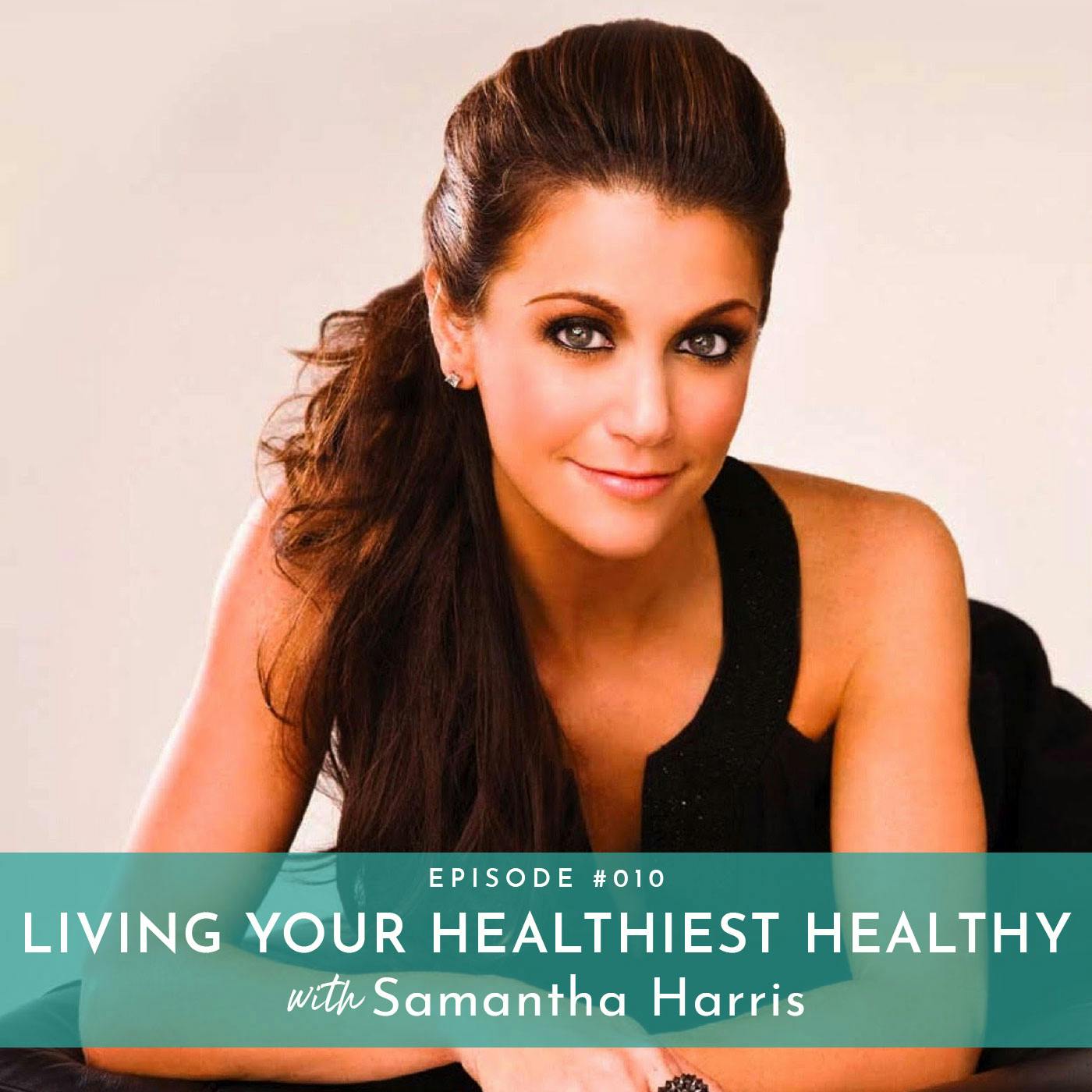
Living Your Healthiest Healthy with Samantha Harris
A conversation with Samantha Harris
About This Episode
We are starting a brand new year! And I can’t think of a better way to start 2020 than to speak with today’s guest, Samantha Harris. You may know her from the hit TV show she co-hosted, “Dancing with the Stars,” that has been watched by millions. She has also appeared on “Entertainment Tonight,” is an Emmy award-winning journalist, and the bestselling author of “Your Healthiest Healthy: 8 Easy Ways to Take Control, Help Prevent and Fight Cancer, and Live a Longer, Cleaner, Happier Life.”
Samantha is a cancer survivor and thriver, healthy living advocate, a certified personal trainer who has appeared on several magazine covers and she is an unstoppable optimist. She and her husband founded “Gotta Make Lemonade,” which is an online community to inspire positivity in the face of adversity.
In this episode, Samantha gives practical advice to empower you to eat better, boost your positivity, and build your resilience.
In This Episode You Will Learn About
- What inspired her to be her healthiest and it will inspire you
- The fat-free craze as a marketing ploy
- How Samantha dealt with her breast cancer diagnosis
- The importance of having a positive body image
- Finding the positive even when you are facing difficult situations
- Loving your post-surgery body
- Getting your libido back after trauma
- How physical fitness puts you on a subconscious level of confidence
- The power of endorphins
- More about Your Healthiest Healthy book
- Knowing the “why” behind our choices and empowered consumers
- “Crowding out” your gut to control cravings
- Different ways to have access to “clean products”
- To reach your healthiest healthy, you should be doing something that is manageable. Small steps to make changes lifelong.
- Intermittent Fasting as a way for our bodies to rest, recharge, repair
- A quick change to live a healthier life
- Bonus!!! The first three people to sign up for Samantha’s webinar get a free swag bag!
Get in touch with Samantha Harris
- Website @samantha-harris.com
- Instagram @samanthaharristv
- Facebook @SamanthaHarrisTV
- Twitter @samanthaharris
Resources mentioned in this episode
- Your Healthiest Healthy: 8 Easy Ways to Take Control, Help Prevent and Fight Cancer, and Live a Longer, Cleaner, Happier Life
- Gotta Make Lemonade
- Environmental Working Group
- Your Healthiest Healthy Live Webinar
Thank you for joining us on The Amberly Lago Show!
If you find value in today’s episode, don’t forget to share the show with your friends and tap that subscribe button so you don’t miss an episode!
You can also head over to amberlylago.com to join my newsletter and access free downloadable resources that can help you elevate your life, business, and relationships!
Want to see the behind the scenes and keep the conversation going? Head over to Instagram @amberlylagomotivation!
Full Transcript
Welcome to True Grit and Grace, a podcast designed to empower you to claim your resilience and thrive through life's challenges. I am Amberly Lago, a mindset coach, fitness expert and bestselling author. Each week I'll dive deep with the world's brightest thought leaders and elite performers to share tangible tools and practical advice to inspire you to keep your eyes on the prize and forge ahead. So get ready to conquer your fears, heal any trauma, lead with your heart, and elevate your life with grit and grace. Happy holidays. I'm so grateful you're here because I have an incredible story of resilience and it's going to inspire you to take action to be your healthiest. And I can't think of a better way to start 2020 than to talk with today's guest, Samantha Harris, who you may know from the hit TV show she hosted, Dancing with the Stars for eight seasons that has been watched by millions. Or you may have seen her on Entertainment Tonight. She is an Emmy Award winning journalist, the best selling author of youf Healthiest 8 Easy Ways to Take Control, Help Prevent Fight Cancer and Live a Longer, Cleaner, Happier Life. She gives practical advice to empower you to eat better, boost your positivity, and build your resilience. She's a cancer survivor and thriver, healthy living advocate, certified personal trainer who has appeared on several magazine covers. And she is an unstoppable optimist. And when life handed her lemons, she made lemonade. In fact, her and her husband have founded Gotta Make Lemonade, which is an online community to inspire positivity in the face of adversity. Y', all, she is beautiful on the inside and out and a true inspiration. Samantha Harris, welcome to the show.
Thank you.
Thank you.
Amberly, you inspire me, so I feel grateful to be part of your podcast.
Oh, thank you for being here. You know, I actually first came to know you and I fell in love with you when I watched Dancing with the Stars because you're so vibrant and you're smooth smile just lights up the room and you look healthy. And I want to know, getting into just being a journalist and in the entertainment industry, how did you remain so healthy with craft service?
Yeah, that is a great question. That's a fun one. No one's actually ever asked me that one. You know, it has always been incredibly tempting and challenging, truly challenging. You know, they put out a myriad of sweets and anything to keep people energized and they really cater to the people who are working behind the camera. You know, the Lighting guys, the grips, the audio, the cameramen, all these big burly guys.
Right.
And here we are. So it was always challenging and there was a rare craft service table that had a lot of veggies as options and non meat based or animal based options. But then it was also at a time where I was focused on low fat.
Oh, I think we all did that. I did that low fat diet where I would buy Snackwell's cookies which were all sugar and I thought that, oh well, it's healthy and I'd eat an
entire row of them.
Yes,
I was afraid of fat. This was a time in my life, you know, Talking about my 20 pre my television career, moving out to LA and trying to make it on TV, auditioning and pounding the pavement, juggling three different jobs at a time just so I could pay my rent and then eventually moving into television and getting some really amazing opportunities. And the end of the 90s, the early 2000s, where the fat free craze was all the rage. Right. It was the way we thought we should be eating to stay fit, to stay lean, to look good in a dress. So I was doing exactly that. I was eating anything that was slapped with a label that said fat free or low fat. I was afraid of fat. Fat was the F word to me back then. And I mean, so I didn't eat anything like avocados or nuts, seeds, olive oil. I stayed away from that as much as I even lost a friendship over. I mean I'm sure it was probably not just over this, but it was definitely the straw that broke the camel's back, but over egg yolks because I went to egg white omelets and any and we were making cookie dough. I mean cookies also not fat free at all. But hey, if we're gonna make them more healthy, we should leave out the yolk because that's full of fat and cholesterol and it's terrible for us. And my friend wanted to use the yolk and I said, we are not using the yolk. And that was that. We were never friends again. And this is like a friend of mine too. So obviously there were some other underlying issues I'm sure there, but that was
the straw that broke the camel's back.
And I mean, and I story more to illustrate the fact that this is how deep and insidious the fat free marketing became for many of us. And I mean, as you said, you know, we're not alone in that, you know, you and I eating the rows of sandwich cookies. Yeah, yeah, as I said, Fat free.
And, you know, I went from being a professional dancer and living on caffeine and power bars and snackwell's cookies to then transitioning into the fitness industry and really going, oh, wow, I'm supposed to eat all this protein and all this, you know, veggies and protein. And I started incorporating a little bit of fat, but it was. I was still scared of it, but it was like smart dogs and egg whites and eating eight times a day. And so I think over the years, there's been so much confusion about what people should eat. And I know for you in your family and your life, you were always. I read in your book that you were considered the healthy one in your family, and you had all these things going for you. You looked healthy, you felt healthy. When was it that you discovered that there might be something wrong? Did you feel not well or how did you discover that you had cancer?
Well, I never felt ill. I mean, thank goodness. You know, I feel very. I feel very fortunate because I know a lot of stories of others who have gone through some really brutal battles. I watched my dad go through a brutal colon cancer battle for two years before he lost. He was only 50.
Oh, my goodness.
So I really count myself lucky in many ways, even though I was diagnosed at an early age with breast cancer. And how old were you? I was 40. I mean, to me, that's an early age.
That's young. That is young.
It blindsided me because as you said, I was the fit and healthy one among my friends. Right. I weighed omelets and the cheeseless pizza and all the boneless, skinless chicken. And I ate so much protein, huge amounts of animal protein to build my muscles and make my look good and look strong. And cut. I wanted to be cut. You know, the arms and the definition and the abs and like, yeah. When I met my husband, which was now 18 years ago, I had just done a spread in Shape magazine. It was an article called Get Celebrity Abs. The funny thing was I hadn't begun my career yet, so I was just a fitness model doing this, trying to get the abs of, you know, helping the readers get the abs of other celebrities. And then I was demonstrating the move. But here was.
We were on the COVID of Shape
and then eventually post, you know, after my diagnosis. But yeah, so I eventually was on the COVID of Shape magazine, on the COVID 4. 4 covers of muscle and Fitness, hers magazine.
That is unbelievable. That is amazing.
Look, where was when I was a kid? I mean, I know I'm totally diverging from the topic of Cancer right now. And I promise I'm going to get back to it. And this, I think, helps just give a fuller picture on body image and what we as women feel so oftentimes like we need to achieve. When I was a little, you know, a young girl growing up in Minnesota, I would get my teen magazine and my Seventeen magazine, and every month I would look at the images of these girls, and I. My mom would get her Vogue and her L. And I wanted to be a supermodel. Like, you know, like, it's funny, people. I want to be a lawyer. I want to be doctor. I want to be a supermodel. But that's, you know what? I want to be a supermodel. And I was already working from age 12 in the industry within Minneapolis, just modeling, doing print ads for a different, you know, for Target and for different corporations that were headquartered in Minnesota. And I loved that. I loved that ability. So I thought, oh, well, I guess I want to be on the COVID of the magazines and I want to look. And then I stopped growing at 5 foot 4. Not, you know, a chance when your model has to be 510 or high, taller. So back in the day, and so what I'm proud of, and as I'm sort of circling back here to the fitness magazines is eventually I started to find my body and find my strength and where I was good. And I was never going to be a 5 foot 10 supermodel. I ended up being able to be on the COVID of magazines because I found my body.
And first of all, I think it was. I read in your book that you were 5 4, I think. I don't know where I read it, but I'm a stalker, obviously, because I knew that you were 5 4, but I always thought you were like 5' 10. Like, when I saw you on Dancing with the Stars, I thought you were taller.
I.
But it is Thomas short.
And I always wore really big heels with a nice platform because they're more comfortable.
Yes, but it's the way you carry yourself, too. And, you know, it's a huge deal. So many people strive to be in a magazine and to be on the COVID but because you kept pursuing your dream and you found your body and you worked hard for that. That's amazing. And I think that that probably, correct me if I'm wrong, helped you get to where you are today, because it wasn't long ago that you were diagnosed with cancer. And so from an early age, you started working, and that took you to one step, to another step to look you're on the COVID of the magazine. Do you feel like that work ethic that you had helped you get through your cancer as well?
You know, it's interesting. No one's really ever pointed out that connection, but I think maybe, possibly, you know, I was very tenacious young child. I always knew I wanted to be in this industry, and I pushed really hard. I never took no for an answer.
You're a go getter. I mean, you are a go getter.
I think when you really want something and that's where it is, when you really, truly have a passion, every door slam in your face is just more ammo to pursue and carry on. And that's what it did for me. And so I think when, you know, at 40, I was blindsided with this breast cancer diagnosis, I had a wave of anxiety and deep, just hollow pain that was so gnawing and horrid and debilitating that I had never, you know, except for the time when I lost my dad, that sort of pain, I had never felt like that. But that was just only the pain. This was pain coupled with anxiety because I watched what my dad went through. I was lucky that my parents married. It was a different time. They got married in their early 20s. They had us. He was able to see me graduate from college before he passed, so I was able to grow up with a parent here. My little girls were three and six. And I. Not only did I not want to leave my husband, I sure as heck didn't want to leave my kids. So the anxiety that I felt in the moment of diagnosis, in the aftermath of the days following, where it was just seeping in and understanding the heaviness of what might be my future was intense. And all of my happy, go lucky, glass half full mentality of my lifetime seemed to be just zapped away in a moment.
Well, I think it's so important to share that because always been a positive person, too, but that gives people hope right now who may be listening and, you know, whether they're going through a hard time from a cancer diagnosis or they lost their job, or they're, you know, grieving from a death or a loss, it gives them hope that they can find happiness and joy again. You are a living example of that, that you can make it through those tough times.
Oh, thank you. As I lay there sort of, you know, on my bed and curled up, you know, wanting to just. I don't even know. It was such an awful feeling. And I knew that it was going to be a long road ahead of Me. And one of the mornings I woke up and it was maybe two weeks of feeling like this. Two weeks of feeling in a way that I had never felt before. It's such an awful level. And I just said to myself, you've got to turn around your perspective. Every step that comes at you next, you need to take a positive spin to it. And it started with some positive self talk. And I didn't even know, you know, now positive self talk is one of the tools in your healthiest healthy life. And I know we'll talk about the book later, but that is such a key element to resiliency and to positivity and survivorship, thrivership. And it goes beyond. No matter what you are surviving and thriving from, life doesn't have to be cancer. But positive self talk is such an incredible tool. And so for me, what that looked like was, okay, you have cancer. What's positive? And sometimes it's hard. Your head's like, why? God, I don't know. I have positive, serious digging. But what it came to is, okay, yes, I have cancer, but we caught it early. Of all the breast cancers, it's the one you want to get it. If you get it, the type of breast cancer you'd want.
No, it was the fast, aggressive type, right? Where.
No, no, no, no. For me, it wasn't. That's the type that, you know, that's a lot more challenging where my friends who I've gone through that I feel for even more from what I had to go through. Mine was slow growing.
Oh, it was slow growing.
I'd been there for a long time. So mine was estrogen. In case anyone is listening, who has breast cancer or diagnosis and is curious, mine was estrogen and progesterone positive. So that's ERPR positive and HER2 negative. So what that means is that it can be really responsive to drugs like tamoxifen and other sort of estrogen blockers. It was very small. The other positive thing was my tumor was very, very small. I had dcis, which is ductal carcinoma in situ. The cancer cells that are contained within the duct, and they're not smart enough to get out, thankfully. And so when they remove that part of the cancer, that cancer out of you, it's gone completely. The problem was that a little bit of it was invasive. But the tumor, that was very tiny. Very, very tiny. So that was another positive. Okay, what else? I have great health insurance. I have great. And then all of a sudden, then it snowballs into a wonderful positive. Things that Just keep coming. And, you know, great health insurance, an incredible support environment between my husband and my family and extended family friends, people I didn't even realize were coming out of the woodwork, who I never. Strangers I had never even met, sending me stories of their struggle and their survival and how it feels when they get to the other side and things to look forward to. All of a sudden, all of that positive self talk really seemed to make a difference for me. And it's what got me out of bed, that and my kids and allowed me that every time we found something else out, that I tried to find the positive in it. And that's what helped me build resiliency, because that is the key to a survivor's mindset.
It sure is. And that's exactly what I had to do. Surgery after surgery is always try to find the positive. And like you said, sometimes it's hard, Sometimes you have to dig deep to find it. But there's always something to be grateful for. And I feel like gratitude is alchemy, and it just changes everything. Everything.
With your surgeries, did you have to go through?
I had 34 surgeries on my leg.
Oh, my goodness.
But one of the things I wanted to ask you was this is something I've never talked about, but I had, you know, after breastfeeding two kids, I chose to have a breast lift. And it went really bad. It was botched. Oh, my God. It was horrible. Oh, no, it was. It was horrible. And I went to, of course, the best doctor to get him to see what he thought. I went to Dr. Debrow, who has that TV show watched, and I just wanted to see what he would say. And he was like, oh, my gosh. Yeah. I would say this is about an 8 out of a 10. And I wondered if you had to go through. Did you have a double mastectomy or did you? You did. It was really hard for me because I had already dealt with all these scars on my leg and kind of accepted that. And then when I had the scars on my breasts, and, you know, the Dr. Dubrow said, looks like you've had a double mastectomy. And it was so hard for me to overcome that. Like, I really felt like my womanhood, Like, I didn't feel sexy. I didn't want my husband to see me naked. Did you ever feel that way when you had your surgery?
Well, you know, so a couple of things. First, I was very lucky that I had nipple sparing surgery and that the nipples survived. So there's always that chance when you try to save the nipples that they don't. So I'm very lucky that they survived, you know, in those couple of months post surgery, while I was bandaged, bloodied, and bruised in a way that. I mean, there were times I'd look down and think, there's not a chance these nipples are gonna ever look anything normal. And the way that one of them healed, you know, I mean, look, I'm grateful I can look in the mirror and I still have two nipples. One might point up that, you know, up north and one point a little bit down south. And maybe they were. You know, they're not quite on the same plane anymore. I go to the gym and I always wear, you know, whatever. My sports bras. But I don't end up wearing the ones with the extra padding because they always slip out in the wash. They. You know, they're in the wrong position. So, you know, I have some headlights, I will admit, when I go to the gym. And every time, every so often, I'll catch myself in the mirror and see just how uneven they are. And then I think, you know what? I don't care, because I have them. I still. But I have them.
It took me a while to get to that point, though. That's how I felt about my leg. Looking at it all scarred up, I'm like, hey, you know. And it hit me when my husband actually, who was a lot more accepting of every. You know, the scar and everything, he really taught me how to love myself again. He accepted it before I did. And I remember he was like, one day I was really upset, and he was like, what? I cannot believe you. At least you have your leg. At least. And then. Yeah, so it's like all how you look at it. That positive mindset. For sure.
It is. I tell myself, well, first of all, again, I feel very lucky because, you know, there are many, many women who lost their nipples completely or who had a scar straight across the breast. Mine actually is. Well, it was supposed to be underneath in the kind of crevice, but they shift, and so it's not quite. But, you know, I still feel like I can look in the mirror and if I stand really straight up and push my chest out to get rid of all the ripples of the implant because I have no skin, thin skin covering it. I don't have any fat or anything left because everything is removed. But, you know, again, I have to tell myself, I'm so lucky that I. Here. I'm lucky that I. You have to find those little things to Build positivity within yourself. And you know, it is hard, you know, getting intimate again and being able to feel sexy or feel, you know, that obviously also plays into your self confidence and how you. My biggest advice is to really find the things that you can focus on that are the beautiful things that you still can find beautiful and then find the beauty in the scars for you. I'm sure, you know, you found many things that you're able to look at and say like what you've gone through, what you've endured. There's a beauty in that. There is a beauty in the survivorship of that. And that's sort of how I focus on it as well.
Yeah, it's funny because now I forget sometimes about my leg is deformed or there's scars and I'll have shorts on and I'll accidentally catch somebody, their response, like their look to it and they're so shocked and I'm like, oh, oh, yeah, that's what they see. And then you kind of get used to seeing that. But talking about just feeling confident and feeling, you know, comfortable in your own skin again, I know there are a lot of people that go through, you know, hard times or they may have scars or whether it's cancer or something. You talk in your book about libido and sex and how, you know, learn to feel confident or sexy or get your libido back. And that's not something a lot of people or I have heard a lot of people talk about is, you know, because when you go through trauma, it doesn't just affect you, it affects your whole, you know, your partner, your family, but it really affects your relationship or it can. What would you suggest to people who are struggling with their confidence and maybe struggling a little bit with just their sex life? What should they do?
Well, I think two sort of different questions that do feed into each other in terms of the answer, but in terms of confidence, I think that's where physical fitness is super important. I think the more we are fit, the more we are taking care of our body through self care through whether it's walking for 30 minutes a day or going and hitting that intense spin class or cardio class or grabbing a girlfriend and doing a hike. Being able to be physically active gives you on a subconscious level, a level of confidence. When you have body confidence from feeling good, the endorphins that are rushing through how it is going to make your body feel overall, it is a tremendous benefit to you. And so that's going to help the confidence and that in Turn is going to help the confidence in the bedroom. Right. You know, you're feeling fine and fit because you know, kicked your own ass in that class this morning and look how fine you feel. And you go into the bedroom and you're like, yeah, I got some of that still. I mean, despite what other issues might be going on. So to me, that's one of the best tools that we all have accessible to us.
Yeah. You know, I really, for me, working out has always been my medicine. And even when one of my doctors thought I was completely crazy because in the hospital bed I was completely bedridden, could not get out of bed to even use the bathroom on my own. And I asked him if he could install a pull up bar over my bed so I could still do pull ups. And I asked one of my friends who was a trainer to bring some dumbbells. And so I did light weights. But I wanted more than just to be obsessed with the actual working out. I knew that if I did something it would make me feel more useful, healthier, like I was living and getting stronger. And I knew that it was gonna for my mindset, it's those endorphins. And in fact, you talk about endorphins when I had my accident that they had to put me in induced coma. And right after I woke up from a coma, the doctor came over and he asked, okay, I have to ask you a question. This is just between you and I. And I said, yeah. He said, do you have a problem with drugs? Do you take a lot of drugs? I said, no, I've never done drugs in my life. And he said, are you an athlete? And I was kind of like, well, can't you tell? And I said, yeah, I run every day and I work out. And he said, that's it. You have so many endorphins in your body, we had a hard time knocking you out.
Oh, wow.
Isn't that bizarre? That's when I thought, those endorphins are powerful. They are like they want to just keep you going. And so exercise is my medicine. And so I love that you see that too. And in your book, one of the things that I love, besides just that, you included beautiful pictures. Because I love pictures in a book and you have recipes and I love that you show the picture of the food what it's supposed to look like. Mine rarely ends up looking like that. I love that you included pictures. I love that you give life hacks in your book. Thank you.
Well, you know, so the book is called you'd Healthiest, healthy. It's eight easy ways to take control, help prevent and avoid cancer, and live a longer, happier, cleaner life. And the goal of it is really to get the toxins out of what are in, on, and around your body. Because, you know, when I was blindsided by this cancer diagnosis and I searched for answers, I thought, well, I must have cancer, because my dad's mom had breast cancer and my dad had colon cancer, so there must be something there with a link. And I had a battery of tests, and I turned out to be negative for all the genetic links. And then I learned that it's only 5 to 10% of breast cancers are hereditary. Wow, that baffled me. And I remember slightly being at the moment and now happier that I don't, but the moment when I found out that I was negative for any of these hereditary links, at first I was disappointed only because I just wanted an answer. And then, of course, I was incredibly relieved because I realized, oh, wait, thank goodness I don't have a genetic link. That means my kids won't be at an even more increased risk of breast cancer and other women's cancers. So I started to research. I'm a journalist by trade. I began to research and I discovered it is truly what you put in, on and around your body that affects your overall well being, whether it's cancer, heart disease, type 2 diabetes, other autoimmune disorders. But there wasn't really one comprehensive action plan out there that kind of gave me all the basic principles of what I needed to do and the tools to do that and to create a healthier life. So I started to create that for myself. And then I realized that, you know, I wanted to be able to give back in many more ways than I already was trying to through my gotta make lemonade site. And so that's when I wrote, you're healthiest healthy. So the life hacks, we call them healthy hacks that are in the book are really just sort of quick tips for being able to live your healthiest life.
Yes, they're quick tips, but let me tell you, I'm like, it changed the way and I've always been pretty healthy. I mean, I really changed my food a lot. But then after reading your book, I have so many questions about, like, well, I'm starting to think about exactly everything I put eat. And the day that I started your book, I went to my first holiday party in December, and she's a baker, and it was a whole huge table full of all these pastries and everything. And I was like, I Just can't eat that. Sugar's the devil. I just can't eat that. So I love that you talk about what you put in your body because sometimes what you think may be healthy may not necessarily be healthy. Have you gone completely plant based or do you eat any?
No, I'm not. A couple things first. You know, going back to our earlier conversation about the fat free generation that we all grew up on, there is so much marketing and so much money put behind what we are told as consumers is healthy. And there are cereals that say, boost immunity, heart healthy, all these things. And then you look at the ingredients on these cereals because we used to eat cereal every morning and we don't anymore. My kids are allowed it once a week and there are a lot of weeks they even go without asking for it now, which is great. But the point is that we have to become empowered consumers. In order to become an empowered consumer, we have to have the knowledge, right? We have to learn about what's the best for us and also by understanding what works best for our bodies and what is the healthiest for us. When we understand the why. The why it's healthy. Not just we. Most of us know, hey, I should eat more veggies and maybe more fruits and I should, you know, cut down on all the sweets. Sure, I should exercise more. We all know that, right? We all know the basics. But understanding the why, what it is doing to our bodies on a mechanical level, on a physiological level and on a cellular level that allows you to then say, okay, I can make a better choice. Because I now really understand if I eat this or if I put this, you know, use this product, you know, in my makeup bag, this is how it's going to potentially affect me. Not maybe right in this exact moment. I'm not going to drop dead right now, but cumulatively, over time, what it's going to do, we all want to live. We want to live a long life, but we want to live an able bodied, healthful life.
And I think too, the cleaner that you start to eat, the more aware you are of what makes you feel bad and what makes you feel good. You know, I was just at the barn with my daughter the other day and someone brought donuts and they were saying, oh, don't you eat donuts? Don't you want a donut? And I love donuts. I love the way they taste. But then after I eat it, I always feel sick. And I think it's because it's just grease and sugar and I think it's easier when there's something like that that you can go, well, that doesn't make me feel good, so I'm not gonna eat that. What's harder for me is the stuff that sneaks up on you that, you know, is probably not very good, but you're getting away with it. Or the stuff like you talk about what you put on your body, lotions, makeup. When I really started to think about how powerful just lotions or oils or anything like that, you know, our skin soaks everything up. Is when I really. And I think I didn't start really changing the way I ate until I was pregnant. Then all of a sudden I was like, oh, my gosh, I'm growing a baby in here. I better eat really good. And then I also became very aware of. I remember one time I was pregnant in the kitchen and barefoot.
Very stereotypical.
I love it. Yes. And my husband came in the kitchen and he was squirting bug killer, like poison. And I was like, oh, my gosh, no, you can't spray that in here. I'm growing your baby right now. You know, but it's when I became, like, super sensitive about, like, what I was eating, what I was putting on my body, and if then that slowly kind of starts to fade away. But I think it's so important to really look at labels to, like, things that we can't pronounce. Like, what is that chemical we're putting on our body, right?
Or even some of the stuff in our body that you can't pronounce. I mean, I think here's the one thing people think, oh, I have to go on a diet. I have to restrict myself. I have to say no to these things. I have to eat a very narrow, a bunch of lettuce and nothing else. The mindset and the way that you approach the situation for the life of time, of good health, nutritionally, it's really important to think about, whoa, look at all these things I can eat. Because when you start to focus on that and the more you fill your gut with fibrous, cellularly nutritious, packed with massive amounts of micronutrients and foods that have been grown from the sun, the sun that gives every single micronism on earth life, right? Think about that. It helps so much because then we are filling our gut with all these good things that it's called crowding out. Once you're putting all the good things in and you're eating, you know, I mean, look, you know me with my morning green smoothie and, you know, lunch Salads and lentils and beans and the healthy fats. The fat that I now realize is not the F word, right? So I'm eating nuts and seeds every day in my smoothie with the chia seeds and the flax seeds. And I a handful of cashews maybe in the middle of the day, and I'm having avocado on my salad or avocado toast, right? So once you're putting all of those things that are so full of nutrition into your body every day, and your body is getting the nutrients it needs, it then in turn crowds out all the room that it used to have for all the junk. Because when you put the junk in your body, and by junk, I'm not just talking candy and chips and French fries. I'm talking things that you might think aren't so bad, right? Maybe you had a sandwich from the local, you know, little submarine shop, Subway. I taste the Subway. But a local sandwich shop, and you had it on white bread. And then maybe you had sushi, but you had all the white rice, right? All of those things that when they go into your body, they turn immediately to sugar. They aren't giving your body what it needs. So when your body isn't getting that opportunity to have the nutrients it needs and it's filling up on the French fries and the potato chips and the, you know, even maybe the chicken sandwich with maybe a little thin strip of lettuce and tomato, your body is still searching for the nutrients it needs to be healthy and to do the processes that it needs to do within your body to live healthily. So because it's constantly on that search, it's a vicious cycle where you're continually eating and feeding yourself what you think you want, but your body's saying, no, I still am not getting nutritionally what I need. And so it's going to make you want to overeat. Obesity, obviously, the biggest epidemic we have in our country, there's a reason for it. People filling up at McDonald's and Burger King, you're not getting the nutrients you need. I'm not saying don't enjoy this. I have the biggest sweet tooth. I love dessert. I have something sweet every night. There might be on the weekends where I go to the frozen yogurt place down the street with the kids, or if there's a cake in front of me or some cookies, it's hard to say no. I try to keep 70% or higher, dark chocolate cacao, you know, around bars of chocolate or something. And a couple squares of that slowly melting in my mouth. It's crazy how satisfied your sweet tooth becomes.
You know what I've done too, and I don't know why this works, but it works for me is when I have a sweet tooth, I'll eat like a small handful of almonds and for some reason it makes it go away. Not every single time. I have to cheat and have my frozen yogurt every once in a while. But there's something about that. And then I think, you know, I think sugar is very addictive.
Oh, more than cocaine. And then lab rat studies that show that the rats go for the sugar over the cocaine.
Isn't that crazy?
Really frightening.
And you know, I've been in the fitness and wellness. I've been a personal trainer for 23 years and one of my clients who she's pre diabetic and she doesn't even look that overweight, but she eats so much sugar. And so I think when she went to the doctor it scared her into eating healthy. And sometimes that's what people need. But I want to share with the listeners now that we don't have to wait until we have an illness to really look at our wellness. We can do things now to live a healthier lifestyle. And you break it down into like a roadmap for people to follow. And I love that because you give examples for what to eat or the best choices. And then if people want to know what might not be so healthy to put on their body, what would you suggest? Where would they go? Do you have, is that on your website or in the book?
I have a keep off your bod list of certain ingredients that you just really want to make sure to avoid. A lot of people are already familiar with parabens. They want to avoid anything that has, you know, has parabens in it. But again, you need to be a consumer who is empowered and understand that just because you see a bottle on a shelf that says paraben free, it's again, marketing hype. It may be a great, very clean product to use, but it might have a bunch of other things like phthalates and other nasties in there that you really don't want on your body. So the quick and short of it is that I provide that list in the book. But also there are websites like Environmental Working group, which is EWG.org which is sort of my go to for food for products because they list from. Let's see. Well, it depends if products are listed on a 1 to 10 really toxic being 10, 1 being very clean and then a through F is on different products and cleaning goods and things like that. So the ewg which what is great about is. So for instance, let's say you go to EWG.org and you look up a specific product, it'll give you that product's. They have a very large database. So most products will be in there. They'll give you a number. So maybe that product you found at the store that you wanted to try is listed as a four. So you think, oh well, hey, that's a pretty relatively clean score, I'll go for it. But the score is an aggregate of all the different scores of the individual ingredients in it. So because it's an average, you might find by reading the ingredients label. Oh wait, there are some things in here that are listed as a nine, like fragrance is a nine because fragrance is a proprietary substance and we have no idea what's truly in it. So they have to give it a 9. Because a lot of times there are some pretty toxic stuff in fragrances that are meant. So you really just have to understand that. But if you want a real shortcut, there are a few wonderful online retailers that provide especially for makeup and skincare specifically that have done all the legwork for you because their whole goal and mission is to provide only clean free from parabens My keep off your bahad list and even many more extensively than that. So Detox Market is one great resource for that. Credo Beauty is another one.
Detox Market, Detox Market.
And actually for people who live on the coast, there's a location, a small pop up in LA and there's actually a couple stores in LA and also in New York. And Credo Beauty is another one. They also have some stores on both coasts, but also you can get everything online. And Folaine, F O L L A I N Folane is another one. But those are just three of them. There are actually a couple of others that have started to become online retailers as well. And just by going to their sites you don't have to buy from them. But it's a great education to learn the products that are clean. I list a lot of the products as well for makeup, for shampoo, for nail care, stuff like that as well in the book.
That's awesome. And you know, I feel like we are so fortunate that we live in LA where we have farmers markets with organic food or we have these pop up shops with clean products. My dad had surgery and he lives with a lot of pain and I was trying to teach him how to eat healthier and he's like, well, we can't get that stuff around here. And I said, well, you can. It's harder to get, but you have to make it a priority. You might have to drive further or you might have to research in different ways for it to be delivered to you. But I think that where there's real passion for getting better and living your healthiest healthy, like you say, there's always a way to figure it out. You know, like I said, we're lucky we live out here, but anywhere you live, I feel like there is a way to have access to these clean products and search for foods that are right.
I mean, we're really lucky too that we have, you know, Amazon that can deliver virtually anywhere in the country. There's also Thrive Market. Thrive Market is a fantastic resource for having delivered to your door clean food products. They also actually sell beauty as well, baby products, products for your dog, but all much cleaner. You still need to read the ingredients, but for the most part they have a lot of grow. Once you know what you need. They have a lot of really great options at Thrive Market as well.
Well, I just want you to know last night I was at Petco and because of you, I was going to buy these little wipes for my dog's eyes. I have a little white dog, the tiny three pound dog. It's little tear marks and I read the ingredients on it and I didn't buy it because I thought, I don't know what some of this is, but it does not look like it would be good for my dog. And so I didn't buy it. But so you've really. Your book has impacted the way I pack my daughter's lunch. Got me more focused on, on what I'm eating and what I'm even doing for my dog. Even the dog's water, you know, I used to just give her water right out of the sink and I'm like, oh no, I'm going to give her filtered water. Right, right.
We do the filtered water as well.
Yeah, it's really changed. And you talk about, we've talked about what you put in your body, what you put on your body and then you say what you put around your body. I remember I have a client, she actually passed away away of cancer. But I trained her for 20 years. I just, I love her. And every time I would pick up my cell phone to use it, she would jerk my hand away and say, don't put that phone next to your head. But she would also talk about, and I talk A lot about get rid of the doggy downers and stick with the puppy uppers in your life. Like, I think that, you know, hanging out with inspired, positive, passionate people is so important. And I've even talked to my daughter about, you know, she was hanging out with some little hooligans at school that were getting in trouble. Then before you knew it, she was, you know, fifth grade last year. All of a sudden, she was getting sent to the principal's office. And she's like, but, mama, I didn't do it. And I said, but you're hanging around the kids that are doing it, so before long you're going to be doing it. And she broke down in tears. And I'm like, I didn't mean to be so harsh on her, but it's so important to. I mean, I notice a lot of times when I'm around people that are negative, it brings my energy down. And I remember when I was really going through surgery after surgery and trying to heal was when I really realized I only want to be around people that are positive. Not that I'm positive all the time, but people that have good energy, that are supportive and kind and loving, that's who I want to hang out with.
Yes, in order to be able to live your healthiest, healthy life, you have to surround yourself with positivity. And that means a positive support squad, I call them. You have your. The down dogs. I say the negative Nellies and the positive polys. Right? We need to kick the negative Nellies to the curb. So in the book, what I do is sometimes we don't realize, right? We don't realize who is creating that negativity in our life and in our space and detracting from us. Maybe just a slow drip, we don't realize it, but little by little, it's draining our life force. And so in the book, what I kind of bring to it, there are a lot of worksheets as well in the book. And so we can really work through things. And so in that it really helps you to identify who are the ones who are negative in your life and attracting then how to have a conversation with them to mitigate that conversation with the least amount of shrapnel. Because you might find that by finally speaking your truth, that person might be receptive to it and say, gosh, I didn't, you know, I'm so sorry, I didn't even realize that's what I was doing. Or the. Unfortunately, the more likely cases, because it is hard to be self reflective, especially when you get put on the defensive when someone's saying, hey, this isn't really working for me is that person says, you know, has a violent emotional reaction. And so I give sort of different ways to mitigate that as well.
Like thank goodness, because that's tough. That is really tough to have that conversation.
Right, exactly. And then the other thing about reducing the toxins around you, it's of course reducing the negativity but also reducing the chemical exposure. So, you know, you're continually in a home environment where you're cleaning your home and you're breathing in those fumes. And your kids, I mean, my little ones still, they're 8 and 12, almost 9 and 12 are still crawling around on the floor and putting their hands in their mouths. Right. So how do you make sure that the cleaning supplies you're using in your home also are not. Basically you're trying to clean to eliminate toxins from your environment. And yet with those cleaning solutions by the big brands, those industrial companies, you're really putting more harming chemicals into your life. So it's doing you a disservice. So again, being able to find the options and I list a lot of them in the book, but I also have a lot of great resources through Environmental Working Group, which is a free resource for anyone online.
Okay. Yeah. I'm telling you, my husband and I seriously got in a full blown argument about Roundup.
Oh wow, that one's. Yeah, no Roundup. No.
Yeah, I was like, we gotta get rid of the Roundup. And it has been like a back and forth argument with us.
So.
And he just said that there's an article the other day about, oh no, they've proven here that Roundup isn't bad. And look at this article. And I was like, oh my gosh, there's so much advertisement and money that goes behind some of those products. Of course they're going to do an article that says it's okay. You know what I mean?
Yeah, you can always find research or like I said, an article to back up any argument about any topic in the entire world. Right. When it comes to health and the safety of different items and products. So, you know, I think it's really about finding the greatest amount of research, the most double blind studies, making sure that your resources are. Because there are huge studies that were done on the impact of sugar. And that's when fat free generation came because the Sugar Council had hired these researchers to do all this research basically to prove how bad fat was, to vindicate how fine sugar was. And so there's so much politics and bureaucracy and red tape also, which is why, again, we have to be empowered consumers in order to live our healthiest healthy and understand that to reach your healthiest healthy, it should not be an overwhelming thing. It should be something that is manageable. Small steps to make lifelong.
That is exactly the next question I was going to ask basically is what is something small that somebody can do today, obviously to go grab your book, but something small before they're waiting for Amazon prime to deliver your book, what is something that they can do today? Just a small baby step?
Well, when it comes to your food, one of the easiest things to do is get what I also call liquid death. Get high fructose corn syrup out of your pantry, out of your fridge. You don't realize how it is hiding in your pasta sauce and your bread and your ketchup and things that don't even need to be sweet. That high fructose corn syrup is used in. And it is one of really the most dangerous ingredients in a lot of our foods today. So simply turning around the package, reading the label on the back, and if it says high fructose corn syrup, do one of three things. Toss it immediately, donate it, or use it up and vow never to buy it again.
That ketchup is going to be hard to get rid of. You can have ketchup, but just not
with the Anything that is made with high fructose corn syrup is also made without it. You just have to know to look.
See, I'm so glad you just said that because so often people think, oh well, I just have to give up that forever. But now there's a healthy alternative.
I'm not promoting Heinz in any way. However, even Heinz has their organic version. Also tomatoes, ketchup, that's a whole other issue. Go organic as much as you can, but they have their organic, you know, free of high fructose corn syrup. They also have their non organic free of high fructose corn syrup ketchup. And then they have their regular ketchup that everybody sees at every fast food restaurant that's on the table everywhere. And I'm so excited when I go to a restaurant and I turn it around and I read the label and they actually have ketchup without high fructose corn syrup. I think yes, kids.
Ok, one more thing about food. Do you believe in fasting?
Very great question. I think that your body can really do a lot of good for you with some intermittent fasting. So for me, what that looks like is if our Body is continuous. We're eating every two to four hours and we're snacking and we're not finishing our last thing in our mouth until 10 o' clock at night. And then we're getting up at six in the morning to work. Our body doesn't have enough time to rest, recharge and repair. It needs time to do that. And if it can go 14, 16, ideally 16 hours, not even nightly, every so often, maybe once a week even to be able to get that repair, that is really beneficial for your body. So for me that means on a weekend night I will try not to have any more dessert or chocolate past 8 o' clock at night earlier if I can. And then it's a great excuse to. My kids are finally old enough to entertain themselves and not come running in at 5:45 in the morning. So that's exciting, very exciting. For me, I will use that excuse to cuddle with my pup or my hubby if he's not off golfing and sleep in and stay in bed and just have a lazy morning until 9 or 10 and then maybe do some yoga and stretching when I get up. And then all of a sudden I realize, oh, hey, I guess I'm going to make my smoothie. And then it takes me a good like 20 minutes, 30 minutes to get that smoothie really blended and great. And then I'm like, okay, I can eat. And this is now I've had that window. So I do think intermittent fasting can be great. But again, you have to always talk with your doctor. Make sure that any of those types of choices you're making are also good for you. Because we are all bio individuality.
Right?
What works for one person isn't exactly what might work for the next. So a whole foods plant based diet as much as possible. So the high fructose corn syrup is the one advice that's quick, easy change. The other is at every meal, flip your plate. We're raised in a world, in a society where meat is a big slab right front and center on your plate. That perspective where you fill half your plate at every meal with veggies and then the other, if you need to have that animal protein, make it no more than 2 ounces, 3 ounces max, no more than 12 ounces per week. Animal meat, make sure it's high quality. So if it's red meat, then it's grass fed and organic. Pasture raised. Pasture raised for your. And organic for your poultry. Wild Alaskan salmon. If you're going to go for fish or anchovies mackerel, or sardines, which aren't quite as yummy. Anyone out there listening has a great recipe for any of those other fish besides the salmon. I am all ears because those are supposed to be also great. So those are my biggest tips for what you can do right now in small steps that aren't going to change your life in such a huge way that it's scary or overwhelming. And when it comes to makeup, change up your foundation. Use up what you've got if you don't want to part with it, and then vow that that is the last time you use that foundation. And use one of the websites that are the online retailers that I recommended to buy a new. You know, a lot of them even offer sample sizes so you can figure out what foundation works best since you're putting it on your entire face and you're putting it on every single day. Probably that's the biggest tip. That's an easy thing that you won't notice the difference. It's not going to detract from your life at all.
Yeah. And then now I'm really excited about something that you have coming up because this is a great opportunity. And I mean, I think it's amazing that you are doing a webinar. And I signed up, like right away. I was like, sign me up, I want to do this webinar.
I was so psyched that you were the first one of my next Gemini January groups.
So, oh my gosh. I saw it and I was like, oh my gosh, I'm so on that. I am signing up now. I'm going to include in the show notes the websites that you talked about, your website, a link to your book, so anybody listening can grab that. But can you also tell us about your webinar that's coming up which is perfect for the new year?
Yes, yes. You know, new year, new you, this is the time. 2020. Make it your healthiest year yet. And, and then going forward. So one thing out of my book that had grown were my you healthiest healthy wellness retreats, which I actually had one also happening at the end of February in Southern California. They're always at five star resorts, all inclusive. We work out and sweat together. We eat healthful plant based meals that are delicious.
Well, I didn't know about that. I want to sign up for that too.
Monarch Beach Resort in February 21st through the 23rd.
Okay, cool.
So what the retreats give is also we have three sort of coaching sessions talking about nutrition, then talking about your beauty bag. Your period routine, because that's something we all kind of don't even realize, that is we're shoving toxic stuff up our very private area and then the toxic relationships, building positivity and resiliency. And so the retreats are an amazing time. It's women only, so it's like minded women who want to become empowered to ignite your best health yet. But what I realized was that a lot of people, especially on the other side of the country, weren't able to make that flight or leave their family for the weekend or take that time away. And so I wanted to make sure that the information of those coaching sessions was accessible to anyone anywhere in the country. And actually we even have some Canadians who signed up. So that's also really great because it's just an online video chat webinar so we all get to see each other. There's small groups, five to eight people at the max. Sometimes they're even smaller, like three or four people. And each week it's one hour, three weeks in a row at the same time. So like the January dates, it's 9am Pacific or noon Eastern. And then there's a late in the day session as well. So if maybe people want to do it after work. And we each session for that hour talk in depth about the things that we sort of touched on here. But I really do a deep dive so that when you finish, it's really giving you an overall how to rehab your healthiest healthy life and a chance
for people just to be able to ask you questions.
Yes, I love that even though it's online, I love that it's video chat. So I do it through Google Hangouts. So it's like facetiming each other with multiple little windows of everybody so we can all see each other and then we have time for Q and A. I also have a private Facebook page for anyone who attends the webinar or comes to the retreat. So that when we have a we're building a community together, right? You feel bonded with the people that you've done the webinar or the retreat with when it's done, which is really nice. So it's just a one stop location for people to continue to bond, ask each other questions, cheer each other on, ask me questions, have me give an answer that then everybody can benefit from. And it's been really exciting. And the first three people who sign up for the webinar get Samantha's favorite things swag bag that I ship out to you. And it's a lot of fun. And really it gives back to me so much because I'm able to help people kind of open your eyes to things that maybe you didn't realize or make changes in your life you didn't realize you even needed to.
Well, I can tell you are so passionate about what you're doing and you're making such an impact and I'm just so grateful that you were here to share all your wisdom and your story of resilience with us. Thank you so much for being here for people who want to join us because I am going to be in that webinar with you, girl. How can they do that? What's the best way to do that today?
So you can either access the information through my website, which is samantha-harris.com also I'm very active on Instagram, which is amanthaharristv and in the link in my bio there's a place to click that will take you directly to the sign up page for that.
Yeah, y' all follow her on Instagram because you will be inspired to work out just by watching her stories and seeing her post. And plus you can see her beautiful family there too. So thank you so much for being here with us today. Samantha, you are just as beautiful on the inside as you are out and I just appreciate you being here.
Thank you Amberly, and thanks for everyone listening. I hope that this has helped at least a couple of small steps to your healthiest healthy oh thank you.
Thanks so much for joining us this week on True Britain Grace Podcast. If you like it, please rate it
or share it with your friends.
That would help too. If you're not yet on the newsletter list, come over to Amberly Lago.com and jump on it. While you're there you can grab a free downloadable gratitude journal. And you might just want to check out my book or even check out my monthly motivational membership. Thanks again for tuning in and we'll
see you next week.
Pain to purpose to joy.
Never Miss a Conversation
New episodes drop regularly. Subscribe on your favorite platform and never miss a conversation.