

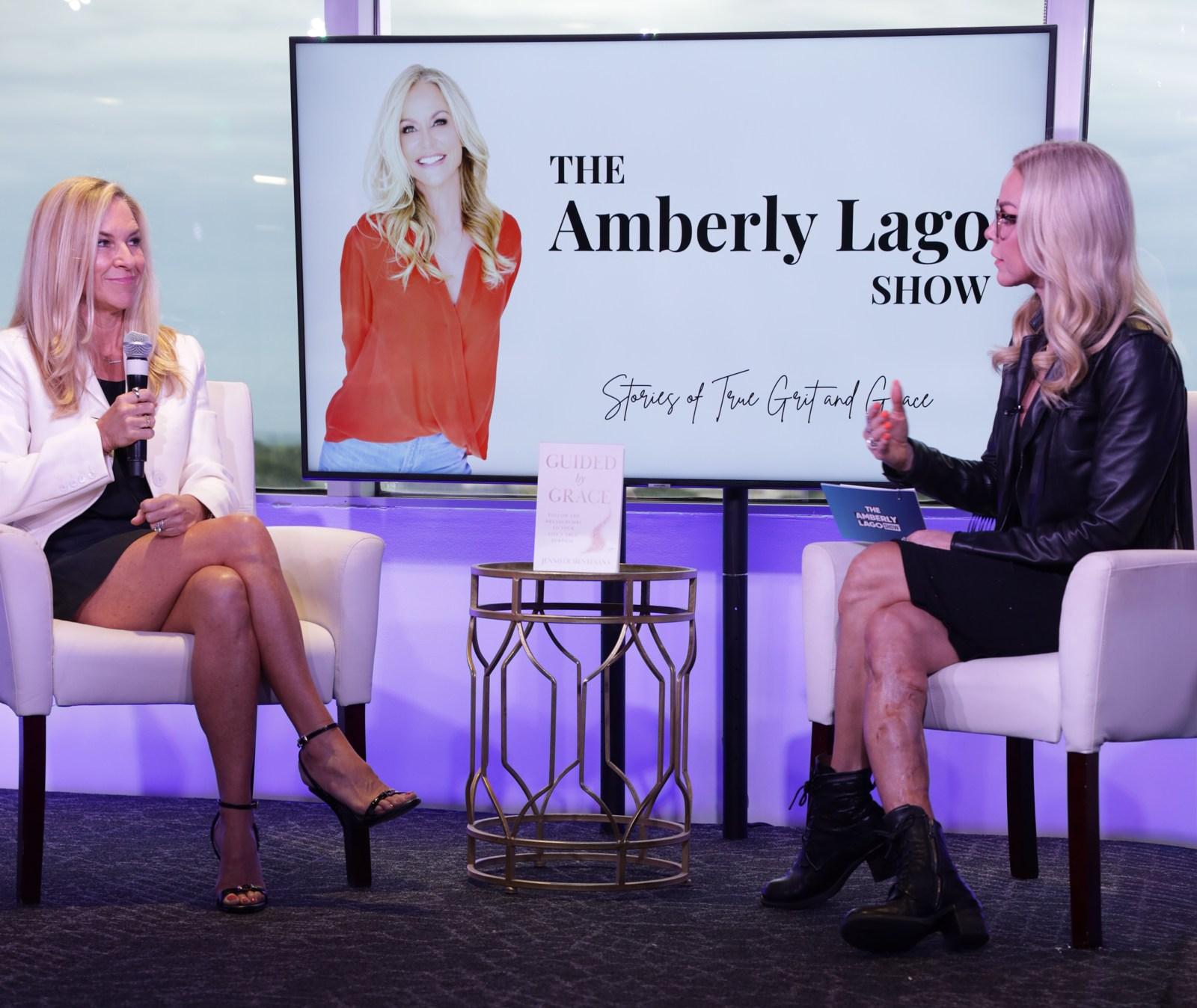
Season 5, Episode 202
Overcoming Addiction and Mental Health Challenges with Ryan Zofay
A conversation with Ryan Zofay

About This Episode
"It doesn't matter how much pain you've been through. The only one that's suffering is the person holding on to the resentments."
In this episode of The Amberly Lago Show, host Amberly Lago welcomes mental health advocate and speaker, Ryan Zofay. Ryan, has a life journey that is both inspiring and transformative. Coming from a difficult childhood that led to a struggle with addiction and consequent incarceration, Ryan's early life was marred by hardships. However, instead of letting his past define him, he used these trials as opportunities for introspection and personal growth. Displaying exceptional resilience, he overcame his addiction, marking an impressive milestone of two decades of sobriety.
Transformed by his personal journey with a 21 years of sobriety, Ryan felt a strong calling to assist others facing similar challenges. This led him to establish a prominent treatment center named We Level up. After building his We Level Up company, Ryan has found a place on the global stage as a influential speaker. Using his personal narrative of redemption and resilience, he inspires audiences around the world.
In this inspiring episode, explore Ryan's remarkable journey of transforming adversity into victory, and learn about his latest book, 'Unlikely Businessman.' Through honest conversations, Ryan delves into his expertise in addiction treatment and personal growth, providing invaluable insights and actionable strategies for entrepreneurs aiming to expand their ventures with less effort. Join them as they navigate the realms of sobriety, forgiveness, and personal growth, immersing yourself in a story of hope and empowerment. Tune in now to discover Ryan's inspiring tale.
Notes:
- Unveiling the intricacies: How early life shapes key brain regions (6:10)
- A teenage journey: From despair to sobriety with Ryan's inspiring transformation (15:00)
- Embracing forgiveness: Mastering the art of letting go, even in the face of profound wrongs (25:55)
- Proximity's profound impact: Empowering your goals through strategic connections (37:45)
- The symbiosis of culture and leadership: Decoding their role in business triumphs (48:40)
Links mentioned in this episode:
Follow Ryan
If you are ready to leave your mark by discovering your message and sharing it with the world, you've come to the right place!! Let's work together to build your influence, your impact, and your income! Join the tribe you have been waiting for to activate your highest potential and live the life you deserve! Join the "Unstoppable Life Mastermind!" and let us know you are ready for greatness! Read the "True Grit and Grace" book here and learn how you can turn tragedy into triumph! Thank you for joining us on the True, Grit, & Grace Podcast! If you find value in today's episode, don't forget to share the show with your friends and tap that subscribe button so you don't miss an episode! You can also head over to amberlylago.com to join my newsletter and access free downloadable resources that can help you elevate your life, business, and relationships! Want to see the behind-the-scenes and keep the conversation going? Head over to Instagram @amberlylagomotivation! Audible @True-Grit-and-Grace-Audiobook Website @amberlylago.com Instagram @amberlylagomotivation Facebook @AmberlyLagoSpeaker
Full Transcript
Hey there. I'm so excited to announce the Unstoppable Success Summit is back, y'. All. We are going to be in Dallas April 19th and 20th, and I want to see you there. Don't miss out on this opportunity to gain valuable insights and make valuable connections and leave with actionable takeaways so you can implement all of these things into your career and level up your life and your business. I've got Ben Newman, Rachel Luna, John Gordon, Rudy Rickstein. I've got a panel of speakers that specialize on publishing, pr, branding, podcasting, and TED Talks. And so if you are ready to level up, if you're like, I've got a message to share and I really want to increase my influence. It's time to kick the limiting beliefs to the curb. It's time to move forward past your fear. It's time for you to invest in you to bet on yourself. So I want to see you in Dallas. It's my hometown and I'm gonna make it, y'.
All.
I'm planning some big stuff. Okay? It's gonna be fun. My event planner keeps saying, amberly, you need to reel it in. I'm like, no. In. In Texas, we say go big or go home. So go to go.amberly lago.com that link will also be in the show notes to grab your early bird ticket. The early bird tickets will only last for a certain time and There are only 100, so these tickets will go fast. You're the first to know about it. I want to see in Dallas, so hopefully I will see you there to hug your neck and let's be unstoppable together. Okay, now on to the show. Thank you for tuning in to the True Grit and Grace podcast. I'm Amberly Lago and I'll be sharing inspirational stories of resilience and empowering ideas to elevate your business and your life, ignite your passion, and fuel your purpose. Hey, thank you so much for tuning in to True Grit and Grace. I'm Amberly and I'm really excited to have today's guest on. I think with addiction being on the rise, people really suffering from mental health issues, especially with everything going on in the world, I thought I need to bring on an expert in these subjects and and y'.
All.
His story, his experience, strength and hope is so inspiring. His story of turning tragedy into triumph is just going to uplift you. And he's got so many tools and take away. So I've got Ryan and Ryan, tell me if I'm saying Your last name, right? Zofe.
You did amazing.
Oh, good, good, good, good. I've got Ryan on the show, y'. All. He is a mental health advocate, a speaker. He's got a brand new book that just came out called Unlikely Businessman. He helps entrepreneurs scale their businesses while working less, which is, I think, what all of us actually want. He is the founder of We Level Up. It's a treatment center offering personal development and addiction treatment, as well as he does his own events. And so I am so excited to talk about sobriety, forgiveness, leveling up, and so many other things and your book. So, Ryan, thank you so much for being on the show.
Amberly, thank you so much for having me. It's such a pleasure to be here with you. And I just wanted to say I. I love what you're doing, and I'm so honored to be here to serve and your community and share my story of hope. And yeah, again, thank you so much.
Oh, well, thank you. I. The more I dug into your story, I was like, it really hits home for me, me being I'm sober. I got sober. And I think you got sober in 2001. Is that when you got sober? And I got sober 2016, it took me a little bit longer to become an alcoholic. And then when I did, I was like, oh, my goodness, I got a problem and got sober in 2016. But your story of how you went from such tragedy and were even incarcerated, it really hit home. My brother sits on death row here in Texas because he didn't get this gift of sobriety like we have. And so I would love to go back, just share, if you don't mind sharing a little bit of your story growing up and then how your. Your mom had substance abuse or addiction, and then you got into addiction and how you got out of that. Do you mind taking us back to that point where you hit rock bottom? I mean, literally, you were at. Well, I'll let you tell your story because it's fascinating. But, yeah, go ahead.
Thank you so much, Amberly. And, you know, what I've learned throughout my life is, you know, 95 of what we do today originated from. From your childhood and especially the ages between, like, 0 and 7. And so that's when the majority of my trauma originated and my first traumatic experience. I was. I was four years old. It was Christmas. And for whatever reason, the significance of Christmas, my. My parents sat me down and they told me that my sister had a fatal disease called Alexander's disease, and she wasn't going to be living that much longer, and it was devastating. I. I really didn't understand it. You know, I just knew that it wasn't good. And I felt the energy in the household and I started to see my sister progressively get sicker and sicker.
And what was the age difference between the two of you?
Sure. She was 18 months older than me.
Okay.
Yeah. So she was. She was my big sister. I loved her to death. She was my best friend. She was my everything. And so fast forward a year. I was five. It was my. It was my fifth birthday. And I remember there was. My dad invited all my friends over because my sister was really sick and they wanted, you know, to me be a part of. You know, they wanted her to be a part of my. My birthday. And, and, you know, and again at this time, I didn't really know much. I just knew that she was sick and, and it was just the way. The way it was. And then for whatever reason, I. I got in trouble during my birthday and my father grounded me. And I remember being in my bedroom and I remember my carpet was blue, my hallway carpet was brown. And my father was like, do not cross this, this line in the carpet. And I just really didn't understand what was going on. And I just remember keep. I kept calling my sister Ashley Ashley. And it felt like 10, 20 minutes. She finally started crawling around the corner and she had a trach in her throat and. And she. She was really having a hard time speaking. And I remembered. I was just so happy. I was so excited to, to, to have that moment with her and, and I was playing with her and it was. It was an amazing moment and it. And turned into such a tragedy. That was actually the last time I got to spend with my sister. Right after that, she started to have seizures and my parents rushed her to the bathroom. They. They put ice in the tub and they were trying to reduce her fever. She had 105 degree fever.
Oh my goodness.
Yeah. I just remember just being so devastated and just being so confused and not really understanding. And they were. They were telling me they had to rush her to the hospital and I wanted to go and they didn't want me to go with them. And I. Again, I didn't understand that. And that was the last time I saw my sister.
Oh my goodness. That is so traumatic as a child to go through that. And it's interesting. I want to go back to what you said, like from the ages of 0 to 7 is when we like, form all the. Our thoughts, our subconscious thinking. And I just actually, I Knew I'd heard that, but I just actually learned that because I have a friend of mine who's an incredible coach and he called me out on some stuff that I was saying. Like I would say, oh my gosh, I can't believe this person is helping me. Like no one ever helps me. Like I, I always have worked and done it myself. And he caught me and he took me back to when I was a child and we walked through the traumatic experiences that I had. And he's like, do you see where people help you all the time? People gift you by letting you be on their stage. I'm helping you by spending time with you. Right now this one company wants to give you medical treatment for free. Like people help you all the time. That's the story that you've created in your life. And it's like, interesting when we go back and we can look at those traumatic experiences and start to heal them. But that was just the beginning because shortly after that you started to witness other traumatic things. What was the next thing that that happened?
Yeah. So not only did I feel like I lost my sister, but then I started to experience the loss of my family. My father was a workaholic, my mother and him fought all the time. And then my mother shortly after divorced my dad. And I really again, didn't understand. So like, I'm, I'm literally just so confused. And I started to, to. To. To blame myself. I started to think like I was the reason I was the cause, because I just wanted their attention and their love so bad. They're just incapable of doing it at the time. And so I bounced around from my grandparents house and my mother, she turned to addiction. She was using prescription pills and, and she was, she was in nursing school, so she had a lot of relationships with, with doctors. And so she was writing her prescriptions. And I just remember like really not seeing her much. And then she started getting into another relationship with another man. And again, just so confused. Like what? Like, like I'm thinking, like, why? Like why aren't we good enough? Like why, why aren't my dad good enough? Or why, why aren't I good enough? And I started comparing myself so like these men and they were just so abusive to her. And, and it was just confusing because it's like, why are you allowing this? Like, why are you accepting this type of behavior and this type of abuse? And by the time I was nine years old, I remembered walking home from school, came into the house, and my father was in the kitchen and he was Drinking alcohol. And he then begins to tell me that my mother was just shot with a.357 Magnum in the throat and she might not live. And it was. It was just. It was devastating, you know, And I went to my bedroom, and that was the first time that I considered, you know, maybe. Maybe I don't belong here. You know, maybe. Maybe I need to end my life. And I just, like, went nuts, started screaming and crying, just going. Going crazy in my bedroom. And so, yeah, that was my real. My second, like, big traumatic experience that marked a lot of the healing that I've had to work on to get. To get to where I'm at today.
Oh, my goodness. And then you started turning to. Was it alcohol, pills? Both? What kind of addiction did you have?
Yeah, so, I mean, I was like a garbage can, right? Like, anything I can get my hands on. I. I just wanted to numb the feelings. And it was just so painful and so traumatic, you know, wanting to be there for my mom and wanting to prot. Her and incapable of doing it. And my father was an alcoholic, and he was abusive, and so I just never really felt safe. I never felt like I belonged. I just felt like I was, like, this outcast, you know? And. And I had references, right? Like, the human mind looks for evidence to support its belief system. And so the only evidence that I had was my mom left, my father's abusive. I go to my grandparents all the time. They wouldn't let me go to see my sister, they. Before she passed away. And so I'm literally living in this victim mentality, you know? And, like, what is a victim? A victim is a sufferer, someone that suffers or someone that experiences casualties or even fatalities, you know? And so when my sister died, I lost a part of me. I lost a part of who I was. And so if you're listening, what happened for you as a child, like, what part of you did you lose?
And.
And think about that, because, like, today, like, if. If you don't go back and heal that and rewire the story around that belief, you're literally walking through your life only a part of your capability.
And so that was so true. That is so true. Everything that you're saying, I love. I literally just started, you know, you. You think, oh, I've done therapy. I've healed that. I've. And I didn't realize that I was allowing things. Trauma that happened to me as a kid, that I was still playing out that story. And I literally, just three days ago, started rewiring my brain, changing the Neuroplasticity in my brain to think differently, to think that I am worthy of being loved, that I am worthy of being helped. And so what I've been doing to change that, and I'm gonna do it for 66 days, and I've actually got the book right here beside me, is I am writing down a whole page, whether it takes me five minutes or 20 minutes, a whole page every day of the things that I've done and accomplished that I'm proud of, whatever that is in my life that I'm proud of myself for, to try to change that. That thinking. Because it all boils down to, I didn't feel safe. I didn't feel. I didn't get the help. So I felt like, okay, I'm not worthy of that help. And so what have you. Well, we'll get to that. I want to get to the part where you wake up out of a coma, because I've woken up out of a coma too. And it's like, I don't recommend it. It's not fun. But it changed your life.
Yeah, it was. It was. And, you know, it's wild, right? Like, everything that I'm telling you today, I know it was a gift. And today I am so grateful that I had the experiences that I had, which might sound crazy to some people, because I would never wish that on my worst enemy, you know? And so my mom lived. She. She did not die. And here's the crazy part. Within. Within two years, she's back in that relationship with that man. And so.
Wow.
Yeah, it's insane. So now it's, like, so confusing. So now, like, there's, like, this enmeshment, and, like, I'm, like, learning these beliefs of, like, you can treat somebody like absolute crap, and. And then it's okay. Like. Like, it's okay. You can still accept that. And so, like, I'm literally learning how to, like, accept crumbs in life. And so by the time I was 11, I started using drugs with my mother again.
Just with your mom?
Yeah, she introduced me to my first. My first drug. My first time I got high was with her.
Yeah. And how old were you?
I was 11. 11 when that happened? Yeah.
11 years old. That breaks my heart.
Yeah, it's sad because it's only sad again, you know, like, change the story, change your life. Right. So, like, I'll speak from that perspective. At that time, it was. It was devastating. It was sad. I couldn't believe it, you know? But again, like, I just wanted to be a part Of. Of her life, and this is what she was doing. So I was like, okay, let me just do what she's doing. And then shortly after that, I became, like, her little pawn, and she started teaching me how to be a criminal. And she started. She started encouraging me to steal from my father. And the next thing you know, that turned into me hanging out with kids in the neighborhood, and next thing you know, that I'm robbing houses, stealing cars, and the more successful I would be at bringing money home. She would praise me, and she would acknowledge me, and she would pretty, like, I would experience, like, this unconditional love for what I thought. So, like, I wanted to be the best criminal. I wanted to be the best son. So I would go do all these horrible things, and I would come back, and she would just be proud of me. So I was just like, okay. I knew what I was doing was wrong, but it was worth it for me because I just wanted her love, and I just wanted it so bad.
Well, let me ask you something. You said, I knew it was wrong. So when you're growing up and you're that young and you're looking to, you know, a parent or an adult that you trust to give you guidance and tell you and teach you what's wrong and right, our own intuition and our guts always know, like, this can't be right. This can't be wrong. Did you, as a kid learn to not trust your own gut? Because here you knew what you were doing wasn't right, but your mom is praising you, saying, good job, good son. You know, did you have. Did you learn to not trust your gut? Or is that something that you. Because I know I. I learned to kind of not trust my gut. And I've had to relearn how to trust my own intuition and gut. Were you in that position or what did you learn from that?
Yeah, absolutely. I mean, there was definitely a time, like, thinking back during that time, I just feel like I numbed it out, right? Like, and. And that was a big reason why I would. Would use. I turned to drugs and alcohol because I hated who I was being. I just needed to numb myself. So I was like, whatever. I'll just keep numbing myself. And. And at this point, the addiction was just spiraling out of control. You know, it was just a part of life now. This was. This was me being a victim to my environment. You know, I was suffering. I was experiencing just real trauma day in and day out. And my. My addiction progressed. You know, between the ages of 11 and 16, I ended up getting arrested. The first time I was arrested was I was 14 years old. And I had a handful of burglaries, a handful of grand theft autos, and I robbed with a. With a handgun. So I had a second degree felony at age 14.
You. You robbed a what? With the hand?
A convenience store With a handgun. Dang.
Yeah. Oh, my gosh. So you, when you're that young, you go to juvie.
Yeah.
But after so many times, what do they end up doing with you?
Well, so I did two years. I was in and out for two years. And then my addiction progressed where at this point, I was 16 years old. And I remember this one day I was on the run because I violated. And I knew if I were to be arrested again, I was going to spend a significant amount of time in prison because of how many felonies I had and the fact that I was getting older. And I remembered my best friend Jonathan. It's funny, his birthday was actually yesterday. And I remember walking on the road and he looks at me and he says, he's like begging me to stop. He's like, ryan, you have to stop. And I was just like, this is just my life. Like, this is. I'm a street guy. Like, this is what it's going to be. This is my destiny. And he's like, you're going to be lucky to see 16. And I was just like, I was just like. Or he said something like, you're gonna be lucky to live past 16 or something like that. Because at the time I was 16. And I was just like, man, like, like this is it. Like this is my fate. Like I don't, you know, like I didn't really care. And. And then Shortly after that, October 8, 2001, I was up partying all weekend. I was in the front seat of my friend's passenger of the, of his vehicle. And we were taking Xanax all weekend and partying and whatnot. And I just remembered like the, the. It wasn't doing it anymore. Like the drugs weren't working. I wasn't, I wasn't feeling the high. I wasn't feeling what I was always looking for. And I just remember like taking a handful of pills and. And next thing you know, he's in a high speed chase. He's running from the cops. We flipped the car. I was pronounced dead at the scene. They trauma hawked me to the Delray Medical center, which is here locally. Yeah, my life was over at that point. I didn't, I didn't really know any Better, you know, I, I, yeah, it was wild.
And so when you, you were in a coma for like three days.
So actually, I, I really don't know. I remember waking up, like, October 9th. It was, it's a little blurry. I don't really remember, like, the intake process. I don't really remember, you know, how long I was in the hospital. I just remember, like, waking up and for whatever reason, just remembering October 9th. And that's when my sobriety dates started because, you know, that's, that's the last time I used. But then I, like, the next memory I have, I was literally, like, laying down in the, the juvenile detention facility, like, with my head down and somebody slapped the table and was like, hey, it's lunchtime. And I woke up and I was like, holy crap. Like, how did I get here? And it was, I was so scared because, like, I knew at this point, like, I'm done. Like, there's nothing I can do. Like, I am screwed. Like, I have 21 felonies. I have a second degree felony. The state attorney and the judge told me, if I'm back in the courtroom, they're going to adjudicate me as an adult. I'm going to spend the rest of my time in state prison. So I thought I was done. I thought my life was over.
Oh, wow. How long were you, did you end up in there?
So that stint, I did an additional nine months.
Oh, my gosh.
Yeah. And so I was released when I was 17. But thank God that, so what was so significant about that time? That was the first time that I truly surrendered. That was the first time that I was like, okay, there's nothing I can do. Like, I have to surrender. And my mother got sober at the time, which she gave me the greatest gift that I could have ever had, which is my sobriety. Like, so although the one that, the, the one that caused so much damage actually was the one who saved me. And so she came into the detention center, she gave me my first big book of Alcoholics Anonymous. She said, read this. And she said, and started praying to God because he's the only one that's going to get you out of here. And that's what I did. I started praying.
Well, I was going to say before this, did you have a relationship with Go. Were you a Christian at this time? Or was that your first experience of. She brought you the big book and said, you better start praying to God. Did you have, were you a man of faith before that at all?
So in third and fourth grade, they. They enrolled me into a private school called Christian Trinity Academy. And. And I think it was in Boynton Beach. And so I was introduced to Jesus Christ at that time, but I was so young, I didn't really know any better. I just heard what they said, and it resonated with me, and it was a part of my practice, so it was a part of my life. And then my friend Jonathan, his parents were really big into church, and they would bring me into the youth groups. And so I was exposed to youth groups and being around that environment. So I feel like I had a relationship with God. But that time in juvie was really when I saw the power of God and the power of miracles. And I truly believe Jesus walked on water, because I've experienced stuff that would be similar to that. This being one of them. You know, looking at. There was no reason why, literally I had a guy in my. In my dorm that had less charges than me that got adjudicated as adult, and he spent 25 years in prison. And so, my gosh. Yeah, I. Literally. It was. It was. And I. I. So I thought I was done, because I remember he went to. To court to get sentenced, and he came back and he was crying. He was adjudicated as an adult, and he was looking at 25 to life. And I was like, I'm next. Like, this is it. Like, I'm. I'm gone. Like, my life is over. And I was in the courtroom, and. And the judge, just for whatever reason, gave me another chance.
Wow.
So.
Well, do you think it's because he could see the potential in you that he could see that you were rem. Remorseful and that you wanted to change and you had dried out and in. In jail. Do you. Why do you think it was that he gave you another chance?
Sure. And so I would say that was probably the first time somebody saw something in me that I didn't see in myself, because I really don't know why. You know, this was the first time somebody's asked me that question. So now, like, reflecting back, thinking about it, like, he obviously bet on the right horse, because I know that moment in my life was such a turning point for me, which is the foundation of who I am today, because going through what I went through, watching my mom get. I don't even share this. She. She. She then was stabbed by this man 13 times. He attempted to take her life again. So he. Not only did he shoot her in the neck, he stabbed her 13 times, like, beat her up all the time, you know, smoking Crack cocaine, selling herself. Just like, pure abuse between both parents. Living on the streets. Like, I. I could never imagine anybody having to go through what I went through. But I am so grateful because the man I am today was all created during that time. And so I am so obsessed with helping people. I am so obsessed with being consistent and. And. And just. Just waking up every day, like, being the best version of myself possible. And. And so everything is energy, right? Like, energy can't be created nor destroyed. And so those moments are my. My power source. Those moments are where I find the energy to get out of bed when I don't want to, or jump on a podcast when I don't want to, or step on stage and share my story when I don't want to, or, you know, go out and do social experiments. Like, I go out and I. I feed the homeless. I take care of people on the streets. I hold signs and stand on the side of the road for hours and talk to people that are struggling with mental health, illness. And so, like, I'm at a place in my life where I don't have to do that, but I don't ever want to forget where I came from. And so those are the things that allow me to remain teachable and to remain humble. And so, again, like, I'm just so blessed to have gone through what I went through, because I get to be here in this moment with you sharing this message of hope. Because where I came from, people don't make it out. People don't make it. And I saw them.
I.
All my friends I grew up with are dead or in prison. And the guys that I was in juvie with, they're still. They're probably just getting out right now.
Oh, my goodness. You truly are a miracle. And we have a saying. Don't give up before the miracle. And you are such an example of that hope and a miracle. And I love all that you share on your social media. Actually, I was watching on Instagram. Y' all can follow him at Ryan Zofay. It's Z o f a y You talking about forgiveness. And so you constantly share this message of sobriety and hope and recovery, all the things. But you also teach valuable lessons along the way. Can you share how you learned the power of forgiveness kind of the hard way with us?
Yeah. And so fear prevents all of us from having the life that we want to have or experiencing the joys or even making decisions to. To better ourselves. And. And so fear is an illusion. Right? Like, the real definition of fear is real. And Present danger. So, like, if there's an alligator in front of you, clearly fear is intended to protect you. But 95 of people today, fear preventing them from doing the things that they need to do. And it's all an illusion. And so for me, it's like, how do you find leverage? And so leverage is, is by giving something of meaning, right? Like our minds are meaning making mechanisms. And so what really helped me was, you know, being in proximity of recovery and, and going to personal development seminars and learning from other people. But my own personal experiences have given me the leverage that I've needed to forgive. Because I understand the only one that's in pain is me. The only one that's suffering by holding on to these resentments. And this anger is me. And I was literally in church yesterday and the sermon was, I hate you, but it's killing me, you know, and that just resonates with me. And so my father and I, we got a huge fight. It was in 2019, and this was probably the long, the biggest knockdown, drag out fight we've ever had. And my father's a very, very, like, hard, thick skin, tough man. And he was very abusive to me. And it was, he was, he was always challenging me and never really acknowledging me or, or telling me I'm doing a good job. So, like, I feel like I always fought for his attention or fought for his love. And no matter what I did, he always said that he could do better. So, like, I was always in, I was always competing with him. And so this one time we got in this huge fight and I said some very, very, very hurtful things. And he was going through chemo for the second time. And he knew what he did was wrong, and I knew I did what I did was wrong. But I was like, I just needed a cooling off period. And so he text me on a Friday and he says, hey, Ryan, let's grab lunch tomorrow. And I didn't have anything to do. I. But I ignored him. I text him the next day and said, oh, hey, sorry, I'm busy. Maybe we can get together next week. And knowing that that was not true, I was just avoiding him. And so that was a Friday, Tuesday. I'm laying in my bed, I wake up with like this, this pounding pain on my heart. I look at my phone and I got a missed call from somebody. I didn't know who it was. The call happened again. I missed it. And then I get a text message. And here's the crazy part. This is, this is how deep the revenge was. And this is how angry I was at the time. It was my dad's fiance, and I didn't even have her name saved in my phone. And she says, ryan, it's Velma. Your father just had a stroke. You need to get to the hospital. That was a very painful moment for me. And I rushed to the hospital. I walked in, and my dad's such a strong man. He. He looks at me and he says, it's okay. He says, it's okay. I love you. I'm proud of you. And that was the last time I got a chance to. To see my father. And I didn't really get a chance to say goodbye or. Or to make amends. And so that moment is the moment that drove me to write a book, to start speaking on stage, to share my message, to do personal development seminars, to jump on podcasts, to show people that you can forgive. It doesn't matter how much pain you've been through. The only one that's suffering is the person holding on to the resentments. And so forgiveness is a big part of my journey because. And even if you're in a church, if you're a Christian, I mean, like, Jesus died on the cross, you know, like his own people betrayed him, you know, and. And. And there's such a power in the ability to just forgive somebody. And I actually just did that with my ex girlfriend. You know, she. She did some things that weren't so nice to me, and I just text her a beautiful text this morning, and I was like, you know what? Like, I forgive you. Like, I'm not gonna hold on to this anymore. And it's so freeing when you're able to do that.
Yeah. Well, let me ask you something. How did you learn to forgive yourself? Did you beat yourself up about meeting your dad and not being there for lunch with him? And if so, how did you learn to forgive yourself and give yourself grace? Sure.
Yeah. And it's. It's. Again, it's. It's all the meaning that you give it. Right. And so what we focus on expands what we focus on we feel. And what we feel is the quality of our life. So the emotions that you're feeling on a daily basis are going to determine the quality of your life. So if I'm focusing on what I don't have or focusing on what I didn't do, then I'm going to experience disempowering emotions. But if I shift my focus and focus on the gift and focus on. Nothing in God's world happens by mistake. All Of a sudden, I'm going to experience joy and grace. And so I started to shift my focus. I started to ask myself a different question, and. And I started to give it a different meaning. You know, there was a time, and it's a daily grind. Like, every day I'm battling it with it. You know, like, today I woke up, and the meaning I gave it was like, you know what? Like, that was a gift. That was the leverage that I needed to. To be here with you today. And I know that I was intended to learn that so that I can share that message with others and show others that. That it's okay to make mistakes. And none of us are perfect. We're humans. We're here in Earth school doing the best that we can. Yeah, I've been able to just shift my focus and. And really just find the gift in all of it, you know, because there. There truly is the gift. And so I've really conditioned myself to. To find the gift in everything.
Well, that's beautiful. And I think it's so true. I think that resilient people choose very wisely what they focus on. What is something that helps you shift your focus? Is it. I know you said you conditioned yourself. Like, I know for me, gratitude really helps me shift my perspective and my focus. And I. And thank you also, Ryan, for saying that it's a daily grind. Like, it's something you didn't just get sober, become resilient, or get through all this, and then every day is just a cakewalk. You know, it's a walk through the park. It's like, thank you for saying that. It's a daily grind because there's so many people that think that I'm motivated all the time or, you know, I'm always inspired, and I really work on that. I get up extra early so I can do things. Like I told you, I've been writing things to try to change my. My mindset a little bit, but it is. It's. It's something daily that I work on. Gratitude helps me shift my thinking and my perspective. Is there a tool or a key or something that you do that helps you when you're having a hard time?
Yeah, absolutely. And so I think the first thing that's important is to understand that 95 of what we do throughout our day is unconscious.
It is true. Right? Like, you don't even realize. Like, I. I don't know if you're listening. You've ever been driving and you're like, oh, my gosh, how did I even get Home. I don't even remember the way home. I was on autopilot.
Right, Right. And you woke up out of the same. The same side of the bed. You picked up your phone, or you walked to the bathroom, or you brushed your teeth, or you took your dog out, or you drank your coffee, you went to the gym. You literally do the same thing every single day. And so the first thing is to understand that, because then what you'll start to realize is you're wasting so much time throughout your day. And so the objective is to create a conscious awareness of a practice. It's all about practice and having conscious awareness. And so every single day that I wake up, I live out of my calendar. So I wake up, I hit my knees and pray. I journal, I cold plunge, I hit the gym, I attempt to do something that's out of the ordinary because I want to, like, rewire my brain real time. And. And so if you notice, like, everybody brushes, if you're righty, you brush your teeth with your right hand, shift and brush your teeth with your left hand, all of a sudden it feels different, it feels unique. And so taking those types of practices to, To. To. To. To see things differently, to feel things differently, all of a sudden you're going to start to see that, like, time is just an illusion. And you'll start to realize there's. There's so much time that you have available to start adding on these new practices and rituals. It's all practices and rituals. And it's an effort. You have to. You have to literally put effort in every single day to consciously focus on who you want to become. And, you know, Joe Dispenza talks about it like, we live in the past. You know, our thoughts create our choices, which creates our behaviors, which creates our experiences, which creates our emotions, which is the state that we're living in. So if you're living in the past, what that person did to me, what they didn't do to me, or I didn't get the job, I didn't get the relationship I wanted, or I didn't make the money that I wanted to make, that's your emotional state that you're living in. And so we have to focus on who we want to become. We have to focus on who and what we have to do in order to become this new version. And so because 95% of what we do is in the past, we have 65,000 thoughts a day, 85% of them happen to be repetitive, negative thoughts. Because our unconscious mind is looking to re. Is Looking to scan the horizon to find what's wrong in every situation, because it's intended to keep you alive. And so understanding all of this, you have to be able to manipulate your mind. You want to create these strategies that trick your mind. Because if we closed our eyes right now and we started thinking about gratitude and we started thinking about amazing experiences and relationships that we want to have, and thinking about, like, stepping on stage and, and becoming this unbelievable motivational speaker and transforming lives and, and, and saving millions of people and making millions of dollars and impacting all these people, all of a sudden I start to experience that. That's, that's my experience. My emotions are aligned with my thoughts. My body doesn't know if it's real or fake. My body is only being triggered by what my mind is thinking. So we have to focus every single day on who we're becoming and who we want to become. And then once we're. We are that person, then the law of attraction happens and you start to attract who you are. And that's been my obsession, because now I understand this. And it's like, hey, if I want to be a world leader, I have to become a world leader. What does a world leader do? Like, how does a world leader show up? And then if I'm showing up as a world leader, then I'm going to attract that level of attraction in my life.
It's so true. And I know that you've talked a lot about, on your YouTube channel and such, you've talked a lot about proximity and the importance of proximity and how that's changed your life, basically. I mean, even in the gym, you know, you working out with somebody, you're like, I want to work out with this person because they have the kind of workout and regiment that I want to achieve. And so can you talk to us a little bit about how important is it to be in proximity of people? Everything.
It's, it's, it's. That's when my life started to change. Because the human mind looks for evidence to support its belief systems, right? And so if I want to believe that I can do something that I'm not doing today, then I need to put myself in a position to be around somebody that's doing the very thing that I want to do. Because what you'll start to see is that that is a human just like you. And then you're like, wait a minute, he's not that much different than me. He's not that much more unique than me. Actually. If I start to apply the Things that he's applying in his life, I will get some resemblance of that. And all of a sudden that starts to happen. And then. And then your mind starts to believe it. And all of a sudden you're like, wait a minute. Like, I can't do this. Like, wait a minute. Like. Like, I. I can step on stage and be a public speaker. I can lift heavier weights if you want to. And. And at the end of the day, it's like, disruption follows intention. And so when you're intentional with something, understand that disruption is going to follow. And so think of it like if you own a home and. Or you. You grew up in a home with your parents, and. And you live there for 30 years, and all of a sudden your parents like, hey, I want to retire. We're going to move away. And they give you the house, and they're like, all right, here's this home. It's in your. It's in the will. It's. We're giving it to you. And the entire neighborhood is building all these new homes. And all of a sudden, like, well, I want a new home. Well, what's fault. What's following that intention is destruction. You have to tear down the old home in order to build a new one. And that's the same thing in life. Like, if you're going to intentionally do something, understand that destruction is going to follow that. Because you're now shifting the energy field. You're shifting how you're showing up. You're shifting who you're being, right? And so all these things are patterns and habits. And so if I decide to be something different, then. Then the things I was doing prior to making that decision are going to be disrupted. And so that means relationships might change. Because here's the thing. Let's say I. I go out party all the time, and I have all these friends, and all of a sudden, you know, like, guys, I'm gonna stop drinking, and I'm gonna start going to the gym. Well, guess what? Those friends are no longer going to be your friends because they're not going to contribute to your growth. So that's disruption, right? And so it's so important to be around people that can model excellence.
Oh, it's so true. And I love that you, you know, you practice what you preach. Like, you go and you get and go to Tony Robbins seminars and stuff like that. And let me tell you, I'd always heard how great Tony Robbins is. I'm like, yeah, I. I know, but like, man, what. What? People go nuts over him. Like, I. I don't know. So I, I experienced after I first moved to Dallas, Wow. Had a friend say, hey, Tony Robbins is doing this event. I'm like, yeah, I want to go. So we get tickets and we don't get the platinum tickets, which are right in front. We get like the gold tickets that are like right behind the front row.
Right.
I believe everything happens for a reason. Tony Robbins, I kid you not, stood in front of me for our. Right in front of me. Not in front. He wasn't in front of the platinum row. They were like turned around backwards, stood in front of me and just poured into us for like three hours. He was so close to me that he, when he was talking, he was spitting on me. Like, spits, hitting me. I'm like, oh my God, Tony Robbins is spitting on me, you know, and he's got these big hands and he's out there clapping. And I was like, oh my gosh, this is unbelievable. And you could feel the energy. And it was like, it was a game changer for me. And I was like, wow. So I get it. Like, I know. That's why I think it's so important to get in the room at events. And I know you do your own events. I wanted to ask you because I know we're running out of time. Just everything that you share is so amazing. We're going to get to your book too, because you have. We level up. You do, we level up. Events for mental health, self development. But you also have a facility for recovery where you help people get sober. How many beds are in that facility?
Sure. So right now on online, we have 174 active beds. So we have five programs in four states. Within the next 12 to 18 months, we'll have eight programs in five states, over 300 beds. And so we've been doing it for about 10 years now. I have about 600 employees, so that's my primary source of income. And so the personal development was inspired by Tony. So I've. I've been to about 30 Tony events, so I've done 30 of those events over the last five years. And I was a lion. So I was in. I was a part of Tony's inner circle. And I remember going to his house for the first time. It was July 2020, right before the pandemic, right after the pandemic happened. And I literally watch Tony apply everything that he taught me real time in his life, because his whole company literally went bankrupt overnight. And so it was really cool to see and the meaning and the grace that he had was just so profound. The feedback to me was like, quit playing small, Ryan. Like, there's no excuse. Like, you need to get out there. And I remembered that moment with my father, and I was like, okay, that's the power source that I need. And so I started making the decision to put on events. And it's been the best thing I've ever done because I've. I've helped over, you know, a couple thousand people at this point. And it's such a magical moment. To be there at the ground level with humans doing the best that they can with the intention of wanting to grow and to heal and to be able to experience that with them is just such a beautiful experience. And I'm so blessed to be able to do that.
Oh, well, that's. It's amazing and must be so fulfilling all the people that you're helping. So you do your own events and now you're speaking all over for other events as well. Have you ever spoken at one of Tony's events?
Yeah. So August 2021 was my first time speaking. Tony actually shared the mic with me, and it was the first time in Tony Robbins history where somebody was allowed to facilitate that was in the crowd. So it was. It was. It was my mom, that was Sage, his wife pulled me up on stage. Everybody was crying. It was just such a magical experience. You know, Tony's a great friend and his. His wife and I were friends and I love them dearly. And. And so, yes, I've spoken in front of probably like, oh, no, actually, I spoke at an event just recently in. In. In November. 42, 000 people. I spoke day with destiny. 9, 600 people. I've. I've done that like twice. So I've spoken on Tony stage a handful of times. Yes.
That's incredible.
Yeah, it's magical.
That is incredible.
Wow.
Yeah, so I had to ask you that. Now tell me. Your book just came out and it's called Unlikely Businessman. And I mean, we've just kind of scratched the surface of a little bit of the things that you do. You help so many people level up their businesses. Tell us a little bit about your book. What inspired you to write your book?
Yeah, so Tony, again, inspired me. You know, he. And I was so ashamed of, like, who I was. And so it was. It was a part of my healing journey because getting what was inside of me on. In writing and. And published was. Was. Was a two, two and a half year process. It took me.
Okay, thank you for saying that. Because you know what I had, it was very cathartic for me to write my book. And I have some people go, oh, my book just poured out of me. I went and checked myself into a hotel and wrote the whole thing over a weekend. And I'm like, really? Because it took me two years to write my book.
Yeah, well, it's so true. They say, like, your first million is the most difficult. They say your first book's the most difficult because your mind hasn't experienced it before. And, and so, yeah, clearly once you, if once you've accomplished it, then you have a reference of like, oh, I've done this. And then, you know, the cheat code, the steps that you need to take in order to show yourself the next time to do it much faster. And so like, success rewards speed. And so I've now started to teach entrepreneurs and business owners the very things that I've implemented in my business to scale their business. And so I've done it. I've walked the path. You know, this year my business will do probably about 75 million in revenue. And so I am able to show people exactly what I did. Like, hey, this is exactly what I did. This is the systems that I've put in place. These are the seven pillars that I implement and focus on on a weekly basis. And this is the mindset, this is the leadership style that I have. And this is how you enroll your employees. This is how you create an environment where everybody is having so much fun and it's exciting and giving people a compelling future and, and giving people a career and, and transforming people's lives. And that was a big reason why I started doing the personal development seminars, because Tony says, like, what's your X factor? Like, why are you better than everybody else? Well, I'm better because I'm the leader and I'm going to get in the, I'm going to get on the ground level and I'm going to show people exactly how to heal trauma and to have healthy relationships, to forgive people that they've been harboring resentments with and creating lasting change in people's lives. And so once you create lasting change in somebody's life, you have a friend and a brother forever or a sister forever. And so that's the culture that we have as an organization. So that's what I'm really excited about next is as teaching entrepreneurs how to have the freedom and the life that I have. And I'm a seventh grade dropout, so the book is literally an unlikely businessman. Like, I was not intended to Be the man that I am today. And so I'm willing to show people how to do that, and I'm very excited about that.
Well, you've definitely done the work. You have definitely done the work. And I would rather much rather learn from someone who has experienced it rather than studied it. You know, I. I would much rather learn from someone who has gone through it. They know exactly. There's something very powerful when you can go, oh, me too. Like that. That's me. And. Or I want what you've got. I know we don't have time to go through all the seven pillars, but can you give us a couple of pillars that are in the book?
Sure, absolutely. So the first one is culture and leadership, and so it's who you're being. Right. And so, like, every single week, I do trainings. So I. I train my staff and I show up, and I am the change that they want and need to see. And so I have a servant leadership style, and I teach servant leadership, and that style is leading by example. And so I'm not a guy that's gonna get on stage and start preaching to you what I think you should do. I'm a guy that's gonna get on stage and say, hey, this is how I. I do it. This is the practice that I live. And if you apply this practice in your life, you will have a life beyond your wildest dreams. And that's the very representation of what we teach. And that's the first thing that's first and foremost. Right. Like, who are you being as a leader in your organization? Right.
And yeah, it's so true. It's not. And that's the same with. With being a parent, too. You know, you can tell your kids to do something all day long, but if you're not doing it, they're. They're looking at how your actions. Actions speak louder than words. And so it's the same thing whether, you know, you're a mom and you want some better leadership skills for your kids, or you run a big company and you want to be a better leader. So I love that you teach that. What's the second one you were going to share?
Sure. And so I'll tell you that. And. And so what you just mentioned, I think is just so important because, like, growing up for me, you know, my parents would be like, hey, don't do that. But then they would do it. And so I was learning how to be manipulative, and. And I was out of alignment with integrity. And so integrity is so important for for leadership, your words have to align with your actions. And if your words align with your actions, then you're going to create a level of buy in. You're going to create a level of, of, of authenticity that your people are going to want to march with you. And so that is so important. The second one is like sales and marketing is, is what we would, we would teach and I, I expand on sales and marketing. And again, it's like sales trainings and creating like building rapport and, and how to have, you know, enrolling conversations to where people are like leaning in and they're attractive with, they're, they're, they're, they're interested and they're inquiring and they're anticipating what you're sharing. And so you're creating this level of attraction. And so sales is so important, obviously. And, and then marketing is again, it all leads into culture, right? And so like, what is marketing? Marketing is, is a brand. And so like the brand is somebody, a human attaches a story and they see themselves in a brand. So like, when you think of like Rolls Royce, you think of wow. Like, wow, look at myself in Rolls Royce. That'd be an amazing experience. Like, you start to play this tape and you start to have this experience. So teaching brand is like, what level of impact are you creating? How do you leave people feeling when, when, when, when they experience your brand? And so like, when you think of like the best cell phone, you think of iPhone. Because the experience that you have, the way you feel about it, how efficient it is, how user friendly it is, you can literally do everything you want from your iPhone, Everything. And so that's the brand. So just really like expanding on all of those. And then, you know, finances is so important because it's, it's, you have to know your numbers, right? Like, I teach people how to make decisions based on optics, based on data, not based on speculation or, or based on theory. And so let's look at the scoreboard. What does the scoreboard say? The scoreboard doesn't lie. Numbers don't lie. And so teaching people how to really create KPIs, every time a business intersects with a relationship or an action, there's a KPI that needs to be created. So creating like a really robust KPI, so you literally are tracking every single thing that's happening in your business. And this is going to give you the ability to make real decisions based on optics, not based on speculation.
Oh, that's so important. And I remember when I was doing my first event, my first big event, I was talking to the web guy who was awesome, and he was helping me. We're trying to come up with a number for how much tickets would be. And he's like, well, how much does the event space cost? And. And I'm like, oh, oh, well, I hadn't thought about that. Oh, I hadn't thought about that. I learned so much because I was just like, I'm the kind that. I'm like, yeah, I want to do an event and it's going to be so much fun and we're going to have this speaker and that speaker. And then I was like, oh, you're so right. Numbers don't lie because you definitely don't want to be left in the red, you know, so that's so good. I can't wait to read your book.
So a lot of the book is really just my memoir. I'm actually going to have a volume two that's going to give more like business principles. But a lot of it's my memoir. There are some tips and tricks in there. But again, it was, it was a two and a half year book. It was literally like pulling teeth to get me to do it.
Wow. Well, I'm glad you did because you're giving others hope that they can get through challenges, that they can turn tragedy into triumph. So tell us the best place to find you, to find your programs, to find your events, and to find your book.
Sure. So we Level up is the name of our organization. So it's welvelup.com and that has all of our information in regards to our mental health facilities and our substance abuse and alcohol facilities. The best way to, to find me would be my social media, which you've already shared, but I'll share it again. It's Ryan Zofa. It's R Y A N dot Z O F A Y. And I'll do all of my promoting there in terms of events and like speaking opportunities and whenever I'm sharing on other people's stages or other podcast. And so that'd be the easiest way to find in my book. You can go to Amazon and just type in an unlikely businessman and that will pop up and you'll be able to order it. And yeah, so from, from, from what I'm hearing, it's a good read. So I am an Amazon bestseller. Not really sure what that means, but I guess it's something good.
Oh, it's awesome. You're incredible. Thank you so much for being on the show. And y' all take a screenshot if you're watching on YouTube or if you're listening on Spotify or. Or itunes, whatever you're listening, whatever platform, take a picture and tag me at Amberly Lagomotivation and Ryan at Ryan Zofe. And when I see that you have tagged me, I always share that again in my story and definitely head over and check out his book. Thank you so much, Ryan, for taking the time to share your experience, strength and hope and all your wisd. I really, really appreciate you.
No, Amberly, the pleasure is mine. The consistency and the commitment that you have to do this, I know how difficult it is. I know this takes a lot of time. This takes a lot of effort. And I just want to acknowledge you for being the change that this world needs to see and allowing for this opportunity to share my message and others that you've worked with in the past. So thank you for what you're doing.
Oh, thank you so much, so much. And thank y' all for tuning in. We'll see you next week.
Pain to purpose to joy.
Never Miss a Conversation
New episodes drop regularly. Subscribe on your favorite platform and never miss a conversation.