

Season 3, Episode 138
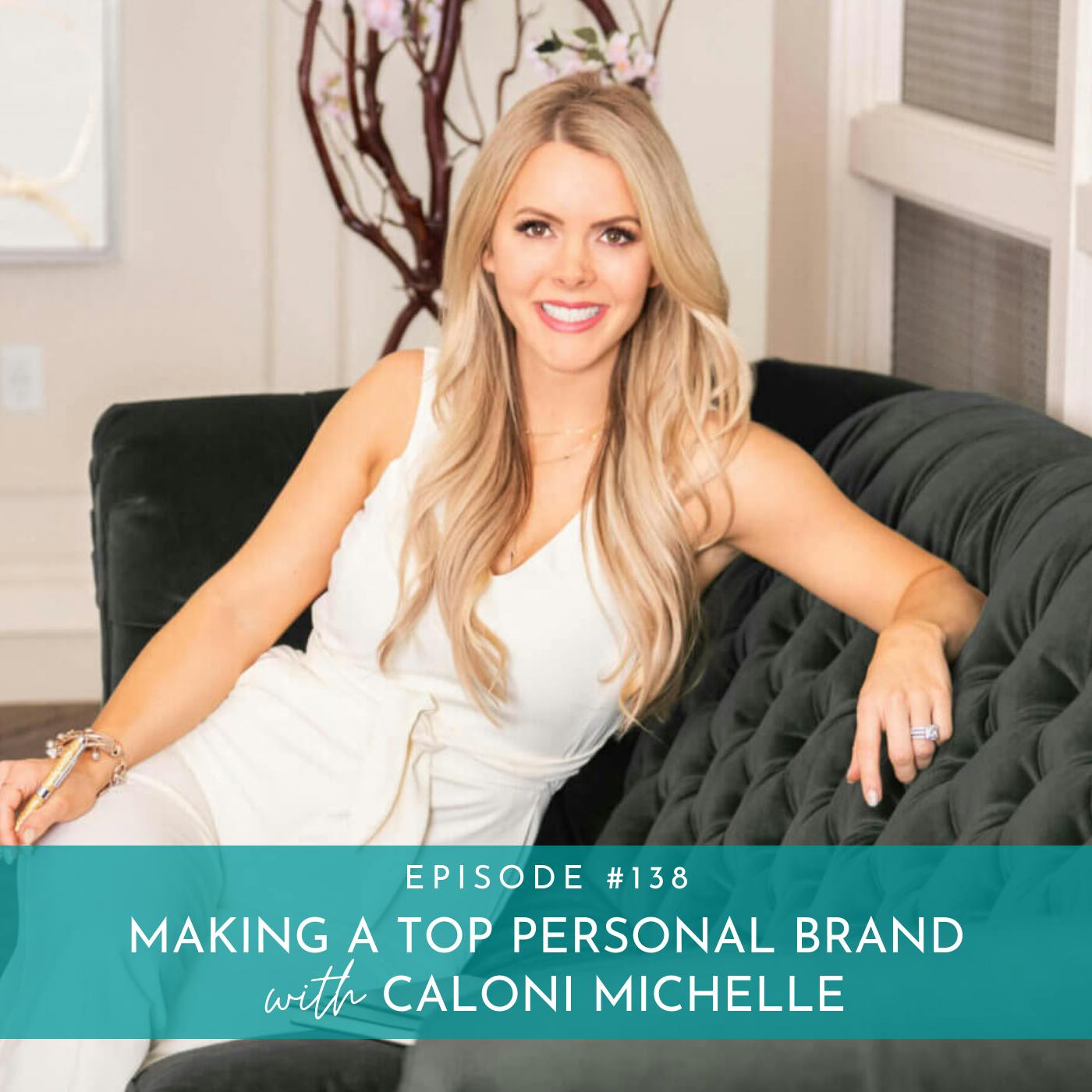
Making a Top Personal Brand with Caloni Michelle
A conversation with Caloni Michelle
About This Episode
I know that resilience applies to all areas of life, ESPECIALLY building a business. This week I brought my friend Caloni onto the show to share how to build and grown your brand and help you be recognized for your best work.
Caloni Michelle is an internationally recognized authority in digital marketing and global branding. She is an international speaker and trainer, event host and global marketing and brand consultant. She has been interviewed on top podcasts with 50 million downloads.
With 17 years of experience in digital marketing, Caloni has built noteworthy international brands and multi-channel marketing strategies for multi-million-dollar brands that have delivered revenue growth up to 400% and audience growth up to 1000%. As a dynamic leader of cross-functional teams, she has built top-performing international marketing teams in 5 countries.
She is the founder and CMO of Brandstrom, a personal brand agency helping founders, CEO, consultants and thought leaders build, grow and market their personal brands online. Additionally, she brought the LinkedIn Local movement to Salt Lake City. She has worked with the U.S. federal government and received national recognition as a recipient of the U.S. Senate Award of Excellence and the Bank of America Social Achievement Award.
In addition to a dynamic background in marketing, branding, business development and operations, she obtained a MBA degree from Penn State. She has been featured in Forbes, ABC, NBC, FOX, CBS and 400+ other publications. As part of her ongoing commitment to growth, she has personally spent over $250,000 on professional and personal development. She's on a mission to help 1 million people build authority, increase revenue and impact millions by transforming their personal brands.
In this episode Caloni shares the story of how she learned to value struggle on her way to success, how personal branding is essential to your career success, and her best tips for building a solid personal brand.
Here's what you will learn:
- How important struggle can be to success (2:31)
- How the loss of Caloni's father taught her perseverance and resilience (8:45)
- Why different mentors can impact your mindset uniquely and the importance of being coachable (16:29)
- Identifying your target audience and how to discover your unique gift to the world (24:07)
- How our values relate to our brand (31:46)
- Why a consistency pays off and having a purpose greater than one's self inspires you to keep moving forward (38:16)
What did you learn from this episode? Share on Instagram and tag me at @amberlylagomotivation and @calonimichelle so we can see!
Follow Caloni
Links mentioned in this episode:
If you are ready to leave your mark by discovering your message and sharing it with the world, you've come to the right place!! Let's work together to build your influence, your impact, and your income! Join the tribe you have been waiting for to activate your highest potential and live the life you deserve! Jump on the waitlist for the next "Unstoppable Life Mastermind!" JOIN NOW and let us know you are ready for greatness!
Read the "True Grit and Grace" book here and learn how you can turn tragedy into triumph!
Thank you for joining us on the True, Grit, & Grace Podcast! If you find value in today's episode, don't forget to share the show with your friends and tap that subscribe button so you don't miss an episode!
You can also head over to amberlylago.com to join my newsletter and access free downloadable resources that can help you elevate your life, business, and relationships!
Want to see the behind the scenes and keep the conversation going? Head over to Instagram @amberlylagomotivation!
Audible @True-Grit-and-Grace-Audiobook
Full Transcript
Thank you for tuning in to the True Grit and Grace podcast. I'm Amberly Lago and I'll be sharing inspirational stories of resilience and empowering ideas to elevate your business and your life, ignite your passion and fuel your purpose. Hey, it's Amberly Lago. Thank you for tuning in to True Grit and Grace. On the show, we talk so much about resilience and sometimes having to reinvent yourself and how to build your business and your brand. So if you're wanting to start or grow your business through personal branding, I am so glad you're here because I have the expert, the amazing my friend Kalani Michelle here with us today, y'. All. She's a personal brand consultant, international speaker, serial entrepreneur, philanthropist with a heart of gold, but she also leads huge branding and marketing seminars. Actually, we're doing a mastermind together. And so it's been so great to work with her. And I am just so grateful you're here on the show because I think, I mean, the listeners need help with branding and marketing, but so do I. So selfishly, I'm going to soak all of this in for myself, too.
So welcome to the show. Thanks, Amberly. And I'm excited to be here. I just love the human that you are and I love how open you are about your journey and how many lives you truly do impact and inspire. So thanks for having me.
Oh, thank you. Well, you know, I didn't know until I started really digging deeper into your story and your website, your beautiful website and everything that you, you know. Yes, it's easy on social media to see people and it's like, oh, wow. Well, they're legendary. They're. They've got it all figured out. You had some struggles along the way. And so I like to share a little bit of the struggle to success so people know that it is possible. I think when we have hope that we can get through those hard times, that is what really gives people what they need and that inspiration to keep moving forward. And so you had kind of like a tough childhood, tough business struggles until you got to where you are today. Can you look back and see some of the struggles and see that as like kind of a blessing for you to get to where you are? Did you learn a lot from that? And can you take us back to the moment when probably one of your hardest struggles, how you got through that and where you are today?
Oh, good question, Amberly. You know, I was just having an in depth conversation with one of my friends here in Utah So I live in Salt Lake City, Utah, right now. And I was just having a conversation with him because he has a very large platform here in Utah. And we were talking because he is such a gift to people, but especially men, with his mastermind, all of that.
Was it Jimmy, Rex?
It was Jimmy.
I love Jimmy.
Oh, my gosh. So we have.
He's been on the show.
Really? Oh, that's fun. Okay. So I was talking to Jimmy, and I was just like, jimmy, like, you truly do have a gift. And we were like, we were talking about kind of just my childhood, just the struggles that I've been through and all of that. And I'm like, jimmy, like, I don't know how I made it through what I have gone through. And still, like, I'm positive, I'm optimistic. But more importantly than that, I want to be able to give back and impact people who may not have the resources, the guidance, the grit to really get through it. And he's like, Kalani, he's like, you have a gift. And I never really considered myself for it to be a gift. I knew that I want to change lives. I knew that I wanted to impact people. I knew that I wanted to give them hope and show them a way that they can overcome certain trials and tribulations in their life. But I could never figure out, like, where did this come from? Where did this constant perseverance, this constant desire for growth and constant desire to overcome, like, where did this come from? And I could never pinpoint it. And he looks at me and he says, kalani, it's a gift. Ever since he said that, which was about a week and a half ago, is just something that I have cherished because it truly is a gift. You look at so much of humanity and so much of the world and how much hurt and pain there is. And the thing is, is the hurt and the pain and the trials and the tribulations, like, that is what connects us. That's what humanizes us. That is what brings us all. And when we can come together, that is where we can get hope. And that is where we can also show people, like, you can get through this. You are going to get through this. Do you want to sink or do you want to swim? And I know for me, it is, like, look, like I really want to swim. And so I am just in a place now where I can give back. And I am so open about sharing my journey because I have learned that, like, I am not the only one that has gone through a bunch of hardships in Life we all have. And so I. Well, just like a little bit background of me, Amberly, just to let the audience know. So I grew up in California. I lived there for about 23 years. I grew up super poor. We had a lot of emotional, physical abuse in our household. My parents just didn't have the tools.
Yeah. Was that abuse from your. Your parents or from your siblings?
From parents and then siblings and then like somewhere it started, right. Whether it's my parents being the role model and then the kids followed after. I was the youngest, so I feel like I always got beat up on. But knowing the youngest of the kids, they probably antagonize their older siblings, which I'm sure I did. I mean, we had all of that. And here's the thing, Emberly, is I wouldn't change it for the world because of the person that I am today. And so grew up with a lot of that. Grew up in like a trailer. We were on welfare and all that sort of stuff. My dad passed away when I was 13, and then when I was 15, my mom got remarried. 16. So a couple of months later, when I was 16, that summer, I came home one night with one of my best friends and my. My stepdad was drunk and he was like threatening me and all that sort of stuff. And it was. I probably came home at like 10 o' clock at night. It wasn't like super late. And plus I was only 16. So the next morning I called one of my best friends, like, or one of my. I mean, I guess in a way she was like a best friend. But there. It's a really good Christian family and there were four girls and one of the girls was my age, so I grew up with them since I was 5. So I called the mom. I called her the next morning and she came to pick me up. And I live with them for the summer and they.
Your mom think about that? Or was she just caught up in the.
I don't think that she didn't have the tools. I do know 100. Like, she did not have the tools that even I have now. Even though I'm not a parent. I guess I'm a dog mom. Does that count?
But your dog mom.
And so at this point in my life, it's like, I'm not going to hold it against her for not having the tools. Yes, there was pain, yes, there was hurt. But that's allowed me to be a beacon of light in a world where so many people experience darkness. And so I don't in hindsight, like I don't know what my mom thought. I mean, I think there was pain, but I think she was kind of stuck between maybe having a marriage and a spouse and then her kids. So I can't speak for her there. So. So I really don't know. But. So I moved out for the summer.
But before you talk about that, I want to ask you one thing. I mean, at age 13, my daughter's 13, and it's such a. That's like a really a year. You're usually going through hormonal changes. It's. It's huge. And your dad passed away. Was that like a sudden death? What did you think, losing your dad at age 13?
I think that sometimes when we experience trauma in life, we don't know what to think. All we know how to do is survive. And how do, like, what do I do next? Like, what am I going to do? How am I going to do this? And so it was during the summer. So it was July 5th and it was during the summ summer when he had passed. And I was actually at like one of my best friend's houses at the time and someone had called and the. One of their. Her parents had answered the phone and told her and then they told me and then they took me to the hospital. And everyone was at the hospital already. My dad was there, you know, on the gurney and he, he was already deceased at that point.
What happened? Was he in a car accident?
It was a heart attack.
Oh, a heart attack.
Yeah. So he was at. We actually had a fire at the property and they were out there trying to like help put it out. Because the fire, at least from the story that I recall the store, the fire was approaching a like a two ton truck. So like, just like a bigger truck because I grew up on a bee farm. And so it was approaching one of the work trucks and it had like a full tank of gasoline. And so everyone was trying to put it out. And my dad, I think was already having heart issues and he wasn't really supposed to be exerting that much energy, but he was to help the. Help everyone contain the fire. And then I think he just overexerted himself. So he went back inside and he laid on the floor. And granted I wasn't there, so this is just, you know, hearsay at this point. And so he was laying on the floor and I think there might have been some sort of like medicine that my mom was going to give him. And I don't know what it's called, but I do recall them saying that he was laying on the floor and he was kind of having some issues breathing. And right when he passed, he looked up toward the. What would be the roof, but looked up toward the sky, if you will, and. And smiled and then that was it. So I was like, he is like he knew he was going to. And it's like. And then you just get this smile like, wow. Like, I get to move on to something more. So, wow. But I mean, I don't. I don't know. Like, I don't know. What did I think? I don't even think that I knew what to think. All I knew is like, what the hell am I going to do? How am I going to get through this? Like, because the thing is, is we didn't have, growing up, a lot of stability. We didn't. I didn't have a lot. There wasn't a lot of love, or at least I wasn't shown love into my love languages. So I just knew that I just needed to keep going. When I was 15, actually, I was laying in bed, I remember this, and I told myself I was going to create a different life for myself. And there's a saying that I always say, and it's when your desire for changes is greater than your desire to stay the same, you'll move mountains. And so that's what I did is, I mean, I got into a little mischief when I was, you know, 13, 14, 15, and then really started focusing on my grades. I mean, I always really got good grades in school, but then started focusing on getting good grades my junior and senior year. And then I got into a couple of different universities. And then I, as soon as I was 18, so that August, I moved up to Fresno State, so California State University, Fresno. And I moved up there and I got a good job at a super nice restaurant right before I graduated high school. And this was such a blessing in my life because I didn't know how I was going to pay for things. I was invited to play volleyball by two colleges, but it's like, I didn't, as much as I love sports and I love volleyball, like, I knew that I needed to create a different life for myself and I didn't see sports as an avenue to do that. So I'm 34 now. So growing up, and I'm sure when you were growing up to Amberly, it's college was the way to go. You go to school, you get a degree, and then you work in the corporate world, you start a family, all those sort of things. And so for me at that time, all I knew was, hey, I'm going to go to college, I'm going to have a career, I'm going to get married, I'm going to have kids and I'm going to live happily ever after. And so that's, that's really all I knew and I just followed that. And I, in college, I think a
lot of people are. I, on the other hand, my parents, they didn't push me to study or school. I mean, I was a straight A student, but I knew that for what I wanted to do, that college would have been a waste of time for me. I knew I had a small window of opportunity to be a professional dancer and that a degree didn't matter for an audition. People didn't care if you had a degree and dance. They just wanted you to see how you could dance. And so I had a partial scholarship to ucla and I was like, yeah, I'll be going to ucla. And then I got here and auditioned for here. I still think that I live in California, I'm in Texas now. But I was like, I don't want to go to college, I want to go to this dance school and audition. And that for me that was, that was like what made me happy and to get paid to do what I love. I was like, yeah, that's what I want to do.
So.
But you with not much money growing up that, you know, you lived in a trailer, you said, and how did you pay for school?
Through your waitressing job, this restaurant, fine dining. So I wore like a tux, a bow tie, cummerbund, like all the things. And I got the job when I was 17. Actually, the girl that got me the job there was one of the four sisters that I told you about earlier, from when I had. It was the oldest sister. They're sisters to me. And so she got me the job there. And so what I did. So I worked and lived an hour away from school. So I would commute up there whenever I would go to the campus. I would drive an hour up there and then drive an hour back. I usually didn't get home till 10 or 11 o' clock at night. And she got me the job. And so, yeah, I literally worked 35 to 55 hours a week.
You can make good money though, waiting tables, especially at fine dining. It's funny, I just asked my daughter, I was like, where do we were at the dollar store. And they, the lady said, how are you? Do you need a job? And she's like, I'm 13. And she goes oh, you have to be 16 to work here. So we're walking out, and I'm like, what. What job do you think you would get is your first job, Ruby? And she goes, oh, probably Hooters. And I'm like, But I said, but you know what? You can make some good money waiting tables. But to go to school full time and to. I mean, I was on scholarship at a dance studio full time. It was, like, major and like, 40 hours a week of that, and then worked two different waitressing jobs. So we have that in common. Like, I did the same thing, but you can make good money doing that.
I made great money. I made more money than all my friends, which was kind of crazy to say that, or even to think that, because I had less money than all my friends growing up. And then I was just in a position where I had no choice, Amberly. Like, this was the only way for me. And so it's just like, when. When you know that this is your only way, it's like, okay, what do I need to do? And that's just what I did, is I worked, I went to school. I really didn't live the college life. I didn't have a ton of friends in college. I didn't party really, like. Or maybe, like, tiny, tiny, tiny bit. I didn't go out of town on the weekends. Like, I literally went to school Monday to Thursday, and then Thursday night to Sunday night. I worked and week after week, year after year, and that's what I did. And I graduated. I didn't have any student loans, and so I was just in a position when I was done that I felt like I was actually in a really good position. I didn't have any debt. In fact, my entire life, I've never had a credit card that I haven't paid off month to month.
That's me, too. And, you know, I just had a conversation with my husband about this last night. I said, so do you have a balance on your. He goes, oh, I pay everything through my amex. I'm like, well, you pay it off every month, though. He goes, oh, I don't mind having a little balance on there. And I'm like, well, I do. I was like, because why should you pay interest? Pay the card off, or, you know what I mean? He's like, well, it's like 14% interest. I'm like, 14% interest. That's a lot. But you know what? I think when you've had to work and he's worked really hard his whole life, don't get me wrong, but when you have worked really hard for everything that you have. Yeah, I don't want to pay interest on something. If I have it, I'm going to pay it off. And so me, too. My first credit card was an Amex when I was 18 years old, and I've always, always, always paid that balance off every single month.
Yeah.
Did you have some mentors and role models?
I didn't have one. I had the family that I was telling you about earlier. They were mentors in the sense they showed me love that I had never felt before, at least the way that I needed to receive it for my love languages. So they were mentors in the restaurant where I worked. I mean, I grew up where rich people were bad. Money was bad, rich people were greedy. Like, these were a lot of things that I would say, my family would say, just, you know, people in that socioeconomic class, if you will, that's what they would say. And so when I got this job at the restaurant, I worked there for a long time, and I built really good relationships with the patrons there. And I had regulars, and they would come in and they would spend, you know, a couple Hundred dollars, $1,000, $2,000 on DIN. It wasn't a big deal. And I started to learn that these people aren't bad. They're actually really good people. They would mentor me, they would give me advice, they would ask me about my life and how I was doing and. And all the things that I was just like, oh, my gosh, like, this is just giving me something else to aspire to in life. Like, I want to go to nice restaurants. I want to eat steak and lobster, and I can do it and still be able to give back. And so, in a way, they were mentors. Those are probably two of the biggest external motivators in terms of, like, people that I had in my. And then after that, I mean, I dove into personal development, so I can go on and on and on about that with books and podcasts and audiobooks and courses and all of those sort of things. And so then I found my first book that I read in the personal development arena was called the Compound Effect by Darren Hardy. And so then it's just once you get a taste of personal development and working on yourself and understanding that you can change your life by going within, it opens up so many doors. And so then, yeah, after that, it wasn't one particular mentor. I've had different mentors. I've spent a ton of money, just like we all have, in terms of, like, growing ourselves and really working on the thing between our ears, our head, and our mindset to really get to that next level in life.
And it's so much about your mindset, and it is. Once you just read one book or listen to one podcast, there's so much available out there to start shifting your mindset, and it does open up so many doors and so many possibilities. Well, when did you know that personal branding was your calling? Was your. Because you are so gifted at it. I mean, first of all, thank you for the beautiful graphics that you continually create for this mastermind event that we're doing. You're amazing. But when did you know that, like, personal branding was your calling?
Well, okay, so back in. When did I get on 20 2005? Like, just getting on social media. That's kind of where it started. And just creating content and putting myself out there. And then back then. Were you on Facebook back in? Like, like, no.
Girl, I am so late to the. I'm so late to the whole. So I. I remember in 2010 when I had my motorcycle accident, I had a client of mine say, instead of texting everybody or writing or calling, back then, it was even calling everybody, you should get on Facebook and do a post. And I'm like, like Facebook? No, I'm not getting on that. I don't. I don't do Facebook. Like, I didn't get on social media until about five, six years ago. I think I had maybe Instagram to just basically stalk my daughter to see what she was up to. But no, I was late to the game. I was, like, late to the show. So you started back in 2005 at
least 17 years ago? Yeah, a long time ago. So I've seen the whole rodeo that social media has been over the last, you know, at least 17 years. I mean, I was on MySpace before Facebook, so, yeah.
Oh, wow. Okay. You have been doing it. Now, as far as, like, brand people might not even understand. They're think. They might be thinking, oh, well, I'm a person. I don't need a brand. But you are your brand. I mean, how would you help somebody to kind of build or establish themselves as a brand? What's the first advice you would give them?
Oh, well, I have so much advice. Let me just tell you.
Oh, well, give it to us, though.
So we have company brands. So think of Target, for example. We have company brands. We have product brands. Think of a bottle of Coca Cola or a bottle of Pepsi or a Dasani water bottle. Those are product brands. And then you have personal brands, which, especially with where social media has taken us, it really has eliminated the gatekeeper that we used to have between us and buyers because oftentimes most people worked for a company and our brand was not our brand. We represented the company and the company also represented itself through billboards and all the marketing that it did and all of that. And so with social media, it has allowed us to have interactions whether we're selling something or not, whether we're just posting motivational content or not, or we're just posting about our dogs and our kids like we are the brand. And now even say employees and business owners have the opportunities to interact directly with buyers. And so we are our own brand with, say, going to the grocery store. If you show up to the grocery store, or let's say Walmart in your pajamas, you're representing your brand. Say you go there and you see one of your coworkers or, you know, your pastor from church or whatever it is, like that is your brand. People are going to form a perception of you both online and offline.
Oh my goodness. I couldn't agree more. So when I first moved into this house here, we're renting the house, the doors behind me were like a poop brown color. And I was trying to explain to my husband, I'm like, I can't have that poop brown color in my background. Like, it's, it's horrible. I can't. And he's like, who cares? You what? What? I'm like, I care because it's my brand. You see, I have the true grit and grace in the background and it's my colors and I want see if they're watching this. If you are watching on YouTube. Thank you. If you're listening on Apple, go head over to YouTube and check out my new True grit and grace sign. But it's so true, you know, Like, I will never forget when I realized that for the first time I was walking down to the little coffee place that's right next to our house back in la and I had just given a, like a motivational talk to this company and I was in a suit and I was dressed all nice. Well, I showed up to the little coffee place with my hair in a bun, ugg boots, cut off shorts, no makeup, and I looked like I was. I looked pretty grungy. And I saw a guy from the business that I had done this talk with and it was the first time I was like, oh, oh my gosh, I can't leave the house looking like that ever. Again, because, yes, now that's his perception of me is this girl's a slob.
She's a hot mess.
She is a hot mess. You know what I mean? So, yeah, it does matter. Those things do matter. I always say, become a part of our brand. Like, be, you know, be a part of that brand. So it's not hard. Like my brand colors are like my favorite colors. I didn't know how to do all that. But if you've got somebody that is like brand new, they want to really get bigger on with their brand and make a big impact. And they're like, well, I don't know what colors to use. What would you suggest them use?
The colors that are appealing to your ideal client. So who do you want to target? Say you want to target corporate men. Well, are you going to use pink? That's not going to be appealing to them. Do you know? I mean, and so you really want to take into account the colors that represent you. Yes, that represent you and your values, but also that are appealing to your ideal clients or your target market, your audience. Whoever it is that you're targeting, you really want it to appeal to them because you could be putting out all this content, but if it's not appealing to your target audience, then they're not going to pay attention to you and then you're not going to be able to make the impact that you want. And so the colors are only part of it though. Amberly. People get caught up in the visual side of the brand. There's, there's work that needs to be done though, before bringing the brand to life. So creating the website, having the social media cover images designed and all of that, they're like, like what? A couple of things that we focus on when we start working with a brand and this is whether it's a new brand or already established brand for, let's just say an entrepreneur, like a seven figure entrepreneur that's been in business, let's just say five years. Like, we still start at the basics in terms of what are your values? How do you want to show up? What's your brand story? Who's your ideal client? How does your brand story relate to your ideal client? So you can form an emotional connection. We're emotional creatures. We purchase things because of the emotion that it elicits. Women don't buy a $3,000 Louis Vuitton purse because it's economical. Right. They're buying it because of the way they feel when they're carrying it. Men aren't buying A you know, $300,000 Ferrari because it's, it's gets them from point A to point B. They're buying it because of the way that they feel when they drive it. So we have to keep that in mind. Is as we're building our brand, we have to remember, like, we need to connect with people on an emotional level. And how do we do that? It's by a lot of it is storytelling. Storytelling and understanding. How can we tell our story in such a way to connect with people so that either they follow us, they purchase from us, you know, whatever that endgame is for us, but so that we can really connect to them. And storytelling is one of them. And so what I would say is get clear on your values. And here's the thing, Amberly, is a lot of people don't even know what their values are. And I'm not even talking like business wise, just in life, a lot of people haven't done the work where they know, like, hey, these are my values. This is how I want to show up in the world. And for a lot of us, we are showing up on social media based on the things that mean a lot to us. So for example, I know especially with a lot of, like your podcast, in your audience, you share a lot of your personal stories, you bring people on that you have formed some sort of emotional connection to. And I'm not talking about a romantic connection by any means. And so you're bringing people on there to really give hope to your audience, to show them, like, look, you can overcome, you can persevere, you can create a beautiful life. But how are you going to do that? Well, you have to show up, up. Whether you show up at events, you show up online, you're creating content. And so back to the visual side, bringing the brand to life, the colors, the fonts, the website, that is just the design and the aesthetics of your brand. You really have to understand at your core, what impact do you want to make? Who exactly do you want to impact? Because if you're trying to target everyone with your message, guess what? It's not going to resonate with everyone. So take Trump for an example. Does he resonate with everyone? No. Does he have a message that he believes like is his truth that he shares? Yes. But he does not appeal to everyone. And so here's the thing is we just have to be okay with knowing our story, our personalities, the way that we speak, the way that we show up, it's not going to appeal to everyone, but it's going to appeal to the right people. It's going to appeal to the people that we want in our circle, in our inner circle, in engaging with us in our DMs, and that's what we want. And when we can get past the place of fear of judgment or fear of people not wanting to connect with us because they might not relate, when we can get past that and be like, no, my purpose and my impact is for my people, for the people that need to hear my message and the way that I deliver it, that is where we can truly make a difference in the world.
That's so good. And really, by starting with, I would encourage everyone, every one of you listening, to write down what your values are. It sure does make decisions a lot easier to make when you know what your values are. For instance, I just had someone that wanted to do some collaboration where it was like NFTs. And I looked at the images for the NFTs and it was like, oh wow. It was all these women that were flipping people off. And I was like, that's definitely not my values. That's not my brand. That's a hard no right away. That's a solid no. But you know, if you don't know your values, you wouldn't be able to make those decisions as quickly, you know, change.
That's the thing is like when we look at, when we connect with people, let's say for everyone on here, like picture three of your best friends, females, males, whoever it is. And why are you best friends? It's because you have come together and connected on common values. And that is where we really form those connections with people is through our values. And something that, that I have been working on and I'll just share this, Amberly is so I went through a divorce last year and there were certain things in my life that have changed now. My values have not changed, but say my three year vision, my five year vision, those things have changed. So I went back into my journal where I have my values listed. I have this on my iPad. I use an app called Zinnia. It's Z I N N I. It's about $40 a year. And in there you can have a ton of different journals. And so I have a journal where I actually journal, but then I have another journal in there that is called Lifestyle Standards. And that's where I dig deep into myself. I understand my values, I understand what I want to create in three years, what I want to create in five years. What like say a future partner that I want to call into my Life. Like, what values do I want him to have? What of those are non negotiables? Because it's one thing for us to have values, but our partner is very rarely going to align with all the values. Right? But we can have non negotiables. And these non negotiables can be partners, friends, family members, whatever it is of the people that we really want in our life. And so the values don't change, but our personal brand changes, our interests change, the way that we want to impact the world changes. Or maybe our vision becomes even bigger and the impact that we want to make becomes even bigger. Well, guess what, the beauty of a personal brand is it evolves with you. People are following your brand because of you, the person. And so as you evolve, your audience, most of them typically will follow you along the journey of, you know, maybe you were an entrepreneur in this space and now you're playing in this industry and now you're doing this, and now you've had kids and now you have a dog and now you've experienced this life trauma or whatever it is. But the beauty of it is our brands evolve with us. And so understanding that and being okay, like, hey, I don't need to, like, it's great to know the ten year vision, the five year vision, the three year vision, but what I need to know is the vision for right now, the vision for this year, and create a brand that represents, represents that. And no next year I can change the copy on my website, the text on my website, I can change the images on my website, I all of this can be changed and it evolves with us. But what we need to do is if you want to build your brand online, okay, then you want it to represent who you are in the impact that you're trying to make right now, but with a longer term vision incorporated in that. Now when I say personal brand, I just want to clarify this because people get confused. There's so many, many different elements that make up the personal brand, okay? And there's so many different touch points that we have with our audience or our connections, whether it's in person and online. So when I say a personal brand, at least the visual side of it, it's your website, it's your social media profiles themselves. So when I land on your Instagram profile or your Facebook profile or your YouTube profile, it's the profile itself, it's the content that you create, okay? It's how you show up to events, it's if you have a book, if you speak, speak if you host events. All of these different pieces of you represent your brand. And so getting clear on who you are at the core, looking at your values, looking at the impact that you want to make, looking at your brand story, how it relates to your target market, understanding who your target market is, that ideal client, understanding who she or he or both together are, will really help you to be able to create that personal brand. And so it can be overwhelming. There can be a lot of different pieces, pieces that you need to focus on to build the brand. And it's not something that you're going to have created overnight. Like you were telling me earlier, Amberly, I think this was when we weren't recording yet is that there's so many different pieces and it's not something that you're going to be able to do in a couple of months. We all started somewhere. My brand 15 years ago was not what it is today. Even five years ago, it's not what it is today. Amberly, your, your personal brand online was non existent 10 years ago.
Oh, it was. I mean, I had a website for my fitness business and that was it. I had no social media, I didn't even have LinkedIn. I had one website. So if people did go to search me up. But all my business was word of mouth. I spent most of my time on my whole life on the dance floor and then the gym floor. I was never behind a desk, never on a computer, I never checked email. It was crazy. But now I've got a whole new website logo, all of that and it constantly evolves, you know, and that's the thing. When I first got started, I was talking a lot more about complex regional pain syndrome. And, and so my audience was really geared towards that. Well, I started to have better ways of, of getting through the pain and controlling and managing my pain. And so I find myself not talking about that as much much. Plus I don't want to focus on that either. And so my audience has changed a little bit with that too. But I like how you describe it as, you know, our values can be solid but kind of like friends some our friends as we grow and change, our best friends might change a little bit throughout that too. There are a lot of moving parts. So what would you like? I've told people, you know, when I'm first starting and in a mastermind or something, I'm speaking to them, I'm like, you know, make sure your profile picture is the same on every platform. So if somebody goes to Twitter, they're, they're not like oh, is that that person that would be like Coca Cola using a different logo for their cans versus their bottles versus their billboards versus their signs. Have your picture across all platforms. But for people who are like, okay, I do have that. That's basic. I've got website, I've got my social media. Well, guess what? It is a lot of moving parts. It can be overwhelming. It could be a full time job. There are people, I was quoted from a company that wanted to run my social media for me because I do all my social media. $7,500. I was like, that's as much as it cost to put for my daughter to go to Yale. Like 7,500. It's a lot of moving parts. What would you suggest for people to do who want to have, have a brand and expand it and they want to do all these things. Where can they start and how can they create some balance and not get burnt out?
Yeah, that's a very good question. There is a lot of moving parts. And so we actually do manage and create content for some of our clients. And it's a lot of work. I mean we have six people that work on one client's account because there's, there's just videos, there's photos, there's captions, there's scheduling, there's, there's project management, there's all of the things. And it can be a lot of work, but that's when you really want to get to a, like that next level in your business. So if you're just starting out, what I would say is spend a couple hundred dollars, get a photo shoot done. That's one of the first things I want you to do if you don't have a professional photo shoot yet. And what I would do is I wouldn't do studio portraits just yet where you're in front of a black, black, white, green or blue screen. What I would do is get, get what I call lifestyle shots. So get some of a laptop, an iPhone, any props, you walking, you sitting on chairs, you writing on a whiteboard, whatever it is. And, and granted you're probably not going to get all the photos that you need in one photo shoot, but go get one. Because here's the thing is you can use those images on your website, you can use those images on your social media cover images as your profile picture, as content on a podcast, when she on a speaker one, she on a press meet. You can literally use them on all sorts of different brand assets. So that's one of the first things that I would do. And then from there you'll want to make sure that your website has good imagery on it. Okay. And you can even have a simple one page website. You, if you're not at that point where you need you have a personal brand that you've been building for a few years. What I would say is keep it simple, have a one page website where you have that online presence. Because if people are going to purchase from you, especially if it's higher ticket, guess what they're going to do first? They're going to search your name and Google. And you want to make sure that what populates when they type your name into Google is consistent with what you're trying to do, what you're selling or what you're, the impact that you're trying to make. And you also want it to come across where it's consistent and cohesive. So make sure that your profile itself, the bio, the COVID image, the profile image is consistent from platform to platform to platform. And it's consistent with your website because then it looks like you're taking your personal brand more seriously. You're treating it like a business business. And when you treat it more seriously, guess what? Other people are going to treat it seriously too. But if you're posting party pictures or low quality pictures or low quality, just everything, guess what? How people are going to perceive your brand is low quality.
That's not to say the website is, is everything. I mean I got my speaker agent because she saw my website and she was like, oh wow, who is that? You know that, that because I really invested in my brand by investing in a website that looks professional and it takes you far. You're right. People will take you more seriously.
They're going to form a judgment about you and it's your job to determine how you want to be perceived. That's not. And I'm not saying to perceive in a false way. Okay. But it's your job. If you want to be perceived as a certain way, if you want to be perceived as the quality of products or services that you is higher quality, well guess what? Your brand needs to reflect one that is higher quality. That's not to say that all of your photos, all of your videos all have to be high quality all the time. No, but you want a combination of both. Is what I say is where you have your iPhone pictures or you know, just some, some photos that aren't necessarily as high quality. Although the iPhone takes, you know, just smartphones in general these days take amazing photos. But combine that with some Professionally shot images where the lighting's good, the lighting looks good on your face and all the things. Things.
And, yeah, and, and I love that you suggest taking. Well, I, I always say get a great headshot photographer and a lifestyle photographer. And when you have a lifestyle photographer, make it somebody that you really like because it comes across in your photos. The relationship I think that you have with your photographer, you're going to be more relaxed, you're going to have more fun. A photo shoot that I did that was like a lifestyle shoot, I ended up using pictures from that for everything. For my website, for my headshot. They weren't headshot photography, but they were the best because I was having fun and I was more relaxed. And so I have that in my phone under different folders. So on a day where I'm like, oh, I don't know what I'm going to post today, I go to my lifestyle shoot and I get a picture and then I can add a caption to it. But I think it is. Glad you said also do iPhone like real life stuff? And some of my most engaged content is stuff where I've literally done a selfie. I flipped the phone on, put a timer on, went over there, no makeup on, and done like a selfie. It's crazy how that works, you know. So I think it is good to have both. But let me ask you this. What's the difference between somebody doing a post on Instagram versus LinkedIn? What should they post on Instagram? What should they post on LinkedIn?
Good question. So LinkedIn has become a more social platform. It's just, it's not just a platform to house your resume anymore. There is a feed on there, people are posting content and a lot of the content that's posted on Instagram can be repurposed on LinkedIn. So here's what we do. Whether it's for my account, for our clients account, what. Whoever account, whosever account it is, we have that one standard post, which typically we start with on Instagram. Instagram. And after we post, after that is posted, then what we'll do is we'll move that over to LinkedIn and then we'll also move it over to Facebook. You can also schedule it. So whenever we post on Instagram, it automatically posts to my Facebook. I'm not posting booty pictures. I'm not posting pictures with a ton of cleavage. And so I don't necessarily have to worry as much about, oh, this isn't necessarily appropriate for LinkedIn. In fact, I was just scrolling my LinkedIn feed. I think it was yesterday and there was a girl with a mini skirt and a super low top and then she was showing her midriff and she was probably somewhere in her 30s maybe. And so here's the thing is some of that is becoming more mainstream on LinkedIn.
Definitely is more business more. But it is starting. I see the little changes that it. It's getting to be a little bit more like Instagram. Do you think that Instagram is the main platform or is it everybody, to each their own, whatever?
You know, I would say for sure Instagram I was probably.95% of our clients do focus on Instagram. They do repurpose to whether it's Facebook business or Facebook personal essentially to show face. At least Facebook business pages typically don't get as much engagement and they don't.
Why is that? Oh my God, I've had this want
you to pay to play.
Yeah. Okay. So Facebook kind of drives me crazy, but I'm there. I connect my Instagram, my Facebook. I like Facebook because I can see insights and I can do ads if I want. Do you. I'm not big on ads. I mean, not that I know whether they're the right thing or the wrong thing to do. Do you believe in doing? I kind of like collaborations better. But do you believe in doing ads on Facebook? Is that something you do for clients to get your brand exposure or what? What do you think is the best thing to do for people to get more brand exposure?
Oh, good question. So. So there's no one strategy, right? Emberly and I were talking earlier. You can have 10 different people that took 10 different strategies, but all achieved very similar business results. Because so. So there's not necessarily one strategy that he's that, hey, this is the best strategy. Marketing is all about testing what works and then running with what works. So we don't do any paid advertising. All of our stuff is all organic. We get clients from all around the world, whether it's from social media or even just organic SEO and brand reputation work that we've done on the web website. And so we take the organic approach. We actually don't send, whether it's me or someone else. Like, I don't send direct messages to people to try to sell them something. Everything that we have created is all inbound, whether it's from a post from an Instagram live, like partnership where we've gone live together, whether it's hosting events together, whether it's speaking at events and all of that. But that's not to Say, like, there's a dollar a day strategy. Just look it up on Google that you can post on, on Facebook, Facebook, and then you promote it for a dollar a day, and then you can gain a following that way. But here's the thing is there's not one thing that's necessarily going to lead to success in terms of post once a day, post twice a day, you know, go live. There's. There's not one strategy. And here's the thing is as our brands grow and as we achieve success, it's a culmination of different things that we have tested and tried and tested and tried and tried again and tried again. And then it's just a combination of all of these things that eventually you get, get this brand, like say Amber, that Amberly has built, that I've built, that we built for our clients because of just even just small different strategies. And so if you're looking at this and you're like, oh my gosh, like, I just need that one strategy. Well, guess what? There's not just one. So if you're buying a course on running webinars and you're buying a course on how to run Facebook ads, and you're buying a course on this and that, guess what? You're chasing too many shiny objects. Post online, build connections, go live with people, maybe get into funnels and click funnels and all those sort of things, but there's not one strategy that's going to get you to the top.
And. Okay, we are running out of time. I got time for one more quick question. This is a question I get a lot. How often should I post?
Oh, good question. Post with where you can be consistent, whether that's once a day, once a week, once every two weeks, once a month. Just post as often, like, however you can. That's consistent for you. Here's one thing that I would do is I would stay consistent with your stories. Stories. I would go. I would at least put five stories per day, five days a week, whether. And some of those I would show, like, show your face, talk to the camera, do a boomerang, show what you're working on, show projects that you're working on, show an event that you're at, a book that you're reading, maybe something that's part of your morning routine. Working out like the stories is a great way to humanize your brand and to form connection points. And I mountain bike. Not a lot of women mountain bike. I'm granted, I'm not doing jumps. I'm not doing some of the crazy mountain biking stuff. But I mountain bike because it's fun. It's kind of my happy place. I get exercise, I get cardio, all that fun stuff. But I've connected with other females over mountain biking and who would have ever thought that? And the thing is, people are coming into our lives through different connection points and the more we humanize our brand and the more that we show parts of our brand, the more that we form connection points with people from different walks of life and people with different hobbies, people with different values, but some common shared values. And so, yeah, post on your stories five times a day, five days per week.
Okay, thank you, you guys. You are going to be able to find out more information in the show notes, but tell us where we can find you, especially if somebody wants to work with you for branding or have you take over and do their social media for them. What's the best way for people to get in touch with you?
So we build brands. So when we're talking about like the social media, the website, so we build the brands, but we also also help grow them in terms of social media content, whether it's just strategy, where we're helping you with the strategy, whether we create the content for you, whether we execute the content and post it for you. So we have a couple of different options there. And it's Kalani Michelle. So it's Kalani Michelle on Facebook, Instagram, LinkedIn. My website is kalanimichelle.com my company website is also Brandstrom. So like Nordstrom, but Brandstrom Co. And so you can find me in all of those. Instagram is probably the best way to get a hold of me. So send me a dm. You're more than welcome to, to like connect with me. Would love that. I also Amberly, have a free download in my Instagram bio that that's to a personal brand blueprint and that will help give people a bigger picture and a little bit more guidance for building their personal brand. So that's Kalani michelle.com forward/blueprint. And it's also the link in my Instagram bio.
Thank you. You guys head over there and check her out, follow her. She does a lot of lives over there where you can learn more from her. And then I'll also have all those links so you can get her. Thank you so much for that. That and I know you have to run. I appreciate you. I love you, girl. I'm excited to see you in Dallas soon. Thank you so much. And y', all, thank you for tuning in.
Thanks, Amberly.
Thank you. Bye.
Pain to purpose to joy.
Never Miss a Conversation
New episodes drop regularly. Subscribe on your favorite platform and never miss a conversation.