

Season 6, Episode 250
Finding Strength Through Loss: Kim Witczak's Fight for Drug Safety Awareness

About This Episode
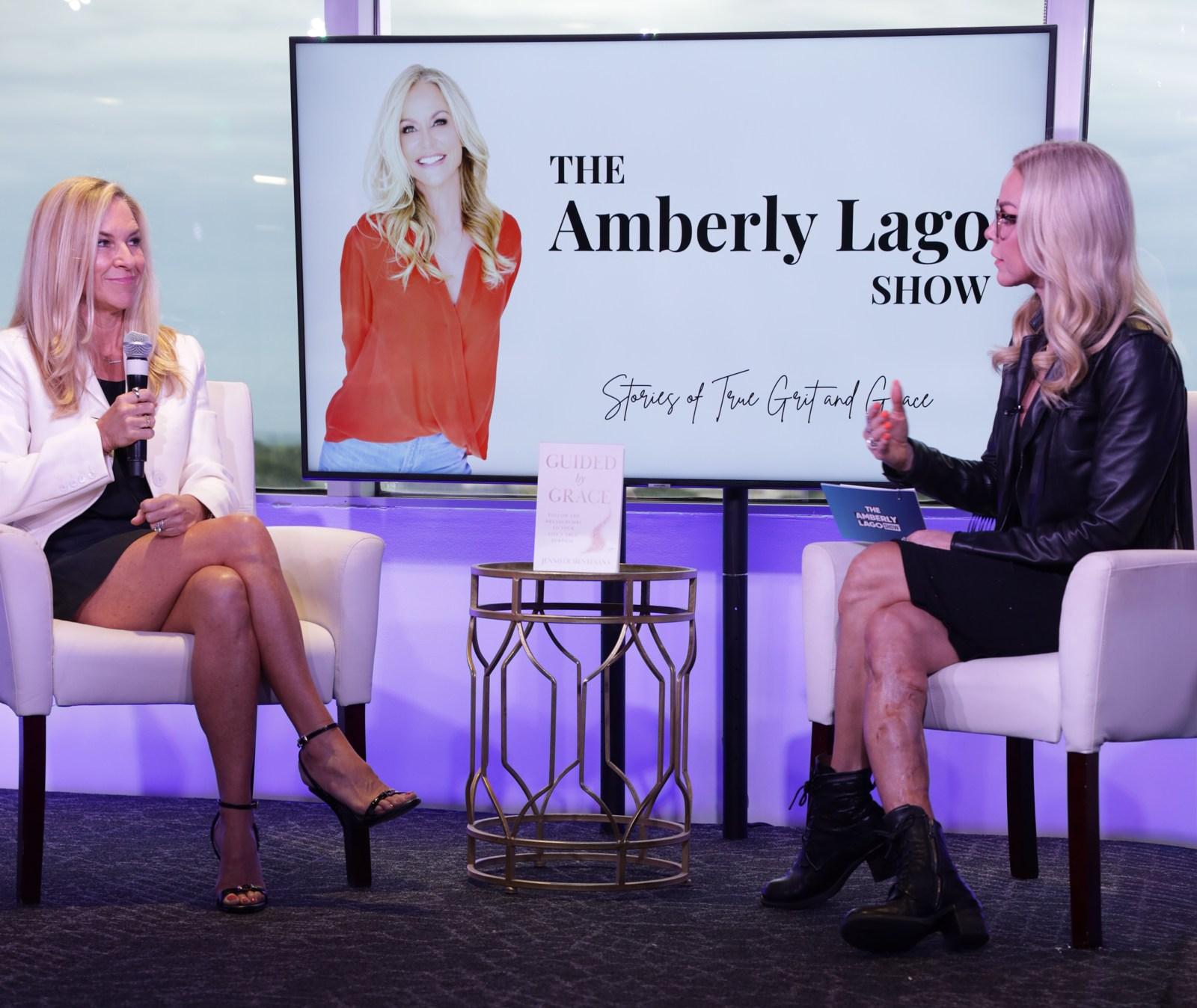
In this episode of The Amberly Lago Show: Stories of True Grit and Grace, host Amberly Lago sits down with Kim Witczak to explore the profound journey of turning grief into advocacy and healing. Kim shares her touching story following the tragic loss of her husband, Woody, and how this life-altering event propelled her into challenging big pharmaceutical companies for better drug safety. They discuss the importance of faith, community, and finding hope in moments of despair. Kim also reflects on the symbolism of butterflies as signs from her late husband and the transformative power of personal growth through adversity. Join Amberly and Kim as they delve into topics of resilience, advocacy, and the emotional pathways of healing in this moving and empowering conversation.
If you are ready to leave your mark by discovering your message and sharing it with the world, you've come to the right place!! Let's work together to build your influence, your impact, and your income! Join the tribe you have been waiting for to activate your highest potential and live the life you deserve! Join the "Unstoppable Life Mastermind!" and let us know you are ready for greatness! Read the "True Grit and Grace" book here and learn how you can turn tragedy into triumph! Thank you for joining us on The Amberly Lago Show: Stories of True Grit and Grace! If you find value in today's episode, don't forget to share the show with your friends and tap that subscribe button so you don't miss an episode! You can also head over to amberlylago.com to join my newsletter and access free downloadable resources that can help you elevate your life, business, and relationships! Want to see the behind-the-scenes and keep the conversation going? Head over to Instagram @amberlylagomotivation! Audible @True-Grit-and-Grace-Audiobook Website @amberlylago.com Instagram @amberlylagomotivation Facebook @AmberlyLagoSpeaker
Full Transcript
Welcome to the Amberly Lago Show. Stories of true grit and grace. Some people spend their life searching for their purpose. Today's guest says that sometimes life's greatest purpose actually chooses you today. I have Kim Witzak on with us today. She is an accidental advocate. She has overcome tremendous tragedy. She's even taken on big pharma, challenged drug. I mean, so many things you've challenged. Drug safety, fda. Kim, thank you for being on the show. I just want you to share how the listeners today can really jump out of their fear and their comfort zone, really increase their resilience and confidence and thrive in life no matter what. So thank you for being here.
Oh, my gosh, thanks for having me. Really excited to have this conversation.
Yeah, well, I, you know, I've been studying all that you have done, and it's just unbelievable. And people are like, challenge big Pharma. Why would you even do that? But you have quite the story and I'd love to get into just a little bit about how what made you challenge pharma?
Sure. So I like to call myself the accidental advocate. I never chose to do this, but as I say, sometimes our greatest purposes choose us. 21 years ago, my life looked very, very different than it does today. I was happily married, travel the world on advertising productions, and about to start having a family. And on August 6, 2003, I got a call that literally shattered the world that I knew into pieces. I always call it like the challenger. It like blew up. I got a call from my dad that my husband of almost 10 years was found dead. And he was found dead hanging from. From the rafters of our garage. Dead at age 37.
I just got goosebumps. I mean, because your husband was outgoing and an athlete and a go getter. And that must have been so shocking for you because you'd been out of town. You didn't see that switch in personality like that.
No. You know, it's so funny because Woody wasn't depressed. He had no history of depression. He had just started his dream job with a startup company and was having trouble sleeping. Went to the doctor the doctor gave him, you know, cause he was a big athlete and, you know, doctors saved him. Right. So he went, got put on a prescription, Zoloft, which is an antidepressant, and said it would take the edge off and help him sleep. In the first three weeks he was out of the. I was out of the country in New Zealand on a shoot. So I didn't see him. And so literally this guy that loved life, I Was like, it made literally no sense. And I remember being at the back studio in Detroit when I got this call, and it literally changed every. Like, I didn't even know who I was. Like, it couldn't have been further from the, like, what I would have expected. And so, like, that night, you know, the coroner asked me a question, right? Just asked if Wood was taking any medication. The only thing he was on Zoloft.
Right? Yeah.
And so, you know, that really, it
seems so weird that they would put him on an antidepressant to help him, but, I mean, I understand. I had every single doctor after my accident trying. They wanted to put me on antidepressants and nothing. You know, a lot of people take them and maybe they help, but it didn't with me. It made me so sick. I couldn't. I couldn't take them.
Yeah, it's really funny, I look back at that and it makes no sense. But you know what? We just trusted, you know, did what everybody else does, and I don't think I ever gave it a second thought. And I don't think we ever even knew that it was an antidepressant, you know, because you trust your doctor blindly trusted.
Yeah.
And so that really was the start of it.
And.
And it made like every part of my body knew something didn't. Didn't make sense. There's no way. How did Woody go from not being able to sleep? He had this whole experience, head outside his body and dead in five weeks. I'm like, something makes no sense. And my. You know, of course, my life, I remember. I'll never forget walking through the Detroit airport, because the next day I had to go home, right? To a life that no longer existed. Walking through that airport with a blanket over my head. I wanted nobody to see me. I wanted. I just. I'm like, who. I don't even know who I am. Like, it was horrible. But that day, when the coroner asked if he was on any medication, you know, said, she's going to take it with him with her. It might have something to do with his death. And the front page of our newspaper had an article that said, the UK finds the link between antidepressants and suicide in teens.
Wow.
And so that was that. But then it was like Googling Zoloft and suicide. Because when something like tragic happens, you're like, what? Makes no sense.
Why would this happen?
Yeah, you go on an investigation because you're just trying to wrap your head around, like, what happened. And so finding out that the FDA had hearings in 91, when it was just Prozac and suicide and violence and they did nothing. So that became like, I gotta do something. And I also feel like, you know, it was something that I could hang onto. It was part of like, just something to like grapple with, like what just happened in my life. But that was really the start of, you know, going on, getting on a plane, going out to D.C. and really trying to get warnings put on these drugs.
But what made you think of. Because a lot of people, a tragedy like that, they would get frozen in fear. I mean, science says we, it's fight, flight or freeze, I guess. And yeah, what do you think it was in you that was like, I'm going to get on a plane, I'm going to research this? Because a lot of people would have kept that blanket over their head and crawled in the bed and not come out.
You know, it's funny, I remember shortly after he died, I was down in my basement after the funeral and looking at all these life size photos of him. And I remember, like, heartache's real. Like I wanted. I was literally trying to crawl. I mean, just rip the heart out. And I kept praying to God, just, God, take my pain and use it. It does me no good. And I just kept praying that over and over and over because I just wanted this to go away. So I don't know that I knew what I was getting myself into. But you know, it just, it was something that I could grapple around myself, you know, like I could at least put something to make sense of something that made no sense. But, you know, I also feel like it's the way I was probably raised, you know, now looking back 21 years, I've got the, you know, the I can look and see, where did this come from? And I think it was just also, I think the way, you know, my parents, like my dad, I still can hear my dad. Cows still need to be milked in the morning. So, you know, like, I think that's probably in the back of my head, like somewhere deep down, right, that I didn't even know was part of my makeup. But I think when I just needed to do something that. So no other family would suffer. And we had no information, none. So that became our mission to get black box warnings put on. And so it made me feel like I was in control. Because when something like that happens in your life, you do not feel like you're in control. You feel like everything you have, no, the life you used to know doesn't exist. And so really that became, you know, And I think.
And you turned that pain to purpose.
Yeah.
And you just went after it and took action. And I always say that, you know, action alleviates anxiety, action alleviates fear. But maybe action was alleviating that pain in your heart as well.
I think it was the one thing I could control. You know, I could get on a plane. I could go do something. I could do something and take it away from sitting at my house and looking at my life that no longer existed.
I so relate to that because, you know, my husband has said, amberly, you don't have to do so much. Like, when are you. When are you gonna slow down? And I said, I could sit here and think about the pain in my leg and just stare at my leg and how much it hurts all day, or I can go out there and make a difference in the world. And that's what you chose, too. But going against these big pharmaceutical companies had to be a little scary. Or were you just. I mean, in my life, a lot of times I've been like, okay, ignorance is bliss. I'm glad I didn't know not to be scared. You know what I mean? But was there a time when you were actually fearful going after this?
Yeah, you know what? It's funny. I think. I mean, definitely I was afraid, right. But there was something in me that was like, once you start learning, you're like, wait, these guys knew about it. There was an anger. And so I probably had, like. I probably had some of this. All the stages of grief, you know, Then it was anger. I was never mad at Woody. I was mad at them. I'm like, you guys knew. And so it became this, like, fuel that got me on the plane. And then when you like my lawsuit against Pfizer, when they. In black and white, you see that they knew, and they kept the suicide and the akathisia that had outside the body from people. I'm like, woody didn't even have a chance. And so that fuel became my fire. But I also think I was a little bit ignorant, too. Like, ignorance, bliss. You know, I used to always think, like, you don't take on a loss, you know, a big company, you know, even, like, lawsuits. Think about that Starbucks where that woman put. I think it was McDonald's. She put that hot cup of coffee between her leg. And then I realized that that kind of lawsuit actually was something that changed the temperature that they sold coffee. And so if I could make a purpose out of Woody's life, because he used to always say, I'll Never judge my life based on how much money or career it'll be. Family, friends, and leaving the world a better place. I needed to do something because it was not the way our life was supposed to turn out.
What. What do you think Woody thinks about you and all you've accomplished?
This one always gets me because he was my biggest cheerleader. I don't think I ever thought I was capable of something like this, except he did. And so I think he would be really proud of what I've done and got that warning put on, did the lawsuit. And, you know, I think there was. He would be like. He used to always say, kim, you could be doing so much more than just advertising. But I also believe that my background in advertising is Also helps me to understand the business in which this whole. How this happened. Right, exactly. It's a big business, and it's selling sickness and all of that. But, you know, I think he'd be really proud of what I've done and the courage it took because I. Woody was always the one out front. I was in back. And for me to get out. And even, like, my job as a producer, I'm behind the scenes. I'm not out in front. And so I was able to kind of have to shed a lot of my insecurities because my fear, like, my purpose was greater than any of my fears. And, you know, I kept praying just, like, give me, like, it didn't mean that when I go up against, like, I've testified before the U.S. senate. And I was scared, but I could feel like I felt like Woody was sitting on my shoulder, like, because he loved dc. I hated dc, And I would be out there, and I was like, wait. There was something about courage is fear that said its prayers and how many times I would pray to, like, give me your words, God. And I think faith was a huge part of my journey, too, is that it helped me make sense of something. And, you know, God said he'll never let anything go to waste. And I think we made a lot of good things happen out of something really tragic. And in the process, it also helped me heal and to see my own power and something that I had no idea what was inside me. And I've come to believe that all of us come to this world with as light, as creative beings, and it's. And it's not. And then life happens. We go through suffering, and we think, you know, it's supposed to be perfect, and sometimes it's not. And it is about finding that the suffering is actually where the growth is. And it's why I love, like, the idea of, like, I'm wearing butterflies. And it's.
That was going to be. My next question is the butterflies. And we were talking before, before we even started recording about how I've got a butterfly suit. I should have worn my butterfly suit.
I know.
Maybe you need to borrow my butterfly suit.
I know. I think I might.
I think you do. I think you are gonna have to take a picture. So we have a mastermind meetup, and we're gonna get to hang out for a couple of days. And I've got a photographer coming, and you've gotta wear that butterfly jacket of mine to take a picture in.
I absolutely would be honored.
Yeah. But I wanna know. Tell us about the story of the butterfly. Because I definitely believe that, like, when I. For me, it's a dragonfly. So when I see a dragonfly, I always think of my grandmother. And it's interesting because when I moved in with my husband, he goes, you're the dragonfly lady. And I was like, what are you talking about? He goes, I've never had dragonflies around here. And as soon as you moved in, there's, like, dragonflies swarming all the time. And there will be times I'm sitting in my car in traffic, and I can be. And maybe not so good of a thought or worry or anxious, and I swear a dragonfly will come right in front of the windshield. And I'm like, okay, I see you. But I think we have to be open to see those signs. But I really believe in signs like that as well. So you have an incredible story about the butterfly. And I think all of us, if we just stop to kind of open our eyes and look around, we do see the signs, and we do go through things for our greater good, I think, if we choose. But tell us a story about the butterfly.
Oh, my gosh. Butterflies are. You know, I love what butterflies. But right after Woody died, and it was like maybe six weeks after, and I was like, I need to get out and start working out again and moving my body and. Because we used to be running big runners, and all of a sudden I was running. Well, I should say walking, because I was just trying to, like, learn to run again. But all of a sudden, this, like, butterfly was, like, flying next to me, and it was, like, following me literally around the lake. Then all of a sudden, everywhere I go. Like, one time I had friends come over. There was a butterfly that landed on the back of my car. I went over there, it hopped up on my finger.
Wow.
And I came, and it just kind of hung out with us, and then it flitted away, went back, did it again. Then another butterfly came, and I was like, ooh, Woody's got a butterfly girlfriend up in heaven now. So we were, like, laughing about the butterfly that flew, but butterflies, too. Then I was on a cruise, and it was, like, with his parents, and there were butter, literally butterflies everywhere. I mean, like, you'd be on. The person in front line had a butterfly shirt, and she looked back at me, and she goes, did you happen to go to the butterfly exhibits in Miami? And I was like, why are. Why. Like, this is.
Wait.
But I was like. It was so over the top. But I believe that we all have access to signs if we see them, and it's the same thing. Like, the other day, I was driving, and I was kind of in one of my. Which I'll go into some of those thoughts, right? And this butterfly flew over, and it's just enough to, like, go, wait. Like, it, like, got me out of it, snapped me out of it, and now I don't know. But butterflies also represent something even more than just the Woody part of it. It. You know, it reminds me that butterflies don't come out a butterfly. They are in a cocoon, and it's dark and it's gooey, and you have to, like, shake it off, and that's where the growth happens. And then it eventually crawls out and starts flying slowly, and then it's like. Then it becomes more and more. And so it represents a lot more than just that piece of it. It represents how far I personally have come in my own journey, but also for other people, that if we could reframe what, you know, what hard times, trauma, and anything that's suffering, that it only comes through the dark times, is the growth. If we allow that and look at it and are willing to sit in the dark darkness of the pain and
what we can learn from it. How long was it before? Because you've been in major meetings. In fact, when we first met, we were talking, and you shared a clip with me, and you were being presented. Award. An award. And it was my. I was like, oh, by the way, Jenna Elfman, who. It was like, it was meant to be that we connected. And you sent me this clip, and I was like, oh, by the way, Jenna Elfman. I was in her wedding. We were roommates in Japan. Like, yeah, I know. We're friends. And I can't believe, out of all the clips that you sent me it's the one with Jenna Elfman giving you an award. And you spoke so eloquently up there. You know, you're such a good speaker, and you speak all over, and you do major media. But how long was it before you really went on that healing journey that you were able to speak so eloquently and be on major media and get this award? How did that take? A while? Because for me, I asked that question because for me, after my motorcycle accident, I was not on social media. I was just trying to heal. I was not. I was just trying to learn to walk again. I didn't go from transformation look before and after I'm jogging on the beach. You know, it took like a year and a half before I was able to actually kind of run on the beach. But how long did it take you before you were, you know, speaking on major media or challenging, you know, in clinical trials and challenging drug safety and stuff like that? How long was that?
You know, it's funny. I think I learned something, which was magic happens when you show up. Right? And I think I don't even. I didn't go out there with the intention of getting on media. I just went out there just with the intention of telling Woody's story. And if we can make a difference for somebody else. So that was. That was the goal. And I think so.
I'm so glad you said that, because so many people are like, I want to make money or I want to be on tv. And it was the same for me when I wrote my book. I was like, I just want to turn this pain to purpose, and if I can help one person, and then I happen to get on tv. So I'm so glad you shared that, because I think when people are chasing money or people are chasing the wrong thing, that's when it doesn't happen. But when you connect with your why and your purpose, that's when you know you're on the right path.
Yeah. And I think that's exactly because I didn't. That isn't at all. I just wanted Woody's story, and I felt like Wood. Woody was deserving of that because he did not have. Even the people who did have depression. The fact that they didn't put warnings. I was like, well, that doesn't make sense. Because they would be like, oh, it just made them feel better that they would kill themselves. I'm like, well, then that's even way more of a reason to put a warning on these drugs. But I think Woody's story was such a And I got to tell it right? And so I think there was something resonated, resonating with it, because he just, you know, like, a lot of us, you know, life's not going well, or, you know, you're not sleeping, you go to the doctor. Like, you trust. Like, there are so many lessons in it, but trust me, I was not always the most eloquent in there. You know, I. I think it was just. I. You know, I look back at some of my very first talks that I gave, and I had a lot of ums and ums. And my mom would be like, oh, no, that's all right, honey. Like, but you have a lot of them.
And I go, I know, but you know what? It's important to listen to that. Yeah, but, I mean, look, I've been doing my show forever, but we have a studio audience today. Thank y' all for being here. Let me give y' all a hand. Thank you, studio audience. And so, I mean, I was a little tongue twisted. I practiced how I was gonna introduce you, and I'm like, drug what? And I didn't bring my glasses, which I love. I'm just like, you know. But it's like, you know what? We're human, you know, and we learn from every. And we practice doing the reps. And you and I were talking before we even started recording. And I was telling you when I first started speaking how, oh, my goodness. I remember my first talk. I was in the green room with Lewis Howells and Jay Shetty and Mel Robbins, and they all had these big posses with them that had cameras, and. And I had no social media following, and. And I didn't have a posse or a videographer with me. And it was my first time on stage, and it was going to be in front of thousands of people. And I remember just sitting at the table, like, just taking it in. Yeah. And you were like, I can't imagine you being like that. And I'm like, well, I'm not like that anymore. Now I'm just like, hey, what's up? Because we're. We're all just people. You know what I mean? And it's just getting in the reps.
I think it is getting the reps, getting as. As I say, like, showing up, getting in the arena. And that means, you know, like, there's so much, especially now in the world. Like, when I started this, there was no social media, so I had to. We had to literally show up in D.C. to do. To get ourselves heard, known. I mean, I was telling everybody Anything. Like, I was just knocking on doors. I was doing the hard work. But I also. That idea of being where you said you were, up on stage with all these, like, amazing people that, like, I look at you and I go, you just seem like a natural. Right. But it's why I need to tell the story of my badass. My necklace that says badass.
Because you are a badass.
Well, it's not. That's not actually what it meant, but. But I'll tell you what it really meant. It's because your stage was different. Mine was being with all these, like, doctors, because I'd be on all these stages with. In the medicine world or, like, clinical. You know, they'd be PhD, JD like,
every Alphabet, the Alphabet behind their name,
all the Alphabet soup. And I remember one time I, like, the organizers asked me for my college degree, and so I wrote that BA behind my name. What literally showed up on my. On my speaker badger said, kim Wittak BA And I was like. And you could just see people, like, looking at me going, oh, my God, you're not a doctor. Like, what? Like, you know, they automatically judge you.
They do. They do.
They judge you, Especially in that arena. And then one of my friends, one of my doctor friends, he goes, you know what? You tell him BA means badass. And I was like. And so now I wear it. Not I wear it because it reminds me of, like, it doesn't matter where you came from.
Yeah.
As long as you are showing up like a B.A. i don't need to have. I didn't have all those degrees, and I didn't feel like I deserved to be there. But I was like, wait a minute. You guys are all talking about something that I have lived.
Yes. That's the difference.
And I live here, and my husband's dead because of all your games of trying to hide something. So I deserve. Deserve to be here. And it was a shift because a lot of times I did not feel like I deserved to be there. I didn't feel like, what? You know, I'm just like, you know, Kim, I'm not that smart. You know, I was. It was all that negative talk and stories that I had to, like, shift and go, no, you do deserve there. Like, you are showing up. And that would be something I would tell somebody. Like, don't let somebody else define who you are.
Yeah.
Like, you can do, like, whatever you put your mind in. Put the hard work and show up, get in the arena. It's really easy to sit in the up on, like, especially now in the social media land where people. And trust me, I get.
I bet you get it.
I get it all the time. Like, I'm an anti vaxxer, I'm an anti drug. I'm like, I get all these mean stuff thrown at me. I'm a Scientologist because of my drug safety work, which I'm none of it, but. And it's. And I'm like, you know what? You are in the arena, Kim. They're sitting up on their. They're just sitting. Going like this.
Exactly.
And I'm like, you know what? You get in there and get marred.
Yeah, I just, I'm laughing because I. On YouTube, I had a. Like a shorts video on there or whatever they're called on YouTube. And this person said their comment was, why are her knees so long? And I'm like, why are my knees so long?
God made me this way.
Hey. Well, I don't know if that's all you notice there's a lot of other stuff going on there, but I was just like, I like, that's somebody behind their computer screen. Just like, yeah. You know, and it's like, yeah, you're in the arena. And I so relate to that because when I did my TED talk, I was the only one that wasn't a PhD. And what I think sometimes we need people to help us shift our perspective or believe in us before we can believe in ourself or love us before we can love our. For me, anyway, that's how it was. And the curator had told me, she goes, are you feeling insecure? And I was like, yeah, I'm the only one that's not a doctor going on stage. And she goes, you have a PhD in heart and that's why we want you on our stage. And I was like, that shifted like. Like him telling you a BA badass. I was like, oh, I do have a PhD. Yeah. Just that little shift in perspective. Yeah. So as we wrap up, how do you continue to keep putting yourself out there when there are trolls, they're haters, they're coming at you. How do you. Because some people just stop. They stop putting themselves out there. How do you continue. How do you keep that resilience to keep going?
Well, I think it evolves. My why is still greater. It's not about me. It's about making sure that people are not blindsided. No one should ever have to ask after the fact how come we didn't know? So that's one thing. So that I have to keep putting out there. I think about But I also have to make sure I take care of myself. Because being in this kind of space where it is a lot of hard work, I haven't made money. That's one of my goals, is to, like, I've been doing this for 21 years and just is I have to take care of my own mental space. And also, like, physical. Go beat, you know, like, go punch a bag and do my meditation. Like, those are some skills. And also, like, realizing that maybe there's a greater purpose to all of, like, you know, the fact when I think about how we met and then I was like, wait, you know, this person, like, all of us, when you start looking, you're like, we are connected.
Yeah.
And when you can see yourself not as an individual, but part of something greater.
Yes. That's so there.
You know what I mean? That I feel like, whoa, that's what. That's what it's about. And I just have to, like, keep knowing that my.
Why?
Because there for many, many years, I'd be like, thinking, I figured it out, would, you're coming back, and he's not coming back. And so now I've had to learn to live with a new way. And I have, like, an appreciation for life that is greater than I ever had before. And so. So through probably the most painful experience, I have found life and joy and. And if there's any, like, hope that somebody, you know, if I. My story can give you hope, like, and I didn't just turn out this. Like, I didn't just start this way.
Yeah.
It was a long process.
It's been a journey. And you have a lot of grit. And I do believe that you give people hope. What is your definition, definition of resilience?
My definition of resilience is the hard work, showing up, believing in. In yourself. Like, learning to believe in something. Your courage is greater than your. Or your fears. Your purpose is greater than your. Than your fears.
Yeah. What does success mean to you? What is your definition of success?
If I can. If some one person's life has been changed by hearing my story or Woody's story, that feels like success to me.
Yeah.
You know, because, you know, the last. This last year, both. I lost both Woody's mom and dad, who have actually been very much like. After Wood died, they became my. You know, I became their daughter in a way, but 21 years, and I look at that, and I've gone through a lot of grief this year of looking back at knowing that I did do something in honor of their son. And that feels like success.
That's beautiful. And I think you are such an inspiration for everyone, but especially for women to get back up and to keep going and to challenge things. And so thank you for all of the work that you do. But one last question. For someone who is grieving and they're having a hard time getting through, what's one thing you could suggest for them to do to keep moving forward?
Yeah, I was just thinking about that last night with my grieving process. I think for me, my faith was a huge part of my healing. I found a faith group, but then the other part was getting it out of my own head and out of thinking and sitting there and retelling that story. And retelling that story. It was about trying to, like, go out and volunteer, go get it, go give it to someone else, because it takes the focus away from. From your pain. And, you know, they say, like, leave it at the feet, and how many times do I want to pick it back up? But, you know, I think. I think those, you know, really just getting it out of your own head and volunteering and helping somebody else helps you.
Yeah, that is so important and so true. And, I mean, it really works. I remember I had a client once that was just. She was actually kind of depressed. She said, but bored. And I said, you know what? Once you go volunteer somewhere, she goes, oh, I don't want to volunteer. I said, well, why don't you go help somebody? Won't you, you know, go call somebody and see how you can help them? And it makes all the difference. I remember being in the hospital bed, and I was still calling clients from the hospital bed. And it does. Once you can get out of your head and stop focusing on you and go help somebody, it really does help.
There's something about when you move it away from you to help somebody else. And it's all about perspective. And I would also just encourage that. It's one day, it's one some. You know, in the beginning, it might be one minute, one hour, one day, one week, one month. But, you know, staying just knowing and hoping, finding somebody who can give you hope. Because I remember that first night after Woody died, I didn't want to talk to anybody, but I had one person who's friend of my sister's friend, whose husband died the same way 10. 10 years ago. And I remember asking her. She was the only one I wanted to talk to that night. I didn't want to talk to anybody, but I wanted to hurt. I go, will I ever laugh again? Will I ever love again. And she said, you will.
That makes me want to cry.
I know. And literally, I held onto that with every little bit of me because I needed to go, I'm gonna laugh again. I'm gonna laugh again. I'm gonna love again. I'm gonna do all that and I'm here 21 years later. Doesn't mean you still don't cry. And that's okay. But it's because you know how far I, you know, have come, and I held on. That girl probably doesn't know how much those words. So I would encourage people to go out and find somebody that gives them hope. Yeah.
Yeah. I mean, community is powerful, and just knowing that you're not alone is powerful. You. You got me all teary eyed.
I know. I'm sorry.
Oh, my goodness. Thank you so much for being on the show, audience. Thank you for being here. Can we give Kim a round of applause? Where can people find you?
You can find me@kimwitsak.com w I t c Z A K. I also have a substack, unacceptable collateral damage, which is all my drug safety work and Instagram. And I'm going to get better at it because this is my. Because I didn't have social media back
then because we've been talking about that and it's coming along. It's coming along. Well, thank you all so much for tuning in to the Amberly Lago show. If you found value in this, please take a picture and share it on your social media and tag me and Kim. And when I see that you've tagged me in your story, I always share that as soon as I see it. So thank you for tuning in. We'll see you next week.
Pain to purpose to joy.
Never Miss a Conversation
New episodes drop regularly. Subscribe on your favorite platform and never miss a conversation.