

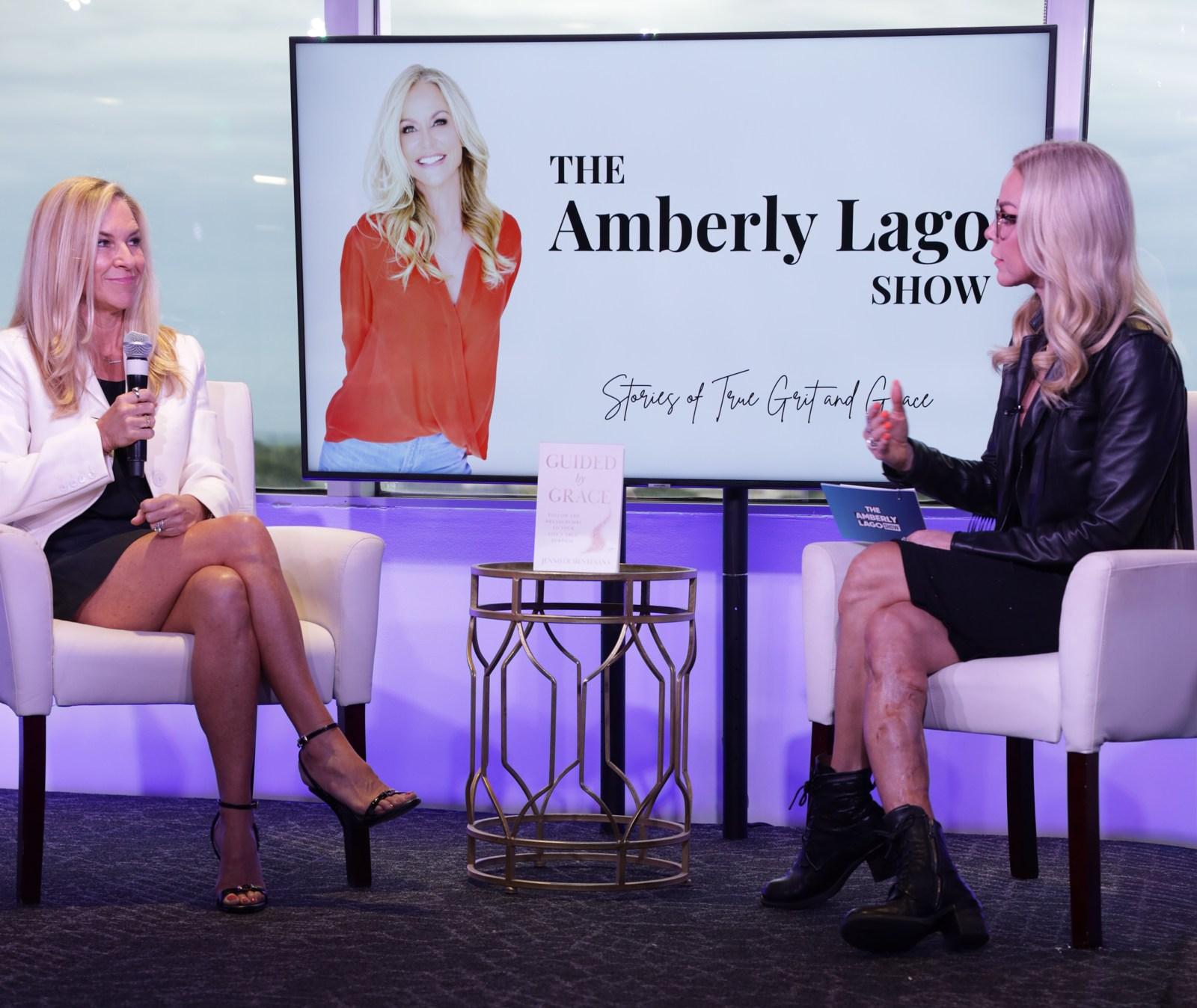
Season 3, Episode 122
Finding Courage & Success through Failure with Emily Lyons
A conversation with Emily Lyons

About This Episode
Today's episode of True Grit and Grace hits close to home because not only has my guest Emily Lyons faced huge physical and mental health challenges, she has persevered through it all, moving forward to create multiple thriving businesses.
Emily is a serial entrepreneur, a podcaster, and author. She is the founder and CEO of North America's top event staffing agency. What started as a small agency has exploded like firecrackers across the entertainment scene in Canada and the United States.
A long list of accolades have already made a home with Femme Fatale Media Group, including five consecutive Annual Toronto Nightclub Awards and three Top Choice Awards. What's more, Emily's hustling has won over big names like Warner Bros., MAXIM, UFC, Justin Bieber, Drake, Lamborghini, and so on. Lyons agency was named "Canada's Top Agency" by Forbes.com.
Emily and I had a powerful conversation about building a business after a major health issue, what happens when we share our story with our true audience, and how to value failures as part of the road to success.
Here's what you will learn:
- Initial challenges Emily experienced on her journey (2:21)
- What she learned from her stay in a mental hospital (11:34)
- Why a healthy fear has steered her away from alcoholism (20:25)
- How experiential marketing can build your passion and create impact (26:42)
- How visibility can level up your business (34:33)
- How to get more eyes on your brand (43:31)
What did you learn from this episode? Share on Instagram and tag me at @amberlylagomotivation @emilylyoness so we can see!
Follow Emily
Links mentioned in this episode:
Read the "True Grit and Grace" book here and learn how you can turn tragedy into triumph!
Thank you for joining us on the True, Grit, & Grace Podcast! If you find value in today's episode, don't forget to share the show with your friends and tap that subscribe button so you don't miss an episode!
You can also head over to amberlylago.com to join my newsletter and access free downloadable resources that can help you elevate your life, business, and relationships!
Want to see the behind the scenes and keep the conversation going? Head over to Instagram @amberlylagomotivation!
Audible @True-Grit-and-Grace-Audiobook
Full Transcript
Thank you for tuning in to the True Grit and Grace podcast. I'm Amberly Lago and I'll be sharing inspirational stories of resilience and empowering ideas to elevate your business and your life, ignite your passion and fuel your purpose. Hey there. Welcome to True Grit and Grace. I appreciate you tuning in. I'm Amberly and I have such a treat for y' all today. One of the most inspirational women I have ever met. I have Emily Lyons with us. She's the CEO of North America's top event staffing multi award winning Femme Fatale Media Group. She's gone on to launch and scale several other businesses. I mean, successful companies including Lions Elite Matchmaking, True Glue, Beauty, Femme Fatale Public Relations, JWLS Accessories, and the Julia Lyons Foundation. She's also got an amazing podcast called Mind you'd business podcast. She's a champion for women in business, mental health and cystic fibrosis. She's been featured all over the place, extensively in business related pieces in Forbes, Huffington Post, Bloomberg Entrepreneur, Global News, Maxim and New York Post. Y' all so much more. You're gonna love her. Emily's has garnered the businesses of brands like Warner Brothers National Bank, Louis Vuitton and celebrities like Justin Bieber, Jennifer Lopez and Drake. She has got a huge social media platform, which is a testament to her personal brand. But I would also say, Emily, it's a testament to your grit. So. So thank you for being on the show today.
Thanks for having me.
Oh, my goodness. This is a dream come true. We have been actually, we've been trying to get this scheduled for a while and I think with both of our schedules, it's been a little hard to get us together. But I sure appreciate you being here. I think we first met on Clubhouse, of all places.
I know we did. I had been familiar with you prior to that. I had seen your name pop up, up, and I think I was following you. But that was when we actually got to connect.
Yeah. And you know, I thought, who is this amazing lady, this powerful, confident woman, but with such humility, which I think is. Is such a beautiful thing when you see a woman that is so successful and so confident but that has humility. And I remember one of my first times on Clubhouse and I don't know what it is, I would get so nervous. Still do get nervous being on Clubhouse sometimes and being asked to speak and you were always so gracious and. And in rooms filled with hundreds of people, you would call me on your clubhouse stage. And we're always so kind. And it's been an honor getting to know you over the past year, for sure. And all the things that you're doing from the outside, it looks like, oh, my goodness, she's got it all. She's got it all figured out. And look at this glamorous life. But if you take a look closer on your social media, you share some of your struggles that you've had, some of the struggles that you've had to get to success. And I think that if we could get into a little bit before you started launching all these businesses and became featured in Forbes and so successful, can we take it back to a time where maybe you were struggling a little bit and how you got out of that dark place that you were in? Because I know that there's a lot of people that are struggling right now, a lot of people that listen to the show and they are looking for that glimmer of hope, and that is what you give hope and inspiration. So can we take it back a little bit to before you became so successful? Because I think you were even in a mental hospital at one time.
Struggle is pretty much the story of my whole life. But successful people aren't void of struggle. So, I mean, once you achieve success, it's not like that struggle stops. Everybody still struggles. It's just not everybody showcases it, not everybody talks about it. And so when we look at social media, that's. We forget that we're looking at this curated feed of what people want us to see. Not exactly what's going on in that person's life. But yeah, I've had a lot of struggles since really the beginning. I was born the middle child to two terminally ill siblings. So my older sister and my younger brother both had cystic fibrosis. And so growing up, it was a lot of turmoil, like a lot of near death experiences with Julia being rushed to the hospital in comas and things like that. Julia was my sister and then she passed away in 2011, and so that was kind of the worst of the worst.
And how old was she when she passed away and how old were you?
She was 27 and I was 25.
Oh, goodness.
That was the culmination of pretty much the worst of the worst that I went through. And afterwards that had to be so hard.
But also being that middle child, did you feel like you had the kind of the role as caretaker?
100% caretaker and comedian? I always wanted to make everybody smile and cheer everybody up and focus on the good. And I guess it just kind of came out being bedside for so many years that it just. I guess that's how we cope, right? Some of us. It brings out certain parts of our personality. And so I became a big joker. That was just kind of how I dealt with things, but it actually has served me well.
I relate to that so much because I was a middle child, and my youngest brother is. Well, there were five of us. But my youngest brother has. He's suffered a severe seizure beat when he was being born, and he's been in a wheelchair his whole life. And then my older brother has. Has some mental challenges. So it was all. You know, it was always a challenge. And being that middle child, I was the communicator between my parents, who were divorced, and the peacemaker and the fixer. And actually, it wasn't until lately that I was like, you know what? I don't want to be. I don't want this role anymore. I'll take. I'll stay in my lane and take care of myself. I'll be your friend and help you, but, you know, y'. All. I don't want to be that person anymore. So when Julia passed away, how did you get through those moments with the grief that you were experiencing and pick yourself up out of that place?
Oh, my gosh. So I started in entrepreneurship two years prior, and I started because Julia had given me a book called Career renegade, How to make a great living doing what you love. And so that was what inspired me to figure out a passion and turn it into a money maker, really. And so when she passed away, I just. I fell apart. And when I say I fell apart, I mean a really. I couldn't get through a day, you know, without just sobbing. Sobbing. And I needed alcohol to cope. And it just kind of. I think when you lose somebody so close to you, it just changes everything about you on every level. You know, you have to find yourself again. You have to find why you get up every day, what is the purpose of all of it. And so for a while, I couldn't figure it out. And so months went on, and I just kept getting worse and worse. And I was like, I need some help. I went to a mental health facility, and I said, you know, I think I'm really depressed. I think I've got debilitating anxiety. What kind of services can you offer me? Wow.
So you took yourself into the hospital.
I did. What?
Courage. That took a lot of courage, and I'm sure a lot of desperation as well that you took yourself there. Now, had you gotten to the point where you were drinking every day to cope with things.
I was, yeah.
Are you sober now?
I am. I have been ever since.
Oh, my goodness. Well, I'm grateful to be your sober sister. I thought you were sober. And so you went and took yourself into this mental hospital and, like, I need help. And, man, there's gift and desperation right where you're like, I got. I'm either gonna die or I need to get help some way somehow. So you took yourself in and then what happened next?
They kind of looked at me and gave me some pamphlets and were like, we'll put you on a waiting list for treatments, and kind of sent me on my way. And I went back to the same life I was living. So I reached out to family members. I tried to say, like, you know, I tried to talk to my aunt, and I said, you know, I think I've got this dependency on alcohol. I'm really struggling. And again, I got this. You're okay. You're just having a tough time. It's okay that you drink every day. We all have drinks, and nobody was really listening to me, and I was screaming inside, yes.
Only I get that. So I get that so much, because I remember when I started drinking every day to try to cope, to try to numb out the pain and just cope. And I remember going to my husband and saying, I think I have a problem. He's like, you don't have a problem. Anybody would drink if they were dealing with the kind of pain you were dealing with. Like, you don't have a problem. But I knew deep down inside I had a problem. Like, I was spiraling down. Depression, anxiety, same thing. So I really relate to what you're saying. And I think that we have to know, it doesn't matter what anybody else says, but as long as we know, like, our soul is telling us we need help. So you were going. You were screaming out for help. You went to your aunt, you went, yeah, and. And your mom passed away, didn't she?
That was many years later. So during this time, that was recently that she passed, but during this time, I actually. I caught a really bad flu. And so I wasn't able to drink for a few days. And so it gave me some time to sober up. And as I sobered up and I got better from the flu, I was in a place where I was like, oh, my God, this is unbearable. I. And I didn't want to go back to the alcohol, but I couldn't keep living life. So I went back to the mental hospital again to the emergency And I said, I'm a danger to myself. I need help. Like, I can't do this. And so then the guy left the room and he said, I'm going to call my manager. And he came back and he said, okay, we're admitting you on a form. You're not going to be able to leave until you've been seen by a psychiatrist and they deem you safe. And they admitted me and broke down crying, like, sobbing hysterically. I wanted the help, but I wanted it on my own terms. So once they were like, you're not allowed to leave then. Now I was terrified.
I was like, oh, I don't want
to do it that way. And they're like, well, I don't have a choice. So they admitted me, but it was honestly the best thing I ever did. And it's funny, Amberly, because when they were doing my intake, they're like, and there's a no alcohol policy during this 30 day stay. And I said, none at all.
Is that funny? Here they're telling you you're going to be in a mental Institute for 30 days, and that is a sign that you really might have a little issue with alcohol. If the first thing is, wait, wait, I have to stay here, but I can't have alcohol, that's the first thing you're thinking, I get it, man. I would have been the same way. I would have been, but no alcohol for 30 days.
Yeah. And I remember thinking, that's insane, because I went in and it's in September, and my birthday was on September 29th, and I was like, not even on my birthday. It's just. It was so great, ingrained in everything I did.
I have actually visited friends in a mental hospital, and there have been times when I did, and it was like, oh, this is okay. And then other times, I have visited a friend in the hospital and it's like, this is scary. Like, wow. So I want to know, what was it like in the hospital? Did you meet people? Did you relate to other people? Or did you feel like an outsider? Or were you just relieved to get help?
Honestly and truly, it was the best experience of my life, really. It's. It's funny because there was a woman I met there, and she was like, a lot of facilities aren't like this. I've been to ones over the years, and she's like, a lot of them aren't as good as this facility. But it just felt like I was finally being heard. And I think growing up as the healthy one, I was constantly just put Aside as Emily's fine, Emily's okay, we need to focus on these ones. And I don't blame anybody if they were terminally ill. But finally it was like I was talking to doctors every day. I was in therapy every day. I was in different groups, group programs every day. And so it was like, I'm finally being heard. And I met a lot of different people. Some people were a lot sicker than other people on, you know, really severe ocd, really severe ptsd. There were some people that were actually kicked out of the program. One woman lit her shirt on fire. Yeah. Which really confused me because I was like, wouldn't that be a cry for help? More so than being kicked out from the program. But yeah, it was honestly and truly the best experience of my life.
Now, did they give you medication? Well, because I asked that because when after my motorcycle accident, every doctor, and I mean every doctor from my orthopedic to the gynecologist was like, you are going to need to be medicated. Your life basically sucks. Like, you've lost it all. You can't walk, you're stuck in a hospital. We need to put you on antidepressants. And I didn't want to do that. Like, I knew that if I could just move my body that I would be okay and that I could get those endorphins going. The only problem was I couldn't get out of the hospital bed. And I was doing everything I could in the hospital bed. You know, I had my little dumbbells. I had a pull up bar installed over the hospital bed to do what I could, but it was still really hard. It was bad. Like, I could feel the depression sinking in. And so I tried, oh, gosh, three or four different antidepressants and I could not keep them down. I would throw them up every single time. And I was hoping that I could take this one called Cymbalta. And it was supposed to help with pain, specifically for physical pain as well as depression, but I just couldn't take it. And so I was throwing up for months, trying these different. And I thought, you know what, I would rather just figure out a way to shift my mindset than be throwing. Throwing up from time trying to take a medication that obviously my body doesn't agree with. So did they start to give you any kind of medication? Because I'm all for medication if it really helps you, but it just didn't work for me.
So I don't like medication. I'm of the same mindset. I think our bodies can Heal if we. If we let it. And being there, it's. It was the opposite. They really wanted. They wanted you to take medication all the time for everything. So it was a lot of pushing back and forth because I was like, we want you to take this. And I was like, no, I'm not taking that. I want to do the therapy. I want to do the cbt, cognitive behavioral therapy. I want to exhaust those things before I'm on a medication that I could potentially be on for my entire life.
Yeah.
So I remember they wanted me to take Ativan and clonazepam and an antipsychotic and an antidepressant. And it's just this and this and this. And I remember originally when they were like, okay, we've got some medications for you. And they were like, we want you to take this to counteract the side effects of this and this to counteract the side effects of this. And this is a pill to protect your stomach lining, because these pills are harsh on your stomach. And so I was like, I'm not taking any of those. So after a few weeks, I ended up taking an antidepressant. That's the pill. The only medication that I agreed to take after I went back and forth with the psychiatrist about it, and she's like, emily, I know you want to heal naturally, but you got to think about your quality of life. What is more important to you is, is it trying to fight on your own or getting a little bit of help from a medication for a bit to give you maybe that little boost that you need just to kind of help you get through this? And so I started taking Zoloft.
And that's such a good way to look at it too. Like, do it, fight it on your own or get a little bit of help. So that really helped you?
It did. It really helped me. And I didn't have crazy side effects from it. I was really lucky. I noticed it just stopped me from getting to that overwhelming emotion. So I'd start to. I start to get upset or I'd start to have panic attacks, because I had a lot of really bad panic attacks. Or I'd be sobbing on the floor hysterically. I'd start to get to it and it would stop me from getting to that over the top level. And so it just. It controlled those emotions. But I also noticed that. And sometimes it numbed a bit of the other emotions that I liked. Like the really over the top happiness when you got really excited about something, you. When, I don't know, a Big opportunity came with business or, you know, something you achieved, something you were after. It stopped me from feeling that, that over the top excitement that I liked to feel. So I didn't like that side of it, but it absolutely did help. And I think that during that time it was what I needed.
Yeah, yeah. And that is the thing. Like it, unfortunately, it doesn't just work with one emotion. It works across for the board, for all the emotions. Same with anything, even with alcohol. Here I was trying to, you know, numb out the pain, but it numbed out the joy, numbed out my spiritual connection. It numbed out everything. And so did they let you out on your birthday?
After I had the appointment with the psychiatrist, after I was admitted, she did a consult with me, a review to see if I needed to be on that form. And so she deemed that I wasn't a danger to myself and that I could come and go. So if I wanted to go on weekends and things like that, I could. But even when you left, you weren't allowed to have alcohol during the program. And I was so committed and so desperate to get better that I was not going to break that. So that was really the last time that I ever drank was before I went in. I think if I. On a Christmas one day. And it just hurt my stomach so bad that I was like, no, thanks.
Well, how do you stay sober now? Is that something that's easy for you or hard?
Sometimes, you know, sometimes I wonder because I'll have. I'll be at a family event or something and they'll be like, well, you can just have a glass of wine, Emily. It's fine. Just a glass of wine. We're all having it. I remember being at one of my close friends weddings and they were like, you've got to have champagne. We only get married once because they don't understand we don't have just one.
That's the truth, right? It's like, no, but it's not just the one. Then the mindset and the emotions and everything start kicking in and you're thinking about the next one and the next one and. And I have a healthy fear of it. I don't want to take my chances. So I actually go to 12 step meetings. One of the first things I did when I found out I was moving to Dallas from la, my first thought is, oh, my meetings. And thank goodness most of my meetings are on Zoom. But I have a meeting that I go to in person and they were about to end the Zoom, because everybody's meeting in person. And when they found out that I was moving to Dallas, they're like, you know what? We're going to keep the Zoom meetings running until you get set up in Dallas. And I was like, oh, thank you. I mean, it's just such an incredible community of people who have saved my butt and loved me until I could love myself. And so now to. To stay sober, do you have just, like, a daily practice or do you do media or what? What do you do?
I have the same thing that you have. I have a healthy fear of. Scares me to go back to that place. I don't want to go back there. And also, after I stopped, everything in my life got exponentially better. I was able to cope so much more. I didn't realize that even though alcohol helped me during those, you know, when I was so, so upset and so anxious, the next day it was worse, and the next day it was worse because I felt so sick, and I was just. I wasn't able to cope with the emotions in any way. It just kept spiraling me worse and worse and worse. So I don't want to go back there. I don't want to be that person. And as I got out and I rediscovered my love for entrepreneurship, I've just been on that path ever since, and I haven't even had a desire to go back.
That's amazing. You know, it's so crazy you're telling me this, and I just realized last night I had a nightmare. Now, most people have a nightmare of, you know, Freddy Krueger chasing them or something. But my nightmare was I actually was trying to see sneak drinking. And I remember in my dream just last night, I was going to a bar, and I was trying to down a glass of wine as fast as I could, and I woke up, and I'm like, oh, thank God it was just a dream, because I do have a healthy fear of that. And I look at it as if I were to do that again, then this community, the relationships that have grown since I've been sober, my business, my podcast, I. All these opportunities that I've had would slowly disappear, like, I would blow it all. And so I do have a healthy fear of that as well. But with your entrepreneurship journey, oh, my goodness, I am amazed at all that you do. I mean, I feel like every time I look around, I'm like, what is. I think you did a post about eyelashes. And I was like, well, I want that. I'm like, oh, my gosh, she's got another company. So you've got so much Going on and a podcast on top of it. Which business did you start first? And that took off.
That was femme fatale media. And that was when I fell in love with entrepreneurship and building businesses. And that's what I think has really gotten me through things long term because I found my passion, which is building things. And that's why I think I built so many.
Yeah, I mean, well, you have your passion and you have figured out a way to turn that passion into an impact that makes an income. And so that is amazing. And, you know, you also teach other people how to do the same. You've got a course. I mean, you teach them through your podcast, through your post. You're on club. Are you still on Clubhouse as much?
I am. I go on every day.
Every day. You're amazing. I've got to get back on there. You know, when I started my Mastermind, I got off Clubhouse because the Mastermind takes it. Really. I put so much of my energy into it that any extra time that I was on Clubhouse, I'm like, nope, I got to put that into the Mastermind. But I've got to get back. I have a little break in between Masterminds right now. And so I've got to get on there so I can get in one of your rooms and. And hear all the nuggets of wisdom that you share. But with your media group, what are some of the things that you work with for companies that say what want to really, like, get their name out there, get their brand out there, build their influence so they can turn that passion into an impact and an income. Are you the person they come to and hire to do that?
Absolutely. And then we've got a team that does a wide variety of different things. So we do something called experiential marketing. So it's live activations for the most part, where you're really connecting with the consumer. You're building an experience so that they remember you. So you've probably seen those activations when you're in the big cities and things like that. But we also have a communications division as well that we built out. We do a lot of event staffing, a lot of different things. Just we work. It depends on the brand and the company, what their target is, where they're at in their journey. Then we build something custom based on that. It's a lot of fun. It is so much fun seeing a business just take off.
Yeah, well, if you have somebody that comes to you and they're not really happy with their day job, but they have this passion on the side, or they have this purpose, but they're like, I don't know how it ever turned that into something that I could do that I love. What are some of the things that you would suggest to people? That. That. Or trying to find their passion. How would you help somebody find their passion?
That's interesting, because I get that question a lot when I'm doing public speaking is I want to monetize my passion, but I don't know what it is. Which is funny. It's like, we don't know what we like. And I think the reason that it is that way is because when we do that exercise, we're often thinking, what do I like? That could be a business, not just what do I like? And so I would say to somebody, sit down and think. What do I genuinely like? Like, what kind of shows do you watch? What kind of books do you like to read? Not to get information just because you enjoy them. What do you browse on the Internet? And then creatively just doodle. See where your mind goes? What do you write down? What do you like? And then figure out the monetization path. Because now with the way that the world is and the way that the Internet is, we can monetize things in a million and one different ways. Whether you just take something that you like and turn it into a course, anything. You know what? I met a girl actually, on Clubhouse. She makes six figures a month with a course where she teaches other women how to have orgasms.
Wow. Who would have thought? Yeah, you know, I think it's. If you can solve a problem, you get in that niche, you tell everybody that problem that you can solve and go for it. But that's exactly what I did when I was, like, reinventing myself. And I thought, well, I can't yet be on my feet, you know, 12, 14 hours a day training clients. But what do I really love to do? What brings me joy? What makes me feel connected? What am I really intentional about doing? And that's how I started to slowly kind of reinvent myself and do things. But that's such great advice to tell people just what makes you happy? Where's that happiness inside you coming from? What are some of the things that you love? But yeah, if somebody can make six figures a month teaching people how to have an orgasm with a course, man, what's. Anything's possible, I think, for me, focusing
on making an impact. How can you positively impact people's lives with whatever product or service you're creating? Because then you're going to be successful. And money will just be a byproduct of that success because you're going to be helping people. And so after Julia died, my sister, in 2011, I took a step back and I thought, okay, I've been an entrepreneur now for two years, but what am I doing? What kind of impact am I making in people's lives? How am I changing people's lives for the better? And I changed how I operated, how I did my services, how we provided them so that we were always helping people, we were giving back. And then we took off, and success was far greater than it was before. And so that's really what I focus on with every business. I've never really focused on the monetary aspect of the businesses. Just how can we positively impact people's lives? How can we help them? And then you will be successful. It'll come through with your passions. You'll be able to sell the products because you genuinely believe that you are helping people. You know, you're not being scammy or salesy because you're actually helping people. And so I think you really can't go wrong if that is your focus.
Oh, I couldn't agree more. And that's how with my book, I wasn't thinking about how many copies I was going to sell or the money I was going to make from it. In fact, somebody asked me the other day, how many copies have you sold? And I said, to tell you the truth, I don't. I don't know. I should know that, but I don't know. My focus was, how can I help someone to believe in themselves a little more, have hope and be inspired? And then it just took off from there. And just the other day, I had a guy who was talking to me, and he's like, I really want my sister to be a motivational speaker. I want her to talk to you so she can learn how to be a speaker. And I said, well, does she want to be a speaker? And he said, well, no, but I want her to be a speaker. She's got a good story. And I'm like, but she has to want to do it, you know? So I think it's important to remember that you. It's got to be something that you want to do, not what others expect of you or tell you you should do or whatever. And then he said, you know, well, she needs. She needs attention, and, you know, she's got a good story. And I said, well, let me tell you something. If she's going to be a motivational speaker so she can get attention. I said she should be doing it for the intention of helping others, not for the attention. And so just little like things like that. I'm like, it makes me focus on. Okay with what you're doing. Yeah. You have to want to do it. You have to love it. I mean, especially as an entrepreneur, if you don't love what you do, I think it's easier just to give up and throw in the towel. I mean, it shows Emily that you love what you do because it seems to everything's just growing and building and you're in alignment with your purpose because everything's in flow, it seems like. I'm sure there's hard times too, but
everything launched businesses that haven't worked out, and that's because they weren't based on something that I loved. So I wasn't passionate to see it through. And so absolutely 100% agree.
Yeah. Well, how long have you had your. The business with that? I want the eyelashes from. For the true glue beauty. That's what I want to know about.
That was 2014.
2014.
Gosh.
And I think that's before all the eyelashes and everything were really popular like they are now. Tell me about that company. I don't know a lot about that company. I want to know more about that.
So I love clean beauty. I love finding natural alternatives to different things. And so back then, I wanted a clean eyelash glue because the most popular lash glue contains formaldehyde and ammonia. And so your eyes are mucous membrane. You're putting that on your eye every day. So going into your bloodstream. Formaldehyde to confirm carcinogen by the National Cancer Society. So I was like, I don't want to be putting this on my eye every day. So tried to find some. An alternative, and there wasn't. They just replaced formaldehyde with another toxic chemical, which when you looked it up, it was like, do not put on skin, do not put on eyes.
Wow.
We're not even looking at this. So I thought, I want to develop a natural glue and if nobody wants to buy it, I'll just use it myself. So I got a chemist and I said, can we do this? And they said, no. And I said, people walk on the moon. I'm pretty sure we can do this. So eventually we developed Truglu, which is the only all natural lash adhesive. So made from completely all natural ingredients, vegan, cruelty free, all that good stuff. And then as we. As I launched it, a lot of the salons that picked it up More carrying it. Were saying we want complimentary products. Can you bring out lashes and things like that to go with it? We didn't, they just didn't want to bring on one skew. And I was like, absolutely love lashes. And so we brought out lashes and all that fun stuff to go with it. So yeah, it's just kind of been. Hasn't kind of been. It's been a big passion project because I love that stuff and so it's been really fun.
Well, you know what I love is that you so many people think that they have, they're called to do this one thing and then they're in this box and that's what they do. But with you, you're like, oh no, I've got a media group, I've got, you know, we've got, you know, femme Fatale. We've got the true glue. You also have. I don't know about this either. I want to ask you, the matchmaking service, what the heck?
It's funny because people always say, stay in your lane, stick with what you know. You know, don't spread your. I think if you have a passion and you're driven towards it, absolutely pursue it. We're not just one dimensional humans. We've got so many things that we love, why not pursue them all? Yes. Lions Elite matchmaking. So I am a hopeless romantic. I'm obsessed with romance novels and rom coms and all that stuff. But a few Years ago, around 2013, I moved into the Ritz Carlton in Toronto, which was a big jump from my terrible basement apartment where I slept on a mattress on the floor.
So you actually moved into the Ritz Carlton?
They have a resident side on one side and a hotel on the other side. I moved in there and I was meeting a lot of really incredible people. I was doing a lot of events and you know, there's a lot of professional athletes that live there and different high net worth people. And so I would introduce them to other people. Like, yo, you got to meet this person. You got to meet this person. And so I started getting emails from random people saying, I hear, you know, everybody, could you introduce me to somebody? And so I kind of became the go to person for setting people up. Like I introduced my lawyer to his now wife and it was just something I love to do. And I was, I was in New York at one time and I saw this high end matchmaking. There was a billboard for it and I was like, I need to have a matchmaking business in Toronto. And so that's where I launched it, but we took off and we have clients all over the world. So we work with, you know, a lot of CEOs, people that are very busy don't have time to find somebody. They're recognizable, so they don't want to go on an app, but they also want it done.
Oh, yeah, I think of that.
Yeah. So they outsource it, right? They want their place clean, they get a cleaner, they want to get fit, they hire a fitness trainer. It's the same thing. So I really describe it as a headhunter for the heart. You come to us, we've got an incredible database, but we also will go outside of that and we will find what you're looking for, hopefully. And it's a lot of coaching as well. So if somebody has been building their business for the past 20 years and they haven't really been dating, well, now they're at a point where they're like, I don't know how to date. What do I do here? How do I. And so helping them with all of that, even, like, how do I show up on social media? Because am I turning people off by what I'm posting? Am I scaring people away? And so all of that.
And it's so funny because one of my clients, I actually helped her write out her profile on one of the dating apps. I'm like, no, no, no, no, no. You don't want say that you got it, you know, And I was like, just switching it to a little more positive because she was kind of. She was really playing herself down. I'm like, are you kidding me? You're amazing. Look at this successful business person you are. We got to add that. I was like, you're an athlete. You got to add that. And so it was fun. Now I don't think I will have the passion to make my own matchmaking service, but I'm amazed that you have. So people come to you. Is it word of mouth or you do a lot of advertising for it?
It's a lot of word of mouth. So I've got four matchmakers that work for us full time. And so. And then I take on a certain percentage of clients personally, so usually the higher profile ones I'll take on. And we don't really do any advertising. We come up naturally in search results because we've had different features over the years. So it's helped with our SEO, and so they find us that way generally.
Wow. Okay, let's talk about SEO.
I just want to tell you, though, it's an. It's a whole other level. I mean, having success with business, but when you actually introduce somebody to the person that they marry and have children with, it's a whole other level of success. I can't.
Oh, I can only imagine to add
that, you know, because one of my clients is pregnant right now with her first baby. They got married in the summer, so.
Oh, that's amazing. And yeah, I could imagine how that would be because I know that. But I had a friend that introduced my husband and I. I will always hold a special place in my heart for them for bringing us together. So that must be so rewarding and just fill your heart up to have that and the fact that you have four matchmakers that work for you in that company alone with everything else that you're doing. But you said something that really stood out to me, which was SEO. And you've been featured in so many media, you know, Forbes, so many articles over the years. How important is it to get these articles, get in this media, get, you know, get on different podcasts, that sort of thing? How important is that for your business and how do you do it?
Incredibly important. It's interesting because somebody actually messaged me yesterday and she said, hi, Emily, I used to work for you with one of your companies a few years ago. I'm starting my own business. What would you say is the number one tip for a new business? And I said, visibility. Get as visible as possible because that is how you're going to get known. You're going to get new clients, you're going to build your brand, your personal brand, all of those things. So getting in that media is crucial for a lot of reasons. I mean, first of all, I could tell you, I could come on here and say, emberly, I'm the best matchmaker in the whole world. My agency is the best one. You know, everybody should go with us. But it's a whole other thing if Forbes says that. Mm, Forbes magazine. Well, I could say whatever. Consumer distrust is at an all time high. So it doesn't matter what a business says, but when the media says it and it's so it's also just giving you that exposure to all their audiences and it's also giving you links to your website to build that SEO. So when people search terms related to your business, you're coming up so you've got this new steady stream of potential clients coming to you. That is what I figured out with my first business was SEO. And so that was one of the big tools with how we grew. And that was Why? I started pitching the media myself early on. So reaching out to places where I wanted to be featured, it takes a lot until somebody says yes. So being consistent, having a really great story that's honest and transparent and authentic and making your mess your message is what's going to catch attention and get you featured in those media and going to help you grow and get that visibility.
Oh, I couldn't agree more. I mean, I think that the best thing I did when I launched my book was I invested in a publicist. I didn't have a great publisher, so I knew I needed a good publicist to basically vet my book. And you know, my husband was like, oh my gosh, that's outrageous. That's so expensive. And I said, but I want to invest in it. And I think it's important for anybody listening who is interested in growing your business, your brand, it's important to invest in the right people. Now, whether that is investing in an incredible PR firm publicist, or really investing in yourself and getting a coach or being in a mastermind. There is also power in proximity. It's who you are surrounding yourself with. And, you know, that's why people are fighting to get into your rooms on Clubhouse. They're like, I want to talk to Emily. You know, and so what do you think about the power of proximity? How has it worked to your advantage in business?
Oh, the power of proximity. You know, I like to tell myself, you're the CEO of your own life first and foremost, so hire and fire accordingly. If somebody's toxic, I'm quick to remove them. And I try to not only surround myself with people that are successful, but just great people, you know, just great people where they can be motivational, inspiring and where I can do that back to them. And that is a game changer for me because, I mean, early on I surrounded myself with people that loved to party and love to drink and weren't really growth oriented or spiritual and negative. And after I came out of treatment, I made a conscious effort to surround myself with great people and get into the proximity of all around good people. And it changed everything because it motivates you. And not only that, but it keeps you resilient. I mean, if you've had a really stressful day or you've had a loss and you're going to your friends and you're saying, ugh, and they're saying, yeah, you should just quit, let's go to the bar versus somebody who's like, why don't you try this? You know, how about this. You can do it. Get back up. And so it's that differentiating factor. And it's also people who can refer you services or help you. You know, you can be a sounding board with them. There's just so many benefits to it, and it keeps me motivated. I mean, when I'm around other people that I see hustling and doing new things and I want to do, that inspires me.
Yeah. Oh, my goodness. Yes, it is inspiring. And, you know, and like, this weekend, I was at Brooke Burke. I don't know if you know who she is, but she's the COVID girl for, like, Skechers into the fitness industry. I've. Because I was in the fitness industry for so long, I. I've really always admired her and been inspired by her. But I was working out at her house in her backyard, and it's in Malibu. It's, like, huge property. There's an infinity pool there. She lives in a mansion. And she's so sweet and so kind. And I was just looking at going, wow, this is what's possible. Like, and then afterwards, she invited me to Dionne Warwick's birthday party at her house. I'm like, that's the power of proximity right there. Being around people who are, like, doing things, paving the way to success. And really, you know, it does make a difference. You know, when I was writing my book, I remember telling some friends, and they're like, oh, well, you better just stick to fitness. You will never do that. Like, there's no way. And then when I went to someone who had already written over 100 books, he was like, oh, yeah, this is what you need to do. You need to do A, B, and C, and you will have a book written. And so it is important to really surround yourself with those people, to be resilient. I never even really thought of that, but to be resilient, yeah, you really do need somebody telling you, don't give up. Keep moving forward. Well, we're almost out of time, and I just have a few more questions for you. I want to know what is the best way that you get more eyes on your brand? So we talked about, yes, getting in publications, getting in Forbes, getting featured like that in magazine, and just keep trying. Keep putting yourself out there. But how would you. If there's somebody that's like, well, I've tried. I can't get into Forbes. I haven't been able to get on, you know, the Today show, but how can I get more eyes on my brand? What would you suggest?
Start your own. Start Your own podcast, start your own blog, get on social media consistently, every single place where you can be seen. So Facebook, Twitter, Instagram, Clubhouse, LinkedIn, Pinterest, all of them are going to give you more visibility. Keep telling your story and keep fine tuning it. See what people really connect with. Quite often we just show the surface of our story. We think that again, we treat the story like our social media pages. We just show the perfect parts of it. But that's not what the media and what people actually want to see. They want to see the adversities that you've gone through when you've fallen flat on your face and how you got back up again, why you started your business, what's the passion behind it, what's the motivation, that's what people are going to connect with and what they're going to remember. I would practice storytelling, but also just consistently showing up on every social media platform that you can.
Yeah, that's such great advice. And how do you start to build the confidence, encouraged to start sharing your story?
That is hard. I think it takes time. Start with a little bit, a little bit when as you get more and more comfortable. But you know, after I got out of the hospital, I remember saying to my best friend, you can't ever tell anybody. God forbid. Social media knew. But as I got older and I just kind of threw caution to the wind and I started to open up a bit about my story had the exact opposite effect that I thought. I thought when people knew that I had had treatment that they would deem me as crazy and never want to work with me. I'd lose clients and customers and followers. But I didn't care. I just thought, I'm just going to put it out there, I'm going to own my story. The exact opposite. People connected with me on a whole other level. People shared my posts. Hundreds, thousands of times. I got asked to be profiled by different publications and more so than anything, I started getting messages saying that my story helped them, that it inspired them, that it motivated them. More so than just some picture perfect selfie with a generic quote was actually telling the struggles that I had been through.
Yeah, because we all struggle, we all go through hard times. And when you can relate to somebody who has achieved such great success, but you know that they struggled to get there. But I honestly Emily, I can tell, like when I first met you, I knew that there was something different about you because you have such empathy and compassion for other people. I was like, she obviously has gone through something and come out the other side because she is genuinely such a good person. Like, good hearted. And I'm just going to share this, and you might not even remember this, but there was one time we were in clubhouse together, it was your room, and I tagged, I got the wrong social media handle, and you ever so graciously and kindly just sent me a message, hey, it's actually, you know, like, you got it wrong. And I was like, but you did it in such a kind way. And then you didn't write me off. And I was like, oh, my gosh, I love her. I want to get to know her more because I can just tell you genuinely want to help people and you know how to do it. And also, I wanted to mention your course. You have an amazing course that really teaches people how to get clarity on their purpose and make an impact and make an income by even using their story and how to build their confidence. Can you tell people I have your course, by the way? I do. I bought that course, girl.
Wonderful.
And you know what? I bought it because really, because I was like, I love her. I want to see what she's doing. And I think that's key. Like, people try to sell a course, they never go anywhere. But people are buying you. They're buying your story, your authenticity, your grit, your grace. They want to learn from that. And so tell people where they can find your course.
Yeah, they can find it on my website, Ms. Emily Lyons dot com. So, Ms. Emily Lyons dot com.
Oh, that's awesome. And is your podcast there as well?
It is. I talk to all different inspiring people on how they've been able to do what they. They've done despite the adversities. And I gotta get you on.
Oh, I want to be on. Oh. And yes. And y', all, I just have to say I'm so, so excited that you said yes to being a guest speaker in my mastermind, because it's passionate women, and I can't wait for you to join. So thank you for that. And one last question. If people want to really explode their Instagram, like, want to make, what would. What's the number one suggest? You could get them to start getting traction and building their influence on Instagram.
Make your mess your message. Show those messy bits of your life that we can all relate to. We can't all relate to success, but we can all relate to struggle. So show up in a way that leaves a positive impact.
Yes, I love that. And if you have any final, like, if you could leave someone with the most important lesson in business that you've learned. For any women or men out there that are really trying to build their business, what do you think is the most important thing that you've learned about building a business?
Don't be afraid of failure. Use it to your advantage. Failure isn't final. It is part of success.
That is so good. Ok, girl, I could talk to you all day. I just adore you. Where are the places that people can see your behind the scenes shenanigans? Because you are funny. I love watching your stories and your reels. So where, where can people find you?
They can find me on Instagram at Emily Lyoness.
Okay. Also your links for everything are there on Instagram. And y', all, she. I mean all that you do to give back to this when we didn't even get into the cystic fibrosis things that you do. But you guys, she's making such a difference in the world with everything that she does. And so we'll have to get you back on sometime and talk about that. Oh, but thank you so much for, for taking the time to be here and share your wisdom and your inspiring story. I know so many people are going to be moved. You guys, if there's a part of this episode that really touched your heart, make sure you share it on Instagram and tag us so we can see it. When I see things, I always reshare it. So share this with someone who you know is struggling to give them hope that they can get through it and they can go on to be as successful and amazing as Emily. So thank you so much for being here.
Thank you for having me. It was wonderful to chat with you.
You too. Well, we will talk again soon.
Oh, wonderful. I can't wait.
Pain to purpose to joy.
Never Miss a Conversation
New episodes drop regularly. Subscribe on your favorite platform and never miss a conversation.