

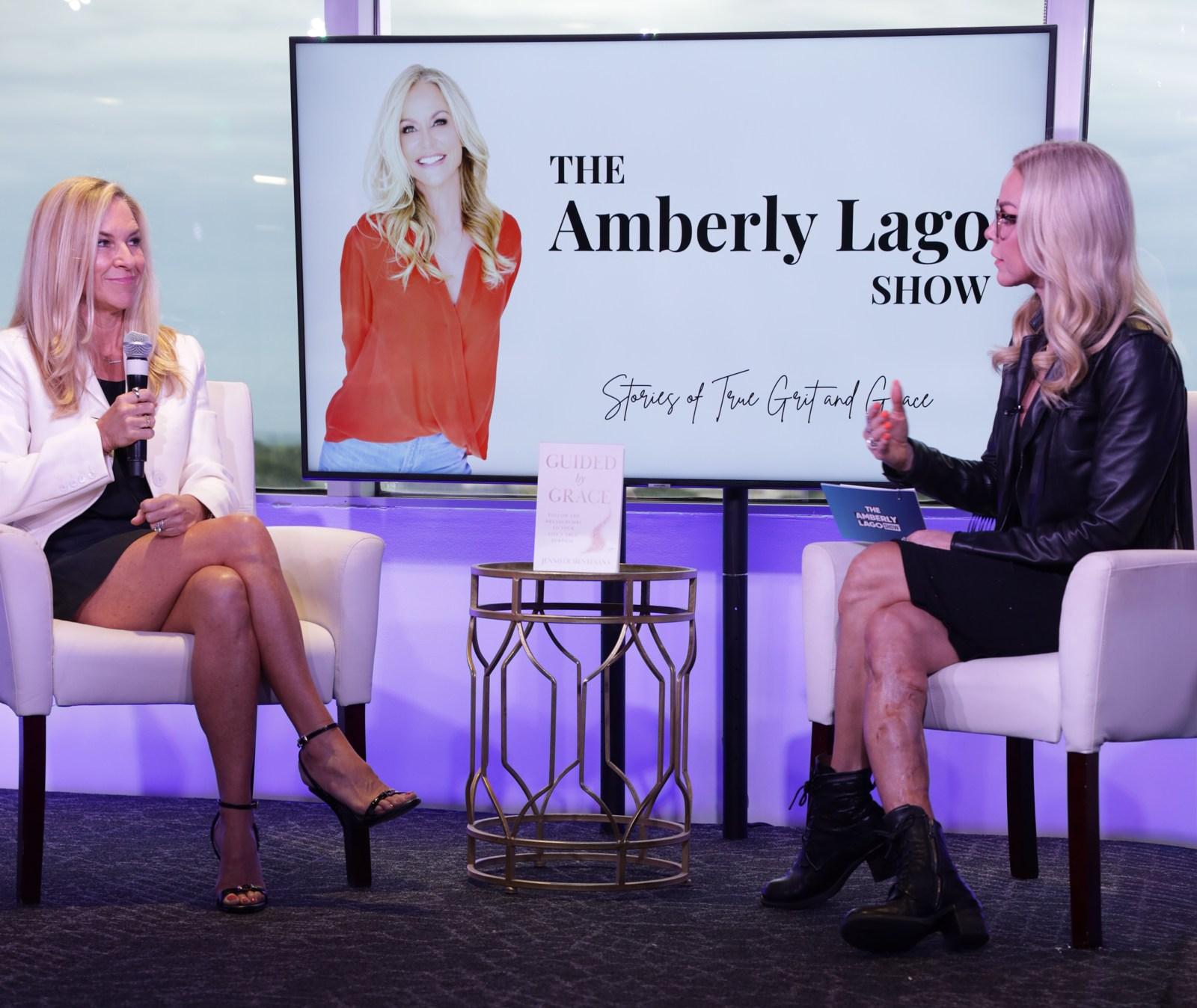
Season 4, Episode 182
Embracing the Future: Exploring Possibilities with Tiffany Bova
A conversation with Tiffany Bova

About This Episode
I decided to release a special bonus episode during my season break because this one is very special. If you've ever ventured into growing a business, you understand the daunting learning curve it presents. When you gaze upon thriving, large-scale companies, their journey to success can seem like an enigma. That's why I'm incredibly thrilled to have had the opportunity to speak with the influential Tiffani Bova. Tiffani is a renowned expert in driving substantial growth for major corporations such as Microsoft, IBM, and Salesforce. Her business growth philosophy is truly remarkable: "The fastest way to get customers to love your brand is to get employees to love their job." This concept is truly eye-opening, and I can't wait for you to absorb her wisdom in this episode.
Tiffani Bova holds the esteemed position of Global Growth Evangelist at Salesforce and has authored the remarkable book 'The Experience Mindset: Changing the Way You Think About Growth.' Her previous book, 'Growth IQ,' achieved tremendous success as a Wall Street Journal bestseller and has been translated into 10 languages.
Tiffani's expertise has earned her a spot on the prestigious Thinkers50 list of the world's foremost management thinkers. She has made appearances on esteemed platforms such as MSNBC, Bloomberg, BNN Bloomberg, Cheddar News, and Yahoo! Finance. Additionally, Tiffani frequently shares her insights in publications including Harvard Business Review, Forbes, Entrepreneur, Diginomica, Quora, Thrive, Rotman Journal, and Duke Dialogue Review.
Tiffani also hosts the highly acclaimed podcast 'What's Next! with Tiffani Bova,' which has received top rankings from both Top Sales Magazine and iTunes in the Management category. On her podcast, Tiffani has engaged in enlightening conversations with thought leaders such as Arianna Huffington, Dan Pink, Seth Godin, Tom Peters, Marshall Goldsmith, Roger Martin, Keith Ferrazzi, Best Buy CEO Hubert Joly, Ritz Carlton CEO Horst Schulze, Square co-founder Jim McKelvey, and Medtronic CEO Bill George, among other notable personalities.
In this episode, Tiffani imparts incredible insights on growing your business by prioritizing your team's well-being. She delves into effective methods of measuring growth, leading people, and persevering through challenges.
Here's a glimpse of what you'll learn in this episode:
1. The role athletics played in shaping Tiffani's career path (6:12) 2. Lessons Tiffani garnered from her first book, which aided in the creation of her latest work (
18:44) 3. Tiffani's approach to measuring growth within her own business (
26:29) 4. The crucial connection between running a successful business and prioritizing employee experience (
33:11) 5. How Tiffani developed her people management skills through active engagement and observation."
Join us for this episode and expand your knowledge! After listening, share it with your friends and post about it on Instagram and tag us both @amberlylagomotivation and @tiffani_bova. Don't forget to spread the word and let others know about what you've learned!
Follow Tiffani
Links mentioned in this episode:
If you are ready to leave your mark by discovering your message and sharing it with the world, you've come to the right place!! Let's work together to build your influence, your impact, and your income! Join the tribe you have been waiting for to activate your highest potential and live the life you deserve! Join the "Unstoppable Life Mastermind!" and let us know you are ready for greatness! Read the "True Grit and Grace" book here and learn how you can turn tragedy into triumph!
Full Transcript
Thank you for tuning in to the True Grit and Grace podcast. I'm Amberly Lago and I'll be sharing inspirational stories of resilience and empowering ideas to elevate your business and your life, ignite your passion and fuel your purpose. Hey y'. All, thank you for tuning in to True Grit and Grace. I'm Amberly Lago and I sure appreciate y' all tuning in every week and making in this a top 1% podcast globally on Apple. That would not be possible without you, without you listening, without you sharing. So I have a very special guest for y' all today. I am so excited to bring you Tiffany Bova because I'm so passionate about bringing inspirational, empowering women on the show who are doing big things in the world. And you are going to be blown away by her. She's a global customer growth and innovation evangelist at Salesforce. She, she's an incredible speaker. I've seen her speak and I'm always blown away by her stage presence. She is a Wall Street Journal best selling author of Growth iq, but she also has a brand new book coming out called the Experience Mindset, which I can't wait to talk about. Over the last two decades, she's led a large revenue producing divisions at businesses ranging from startups to Fortune 500. As a research fellow at Gartner, her cutting edge insights helped Microsoft, Cisco, Salesforce, Hewlett Packard, IBM, Oracle. I mean the list goes on Amazon, it goes on and on and on and their market share and grow their revenues. I mean, she is incredible. She's a powerhouse. She's been named one of the top 50 business thinkers in the world by Thinkers50, not once but twice. She also has a podcast. Her podcast is called what's Next with Tiffany Bova. Tiffany Boa, welcome to the show.
I always, when I get intros like that, you're like, I wish my mom could hear that. Like, she's like, what do you do? Exactly right? But thank you for the kind words. I'm glad to be here.
Oh my gosh, you are amazing. So I have, I, I mean, I have so many questions for you, but we first met when we shared the stage at a virtual presentation that Heather Monahan did. And I was like, who is this amazing lady? I want to get to know her. She is a powerhouse. And so I think we messaged each other on LinkedIn of all places. And then we met for coffee because we. You live in la. I lived in la. And so this podcast has actually been a long time coming to actually get this together because we met over, like, almost two years ago by now. And I think it's perfect timing because you have this new book coming out that I want to talk to you about. But you're incredible, all that you do. And so I just have to tell you right now, so often when I go on stage and I'm thinking about, oh, how am I going to introduce myself? Or what am I going to say? There's this one time you went on stage and you were like, hey, you're in front of, like, thousands of people. And you're like, hey, it's so great to be in front of thousands of my favorite friends or something like that. And I was like, she is the best. Like, yeah.
Oh, my God. It was 14,000 people in the round.
Was it 14,000.
Was 14,000 people in the round at the Verizon center in D.C. yes, it was. That was my. That was my biggest live for sure, yet, anyway.
And you were so calm and like, you owned that stage. You were incredible. And I've listened to so many of your interviews and admire all the work that you do, and I love your confidence. And so I want to get to, like, how. Like, of course, your book. We're going to talk about that. Of course. Things about how to be a better leader, how to, you know so much about change and how to adapt to change and make positive change. But I have a lot of listeners here who, they want to be like you. They want to lead companies like you. They want to speak on stages like you. They want to have the confidence like you. So I would like to get into that, too. So can. Can you first and, like, a little bit tell us about how you got to be where you are today. A little backstory about what made you decide to be this badass that you are today.
Thank you for the kind words. Again, I would say a couple of things. One, I was an athlete growing up, and I think that a lot of what I learned about preparation, competition, winning with humility, losing with your head held high, being coached as an athlete, and you can recreationally be an athlete, but I thought in many ways I wasn't a great student, that I thought athletics was going to get me to college. So I worked really hard at that part of my life. I played multiple sports and landed on volleyball being the sport that I chose to try to get myself to college. However, really, I don't have.
How tall are you?
Yeah, I was just gonna say I don't have the luxury of your height, so, you know, it only took Me, so far, I'm like, I'm just shy of five, seven. Now that I'm in my 50s, I'm probably five, six at this point. I might even be five, five, six even, I don't know. But I'm not six feet. And so back then, you could get away with being under six feet and playing volleyball. Those days are sort of long gone. You really need the height just because the competition has gotten so great. But I'd say athletics taught me all of those things. And I started playing tennis when I was really young, highly competitive. I was number one in my state, age, sort of 12 and 13, but individual sport didn't really float my boat. I liked it, but once I started playing team sports, I was like, oh, I like this a lot better. And so I'd say if you have kids or, you know, you're thinking about having kids, sports is a great way to give those kinds of skills. I'm also glad to hear. Just to digress for a second, I'm also glad to hear that in the sports, sort of kids, youth sports, that they're thinking about not giving away participation trophies that they're really getting back to, you win or you lose. Because I think there's a big message in that.
Right.
And how to do those things. Well, I couldn't agree more.
Couldn't agree more with everything that you're saying.
Yeah, I. I don't think that I. I do believe participation and showing up is something to be celebrated and rewarded. But I do think there is a lot to be said around the competitive nature of it, especially if you're going to get into an industry or a profession like sales, which is kind of where I grew up. So it's, you know, that's kind of one big anchor for me. I. I think when you think about what has served well in my career, it's those things I learned very young from a lot of coaches and people who were on my teams. As I got older, I often joke that everything I learned about business, I learned at the carnival. And people go, wait, what does that mean exactly? And I literally mean the carnival. So I was born and raised in Hawaii, and my best friend's family owned the outdoor carnival. So, you know, Ferris wheels, games, roller coasters, those kinds of things. Not a carnival with animals. So there was no. No animals, but just sort of rides and games. And I was 16, 15, 16 years old. And my best friend's mom, her name was Linda, she was sort of one of the very first women to be in ypo, which is the young president's organization. So at a very young age, I saw, saw somebody that I wanted to be right.
Like, wow, right?
A strong woman who was running a multi million dollar business that she built on her own that was employing lots of people. And I was at her house, you know, pretty much non stop because her daughter was my best friend. So I had a front row seat to this.
Wow, you're kidding.
Really sort of powerful businesswoman. Go ahead.
No, that, like, that's incredible. So your best friend's mom, that's who you. I, I mean this really hit home because just last night in the car, my daughter said, her best friend, she said, yeah, her, her friend really likes you, mom. She looks up to you. Her mom drinks a lot. She gets drunk all the time. And she likes that you have a business. And I was like, you know what? We never know who we're influencing. And that mom changed your life?
Changed my life and taught me. That's why I say everything I learned to know about business I learned at the carnival is I had to learn how to. We would set up a carnival, like Wednesday, Thursday, Friday afternoon. It would start Sunday night at, you know, two in the morning. We'd start breaking down and then the very next weekend we'd be in another school or another place for another carnival. So it was sort of a multimillion dollar business that was breaking down and setting up kind of every four days. So you'd have to hire, manage, create schedules. And then I ran the games, if you will. So if you think throwing a dart, hitting a balloon, winning a teddy bear, or throwing a ring and getting it on a coca Cola bottle and winning whatever those games. So then I had to learn how to order the product. So teddy bear within a certain price point, which then taught me what plushes go on. Teddy bears. Like, I know so much more about teddy bears than you ever want to know. But all of those things and then like theft because it was a cash business. And then I had to do like count all the money and I'd have to do the deposit at night and I'd have to do the inventory of teddy bears. And I was sleeping in the containers full of teddy bears. And once again, in Hawaii, the only way to get stuff in was containers. So if something was late, we had no product. What do we do? Like all of those things. Here I am, you know.
Wow, that is incredible.
And so then I, you know, went away to college and I decided I wanted to get an undergrad in business administration because I was like, you Know, I want to get into business. So once again, I wasn't a great student. So I got into a state school. I think it might have been one of two or three I got into, so. So I decided to go to Arizona State University at the beginning of, like, my second year, where you kind of have to call your major, like, right, like, what's your major? I said, well, you know, I want to do business administration. So they look back and they go, okay, well, what classes have you been taking? What are your grades in those classes? And I wasn't doing well. So my college counselor, right, Says to me, tiffany, I don't think business is really for you, so maybe you may want to think about a different career. You know, you did really well in this class, criminal justice. Like, maybe you could go and get a criminal justice degree. And Arizona State was, I think, if not the first, it was probably the first or second school in the country in the US to actually give that as a degree. And now it's required in law enforcement. But back then it. It was not. And so I said, well, maybe I'll take that and go on to law school. I had high aspirations for myself through forgetting I'm a terrible student. But the note in this was that my college counselor said, business is not for you. And a lot of my issue was what I was reading in the book. I was like, that's not really how supply chain works. Like, if you don't get a teddy bear in that container to that island for that noon Friday start date, you got a lot of really upset customers who, by the way, are all under the age of, you know, 10. So I. I thought I knew more than I knew. You know, the classic, you think you know everything when you're in college. But it really showed me that I was not going to get what I needed to get in that particular situation out of a book. That doing it was my way of learning. And that those two things were really the catalyst for me to say, what do I want to do and how do I want to do it? And who do I want to model myself after?
Oh, I love that story and that experience. And, you know, my best. We have so much in common because I was an athlete, and so I learned so much from my coaches. And then I had a teacher that I was in a teacher training class, and she taught me more than just how to teach dance. She taught me how to run a business. And it's still to how I use things today. But I have lots to learn. I'm constantly learning And I'm so blown away by all that you teach, all that you have done. I mean, you already have one Wall Street Journal best selling book out there. And so I am so curious to, like, what made you go, okay, time to write another book? I want to write another book. Because for me, writing my first book was hard. And I was like, oh, it was like birthing a child.
Awful.
And I was like, I just. I don't know. I don't know if. And I think it's taken five years, and I think I'm finally maybe ready to focus on another book. But how long was it before your first book and now the new book, which I can't wait to get in the mail, by the way. It's not. When is the due date? I say due date like it's a baby.
June 6, my second child will be born. Yes, your.
Your second child will be born June 6th. That's what I thought. I thought it was June. So, yeah, I cannot wait to get that in my hand and share it with everyone. But how long was it between your first book and your second? And then what made you really decide to write the second book?
So I would say this, you know, beyond sort of everything I learned from Linda. My mom was a school teacher. And I think a lot of what I am now is this combination really between the two strong women in my life growing up, right? A teacher that sort of. And you use the word like teaching people, right, this. So I feel like I channel my mom in that way and I channel Linda in other ways. So much so I just want to finish that story up. But so much so that the last chapter in my book, my new one, the Experience mindset, has a kind of rip from the headlines. I sort of did a SVU Law and Order kind of twist. And so I created a fictional story about kind of these two leaders and who was a good leader and a bad leader creating this environment that I talk about in the book coming, you know, know, leading up to this story. And so I just ripped from the headlines, like, things that a few executives have done that were not great, and then things that executives have done who were. And so the lead character is a combination of my mother's first name and Linda's last name. So that is homage to the two most influential women in my life. So that was a, you know, that was a great way to sort of pay that back.
But.
But I would say, I love that.
That is beautiful story.
Yeah, it's just a little, little tidbit of information. If you read that story. But the. I'd say this, look, I'm a practitioner. I may listen, sort of see, understand learner than a read learner. So writing a book was out of sorts for me like that. That was just. It's not my medium, if you will. Like, I, I work.
I agree. I'm the same with you. I'm a C too. I'm not a. I didn't go to college. And look, hey, I got a daughter that's graduating from Yale next month that I'm really proud of. But I am much more of a. I need to see it, I need to experience it. I'm the same as you and. Yeah, but go ahead.
Yeah. So I wanted to write a book, my first one that felt like that. Otherwise I wouldn't have been able to write it, you know. So I worked really hard, my first book, growth iq, in trying to create it to feel like a light lift. It was 30 stories of me trying to let. It was me letting the stories tell my narrative instead of me just pontificating for 250 pages. Right. Let the stories tell the narrative. And I underlined and I had sketch notes. And at the end of each chapter, it's like, here's what I told you. Here are the takeaways. Because I know people aren't going to read word for word. They might not want to read that story, but now they know they can skim the underlines or just go to the what I told them. So what was really interesting about the first book was many people said to me that they liked the format of the book almost more than the content. Right. Because they actually got through the book, which if, if any of you read regularly. Getting past the first sort of 50 pages is a home run for an author. Like, if you could get People Past page 50, we've done a good job of capturing your attention. So the first one was a really heavy lift for me. And I felt like it was a look back at the career of being a practitioning sales, marketing and customer service leader and all the companies I'd advised over the decade. And so that was really a culmination of 4,500 conversations with executives and hundreds of consulting days. And that was really that book. It was my way to scale what I had been saying individually or over the course of my tenure at Gartner. I had no writing a second book. There was just. There was no intention. But I was standing on stage at an event in Vancouver. The art of. And it was the art of Women in Leadership. And I said I didn't think it was a coincidence that Salesforce, which is where I work, is a great place to work. It's one of the most innovative companies in the world, and it's the fastest growing enterprise software company. I didn't think that was a coincidence. And I'm not the first to say, like, happy employees, happy customers, get those two things right. Greater growth rate. Herb Kelleher has said it, Richard Branson said it. I mean, lots of people have said it, but I couldn't find anybody who could prove it. So I went to our CMO at the time and I said, hey, would you give me a little bit of money and let's go prove it. And so she said, sure. So gave me a little bit of money, did a project, and lo and behold, we found some causation. It wasn't. Couldn't call it that yet, but we could see a direct link. So then they said, let's fund one more and let's do it globally. Look, you know, people are really responding to this. And so that's what we did. And then, you know, the pandemic hit. Lots of things changed and kind of got shelved a little bit. The research got a little shelved. And I said, I had no intention of writing a second book, but I cannot let this sit. It was one of those things where, like, I really believed it could have an impact. And so hence, the second book was born. So that's kind of how that happened.
Oh, well, I love that. And it's so good and so much that we need to learn and so much about leadership. And I'm just curious, like, especially for. I have a lot of people who. They're trying to lead themselves, but there's some people that are really trying to lead big companies as well. And I love that you talk so much about, you know, it used to be where let's just. The customer is always right. We just got to make the customer happy. Got to make the customer happy. And you have a different approach on things where you're like, wait a minute, we got to do something different here and approach things differently. Can you talk a little bit about that? About what you're. Like, the whole concept of this book is about.
Yeah, I'll ground it in one quote. The fastest way to get customers to love your brand is to get employees to love their job. Oh, that's sort of the fastest way for me to say, if that resonates with you, then this book is for you. Because if you are customer focused, if you're customer led. If customers are your true north, if the customer is all those things which by the way, 100% correct, not a wrong statement there. And I'm not even correcting the statement. What I'm saying is that you can't get to those true north best customer experience. Because the keepers, the keepers of the promise that you make as a company about your customers are your employees. They are the keepers of that vision on your wall. The values of your company, the promises you make in your, you know, earnings calls. If you're a small little mom and pop business and you have a nail salon or a shipping company or a framing company or a surfboard store, whatever, when your customers walk in and you are not there, are your employees sitting behind the counter, you know, on their phones and don't say anything to somebody or give them the wrong information and then your customer walks out, I'm going to bet that you spent a lot of money getting that customer in the door by paying rent on the main street. So you get walk by business or you've done a, you know, in, in mail a mailer to their homes or you've done an email campaign, you've done something to get them into your door and then in 30 seconds your employees blow it. Because why? Right? They're not satisfied. They don't care about their job. It's a paycheck, it's transactional, they're part time, they don't have what they need, they haven't been trained. Like a whole lot of reasons. Now I want to sort of give a caveat here. Asterisks. I am not an HR expert by any stretch, so I am very focused on what I call the moment that matters. When an employee touches a customer. Could touch them in a face to face interaction, an email, a phone call, it could touch them in the packaging or the instructions in something you sell them, it could touch them in your website, it could touch them in a mailer, right? When your brand and I say touches and air quotes, right? That literally has a moment that is interacting with that customer. That is what I talk about in the book. I'm not talking about all things HR like hiring and de and I. All extremely important, but not the purpose of this book.
Oh, that's so good and so important because like I know there are a lot of people listening that have personal brands that they're trying to build out and build their business and all it takes is one thing wrong, bad trend. I mean I, I trust my integrity is everything and my brand My, you know, my trust and brand and building what I have and having people know that what I say I'm going to do, I'm going to do is everything. And you know, I just did my first in person big event with lots of people there and I trusted a lot. I had to trust a lot of new people from everything from caterers, from front desk people, from the event planner or the event place itself to everything for that experience. And it's, it's scary a little bit when you're growing your business and when you're used to. Well, I know that I can make sure my customer has a good experience, but how do I know and ensure that people that work with me have that experience? Experience. So how do you measure, like how you bring on employees, how to grow your business to where you have these employees that there is a, like this type of win, win where you want to succeed together? Because I want to build together like that. That's what I want for anybody who works with me is to build and win together and have fun, enjoy on the journey. But how do you ensure that? And is there some sort of scale to measure that and to go down and make it better?
Well, so the commonality here and the thing I want, people who, you know, are thinking about this kind of topic especially, right. Growth scale, sales, marketing is. Experience is the connector. So I this play along a little bit with me. When was the last time you caught an Uber?
Two days ago.
Okay. How much did you pay?
$104 exactly.
Really?
Yeah.
Oh, you're like one of the only people that ever remembers.
Yeah, yeah, awesome. Yeah, I remember that crap because I, I remember exactly. Look, I grew up with nothing and no, no money. So I remember every penny I spend.
So most of the time when I ask that question in a room full. Let's go. It doesn't matter how many people you know, 80% of the people raise their hand that they, you know, caught an Uber in the last 30 days.
Right.
And then all I say, keep your hands up. How many of you remember what you paid? Most of the time the hands go down, right. Because it, it could be it's a business expense, right? Or like, like for me, my problem is I might catch four in a day. So I just don't remember when I'm on the road. Right. But I will remember. Did you remember, was the driver too talkative? Were they driving erratically? Was the car smelling.
Wow, that's the radio. So good. Right?
So you will remember those things. So let's just hypothetically say you're not the only person who remembers how much they pay, which is so classic. That's like, that's like a cardinal sin in legal world. Do not ask a question you do not know the answer to. There was a perfect example. But let's just pretend that you didn't know what you paid.
I'm all, $104.
Jesus.
Here's the receipt.
All right. But you remember the experience. So now.
Oh, and yes, I remember every, every experience with an Uber driver, because I talk to every single one of my Uber drivers. Yeah.
Okay, so if you were to go to a really incredible restaurant that had amazing food, like it was spectacular food, but the service was terrible, would you go back?
No.
Okay. You might go back a second time to go, ah, maybe it was an off night. But if you went back a second time and the service was still bad, you probably wouldn't go back again.
Yeah, probably not.
Okay, so let's talk about it. The food was spectacular. That's the quote unquote product. The server is the quote unquote employee. Now why was the service bad? Slow. Maybe restaurant was dirty, didn't have what you wanted, they ran out of things, or the server was trying to use some new tool to order it on a device, but they didn't know how to use the device and it was slowing it down, or they forgot the drinks or it got the wrong order. Whatever you defined as that experience,
that
is what we're talking about here. It's how do you get somebody who's serving your food to love what they do so much that they make sure that that experience is top notch always. Now you can say, well, in a Michelin restaurant, you know, like, they meet ahead of time and they hire these right people and they're very hospitality focused. But if I have a little mom and pop restaurant, like, it's just the college kids who come in in the summer and they're collecting a paycheck, they're not thinking about my long term brand, that if service is bad, people won't come back. So how do you instill something that gets your employees, regardless of who you are, what industry, what size, to be committed and willing to do what you've hired them to do?
How do you do that?
Yeah. And so I start by saying, understand what they like and don't like today. So what's working and not working today? I don't know. We did some surveys and I can tell you that outdated technology was the biggest disconnect between what executives thought was happening in the business and what employees are actually experiencing. So what we mean by that is I work in a call center, you know, for a little tire company, you know, and a customer calls me and it takes me 20 minutes to close that call out because I have to log into three things. I have to get up from my desk and go ask Bob and then get married to give a, you know, a, a return and ask Jose and shipping to go do something else. And it's me 20 minutes to do it. So do I have everything I need to really serve that customer and serve them quickly, or am I having to use brute force? Yeah. And expend a lot more energy and effort to do something that's really simple. But because the owner of the company. Right. Or the executive, the leader doesn't notice, doesn't care, or doesn't acknowledge that I don't have what I need to do my job and do it well. So I always.
So it's on the leader to go, hey, maybe what are better systems that we could put in place to make things more effective for the customer and for the company and for the everybody working within the company.
Yeah. Because we've been so pivoted towards customer for so long, we've done two things. We've tried to reduce their effort in engaging with us.
Right.
I was very early in this thing called the World Wide web back in 2000. I was selling domain names in 1995 or six. I mean, I've been on this cloud journey for a minute. And you know, I can tell you that if you think back about what technology we were able to use back then versus what we're able to do now, you would think that with all this technology it should be easier. So what we did over the last 20 years was we said, look, it used to be seven clicks to buy something back in 2002 and now it's three clicks. Sometimes because of Amazon, it's one click. But that was about reducing effort for the customer to increase their experience, make it faster, seamless, more friction, all or frictionless. All of those things. Right. Unfortunately, the unintended consequence of that is the effort for employee has gone up and their experience has gone down.
Really? So like just like as far like this. Take Amazon for instance.
Yep.
So do you mean by them making it easier for us to click? 1 click for Amazon, it's made it easier for us, but it might be harder for the Amazon employees.
Well, how happy are Amazon warehouse employees right now? They're trying to unionize.
Oh my gosh.
So.
Well, it's building so fast.
And I, and I use that as a very quick snippet.
Right.
That's not the only reason. But let's talk about it right now. Packages can go out one click and we ship to them and then lo and behold.
But how fast can they work? How fast can they do it used
to be two day delivery. That one day.
One day.
And then sometimes it's same day. Oh yeah, okay, so who has to do that today? Next day, same day. I mean some of it is now automation and robots and things like that, but humans still have to drive the trucks and pick up the packages and deliver them to the homes and Right.
That's all employee.
So while driving for that obsession, which you know, the mantra on day one of, of of Amazon specifically was right, we are customer obsessed. We want to be the most customer centric organization on the planet. And as Jeff was walking out, the former CEO, he said, now we want to be the world's best employer. Right. Because we need to be better on the employee side. So. So I would say that for all intent and purposes, that tends to be the downside of being too focused on the customer. So I want people to hear that. I'm not saying it's employee first and customer second or customer first and employee second. I'm not actually ranking them. That's why it's called experience mindset. I want you to change your mindset that if you are going to do something for the customer, you understand what is the implication to the employee. If you have employees, then I want you to understand what is motivating them. Are they satisfied? And I don't care if they're part time, full time college kids, senior executives like, it doesn't matter. You have to spend the time to ask them what would make their day to day better. And if you don't believe what I'm saying, I just say go watch every rerun of Undercover Boss.
Oh yeah, that's a ma.
But it's a masterclass in running the business from the four corners of the office at the executive suite and having no idea what's happening in the employee base.
Right.
Because if you had spent time with employees, you would know all those things were going on. But if you're managing your business from a spreadsheet and you never go sort of, you know, wander amongst the people, then you're not going to know what's happening and what is working. You know, I'm not trained, I don't know how to do this with this. Technology is out of Date we, we get, we get new clothes for the store without the tags on it. So we have to tag it. Or when stuff is returned, we just toss it in the back. And there's millions of dollars worth of, you know, inventory that no one even knows where it is. And it's a line item. And the executives are going, what is going on? Like, stuff getting stolen. They don't even know where it is.
Well, how do you pro. How do you develop better communication between the, the leader or the employer and the employees? How do you develop that better communication?
So I'm going to oversimplify it. It can be something as simple as this. I was doing an interview with Michelle Romana. She is on Dragon's Den Canada, which is sort of shark tank, but it's the Canadian version. It's called Dragon's Den. And she's a double unicorn, two billion dollar organization. She's in her 30s.
Oh my gosh.
So she said, look, we were in hypergrowth Mode. We had 10 employees, 50 employees. Then we had a couple hundred employees. And all of a sudden it started to get a little bumpy. We weren't having the same kind of level of engagement and satisfaction in the employees. It was seeming like we were missing something. Once again, we are simplifying this to its most common denominator. She set up an email box and it said, the stupid shit we do@intercompanyname.com
love the stupid shit we do at the company. Name.com. so people could put in low tech.
And that's about as low tech as you get. You need to hire consultants. You need to survey for six months, ask one question. So they asked one question. What's one thing we could do to make your job easier? So of the 200 employees, they knew they'd get, you know, 200, 250 emails kind of a thing, right? Manageable. Like if you're listening to this and you have 1500 employees, that doesn't necessarily work unless you're going to do, you know, there's ways to do it, but I'm just trying to do it by group, by division, by team, like, start small and work your way up. So sure enough, it was like broken processes or they had made a ton of acquisitions and so they'd missed cleaning stuff up during those times, right. Because they were so focused on the end goal. They, they didn't do some of these things or they weren't trained on something and they didn't know how to do it, or they didn't have access to Something so they couldn't do what they needed to do. Something that simple, like it doesn't have.
You know what I think a lot of times is people are afraid to ask. That's what I've run into when I've hired people to work for me. And the first thing I tell them is, hey, look, I am still figuring stuff out. I don't know how to do anything or everything. And if, if there's something you don't know how to do, just let me know and we'll figure it out together. Or we can hire somebody else to do it, but you have to tell me.
Okay, let me, let me double click on that. So what we found in the research was there was no shortage of asking that question.
But what, why, why is it that? Is it out of fear of people losing their job that they don't want to tell you I don't know how to do something?
So let me tell you what the research showed was there's no shortage of surveys. There's no shortage of data. What we found was 76% of executives in this global survey said that they did not know how to use the data they collected. So now if you're an employee and you fill out the survey and you give all this feedback and then it goes into the abyss, the executives may, may not read it, may, may not do anything about it. When the next survey comes out, what do your employees want to do? Do you think they want to fill out that survey? Do they feel like, you asked me, I answered, you fixed it? No, what they feel like is you asked me, I answered, you didn't care enough to fix it. So, you know, if you're going to ask, do not make the mistake of, number one, not listening, number two, not actioning. So what, what, what that did, what Michelle did and what that engendered was a high level of trust. They asked, we answered, they fixed.
Wow.
Right? Super simple. Super simple. So now the next time you get asked, you're more willing to answer. And then what else happens? It's, you know, that psychological safety of. I've answered that something wasn't, you know, working. Right. And I didn't get fired. They acknowledged it. They called it out and said, great recommendation by, you know, by Amberly, by Tiffany. Right. Whomever. And okay, next time they ask, I'm even more willing. Or. So if you're going to try to uncover what's going on in your current employee environment, the first thing I tell you is you have to ask. Second thing I tell you is if you're not going to do anything with what you find out. Don't ask. Because it's kind of almost worse, right?
Yeah, yeah, yeah. Well, what are your tips on how to be a better leader?
This really look, the last two and a half, almost three years, this has been a journey for me as well. I'd never spent any time on employee experience. I've been really focused over the years on customer experience for all kinds of reasons and growth IQ. My very first growth path of the 10 growth paths was customer experience. But of the 10 growth paths, I didn't have one on employee. I mentioned it slightly. I did a word search on it when I started working on this and realized I think I said five things about it. Let's put it this way, I did it a complete disservice on the last three years. I've really learned a lot about what are the things that have the greatest impact? I would say on the leadership side, this is where this Manage by wandering around, which is very Tom Peters. His book In Search of Excellence was the very first business book I ever read. And it was 1982. My stepfather gave it to me and I was already working at the carnival. So he's like, this is a great book for you to read. And you know, fast forward a full circle moment. Tom Peters wrote the foreword for my new book.
Oh my gosh. Are you kidding?
Full circle, right? Gotta love me some Tom Peters.
So.
Oh my God.
That is incredible.
Right? Honored. Blessed. So.
Well, I've got goosebumps right now. Seriously, that is incredible.
So his book was all about managing by wandering around. Like, get out of your office. Go talk to your people. Like, you don't need to survey if you're sitting in the call center. The new CEO of Starbucks now is, you know, spending a couple of hours every month in a store with the baristas to see what it's like to get a feel for it. And it was like this novel idea. It's like really like, how do you manage if you don't know what your people are doing?
Right.
That undercover boss conversation we were just having.
Yeah.
So I'd say being a leader, that becomes a master asker. Like asking better questions. But you have to be a much better listener. Then you have to be self aware enough to know that they're not saying that the business is ugly. They care enough to give you suggestions on how to make the business better. You should thank them, tell them either why or why not. You could be doing this. Right. Because we all think we know and then they may say, this is the reason we don't do it. Like, regulations won't let us do this or, you know, whatever it might be. Like, we just want to know if we care enough to tell you. You should care enough to answer. And so I would say right now, I think that's the most important hybrid work. Back to office, right? Mental health and well being and wellness is important to us. But then you're not actioning anything to do it. Employees are important to us. Yet on our earnings call, we only talk about customers. Like, you know, we default to the customer's always right and our employees don't know what they're talking about. Like, it shows in the actions. And then the result of that is the great resignation and quiet quitting.
So good. I. I'm telling you, I could like listen to you and learn from you all day long. I mean, I remember when we went to coffee, I was just like leaning over the table, just listening to ev, hanging on to every single one of your words. I want people to be able to find out how they can improve not only their business, but their leadership skills, their communication, and be able to thrive in their business, especially with today's economy. So tell everybody where they can find your newest, latest book that's just coming
out so you can go and buy it at your, you know, favorite retailer. There's an audiobook as well that will be coming out that I just recorded two weeks ago and the Kindle, you already recorded it? Yeah. So it comes out the day it comes out. So June 6th. It will come.
You're amazing.
Well, I. Random House Portfolio is my publisher and that's just. We did it the last time as well. And Growth IQ was translated in 10 or 11 languages. And right now the experience mindset is think is scheduled for three or four. But you could follow me on social media. Ifanyboven, it's Tiffany with an I at the end, not like the jewelry store. And you can follow me on Instagram or LinkedIn. I can't connect to any more people. I've maxed out on connections, but. But you can follow me on LinkedIn.
Wait, oh, so on LinkedIn you. There's a max out for the amount of people that can connect with you.
Yeah, connect. Not follow, but follow.
So they can follow.
Well, they can follow.
I feel honored that I got to connect with you.
Yeah, I ran out. I don't know what happened. I got a little email and they're just like, yeah, you're about 1,200 away from you know, like hitting the, the, the ceiling.
So I didn't realize that you have like over 14, 000 followers on LinkedIn, don't you?
I, I'm almost, I think almost at 50 now. 45, 000 or something like that. I'm getting up. Is it.
Oh, no, no. You know what it is? I'm thinking of my following. I have 14,000 following. You have like a million followers on LinkedIn. No, I have it here somewhere. I wrote it down where you, you have a huge follow. Oh, gosh, no. Yeah, like 45,000 on LinkedIn.
Yeah, yeah. So amazing. Good enough. Yeah. I mean, it's getting better. You know, I think I was really early and, and I wasn't putting content out as much as I am now. And so, you know, I've made a more concerted effort to try to put bursts of stuff out, you know.
So when did you start on LinkedIn?
Oh, I don't know if it was 2008 or 9. I think I was, I was at Gartner at the time. I just don't remember what year. And I know that there was the whole thing around. What number are you on LinkedIn? And I remember I did it like years ago, and I don't remember what it is. You know, I, I don't remember. Yeah, yeah, I know Twitter was.
I didn't even know LinkedIn was. And like, you know, six years ago when I went in and I went to someone to help me try to put together, like, I didn't know how to give a talk, and she's like, you need to get on LinkedIn. I'm like, what's that? So I'm all new to this, but I so appreciate you being on the show. I can't wait for people to read your book, you guys. If. In case you missed the links, if you're out for a run or you're driving, don't worry. All of her links will be in the Show Notes or if you're listening on Apple or your favorite podcast platform, they will be in the Show Notes so you can find all of her information. You can follow her on LinkedIn or all our other social media. Buy her book. You guys definitely check her out. Check out her podcast too, because I learned so much from her. I'm really interested in learning more and more and more about business, and I love successful women who are paving the way for others to do the same. So, Tiffany, thank you so much for being on the show.
I'm so thrilled we finally got it on the calendar. I know it took us a minute, but totally worth the wait.
Me too. Thank you so much. And, y', all, thank you so much for tuning in. Take a screenshot and tag us at Tiffany Bova and Amberly Lago. Motivation. And thank you for tuning in to True Grit and Grace. I appreciate y' all being here. Thank you, Tiffany.
Thank you.
Pain to purpose to joy.
Never Miss a Conversation
New episodes drop regularly. Subscribe on your favorite platform and never miss a conversation.