
Season 2, Episode 316
Dirrerent Is Your SUPER POWER with Dylan Smith
A conversation with Dylan Smith

About This Episode
What if the very thing that made you feel different growing up could become your greatest strength?
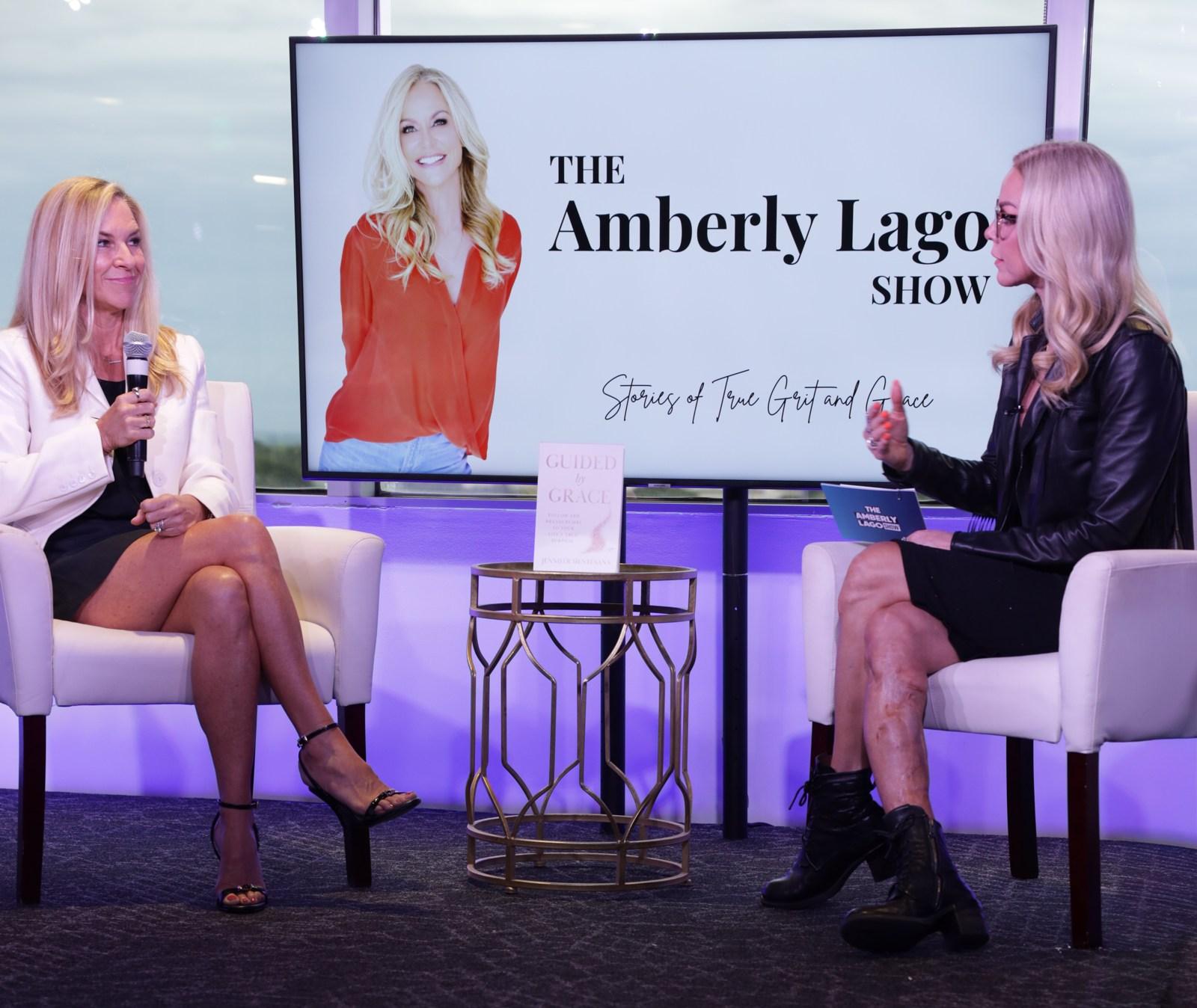
Welcome back to The Amberly Lago Show! Today, I'm sitting down with someone I've had the privilege of knowing since he was just 19 years old, Dylan Smith. He's a motivational speaker, dyslexia advocate, international bestselling author, and someone who is making an incredible impact by helping others turn their challenges into purpose.
Dylan's story is one of resilience, determination, and learning to believe in yourself when the world makes you feel like you're not enough.
Adopted twice as a child and diagnosed with dyslexia at 16, Dylan spent years struggling in school, working harder than many of his classmates just to keep up, and facing bullying from people who didn't understand what he was going through.
He shares what it felt like to be labeled the kid who wasn't smart enough, how those experiences affected his confidence, and the moment he finally understood that he wasn't the problem. His brain simply worked differently.
But what I love most about Dylan's story is how he chose to use those experiences to help others.
In this conversation, we talk about how he went from being an angry kid determined to prove everyone wrong to becoming someone who leads with gratitude, kindness, and a genuine desire to serve others.
Dylan shares how mentorship changed his life, why believing in someone for even five minutes can make a lasting difference, and how taking action on the lessons we learn is what creates real growth.
We also discuss the importance of finding your people. Dylan opens up about how wrestling gave him a place where he felt accepted, supported, and valued for who he was. We explore why community can be life-changing, especially for young people who feel misunderstood or alone.
One of the most inspiring parts of our conversation is hearing about Dylan's mission to impact one million lives through his nonprofit initiative, Mission to a Million Lives. His vision is to bring his message into schools, create conversations around dyslexia and bullying, and help children recognize that their differences don't make them less capable or less worthy.
We also talk about his bestselling book, the importance of supporting parents and educators, and why he believes success should be measured by the lives we impact rather than the money we make or the titles we hold.
And toward the end of our conversation, Dylan shares a powerful lesson that I think we all need to hear: You are enough exactly as you are.
You don't need a certain number of followers, a fancy car, a successful business, or someone else's approval to prove your worth.
If you've ever felt different, been underestimated, struggled with confidence, or wondered whether your story could make a difference, this conversation is for you.
I hope Dylan's journey reminds you that your challenges do not define your potential, and that sometimes the experiences that hurt us the most become the very things that allow us to help others. ❤️
We Discuss
-
Dylan's experience being adopted twice and growing up with dyslexia
-
What it was like struggling in school before receiving his diagnosis at 16
-
The emotional impact of bullying, labels, and feeling misunderstood
-
The moment Dylan realized he wasn't the problem and began seeing himself differently
-
Turning anger and frustration into motivation and purpose
-
How a year-long unpaid internship helped him develop his work ethic
-
The power of mentorship and why believing in someone can change their life
-
Why applying what you learn matters more than simply consuming motivational content
-
How gratitude and helping others transformed Dylan's outlook on life
-
The speaking engagement that inspired him to become a dyslexia advocate
-
Encouraging parents to listen, support their children, and seek appropriate evaluations
-
How wrestling provided Dylan with confidence, belonging, and community
-
Why collaboration and community are more meaningful than competition
-
Dylan's nonprofit initiative, Mission to a Million Lives, and his vision for schools
-
How kindness, friendship, and understanding can help address bullying
-
The role of social media in building relationships and expanding his impact
-
His bestselling book and the message he hopes it brings to children and families
-
Why success should be measured by the people we help, not material achievements
-
Learning to recognize your worth without external validation
-
Dylan's definition of resilience and the importance of showing up as the person you're becoming
Timestamps
0:00 – Mission to a Million Lives: A Vision to Impact the World
1:12 – Meet Dylan Smith: Turning Pain Into Purpose
2:18 – Growing Up With Dyslexia and Being Adopted
2:45 – The Struggles of Dyslexia in School
3:36 – The Moment Everything Changed: His Dyslexia Diagnosis
4:19 – Facing Bullying and Being Called the Stupid Kid
5:37 – Turning Anger Into Motivation
5:52 – From Almost Joining the Air Force to Building a Career
6:16 – Working for Free to Learn and Grow
7:07 – The Power of Mentors and Learning From Others
8:23 – How Believing in Someone Can Change Their Life
8:54 – The Power of Gratitude
9:12 – Finding Joy in Helping Others
10:05 – Discovering His Purpose as a Dyslexia Advocate
11:24 – Signs of Dyslexia Every Parent Should Recognize
12:10 – Why Proper Evaluation Matters
13:02 – Navigating Medication Experiences and Recovery
14:19 – How Wrestling Became His Outlet and Support System
15:00 – The Importance of Community and Connection
15:25 – Measuring Success by the Lives You Impact
16:58 – Building Mission to a Million Lives
17:29 – Changing Perspectives and Ending Bullying
18:07 – Advice for Kids Struggling With Bullying
18:25 – The Power of Asking, "How Can I Support You?"
19:08 – How Serving Others Can Transform Your Career
19:25 – Growing a Brand Through Social Media and Relationships
20:21 – Bringing His Book Into Schools and Reaching More Lives
21:36 – The Legacy He Wants to Leave: You Are Enough
22:29 – Why Your Worth Isn't Measured by Followers or Success
23:20 – Finding Your Purpose and Defining Resilience
23:37 – Show Up No Matter What
24:00 – Where to Find Dylan and His Upcoming Events
24:25 – Final Words and Closing
To Connect with Dylan Smith
Instagram: @disfordyslexia19
Website: disfordyslexia.com
Get Dylan's Book: disfordyslexia.com/book
Learn more about Dylan's advocacy, speaking engagements, book, and mission to help others embrace their differences and recognize their potential.
To Connect with Me: New and Exciting!!
Every episode, the whole archive is searchable! Look for a moment, or ask a question and get an answer drawn straight from the episodes, with the clips it came from.
https://amberlylago.com/podcast
Bring Me to Your Next Event
Looking for a keynote speaker who will inspire your audience with practical tools for resilience, joy, and meaningful connection? Learn more about booking Amberly for your next conference, corporate event, or leadership retreat.
https://amberlylago.com/speaking/
Get Your FREE Joy Playbook
Ready to spark more joy in your everyday life? Download my free Spark More Joy Playbook and discover simple, actionable practices to help you build resilience and embrace more joy, no matter what life brings.
https://amberlylago.com/sparkjoy
Download Your FREE Gratitude Journal
Start cultivating a daily gratitude practice with my free downloadable Gratitude Journal.
https://mailchi.mp/9beab9de1b2c/gratitudejournal
Let's Connect
LinkedIn: https://www.linkedin.com/in/amberlylago/
Instagram: https://www.instagram.com/amberlylagomotivation/
Watch the Podcast on YouTube
Catch full video episodes and exclusive content on YouTube.
https://www.youtube.com/c/AmberlyLagoMotivation
Read My Books
Discover Joy Through the Journey and True Grit & Grace, and find more resources to help you live an unstoppable life.
Join the Waitlist for My Mastermind
https://amberlylago.com/mastermind
Enjoying the Show?
Be sure to subscribe, follow, and leave a review! Your support helps us reach more people who need a little more hope, resilience, joy, and encouragement.
If this conversation encouraged you, share it with a parent, educator, friend, or someone who needs a reminder that their differences can become their greatest strengths.
Thank you for being part of this community.
Full Transcript
I am building a community and we're building in a nonprofit. It's called Mission to a Million Lives. And I'm super excited about it because the mission is to impact a million lives in a positive way. And it's not just for dyslexia, but it's just lives. So we're going to be doing conferences, we're starting a show, Mission to Million Lives. We're going to have a bunch of guests on, but I have a vision for that and this book of me being in classrooms, reading this book to those small classrooms and then having an assembly for the whole school and bring those kids up on stage to highlight. I think where a lot of the problem is with bullying is kids don't understand there's a lack of perspective. I learned that the key to life is perspective. What it is, what it isn't. So if I could bring those kids on stage in a school and share this and say, these are your peers who are going through those 10 hour days and getting those 70s who are working way harder than you, who are creatively way more intelligent than you, you should probably listen to them and learn from them and become friends with them and support them, not bully them.
Hey there. Thank you so much for tuning in to the Amberly Lago show. I have a real treat for you today. Dylan Smith is here, y'. All. He is a motivational speaker, an advocate, he has written a best selling book and I can't wait to share his inspiring story. He's someone who is truly turning pain into purpose. And not only that, he's proving that what makes you different can actually be your greatest strength, your superpower. Dylan, thank you for being here. Welcome to the show.
Thank you so much for having me. It's been a full circle moment for me. As I was saying before, like I met you at 19 in some green room at a conference and I think a lot of us learn from what we see and what we like and what we don't. And you've definitely been a indirect mentor of mine for a long time. So thanks for having me.
Well, I'm so grateful to have you here. I've been wanting to have you on for a long time and when you wrote your book, which became an intro international bestseller. But you are just despite like your incredible luminous achievements and success, you are so kind and so humble and I want to get to your story a little bit because your story is incredible. I mean, you were adopted twice as a child and grew up with dyslexia, which had to have been Challenging at some points. Can you take us back to how it was? Because there's a lot of people that maybe, you know, they have dyslexia or they know someone or they're going through something and they need some advice on how to get through those hard challenges.
Yes, absolutely. So with my journey of dyslexia, imagine you are a middle school to high school kid and you are trying to understand what's going on in class, but you've got words flip flopping on the page. You have a teacher asking you to try harder, and you've got kids making fun of you for falling behind. But what people don't see is that you've come into class early to try to figure it out and build that relationship with the teacher, to show her that effort is not a problem. There's something else wrong here. You've skipped your gym to work with a teacher, him or her, that Everett's not a problem for another subject. You've skipped your lunch, and then after school, you've stayed after. And then you went to a tutor. Your peers don't see that you're doing all that, and then you're still falling behind, and then they're basically jabbing you in the back saying, oh, he's the stupid kid. And you're like, I don't get it. I'm putting in all these hours, all this extra work for what, that? 47. And that is why I'm so called to this title as a keynote that I gave at my home school, because I remember it was the realization of when I was officially diagnosed and I started Orton Gillingham, which was the program I used. I had the epiphany in class in 11th grade, and it was like, oh, this whole time I wasn't backwards. The words were,
yeah, well, how old were you when you officially were diagnosed?
16.
16? You went 16 before you were diagnosed?
Yeah.
Wow. Well, you know. Do you know Greg Reed?
Yes.
He's a good friend of mine. And he was diagnosed with dyslexia, and he's written, I don't know, over 20 books
now.
I mean, it's incredible. But did the kids growing up, did. Were you bullied? Were you made fun of?
Oh, absolutely, I was bullied and made fun of. I was known as a stupid kid, the kid in the small classes, the kid with a teacher following him around. I was definitely made fun of, not welcome certain places due to that. And I think it was something that was beautiful in my journey. I look at my journey as a bunch of positives and Opportunities to learn. So in it, it sucked. But looking back, I look back at it, like, wow, what a pleasure. Like, I probably got my networking skills, having to survive in the school system.
Well, I think you definitely got your grit from that, too.
Yes.
But how did you turn that around? Because in school, I was put in the class for, you know, kids with learning disabilities. I wasn't diagnosed with ad, but I was diagnosed later with add, and I was always put in the special needs class. And then they were, like, didn't know what to do with me in that class. And then they tested me for talented and gifted and then ended up putting me in that class. But it still affected me. Like, I'm not smart. I'm. I'm the dumb kid. I'm the. You know, how did you turn the bullying and being put in those classes and being told that you weren't smart? How did you flip the script on that and start to build your confidence?
I used it originally as fuel, and I was a very angry kid, as you could imagine. And I was under a. Let me prove them wrong, you know, anything I could to prove them wrong. So I had two options when I graduated. Had an internship, or I was going to go to the Air Force. No, I've never really told that story about how I went to the Air Force recruiter. I tried to be sworn in, and they deny me without my high school diploma. So you come back when you hit a high school diploma? Because I wasn't certain that I was going to get it. So I was like, oh, if I get sworn in and then I don't get it, I'm already sworn in. So I was trying to figure it. Thank God it didn't happen, but I was trying to figure out a way to just survive and make a career out of something with nothing. And I remember I was like, all right, if this internship works, if I get an internship, I will treat it like boot camp. So I came in early, stayed late, asked questions. We said, I want to learn, I want to scale. I want to build a career. I'll work for you for free. So I worked for free for a whole year just to learn. And while that, I said I would never be able to work and then not work for myself. So every day I went to work, I had to make a selfie video of my story or whatever. That's how it started. And the videos.
What year was this?
2020.
2020?
Yes.
Not that long ago. And look at what you built. I think I met you, what you were 19.
I first
met you. Yeah. And you are such a hard worker. You are somebody who definitely works hard to get what you want. Where do you think that you learned the skills? Was it because you had to work so hard in school, or did you have mentors or you're adop parents who adopted you that taught you that?
I think it was a mix, honestly. I think mentors, you know, mom and dad could tell you anything, and you're like, that's mom and dad. Your brothers and sisters could tell you anything. You're like, what do they know? I think the power of a mentor is very underestimated because I learned. I watched a bunch of motivational clips and speakers and podcasts, and you were one that I looked at at 19. And so it was a pleasure to meet you at the time, but it was like, okay, you can also indirectly have a mentor. You can watch these things. I watched Ryan Serhan, I watched David Meltzer. I watched all these people who've become PE now. But it's understanding that the application is where the improvement comes from, and that when you get into the position where you're presented with an opportunity to meet somebody like yourself, be ready for it. And, yes, that was a nice okay. But then when you see them again, make sure they see that you've changed. Make sure they've seen that you're grown, that you're mature, and give them an opportunity or a reason to give you an opportunity and to listen to what you have to say. Because something that you did that has changed my life when I was 19 is you gave me just a little sliver of. I believe in this kid. And everybody has. Jeff has, everybody that I met at the conference, but nobody understands the power of that to somebody chasing a dream. Believing in somebody for five minutes could change somebody's whole career. I do believe
in the power of mentors and. And one thing that I love about you is that how you are so well, that you're humble, but you also. You have achieved so much, and you always give people credit for things like you've, you know, talk, speak highly of David Meltzer, and you speak highly of these people and appreciate them. I think appreciation goes a long way.
Absolutely. The attitude of gratitude's probably unlocked every opportunity I've had.
Yeah. And you've got such a positive outlook. But you said you went from being. You were an angry kid, which I can understand when you're bullied and made fun of and that sort of thing. How did you start to shift that anger to gratitude?
I promised myself that I Would help my friends. I was helping people to help me. Very indirect, very. I call my friends. Don't think that it is. But I personally think I'm selfish because I help people, because I like helping people. I think that's a selfish thing because I. I like to help people. So I said, I'm going to help my friends grow in these ways. And while I'm helping them grow, I have to grow so I can be able to help them grow. So I used it as like a back pressure and then made non negotiables. But I think that my purest joy is helping people. And then when I watch them grow, it makes me want to go harder. So it's kind of a yin and yang, a pushing up, a pull.
Yeah. Well, when did you get into being such an advocate for others and helping parents and educators and kids, Kids that have been diagnosed with dyslexia. When did you start to. To go. I am going to be the person to go to to help them.
2021. I got my very first speaking engagement in Virginia, and it was at a Catholic school. And I walked in, no one told me anything. And everybody had a dissection T shirt on. All the staff, all the kids. I'm 20 years old. I'm like, whoa. And I thought I was speaking to a small room. I had four speeches. One was a full church because it was a Christian school. And then one was parents. And then was the. The whole board. And I gave the one to the. They loved me. I brought a lot of energy. I ran up on stage, I was talking about my story, and then kids are coming, telling me how that impacted them. Did the parents. I have mothers in tears. Did the board. And then they were like, you are the person for this. That was amazing. Thank you so much for coming. So that was kind of like a light bulb moment. And all I was doing at that chapter was tell my story. That's all I did, was tell my story and give my perspective on where I felt I fell through the cracks and where I could improve and where teachers could improve. And ultimately, you're an amazing present parent. But how strong parents are. And I don't think a lot of people realize that that's a luxury to have a present parent,
and
they're a parent that cares. So I think that when I had been adopted, I realized it's an opportunity to show them why they chose the right kid.
Oh, wow. That's beautiful. Well, what would you say to a parent that maybe they're overlooking that their child has dyslexia
do research, have them evaluated, be their biggest cheerleader and listen,
what are some of the signs?
Some of the signs are frustrated, aren't going to read, very easily distracted, very creative, extremely creative. All dyslexics are extremely creative and out of the box thinkers. So that's why you usually see the sexics very creatively successful.
That's true. I think everyone that I know that is been diagnosed with dyslexia is very creative.
Yes.
So what would, what would a parent do if they're noticing, okay, something's not quite right, they are frustrated and I feel like a lot of times nowadays people are quick to label kids.
Yes.
So what, what's the first step that they could do?
I would say don't go to the doctor because I was put on meds for ADHD in seven minutes.
Yeah. That's what I feel like.
So
there's so much, you know, and I, I've never, I mean to each their own, but I've never been put on medication for add. I just have learned different ways of staying focused and. Yeah, but yeah, I feel like nowadays everyone is very quick to medicate.
Absolutely. It's like sign a subscription, have them eat it and they're all fixed. But you're just putting a band aid on a bullet hole. So I would say have the right evaluation taken.
Yeah.
Find the right people. Where
do you get an evaluation now?
You would find, you can look it up. I use Marta Flom, she's one of the biggest in neurodivergency. But if it is dyslexia,
what was it again?
Neurodivergency.
Okay,
so a evaluator in neurodivergency to evaluate your kid will be 2 to 4 days, 10 hours doing tests and I'll do basically a write up on you and they'll tell you what you have. But when they do it, if you're on meds that you should take, get off immediately, which for the problem is, is when you're on them for 10 years like I was, immediately your body's imbalanced. So I bloom ballooned up. So on top of being bullied and all this stuff, now I'm 16 and fat and ugly because I was taking off the meds.
Oh, so the meds, when you take them off, it made you gain weight.
Yes, because it is really concerta, which is actually if you break it down chemically, meth.
Oh my God,
yes.
I had no idea.
Yeah. So if you look at 16 year old photos of me, I'm 160, bloated, wearing large T shirts.
So when did you start to get your health back?
Senior year. So it took a two year bounce back. Yeah. Figuring out what worked and what didn't.
And then did you have a girlfriend at this time?
I had a girlfriend before it all happened. So we broke up and then I was taken off the meds.
Oh, wow. So how was that with, you know, going? Just being in high school is hard enough.
Yes.
But you're dealing with all this. What are some of the things that helped you cope with the ups and downs and the diagnosis and the weight gain and the weight loss and the meds and. No meds.
Wrestling helped all of it. I was a big wrestler and that was the only place on earth where I was not the stupid kid. I was not this, I wasn't the adoption kid. I wasn't this, I wasn't that. I was just a teammate. And like, I really wouldn't have got through it without wrestling because you're going to go to war in practice anyway. You're going to be able to get it out. You're going to exercise hard till you're sore and can't think anyway. And then when you actually wrestle, you get to go on the mat and wrestle people. So it was like an outlet for sure and a community that definitely was well needed.
Yeah. I think that it's so important for kids to have outlets. I know for me going through so much as a kid, that dance and track, that was my outlet. That's where I found joy. And let's talk about the power of community, because you just said something very important. You had that community of people that understood and now you are not only traveling all over the world speaking, you've got this book, but you are really a community builder and you're doing your own events and creating community. Tell me the importance of community to you.
I think that a man should be forever be measured on success based off the lives he impacts and the opportunities he creates, not off the titles he's given or the income he has. And when I learned that and the people I look up to, why do I look up to people like yourself and David and all these people? Because you help people. That's why I look up to you guys, not because of anything else. And I have a big passion to help my friends in here. So wanting to scale my friends and then gain more friends and more community and help them scale, I learned that collaboration beats everything over competition. And I found my most fulfilling thing I've ever done. Is watch and help people grow. Like I have a friend. Shout out. Shannon Pell. He, me and him chased our dreams together. That was our deal. And he landed a Netflix show on building the band. Built a band, went on a world tour. He's a pop star now. And I just, he, I just said thank you for allowing me to be a part of your journey. And I, I want nothing from him but to be able to watch Journey and there's nothing more fulfilling than that.
Yeah, well, you can tell how much you impact people in a positive way. I mean, you've got your crew here in the, in the studio watching you. You've got your. And so I'm like, so we were highlighting you. Yeah. And so you. But you can tell how much that you love. And everywhere you go, you're like a networking king. I've seen you in action and you make sure. Even when I got to the studios today, you were already here. You were making friends, running around. So it's, it's incredible what's next for you as far as your event or your any.
So I am building a community and we're building it in a nonprofit. It's called Mission to a Million Lives. Super excited about it because the mission is to impact a million lives in a positive way and it's not just for dyslexia, but it's just lives. So we're going to be doing conferences, we're starting a show, Mission to a Million Lives. We're going to have a bunch of guests on. But I have a vision for that and this book of me being in classrooms, reading this book to those small classrooms and then having an assembly for the whole school and bringing those kids up on stage to highlight. I think where a lot of the problem is with bullying is kids don't understand there's a lack of perspective. I learned that the key to life is perspective. What it is, what it isn't. So if I could bring those kids on stage in a school and share this and say, these are your peers who are going through those 10 hour days and are getting those 70s who are working way harder than you, who are creatively way more intelligent than you, you should probably listen to them and learn from them and become friends with them and support them, not bully them,
well, what would you say to a kid who has been bullied and they don't have confidence? What's the first thing they could do to build their confidence?
Get a friend. Because there's no way that anyone's. I don't care who you Are everybody's going through something and everybody could use a friend. And it doesn't matter who your friend is, as long as they listen and support you. And I'd say the best way to make friends is ask this question, how can I support you? How can I promote you? How can I uplift you? Who doesn't want if I'm trying to give it to you? So that is the question that's opened so many doors for me and created so many friends.
Yeah. And you know, I have to say that is something that a lot of people don't realize, and that is what sets you apart as well, is you're always like, want to send a prayer, you want to send a motivational quote or a picture or something uplifting instead of, hey, I want to pick your brain or hey, can you do this for me? You know, it shows that you are just so willing to say, serve. How has being of service impacted your career?
Oh, astronomically. I'm sure I'd be in my car doing selfie videos if I was asking to pick brains. I'm sure of it.
Yes. Can we just shout that off the rooftop? Yeah, it's. It's so true though. It's so and so. Yeah. Okay, so you have grown your brand, you're growing your community. You've got an international best selling book. How has social media played a part in growing your brand?
It's brought in eyes that I've never really wanted or manifested. But like those, I call them God layups. God lays you up. So I've been able to meet a bunch of like Grammy award winning artists and some NBA players, NFL players, and they're all. It's funny, I think that the universe answers to what it sees in action. So it's funny that after all these things, usually some big celebrity reaches out to me. Like last year I became friends with Teddy Swims. I became friends with Justin Love. I got to watch my friend blow up on Netflix and became friends with his whole band. And it's like those side quests of interviewing them and hanging out with them shows you and reminds you like, I am doing the right thing and I do belong here and I am just happy to support them. Like, never want something from anybody, always want something for them.
That's key. That's a mic drop moment right there. If I had a mic, I would just drop it right there. So what's next for you? Where are you going? Where are you headed with your book? I know you have been all over touring with your book. What's next for you with your book.
What's next with the book is bringing the schools. Launch it with mission to Million Lives and continue to put it in as many hands as possible. I've been very surprised on how it's been received. I don't know why. You're an author, so you could probably relate. You write the book and you publish it and then you're like, I don't know what's going to happen next and there's nothing you can do about it. So I don't. I think that I was definitely playing small mentally, not physically, because I was like, oh, it's going to come out. I'm going to give it to my family and friends and some people I met and that'll be that. And I didn't think it was going to. It's already doing way more than I ever intended and the feedback is beautiful. But I think the best part is people are reaching out to my family and my friends. The people reached out to my mother and my father and my brother, sharing with them how it impacted them. And then my mom is being able to come to me and I think it's impacting my family indirectly without me, which. And that makes me happy.
Yeah. And it will continue to be the ripple effect. And I can see you speaking in all these schools and graduations and so much. I think it's amazing. You are the person that people are now going to to learn, not just kids, but parents and educators. It's amazing.
Thank you.
What is the legacy that you really hope that by lead with this book
that you are enough? It is a lesson that took me forever to learn. A lot of young males, I'm sure a lot of young females deal with it, but a lot of young males, as I can have experience is we think that we have to be the CEO, we have to drive the Mercedes, we have to be this successful guy to be loved, to be enough, have to provide, have to protect. And it's true. But you're enough as you, you know, if I were to take my suit off, I'm still going to have the same things to say. And if I, if I impact lives with a suit or without a suit, I'm still impacting lives. And that you're remembered as how you carry yourself and the people you help, not in the things that you hold, whether that's titles, income or fancy things.
Yeah, that's really. I love that. And I think now so much because of social media, people see the fancy cars and the suits and the flashy Jewelry and, and the big stages and that sort of thing. And they measure how. How, if they're enough by that and. Or how many followers they have on social media. So what would you say to the kid out there that is struggling because they don't have as many followers or, or likes or comments or whatever, or they don't drive the car? What would you say to them to let them know that they are enough as they are?
I would say find somebody who has the results you want and go ask them how you can support them and find somebody that you may want to be your mentor and say, how can I learn from you? How can I learn from you? And how can I support you?
That's great. And it's really, I think about what you're saying is like finding your purpose.
Yes.
Basically find that purpose. And, and then what is. As we're closing up, what is your definition of resilience?
What a good question. I. What is. I know yours. You got an incredible story. I think my definition of resilience is to show up no matter what. That is something I live by. I remember I asked my father when I graduated, what. What is one piece of advice you can give me when I leave
and
I can carry the rest of my life? He said, men, show up no matter what. Tired, broke, hungry, energetic, wealthy. You show up no matter what because it matters. And I would say, show up no matter what, but show up as the person you are becoming, not who you were.
That's so powerful. Well, what is the best way for people to find out about your next events? Whether you're going to be doing book signings in their town and grab the book. What's the best way for people to reach
you? You can find me on Instagram @dhru19. You can Google me. Dylan Smith, Dyslexia. You can email me@dylan.com.
okay. And I'll have all those in the show notes as well. So you. You're amazing.
You're amazing.
Thank you so much for the work that you do, for the example that you are, and for writing a book that's changing lives. And it's incredible, incredible to see. And. And I love how you build community. And so thank you. It's a dream come true to finally have you on the show. Thank
you
for being here.
Absolutely.
And thank y' all for tuning in. If you found value in the show, please share this. You can tag me at Amberly Logo Motivation. Tag Dylan too. We'll put his. We'll put all your social media in the show. Notes. So if you're out for a run or drive, and don't worry, you can find all the link in the show notes. And I, I appreciate you tuning in. It's because of you that we are a top 1% podcast. So thank you and we will see you next week.
Pain to purpose to joy.
Never Miss a Conversation
New episodes drop regularly. Subscribe on your favorite platform and never miss a conversation.