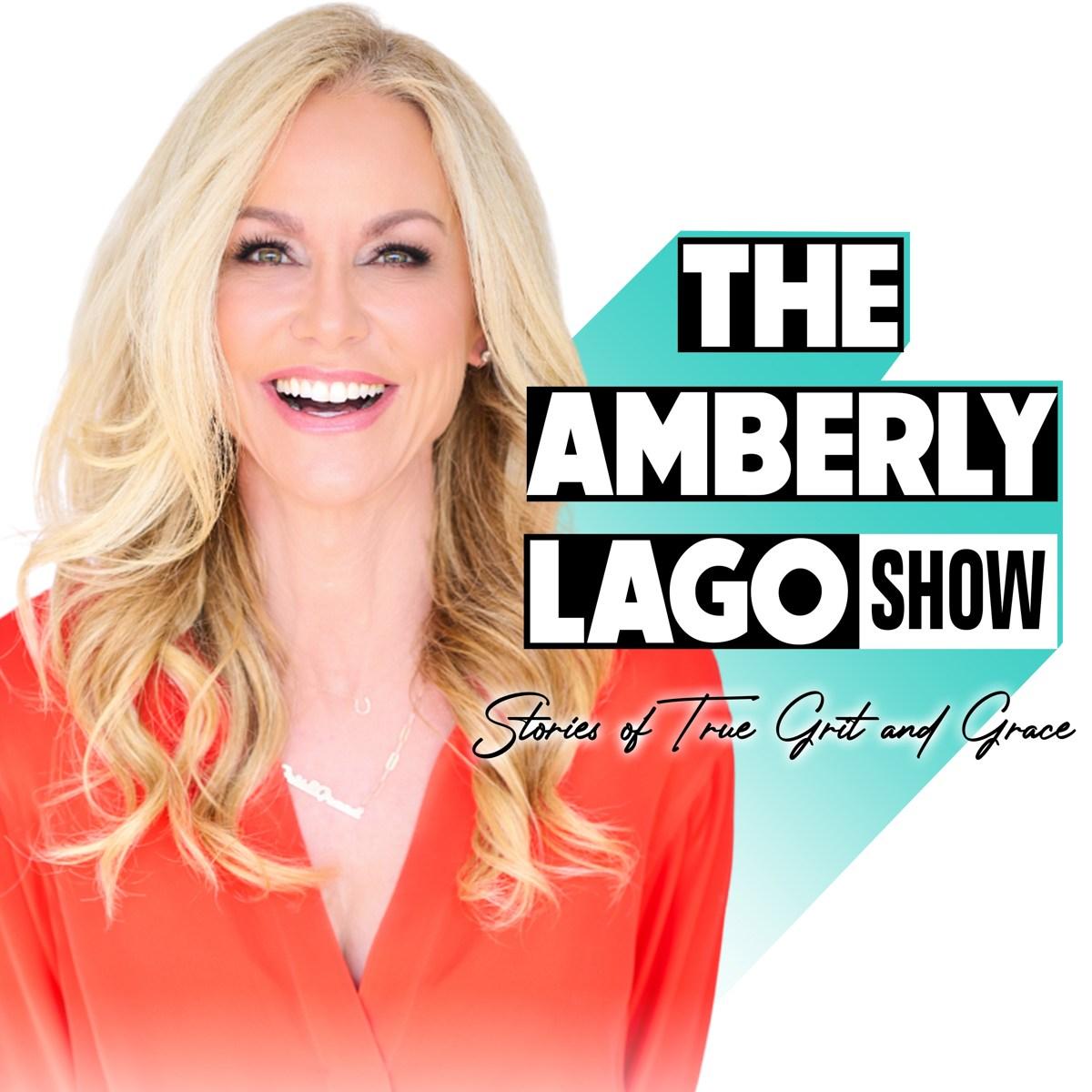
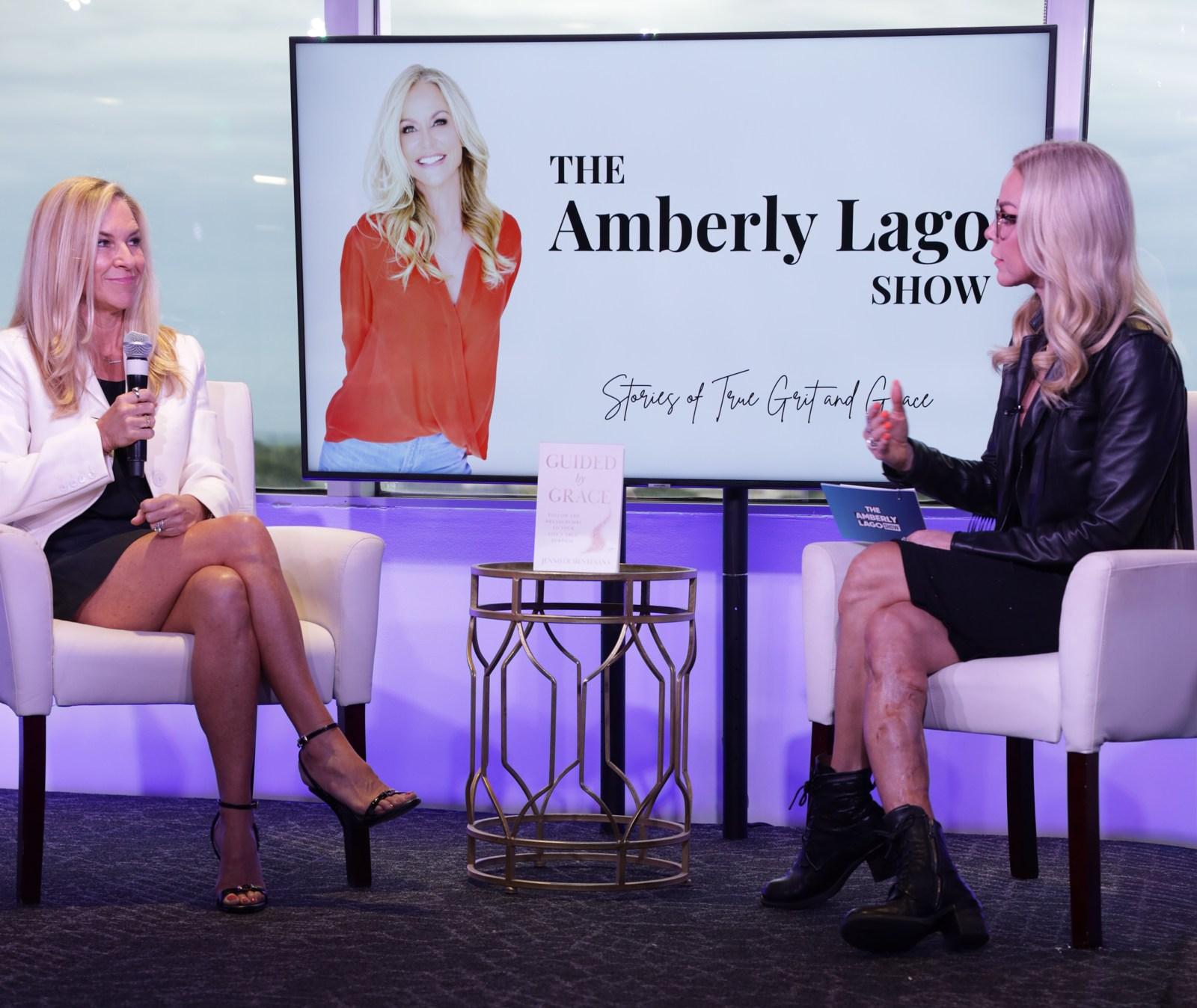
Season 1, Episode 52
Write Your Story and Let It Be Found with Rea Frey
A conversation with Rea Frey

About This Episode
"Comparison is self sabotage."
I am often asked about the process of writing my book - tips, tricks, the honest truth. It seemed like a good idea to bring on a book writing expert to the podcast because statistics state 81% of people think they might write a book one day.
Rea Frey is the multi-published, award-winning bestselling author of three suspense novels and four nonfiction books. She's been featured in US Weekly, Entertainment Weekly, Popsugar, Working Mother, Bustle, She Knows, Marie Claire, Parade, Shape, Brit + Co, Hello Giggles, CrimeReads, Café Mom, Writer's Digest, WGN, Fox News, Today in Nashville, Talk of the Town, and more.
She also recently founded and scaled her six-figure business Writeway™, where aspiring writers become published authors. On her weekly Writeway™ podcast, she cuts through the B.S. of the publishing industry and gives writers the exact information they need to make informed decisions about their careers. When she's not busy running a business, meeting book deadlines, or homeschooling her daughter, you can find her alternating between meditating, exercising, and trying not to lose her mind in the process.
This conversation is so informative, especially if you've ever thought about writing a book. I hope you get a ton of inspiration and motivation as you listen to Rea explain how you can share your ideas with the world.
Here's what you will learn:
- How Rea began her journey writing her first book (2:03)
- All that comes with publishing, promoting and selling a book (12:14)
- The changing successes as the times change (20:15)
- The productiveness of repurposing social media copy for other purposes (25:16)
- The difference between writing and publishing nonfiction and fiction (31:41)
- The importance of engagement to match the following (38:52)
- The importance of posting positive as well as authentic (41:31)
- How hybrid publishing works (45:28)
- The importance of having a literary agent (48:37)
- How a book can become evergreen (56:35)
Get in touch with Rea:
Mentioned in this episode
Unlock your highest potential and start living the life you deserve!
Read the True Grit and Grace book here and learn how you can turn your tragedies into triumphs!
Thank you for joining us on the True, Grit, & Grace Podcast! If you find value in today's episode, don't forget to share the show with your friends and tap that subscribe button so you don't miss an episode!
You can also head over to amberlylago.com to join my newsletter and access free downloadable resources that can help you elevate your life, business, and relationships!
Want to see the behind the scenes and keep the conversation going? Head over to Instagram @amberlylagomotivation!
Audible @True-Grit-and-Grace-Audiobook
Full Transcript
Welcome to True Grit and Grace, a podcast designed to empower you to claim your resilience and thrive through life's challenges. I am Amberly Lago, a mindset coach, fitness expert, and bestselling author. Each week, I'll dive deep with the world's brightest thought leaders and elite performers to share tangible tools and practical advice to inspire you to keep your eyes on the prize and forge ahead. So get ready to conquer your fears, heal any trauma, lead with your heart, and elevate your life with grit and grace. Hi, and thank you for being here. I'm Amberly Lago and I appreciate you listening in to True Grit and Grace. I just recently heard that 81% of people want to write a book, and only about 1% of those people actually end up writing a book. And so I'm really excited about today's guest. I have Rhea Fry, who is a published author of four nonfiction books, three novels, and she is the CEO and founder of Writeway, where she teaches aspiring authors how to become published authors. She is passionate about sharing tips, tricks, and insights into everything she's learned over the course of the years in writing, publishing, and marketing industries. Through her coaching, her blog, she's got a podcast. And I'm so grateful that you're here with us. So thank you for being on to share your wisdom.
Well, thank you for having me. It's an honor.
Oh, yeah. Well, I, you know, I know how hard it was to write one book, and I was blown away that you have written so many. And we originally met when I was speaking on a panel that you were facilitating so beautifully through Happy Women Dinners events, and we just instantly connected and ended up talking afterwards, and I was like, wow, I have so many people that ask me all the time, I want to write a book. How do I get started? And people that ask me about the publishing process, should they self publish, should they do hybrid publishing, should they do traditional publishing? And so I would love to talk to you about all those things. And first, I'd like for us to get to know you a little more and how you began your journey with writing. Even your first book.
Yeah, you know, my first book I don't talk about actually ever. So.
Well, you were young, weren't you?
Really young. I was. So, I mean, I grew up always writing. I loved writing letters and journaling all the time and not necessarily fiction, but my dad was such an influence in my life. He's a great writer and used to make words really fun. He taught me to read from the TV Guide back When the TV Guide.
I remember the TV Guide.
And we just would do such fun things together. But as I grew up, I got really into sports, actually, and, you know, kind of thought about going to college either for, like, athletic training or creative writing maybe. And then when I went to Columbia in Chicago, I went to visit and fell in love with just the creative writing program and where it kind of was in the city. I grew up in Nashville, so moving to a big city was super exciting. So I did. And I, like, wrote and read so much during those four years. And when I was 21, I wrote this novel called A Woman's Ring, which, I mean, bless my little heart. I was so naive about the whole thing. I knew nothing about the publishing process, even though I had interned at literary agencies. I was trying to learn about the business. But, you know, back in 2002, or. Yeah, 2002, 2001, 2002, the publishing landscape was totally different than it is today. And I decided, though, like, I wrote this book, and I said, I'm gonna get it published. So I found this little publisher that did not need an agent, and I got a quote, unquote book deal. It was a terrible deal. You know, my book was never in the bookstore. It was pretty much a, like a vanity press, a print on demand press. So it was a really good learning experience. I remember being at my book release party. I was having all of my professors come, all these people that I admired, and my cover looked terrible. Like, it was just awful. And they had printed my book with double prologues in it. So I was taking a straight edge razor, like, 30 minutes before the party, like, cutting out the extra prologues in this book. So it was just. I was really embarrassed. I remember all these people, like, oh, you're publishing a book, and being very embarrassed. Like, that was my lead emotion with it, which was pretty disappointing. And because of that, quite honestly, I abandoned fiction. Even though I loved it. I dropped it for 10 years. Didn't touch it. Would kind of think about things I wanted to write about. But I found safety in nonfiction. I married my love of health and wellness with my love of journalism, and I wrote for, you know, magazines and newspapers and ended up writing for traditionally published nonfiction books. I was a very prolific writer, so I could crank the material out. By that time, I'd studied the industry a little bit. I knew how to land a book deal. But what I didn't understand was, oh, if you're a nonfiction author, you have to be an expert in your space, and you have to have an author platform. And you have to have a community of readers waiting to buy your book or you're not going to sell them. And that I very quickly realized that I could write the book, but I had not spent the time building the community of readers to really support and grow my audience.
So I remember when I got a book deal, and they said, well, we publish your book, we get your book in bookstores, but if you want to sell it, it's up to you. And I was like, oh, wow. At the time, I had about, I don't know, maybe 400 followers on Instagram. And those were like, family and closest friends. And I was like, oh, my gosh. I had no idea, you know, how to market and how to do any of that. And so I had about a year to start to try to build my platform. And you're exactly right when you, You. You have to be the expert in your field for that. And I had no idea. And, you know, I didn't have a LinkedIn profile yet. And so I was like, I gotta get a LinkedIn profile. I have to get headshots. I have to get a website. I mean, there's so much that goes along with that. But, yeah, I was in the same boat, and I had no idea just what goes along with when you're writing a book.
It's so. It's. There's so much that goes along with it. And when I was publishing nonfiction, this was still like, I don't know, 2010, 2011. So, again, the author platform wasn't as huge as it is today. There were really no influencers yet. And I remember being somewhat placated by reading the stats, which are depressing, but that, you know, the average book sells 250 copies in its first year and 3,000 copies in its lifetime. You're kidding. I mean, that is. That is still. I think that still stands true today. And I remember being like, oh, well, then I'm okay. You know, I just. I set the bar so low. And I had fed myself this story that if I'm going to be a published author, it's more of a passion project. I could never make money at it. I could never make a living at it. You know, writers don't make money. It's really hard. And I kind of grew up with this story that I didn't really take myself seriously. And I didn't understand that this is a business. Publishing is a business. Your book is a product to sell. And once I made that switch, everything kind of changed. But in order to get There, you know, I had these four kind of nonfiction flops. I mean, they, you know, some of them did okay, but they, they weren't anywhere near what I wanted. Despite getting like TV shows and radio appearances and doing all of the marketing things, it still just kind of flatlined with the sales. And I learned, you know, you really can't control the outcome or the results. And as an author, that's so hard because you want to sell books. So I still really, in the back of my mind, wanted to write fiction. I just always wanted to be a novelist. And I still just would not touch it. And then about at the end of 2016, I started to get an idea for a book. I was a mother by that point. I started becoming really observant about mother daughter relationships. I've always liked writing and reading suspense. So I had an idea for this book. I was in a. It was in an airport and I witnessed this exchange between a mother and daughter that was awful. The mother was physically and verbally abusive to her child. And I just remember wanting to like take this little girl and she was all decked out in red. She looked like Christmas, you know, red dress, red shoes, red bow in her hair. She wasn't doing anything to provoke her mother. And my first reaction was to empathize with the mom. And then my second reaction, or the question I asked myself was, you know, if this mother is acting this way in public, what's going on behind closed doors? Which led me to, you know, is she a bad mother or is she just a mother having a bad day? Because I've been that mother. I've had those bad days and I've had good days. So I got an idea to write this story. I created this story around these two people, these two real people, about this woman who kidnaps a five year old to save her from her abusive mother. And I could see the whole story from start to finish, like standing in that airport line the moment I got home. I was working three jobs at the time. My husband was struggling with work. Our daughter was very young. I quit two jobs that very week. Even though we desperately needed the money. I gave myself eight weeks to write that book. I wrote it in four weeks, got an agent, landed a two book deal, then another two book deal. And it is quite literally changed my life because I did not give myself a plan B. I didn't allow myself to be like, oh, well, if this doesn't work out, then, you know, then I'll go do this. I mean, I made my husband, made me like A film casting board of who's going to play these characters in a movie. He did a mock book cover of the book that I would look at every day. I would rehearse what my imaginary agent was going to say to me. When they said yes, I imagined what the editor phone call would be like. When I talked to the editor and they offered me the deal. I practiced those imaginary speeches every day. I wrote it down and it literally came true almost verbatim. I got the publisher that I wanted, I got the deal that I wanted to, I got the agent I wanted. And it just all happened. It seemed to happen overnight, but it was like a 15, 20 year process to get there. And again, I went into that very naive. Even though I knew somewhat more about the business. I was a brand new fiction writer. I was no. 1 in this arena. The author platform wasn't quite as important as it is in nonfiction. But I was like, I'm going to treat this like a business. I worked side gigs to raise $20,000 to pay a publicist. I looked at it as a business expense for startup business, startup costs, and approached every step of it. I took the emotion out of it and I was like, I'm going to grow my business. I'm going to grow my business as an author.
Well, see, I think that's what's really, really important. I want to highlight some of the things you said is you really set intention for what you were doing. You were, or you can say manifest. A lot of people use.
I'm like a specific manifester. I love, you know, all of that.
And you were like that. You were visualizing these things. You were writing it down, but you weren't just. See, I think sometimes people kind of, they try to manifest and they set their intentions, but they don't do the work behind it as well. And you were doing it all. You were doing the work. You knew specifically who you wanted to be, your, you know, publicist, your editor, your literary agent, you know, and so I think that's really important. And you said it. You're like, you put a little bit of pressure on yourself by quitting two of your jobs. Like the pressure is on. And I think when we get a little uncomfortable, that's when it kind of spurs us along to make something happen.
That's when everything good happens. Like nothing good ever comes from a comfort zone. And we're desperately afraid of change. I think biologically we're made that way. It keeps us safe. But we are no longer in danger of dying from walking outside because we're going to get eaten by a predator. But we still stay in our little bubbles in our comfort zones. And, and one thing that helped me with that whole amazing story. I mean, it's still the most exciting time in my life, but I got really clear on what I wanted. Not what I wanted the world to think of me, not what I wanted my ego. Like, oh, I just want to have a traditional publishing deal or land with one of the big five publishers. It wasn't about that. I wanted to prove to myself that I could finish this story. I was, I've never had so much fun writing anything because there was, yeah, there was pressure, but I had no deadline I could play. I mean, it was just fun. I was totally in the flow of things. But I got really clear on what my goals were. And that's the first question I ask when I work with clients. You know, what are your goals when it comes to publication? And a lot of us give the same canned answers like, I want to be a New York Times best selling authority, I want to be on the Today show. But when we dig and actually find out nine times out of 10, that's not actually what they really want. And the cool thing about being an author today is you can be published. You 100% can get your work published. It's just deciding between self publishing, hybrid publishing, traditional publishing, and then understanding how each of those works. Because I feel like we want to write and then we immediately don't really want to do the work of either writing the book or understanding the industry. And then understanding, as you know, specifically as a nonfiction author, it is a full time job. You are wearing 15 different hats. It's riddled with anxiety and uncertainty and you know, you just, you have to really be willing to do the work. And I think for a lot of us, we think when I get the book deal, I'm gonna feel great, or if this happens, you know, then it's great. And I journaled during that time and I said, when I get a book deal, nothing is going to change. I worked so hard during that time to make sure I was happy and content with myself, my work, just my intentions. And then, yeah, when the book deal happened, I was excited, but it didn't fundamentally change anything. I remember my book coming out and a couple days later, you know, before my tour, I was at my daughter's soccer game and like still going to the store and picking up groceries. And you know, it doesn't change who you are fundamentally. And I think that's a really Important thing to note because we're just so ego driven, especially when it comes to, you know, having a big publisher behind you. There's, that's something that people really want and I think there's some interesting psychology there as to why, like what are you trying to prove?
And you know, I'm so glad you brought that up, that you really, you made sure you were enjoying the journey. It wasn't all about putting your focus on when this happens, I'm going to be happy. And I think that's so important because if we just focus on, well, when I make this much money or when I buy that house, or when I get to, you know, be on that stage with that person, then I'll be happy. Then you're going to always chase success and you'll never be able to fully live in the moment. And there's one other thing I want to backtrack that you said was you saved up money and $20,000 for a publicist. And that's exactly how much money I spent on a publicity publicist. And it was worth every penny for me. It was a great fit. And I remember when I first talk to the publicist and you know, she's like, well, I don't know, you know, you're a first time author. I usually work with New York Times best selling authors. I don't know if, I don't know if I can get you to New York Times bestseller. And I was like, oh, wow. I didn't even think about that. Like that was not even, that wasn't even on my radar. Like I want to be New York Times bestseller. My intention was I just want to help one person if one person can read this. And she was amazing. And I said, like I said, worth every penny. But boy do I think it's important to research your publicist because there are a lot of people out there that say that they're a publicist, but they will take your money and run.
Definitely. And I think something really important to know about publicists and publicity in general. And I learned this very early on when I was weighing like, do I want to do this or do I not want to do this? Publicity does not translate to sales. It translates to awareness of who you are and possible engagement of a new community. So, you know, for me that was worth it. Like we reached 12 million people on launch day organically through. All of the different people did not buy that book, I'll tell you that. But it wasn't.
What shows were you on?
So for that I wasn't I didn't get on like any traditional shows, like I wasn't on the Today show or. I mean, that's hard for fiction. Fiction in general is hard for the Good Morning Americas, unless you are a well established author. I was a first time author. I did a ton, I did over 50 events and tons of conferences and podcasts and things like that, but we really focused on digital. We did focus on Instagram a lot, the book blogger world and really getting my book out there so people could see it, you know, everywhere. And I remember and still to this day, like none of it really hits me what's happened until I go into Target and I'm buying paper towels and you know, getting stuff and I go to the book section and my book is on that shelf next to the authors that I just love that are like literally, literally my heroes and that those are the moments like when I can just stand still, I'm in workout clothes, no makeup, and I'm just like, is this, did this really happen? But as you said a few minutes ago, you know, we're always chasing the next thing. And I think that's just indicative of our fast paced, noisy, distraction prone society where we don't sit with our successes. In so many ways. I feel like everyone is successful now. Like used to if you had, you know, if you got a good review or you did land on a TV show or something like that was a huge deal. Now I feel like everyone has an audience, everyone can do a TEDx talk and do you know, it's just, I
feel like that too. I feel like, you know, there, there's more people and, and you know, when I see that someone's done a TedX, I always go and look, well, which one did you do? Because there are really small, small ones and then there are big ones.
Absolutely.
And you're right, you know, now with social media the way it is, you can become famous overnight on TikTok.
I mean, you see, I'm so old school. Like, that's never felt good to me. Like I. And it's tough. I mean, before we started recording, we were talking about this. As an author, as a business person, as a human being, it is impossible on a daily basis to not constantly and consistently compare yourself to people who are doing bigger, better things than you. And it's just because there's always gonna
be somebody doing bigger and better things. Always. And they're usually, they will come up first in your feed, of course, because
the psychology of, I mean, that is the creepy thing. Like everybody go Watch the Social Dilemma on Netflix, a documentary that will make you want to delete all your social media accounts. My daughter, after that, she's eight, she watched it, but she was like, wait, so they're watching me? Like, she uses her iPad. She's like, they know what I like and where I am. And I was like, yeah. She's like, I'm never. I'm never using my iPad again. And then she was on it the next day. So that show you how addictive it is?
It is.
Yeah. It really is. And I think, you know, if you're gonna go and if you're gonna step into these shoes, if you want to write a book, which I'm finding during this quarantine, it's been such a beautiful thing running a business for writers. We started this business in January. My husband quit his very comfy job to come be our creative director at Rightway. And I was like, we can do this. We rule our own lives. And we started it in January. And then Covid happened, and I was like, oh, my God, we're gonna have to sell our house. What's happening? And quite the opposite was true. So many people have decided if I don't write this book now, I'm never gonna write it. And I have seen so many inspired stories come out of this time. And that's what I'm passionate about, is just helping people figure out their next steps. You've got to do it without, like constantly leaning into that comparison game because it's self sabotage. I think it's hard enough to write a book, complete a book, publish a book, then you're. I don't know, I'm such a control freak that I'm constantly thinking ahead and how's this book gonna sell and what can I be doing and why isn't my team doing more? And I'm just trying to control all elements of it where it really sucks, the joy and the fun out of it. And writing should be a somewhat joyful experience. I mean, it's still a hard job, but. But, you know, I think for the people who want to write, really searching why, you know, you want to in the first place, is it serving your business? Is it going to be a tool that you're going to use to land you speaking gigs or other paid things? Is it a source of revenue or is it a source of pride and you want to see your book on a bookshelf or you want to have a book self publish a book just for your immediate family and friends? I think getting clear around that will really help steer you, and it will block out so much of the distractions and the noise of what other people are doing.
I think so, too. I couldn't agree more. And that is one of the questions I was going to ask you is just, how do people get started? People will come to me all the time and say, I really want to write a book, but I just don't know how to get started. You know, what. What do I do? And, you know, because it does take time, and it should be joyful, but it's not always joyful. Sometimes when I'm, like, 99% not joyful, I mean, and I know when I'm in a place where I feel like I'm struggling even to write, like, an Instagram post or a blog that I'm like. Or a newsletter, I'm like, okay, maybe I just need to rest. I can't even think straight. Maybe I just need to, like, take away time off of the, you know, screen time and just rest.
So that's my biggest thing. So, so many people who want to write a book, and they're like, I just don't have time. That's the number one excuse I hear is I don't have time. Well, it has been proven. We are, on average, on our phones four hours every day. And for most of us, that's a lot more. When you factor in, like, TV or computer or whatever, when it's not focused work time, at least four hours of your day is spent on that little device. Imagine if you did anything else for four hours a day. If you studied music, a language you wrote. I mean, you could have three books written in a year if we really concentrated on that.
I just thought of that because I saw how much time I spent on my insights on Instagram alone, and I was like, oh, my gosh, I could have my second book.
I mean, that is what really gets me. I'm like, we're all here for such a finite period of time, and I'm staring into this box, talking to a community that I don't know, that I appreciate. And it's so amazing in so many ways, but it's not my real life. Like, it's taking time away from my husband, my daughter, my craft, my body, my mind. And I constantly grapple with that push pull where I just want to, like, live an ordinary life without it. But it's such a crutch, right? Like, we feel like we have to have it. There's actually a nonfiction author named Cal Newport. He has a book called Digital minimalism that is mind blowing. And also another one called Deep Work. He has no social media. He's a New York Times bestselling authority. He doesn't even have, like, an email that you can email him. And I reached out to his agent and I was like, how. How does this work if he doesn't have any sort of social media presence? And she's like, you know, he. He has a blog that has become very, very popular, and he just focused on doing the deep work. He trusts his team to handle marketing or whatever, but he takes that time for himself and his family and his own mental health. And I just so admire people who can do that in this. In this day and age.
Yeah, I mean, I do, too. And, you know, my daughter's a huge Elon Musk fan, and she has, like, an account on Instagram that's a fan club for Tesla. And, I mean, she's into it big time. And, you know, Elon Musk doesn't. They don't do commercials. They don't. He's got. I think there's Tesla on Instagram, but Elon Musk has Twitter, and that's it. And it almost makes it more desirable. Like, he's. He. It's not as accessible, and so you want it more. It's kind of like when, you know, there are limited editions of designer purses. I'm not a designer purse gal, but if I were, and there was, like, this limited edition one, it would make it more desirable to wear. Want that? And so I actually had someone, because I'm the kind of person that I like to respond to every single person who leaves a comment. And I've gotten to where I physically can't respond anymore because some post on Instagram I'll get maybe like a thousand comments. And I just. I can't respond. And. But I want to. And I find myself going through and trying to, because I know how that feels. Because people want to be heard and seen, and I know how that feels. When you're first starting out as an author and you want to write a book or whatever you're doing, and someone reaches out and they're like, yeah, me too. And you can connect on that level. And I had someone tell me, they're like, you don't need to respond. You should not be responding like that. And I was like, but that's so hard.
It is so hard.
It is. There is that push.
Yeah, it's a responsibility. I mean, it's your community, right? So you feel like you need to foster that and respond, but it is such a vicious beast. On my launch day, my new book, Until I Find you'd came out in August. And I literally spent the entire launch day responding to people, thanking them for posting. But 8 to 10 hours a day was sent, like, was spent behind my computer, behind my phone. I was like this. I mean, again, so grateful. But at the same time, I didn't even. I had no. I didn't have a sacred moment, like, with my family, myself. You know what I mean?
I get it. Because when I launched my book, I was in New York. I got to meet Megyn Kelly on the. You know, I was on the Today show. And right after we rushed off and I went. We went to brunch with my publicist. And sitting at brunch, she goes, okay, well, you need to go ahead and start working on your second book. And I was like, this is my book just launched today. And that whole time, between all the different book signings that, you know, I had set up and TV appearances and in New York the next few days, I was doing radio interviews, like, three a day. I took over Health magazine, I took over their Instagram. That was when stories were still kind of new and I didn't know what a takeover was or. And I was like, yeah, I'll do it. What is it? And. And somebody had said, oh, wow, it looks like you're having so much fun. Because I was, like, in New York to Dallas to Miami to North Carolina, like I was ever. And it was. Honestly, there were moments of joy in there, but I was also behind the scenes doing my posting, all my marketing, my newsletter, and it was kind of like a blur. And I was going through pictures the other day, looking back at that, going, wow, my. If I do a book again, what I'm going to do is I am going to be in the moment more and I'm going to hire someone to help me with my marketing and social media so I can enjoy the moment a hundred percent.
I mean, God, that's the thing. It just. It all. It all moves so fast, and it's just so hard to stand still. I remember right before my debut came out, another fellow author was at my book release party, and right before I went out, he was like, hey, I want you to do something and just stand still and look at all these people who have come here for you and just. Just be here now. And I still remember that moment and how special it was because you feel like you can't take a breath. I did about 50 events for my debut Because I said yes to everything. Like, yep, sure, I'll do that. I'll apply here, I'll go here. And I remember by the very end, I had one more event. And we were. I mean, I spent a lot of money during that whole launch. I was exhausted. I mean, again, had my child trying to juggle all of that. And we were going to drive to this last event. It was like a 10 hour drive. And my husband and daughter were going to come with me. But I was depleted. I had nothing left. I was emotionally drained. I was just exhausted. But it was a ticketed event. People had paid for it. And I remember calling my agent and editor and being like, I just, I'm just done. Like, I am so tired. And they both said that I should not do it, but I did. I sucked it up and did it. And it was actually ended up being great. But that's the thing. I feel like you just have to put on this mask almost and just go, go, go. And it's different. Like nonfiction authors, I feel like you are really, you're solving some sort of problem. People are coming to you for a very specific reason. Fiction, it's a little bit different. I mean, the demand is different. You're showing up, you're talking about your book, but it's not really about you. It's about, you know, your work. And it's just, I don't know, it's just such an interesting profession in general where you do have to be all of the things. And one piece of advice I always give to writers is like, write your first book and then write your second book before you ever even pitch your first book or publish it. So you, because you're gonna have to hustle and you're gonna have to do all of these things if you choose to. Not every writer has to go out and promote this way. But going back to what you were saying about you get people coming to you all the time. I want to write a book. Where do I start? So I always love to look at. I divide it into two. Are you writing fiction? Are you writing NonFiction? There are two completely different systems to follow. So fiction is a little bit easier in that you come to the table with a few fully written manuscript. You know, people come to us if they want to edit, if they need an edited manuscript, if they want a manuscript proofread, developmentally edited, or if they want to pitch to literary agents. So that's one thing we do. We've really cultivated good relationships with certain agents. And I love to just consult with the author and figure out what is the best path to publication, what they need. But you always have a fully developed project for fiction, for nonfiction, like this is my specialty and what I handle the most in my business. You create what's called a book proposal, which is basically like a roadmap to what your book will contain. So if you're trying to get traditionally published, you actually don't write the book. You write this very comprehensive book proposal which has all these different parts. It has your marketing plan, your bio competitive titles, your audience chapter breakdown, and it has a few sample chapters. And that's what people come to me to help co create. And then from there we pitch them to agents or if they want to. I mean, you wouldn't do a book proposal if you were going to self publish, but only if you traditionally publish. So there's just two totally different paths to do. And you have to figure out, again, I think you have to figure out like, do I want to self publish this? Do I want to hybrid publish it? Which as you know, like hybrid publishing is so confusing. So many people don't really know what it is or what it contains. Or do you want to really try to go for the traditional book deal and get the agent and get the book?
And it's a lot to learn. And when people will ask me, and that's the first question I ask them, I ask them the same questions. And then when I ask them, do you want to do self publishing, hybrid publishing or traditional? They're like, what is that? Like, people don't even know the difference. And when I first started, I didn't know. And I also didn't know that, you know, people think, you know, you write a book, you get it published, it's on the bookshelves. Well, if you self publish, you can have more a book that you can get on on Amazon faster, you know, but I didn't realize, you know, when I got my publishing deal, it was a full year and a year's pretty short. When you have a traditional publisher, it's the average of a year and a half to two years to get your book done. And I did not know, and I wish I would have known that I already should have had that second book because with the first book I have gotten, I had no idea that my I would get. My life would become so eventful. I didn't know that it would open doors for me for doing more speaking and showing up at more events and web that I had no idea. And so I wish I would have known about I should have already had the other books. So that was done, ready to get. Because a lot of people I see do that and I'm like, how'd they have the time to do that book?
What? What? It's crazy. And I think, you know, and you were also building an author platform simultaneously while you were doing this. So if you're wanting to write nonfiction, I mean, so we get the most inquiries about nonfiction. I have a great idea for a nonfiction book and I have a little intake form and that author platform, the questions about author platform are the most important. So we have one of our most successful clients. She landed a six figure book deal. She is just kind of been like the dream scenario.
I was going to say. That's rare though.
It is rare. I mean, so the average advance today, and that's even changed a little bit. The average advance, which means money that a publisher is paying you before your book is published is around $10,000. And now some publishers who aren't one of the big five, so there's five big publishers that are, you know, seen as like the mecca in New York. They, unless you were one of the big five mid sized publishers, aren't even paying advances anymore, which isn't a terrible thing. I mean, usually you get a higher royalty rate and they're probably not going to do as much to push your book. But, you know, we won't even get. Getting into the money side of things is crazy. But my point was that if you have an idea for a nonfiction book, the most important thing you can do is to build the author platform. Build your community first. So people think an author platform only means social media. Like how many followers do I have? And that's not what that means. Social media is a part of it, but it's not your entire author platform. And what we're seeing within the industry is so many of these people, as you know, on Instagram or Facebook or wherever, have these massive followings, massive numbers. But what we're finding is that the numbers, a lot of the numbers of course are paid for. They're not real. Or you know, what we're really looking for and what the industry is looking for is engagement. How engaged is your community, even if it's smaller? Do you have a really dedicated email subscriber list where you were talking directly to your audience, which I think is still one of the most effective tools because you own that, that's yours. Are you doing tons of speaking events or conferences? Do you have a private group that you host? Or do you do webinars or have a podcast, really trying to cultivate where your readers are, find out where they are, and then build community around them. Because the point is, when you have a product, when you have a book, you want people to buy it. So you need to find your readers first. And people always want to do it backwards. They want to write the book and then they'll find the readers. But it's, you know, it's not attractive to agents, it's not attractive to publishers. And sometimes, like, we've sold. I've had clients who have landed book deals and agents with very small platforms, but their content was really good. And I always say there's two barriers to entry, and that's either your, you know, your idea is really saturated, it's like a diet book or another business book, and it's not super specific, or you don't have that author platform. And it's frustrating. I mean, in the age of social media and book publishing in general, 20 years ago, like, social media just wasn't a thing. And people were selling the shit out of books, tons and tons of books. But the industry is really glommed on to, nope, gotta have social media. Gotta have this big presence because they're doing less and less and expecting the author to do more and more. And it's really.
It's really true, though. And I remember, you know, even when I got my publicist, she said, look, I don't do social media. She goes, I do just media in, you know, news papers, blogs, podcasts, TV shows. She goes, I do not do. And she's not on social media. She has no social media.
Love it.
She doesn't even have, like, a big glamorous website. Big shout out to Jill Siegel.
She was my publisher.
I love her. But when I got on the Today show and when I got on Hallmark and some other shows, and actually, my time with Jill was up after I got on the Today show, and I was just fortunate that I did get that. But once you're on one show and you start building your author platform more and more. For me, I found there was a producer at some event that I was speaking at who happened to be a producer for the Doctors. And that's how I got on the Doctors was she heard me say, speak at an event for Hallmark. I had a friend that was like, I know a producer at Hallmark. You have to do the work as an author and you have to keep showing up. And it's hard. Sometimes.
It is hard.
It is. But I think I'll never forget when I was first, like, my book first launched. And, you know, I'm fortunate I don't have, like, a lot of trolls. I've got a very positive social media. I love the people that I've connected there with. My favorite part of my whole journey is when I've been able to meet them in person. So that was really a blessing for me is when I finally got to meet people in person that we connected, and now I got to hug them. But I remember I got this one message from somebody and they said, I hate people like you who make money off of their story by writing a book. And I was like, wow, this guy has no idea how much money I have spent to write this book.
And that's not about you, that's about him. I mean, that's totally his story, his own insecurity. But.
And I was just like, I haven't made any money. I'm still spending money. I was buying plane tickets to get to that book signing or at least
like on just publicity and events and, you know, because again, unless you're a huge author, and it depends on what publisher you're with, but they don't really spend the money for traditional tours anymore unless you are a big, big author. So a lot of times authors have to front that money and pay for stuff themselves and. And book things themselves. And it is expensive and there is so much work that goes into it, which is the danger of social media, I feel like, because we are posting just like the results of our journey and not. I mean, sometimes we post the journey and the struggles, but it's not a place to just be like, oh, my God, this is so hard.
Yeah. And I really don't. It doesn't inspire or motivate me to do that. It actually kind of brings me down. So it's kind of a little way that I can celebrate the moment. I can look back and go, oh, that day. I remember that day. It was so awesome. Or whatever, you know. And so I like to post the positive. I mean, I like to keep it real too, but I also, like, post the positive. But will you tell people or share with others? Like, what is the difference between, let's say, say hybrid publisher and then traditional publisher?
Yeah. So a traditional publisher, which is what most people and what most clients who come to me want. They want a traditional book deal. A traditional publisher, which means someone is paying you for your book. It's going to be distributed nationally. You have the option to sell it internationally. You often have a film agent who can sell the TV and Movie rights. You have an in house sales and marketing team and in house publicist and you really have that kind of support around you. So a hybrid publisher, and this is kind of a newer term and it's funny because no one can really nail down like there's not what it is. Yeah, there's like a perfect kind of definition. But then finding a hybrid publisher is really tricky. But it's supposed to marry the best of the traditional world, the best of self publishing, which means you're gonna still get like some in house help. A team, maybe not a great editorial team, maybe not a great marketing team, but your book should be distributed to some bookstores and you're, but you're gonna get the autonomy and the control that you would in the self publishing world where you're gonna have more say, like in your cover for instance, or in the copy or how the book looks, or even the content of the book. You're going to kind of marry those two together. You're usually paying something out of pocket or you know, you're going to get usually a higher royalty rate than you would in the traditional publishing world. So in a traditional publishing world, kind of no matter what the advance you get, once you earn out your advance, which means once you sell a certain number of copies, that makes up that initial advance, you get what's called a royalty rate. And it usually ends up being about a dollar a book. That's what you're making is a dollar a book in perpetuity, forever. So the publisher is getting the remainder of that. In hybrid publishing, you're gonna get a higher royalty rate, so you're gonna be making more money. The contracts are usually easier to get out of than traditional publishing contracts, which are insane and often don't have the author's best interest at heart. The traditional publishers, they basically own your material, quite frankly. And they, they have, they maintain certain rights, they retain certain rights and you retain others. In a hybrid, you're going to have more of your rights. You usually own your material. So it sounds really appealing. A hybrid. Oh, this is, this is the best of both worlds. But you have to do your research and your due diligence. No matter who, no matter if you're picking an agent, if you are picking a traditional publisher, a hybrid, even if you're self publishing, talk to other people who have either worked with the hybrids, worked with that agent or the traditional publisher, or if you're picking something for self publishing, a format, talk to other authors who've published using that program or software and really really do the work there and don't just, like, blindly choose. I think we are so eager to be chosen and, like, have a look that we often skip that step and then we regret it later, you know.
Yeah, I can really attest to that. And, you know, when you write a book, it's very exciting. And when you have a publisher that says they want your book, it's like, they want me. Yay, I've got a publisher. I'm going to be a published author. But then you do have to do your due diligence. Diligence. But then you also, you have to listen to your gut, have to listen to other people. Because I remember researching people who had used my first publisher, and the one guy said, oh, I would never work with them again. That's all I'll say. And he wouldn't talk. That's huge. But I was like, oh, well, something must come up, right? You can yourself and you. Because you do. You want it so bad. But I also, when it comes to signing that agreement, there's. There's a lot there. And I wish that I would have had paid a little bit more money to have a literary agent look over that contract because you were basically, like, signing your life away. And something that is, you know, like, for me, mine, my little thing in the contract that was hard said the author will be paid after all expenses are met.
Well, what are those expenses?
What are those expenses? When are they going? You know? And also, you want to make sure that you will have access to the amount of books that are being sold, that you're not going in blindly, that the publisher is giving you, you know, a monthly. Like this month, you sold 2500 books or whatever it would be. Because I didn't have that either with my.
Yeah. And with, you know. So again, a couple of things you said. Like, I always suggest people hire a lawyer to look over the contract. We actually have people, if you know, who get deals, they'll send us the contracts. Because I've become pretty well versed in contracts and language to be like, oh, no, you know, you need to ask this, this and this, and don't be afraid to ask questions. I think that is so huge. Like, we feel like, oh, this person's interested in me and I can't possibly ask any questions. Well, yeah, you can. It's your career. It's your product. You do not have to say yes. Sometimes I feel like when you say no, you know, then that does open up doors for the yes that you actually really want. Want. And trusting Your gut is such a huge part of this process. But like, in the traditional world, you don't get a royalty statement or even know, like, your total sales. You get. You get paid every six months. Some publishers, like Amazon Publishing, they're amazing. They. They pay their authors monthly, which is really awesome. But there is something called Amazon Author Central. You can get on. And every Friday it shows you how many books you've sold. It's about 85% of your sales. It doesn't show ebooks, but that's a great way to keep up with it, too. If your team, if you're traditionally published and want to know your numbers, I think you have to know your numbers. And so many authors are like, I'm not looking. I don't want to know. Don't tell me. I don't want to know my sales. But that is such a huge part of this. You have to know when your sales spike, when they dip. There might be a reason, like your book is just not on the shelf for some strange reason, and that particular region in that store. And that can be fixed by just calling them up and, you know, or having your publisher do it. You have to know the information, even if it's painful. Like, you know, I launched during quarantine and it's not been great. Like, the sales haven't been anywhere where I need them to be. I feel like we've done everything we possibly can, and it's one of those things that it's just like, I feel like I'm beating my head against the wall. Like, what else can we try? You know, I've thrown. I said I wasn't going to hire a publicist this time, but then I panicked and hired someone at the last moment and kind of wasted that money because it wasn't very strategic. And, you know, this career is a bunch of trial and error. There is no one size fits all. But you do have to figure out what you're willing to do, what you're comfortable with. And that really goes back to what we were talking about with Author Platform. When we talk about that, that doesn't mean getting on Facebook, Twitter, Instagram, LinkedIn, TikTok, Pinterest. You know, I always say, pick one or two where your audience is and go deep. Or don't do social at all. Build your email newsletter list. Be a rebel. Like, go out there and meet people. Because I feel like meeting people in real life is where opportunities happen, where the magic happens. And as you can attest to that, like meeting a producer, you know, showing up in real life, if we're ever allowed to do that ever again.
I know. I hope that'll be soon. I really do. I hope that'll be soon. But. And you know what I've seen a lot of people do during this time where Covid is going on that, you know, there's a few people, like Glennon Doyle published a book during this time, Jay Shetty. And what I've seen with Jay Shetty, he's been like a machine. He started really pushing the book months in advance for the pre sale, which I didn't know to even push a book for pre sale. I had no idea. I didn't have any guidance with that at all. And so I basically, I think had about a month window and I didn't know I should have been talking about it every single day. I just had no clue. And so I see how much. And then you can also. What I've learned is you can have your tribe of people that you let them read your book early. And the day that it launches, you have your tribe of people go and write reviews for you on Amazon. I didn't know that either. And I was afraid to ask anybody to write a review. And it was hard for me to ask for help. But when I've asked other authors, my gosh, how did you get over a hundred reviews on your book? Like the first day they said I asked and I was like, oh my
God, ask, ask, ask, ask. That's been the biggest lesson. And that's where again, Instagram has been my best tool because the writing community is so generous and so lovely and I've been able to connect with huge authors that I would never talk to. And just by sending a direct message and asking a question or basing something on reciprocity. I love sharing other authors books. And that's important too, is really building that rapport before you have a product to sell. So it doesn't feel like you're only engaging to ask for something. But also when it comes to launching, you know, there are four different ways you can launch. Like there's the bestseller launch, where you're going after those bestseller lists. And that that entails a whole different bag of tricks. There is an influencer launch, which I think is really cool. Like if you don't have a big following, you most likely know four or five people that have a decent, engaged following and you establish relationships with them and then ask them to maybe post about your book, review your book or do a live.
That's what Jay Shetty is doing. He was doing the day of doing lives non stop with other huge.
The sales, you know, we're again doing that, running the data on that. With all these Instagram lives and, and all these virtual events, the sales are only about 10% of your viewership. But you know, it's better, it's better
than nothing and it's bringing more awareness.
Like you said earlier, that is half the battle in this game. It's not just about selling, it's about really engaging and yes, your audience becoming aware. And then you could also focus on the email launch, your subscriber launch where you're only, it's a list launch. So you're only really targeting your engaged subscriber list on your newsletter and really hoping that they will share the word. And you know, if you have a thousand email subscribers but they're engaged and you're offering them incentives or freebies or lead generation magnets, you know, the word of mouth I feel like is still such a powerful tool in this game. And then the last launch, which I love as well, is just kind of the long, just the long game launch where you feel like you have this finite period of time, like six weeks to promote your book and then it's just like moving on to the next book. Especially in the traditional world, your in house publicists will market and work on your book for about six weeks and then they're gonna move on to one of the millions of other titles they have. So if you don't focus in those first two weeks to hit a list or the first few weeks of launch, you can really build your strategies slowly over time. If you're writing a nonfiction book, most likely it's an evergreen title. It's something that you can promote for the rest of your life unless it deals, you know, specifically with something very trendy. But that's the beauty of this, is your book can have a resurrection all the time, every few months, every year. And it's, that's, it's so funny that
you said that because so I just, I was, I was actually so excited that there's a company called Book Thinkers and they've got a podcast and they promote different books and they review books and they've got a huge platform. And the other day I noticed I was tagged in a post and I look and my book was in the stack with the Book Thinkers and it was like Jay Shetty's new book. I was like, I was in the same stack with Jay's new book and I was like really excited. So my book is two Years old. So I reposted that. I had a lot of people saying, oh, congratulations on your book. So you'll be surprised. Over time, you gain, you know, a new audience and they might not even necessarily know that you've written a book and so you can resurrect it. And I was like, oh, thank you. That actually the book's two years old,
but, oh, it doesn't matter.
Yeah, but like you said, it's evergreen. I still, I still do webinars, I still do courses. I still am asked to speak at conferences about my book. And that is something there to sell.
Yeah, absolutely.
And so, yeah, I think that's so important. You have just really, really been so helpful and clearing up, like, the difference between, you know, self publishing hybrid and traditional. And also letting people know that you got to put some skin in the game. Like, it's not. Because I think a lot of people or people that have come up to me just think when you write a book that it means you're going to get money.
And it's like, if you're doing this, you can absolutely make a great living doing this. You can be a six figure author, you can, you can write full time, you can do all of those things, but it takes some strategy around that and again, approaching it like a business. But I always say, if you're doing this for the money, like, then that's not the right reason to do it. I mean, you can make it absolutely, but it should be for a different reason. I think you're gonna burn out really quickly if it's just for the money.
That's exactly why. And, you know, I just had somebody ask me. I had a client asked me the other day, she said, well, you know, I just don't know if it's worth it. I don't know if it's worth giving up time with my family and putting money into this. And she goes, well, how did you know it was worth it? You built this business. How did you know it was worth it? And I said, I never questioned that. I said I was doing it because my passion to do it was so big that it was in my heart to do it. So I didn't care how much time it took or how much money it cost. Of course, I did care a little how much money it cost.
Of course, yes.
But, you know, that was never a thought process. It was like, this is what I wanted to do.
And, you know, I think defining success too, for what that really means for you very early on. And of course it can shift and change, but really dig deep into that, because when you. When you answer that for yourself and block out what the world deems as successful, it can free you up to just enjoy the process. And quite frankly, it's why I started this business for writers. Like, I want writers to feel empowered about their own careers and their own choices and informed. Because in this industry, you can often feel in the dark. You can feel like, I don't know what's going on. I don't know what I'm supposed to do next. I don't know who to trust. I don't know what I'm doing. And having that information, it is my number one priority with authors, that they walk away, no matter how they engage with us, and just understand the business a little bit better and understand themselves and where they fit into it.
And I really wish that I would have known you when I was. When I was writing my book, I was. Was like, oh. Because I was so trying to figure it all out. Like, trying to just figure it out. I had no idea what I was doing. And so, yeah, people, please tell people where. Because I know you have two websites tell people where to find you so they can. When they're writing their book and they have questions or they need coaching or guidance or they're handheld, they can find you.
Absolutely. So our business is called Rightway and The website is rightwayco.com. so w r I t e w a y co dot com. We have all the information there. We have our podcast on there. So we have a weekly podcast where my business partner, Joe and I, we just. I mean, it's a very, like, no bullshit podcast where we really talk about just the industry and we're giving you all of the things that we're talking to our clients about for free. So that is every single week. And then there's all kinds of ways to get in touch with us. Social media is on there. Just everything's kind of under that one umbrella. So it's the easiest way to get in touch.
Oh, thank you. And then there's one other question I always like to ask my guests because I think more than ever, we need to have some resilience. And I wondered, what is your definition of resilience?
Oh, that's such a great question. I mean, I have always, like, prided myself on being resilient. And just to me, I think it's just being able to adapt and bounce back from the hardships that we all encounter in life and really digging deep to find what you're made of. And what's important to you and to just keep pushing forward for the things that you really care about and the things that you really want in life. And I think we so easily give up sometimes on how we want to live, how we want to feel, what we really dream of, because we think we have to live a certain way. And I think now during quarantine, we're learning more than ever to wake up to our own lives and to figure all of that out, because if we don't, then, yeah, we're just going to live in this little bubble like everybody else. So resilience is such a. It's such an important word, especially during this time. I think all of us have really shown resilience during the year of 2020, when so much is out of our
control, you know, just every day getting through the day.
Yeah, we quit. So, yeah, we decided to use 2020 as when the quarantine started. I mean, we were going through a bottle of wine every night. We were just like, this is great. We can be at home. And then we very quickly were like, no. We stopped drinking. We took up a breathing practice, a meditation practice. We really started to figure out, look at our marriage, look at our lives, look at our relationship with our daughter, look at our relationship to ourselves. And it's actually brought more good and more answers and clarity, I think, than bad. But it's been a year.
Yeah, I think. And I think those hard times, you're. There's two ways you're gonna come out. You can either come out bitter and. Or depressed and angry and not better, or you come out the other side resilient and grateful with a lot of grace. And so thank you so much for. I love talking to you. I think we could just talk all day because, like, we get on the phone. But you know what?
That's what's so good.
When you have somebody that, you know, you can send them my way, I can send them your way. We can talk over situations. And that's what's really important, that you don't do it alone. That when you're working hard for something, reach out for help. Reach out to somebody who's done it before. And I just talked to somebody yesterday on the phone, and they're like, I'm trying to decide if I need a coach. And I said, I have hired a coach for everything I've done. When I. It's so important. I said, yeah, you can do it on your own, but if you want to get there with less mistakes, you want to get there faster. You want some guidance and support, hire a coach 100%.
And that's one thing that we offer. So you can schedule on rightwayco.com, but I do free 30 minute consults all the time.
I saw that on your website. I was blown away.
Whatever, you know, just like whatever you want to talk about. It's my favorite part of the job. I love talking to people and just trying to figure out what path it is. And it's not a sales tactic at all. Like, I actually say no a lot of the time because people want to publish for the wrong reasons or they're not ready yet or. I mean, I take it very seriously and I want clients to as well. But I love just helping them figure out the puzzle piece of, you know, publishing a book. Because it's a tricky one, that's for sure.
Well, thank you. And you might be getting a lot of calls after that.
Well, I'm happy to help in any way. Foreign
thanks so much for joining us this week on True Grit and Grace Podcast. If you like it, please rate it or share it with your friends. That would help too. If you're not yet on the newsletter list, come over to Amberly Lago.com and jump on it. While you're there, you can grab a free downloadable gratitude journal. And you might just want to check out my book book or even check out my monthly motivational membership. Thanks again for tuning in and we'll
see you next week.
Pain to purpose to joy.
Never Miss a Conversation
New episodes drop regularly. Subscribe on your favorite platform and never miss a conversation.