

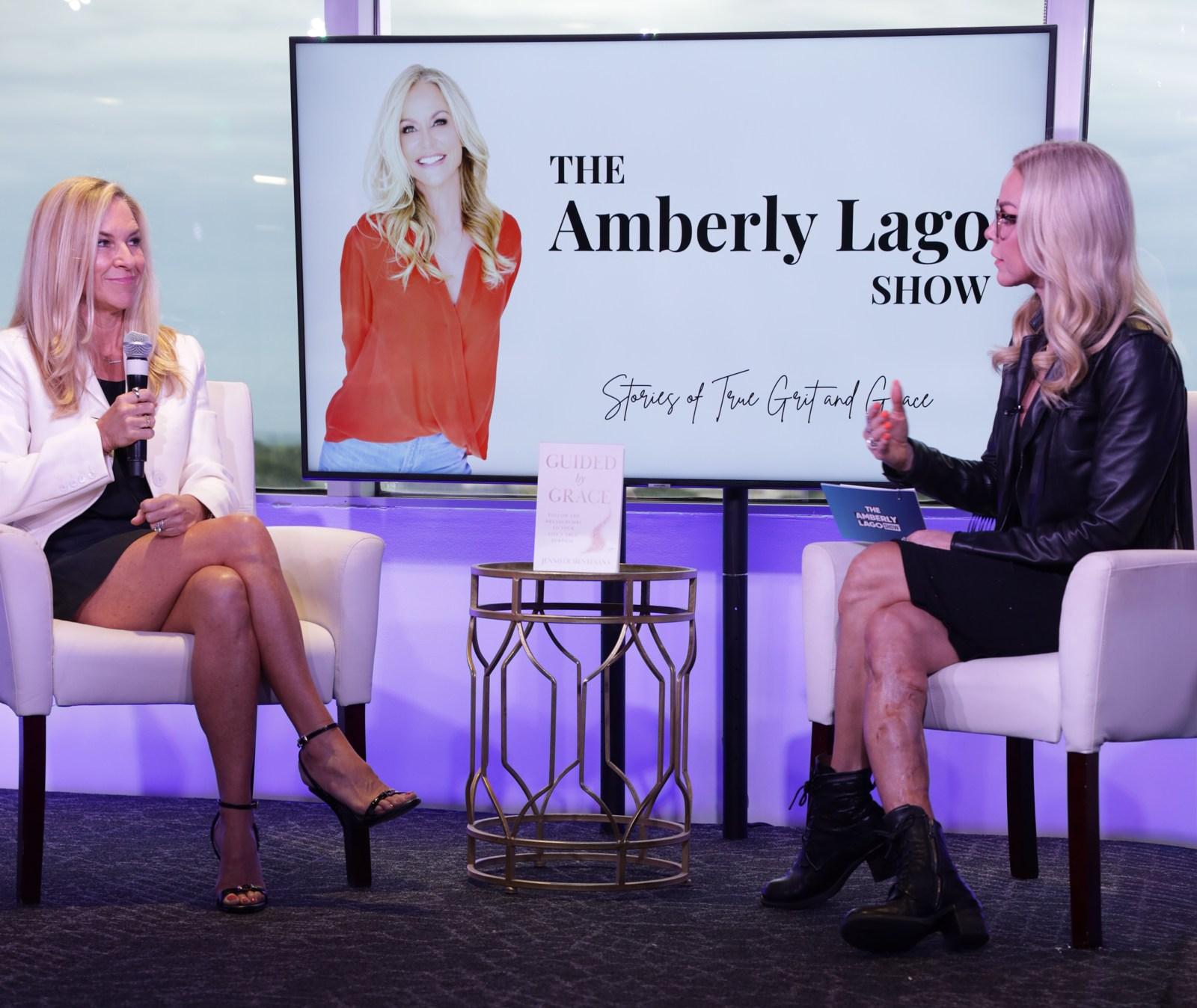
Season 2, Episode 88
Why Work Will Always be Personal with Amy P. Kelly
A conversation with Amy P. Kelly

About This Episode
Welcome back to another powerful episode of The Amberly Lago Show! In this conversation, I sit down with the incredible Amy P. Kelly, USA Today bestselling author, leadership expert, and someone who has spent decades helping organizations and leaders navigate what truly matters, people.
This episode is all about a truth that so many of us feel but don't always say out loud: work is personal.
We can try to separate business from emotions, performance from people, but the reality is, people don't leave their humanity at the door when they show up to work. And when leaders forget that, it doesn't just impact productivity… it impacts trust, connection, and culture.
Amy shares her journey as a global HR executive and the moment that changed everything for her, when she realized that the phrase "it's not personal, it's just business" couldn't be further from the truth. That realization became the foundation of her work helping leaders build cultures where people feel seen, valued, and supported.
In this episode, we dive into leadership, burnout, boundaries, workplace culture, and what it really takes to create an environment where people don't just perform, they thrive.
This conversation is honest, practical, and incredibly relevant whether you're leading a team, running a business, or simply trying to show up better in your own life.
We Discuss
• Why "work is personal" and why that truth matters more than ever
• The moment Amy decided to challenge the idea that business isn't personal
• How leaders can better understand what truly matters to their people
• The impact of boundaries and why leaders must model them
• Burnout, well-being, and why wellness is not "soft" — it's strategic
• Why money alone doesn't create loyalty or fulfillment
• The role of meaningful recognition and how to do it right
• How to create a true sense of belonging in the workplace
• The importance of connection, communication, and consistency in leadership
• Practical ways to build stronger, more human-centered teams
Timestamps
00:00 Introduction to Amy P. Kelly
03:10 Why work is personal
08:40 The moment that changed Amy's perspective
14:25 Navigating boundaries in leadership
20:10 Burnout and workplace expectations
26:45 Why compensation alone doesn't keep people
33:30 Meaningful recognition and leadership impact
39:15 Creating belonging in the workplace
45:40 Building connection and team culture
52:10 Practical leadership strategies that actually work
To Connect With Amy P. Kelly
Instagram https://www.instagram.com/amypkelly1/
Website https://www.amypkelly.com/
To Connect With Me
Instagram https://www.instagram.com/amberlylagomotivation/
Coaching Program https://go.amberlylago.com/
Website https://amberlylago.com/
Become a best selling author today https://selfpublishing.com/
My favorite for gut health & wellness https://plexusworldwide.com/?sponsor=Amberlylago
My MAKE Wellness link https://meet.makewellness.com/?referral=521698
Unstoppable Success Summit 2026 https://www.eventbrite.com/e/unstoppable-success-summit-2026-breaking-chains-building-dreams-tickets-1968268162057?aff=oddtdtcreator
Become a sponsor https://go.amberlylago.com/uss2026-sponsors/
Joy Through the Journey https://www.amazon.com/Joy-Through-Journey-Amberly-Lago
Listen to The Amberly Lago Show https://amberlylago.com/podcast/
Subscribe so you never miss an episode!
Full Transcript
Every year you wait, someone else writes the book you were supposed to write. You've been sitting on your story, your expertise, your idea, and it deserves to be out in the world, not still in your head. Well, that's exactly what self publishing.com is for, y'. All. They help you write, publish and sell your book from your very first chapter all the way to becoming a best selling author. If you've got a dream of becoming a best selling author, you, you need to check them out. I mean, their team handles the heavy lifting so you can focus on the words and it actually gets done. And I'm telling you, thousands of authors have already hit bestseller status with their help and you could be next. Just go to self publishing.com and start your author journey today. How do you kind of not get too personal, I guess I should ask.
It's very personal, always, all the time, across things that you agree with, but you disagree with. But your role is to help unify. And if you don't know what matters to people, you can't unify people. And it doesn't mean that there's going to be agreement, but there can be better alignment. And you will not align if things don't have some element of connectivity to what matters most to individuals, regardless of what that is.
What does meaningful recognition actually sound like?
Meaningful recognition is tied to the best of your ability to what matters to the person that you're working with. We want more productivity or performance out of you. It is truly about valuing. And that type of recognition ties those different elements together to make it hit the mark of what matters.
What is your crisis framework?
The crisis reveals character, is. I watched and I felt empathy for everyone because we both know what it's like to put together a big event and have hundreds of people coming. And then that is months, if not years of work. Don't let yourself get hijacked by what the normal human response is, which is to react instead of be prepared with some of these different approaches to the inevitable crisis in the workplace.
Welcome back to the Amberly Lago Show. I am so, so, so happy that you're here. This conversation is one I truly believe every leader, every entrepreneur and human needs to hear. Because it speaks, speaks to something we all feel, even if we don't always say it out loud. Work is personal. We can try to separate our lives into these neat little boxes. Business over there, emotions over there. But the truth is people don't leave their humanity at the door when they show up to work. And when leaders forget that, it costs more than numbers on the spreadsheet. It costs trust, it costs connection and it costs people. My guest today is the one and only Amy P. Kelly. And she has spent decades helping organizations navigate the moments that matter most. The moments of change, pressure, crisis, transition and showing leaders how to build cultures where people feel seen, supported and valued as humans. Y', all, this conversation is honest, it's practical and it's not the first time we've tried to record is going to be a very important topic because we couldn't even get on that kept cutting us off another platform. So we are back and we are doing this. And let me just tell you a little bit about Amy P. Kelly. She has become a really, really good friend of mine. She's a USA Today best selling author. She's the co founder of your growth group, vice president of consulting for John Gordon's positive training company. And y' all know how much I love John. A global H executive, she's designed a warn winning workplaces and employment brands and advised leaders at companies including McDonald's, Walmart, GE Ingram. I mean the list goes on and on and on. I've read many of her other books. I think the first one I read was Glue. I'll have all the links to her books in the show notes but I've got like six pages of questions so I want to get right into this. So let's dive right, right in. Amy P. Kelly, thank you for being here and thank you for your patience as we switch platforms to record.
Oh well, you are the woman of true grit and grace, Amberly Lago and I felt that for as long as I've known you. And yes, as we adapted to today, we both knew that this would be one hot episode because we were getting a little opposition to getting our words down for other people to hear and to learn and to just enjoy the opportunity to grow and to apply some of the things we're talking about. Because you're right, I don't feel like I'm the first person on the planet to believe wholeheartedly that work is personal. And I think through time we've all kind of had that into our molecular structure. You know, when we go and we do something, it matters to us. And sometimes it's hard, sometimes it's fun. Some of that is in our mind, but it's not, it's not nothing. It's very important. So work is personal and it's also connected to how we drive performance and great cultures in organizations and that's something I care deeply about.
I can see that in everything that you do. And you really, truly have a gift for making people feel seen and appreciated. And I think that's part of making work personal. I feel like when you know you can see your teammates, when you can appreciate them and work is personal, then you are more willing to be more productive. But was there a moment for you when you thought, okay, work is personal and I gotta write a book about this?
Yes. Years ago, I had already been having the feelings you're talking about for. Since I was little, actually, just, this is very personal, whether I'm selling barrettes at the, at the, the school fair or whether it was some type of other job. But once I was in the corporate world, there was a day when, as an HR executive, I was a part of letting go multiple people. And it wasn't a small number. And I wasn't the only one involved in all the different conversations that were happening, but I certainly was a part of the preparation, how we would do that. And I knew the gravity of it. I. I think everyone remembers when they get their job, the first day of their job, and how the last day of their job goes. And I knew that this wasn't a good day, no matter how you sliced it for anyone involved. And it took a toll as we went through the day. So by the end, I went to the office of another executive that I really admired. Just, I needed to check in regardless. And he was really trying to comfort me when he said, you know, Amy, it's not personal, it's just business. And that just hit me so wrong that day. And it wasn't him. It was just. That is so not true. Where did that come from? I'd heard it before, and I just thought, I am on a mission to just completely debunk that lie that is not to be uttered again around me. And how do we combat that? And it really started me thinking about every time we did anything in regard to the organization and the employees, how do we do this in a way that as best as possible is going to enable both and be real about it? And there are different opinions about how you go about operationalizing those thoughts, but it wasn't something that was second priority. It was a first priority. And I've been very blessed to work with leaders who understood that that was something that was going to change the nature of our business results. And in particular, when leaders say, I want great people, well, great people don't want to work at a place that doesn't care about them. Period. End of story. And that Takes a plan and operational strategies and systems just as much as any other aspect of your business. When you talk to CFOs, one of the big line items on any organization is their people cost. Right. You're investing in the people that drive your results. And so that was just. That day was the beginning for me of really putting together the best I could when it came to enabling the personal nature of work performance and then ultimately the combination of organization and people performance.
Well, how do you. Especially for an organization that still has this strong belief that it's just business, it's not personal. And maybe leaders who are like, I don't want to know about their personal life, and that's. Wait, that's crossing a boundary. And I'm. I'm assuming maybe especially in corporate, that might be hard sometimes that. That you don't want certain boundaries crossed or. I don't know, is it. How do you start to navigate your way and. Because I believe work is personal, but I guess what I'm getting to is I tend to get too personal. I say it like it is. I just. What you see is what you get. And I've even taken people in, you know, in my home and my husband's like, that's it. No more. You can't do that. You know? And so I tend to be. Johnny and I are totally opposite. He comes from law enforcement and I come from. Oh, let me just hug you. Get over here. What do you need? You need me to feed you? What? Total opposite. Like, tell me all your problems. What's going on? Tell me something good. How do you kind of not get too personal? I guess I should ask you're.
It's a great question because there isn't a simple answer for that. And I know. Well, you should know, Amy. No, what we need to do is we need to find out what matters to people and help to support them in those things that matter. Because I am actually not one of the people that my colleagues or my business associates would say, oh, she's the mushy, gushy, you know, softy type touch. And it's not because they think I don't care. It's just that I have my own way of bringing my passion and purpose and commitment to them. They know I care, but I wouldn't probably know every single detail about them, but I would know what mattered to them, and I would. We would have asked each other. We would have had those conversations. And there are things that. It's not that it's too personal. I've had conversations with some people about very, very personal details of their marital relationships and their illnesses. And those are private, obviously, but. And then other people who. The most personal moment they had was when they admitted a mistake to me, and that was as personal as it ever got. It was that they were asked, what matters to you? And how does this matter to you? And how can I support you? And those things were as much a priority in the communication about their job as the metrics that went along with their job performance. And so you don't. You have to find the right place with each person by actually spending the time and investing in them and doing your best to adapt to the degree that they want to share.
Yeah. And, you know, when I hired my new assistant, who I just love, I hired her in a different way than I've ever hired anybody. I started by asking her, like, well, what. What. Basically, what matters to you? What do you love to do? What, what's your mission? What's your passion? And then what are you really good at? And everything she was good at, I'm horrible at. And then I actually asked her, and then I was told that I could get in big trouble for this, but I said, well, do you believe in God? And she said, well, yeah. Is that a problem? I said, no, you're hired. I'm like, my. My friend Malik, who's on my team, said, girl, you can't be asking questions like that. You're gonna get. You're gonna get in trouble.
And I was like, your HR manager, if you had one, would say, it's a risky question, because if someone said you didn't hire them because of the answer or did hire them just because of the answer, they would say, well, that's not a job qualification. And I know you know that, Amberly. I'm with you. Finding out what matters to people is important because we even talk about this in the book there. I just. I get so fired up about this exact topic because people have so many different things that absolutely we're not going to agree on personally. And whether it's the HR leader, the CEO of a company, the owner, yourself, Small, big organizations, you represent everyone. So it's very personal, always, all the time, across things that you agree with, but you disagree with. But your role is to help unify. And if you don't know what matters to people, you can't unify people. And it doesn't mean that there's going to be agreement, but there can be better alignment, and you will not align if things don't have some element of connectivity to what matters most to individuals, regardless of what that is.
And I think it helps you to communicate with them better as well. Because, for instance, like, I know what matters to someone on my team. Malik, who's amazing is he's a night owl. He loves his morning sleep. So I know I'm not going to. He's on a different time zone. I know that I'm not going to get an answer from him early in the morning because he's asleep unless. Unless it's like event time and he's like on call nonstop. Like, he's like. He hears that phone ding and he's like, oh, what do you need? You know? But I think even the smallest of things. Like, what matters to people as far as, like, when I want to get them a gift for a work anniversary or their birthday, I know what they're gonna like. And I think it makes it more personal. And so, yeah, it's just different because Johnny's so opposite for me and he gets on to me about like, well, why do you know that they're not feeling well? Or why do you even know that they're in the hospital? Or, you know, and. And so I think it's. It's hard sometimes not to get too personal for me, but I love how you've reframed that and what matters to them. So that's a great, great start. I want to talk about also, like, well being isn't soft, it's strategic. And you say, like you talk about in your newest book, which is so amazing, by the way, the executive team who said they'd protect vacations but didn't was. It was a powerful story. And what message do leaders send when they don't model boundaries, even with something like that?
Yeah, it's a big issue right now. It comes up with clients of all kind, regardless of the type of culture. And when you were mentioning your husband and law enforcement and whether I'm talking to cyber warriors, whether for the work, for the government, people who are scientists at the Nuclear Regulatory Commission, someone who owns franchises for a Chick Fil A, I mean, a bank, this is an issue because what happens first is the incongruence of what we say, and then doing something else sets off disingenuousness, alarm bells, and it then goes to our relationship. But ultimately it's a huge issue with well being. What I mean is organizations will say, I really care about you. I want you to have work life balance or work life integration, which is a challenge. No one has that perfected self. So Organizations that are doing their best are doing lots of different things to best enable that. And if leaders say, go ahead, take your time off, but yet they don't have someone backing you up so that you can spend time with your family or using the time that you would like to have to actually, you know, resilience is not fueled by digging in. It's you need some rest, you need some rest to actually take care of yourself. But this team, one of the biggest, the one that's mentioned in the book, the ones that actually make a change about how people can take vacation and have some protected time, have greater retention because you saw the example, the people that ultimately did not do anything about that, they lost many of their executive leaders and the people who were still there kind of looked at those people as heroes. They said, wow, I'm so proud of them for leaving. I'm so glad they got out. I can't make a change right now. But you know what, Amy? I'm proud of them because no one ever. And I'm still grinding and I'm still miserable, but I don't have another option yet. And so it's a really big issue having that protection of the, the well being of an employee. And then what does that look like with their personal lives and how the employer says, well, that's your business. Not if you're emailing me 247 expecting me to respond on the weekends and you're not respecting any of the time that I take off that I've earned and those, those organizations suffer higher turnover.
Yeah. And honestly, it goes both ways. Where I've been either, and this is not my assistant now, but I had someone that worked with me before and said, hey, I'm going to be at this event, I'm at this event, I am all in. And then they were calling me and emailing me non stop and I'm like, man, this is throwing me off my game. Like I gotta just not like no. Or, or on a day on a Sunday where I said, hey, I'm taking a day off. And they're constantly. And it goes both ways. You know, I think it matters with personally, you know, what work hours are. Okay. And, and like for instance, this weekend my assistant was having a spa day. She, she helps me on the weekends because she works with me and one other person. And so there are certain hours she works with me and certain hours she works with the other company. And so on the weekend she's like, I want, I want to really help you the most on a weekend. And that's great for me and, but she was taking a spot spa day over the weekend and I said I'm texting you but do not respond. Enjoy your spa day. I just want you to know this for your notes on Monday because if I didn't text her I would forget. But I made sure to put do not respond like go get your spa day. And I think that's important. So I can see where you want that culture. You want people to feel like incongruent is the perfect word that you said you've worked with a lot of high performing teams, that bonuses were great, but people still left. What does that teach about what money can't fix?
Yes. So work is personal, so is compensation, right? It is very personal. And there is something that I have seen 100% of the time in the long term be more important to people is the quality of their life and meaning in the short term. I've seen people choose money over quality of life and the people who have learned that lesson the hard way then say unequivocally, that's not worth it. And I've loved what has happened and I'll get back to the big bonuses not keeping people. What I've seen and I perceive that a lot of this has happened since the pandemic is that with more flexibility about where you work, people have been able to kind of architect how best to have the balance that suits them in their life. And more and more often I'm having people from all different industries say I will take 20,000, 25,000 swing down in total comp if I can have these different types of flexibility when it comes to wear and when it comes to people really setting boundaries for not reaching out in the evenings or expecting 24, seven, you know, service, support or so people are thinking about the reality of how connected we are and saying it's not going back to wellness, it's not a sustainable way to be always on. It doesn't fuel our best thinking or our bodies. So it's their, they have to protect their wellness plus their personal quality of life. And so people are willing to forego the compensation. Again, more often than not, I see people taking the higher comp in the short term, learning the hard lesson because it's like, wow, this really didn't work and it's not making me happy, it's not making me fulfilled. And now they've trained their employer to think what I do is I say okay, stay, I'll give you more money, but they're not going to change how they expect you to be available 100% of the time. And slowly your personal relationships erode, your wellbeing, your health erodes. And I mean, I've seen people in the hospital with heart attacks because they just were like, this is the most time off I've had in years. And I'm in the hospital. And you probably can people relate to those stories. They said, yeah, I remember that I was sick and that was the first time I really had any time off. And so it is important and compensation is not a cure all. And having a fair compensation policy that is explainable regardless of if you choose to lead the market, you pay above. If you meet the market in your compensation strategy or say you lag the market in compensation, that's financial, but you have a total rewards package that has astounding benefits. Just be able to explain why, how it aligns with who you are. But employees aren't only driven by the dollars. It's very important. I'm not saying that money doesn't matter. It's not the only thing though, for people.
Oh yeah, for sure. And you know, your impact and your productivity is only as powerful as you are healthy. And so I've learned that the hard way, unfortunately. So I totally get that. I want to talk about recognition and belonging and the cost of being invisible. So what you're clear. The recognition isn't just, oh, great job. What does it. What does meaningful recognition actually sound like?
Well, the beginning of our conversation stemmed from knowing what matters to the people that you work with. And meaningful recognition is tied to the best of your ability to what matters to the person that you're working with. If you hired to someone that believes in the shared vision and mission of the organization and the values. Meaningful recognition is something that's specific about something they've contributed. Talking about what the impact was to what they did and thanking them. It has a spirit of gratitude in the recognition that is authentic, that is not about, oh, we want more productivity or performance out of you. It is truly about valuing. And that type of recognition ties those different elements together to make it hit the mark of what matters.
Oh yeah, I love that now you say belonging goes beyond DEI metrics. How does a leader know if belonging is actually happening or just being talked about?
Well, the. A couple of the things that I do and there are some templates that are included with the book is looking at doing audits on a regular basis about what your employees think about that. You know, looking at belonging as how engaged are you using employee net promoter Scores about what they say. How likely are you to recommend the place that you are to work? Are you. Do you have someone that is a colleague that you also consider. It doesn't have to be your best friend, but do you have friends at your job? You know, Gallup does a lot of research and said people tend to say they're happier when they have a work friend. And that's a part of belonging too, is those relationships. So how do we know are there practices put in place to connect employees beyond just your team meetings and the metrics is one thing. Do you have surveys that ask what your opinion is about things and is anything done about them? It's always a market basket of factors that you're looking at. Is the organization saying this important is important and then what are they doing about it? And then when I offer my input, does anyone listen to it? And it's also just for people. We're both business owners and have been in roles where we've been the one that of course everyone wants lots of great things. They want all the great things from us. You can't do them all. But the consistent approach to having the two way dialogue about how are you connected here, how can we support you here? Also how are you doing to do the things that you're called to do here? Both ways those enhance people's feelings of belonging and over time that engenders belief that oh, it does matter. And I, and I do matter here. So you need to look for. Are they just talking about performance all the time, which is absolutely key in any winning organization, or are they talking about are the things we're doing really making this also rewarding for you and fulfilling for you and the people that work here?
I love that. Well, talking about belonging and talking about friendships at work, what are some things that you would suggest someone do that owns a business, maybe a small business that would. Is it weekly team meetings? Is it a night out to dinner, Is it a quarterly party? Or is there anything that you've seen really work for uniting and getting people closer in the workforce?
I absolutely start with the very big fundamentals of whoever the manager of the person is. If, if you reported to me or I reported to you, we should meet one on one, not as a team, one on one, a minimum of one time a month, that you can't really have a meaningful workplace relationship and have success. And with that, then the follow on to that. These are the fundamentals. If you're, when you're on a team, you have a team meeting at least One a month. Once a month. I normally see teams do that at least once a week, but minimum of once a month because there are different scenarios and there are distributed workforces who are in different time zones all over the world, but once a month for those two things. Now, the next part is asking people like, do you want to have a coffee? Zoom? Do you. What do you all want to do to stay connected? What would you be willing to host? Because I've worked with companies where, you know, I just worked with an organization that wanted to invest hundreds of thousands of dollars in the different affinity groups all over the world. And one of the affinity groups was for women. And after about 70 interviews, the women all said whether it was Asia, PAC, whether it was Africa, whether it was the US or Mexico, they said, we just want to have time during work hours once every other week to listen to each other and learn more about each other, because we don't know enough about each other and we want to learn more. So that's what they wanted, was not to have to do it off hours, not to have to take a lunch to do a lunch and learn. And that was what was important to them. Other organizations, when you ask, what would you like to do so that you'll get different answers, and you can't always win with everyone, so you've got to try things, say that you listened to rotate the different ways for people to communicate and to connect and to get to know each other and keep asking them what would they like to do? And doing the best not to just say, here, we're willing to do a picnic, or this is what we're doing for you, or we're going to do a scavenger hunt. And as much as those things that sound, you know, wonderful to me, they don't sound wonderful. They wouldn't sound wonderful to Johnny. I bet. So you would have. They wouldn't.
They wouldn't at all.
We'll have to do our best to, you know, for a quarter. One time, we had Taco Tuesdays, and about 30% said, I don't want to have a taco. But 70% were happy. And then we. We moved on to the next thing. But the fundamentals of connecting with your manager and your team and having those regular communication sessions and then looking for input, not deciding as the manager what those things are, but asking for input and making programs that are based on what's important to the employees. That's so good. Yeah.
I remember years ago, when I was in the fitness industry, one of my clients that I had for, like, 20 years. Every year, her boss wanted to take her out to lunch for her birthday. She never wanted to go out to lunch for her birthday. All she wanted to do, she worked out on her lunch break. She wanted a longer hour so she could work out a little bit longer.
But.
But all those years, I think she was working for him for, like, 30 years. He never listened to her. He always wanted to take her out for lunch. So as you're explaining this, it reminds me of the story of Marilyn, who is like, my adopted California mom now. That's how long we've been together. Well, I. I want to ask you a few more questions. This one, especially for safety and kind of what people are afraid to say. You tell Darren's story in your book, which I love. The leader quietly breaking while pretending everything was fine, which I have done this time and time again. I mean, honestly, right now I have a broken toe, and I've been hobbling around, and I don't like complaining. And Johnny actually sat on my foot. Didn't just sit, like, plop down on my broken leg with crps. Toe with. And it's a toe, but on a leg with crps. I said a cuss word, Amy. It came. A cuss word came out of my mouth. And my daughter came running the room. She goes, this must be bad. And I actually came into my office to cry, and I'm like, what is wrong with me? Like, it's so I understand, like, these high performers that feel like, you know, they don't want to say anything or they have to hide that or they have the tough up. And I've been trying to break that, but I'm guilty of it. So why do you think that so many of us who are high performers have to pretend like, oh, I'm fine, I'm fine?
Well, I think that when we were talking about the work is personal story that I shared at the beginning, one of the things that that day ignited in me was a desire to find out where that phrase started. And when I looked it up, it was credited to a mob accountant. His name is Otto Berman. And, you know, that's when it's not personal, it's business kind of started. And then recently, in a show on Netflix called Hightown, I was watching this past year, and one of the criminals who was, you know, busy leading his enterprise says, you know, we've been telling ourselves a lie. Everything is personal. And I thought, hoorah. Even though it's coming from a criminal. And the point of me saying that, here Is that another thing that had been put into our minds? Things get put into our mind over years and years and years of kind of repeating and teaching. And I do believe, and I understand that we have been taught many of us, that if you're strong, you don't complain. If you're strong, you just tough it up. Strength doesn't come from sharing what you need and actually being, to use a term that's vulnerable or open to dialogue. It comes from stuffing. And you know, recently we found out that that's not necessarily what helps, you know, healing and getting to greater strength. But people who have have felt that way. It's because we've been taught that and not with mal intent. It's just that was the way it was. I remember when I started working, it was don't be annoying, do what you're told, don't bring your problems to work.
Certainly don't cry.
No. And definitely don't. And all of those things. There's no one way to behave in any horrible situation or hard situation or great situation. Be yourself and have some self management. But it doesn't have to. We don't want to have a mask on even when we're having hard things happen. So I just think that a lot of people are still learning how to do a little bit more of the vulnerability piece and the freedom that comes with it because it's new. And then you see, oh, it's actually, it takes a lot of strength to share your weaknesses and when you're in pain, and that's the part that really connects us all is because there's just no problem that's not common to man. So when you have one and you, you don't have to unload the whole dump truck. Of all the things that are challenging for us but saying, look, I've got something going on and I'm not going to pretend it's nothing. It is hard for me and I'm doing these things. But I'd love for you to just know a little bit so that I can make sure you understand where I'm coming from when we're working to cover things. So by the way, I'm sorry about your toe because toes, you know, I know you're a dancer and I remember the first time I broke a toe in my pointe shoe and I was, I still remember I was 13 years old and I thought, how could this toe hurt this bad? It felt like someone took a hammer and just kept.
I know it's black and blue and swollen and the dog totally knows it slowed me down because Nugget totally takes advantage and knows I can't run after her when I take her for a walk. I can't even fit a shoe on my foot. But anyway, I'm going to make the best of it. I've got some fancy tape coming today with like rhinestones that I'm going to put around my crutches that are really cute. So I'll be blinging my crutches out. But yeah, I was taught that for sure. But I think vulnerability leads to that deeper connection. And I'll never forget, Amy, the first time you came over. It was the first time you came over to my house and it was for one of the retreats I did for my mastermind. And it was the first time you opened up. We did each got up and did a five minute talk. And do you remember you had me in tears just by opening up and sharing like what, like part of your story. I was just crying and I immediately felt more connected to you.
Well, I remember that very vividly. And I think that one thing that we do share is an unabashed willingness to say we've had some problems.
Yeah, I've been there. I can relate.
I may not have had every problem you've had, but I'm not going to say like I feel, feel deeply connected to other human beings because I'm tremendously flawed and still feel like I'm a beautiful, valuable human being. And it's not easy to always see those mistakes as, you know, as beautiful things because they were painful. But I definitely can see how we can be restored through sharing and through caring about other people's experiences. And that can happen without. That happens in the workplace too. And I'm not saying I have the rule book for the policies of you can share this, but you can't share that because if there's too much of that stringent structure, then it doesn't feel natural. But being willing to say, you know what, you got kicked, you're in jail and we're going to help you because we're not going to fire you right away. There's a story about that in the book, you know, and I've been arrested, I've had other things happen to me and you know, I'm not going to put the whole laundry list, even though if anyone wants to reach out, I'm not hiding things, I'm just, we have to be willing to talk about the mistakes that we've made, the things that are not the best parts of us and what we've learned through working on that, and that tends to show up. What I've had the honor of experiencing being in HR is when things go really wrong for people, they either get told that they're going to have to deal with something or they hopefully get some support. But it's a lot of private information that gets passed around. And I always just felt like people just need to not feel like they're the only ones.
Yeah. And. And I never knew you were arrested once. Let's just.
I was.
Wow. Say I love you even more. I knew there was a reason I loved you so much.
Yep. That'll be for another podcast. I will. I'm happy to talk about it, but that is a whole nother tale. It was funny because I was in church recently in the last couple months, and someone was sharing a testimony and then we were praying for people and I remember there was another lady next to me and I said, and it was just. It was all processing in the moment as we were getting up and we were doing different things. And I said, I mean, they should just ask people to raise their hand like, have you also been arrested? I'm like, I would raise my. And she was like, what? What? I said, oh, I guess I haven't told people that. But yep.
Yeah, it's. It's funny because when I start to sometimes share things, people what. What you know. But it's when it does connect you on a deeper level and then when you can be. Just be honest about that kind of stuff, it. The there is truth in the in the truth will set you free. That it is. It's freedom. For sure. I could talk. I've got still pages of questions, but I wondered if you could share a little bit about your. I like that you talk about crisis reveals character. Speaking of crisis, being arrested, those sorts of things. What is your crisis framework?
Oh, yes. So I will. I want to talk. Yes, we'll go into that. And it has happened to me. This all went into effect recently when the huge snowstorm that wasn't as huge as it was really happening, but I wasn't able to do something that I had been scheduled to do. And I had been working with a series of different groups and they all handled it very differently. And the crisis reveals character is I watched and I felt empathy for everyone because we both know what it's like to put together a big event and have hundreds of people coming. And then that is months, if not years of work. And one person managed to kind of keep their wits about them. Another one Completely changed, you know, which I had again, I knew because I've done similar things at different, different points and another person really, really lost it. And those crises, without a framework to having those different categories of what's going to happen in the workplace and how you've prepared you will be at the behest of those more emotional responses. And we go into, in the chapter, you know, what are the type of crises? And it can be from conflict with other employees. It can be a truly a natural disaster. We deal with those. And we all know that as much as it sounds like we're not FEMA here, we're not talking about saving the city from a flood. We've all experienced now when a pandemic has happened, or when there is a weather situation or when we have colleagues or clients who don't get along and it's the reverberations are cascading through all the other people's well being that are related to that. So you talk about the different pieces of the types of crises and then there are different responses to each and how to be prepared. And that in and of itself could be an entire episode. But in that chapter it's pulling out. Don't let yourself get hijacked by what the normal human response is, which is to react instead of be prepared with some of these different approaches to the inevitable crisis in the workplace.
Well, yeah, because I mean, even for something like with work when we had all the storms, my flight kept getting delayed. Delayed, delayed luggage. I mean, it's not good to have me roaming the streets. I was even looking at tattoo parlors and hookah place stuff I'd never done. But I was like, maybe I should try that. No, it's. But I, there were a lot of people freaking out and you know, I was just like, well, what can I control in this situation? And that's what I always have to go back to is actually the Serenity prayer. In fact, I have it right over here. Grant me the serenity to accept the things I can change, the courage to change the things I cannot, and the wisdom to know the difference. That prayer helps me with so many big and small little crisis, you know, crises. And so, yeah, I think it's not reacting, but going, okay, maybe doing, pausing a little bit and maybe having a whole other hour just to do something on a situation like that. Because I'm sure that you deal with all different kinds of personalities and you speak at so many different events and, and the way the weather has been lately, with all the travel that you're doing. I'm sure that's been hard too.
Well, I can relate to your I've met some beautiful people in airports. I've been the one that I had to remanage my, you know, internal dialogue to stay calm. I understand what that's like. I often wear my no Complaining Rule T shirt or many of our John Gordon shirts about the just how to manage my mindset when I'm traveling. And so some there are a lot of different techniques, both our personal mindset management to then things to put into that crisis framework that I have in the chapter. And I think one of the things that goes along with this topic is you mentioned you mentioned him. So I'm just going to bring him back in. I do. I also love God and you know, I don't have any policies related to that in my work as a HR executive and I do look at any crisis through the lens of Proverbs 3, 5 and 6. You trust in the Lord with all your heart. Lean not on your own understanding. In all your ways, acknowledge him and he'll make your path straight. So to your point about pausing, you don't have to worry in a crisis when you have something that you can lean on and you trust about and whether people can identify with what I said or not. Today is the anniversary of a book that I released in 2022 that we were talking about called Glue. And it's also kind of a crisis management framework that I use that goes back to not reacting, but taking that moment and looking at a crisis as really a place to have a plan, know where to go for support, and then kind of sit back and trust as you activate that plan. So inside the book you'll find to instructions about how to get your crisis plan in place and the different types of crises and then how to make those align with the culture of your organization. Because that is important.
Oh my goodness, this is so good. And I'm looking at all these other questions that I had jotted down because I've been looking forward to this interview for so long and I'm like, we are running out of time, so you guys are going to have to grab the book. Actually. Where's the best place where people can get this book? Your newest book, all your books, but also your newest book.
It comes out on April 10th and I'm very excited about that. The best place to find it is either on Amazon by searching on Work is Personal or you can go to workispersonal book.com workispersonalbook.com and those are the two spots. And I would absolutely love to talk to anyone about it. And I'm excited to be doing some of the things that, you know, we both love to do, which is go out and share the message, help people to do the things that will kind of empower and put the same type of structure into their teams and workplaces. So I'd love to connect with anyone about it.
Well, thank you so much. And you know, I have all your other books and have read them. I've read this manuscript. Thank you for sending it to me early so I could read it. And I've already pre ordered my book, by the way, so I can't wait to have it in my hand. But I also have quite a few of your cute hoodies too. I've got your glue hoodie. I've got you your grow girl, you grow girl hoodie. So I always think about you when I wear those. But now I want to do some. A little bit of a lightning round. Are you ready for it?
I'm ready.
Let's do it. What's one leadership behavior God had to soften you in. Soften in you, I should say Patience. Patience. Oh, me too. Me too. I feel you on that. Where do leaders most need courage right now?
I think they need courage to speak the truth of what they really believe. Because we're so easily misunderstood and with everyone's emotions somewhat heightened, it's scary to say something. And potentially I find people asking me, am I allowed to say this and that? It's impossible to listen, to understand if people won't tell you what. And giving them grace, you know, giving people grace when they do speak up and share what they're. What they believe is the truth. I think that encouraged to still speak it.
Yeah. Yeah. So good. What does stewardship look like in leadership?
Knowing that whatever you have, you know, did not come from you, it came from other people, from other people's contribution. And ultimately, you know, we've been talking originally it did come from God. So it's about how do we share that with others and being grateful for any resource that we do have. So in leadership, it's generously giving what you've been given with a spirit of joy because you, you're honored that you get to have anything to give and give it back.
Oh, that's beautiful. What's one word that defines the future of work?
It's personal.
Oh, that's so good. You're so good. Way to wrap it up. Okay. Coffee or tea?
Oh, definitely coffee.
Okay. Early morning or Late nights, early morning. Dogs or cats?
Dogs.
Oh, me too. Salty or sweet?
Salty.
Okay. See, this is why we are best friends, Amy.
And I do love tea. The coffee tea one was hard. I want to drink more tea, but I still drink more coffee than tea.
I drink both.
Yeah, I have a huge thing of the meaningful, beautiful, bountiful green tea. But I've had three cups of coffee today and one of the tea.
Oh, well, I drink my little tea at night with my morning ritual. And then we both have vanilla candles going. I mean, come on.
That is true.
Yeah. So, you guys, thank you so much for tuning in today. Amy P. Kelly, thank you so much for being here and actually recording twice today. Do. Being willing to stay on and hang out with me a little bit longer. This, this. And if you found some value in this episode, which I'm sure you did, take a screenshot, whether you're listening on Apple, Spotify or watching on YouTube and tag us on Instagram or on Facebook, wherever you're hanging out on your social media. When I see that, it always makes. It brings me joy, and I always reshare it. This is a. This has just been a beautiful reminder, Amy. It's a reminder that culture isn't built in mission statements or onboarding packets. It's built in moments. It's built in how we communicate when things are uncertain. It's built on how we respond when someone is struggling. It's built on how we handle exits, conflicts, meetings, and hard decisions, especially when no one is watching. So thank you for being here. Thank you all for being here and for tuning into the show. And thank you for choosing Growth, and thank you for showing up with courage and compassion. Until next time, keep choosing joy, leading with heart, and keep showing up as your real, authentic self. And, Amy, love you, girl. Thank you for being here.
Thank you. Love you too.
Pain to purpose to joy.
Never Miss a Conversation
New episodes drop regularly. Subscribe on your favorite platform and never miss a conversation.