
Season 6, Episode 281
Unleashing Your Story: Insights from Bestselling Author Lauren Ungeldi

About This Episode
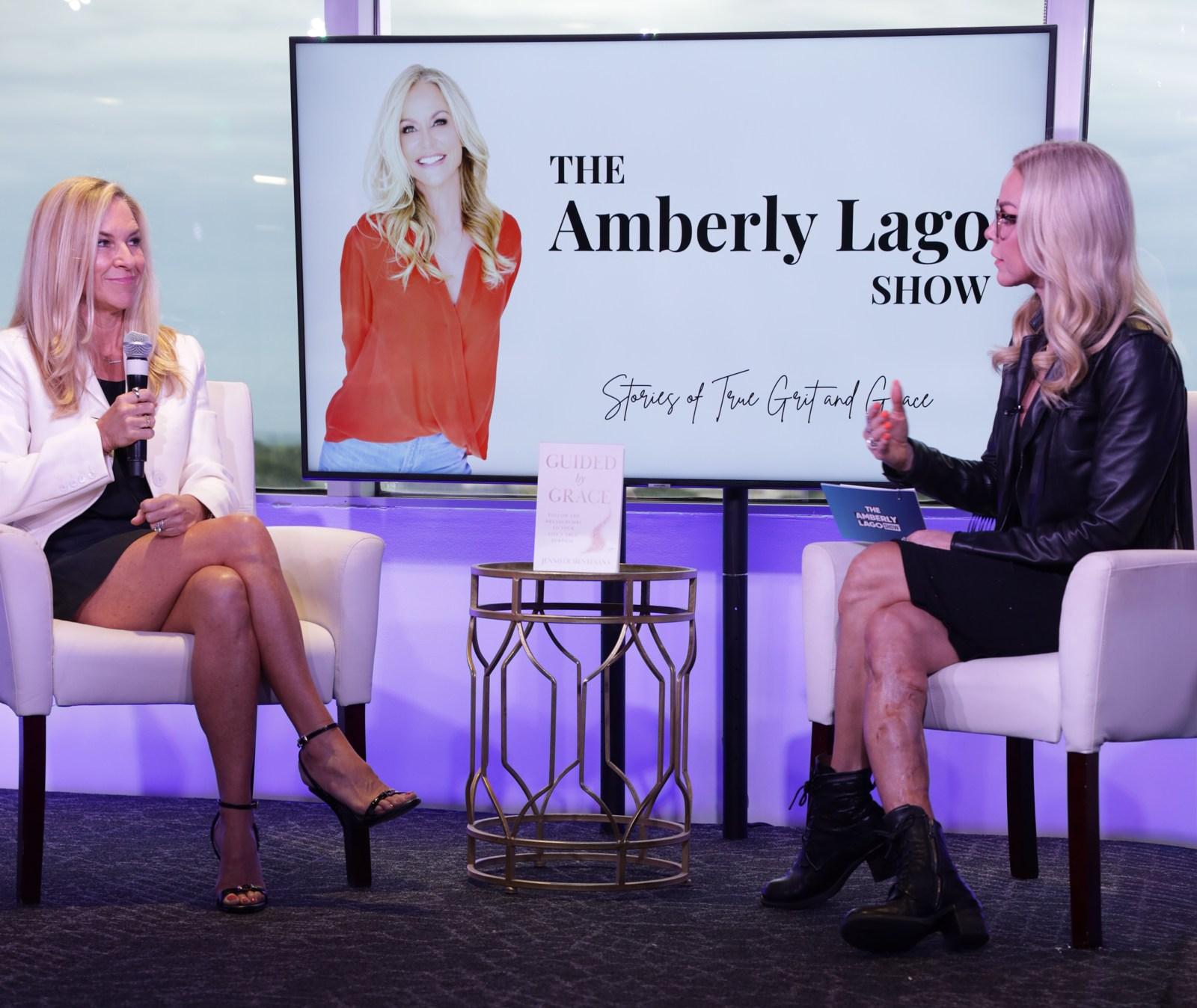
In this episode of the Amberly Lago Show, Amberly welcomes the incredible Lauren Ungeldi, a 10-time bestselling author, international speaker, and global business innovator. Known for her expertise at the intersection of storytelling, business strategy, and human transformation, Lauren shares her insights on the power of storytelling and the intricacies of writing and publishing a book. With a unique perspective shaped by her experiences working worldwide with elite special forces, world leaders, and entrepreneurs, Lauren empowers individuals to own their stories, adapt with purpose, and build unshakable strength. Tune in to discover how you can harness your narrative and embark on your writing journey!
Follow Lauren
-
Instagram: https://www.instagram.com/laurenungeldi?igsh=MTUxbnl6cHRzbDhwcg%3D%3D&utm_source=qr
-
Website: https://laurenungeldi.com/en/
Thank you for joining us on The Amberly Lago Show: Stories of True Grit and Grace! If you find value in today's episode, don't forget to share the show with your friends and tap that subscribe button so you don't miss an episode! If you are ready to leave your mark by discovering your message and sharing it with the world, you've come to the right place!! Let's work together to build your influence, your impact, and your income! Join the tribe you have been waiting for to activate your highest potential and live the life you deserve!
Get your copy of my book, Joy Through the Journey on Amazon with one click here: amazon.com
Order here and get your FREE bonuses: go.amberlylago.com/joy
Join the Joy Sparkers book club here: go.amberlylago.com/book-club
Join the The Unstoppable Mastermind to start growing your personal brand and business: go.amberlylago.com
Head over to my website to join my newsletter and access free downloadable resources that can help you elevate your life, business, and relationships: amberlylago.com
Connect with me on Instagram: @amberlylagomotivation
Join the discussion on Facebook: @amberlylagospeaker
Full Transcript
Welcome to the Amberly Lago show. Stories of true grit and grace. Oh, my goodness. Thank you so much for tuning in to the show. I have a new friend of mine on the show today who is a freaking legend. Oh, my gosh. Lauren ungeldy is a 10 times best selling author, international speaker, and global business innovator. She's known for her work at the intersection of storytelling, business strategy, and human transformation. Y', all, she is a powerful speaker. I had the honor of sharing the stage with her at an event where we met. She knows all there is to know about writing books, getting a story out there, what it means to publish a book. She, I mean, having lived and worked worldwide, she brings a rare frontline perspective on global dynamics. High State takes leadership and resilience under pressure. When I met her, I was like, you're my soul sister. You are the definition of grit. She's co authored best selling books with elite special force forces, operators, operators, world leaders, entrepreneurs, media figures, even spies. I don't know if that's in your bio, but spies, I will say spies. She has got so much going on, and instead of just reading, I could read for like two days. The list that goes on and on about how amazing she is. But I want to dive in for you to get to meet her right now because she really helps people. And if you're looking to write a book, you need to really pay attention, close attention right now. Because she empowers individuals to own their story, adapt with purpose, and forge unstrankable, unshakable strength. Lauren, thank you for being here.
Thanks so much for having me. I've been excited to do this with you.
Oh, I have been so excited. And I mean, before we even hit record, we were going on and on about stuff, about writing a book, publishing a book. And I was like, wait, wait, wait, we got to get this on the podcast.
Press record.
Yes, I want to know. Okay, you've got 10 bestselling books. That's. That is amazing. That. That's like running 10 marathons, basically. What got you into book writing and storytelling?
I mean, it's a great question because a lot of people are like, did you go to school for journalism or this kind of thing? So when I was a little girl, probably two, three years old, and my mom, she told me this story, I would get these notebooks and I would just open them and I'd take my pen and I just go up and down on the page like this before I knew my Alphabet. And she come over and she said, like, lauren, what are you doing? You know, because everyone's like, is this a crazy child? You know, And I was filling out the entire thing systematically and I said, I'm writing books, so. And you're talking. I mean, I'm young, I can't even write the Alphabet yet.
In my goosebumps, by the way, like,
this is what I was born to do. But interestingly, instead of pursuing that as like full time profession, it's like that was my passion, right? That's the thing that I know I'm good at. But then it's like, okay, wait, now you, you need a career path, you need a profession. And so I got into something else that I'm actually really passionate about, which is health and wellness. So I opened my own health and wellness practice, was working with people. They grew that over four years in Texas. Loved working with people, loved, you know, working with them on kind of a functional medicine perspective and just really getting in there. And we were doing like full lifestyle renovations for nine to 10 months. Where every aspect of life and just loved my work there was, it was wonderful.
And where, where in Texas was this?
Tyler. Tyler, Texas. It's about two hours east of Dallas.
The Rose, isn't it? The Rose Rose.
There's a Rose queen, there's like a Rose parade. It's the rose capital of.
Yeah, that, that's what I world.
But I don't know, we might need to check in with that. You know, Texas is claiming a lot. They got a Paris, Texas and, and Athens, Texas.
Yeah, yeah, yeah. So I want to go into that health and wellness a little bit because I mean, I've seen your Instagram. Y' all have to follow her on Instagram because you have some pretty powerful posts just of how you work out. So you are not just saying you are living it, you're not just preaching it, you're doing it. So with your health and wellness practice, are you in, in the trenches with people showing them how to work out too or do you have a people that do that?
I've never been, I've never been a trainer. Like I said, my background, you know, was in, you know, the nutrition element and that kind of thing. And so I had built my practice up over four years and this is where the story gets kind of interesting and I'm going to circle back to how that part kind of came back and played a role in my life right now. So at the height of me, you know, running my practice, kind of a functional perspective, I get to write a book for a company commander in The Iraq war. He was coming to town with speaking engagement. And at first he just asked, can you write like a blog post, an article, something like this, just to help promote the speaking engagement. And I do. I interview him. Two weeks later I get a message and he said, in that 45 minutes, you listen to my story. And you said things that were inside my mind that I'd always wanted to say but never had the words for it. Will you consider writing my full book? And at that point, I've never written a book before. And so basically we, we embark on this journey to write a book. I'm running my health and wellness, you know, clinic by day and then, and in the evening I'm working on, you know, there's geopolitics, there's head camera footage from, you know, combat, this kind of stuff that I'm working on his book. And so I'm like. And a lot of writers you'll, you'll see go through this transition where they're doing some kind of work by day, but then they're also working and writing, you know, doing something they're passionate about. So that book does very well, becomes a bestseller. And then I start getting asked to write books for incredible notable individuals. So for a while.
Okay, I got to go back real quick.
Yeah.
To this because this is a big deal. I mean, you've written a book for someone. Were you a ghostwriter or was your name on that book?
Well, here's an interesting story for you. It was going to be a collaborative work between me and him, and I had planned out my name on it. Actually, when we went to publishing, there was a pretty well known writer who's a male and he read the book and he said, this is really good work. And he, he told my co authors, like, look, nobody knows Lauren. She's a no name right now. She's not going to help get your book out there. And you know, people, when it comes to serious subjects, you know, you need to be careful about putting a woman's name on that. You know, women don't. It's not well received for serious subjects. And my co author, and so he said, you can put my name on it, I'll take credit for it. You'll sell a ton of books and we'll, you know, do great. My, my co author and his name is Jeff Morris and he's just an amazing individual. He calls me up, he tells me what happened and you know what? I said, look, if it'll help get your story out there at the end of the Day, it's yours. Like, you can do this and I'm never going to be upset with you, never going to fault you for it, anything. And he was like, you listen to me right now. We're putting your damn name and your damn face on that book. He's like, you do it for your daughters, you do it for all the women. He's like, I want you, like, loud and proud on the back of my book. And we are not going to, you know, back down for this. So that was an amazing thing and it launched my entire career. My life, My life changed after that moment because that's when I had these two career paths going at the same time. I'm working a full time job and I'm writing. And then I eventually sold my clinic in Texas. I end up traveling the world for a full year, working with all kinds of incredible individuals, world leaders, writing all kinds of stories. Africa, Middle East, Europe. I mean, you lived in Turkey for
a while, didn't you?
I am in Turkey, my dear.
Oh, you're still there. I can hardly keep up with you. I was like, I, I was stalking you, okay, like, looking over YouTube, like, really stalking you to see where you were. And I was like, okay, she was in Turkey two years ago. Okay, where is she now? Because you've been in Ireland, you've been in all these amazing places that are on my bucket list to visit. But, but I just feel like I need to, like, I, I'm glad I got to meet you in Dallas.
I'm so glad we met as well. Well, if you, if you ever want to talk travel itineraries, you just text me and call me. I love travel. It adds so much perspective to you. It's humbling. It's beautiful. And so I, I will. If you're ever on a trip and you don't want to post too many pictures because you don't want to irritate all your friends, you can post and share any amazing travel photos with me and I'll be so happy because I love it. It's amazing.
Well, that is amazing and I'm glad that I stopped to ask you. Wait, wait, wait, let's go back. Was your name on that book? Because, yeah, a lot of people out there that do want to share their story and a lot of times people come up to me and most of the women that are in my mastermind have this idea to write a book. And one of the first questions I ask them is, well, do you want to write it or do you want to have a ghostwriter and the reason I asked you, like, well, did you have your name on that book? Because. And then we started talking before we started even interviewing, and I was like, you're like. And you are so sweet. You're like, how are you? Because I know you just launched your new book. And I'm like, yeah, yeah. Are you tired? I'm like, yeah, because. And I was like, you know what? It's one thing to write the book, it's another thing to edit. It's another thing to like, pre launch it. And it's another thing to launch it. And I'm still, I feel like kind of in the launch of it because even though it came out last month, almost six weeks ago, I'm still doing interviews to promote the launch of it. But
for somebody who really wants either, there's not like a guidebook. When I first started, I felt like I was kind of in the dark, like I'd written the manuscript and I was like, yay, what's next? And then people just start throwing jargon out at you, blah, blah, blah, blah. Agents, editors, proofreaders, copy editors, and then publishing, indie publishing, self publishing. And people are just talking to you and telling you stuff, and you feel like there are. You speak in a different language and you feel like everyone understands the. The setting and scenario. And you're like, am I the only one who feels like this is a little complicated? You know, and so it, it takes a lot of time to get. Dip your toe in the water and then start to swim, you know, and there's not a lot of guides and people out there that really pass it on of how it's done. And so that's why if there's ever a young writer that comes to me, I always try and take time to like, let's talk about how it happens. Because I was muddling through, trying to figure it out in the beginning, and it's. It's not easy. It's really not easy. Yeah.
So what advice do you give someone who wants to write a book? What's the first thing that you tell them?
Well, you know, you brought up a good. The, the first thing is getting an amazing manuscript, you know, and I. And some people who've lived an incredible story and are even incredible speakers, they are just not writers. And it really is a very specific skill set to be a writer. And like I've said, I've had collaborative works that I've done where my name's on the book. I've had several that I've ghostwritten to and so it's an interesting thing. Some people love writing. Some people can't stand it. To be able to not just be good on the line level, to write nice sentences, but to be able to architect the flow that starts here. And you want to build tension and you want to keep the reader engaged, and you build this flow all the way for an entire journey. That's the part that actually takes a lot of time, where it's not just, you know, here's some bullet points to cover. And so I think usually what I tell people is, you know, make that decision, try writing, you know, see how it goes. And then if you can tell it's just not your thing, you know, bring someone you know along there that can actually come alongside you and help you. These days, it's not just about crafting a book. It's also crafting what is my message, what do I want to share with the world, what's unique inside of me. And actually, I believe that that collaborative moment where someone can sit across from you and say, like, this is what I see in you. This is a quote that you've always said to me. That stuck with me. Some people actually need a little mirroring to go back and forth, to really be able to pull out the greatness inside of them, the extraordinary nature. And I'll tell you, I've worked with incredible individuals who faced, you know, combat to. You know, I worked with the young woman. Her name is BB Aisha. She was on the COVID of Time magazine.
I saw that on your Instagram. Amazing.
A Taliban Bride at 13 years old. You know, they. They mutilated her, cut off her nose and ears when she tried to escape. And she is an incredible story of resilience and hope in her message for young women. But even she doesn't always see the extraordinariness of who she is. And while we're writing together, you know, to. To the whole world, you're like, you were the most extraordinary human being. And even in her, she feels like, am I enough? Have I done enough in this world? And I'm like, baby, you're one of the most incredible, inspiring women I've ever seen. And so it helps, I think, sometimes, even if you're going to write your own book, I highly recommend it's a trusted person for that collaboration. And then the writing process begins. I. My writing mentor says, write like a drunk, edit like a surgeon. So. Oh, I love that you're in the drunk phase. You just got a word vomit. You just got to. You got to pretend like no one will ever read what you're writing. Not your mother in law, not the girl you went to high school with. You know, because if you're reading, if you're trying to write for your audience, you're already editing yourself. Like I say, put every gritty, incredible detail in there. Put it all out there.
And do you know what? That's why my first book, I wrote 90% of it, if not more, in a notebook.
Really?
Yeah. I didn't even own a computer. And I went to the store to buy a laptop and started writing the last part of my book in the laptop. And it was not coming out the same. And I had to do exactly what saying right now I just had to write it out because it came out differently. There's also something so cathartic. When you can write something and just go from your head to your heart, pen to paper, and write it out, it. It's cathartic, it's healing, but it comes out differently. But I love what you just said. Write like a drunk edit with edit. Like a surgeon.
Like a surgeon.
Okay. And I will just say that I started reading my audio version of my book. I found four errors.
Really?
Already? And I'm like, how did I miss this? Like, I quoted something from Les Brown and it's misspelled. So just asking y' all to give me some grace on. On that. It's like people don't realize how much you need a good editor, but I had two editors and all three of us missed.
Now that's frustrating when you're like, you're the gatekeeper. You're supposed to see. I will tell you this, that I do when I'm in my surgeon mode on the editing. I read my book aloud to myself like a crazy person at least twice. All the way through. You do? I read aloud every single piece before it goes anywhere. So I write silently. Then I do a full edit and then I usually. My poor husband, he has to be my. I have one audience member. My second round of credits is me reading aloud to another person because then.
Wow.
So for hours.
How long is it? It's a while saying this because I just got out of the studio where I'm not kidding you, it nearly killed me four hours straight reading my book aloud.
Yeah.
You read your whole book out loud?
Yes, I do it twice and then I do a full read out loud to my husband and edit while I go. And a full one out loud to myself. So by the time. I'll tell you, by the time I'm done With my books, I never read a damn word again when they're printed because I know them by heart. And everyone's like, did you read your book? And I was like, why would I read my book? I've got that thing memorized from COVID to cover. At some point you're just flinging it out like, I'm done. Now I'm done. You know, you're proud of it, but you know, you've, you've gotten so integrated into it. But yeah, the reading out loud helps a lot for the editing process. So that's, that's a good one.
Okay, I have a question for you. Do you take someone who is not necessarily a spy or a celebrity or. But they have a story they want to share? Because I know you've worked with some very, very high end people. Do you have people that you work with and say, let me go on this journey with you and ghostwrite for you and show you how the whole publishing works? Because it's one thing, to me, the easiest part, people get overwhelmed with, oh my God, to write a book. No, writing the book is the easy part. That was easy for me. It was. Now I say easy. I was getting up at 4 o' clock in the mornings to get it done because that was the only time that I had. In fact, my assistant texted me this morning and she goes, can we find other times that you're most productive when the whole rest of the world isn't sleeping? And I'm like, but that is the time that I am not interrupted, that I can be in my zone. And that's when I think it's important to find a time. If you do want to write a book that you can commit to and just start writing. But do you work with people who are like, I don't want to wake up at 4 o' clock in the morning and write a book. I want a ghostwriter and I want to know how to get through the publishing process. Because that's a whole other ball game that I want to get into as far as the public, the, you know, the publicity of your book and what you need to do to make it to bestseller list.
Right? Because the world of publishing has changed. It's not. It used to be, hey, I'm going to send this typewriter version of a manuscript. And as long as it's written well, that's all you're being judged on. But right now the world's very different. And that it's really, it's a whole brand that you're selling to a Publisher, not just the manuscript. So I will get into that as far as answering your question. Yes, I work with all different types of people. Really my criteria for working with people is I. And we live in a world of information where there's so much out there. I want really purpose driven books. And when I invest my time into a story, it's to show something to the world. Because we live in this time of like influencers and people who stand up and these are the people that we're emulating and are the, the young generation are looking up to. And it's so important for me to help elevate the stories of people that demonstrate strength or resilience. And actually people that you go, this is a person that is a wonderful example not of perfection, but of what the human spirit can do. And so that's really my criteria. I've worked with all different types of people, from doctors to entrepreneurs to people, you know, with. But all of them have that through line of something really incredible to say and to tell. But I mean, you know, or I've also done writing coaching because for some people, they're like, hey, I can write, but it's just a long way to try and do a whole book. And so that's also something, you know, that that can happen. And so as far as the writing process goes, I would say that you gotta build momentum. It's kind of like exercise. You know, when you're first running, you're running, you're looking at your watch, it's like eight minutes and you're like when you get in the side stitch and
you know, I always say if you can get through that first 10 minutes.
Yes, yes.
For some reason, if you can get through the first 10 minutes.
Yeah.
Then you can keep going.
And if you do it consistently than what, you know, three miles used to feel like six miles doesn't feel so bad anymore. So it is like a stamina thing. So I always tell people, first of all, right, don't go back and try and edit at the same time.
Right.
And write as much as you can. Get pages of momentum built up. And another thing my writing mentor said, he said you got to get the bad words out. Like there's gonna be some. Not every sentence is great. And sometimes you just gotta actually, you know, when you turn on the faucet of water, you're waiting for it to get hot, the cold water runs out first. Sometimes writing, even if it's not great, even if it's mediocre, you just gotta get momentum. You gotta get the muscle. But you gotta get the habit started. And if you do that and you're real consistent, then your stamina, you'll improve. You'll get great. But what happens is people get out there, they do a little bit. They judge themselves and try and edit too fast. And then they say, it's not good, it's not great. And then, you know, they kind of give up in the process, or they just discover it's not for them, which is also fine, too. Like, some people just, like, I just hate it, you know, it's not great.
I love the analogies that you give, but I also love that you're sharing. Just get out there and write. Don't go back and edit. That's why I had to get off of my laptop and finish my book on my notepad. Like, old school notepad. Because when I was on the computer, when I was on my laptop, I was just trying to make sure all the margins were right and I didn't misspell a word. And I was just trying to make it perfect. But also, what really helped me write this last book, my newest book, was I needed accountability. And so every week, I met with an editor. So I had a developmental editor that I was like, this is the idea I'm going for. What do you think? And they were like, yes. And then I had an editor that I would meet with every day. That. Or not every day, every week, that that helped. And it just helps you to have that accountability. And I remember turning my book in, and I was like, my ending needs to be stronger. And I got a message, and they were like, we like it, but your ending needs to be stronger. And I was like, I know.
Okay.
I just wanted to be done. But. Yeah, but that really, really helps. An editor is so important.
It does. It does for sure. And again, it's. It's not just about making your lines good. It's about how you build a trajectory to make the. What someone's gonna feel. So if you. You need tension in the beginning. If you relieve your audience of tension too fast, if you give them answers too fast, Nobody reads until the end. And so someone said early on in writing, they're like, there's always a point when in unfinished books, at some page, you close the book and you went to sleep, or you were on the toilet and you put it to the side, whatever it was, and you never touched it again. And so we as writers, like, every time I'm thinking, is this the page? They shut the book and they never pick it back up. So what did I do? What question needs to linger. Well, how do I create this seduction that pulls them on and on? How do I create tension where they feel that they're waiting for it to get resolution? And so those are the things that take some time. How to architect an entire, you know, feeling that way. And so. But it's fun. It's fun to put together outlines and see how it goes, but eventually you kind of create a live thing and then you watch it and it develops a life of its own. Like, I'm all for outlines, but you can't get too, like, set on them. Once, once you get three, four, five chapters in, it's going to start speaking back to you and then you're going to be able to have that interaction and see where it wants to go.
Yeah. It's interesting you say that because with my first book, when I was, I didn't even know the title of my first book. And I was, I just knew I wanted to write this book and I kept trying to do an outline and write it from that and it didn't work out that way. And I love how you say, make it every page. Like they want to turn the next page and keep reading. I purposely ended up putting my book together in past tense and present tense, past tense, present tense. And I left little cliffhangers on the end of each chapter that would make people want to read the next chapter. And I have a really short attention span, so I was like, I don't want to get overwhelmed with long words, chapters, paragraphs. I'm going to make each chapter so short that you are going to feel rewarded for. Oh, I've already read three chapters. I've already read five chapters. And I did that because I'm not a great reader. I'm, I'm getting better at it. I will say I'll put that in a more of a positive tense, but I think it's really important to create that. But I want to get to, okay, you've written the book or say somebody really wants to write a book and they reach out to you. They're like, okay, let's do this book together. Done. Got their manuscript, they're going to publish it. Do they do self publishing, hybrid publishing or traditional publishing?
Yeah, I mean, it's great. And so, I mean, we'll kind of recap a little bit. Self publishing is kind of self explanatory. That's like you being your own home builder. So you're laying your own concrete. You're, you know, you might hire a Concrete guy. But you're watching them do it. You're coordinating everything. I would say hybrid is kind of like having a home contractor. So you're paying someone who can oversee all of it, but then you are going to own the rights and royalties, or at least the majority of them yourself.
So typically, I think we have to be real careful and read the contract and actually even have a literary lawyer read that contract because, yeah, the hybrid publishing didn't go well for me in the beginning.
So I've heard some real horror stories here recently. I've had, I've had two or three people who've had some real. And it's getting expensive. So sometimes the margins are anywhere from 20 to, you know, let's say $60,000 is typically what you're talking about to wait, what,
20,000 to $60,000 to have your book published through a hybrid publisher?
Yep. I mean, there's a few that are going to do it for last, but I mean, typically you're coming and what
does that give you?
Typically that's going to be like you're going to get cover design, editing, upload to Amazon, maybe some distribution to like Barnes and Noble and some bookstores, that kind of thing out there. And then typically they do some type of marketing, you know, alongside you. Either they do some announcements, some social media, some of them do good SEO on Amazon to kind of boost your bestseller chances. But basically you're again, you're kind of paying them like a home contractor. So you're going to maintain most of the rights. Now, some of them take up to you know, maybe 15, 20%, but you're going to, you know, maintain the ownership of it, whereas traditional publishing. You're going to what? Tell me.
Oh, I'm just, I. I'm just like. I have to say something really quick. I think so many people think, oh, I'm gonna write a book and make a lot of money. No, for me. Unless you're Brene Brown or I guess Mel Robbins now who has this top book. I don't know how much money she makes on a book, but writing a book is an investment. I got a book deal that was small. I mean, I'm gonna tell you, it wasn't much. And the amount of money that I've put into hiring a publicist, hiring a team to make a landing page for my pre launch, the work that I went into, right. I remember finishing my book and on the computer one morning early, and Johnny, my husband, goes, what are you doing? I said, oh, I'm making a pre Launch companion playbook for my book. If people pre order it and like, it just never ended. I. I was spending, you know, $2,000 a month just on somebody to help me with a website for the book.
Yeah.
And, yeah, so I want to talk about that. Like, people think, oh, you sell a book. And I think a lot of times, and I don't know if you get this or not, but people like, I had no idea what they were going to ask to sell my book for. Let me see, I have one here, $28 for the book. I didn't even know what the back cover was going to look like, to be honest with you. But $28. And I think people think $28 in my pocket.
Yep.
Nope. I think maybe. Maybe I get a dollar.
Yeah. If you do a traditional publishing deal, which this one was, you know, I mean, you're gonna get, you know, anywhere from 8 to 15%. So the, you know, traditional publishers, they will, they're amazing for distribution. So if you want mass distribution, they're great. They're still unparalleled at getting it out into tons of bookstores. You know, with hybrid, again, you're going to hold on to, you know, the majority of ownership, but usually the distribution is a little bit less. Here's what I will say about writing books and, and how I think it's a little different than it used to be. So the real value that you get now in writing a book is that it is a solid platform for you to launch everything on top of. So when you invest in a book and you really create something that's different, it is the entry point for speaking, for getting on podcasts, for getting your name out there. So what you're doing is. And a lot of people like, and I'll be honest on the front end, hey, do you think I'll make this investment, you know, of paying you to write my book or for investing in the publishing, you know, part of it, they're like this, this is going to be an investment. And I say, absolutely. But they're like, well, I make this back in a year, this kind of thing. I'm like, you have to look at. When you're looking at returns for your investment, the real return on the investment is that you are creating basically your personal brand, what you want to say to the world. And still I've seen, I'll work with someone the moment they get the book out there, they are invited to be in a consultant on all the stages, unable to do interviews, and lots of this kind of thing. And so these days, so. And this is a mixed thing, right? The benefit of it is that it opens so many doors. And so if someone's trying to look for a pivot into, I really want to do more as a personal brand or I want to get into speaking. I want to get, you know, be a thought leader, get more out there. The book there. There's no other single investment you could make that will be as strong as a book. You could put, you know, social media out there. That's great. But having a book is something. But because now this goes hand in hand, now you're expected to have an ecosystem built, a website, your social media, you're getting on podcasts, and traditional publishers are judging you now for all of them. It's not just, hey, did you have the best grammar in your manuscript? You know, and you just have an editor judging you based on the work. They're also looking at, are you a good investment as someone who can promote, can brand, can do all these kinds of things. And that's what some people don't prepare for enough, is that they're like, all I want to do is focus on my manuscript, and when it's done, then I'll focus on branding for. To get ready for.
Oh, and see, I'm so glad.
A long time in advance.
I am so glad you brought this up, because I don't think that people realize this enough. First of all, yes, your book, I always say, is like a very expensive. A very expensive business card. It gets you in the door, gets you on podcast, it gets you on stages. But look, when I got this last book deal, I had to write them a proposal. They reached out to me, but then I had to write a proposal, and I had to tell them every stage I had spoken on for the past year. How many people were in attendance, what was the demographic of those attendees, how many events that I had coming up? What was my following on every single platform that I had? What was my newsletter? Who. Who. How many people were subscribed to my newsletter and how many downloads that I got per episode for my podcast, the Numbers Game?
They want all your endorsements plus each of these endorsements, how big their social media following is, how many views their stuff gets, because they're trying to. They're counting up potential book sales. So exactly 60 pages that you put together for that. I mean, it's typically about 60 pages.
It was a lot. So I got this. They wanted me to send them in a proposal, and I had two days to get all this information together. And send it to them. It was, yeah, it was non stop. And then if you get the book deal, then you are on a tight schedule and you have to have so many pages written per week, per month, poor, you know, or your book doesn't get published and you don't get paid and like that's it. And so, yeah, it's a lot. It's a lot.
Well, people think that's the ideal scenario of someone paying you before you write it. But I always tell first time authors, I was like, you need to be careful what you wish for because when that monkey's on your back and especially if it's your first time, fortunately for you, this was your second.
So my first one, it took me two years to write my first book, but I didn't have deadlines. I wrote at my, you know, I was in and out of surgeries at the time, but I wrote at my convenience. I think there was more stress this because I was under so much pressure with deadlines and traveling so much for work. But there is something to be said for having those deadlines and just having to get it done.
But you know, I will say this when, when young, young writers come on and say, look, I want to be really, I want to be a successful writer like you. And they apply that word success to creative. And typically when we say a successful singer, a successful movie star, a successful writer, you take any creative profession, what we mean is that's what they do for their full time job and they're getting really well paid for it. But I'll tell you, and this is kind of my purest artist mind, I will tell people you can create beautiful art and put it in the world and be a huge success and it doesn't have to become a full time profession. I know so many beautiful souls that are painters, artists, singers, all kinds of things. They work a job and then they create without any pressure because that's what they love to do. They enjoy it. Now if you make the decision and not talk about people, be very serious with yourself if you're gonna do this as a profession, if you're gonna do this for money, you're gonna do it as a business investment. You have to be ready for what that means. And it means you have to create under extraordinary pressure. You have to be ready for criticism. You have to have very strong grit and resilience to be ready for what's gonna come. You can't be overly sensitive when people give you feedback that is good or bad. You can't get easily, you know, discouraged. And you got to know that I signed up for cultivating something to be a business. It's an asset I'm going to sell. So you have to have a business mind integrated with it. Now. You don't have to, but if you'd make that choice, there's a lot that'll come with it. And we don't talk about what it means to be a beautiful creative soul, but also need to sell as a business. But I always say you can be highly successful, truly, by just sharing what you have, your gift with the world. It doesn't necessarily have to become an asset to sell. It doesn't have to. You don't have to be a content machine if you don't want to, but if you do, you can't resent the process. You can't say, I don't like this. I don't like. People are critiquing me. I don't want to compromise. You know, you have to know I signed up for it to be a business. This is what I signed up for. And it does take some. A special kind of resilience. And so I'm big on redefining that. That's not the only path to success as a creative. There's many ways to do it, but if you do want to do it, if you want to jump in there, we have to have more conversations about what the discipline it requires to actually perform under pressure. Because there's the inspiration part where you feel really inspired to write, then you got to have that motivation. Okay, I want to get this done because. And then you've got to have daily discipline where you show up no matter if you feel like it or not, to stay, to stay steady in. In what you want to do.
Do you think that's the secret is to having that daily discipline? Or do you have. Do you have days where you're like, I'm tired, man. I just want to be on the sofa and binge some Netflix right now because I can't think. My brain is going to explode if I even think one more thought. Do you have days like that?
Of course. I mean, we all do, for sure. But, you know, what do you do?
What do you do? I'm. I'm at depends on asking for a friend.
It depends on which kind of tired it is. So when you're first starting out to write again, like capacity and exercise, there's a feeling when you're exercising and you're getting at the top of your threshold and you need to hold it there for a little Bit, it's not comfy. But the only way you're going to create more capacity and ability is to move past your comfort zone. So there is a process where you got to go a little past fatigue point. That's normal. Now if you get that under your belt and you're used to doing it and you hit a total fatigue point, you actually know. There's some days I'll go to write and then I'll just say like, you know what? Not happening today. I shut it, I get a good night's sleep, I eat something tasty and I come back the next day because I know myself and just sitting there in front of the screen isn't going to do much. But I'll tell you, there's two different kinds of writers. There's plotters and then there's bingers. And this was something that my writing mentor told me way early on. In writing. Plotters are the ones that write like, you know, five hundred to a thousand words per day, very consistently every single day. They plot, you know, they just plot along until you win the race. Then there's the binge writers that go on a one to two day bender. They don't do anything. They shut themselves in and they go crazy. But typically you can only go one, two days of that and you'll actually need two, three days of rest before you can do it again. So if you're a binger, but you think that you need to perform like that every day, what'll happen is that you'll totally tap out. So you gotta learn who you are, what you are. Either plot a little bit every day, or prepare for your binge cycle, go all in, go crazy, and then just wait a few days until you're refueled to go go at it again. And both are okay. Both are great ways to write, you know, but biggest thing I would say is you can't really multitask and write well. You have to really be. If you're answering texts about your kids and then you get on Instagram, are you doing much at all? You really shouldn't multitask for. We women, we think we can, but,
oh, I don't do it. Had to write when the family was asleep. And I did not have a puppy at the time, thank goodness, because having a puppy is a whole. I got a puppy a day before my book published and she just had surgery. So in the midst of launching a book, got a new puppy. She just had surgery a few days ago. It's been a little bananas, but I had to. I had my phone on do not disturb, but I could feel it vibrate. I had to throw it across the room. I mean, it landed on the sofa, don't get me wrong. But I was like, no, I cannot even have a ping or a vibration telling me to look at my phone. I got to be in the zone. And that's the only way I could write.
Oh, yeah, absolutely. So that's. You need that time to really get in the zone. And if you can really hit it hard and be pretty efficient, you don't necessarily need eight to 12 hours. I've done some of those stents like a couple times. I did like 10,000, 15,000 words in a day. And that's a lot. It's really too much to do at one one sitting. Typically I find at about five hours is really pretty much sufficient if, if typically, I mean, if you're really on a roll, go past that. If you're first starting out, you know, shoot for like a three to four hour window where you're just hyper focused. And. And I also, you know, I recommend. I was talking with someone who was wanting to write a manuscript and they were kind of writing the outline and everything out. I was like, what's your word count? And they're like, I don't know, I kind of go by pages and this kind said.
I'm like, no, you need a word count. I mean, I, I had a contract on how many words and I was supposed to give, you know, 50,000 words like that.
Yeah, 50,000 to 75,000 is usually your sweet spot. My newest book that's coming out is 120,000 by the way. So we went way, way over. Wow. Lot to the book.
And so what's it called?
Forged in Chaos. So it's about the chaos addiction that comes with high performers.
Oh my gosh. When is this coming out?
Coming out in July. And we are so excited. We've already gotten amazing feedback on it. So he's former Delta Force, current Hollywood film producer, has an amazing story. His arm was blown off in Iraq and during an explosion.
Oh my gosh.
Follows really talking about the chaos addiction that a lot of warriors, entrepreneurs, athletes, high performers feel that when the chaos is around and you're in your zone, you're hypervigilant, you feel great, you feel clear headed, you feel good, but on the downward moments where you're supposed to rest, your nervous system tweaks out, you don't feel great, you feel anxious. And so it's really. And it goes back to if you've had a traumatic childhood. You're actually neurologically conditioned to seek out chaos.
And you're speaking my language right now, by the way. I'm like, so that's what's going on with me.
Yeah, I identified with it quite a bit. So, you know that that was a long one. But we had a lot to cover in that. And his story is incredible. What's his name again? His name is Tyler Gray and the book is called Forged in Chaos.
This is amazing. I cannot wait to read it. And I will have that link in the show notes as well. And I have, I could, I could talk to you for days. And I'm sure our audience is going to have lots of questions to ask you. So what is the best way that they can reach out to you? If they want to write a book, if they, you know, want to see how they can connect and work with you, what's the best way they can do that?
So you can go to Lauren and Geldi. That's on my handle on instagram. And also learningaldi.com that is my website. So. L A U R E N U N G E L D I and either one of those places. Great place to get, get a hold of me.
Oh, my gosh. So I think I need to have you back on the show. No, I have two pages of notes that we didn't even get. I didn't get to the questions, but you have been so helpful because I know a lot of listeners. Well, actually, I've heard that 81% of people, people want to write a book.
Right. So amazing.
And 1% actually write that book. So I, I know that with everything that you've shared today, people are just going to be really helped and inspired to share their story. I, I mean, thank you for sharing your wisdom and your heart and your incredible journey and, and just reminding us that how important storying storytelling is. It's more than just entertainment. It's life changing. It really is. Not just for your life, but it's for the person that you're out there impacting. So thank you again. You guys take a screenshot and tag us. If I see that on Instagram, I always reshare it. It makes me so happy when I see that you've listened to the episode. Lauren, thank you so much for being here on the Amberly Lago show. And I can't wait to see you in person again soon, I hope.
Me too. Me too. Thanks for having me on. I appreciate you.
Thank you.
Pain to purpose to joy.
Never Miss a Conversation
New episodes drop regularly. Subscribe on your favorite platform and never miss a conversation.