

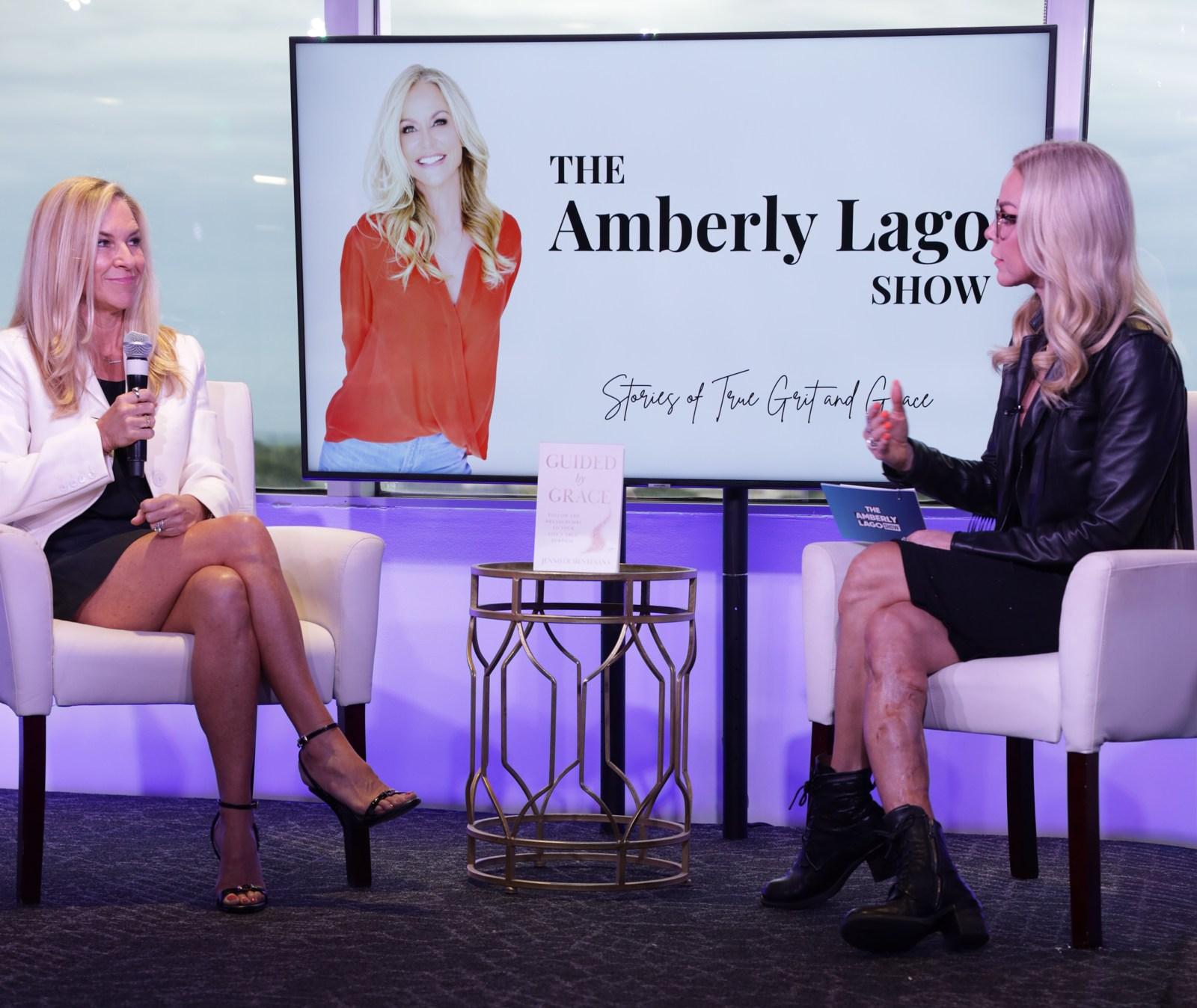
Season 6, Episode 266
Transforming Trauma into Leadership: A Conversation with Tyler Dickerhoof
A conversation with Tyler Dickerhoof

About This Episode
In this episode of the Amberly Lago Show, Amberly welcomes her inspiring guest, Tyler Dickerhoof. Known for his exceptional leadership skills and impactful speaking, Tyler shares his insights into growth strategies and good habits that can elevate both personal and professional life. A top leader in the network marketing company Isagenix and a collaborator with renowned speaker John Maxwell, Tyler emphasizes the importance of service and leadership in today's world. Tune in as they delve into actionable strategies for leveling up your business. Don't miss this engaging conversation filled with wisdom and motivation!
Follow Tyler
- Instagram: @tyler_dickerhoof
- Website: https://www.tylerdickerhoof.com/
Thank you for joining us on The Amberly Lago Show: Stories of True Grit and Grace! If you find value in today's episode, don't forget to share the show with your friends and tap that subscribe button so you don't miss an episode! If you are ready to leave your mark by discovering your message and sharing it with the world, you've come to the right place!! Let's work together to build your influence, your impact, and your income! Join the tribe you have been waiting for to activate your highest potential and live the life you deserve!
Join the "The Unstoppable Mastermind" to start growing your personal brand and business: go.amberlylago.com
Get your copy of my book, "Joy Through the Journey" on Amazon with one click here: amazon.com
Order here and get your FREE bonuses: go.amberlylago.com/joy
Join the Joy Sparkers book club here: go.amberlylago.com/book-club
Head over to my website to join my newsletter and access free downloadable resources that can help you elevate your life, business, and relationships: amberlylago.com
Connect with me on Instagram: @amberlylagomotivation
Join the discussion on Facebook: @amberlylagospeaker
Full Transcript
Well, I am excited to share my new book, Joy through the Journey. And it y'. All. I've packed it with real and raw stories, but it's got actionable steps and tools and powerful insights that are going to help you embrace the present moment, really build your resilience and unlock the joy that's waiting for you. So go over to go.amberly lago.com forward/joy and you can collect your free bonuses that I have created for you. Or if it's easier, just go to Amazon one click away and you can grab your copy. And not only that, I am having a Joy Sparkers book club. So if you've already bought a copy, thank you very much. It's not too late to join the book club and we can spark some joy together. This is an exclusive space to grow, connect and really transform your life. So want to be a part of the book club? I sure would love to see you there. Go.amberly lago.com forward/book-club and these will these links will be in the show notes and thank you. Let's spark more joy together. And now on to the show. Welcome to the Amberly Lago Show. Stories of true grit and grace. Okay, I am so fired up about the guests today, y'. All. Thank you for tuning in to the Amberly Lago Show. I have my friend Today with us, Mr. Tyler Dicker Hoof. And y', all, he's amazing. And with what's going on in the world today, I think we need more leaders like him. He is truly an incredible leader. And every single time I get to talk with him or even binge stuff that he's posting on social media, I'm always like, seeing, see, this is why I just love this guy. We have so much in common. But I'm so inspired by him with not only his leadership skills, but y', all, he is an incredible speaker. He does his own events. He works alongside John Maxwell, who's also one of my favorite people. Not only that, he is the top five, I think it's five of his multi. Well, it's a network marketing company and it's one of the biggest ones in the world, Isagenix. And he's so humble about and he's got all these luminous accomplishments. So today we're going to talk about, yes, we'll get into growth strategies, we'll get into leadership and we'll get into good habits about like how you can level up your business, your life. But I really want to get into some leadership stuff, especially with what is going on with LA? I miss my city. LA. I was there for 31 years. And so, Tyler, thank you for being here, man.
As a mentor of mine says you're only as good as how you show up, but your bio really sets the stage. And what's interesting is as you share that and I appreciate you vision and see that. I see I'm just here to serve you and however that is and I'm excited to do so. So some of those things you say, it's like, oh, okay. But it's like, man, I'm just here to sit with my friend and how can I pour into you? And I'm excited to do that. And so thank you for being me and thank you for taking this time out of your day to have me just sit with you.
Well, thank you. I. I just loved being on your show and I. Y', all, we had a great time. Oh, my goodness. Y' all have to binge his podcast. I'm going to put all of his information, including where to follow him on social media, in the show notes. So you're definitely going to want to listen to his show because he is the most incredible interviewer and has some of the most amazing guests. So I was honored to be on your show. And I really want to talk about leadership because it takes an incredible leader. You just, you don't get to the top of a huge company by luck. It takes a lot of great leadership, a lot of grit, and it takes discipline and it takes good habits. But most of all, I really think it takes a good leader to get there. And so, first of all, how did you learn how to be such an incredible leader?
By failing, by doing it wrong, by screwing up and saying, ah, this doesn't work. You know, I think one of the challenges, and I see this as I work with people and speak for organizations, is we're rife in a world. If we were to line up 100 people and say, hey, what qualities of a leader do you admire? And I think we would talk about compassion and resilience and grit, but empathy and kindness and encouragement. And, you know, we think about whether it's, it's, it's like when you think about some of the bosses you've had or, or some of the coaches, different sports you've had, or people you've been around, like, man, I want to be more with them. Yeah, we would probably all agree, but there's a lot of people that don't act that way at all. And so often they think they're acting like that, but yet they're not. They think that, oh man, I'm the best. You know, I'm CEO. I, you know, I've risen to this. But, you know, too often they'll say, oh, I'm fighting. You know, they, you really get them in a back room, they're like, dude, I, I'm just trying to figure this. I'm like, I don't understand why I'm here and fighting that imposter syndrome. And so often that shows up through this, what I describe as our insecurity, the walls of insecurity that shows up in an intensity and, you know, I choose not to. An isolation and insensitivity in what really I've learned and grow through is leaders. You know, it said, are leaders made or born in John Max will say, every leader I've ever been around was born. And they, you know, so often they think, oh, you know, they're just a natural born leader. All right, well, they may have some of the in hate characteristics, but yet leaders can be developed. And so when I go back to, you know, your question of saying, well, how did you become leaders? Like, well, because I failed and realized this doesn't work, this doesn't feel good. I put myself in a, in a place to have other people. Hey, what do you see? Because it came to a point where you can, you can only do so much yourself. And so often when you, when you try to pursue it yourself, it just seems fleeting. Like every day you wake up and say, oh, are they really going to figure out who I am? Or is all of this going to disappear? Like, I know you talked about this. I'm going to sit here right now. It's a bold statement. There are people in LA that have lost their homes, that are breathing a sigh of relief today because there are people that had the home, they had the picturesque, whatever, and they're just continuing to say, well, this will make me whole. This will make me whole. And then it's all gone. And they're like, I no longer have to hold up that facade. I no longer have to be who I'm not. Now it's all a blank slate. I can. Don't get me wrong, no one wants to go through that pain, that heartache, the whole. But there's people that are probably. I no longer have to push that rock up the hill and just let it all go. And, you know, coming back to like, the leadership perspective of that is so often I see leaders that are constantly trying to push that rock up the hill that they get in their own way, and the rock rolls right over them. And when you ask, how did I get there? It's because I was broken. I had to understand why I was broken as a leader. And then I had to go seek help and say, hey, how can I do this better? And, you know, that's what to people like John. But I. I was fortunate. Anything that I've achieved that is of note wasn't by me. It was everyone around me. You know what I've been able to do, as you mentioned, my podcast or whatever else, like, hey, I have people that help me. If I did it on my own, it would suck. Or there are a few things I can do. Yeah, I. Well, hey, I can ask good questions.
I was like, I love your team, and it's a great reflection of. And when y' all sent me assets from your podcast, I was complimenting your team, going, these are incredible. Y' all did such a great job. And. But you know what? I love your humility as a leader, and I think that is a quality that a leader that I look up to has, is humility. And, you know, I just. I have a very small team that, um. And I had a team meeting on a Sunday, which I was just. The first thing I did was start out by thanking them and saying, thank you so much for taking the time on a Sunday to meet. We don't usually meet on a Sunday, but we got a lot of stuff, a lot of things going on right now, and so we're like, can we meet on a Sunday? And actually, it was their idea to meet on a Sunday. I didn't even ask for it. And at the end of the meeting, and I get emotional thinking about it. I am just so grateful for them because, I mean, I'm still learning and to have good people by my side. Believe me, there's no way I could do some of the things. Like, I. I started laughing because somebody on my team, Malik, was like, well, then we'll just take the this. We'll do this. We're going to create this, this. And I was like, oh, oh, oh. I have PTSD from the last thing that I created through Kajabi, and I can't deal with it right now. And he goes, no, no, no, no, you don't. You don't have to. It's like, we all have our rules. I get to show up and do what I love doing, and then I take what I do and I send it over. They craft it all up and go, here you go. And that's Kind of. I think it's important to know what lane that. That you're. You're in, what brings you joy, because some people love being on the back end of a website, and they're good at that technical stuff. It drives me insane.
It gives me a headache.
I can't. I can't do it. And so I think it's knowing your strengths and, you know, working on those and then hiring your weaknesses. And some people go, well, I don't have money to hire my weaknesses. Well, you know, barter, or if you don't like bartering, because a lot of people don't like bartering, see if you can get an intern, whatever it takes. But also, there are places that you can hire for a lot less now as well.
So, anyway, here's a concept there that I think about when I, you know, look in the background and say grit. It's like, too often people think grit means, man, I have to, like, hate it. I know. Grit. That means even though you love it and you're like, hey, I. I gotta do it because no one else can do it. And, you know, I. I can. You know, there's. There's a difference there between, oh, I gotta do all the hard stuff that I hate, as opposed to, no, I need to do the stuff. And even though, you know, I could do other things. And I think part of where, you know, and my wife Kelly and I, you know, differences in regards to delegation and, and having people around us help us and in, man, like, again, I have no. I want to be a collaborator. I want to do things as a team and realize there's a couple of things that I really enjoy doing I can do. And if I can focus on more of those, man, I'm happier and so is everyone else, and I can do it longer and more. And I think that's where it comes down to there are elements. You have to do the work yourself. Right. But you don't have to do it alone. And I think that's, you know, the same thing when it comes to a transformation journey as a leader, but it's also as a team. Hey, I have to do stuff on my own, but I don't have to do it alone.
Exactly.
I think there comes to a place where you talk about a few of those things. What's the bottleneck? And I talked to my team about this is like, I understand I'm the bottleneck. That's great. I'm cool with it. I understand it. What I need you guys to do and help me is when I recognize those bottlenecks or the bottlenecks that you guys see that I don't see that we attack those bottlenecks. And, you know, a lot of times, whether it's like social media, like, I'm involved, like, I really don't enjoy it because I don't think about it. I don't. And I like overthinks, like, all right, does that look good? Whatever. And so, like, whatever happened, my team does, and I'm glad for them to do it. And so I'd much rather invest the money there. And. And I'll go out and mow my grass. So that way I'm not paying money over there, and I'll go let somebody else do that stuff. And that's a choice that I've made. One. Hey, it keeps me humble. I can go do that dirty work. But it also refreshes me. And I think partly coming back to is like, well, can I hire somebody to help me on the design side? Well, it. Could you save money from something else that you can do to spend that knowing at the end of the day, it's either a net even, but you're also feel better and you're able to do better work of what you do. And I think a lot of times, as people, leaders, parents, it's always that constant balance. Do I. Do I pay for the gym membership? Do I pay for the trainer? Or do I say, all right, I can, you know, I'm. I'm pretty competent. I like creating workouts. I know what I'm doing. Instead, I'm going to pay for the chef.
Yeah.
Instead of someone like, I'm going to pay for the trainer. But I love to cook. I'm going to cook all my own meals. Great. Neither one of those are right or wrong, but when you're having to decide, where do I spend money? What allows you to achieve whatever goal you want to get to and then know over time. Hey, you may get to a point where it's easier for me because of time of kids, of balancing it all. I want to be president. I have a trainer, I have a chef. Right. Is that any better or fortuitous than someone that doesn't have either one of those? No. All of us are different based upon, you know, where you're at.
Yeah. And I'm gonna share this because you will totally get it, because I see you working on the farm and I, you know, and so I'm. I know you'll get this. So with our horse, I was like, oh, gosh, we got another bill horseshoes every six weeks. You know, $325 for horseshoes. And. And we were at the. The store one day, and I saw a pair of boots that I really liked. And I was like, yeah. And I was like, oh, but no, I'm not going to get those. And my husband goes, are you kidding me? Like, you literally put new horseshoes on the horse, but you won't buy yourself a new pair of shoes? And I'm like, well, that's not as important to me as making sure. What brings me happiness is having this gorgeous horse that brings my daughter joy, that teaches her lessons and resilience and grit and compassion and kindness and patience. And that's more important to me. I. I will get a big check in the mail. And I'm like, look, honey, I gotta check. And he's like, yeah, but you're just gonna invest it into your business. And I'm like, yeah, you're right. I am gonna invest it in my business because I know it's gonna make my business grow. I would rather invest it in my business than I would be take that check and go buy a designer purse. That doesn't really interest me. So I think it's, where are your priorities, what really matters? And you said it best when you were like, okay, what's going to make me happier? When you're happier, your whole team is happier, your whole family is. Is happier. And so. And. And just speaking of that, you know, I will spend a lot of money on getting IVs from a nurse that comes to the house, but I have to. My most important, my health. I have to protect my health, because without it, I can't. I wouldn't get to be here with you. I wouldn't get to travel. I wouldn't get. You know, so to me, that's worth it. So I think that's a very good point. And I hope you listening can start to take a look at. Okay, what we did. Our. Well, we didn't. I did all my expenses on New Year's Day, and my husband was like, who does their taxes on New Year's Day? And I was like, that would be me. Because I want to know how much did I spend on media, on my podcast, on, you know, marketing, on traveling, all of that. So I can go, okay, where did I spend money that really moved the needle on the business? And where did I spend money that I'm like, oh, I need to not do that again? You know, I think it's important. So I encourage you, especially as this is Coming out in the beginning of the year, make this year a year that you are really investing well. But. But on that note, I want to get to the biggest lesson that you learned with your leadership. Like, what was the. I say mistake, but I feel like mistakes are just always kind of a blessing because I've learned my biggest lessons from mistakes. I'm saying that I've made what was something that was, I guess, not the biggest mistake, but the most painful lesson, but one that you will never forget that has carried you through now and made you a better leader.
I think it. It. It's two. They're interconnected, but it's two. The first one, it's not about you. Hey, Amberly, in regards to your team doing great work, it's not about you. Right. You know that you said that because you have such gratitude, what they're doing, and they can take things off of you, and they just make things happen. No different for my team. And what I see and what I've experienced at times is so often we think, oh, it's about me. How are people going to view me? What are they going to think about me? Or, hey, what. What work my team does is a reflection of me. Well, it is good and bad and what they do great, not you. And what they do, bad isn't always you. Now you have the role. Are we going to accept that? If it's bad or not, well, that's on you. But everything is not about you. And I think, you know, when we talk about the success of different people, businesses, executives, it's not about you. So quit making it about you instead of, like, how can I make it about everyone else? And then, you know, as Zig Ziglar says, I'll get whatever I want. Right? If you help everyone else get what they want, you will be able to get what you want. And I think that was a lesson I had to learn, because making it about me was the drive, the intensity to. I'm going to push through whatever, however. And it was that lesson that I. I knew my intensity was challenging to people, but I was like, act too bad, right? That's just who I am, and that's how I'm going to succeed. But it was through a lot of revelations, you know, God speaking to me, a person of faith, and just kind of revealing, dude, that's the problem is you're so intense, it drives everyone away. And again, it ends up being about you because everyone else is gone. And so it's like, okay, we'll dial this back. Don't make it about you, make it about going with others, being in it with others, for others, because it's not about you, man. When you dial back that intensity and that kind of like Furrow Brown, you sit down a meeting, it's like, amberly, you got to do better. Right? We need better. Right. That doesn't help anyone do better. If anything, they're like, hey, let me go find another job. Right?
Yeah, yeah.
As opposed to say, hey, Amberly, I believe in you. I know what you can do. I've seen at times. How can I help you achieve that more often? What can. Maybe you're like, hey, I'm over this. I'm bored. This sucks. I want to do something more creative, different. It's like, awesome, Wonderful. Thank you for telling me that. Let's go help you find that job. Because once I allow you and go, then it's going to create space for someone else, and then it's no longer, oh, how am I slogging through this? And so those are the two lessons that are interconnected, is me realizing that my intensity was the barrier to my relationships, and it was a crutch to get through difficult times. It was what I relied on when there was conflict and challenges. I'll just push my head and just grip my teeth and get through it, right?
Yeah.
And realizing that, oh, that's all the problems, because I'm making it about me instead of being sensitive to the person sitting across the table from me saying, hey, what are you trying to accomplish? What do you want out of this? And one of the things that's very, very interesting, and I would say I learned this through the process. So my first career out of college, my. My longest career up until I would say still my longest career was a nutritionist for dairy cows. So I worked with dairy farms where I helped create diet plans for their cows, much like a dietitian at a gym would make for someone walking in. Right. And I thought for probably the entirety of that career, that my job was to create the. The best. The. The most cost effective, highest performing, balanced nutritionally, you know, safe, productive diet for cows. That's what I thought my job.
You should have put in the introduction, the most interesting man in the world.
And so that's what I thought my job was, right? Because that's what I did. That's what my. You know, that's what I did to pay the bills. I couldn't have been any farther from the reality. My job, looking back, was to go to those farms and help those individual owners or Operators achieve whatever they wanted. And sometimes that happened to be me creating a different, better diet for cows. Sometimes that came in, in me saying, hey, I don't need to change that, but let me help you, you know, manage your employees better. Let me help you, you know, get the right people to help you manage your business better, you know, your finances. Maybe that comes down to me helping you become better at managing your relationships. Right. I look back and realize none of my job had to do with four legged. It all had to do with two legged. And that's where I was like, oh, looking back now, that's what I kept screwing up. And that's why at times it was difficult because I made everything about the four legged instead of realizing, no, it's all about the two legged, because I thought if I did everything right for those cows, then everything else would take care of itself.
Wow.
And the reality is like, nope, that had nothing to do with it.
What a huge realization, though.
Yeah. Painful.
Yeah. I'm sure. Well, I want to know. I mean, you are so energetic. I love your energy. I love watching your Instagram reels. You're like, out there shoveling and working. And when he says he works out in the yard and out in the stalls and everything he, he does. And I love watching your reels, your videos. What, what, how do you stay so driven? What is that driving force behind it all?
I think there's twofold. You know, when, when you bring up, like, having cows and living on, you know, a property and doing those things, what, what drives me there is to keep me humble. You know, there was a part of my life where, you know, we had moved from California, we came to Washington. I grew up on a farm, you know, went to school in New York, you know, was around animals and cows, but not. And then there was a few years where we kind of changed careers, and I didn't have that. And one of the things that I understood is there was a restlessness about me because I needed to get my hands dirty, to feel like I'd accomplished something, like, one of the greatest way.
And my husband's like, why don't you wear gloves? I mean, I really want to get my hands dirty. Like, when we first started dating, he'd come outside and he saw me in, like, cutoffs and boots and like, shoveling in the yard. I, like, redid the whole yard. He was like, who are you? But I want to get my hands dirty, like, really get dirty. There's something like, it keeps you humble, but to me, it also just makes Me feel good. It brings me joy.
It's therapeutic for me. There. There's. There's a point of accomplishment, like, you know, right out here, these windows, there's the pasture. Well, at. Sometimes during the summer, it needs to get mowed off, you know, just, you know, to even it out. I enjoy doing that because at the end of that 30, 45 minutes, whatever, how longer it takes to look, it's like, yeah, I. I accomplished something today. And there's. There's a cathartic part of that where it's like, oh, I know that I'm working towards something. Is there necessarily a monetary or a reward today? No, not at all. But I know if I do it, it's going to yield somewhere. Either I got to do something, and I feel accomplished and fulfilled. And so a big part of that understanding and this, you know, doing those things because, you know, there's so many people. There's so many people that say, hey, if you make enough money that you can hire a gardener, you need to hire that gardener. You know, it's only 50 bucks an hour. You can go make 500 bucks an hour. Okay, great. That's fine. But you know what? That's the best therapy I can pay for. And so sometimes instead of saying, hey, I need to go to all the therapists under the sun, Sometimes I just need to be out there knee deep in, you know, mud. And let's be honest, that's what it is. Right. And that level of humility and that drive and resilience and perseverance, to me is. Is so healthy. It's why I think so much of our world today is appreciative of that stuff, being outside with animals, in the country stuff, because we've lost so much of it. And that's really the cathartic refreshment of our soul we need.
Oh, it is. Because you know, what my reprieve is, is when I get to go to the barn with my daughter and help her groomer horse, help her clean out her tack trunk, clean out the stalls, whatever it is. And I mean, we are just covered. And I. I love. It's therapeutic. And there's something magical about hugging a horse, too, by the way.
Yeah.
Really? Yeah.
Not into. I mean, horses are.
I mean, is it as magical hugging a cow?
Well, it depends. I mean, some cows are that. Are. Are you. You would say their temperament and their personality is much like horses, right? There are. There are cows that I've been around that I own that are, you know, pretty show cows. You know, the Steers that I have now, they don't care. They don't want you to get close to them. Just leave them alone. Theirs are different. I mean, it is what it is, right? And some horses are like that, too. Let's be honest. There's some horses that don't want to have anything to do with people, you know, do you? But the, you know, getting back to the. The lessons of learning that in just the massive change that it created in me was like, oh, you asked me. What drives me. What drives me is twofold, that I have the opportunity to share that with. I'm sharing with you and share with others in a different perspective that most people would be surprised by. But here's the other part of it is, you know, one of the things that I shared is I used intensity to kind of overcome what I recognize, overcome a traumatic event. So I grew up on a farm, and when I was 14, I had a younger brother who died in a farming accident. I drove over him. And it was after that event when the sheriff and the emergency personnel were asking me about what happened, what's going on. And I'm answering questions, and I'm the sheriff sitting on the hood of this car, and I'm standing in front of him, and he's just peppering me with questions. I'm like, it was an accident. That was it. I'm done answering. And as I said that to him, I looked off to my left where the barn was, where our cows were housed or housed our dairy cows. And I said to him, I said, hey, I'm done answering questions. I'm going to go in that barn. I'm going to milk those cows. If you want to go with me, great. If not, we're done. And it was me reflecting back many, many years later and. And just normal business stuff, normal relationships. It's like you having that Sunday meeting and you're part of that conversation is, hey, you didn't show up. You didn't get that deliverable done. Why? Oh, I didn't this or that. It's like I'm just going to put my head down and push through it. And that's what I was doing, you know, seven, eight years ago. And. And I felt, God, I was at the gym, just got done drinking my protein, protein shake. And he's like, tyler, this is how you deal with things. Okay, I just put my head down and push. That's how I do.
I. I used to do that. And I still fall back into it sometimes, but I have a loving team that calls Me out on it.
Well, there's, there's call me out on it. And there's that. It's like I know the worst of me is when my intensity rises.
Yeah.
Because that's what I revert to. And I don't want it to. And it's just kind of like, hey, I'm sorry. My insecurities showing, you know, however that may be. And so it was after that and you know, recounting that story, which I hadn't really shared with many people.
How old were it? Yeah, please. How old were you and how old was your brother when this happened?
I was 14. He was 3.
Oh, my goodness.
Yeah, I was 14. He was 3. It was right. A couple of days after the freshman year, my freshman year of high school, and he was just out playing in the grass and I was moving some wagons. We had a bunch of hay to bail. And I saw him out of the left hand side. I waved to him and. And I drove the, the truck that was pulling the wagons around because I was trying to make sure the wagons were ready to bail. Hey, Greased up air and tires, all those things. And he must have run over towards me and I didn't know it and drove over.
Oh.
And yeah, it was for your whole
family, I mean, but for you as a young, like as a teenager. Oh. To process that. And it's interesting how traumatic trauma, how you deal with it and everybody deals with trauma in different ways. You know, there's.
There's one thing that I'm. If there's ever a. And this is my opinion, if there's ever a. A reflection that I need, that God is real. Never in one moment, and it's been almost, you know, over 30 years, never one moment have I ever had an ounce of guilt.
That is amazing.
In, you know, and I say that in, in just the response from others, it's like it was an accident. It was. Absolutely. And there was. But this is where that other part that I was going to is understanding. And it took me 24, 25 years. And the story that I told you in, in the intensity and how that created such a barrier in relationships and being able to understand that and work through it and process it. My brother's life had a tremendous amount of value because I would not be speaking to you in sharing about that if his life wouldn't have had value because of all the things that it taught me and all the things that I've had to work through and all the revelations that I've had because of how I dealt with it and how it affected my personality and my relationships in my leadership and relating that to so many other situations. Whether you think you're a leader or not, you are leading yourself, and that leadership of yourself affects the relationships around you. And for me, it was intensity. And that's just what the armor that I put on. It's like, all right, I don't know what value I have. I don't know where, you know, what worth I have to others, but, man, I'm going to put on this level of intensity and I'm just going to drive and push. And so now, you know, getting back to this, this idea of drive and commitment is to, to serve people. Because we talked about this. The very open. There's so many that don't realize it. When we were chatting, you know, we were. There's so many leaders that don't understand that the, the, the walls of their insecurity are what's keeping them from being able to accomplish the goals that they and those around them have. And it's no different for a mom or a dad with a family is, you know, and it's wrestling through and, and working through those things and understanding, hey, this is one, one belief that I have. Every single person living and breathing today deals with and struggles with at some extent, some type of fear and insecurity. I believe it is 100% a human truth. We're all dealing with it and, and do we recognize it and own it and how it shows up, or do we hide from it? Because the, the hiding from it, as, you know, no different than hiding from addictions. It will kill you and everything and everyone around you slowly and even so much that you can't even see it. And I believe our fears and insecurities will do the absolute same.
I think so, too. I think so, too. And I always say we heal what we reveal, but it takes courage. It takes courage to do, though, and it takes a willingness to do so. And I wish that there were more leaders out there with your courage and your willingness and your humility, because you're amazing. And, you know, thank you for sharing that story with us and the valuable lessons that you learned and how it made it made you the person really, it helped mold you into the person that you are today. And, you know, before we were talking, before we started recording, I'm like, you know, do you mind if we talk about this on the podcast? I think it's important with all the stuff that's going on in la and to be honest with you and I don't talk about politics much really, but I think I've kind of got.
I've talked more about politics with my friends and otherwise more in the last six months than I have the entire rest of my life.
I have, too. And I was, I never talked about it. Now I'm just like, it's, it's, it's crazy what's going on right there in front of us. Yeah, yeah, it's right there. And with so much going on in la, with the fires and there's a lot of finger pointing and there's a lot of things going wrong, and it's, it's truly just unbelievable. And I'm. I've just been glued to my watch duty app and I see it keep getting closer and closer and closer to our house where the evacuations are and the fires are. And so I'm just like, it's just crazy what's going on. But you did a post on your Instagram about the leadership and stuff, and I'd love for y' all to go check out his post, but I'd love for you to share. What do you think could have been different? I don't like to go back and say, well, what should we have done? But what do you think kind of needs to change.
Here's one thing that I've always struggled with, and I don't necessarily know where it comes from. It's maybe my curious brain. It's maybe my mom was joking here a few weeks ago. I don't know what it was we were talking about. You know, I used to always take things apart. I struggled putting it back together, but I love to take things apart and find out how and why it worked. Like, I would have those remote control cars and I would take it apart to understand how the motor, how it worked. I would struggle putting it all back together because there was always extra screws. I say that to say one of the things that I, I believe we're missing right now, especially in, you know, the, the Southern California, the la, the Pacific Palisades, the, you know, Altadena, all those fires, is understanding how and why did this happen and how can we act in a way that it doesn't happen again? And one of the things that I've yet to really see is either by Mayor Bass, Governor Newsom, or the LA Fire Chief or anyone else, there's never any, hey, it happened. We didn't have enough water. We didn't, you know, there was too much under. Whatever. That's the reality. Right? Those are not Optional facts. Those are documented what happened. And there's not been a. My number one charge right now is to figure out how and why this happened and make sure it never happens again. And at the same point, it happened on my watch. I need to take responsibility. And part of that responsibility is going and finding out why did this happen and make sure that it doesn't happen again. And yet, what I've seen professed is we did everything we could do. It's not on us. It was just, you know, randomly happen or. Or, man, we're looking so far in the future. I'm going to make all these changes. So the future is like, whoa, whoa,
whoa, whoa, whoa, whoa, whoa.
Don't forsake the current. Because you're so envisioned about the future. Because one of the great things that I've learned in leadership is this idea of. There's the African proverb that says, you know, one goes fast, many go far. Right? And, you know, too often we see this with leaders. They're like, they profess this vision, and they're like, this is where we're going. We're going to the top of the mountain. And they don't take the time to connect with the people around them and take them. And, you know, I've heard John Maxwell say, this is like, if you look around and, you know, you're leading a, you know, a charge and you look around and no one else is with you, well, then you're going on a hike by yourself. And one of the things that I believe leadership. Leadership is three facets. It is having a clear vision. So you have to, you know, many organizations, they'll go through, like, branding and mission and vision. And Michael Hyatt has a great book. It's called Vision Driven Leader. And in that he really describes. And this is the way I take it, is when you're casting a vision, it would be like, Amberly, let me tell you about this most amazing ranch in North Dallas. And there's barns that are just ornate, and there's wrought iron gates, and there is, you know, the perfectly amazing, like, glossed floor. And every single panel is, you know, polyurethane and glazed, and there's hooks for the halters. And it's just the pastures. It's lined with white fences, and it's got a little bit of rolled to it, and there's irrigation, so it's always green. Right. When I share that type of vision, you can already see it. And like, yeah, that sounds like great barn, right? But leaders, that's our job. Then my job is to next come beside you, put my arm around you, and walk with empathy and saying, hey, I know that you're passionate about horses. I know you want your horses to be in the best place, and I know you want your daughter to be in a safe place. And you know, the horses to be healthy. That's why that vision is appealing to you. And so let's go achieve that. That then allows for influence. So it's a clear vision. It's connection, understanding what's important to you, and then influence. We're going to go get it. And what I see with the leadership that is active right now, it's not that at all. We don't care to connect, but we're just going to influence because this is what we're going to do. And like it or not, and it's just like, yeah, it doesn't work. And what happens is it works until it doesn't work. And then everyone else is sitting there saying, didn't turn out like you wanted it to. Right. And it doesn't have to be from the naysayers. It's all of a sudden your supporters because the vision that you casted didn't happen. And instead of taking ownership and saying, oh, you know that barn I was telling you about? Yeah. You know, the owner of that property is a real jackass. And so you know what? He owns the 75 acres right beside and learning, you know, he's trying to sell this off and have understood his other neighbors. Like, we don't want to be there. It may be the most amazing barn in the world, but that's not a place where we're going to end up having a good neighborly relationship where we want to work with them. So you know what? We need to tweak our vision and we're going to go do that instead of taking that ownership. It's, hey, Agent, you never told me that this neighbor next door was going to be so difficult. He was going to shut off my water because he controls the water, because he doesn't like the sprinkler. Like, that doesn't work. Right. But that's what we're seeing displayed in leadership is, oh, we had all of these mandates on creating a different equality equation. And it's not our fault that, you know, we don't have enough resources or, you know, incapable, you know, provider or whatever it may, all the different things. It's pointed everyone else and expect them to take all the blame instead of saying, no, the blame's on me. And what I think is most amazing. You don't have to be a sports fan but take this and I think he's only shoot 26, 27. Justin Herbert, quarterback for the Los Angeles Chargers. They got beat, they got beat bad by the Texans over the weekend and there was one person through a, you know, press conference over the weekend that took ownership for what happened and that was Justin Herbert. That was the quarterback, the leader of the Los Angeles Chargers. Not the mayor, not the governor, not anyone else. They didn't say, hey, this is on me, I'm going to own it. We're going to make sure we do things differently in the future. It was a 26 year old leader of a football team. That's who did it. And the others, they wanted to point blame or they're out gone. And it's just like I think we've, we've gotten to the place so much in our country where man, this is one of the things I believe is a leader doesn't have to be right. There's no one says a leader has to be right. They just have to own when they screwed up. And so many of our politicians, so many of our public leaders are so afraid to own when they screwed up because they don't think they'll get reelected or there's some type of fallback on them. Well, the fallback is we're either going to recall you or not vote for you again society. So it's like take your pick. Would you rather be honest and say yeah, I screwed up and roll with that dice or deny, deny, deny and we're seeing what's going on?
Well, I mean I, yeah, it'd be, I wish there's so much finger pointing and it would be nice if people could just really be honest and take accountability. It's not what is going on and it's really heartbreaking. I mean I just, I just can't believe what I see. It's just unreal to see the before and after and that it's. And it's still going. And it, it is still going. Have you.
The heartbreaking thing for me is and we've seen this and it's just our society, it's, it's whether it's through social media, it's whether it's through reality tv, it's whatever is, you know, all of the, the acknowledgement from the, the high profile, the celebrities, everything else, you know who, who I think about it, it's the single mom who is an apartment who worked at the Starbucks there in Pacific Palisades. That you know, lost her apartment, lost everything, and no longer has a job. And now all of a sudden, where's she going to go live? Because she was just living life paycheck to paycheck, was trying to do her best, wanted to be in that world. Those are the people that I feel bad for.
The.
The, you know, the people that have mobility and, you know, whether they choose to rebuild or not, or whether they choose to move around the countries, you know, because it's easy. Unfortunately, they're the ones catered to, and they're not the people that are in dire spots. It's also, you know, I've seen this happen, you know, play out. I have a friend, I was just talking to him yesterday, and his daughter went to Appalachian State in Boone, North Carolina, and that part of the world was devastated. And I just saw this yesterday. There are people still, you know, without resources. They're waiting in line for, like, hours upon hours upon hours just to get propane to heat their trailers. And so it's one of these things like, yes, what's going on in California, that's a major priority. But because there weren't. So it wasn't such a profile, like what happened there in the devastation, the long rebuild. You can go back to Lahaina. Lahaina still isn't rebuilt in total. I mean, they're still dealing with that. And so it's this idea of we go to where the most eyeballs are, and it doesn't mean that's always where it's most dire. And there's a little bit of a, you know, and it sucks for everyone that lives there. And yet, you know, you've seen a lot of people call them out. It's like, to this point, it's like. But the elected officials, the, the. The people in charge of this, are you taking ownership or pointing the finger? Because we just need to take ownership and let's move on and not say, you know, one of the things that I saw from Gavin, which kills me, because it. It's just like he goes, you know, I understand. We need to have a, you know, he called it a Marshall Plan. We're going to reduce all the regulation, can get rebuilt right away. It's like, if you can snap your fingers and make it go away that quick, why was it there in the first place? And if it didn't need to be there in the first place, then why wouldn't you keep it there? And it's just kind of a little bit, I understand, like, easing or saying, hey, we're Going to have more personnel to process this stuff. But he kind of said, I'm going to do away with it so it can be rebuilt right away. It's like, now, wait a second. Stop and think about it. You've built properties, right?
You.
You've done some construction. It takes a while.
Oh, we just did a little add on deck in our backyard. It. A little tiny deck in our backyard in L. A. It took a. It took forever.
Yeah. And so here's the challenge, and I'm not a conspiracy theorist, but it's like, hey, what are you more. What are you more concerned about? Taking care of the people, making sure they have homes to live in, make sure they have jobs, make sure they have schools. Are you gearing up for the Olympics so you look good? Oh, because that's what's really challenging here is that. That undercurrent because you've already talked about how important it is to you and your legacy and everything else. Like, they've talked about it. Right. And so now all of a sudden, it's like, are you being genuine? Because everything you say lacks being authentic. Like, when the lady.
Wait for my husband to hear this interview, by the way.
Well, it's like the lady who, you know, saw him and, you know, she was asking about the school. She had the mask on. The video has been, you know, so many documented news outlets. And she's talking to him, and he's standing there and she's like, what are you guys going to do? Like, what's going to happen? And he's like, I'm talking to Joe. I'm talking to Joe. Right, as in President Biden. And she's like, well, can I talk to him? It's like, no, I'm talking to Joe. And then she's like, well, you have cell signal. None of us have cell signal. And he goes, no, I'm trying to get somewhere to be a cell signal. It's like, oh, so you weren't being genuine at all? And I think that comes back to the things we've talked about, the. The masks of our insecurities. Because I believe, you know, from watching this and accounting this, he's afraid to be honest because he's sitting there. If I'm honest with people, they may not like me. Well, okay, you got to deal with that now. And there's also a lesson I've learned is it's important to tell the truth, but you don't have to tell all the truth. Truth, right. You got to tell the truth, but you don't have to spew all the truth. And too often I think that, you know, the judgment, accountability, I will tell all the truths. That's not helping anyone. And, you know, again, coming back to some of this, at times, it's not a judgment and a condemnation, but it's looking at the examples and saying, I understand why people want more because we're yearning for authentic vulnerability. To say, hey, I don't have all the answers, but I'm willing to do the work to find them. That's where the grit to me comes back to. It's like, I need to do the work to find them, to do my role and job. But I don't have to do it all alone. And I can't do it all alone. And it's a challenge at times because we're constantly fighting our ego in saying, oh, am I failing or not? It's like, well, we're gonna fail. We're gonna fall short. Do we own it or try to cover it up?
I think we're gonna have to have a. To be continued. Have you on again, because I literally have a whole list of questions. You got some questions I didn't even get to. And our time. Our time is. Is up. And I want to know when is your next event?
So my next event is May 7th and 8th. It's the Impact Driven Leader Summit May 7th and 8th in Spokane, Washington. I'd love for anyone watching, listening to, to come join us. We're going to have a great, amazing array of speakers. One of the things kind of not necessarily a theme, but one of the big topics that a couple of the speakers are going to cover is culture and the impact of culture and especially leadership and in that dynamic. So I'm super excited about that.
Oh, and I've never been there and I've always wanted to go there. So I am going to have to check that out. Give us the link where people can
go to the impact drivenleader.com there you can learn about the event. You can as well learn about my signature community called the Roundtable. So it's a weekly community. We meet once a week from February to November. We, you know, meet in cohorts. We talk through, not only a little bit, my curriculum, awaken the leader within, which is about recognizing your fears and insecurities, owning how they show up, and then changing the mindsets and beliefs that kind of perpetuate those fears and insecurities. So you can find out more about that there as well, about the event and grab your ticket for again, May 7th and 8th in Spokane, Washington.
Oh, that's amazing. And where's the best place that people can find your podcast and everything else that you're doing? Because you're always doing something exciting.
I appreciate that. I would say the best way to kind of view content is YouTube. Go to impact. YouTube. Impact driven leader as well. You can always find me on Instagram. TikTok. My team does that. I'm on Instagram. They do tick tock. But look for Tyler Dickerhoff, the bald one. I think there's two other in the world. I think one of them is private, but Tyler Dickerhoff. Yeah.
So, okay.
Thanks so much for having me.
Oh, my goodness. Thank you so much for being here. And I know why you are such, you know, you're at the high, you know, highest level at your company. I mean, y', all. I didn't even say. Did I even say he scaled businesses to over 500 million in sales. Yeah. You do that because of the kind of person that you are, the kind of leader that you are. And everything that you shared today was just pure gold how we can all be better leaders, whether it's for our businesses, for our families, or really for ourselves. So thank you so much. I just love talking with you every time I get to talk with you and I'd love to have you back on the show and maybe we need
to find a way to do it in person.
I know. You know what? We will do that. So I get back from my book tour. I'm leaving tomorrow for speaking events and I'm going to be traveling. I hope my family doesn't trade me in because I'm going to be gone so much. And then I do my annual event at the end of April and then I'll be back at the studio. And if you're going to be in Dallas anytime, you know, at the end of April after, please, please, please come into the studio and I'd love to have you in person.
Well, thank you so much for having me as a guest. Thank you so much for the time that you spend and thank you for the work that you do. And really speaking from what you've gone through and overcome and being that example for others, I tremendously appreciate it and I so know so many others do, too.
Well, thank you. Thank you. I feel like you're my brother from another mother. Thank you for tuning in, you guys and I apprec listening every week. Share this with a friend. Make sure you subscribe and leave us a a a rating and review that helps me know what content resonates with you the most that helps people find the show. So I. I just appreciate you listening, and we will see you next week.
Pain to purpose to joy.
Never Miss a Conversation
New episodes drop regularly. Subscribe on your favorite platform and never miss a conversation.