

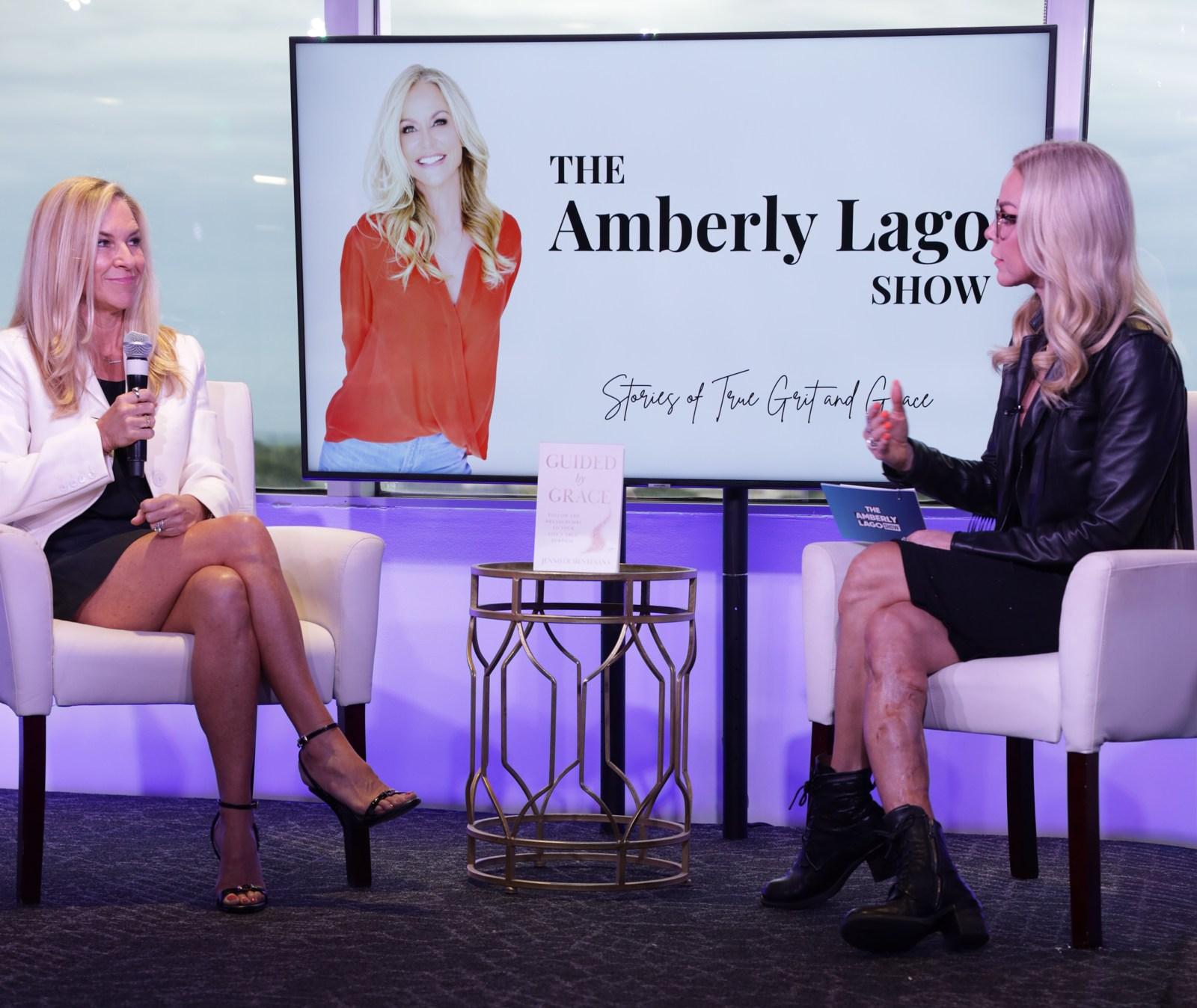
Season 3, Episode 127
Recovering Out Loud with Michelle Smith
A conversation with Michelle Smith

About This Episode
In honor of Alcohol Awareness Month I am excited to bring you a conversation with my dear friend Michelle Smith who is normalizing sobriety in our boozy culture.
Michelle left corporate after 20 years with nothing more than passion, a laptop, and a dream. She is proud to have created "Recovery is the New Black," a digital community that touches thousands. Her passion for maternal mental health emerged after becoming a mother herself. Alcohol became a coping tool, eventually resulting in severe alcohol use disorder. Her unique blend of education and personal experience serves her well in supporting moms postpartum who are reaching for alcohol to cope with the hard seasons of motherhood.
As an educated professional working in the addiction field, she never imagined she would find myself struggling to find a healthy relationship with alcohol. She has learned no amount of alcohol is good for her, and she is far from alone. Addiction does not discriminate, and no one is immune. She went from a depressed, anxious mom using alcohol daily to numb, to living a life of confidence, freedom, and purpose. She recovers out loud to let others know alcohol is not an accessory to motherhood.
Michelle and I talk about how anyone can find themselves struggling with addiction, what to do when you realize you want to change, and why you are not alone if you want to live sober and happy.
Here's what you will learn:
- How Michelle recognized her own harmful behavior (5:21)
- How addiction doesn't discriminate and how reaching for mind altering chemicals to feel better is a slippery slope (12:03)
- Why confronting recovery is difficult but lifesaving (20:31)
- Myths about drinking alcohol (22:00)
- How to let go of shame, embrace change and claim your happiness (27:44)
- How alcohol keeps you from getting restorative sleep (32:19)
- Why accountability was important to Michelle sharing her story (41:53)
What did you learn from this episode? Share on Instagram and tag me at @amberlylagomotivation @recoveryisthenewblack so we can see!
Follow Michelle
Read the "True Grit and Grace" book here and learn how you can turn tragedy into triumph!
Thank you for joining us on the True, Grit, & Grace Podcast! If you find value in today's episode, don't forget to share the show with your friends and tap that subscribe button so you don't miss an episode!
You can also head over to amberlylago.com to join my newsletter and access free downloadable resources that can help you elevate your life, business, and relationships!
Want to see the behind the scenes and keep the conversation going? Head over to Instagram @amberlylagomotivation!
Audible @True-Grit-and-Grace-Audiobook
Full Transcript
Thank you for tuning in to the True Grit and Grace podcast. I'm Amberly Lago, and I'll be sharing inspirational stories of resilience and empowering ideas to elevate your business and your life, ignite your passion, and fuel your purpose. Hey there and welcome to the True Grit and Grace podcast podcast. Y', all, I have such a treat for you. I've been waiting for this day. We've had this on the books for a long time. I have my friend Michelle Smith with us. She is an author, speaker, addiction counselor, founder of Recovery is the New Black. She's brave, she's bold, she is a badass. And she is on a mission to normalize sobriety in our boozy culture. She's dedicated years and years, really, to talking about addiction awareness and mental health awareness. She's been featured on huge shows like the Today Show, Scary Mommy. I haven't seen that one yet. I want to see that one. The Washington Post, Authority magazine. Oh, my goodness, the Zoe Report. There's so much, and she's got so many big things coming up. But we were getting busy talking and I said, oh, my gosh, we got to press record. So, Michelle, girl, I love you. Welcome to the show.
Love you, too. Thank you so much for having me.
Well, you and I were just. We have so much in common. And we were just talking and talking. I'm like, oh, wait, save this. We got it. We got to share this. People need to hear this. Because there we were talking about so much that happens behind the scenes that people seem like, oh, wow, they're an overnight success or, wow, they're just the best selling author and they make it look easier. They have millions of views on that video and they don't see the hard work that goes behind everything that we do. But also they don't know the backstory about where, like, how you got to be the way you are and the grit that has been instilled in you and that passion that burns inside of you that. That keeps you going. And so I want to talk a little bit about where you were before you decided to stop drinking and kind of how you got through that process to where you are now. Because a lot of people think that it is easy. And there is a lot of the behind the scenes healing and recovery and ugly crying and laughing through the ugly cry and all of that stuff. So, so can we start with. With. Well, first, I just want to say something really quick. You said something in an Instagram post. Y' all follow her on Instagram. Michelle Is recovery is the new black on Instagram. And especially if you are thinking you might be drinking a little bit too much or you're just sober, curious, or any of those things. But you wrote you can hide the bottles, you can deny a drinking problem, you can lie to your loved ones, but you cannot hide behavior that was bad. So when did you know? Oh, this behavior is catching up to me. I think I got a problem when
I started coming in the back door and not the front door. The behavior right when I was looking at everybody else's recycling bins in suburbia and couldn't be honest about where all the bottles were going. You know, any little itty bitty, you know, oh, I'm running a little bit late. No, there was no traffic. I just wanted to hit the gas station of a supermarket before I got home. So just little itty bitty, tiny changes in my behavior outside of the norm are things that we can hide paraphernalia in bottles, but we can't hide slurred speech. We can't hide the lack of confidence. And the, you know, depression doesn't always, you know, it's not always invisible. Sometimes it really does show in our eating habits or sleeping routine. And so it's always something to remember. We can convince people that we're okay, but sometimes our behaviors speak otherwise is really what they do.
Yeah. Or, you know, for. For me, I mean, look, I thought I was hiding it pretty well when I was drinking. I was sneaking my drink in to just really try to numb out from pain emotionally and physically. And I look back at pictures of me, and I was so puffy, and my eyes were so red, and I'm thinking, who was I fooling? Well, I wasn't really fooling anybody. I don't think you think you are, but you're not. But, yeah, you're right Behavior. You doesn't lie. Also, I don't know if you've heard this, but a lot of people say, oh, well, you can't smell vodka. You can totally smell vodka. Just so y' all know, if you think you're hiding it by drinking vodka, you reek.
You do. There's no tongue scraper. Trust me, I've tried it. There's not enough mouthwash and gum and coffee.
Right?
I know.
I tried it too, girl. So you started looking around like, oh, gosh, this is a lot of bottles in the recycle bin. I think maybe I have a problem. But then there was something that you did, too. I think maybe you did. Did you Google am I An alcoholic or do I have an alcoholic problem or something?
I did, and you know, I did too. I think everybody has. Because if you're questioning whether or not you have a problematic relationship with alcohol, you've googled yourself and your behaviors, trying to take those online questionnaires and self assessments, because we wanna fudge the answers where we don't fit into that definition, that diagnosis of alcoholism, because that's really scary, especially the way society portrays it. So if we can somehow finesse it and manipulate it into working in our favor, phew. We're not the God forbidden alcoholic that we think we are. And I think that's all it really comes down to is if we're questioning our relationship with an addictive substance, that's enough information to lean in and get curious about why I'm doing what I'm doing. If I'm questioning it, I already know the answer. There's something more to be revealed, so. And that's what everybody. Everybody I've talked to has always done that, including myself.
Oh, yeah, I remember Googling that. I also remember Googling what causes trembling hands, y'. All, Some of you who have never had a problem with alcohol. And believe me, I never in a million years thought I would. I was the goody two shoe girls. I was not the party animal. I was always working hard. I. I never was like that. I was the fitness trainer. And addiction does not discriminate. And I can laugh at things now, like Googling trembling hands. Well, yeah, I was. I was having withdrawal. I needed my alcohol. That's when I got really scared. But, you know, it's interesting, and I don't know if you did this, but I even had blood work taken. And the doctor called me and he was like, do you drink? And I'm like, oh, occasional wine. He's like, well, your liver enzyme levels are 300 times the what they should be. And I was like, the numbers don't lie either. The gig was up. So when was the gig up for you? When you kind of knew. Oh, I think the gig is up. I think I am not fooling anybody, including my loved ones anymore.
Yes, it was the moment that my two worlds collided. I would say my secret life of drinking to completely numb out and escape the own. My own reality, the whole world that I built for myself. All I wanted when I finally reached it, was to escape it all. When that world and my real world collided. I was hospitalized with a 0.43 blood alcohol level to a team of medical professionals that I worked with and woke up with fatal alcohol poisoning to that team working over me in the hospital for the fourth time.
Oh my gosh.
And there was a state CPS worker there.
And tell people what you did. I can appreciate what you did in the kind of the stigma behind like, oh, I don't. I can't have a problem because of my work. There's no way I can have a problem with this because I'm married to, you know, a cop. Well, he's retired now, but he was a lieutenant commander with a highway patrol. So I understand. So tell everybody what you did for a living.
I am a substance abuse counselor. Inside of what I did work in was maximum security prisons.
Yeah, that's what I was getting to that.
It's like I had a background in law enforcement, mental health and substance abuse and knew exactly what not to do. And, you know, a lot of times in the public eye and community safety is number one. And I taught relapse prevention, I taught all of these psychoeducational groups of how substances and abusing them affects myself, people, our bodies, our mind, the community as a whole, and how the people that are in these prisons, 70% of them are it's alcohol or substance abuse related or they were under the influence when they committed the crime that they were incarcerated for. And so I have the educational component and the smarts. I'm educated, I'm smart. You know, I have a career. Why am I falling victim to this alcohol a little bit more than I did before? And so that was really an eye opening experience that I didn't feel comfortable having this space to be open and honest about. Maybe I'm having an issue here, but do substance abuse counselors have issues? If so, where do we go? You know, how is this going to affect my work? Do I have the ability to take time off all of these things of professional, you know, these professional careers of doctors, nurses, pilots, lawyers? Again, like you said, this disease does not discriminate and nobody is immune. But these positions of high stress, high turnover, being of service in the public eye, the scrutiny and it's a lot. And if we're not encouraged or we're not taking care of ourselves and decompressing, it can get really hard and heavy. And that's what happened to me is my whole world became that institution where I would work to gain the financial freedom. I was working double shifts in that prison. And so it's a very corrupt piece of the pie. But when it becomes your whole world, it feels like the whole world is like that. And so I wasn't taking time to decompress. I wasn't taking care of myself. And then I became a mother, and I lost my mother at the same time. And there was grief and loss and postpartum that hadn't been surfaced or diagnosed yet. And so there was a lot of things going on that led to me feeling like I was too vulnerable, and I had too much pride and ego to say, I think this is bigger than me. I think I need help, even though I should know the answer. But this disease strikes to kill, and the stigma is so real, and our culture normalizes excessive drinking. And so when I became this mom, I wanted connection, I wanted friendship. And so what were the other moms doing? They were having pedicures and mimosas. They were sipping on vodka at their kiddo's soccer game. And I wanted to be included. It wasn't peer pressure to begin with at all. And. And little by little, it adds up, and it becomes this, oh, that felt really good. I don't have to deal with the stress that's bottled up in my head today, because I can just have a nice glass of innocent wine, and I'm going to be okay. And it became this reward and a way to relax and then a way to celebrate. And then it just became my new tool, because why meditate and hit the gym when I can sit and watch Netflix and drink a bottle of wine? And so over the years, it just became this progressive thing where wine's the cure all.
I remember thinking, okay, I have tried every kind of treatment out there. I had $2.9 million worth of medical expenses. I mean, I was doing spinal stimulator, all these treatments, and nothing was working. And I remember when I had a glass of wine thinking, wow, why didn't the doctors tell me just to have a glass of wine? That really eases up the nerve pain, and it helps me stuff my shame and my inadequate feelings. And it did, until it didn't. Until I woke up the next day and it was all worse. And it was. My leg hurt worse. There was more shame. There was this horrible feeling trying to figure out what I'd done, make sure my husband wasn't mad, I hadn't embarrassed my kids too much, like. And it was just this cycle, and it was. It was this horrible cycle. And you're right, though. You know, when you're in a position, you're like, well, I should know better. I knew better. I was a fitness trainer in the health and wellness industry. I'm married to a cop. I know Better. I know it's bad. It got a grip on me so fast. And that's the thing that I've heard, and you probably know more about this, especially because you did a TED Talk on recovery and addiction and alcoholism. But I'm sure the statistics are higher now than they were. I think it was, what, one in 12Americans have a problem with some alcohol disorder. I guarantee that's higher. That's pre pandemic. I bet it's higher now.
It is.
But then there is such shame about asking for help. I remember when I told my husband, I said, I think I got a problem. He's like, oh, no, no, no, no, you don't have a problem. No. Because he arrested people. That hit was his idea of what he had a lot of shame about me being an alcoholic. You know, I'm so happy that you have this courage and that you're sharing, because I'm sure there are a lot of moms out there that are sneaking their drinking.
Oh, there is, Yes. A lot. And this isn't even about me anymore. This is. It never was about me or the people who speak up and recover out loud. We do it because people need our protective silence. Like, they don't need that. They need to know that, like, people are dying. People are dying, and people are ODing and committing suicide over this innocent glass of vino that we're encouraging. You know, it's just like this perpetual cycle that they don't need my silence. They need to know that they're not alone, that somebody that looks like you and I, that are successful and, you know, have a great family and we have support and we have, you know, we're grateful to have somewhat of an income to be able to support us and the level of care that we have access to. And all of that can be true, and we can still continue to fumble and struggle. And I think if the more of us that find confidence in our recovery and feel safe enough to be vulnerable can share. Think about how many people struggle, and we just don't talk about it. Right. Because we are stigmatized by. We're not. We're supposed to be this all or nothing. You're a normal drinker or you're an alcoholic. And I love that we're embracing this conversation and saying, this is the face of recovery. You might not have ever guessed it, but your school principal and your doctor and the nurse, some of the best
people I know, I'm like, oh, no wonder I liked you so much.
You're in recovery.
Yes. Well, I want to go back to. Back to the hospital when you woke up. And I don't even. I can't even imagine how you must have felt. I mean, I know how I felt on my worst day of a hangover, but to wake up in the hospital, how much is that? About how much is it to get your blood alcohol to that level? About how much drinking is that to give people an idea?
What I was told was it was four bottles of wine in 45 minutes. I didn't drink because I liked the taste. Towards the end, I drank to get. Get drunk and black out.
So the faster bottles of wine and for. You were chugging it.
I was, yeah.
And same for me. I wasn't drinking it because I thought, oh, this is good. I was drinking it because I was like, this is my medicine. This is going to help me. This is what I. Yeah, that's. You know. Yeah. Wow. I wouldn't have imagined that. But, you know, I have to say, I switched to vodka. It was faster.
You know, people. People ask me what.
I don't think I've ever shared that on the podcast before. I don't even know if my husband realizes that. Sorry, honey. If you're just hearing this for the first time. Well, I mean, thank God I wasn't out there for too long. My ex sister in law who is in recovery, she's the one who called, called me out and it was a big risk that, you know, she could have lost me as a friend or whatever. And she saved my life. I needed somebody to be like, the gig is up. So your husband stood by your side through four times in the hospital. I can imagine there were plenty of times when you woke up in the morning and you're like, what happened last night? What did I do? And he. Were there conversations of, we need to have a talk?
Yep, that was exactly what it was. I would turn just to try to check the temperature in the room to see, okay, are we on good terms? Cause I don't remember, was I good? Was I not? You know, and it's like, wow, what a way to live. And so the gig, like, I felt this emotional, just like shock. How is this really happening right now? But you know what, to be really honest, there was a sense of ease that came over me to say, you know what? The gig's up.
It was for me too. It was. I cried and I was like. I said, yeah, I do want help. It was, it was like. And it was scary. So I walked into recovery meeting. That was one of the scariest things I'VE ever done. I was sitting on my hands because they were trembling so much. Like some, like anybody else in the room didn't know what that was. I mean, I was in, you know, I heard hope. But I want to know what you did next to stop drinking. How did you do it?
I accepted the need for help and went to inpatient treatment. I left inpatient treatment because I was just too darn good for it apparently and felt, oh, you know, I'm detoxed, I'm, you know, got 21 days in me, I'm doing great, I got this now. Well, you know, when you return back home to the same environments and nothing's changed, the same stressors, the same everything is there. But when you shoo away the problem, the problem's supposed to be fixed. And when you realize that not solely am I just the problem, but the environment and the expectations and everything that needed to be adjusted accordingly hadn't been. And so a lot of people, you know, I can understand why now, thought, okay, well if this didn't work, what's left? What are we supposed to do now? And you know, it took about 30 days additionally and I relapsed. I wasn't prepared. And that was the last time that I picked up a drink though after that relapse, you know what it was was people wait for this rock bottom. Because clearly, as you can tell in the story, there was lots of writing on the wall and I had a lot of reasons to say, whoa, you need to stop, stop, you're going to die. That's the baffling part about this disease, is that you just think you can continue to keep going or the natural consequences wear off or there's always somebody else worse off. And for me it was just, I woke up this day and I just said, I can't keep living like this, I can't do it. My parents are both gone. I know what it's like to not have parents when I am trying to navigate some really hard seasons of life and I lost them too early. I am doing this to my children. They're not going to have their mom. And that's not fair of me. As you know, this disease is so selfish and it was all about, I'm not hurting anybody, nobody's being impacted negatively by me choosing to take care of myself as a self care tool. How in denial is that? There is nothing about wellness and self care and self love by ingesting a mind altering chemical that we put in our gas tank as cute and funny and relatable as it sounds, if we were to shove five cigarettes in your mouth, people wouldn't think that's funny, right? It's not. And if I were to tell you anybody, I have 30 days that I'm free from cigarettes, people would say, congratulations. They wouldn't say if it was alcohol. Are you pregnant? Are you okay? Are you a drunk? Are you an alcoholic? They wouldn't say that. And it comes back just to feeling safe enough from a society standpoint to feel like we can be vulnerable and that we don't have three heads and that we're not going to contaminate you with this and we're not going to spread this to you. Just find some compassion that I'm not out partying, I'm not out sleeping around. I don't love this life. I am miserable. I am sick. I don't love anything about this. I was ruining my entire life and all I wanted to do was stop. And I didn't know how. The fear that goes behind that it's too late and you've done too much damage is so overbearing. And that's why recovering out loud is so important. Because look at us. Recovery is possible and we can make a mess our message and find that pain into purpose and show others that as fast as we can nip this in the butt and address it when it becomes problematic. The more you can move on with your life instead of being dependent where then, you know, you're so dependent that you just can't escape it.
Yeah, that's powerful. And it was, I feel like, you know, it was your decision, like you decided, I want to quit. I think once you decide and you have that willingness, it's one thing and then you're like, okay, but I need real self care. I need to address the trauma of losing my parents. I had postpartum depression. I was seriously like a crazy person. My husband at one point was like, you need to go see the shrink or we're done. Like, you are driving me insane because you. I was like, those hormones are powerful. And so dealing with all those things. So you went to a treatment center. You left the treatment center. You had a relapse. When you got out of the relapse, what did you do to stay sober? One day at a time?
I went straight to the rooms.
Yeah.
Committed to showing up. I deserved my seat. I was going to sit in my seat and I found the similarities versus the differences and listened. I was teachable. I didn't know it all. And if they're doing it I can do this, too. And that was my first. Taking action and being willing to. To know that I can't do this alone and it's a power greater than me. And that I don't have to feel shame around this anymore because there's a reason that I'm going to discover and uncover for why I did. And I'm doing what I'm doing. And once I can love, heal, forgive, accept, acknowledge, I can grow from this. And I remember waiting for my five years, sitting in my closet, the last drink that I had, just shaking and bawling and just suicidal. I'm going to make something of myself. I don't know how, I don't know where, I don't know when, but I don't want anyone to feel this way. I don't want any other mom to feel so depressed and so alone when this should be the best season of their life. And I looked at my vision board of five years recently and just. I was just amazed at how far I had come because I chose me. I chose to not give up, and I chose to not do it in secret like I had been doing, which was the biggest piece, because I didn't want to be vulnerable. You know, I just. I was too much about what people think of me. Guess what, Michelle, they're talking about you. Regardless, give them something to talk about.
Well, so how much recovery do you have now?
I'm going on six years.
That's amazing. Wow. And how did you get. How did you let go of some of the shame? Because for me, there was a lot of shame at first of like, oh, there's something wrong with me. Ooh, there's. I felt like there was this, you know, stick. There was a stigma and it was. And, you know, especially living with a cop who had some shame about it too, you'd be like, don't talk about that. Don't talk about. Don't let the kids here. Don't let you know. And so it was very hush, hush. How did you start to let go of shame and embrace your new life of sobriety?
My husband was the opposite because I was trying to keep it a secret. And he was like, I'm sorry, the neighbors have a safety plan. They're gonna know. I'm not hiding this because it's not helping. Right. And so it. By default and working through the resentment on what he did, it wasn't a secret anymore. Everybody knew the gig, the gig was up. And so in addition to the treatment and the counseling or in the aa, I went to Counseling. And we really worked on the shame piece of it and meeting, you know, the relapses with self compassion. Like I would if you were to relapse, like if you were to tell a friend, like, just pick yourself up, take the lesson, pocket it and move forward, forward. That you're either learning or you're winning. And so when I started seeing that, the guilt and the shame and the difference of I feel bad for doing something, but the shame is I am a bad person because I did it. And so I was owning the behavior, I am a bad mom. No, Michelle, you are a really great mom and you make really bad choices when you're under the influence. Right. And so separating.
What a difference. Yeah.
And so meeting myself with self compassion, the relapses, and it really stopped the spiral of self sabotaging and said, okay, how do you, how do you pick yourself up again? Right. How are you going to love and nurture yourself and learn from this experience and continue to keep healing? This recovery journey is not linear. You're going to ebb and it's going to flow. And you have to understand that it's an emotional roller coaster, especially the onset of early sobriety. And so buckle up. It's a non negotiable. Nothing requires a drink. That conversation is off the table. We're not going to do the devil and the angel. Am I going to drink? Am I not going to drink? It was completely removed from the equation. And so I had to sit in the discomfort of knowing that I couldn't drink. And how am I going to be able to be okay and sit through that, knowing that that's uncomfortable and it's still not going to hurt me.
Okay, so how do you, how do you now you've got, you know, all this time under your belt. Do you ever feel like having a drink or ever feel like, oh, I'd love just to have that relief, that, that glass of wine looks good. That lady across the restaurant's drinking, that looks kind of nice. Or that cold margarita sure sounds good with this Mexican food. Do you ever feel like that?
Yeah, I do. And it's distorted thinking, it's irrational beliefs because guess what? All of us use substances because of one thing. It feels good. I have this false belief that it tastes good, it makes me sleep better, it eases my anxiety. And so what I do when I see that lady drinking a margarita, I look at all the people who aren't drinking because my mind automatically goes to, I'm the only one in here sober. How ridiculous are You, Michelle, that you can't get your stuff together and so challenge those beliefs. Do I really feel less anxious? No. I feel more anxiety in the morning. Right. I don't sleep better because you can't get into a REM sleep. You just pass out initially. And so when I slowed down and really collected my thoughts and my beliefs around drinking and challenge those with honesty, the game changed because those things weren't true.
Yeah, that's such a good thing to do, is look at the people who aren't drinking. It's all about your perspective, and it's all about what you put your focus on. And then that REM sleep, I've been fascinated with it lately. I've been trying to really get good sleep. And so I even wear this ring that measures my REM state and all that. And I didn't realize that with alcohol that you don't have any REM sleep
and people can't find their natural sleep rhythm. And that's one of the things.
Crazy. And yet, you know what? When I was drinking, I never slept through the night, ever. I would wake up in the middle of the night every single night, and I thought, you know, well, a lot of times that's your blood sugar crashing and your body craving more sugar or something. And. Yeah, but wow, I didn't even realize that about the. So REM state is where you are recovering. So you're basically not getting any real recovery when you're drinking for your subconscious mind.
Right.
Or heart. Your body either.
Yes. And you're so restless and initially you feel like you are because you do black out or pass out initially, but it's not. You do not have a maintenance sleep. You do not fall into a restful sleep. Sleep while you're under the influence. And so whether you think you're going to the bathroom or you're nauseous or you're sick or whatever, your anxiety and shame are getting to you. And that's what's so hard about trying to find a way of, like, can't sleep now. Your body has been fighting. It's such a smart piece of machine that if you honor it and love it, it's going to treat you back with the same respect in return. And so it has to learn to fight in a different capacity than it had to before. So it's trying to figure out how it needs to work again. And it's reregulating itself. And that takes time and it takes patience. And sometimes it takes medication or melatonin or white noise or yoga or no, Screens. But if we continue to stop the sabotaging of early recovery, regardless of what it is that we're using, is that we fight it. Because it's so hard that we never get to see the true gifts and how wonderful it is. We just see the hard withdrawals and the emotional sobriety that comes along with it, because it really is that hard. But if we stick with it so much as discipline with anything that we do, right, nutrition, you know, working out, positive affirmations, if we continuously do something on the repeat, it is going to become an activity and a habit that we do subconsciously without even thinking about it.
Well. And you know what, though? Now I think that we are trained as a society. Everything's a quick fix. There's no delayed gratification. Everything is quick. I mean, you want a package, you click it on Amazon, it comes to your doorstep the next day, you got whatever you, you know, new pair of shoes, new book, whatever it is, you, you want sex, you watch porn like that. I mean, everything is a quick fix. And I think that's what's hard, is sobriety is not a quick fix. And it's a constant, like you said, ebb and flow. And it's really getting, you know, used to being uncomfortable and in dealing with it and using different tools instead of grabbing a bottle to deal with it. And it's hard at first because I had realized, you know, I was stuffing down emotions from back when I was a kid, I just stuffed and stuffed and stuffed. And I think the first year I was in recovery and sober, I don't, I think I cried almost every day. But I love that you share that. You, you know, you got in the rooms, you went to therapy, you worked on yourself, your relationship, self care. What's something that you would suggest for somebody to do right now who might be listening to this and going, oh, geez, you know what, maybe I should try staying sober and see if I can do it. Maybe I have a problem. You know what, what would be a first step for them?
It would be, is to don't Google yourself. It's really just leaning in and getting curious about your own professional, like your own personal relationship with alcohol. And so don't look for outside feedback into asking people who you drink with socially if you have a problem because they're going to tell you no, right? So if you're asking yourself and you're curious about your intake and possibly wanting to cut down test drive sobriety, take it for a spin drive and see if it's for you what that can look like is Google. Sober celebrities get into Facebook groups that are in recovery. Search hashtags, download podcasts on recovery books, audibles. I truly believe that if you fill your mind with sobriety, drinking will never be the same. And so if you start to really understand what this does to you and your body and your mind and your family, it's never the same. It's not about you being. It's not the selfish thing anymore. It is such a bigger disease and it's so much more dangerous than we are able to giggle off in a Facebook meme. Right? It's very innocent until it's not. And so you don't have to tell anybody, you don't have to talk about forever because that's a really long time. And don't label yourself as anything more than curious about where you and your relationship with alcohol stands. And if you start making a promise to yourself and saying, I'm just going to start to moderate or I'm only going to drink on weekends and you feel find yourself breaking those promises, that's information, right? That you maybe are having a little bit harder time breaking free. Whether it's excuses because there's a wedding or your best friend's in town or you're grieving a death that was unexpected, guess what? Our lives are always going to be that way. It's never going to change. And the more you continue to justify and allow this substance to be a part of your life, especially when there is an emotional component to it. So if you are starting to say, well, this is a staple when I celebrate, this is a staple when I am sad. This is the only way that I know how to unwind or re regulate after a fight with my partner. It is slow and steady that this is pushing out the things that were working and filling it with this artificial synthetic substance that will promise you the world and will always under deliver. And that's how the addiction starts. This is an addictive substance and anyone will become addicted if they are not careful about their consumption. It sneaks up on you faster than your head will spin.
Oh boy, does it ever. I mean it really snuck up on me. And so just a couple of more questions for you. I wondered how long were you in recovery before you started talking about it openly on social media? And you hear in the rooms like, oh, you don't, you don't want to talk about this, you don't want to talk about that. Certain recovery groups, which I understand the reasoning, what made you decide to really start talking about it and how much sobriety did you have before you started talking about it on, like, social media?
It was two years. And the thing that was holding me back was people are gonna know, and that's okay. Right? And so I think at first it was the accountability, and what if I relapse? And I don't honestly want to stop, and I don't want people to police me and people to hold me accountable. I'm an adult, and so those are the kind of things that were running through my mind. But really, I need the accountability. I need the love and support because I want to be here for my kids. And that's vulnerable. That's like. That's. It's really hard to have to be an adult and not be able to trust yourself alone. And so that was really the pivotal moment for me was like, the cat has to come out of the bag because I'm a very private person. And I get a lot of that from just working with the law enforcement field, is that you just don't share a lot. And so everything was just really hidden and really secretive. And so I really was looking at everybody else, though. Like, I see people struggling. I see that girl in her yoga pants running into the mini mart, grabbing this $2 bottle of wine to go chug it, right? She's me. I'm her. And I struggled because I had the ego, the pride. I didn't feel comfortable and confident to share. And now that I'm sharing in recovery circles and groups, I'm surrounded by all these people. And I don't want these people struggling to think like I did, that they're alone. And that was my motivation. This isn't about you, Michelle. Push everything else aside is that somebody needs to hear that they're not alone in the struggle and that there's nothing wrong with them. And that with some support and love and unraveling why you're reaching for this, more so now than ever, can turn their life around. This isn't about shaming or saying that alcohol is bad. I am not anti drinking, but I am not going to live in this shell that is telling me that I can't be pro sobriety and I can't show my kids what sobriety is and share a cup with them without fear, that this is mommy's cup and this is the kiddos cup, right? I'm going to go through really hard times, and I'm going to make it out on the other side a more resilient, a better individual and mom, because I worked through it instead of Numbing myself to pause it and have to come back later. And so it's really for other people to know that again, they're not alone. And we can do this together because we're stronger. And I think the biggest piece for me is that I'm not here to convince society that they need to accept us. It's about empowering people to be able to be brave and vulnerable enough to say, I am a person in recovery and I'm damn proud of it.
Right? Amen.
And the more people that are like, mocktail, please, or I'm a non drinker or no, thanks, I quit to become normalized where they're not chastised and made fun of because it's pretty cool to be a person who doesn't drink, smoke, or eat meat like me. And I'm proud of all of those things. And they might not be for everybody, and that's okay, but we don't need to shame people for it either.
Well, it's funny. I'm just giggling because even the doctor today. So as you know, because we had to push our time back a little bit, you've been so flexible with me. I had a doctor's appointment today and he's going down the list and he's like, you smoke? No. Ever? I'm like, no. Do you. Do you drink? No. He goes, ever? I said, no. He goes, no, seriously, ever. And I'm like, no, I'm sober. And he goes, oh, okay. So why. What? How much were you drinking? And why were you drinking? Oh, my gosh, girl, I'm so glad you were able to push this time back. I was at the doctor for an hour and 45 minutes. I mean, I don't know. He was asking me a lot of questions. You just never know who you're going to touch when you start to share that you're in recovery or that you're. You want a mocktail? It's something I'm proud of now, but it took me a long time to get there. So thank you for those words. And. And I know it's going to encourage a lot of people to, you know, embrace their vulnerability, to really have courage to start speaking up. Because it does save lives, and you are saving lives. And I've told you that just how much your Instagram post mean. I mean, those reminders of y'.
All.
Check her out again on Instagram at. Recovery is the new black. Because constant. Not just like informative stuff, but some funny stuff that we deal with too. So you give. You do both the, like really, like, y' all need to hear this statistic. And also some funny stuff, too. Like stuff that we hear all the time. So I know you've got big things coming. Can you share with us some exciting news that's coming up for you and all your hard work and everything that you've been doing is. Is your hard work and always says, put you where your blessings can find you. So tell us what's going on now.
Yes, absolutely. So I am building a couple new programs for women who are just kind of sober, curious, and then working on the mindset because I think it's such a big piece to the journey and then being able to funnel into. Let's explore it, let's test drive it together as people that are just curious and have that platform to do that. And so. And then I'm going to be reaching out to the families that are affected by addiction. How can we support them? Which I think is a huge piece because we're all in this together. And so that is happening. And then I am doing a couple keynotes that have been scheduled for 2022, which I'm super excited about.
That's awesome.
Yes. Those have been on my vision board forever. It's like, what do I know who's going to talk? You know, what does somebody want to hear from me? And it's like, stop that negative self talk. And so I have those going on. I have a few books that are going to come out this year that is still in the works, but should be good to go. So that will be coming out as well. And then a really cool project I'm working on is really bridging the gap between sober professionals and employers. We're getting the second wave of the people from the pandemic, creating new habits and routines. And now these people are going back to work. And what does that look like? And what type of wellness is there in today's workplace? And so doing some contracting and consulting with some Fortune 500 companies and being able to go in and educate them on addiction awareness and how we make sure it's an inclusive workspace and that everybody feels safe and supported, regardless of if they're in recovery or contemplating recovery.
Oh, that is incredible. Well, also, y' all check out her TEDx talk. Tell everybody where they can look to see your upcoming books this year or maybe get a ticket to see you speak in person and the best place to find you so they can watch your TED Talk and everything.
Yes. So recoveryistheny block is where you can find me on all my social media platforms, and my website is recoveryisthenew Block as well. So everything's pretty pretty hubbed into that location of where you can find me for upcoming events and and all of my platforms as well.
Well, thank you so much for sharing your experience, your strength and your hope and your heart. And I just think you're doing amazing things. And you sure help me stay sober one day at a time, too. Just getting to know you. So thank you for being here, y'. All. If you liked one part of this, take a screenshot of it. If you liked one part a little more, take a screenshot of that. Tag us @amberly lagomotivation on Instagram and tag michelle@recoveryisthenew black on Instagram as well, so we can see it and share it in our stories. And thank you for tuning in.
Thank you.
Pain to purpose to joy.
Never Miss a Conversation
New episodes drop regularly. Subscribe on your favorite platform and never miss a conversation.