


Season 3, Episode 131
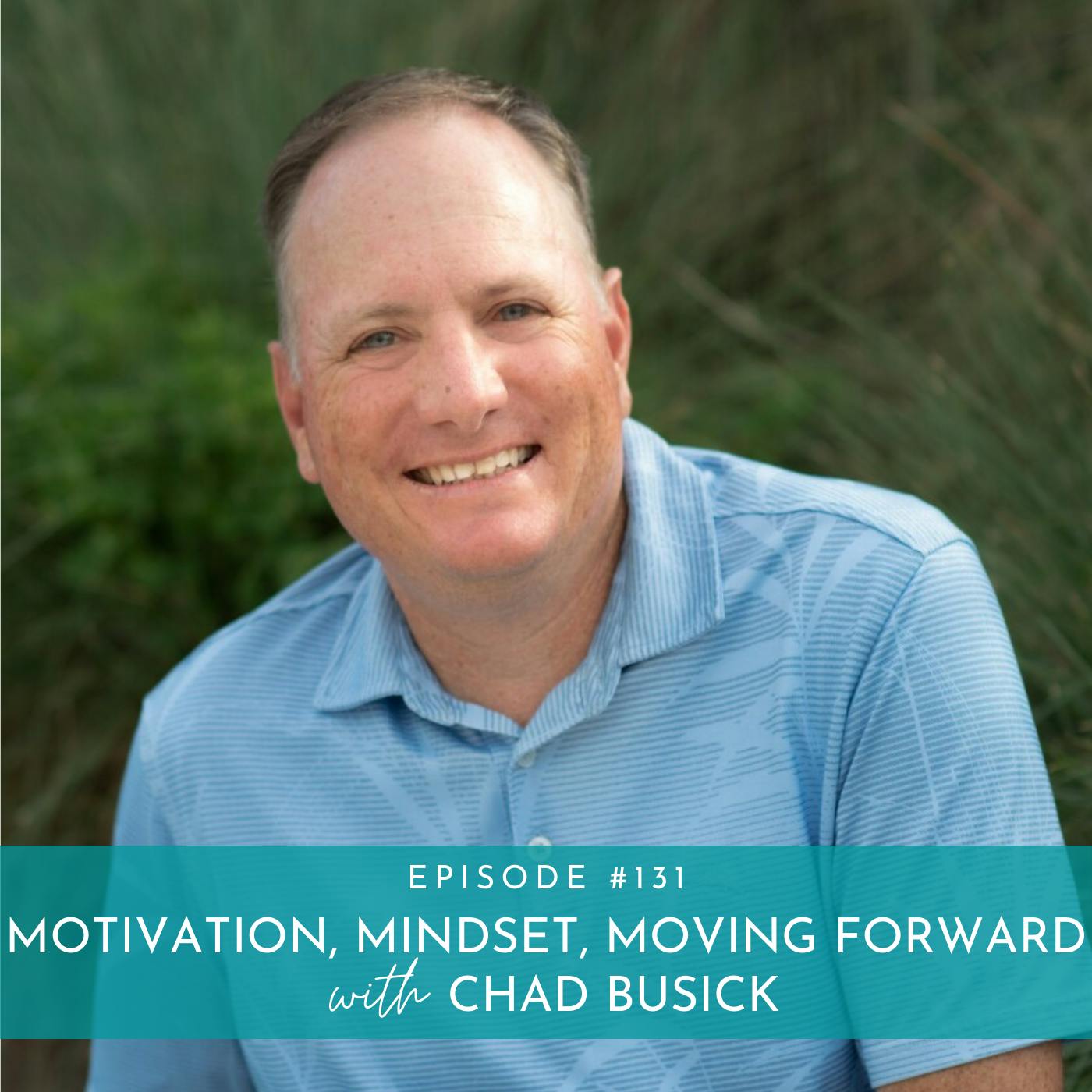
Motivation, Mindset, and Moving Forward with Chad Busick
A conversation with Chad Busick
About This Episode
I got to talk to one of my good friends on the show about some of my favorite topics: mindset, motivation, resilience, and thinking like a champion. These are all key parts of living with grit and grace.
Chad Busick was born and raised in Southern California. A former collegiate soccer athlete, he graduated with a B.S. in Psychology and is a Master Facilitator with Advanced Sports Technology and a Power of Positive Leadership Facilitator with Jon Gordon Companies. Chad is also the author of The Rock Tumbler: 16 Life Lessons to Conquer the World by Becoming Who You're Meant to Be. He holds a U.S. national D coaching license with US soccer. Together with his wife Jennifer, he is the father to two daughters. In his free time, he golfs, wakeboards and scuba dives.
In this episode we talk about the powerful lessons he has learned through coaching sports about what success and failure are here to teach us. He shares frameworks and mindsets you can use to change your motivations and become a champion.
Here's what you will learn:
- Why Chad started his mission to help athletes (4:19)
- How to develop the mindset to be motivated and move forward (8:33)
- What is behind the Christlike mindset formula (13:42)
- How to learn to adjust your attitude (17:27)
- Why stress is important to our growth in life (26:42)
- The importance of vulnerability in your journey (32:35)
- How feeding coaches feeds athletes (43:15)
What did you learn from this episode? Share on Instagram and tag me at @amberlylagomotivation and @championshipmindsetllc so we can see!
Follow Chad
Links mentioned in this episode:
- The Rock Tumbler
book
Read the "True Grit and Grace" book here and learn how you can turn tragedy into triumph!
Thank you for joining us on the True, Grit, & Grace Podcast! If you find value in today's episode, don't forget to share the show with your friends and tap that subscribe button so you don't miss an episode!
You can also head over to amberlylago.com to join my newsletter and access free downloadable resources that can help you elevate your life, business, and relationships!
Want to see the behind the scenes and keep the conversation going? Head over to Instagram @amberlylagomotivation!
Audible @True-Grit-and-Grace-Audiobook
Full Transcript
Thank you for tuning in to the True Grit and Grace podcast. I'm Amberly Lago, and I'll be sharing inspirational stories of resilience and empowering ideas to elevate your business and your life, ignite your passion, and fuel your purpose. Hey, thank y' all for joining in. I have a good friend of mine on the show with us today. Chad Buzik is the owner of Championship Mindset. He's the author of the Rock Tumbler. He is a mental toughness coach, and he's worked with college teams, high schools, competitive teams, but he's also a pause. I mean, he's also an incredible speaker. He's a member of the John Gordon speaking team. John Gordon has been on the podcast before with his wife, Katherine Gordon, and they're good friends, and so he just delivers such positivity and such value for if you're struggling, having a hard time with challenges to give you the formula to develop your mental toughness. He's got a podcast, and he is doing amazing things in the world. So thank you so much, Chad. Thank you for being here, Amberly.
That is an amazing introduction. I just hope to live up to part of that, but I'm so excited to be here with you.
Hey, look what I have.
Look at that. Showing off the book already. What a great lead in. Love it. We've had some amazing conversations, so I'm excited to share with your listeners just more of what we do.
Oh, my gosh. I had to put your book up the Rock Tumbler. Chad, I love your book, and I have loved just learning more about you and loved being on your podcast. And the reason I'm holding up your book like this, so proud. Like, if y' all are listening on Apple or Stitcher or in Spotify, you can go on YouTube and see us talking together. I'm holding this book up because we just moved to Texas and we're not settled in quite yet. Not yet. But I was like, I have to have the Rock Tumbler. I got to find that book out of the boxes, and I found it, so I'm so proud, and that's why I'm holding it up. But the first time I talked to you, I was just so touched by all that you shared. And when we had a conversation on your podcast, and I was like, man, I got to get you on my podcast. And to know that you are, like, with John Gordon, doing good things with him on the positive leadership, and you develop this whole championship mindset mindset. I think so many of us need that Right now, it doesn't matter if you're an athlete, if you're an entrepreneur, or if you're a mom, like struggling to get everything done. Like we need that championship mindset. But first I wanted to ask you, how did you start to develop this and how did you know that it was something that so many of us would need?
Yeah, that's a great question. And I don't know if we have enough time in the episode to cover all the stops and starts and the detours and the U turns that I've gone through in my life, but I'll give you the short version of it. I knew coming out of high school that I wanted to work with high level athletes on this mental side of the game. And so I got my degree in psychology, went to Cal Lutheran University out here in California. After that, I wanted to continue that education and move on. But at the time, the sports psychology field was really in the kinesiology or in the physical education. This is, you know, several years ago. And so I got married and I moved to San Diego. There was a small school down here, University of Humanistic Studies in San Diego, where you could get a master's in marriage and family social work with an emphasis in sports psychology. So I went for it. I came down here and a year and a half into the two year program, the school went out of business and. Wow.
Are you serious?
Yeah. So they went out of business and it was just the beginning of all these stops and starts that happened. And so they gave me two options. The state of California said, you can transfer your units somewhere else, but I wouldn't have the emphasis in sports psychology or they could give me my money back and I could go do something else. At that time I had met some people and got into sales and went in and had a very successful career in sales for 10 years.
So were you, you were in the corporate world for a while, weren't you?
I have been for 20 years, 20 plus years. So I spent 10 years as a high level account executive, one of the top account executives in the country. And then the mortgage industry completely fell apart. It was during that time when I was at the mortgage industry, I met a mentor of mine by the name of Jim Madrid, who is the founder and CEO of Advanced Sports Technology, AST and had this curriculum and it kind of connected me. Back when the mortgage industry went away, I went into another sales career and I went back to coaching. My kids were getting older, I have two daughters. And so I started coaching soccer again and their teams and spent 10 years coaching competitive soccer and it really connected me back to sports. I got connected back to Jim at ast and we really kind of. He developed the seven fundamentals of mental fitness. And so after about seven years ago, I stepped away from that coaching and started really just working with players and coaches and teams on the mental side, sports. And it was through that, that just in reading and continuing my education and that I got connected and I just found myself sharing over and over again the messages, the stories, the books of John Gordon and just I just quote after quote and so it led me.
I love John. Oh my goodness.
It's been amazing.
And you know what? I actually walked in on my daughter reading a book and it was John Gordon's book. And so I took a snapshot of that and I sent that to Katherine and I was like, I am so happy right now. My 13 year old is in her room reading your book and not on TikTok, not on Instagram, but reading your book. So I. He's doing amazing things and. Yes. So go on. I'm sorry, I just had to say that.
So what. It led me to reach out to him. And so I became a certified trainer with the power of positive leadership. Just working with coaches and I've done it with schools and businesses and just a lot of different people. And it's led me to where I am today, which is now a member of the John Gordon speaking team. And I'm so excited about the opportunity moving forward. He's doing such amazing work and the team that he has around him and so I'm excited to continue that and to deliver this message that's so important. It's been a tough couple of years and I mean, even if you just take Covid out, but then you bring that in, it's been really, really challenging. So equipping people with skills and tools and ideas to help them not just go through what we've gone through, but actually grow through the challenges that we face in life.
Oh, it's so important. And it has been a tough couple of years and there's always going to be challenges. Always. It doesn't matter. Covid or no Covid or, you know, things are constantly changing. How do you develop the mindset to get through the kind of change that seems so hard? And some people get so stuck and they get in fear. I mean, I think we've all been there where we've been in fear and we're like, I don't know what to do. How do you start to develop the mindset to get motivated and then to take action, to keep moving forward.
Sorry, it's a great question, and I think where I would go with that is. Is talking about the rock tumbler, because I think it's such a great analogy. I mean, the book itself is. It's a very short. It's an illustrated fable that follows my two friends, Chip and Corey, who are two rocks that I find on a run one day. And basically, and I admit, Amberly, we have to do some education because people may not know what a rock tumbler is. So a rock tumbler is this machine where you put rocks into this cylinder, you add water, and you add grit, right? True grit and grace. You add grit, water, you put them in the cylinder, you close it, and it spins on this machine 24 hours a day, seven days a week. And you go a week, and then you take them out, you rinse them, you clean them back in the cylinder, more grit, more water. The whole process takes over a month. And what we find, and I really use this as an analogy that when you think about the world that we live in right now, it feels like a rock tumbler, right? That's really what we are in, is this rock tumbler. And when we. We love the peak moments, those highlight moments. My daughter just got married in December.
I saw that on your Instagram. It was beautif.
It's amazing. And we love those moments. But when we really break it down, we spend the majority of our time either heading into a rock tumbler in the midst of a rock tumbler or coming out of a rock tumbler. Very few moments in our lives are spent in those peak mountaintop moments, and we need to celebrate those moments. But if we're going to spend that much time in and around the rock tumbler, we need to change our mindset towards that. See, the circumstances in our life, they either tear us apart, chew us up, and spit us out, or they can shape and mold us into the people that we're meant to become. And I think that's really the message that how we set our mind to those circumstances. I mean, take your story, your amazing story, right? And that's why I wanted you on our. On our podcast and had you on there as well, because those circumstances, you didn't ask for that. You didn't have a lot to do with those circumstances becoming part of your life. But how you chose to handle that, how you chose to approach it, has shaped and molded you to the person that you are today. And I think that that is the mindset that we need to adapt. And I love this idea that when we look back on these last two years for Covid, there's a lot of people in the world that have just gone through this.
Right.
And it's not about just surviving or just getting through it. Right. That we could actually grow through these moments. And now the people we're seeing. Take Zoom, for example. Right. Prior to Covid, I had only ever done two Zoom sessions with teams. Now I'm doing them all over the place. We're doing virtual Zoom keynotes. We're doing, you know, Zoom training sessions with groups. That's a new skill that we've learned and we've adapted through that. So I think to me, that is that mindset that we don't have control a lot of times of our circumstances, but we always have control of how we respond to those circumstances.
Yeah. And you know what? Sometimes when you're going through those really hard times or it's just challenging, and you always hear, you know, oh, there's a gift in every challenge, but there actually is. There are gifts in every challenge that you go through. And. And I have actually found many gifts in actual Covid, which, you know, there's been many hard times. And I was sick for a month and it sucked. And I am so sorry that so many people have had so much loss during COVID but there are a lot of blessings in it too. Like for us, we decided to move to Texas and. Or like, wow, I can work from anywhere. And actually I can work easier from Texas because I can travel. I'm more central, and I'll get to be around family. I think it's a way to really put things in perspective to what's important. And I was like, you know, family and being around family is so important. And so there are blessings in every challenge. But I remember when I had you when I was on your podcast, actually, and I was just talking to you and you sent me your book. I was so just amazed by. You have this formula that you've developed for a Christ like mindset, which I love, and a championship mindset, which I also love. But I'm a kind. I'm the kind of person that I need, like a formula. I need a quick fix. I need something to snap me out of. Okay, why am I feeling like this? Why am I feeling depressed? Why am I feeling tired? What do I need to change? And so when you sent me these, I saved them, by the way. I love these. I love them. But. And I'm showing them on YouTube right now, can you walk us through how you came up with, first of all, the Christ like formula, and walk us through that formula? Because I know there's a lot of people out there that struggling, and I mean, there's a lot of times where I'm feeling like I'm struggling. Every day is different. So can you walk us through, first of all, how did you come up with the Christlike mindset?
Well, I'm going to have to take a step back a little bit because to give you a little bit of the background to bring that. So the idea behind the formula, the championship mindset formula, was really in the work that I do with teams, coaches and players, and that I believe that champions act and behave like champions long before they ever become champions. And so really what I was after is, what's the DNA? What's the makeup of a champion? And so I started kind of playing around with it a little bit, and I settled on this championship mindset formula, which is talent plus hard work plus attitude plus mental toughness plus teamwork plus passion. Right? So that's the top part of the formula that stays consistent regardless of whoever we're working with. And then the bottom part of the formula is divided by one, so that changes a little bit. If we're working with a sports team, for example, if we're working with baseball, it would be one season at a time, it's one game at a time, it's one inning, it's one at bat, it's one practice, it's one pitch. It's everything that we do. And then beyond that, what's not on the formula is just as important as what is on the formula. Because if you look at the formula, nowhere on there does it say anything about the number of innings you pitch, home runs, goals that you score, what the title is on your business card, how much money you make, any of those things. Because I believe that everyone can have a championship mindset, regardless of the role they play on the team. Right? So that is the second thing. The third thing about it is that while we talk a lot about sports, I believe that this formula is the formula for success in all areas of our lives. If we want to be great husbands and fathers and mothers and wives and great in our careers or great at anything that we want to be great at, at the end of the day, it's our talent, our hard work, our attitude, our mental toughness, our teamwork and our passion into everything that we do. Okay? So I created the formula. I started sharing the formula out with some of the teams initially. And then something crazy happened. I happened to be reading through Romans. My faith is very important to me, and we can talk more about that. But I came across Romans 12, 10 through 13. Let me read this to you and just watch how closely this comes together with the formula. Okay, so it begins. It says, be devoted to one another in love. That's your talent. Honor one another above yourselves is your teamwork. Never be lacking in zeal is your hard work. Keep your spiritual fervor. Serving the Lord is your passion. Be joyful in hope. Patient and affliction is your attitude. And be and faithful in prayer is your mental toughness. That's all the items exactly laid out on the top part of the formula. And then we even go a little bit further, and it says, share with God's people who are in need and practice hospitality. Well, that is the bottom part of that formula. That is in our work settings, in social, in sport, with family, with friends, believers, non believers. It is every interaction, every person that we encounter at a time. So it is a Christlike mindset. And it just floored me, Amberly, when I read this, I am like, oh, my goodness, Lord, this is amazing. I created this formula, and then I'm reading, and it matches up item for item perfectly with the verse. And so, yeah, I'm fortunate. A lot of everybody I work with gets championship mindset. But I've had an opportunity to work with some, you know, Christian colleges. And so in addition, they get the Christlike mindset as well. So that's a little background about how I created it and how it came. Came to be.
Well, it's amazing when you think about, like, putting all those things together. And then the thing that I like about it is that when you. I like to see. I'm a very visual person. I learn by seeing something. And so you sent me this card that has the talent, the hard work, the attitude, the mental toughness, the teamwork, plus the passion. And so for me, I can look and see if I'm struggling in one area, what I need to work on more. Like, where's my talent and how do I improve that? Where's the hard work and how do I work harder? Where is my mental attitude? So I want to go to, first of all, to the attitude, because that's where I think a lot of things start to shift, because I know for me, and even dealing with teenagers or, you know, my oldest daughter's not a teenager anymore, but my youngest daughter's a horseback rider. And we've talked about this her whole attitude matters when she gets on that horse. If she's having a bad day, the horse feels it. What is something you would suggest to somebody to adjust their attitude to a more positive one?
Yeah, that's a. That's a great question. And I think I would answer that by sharing a story with you because I think stories always resonate really well. And so I'll kind of share this story and group attitude and mental toughness together a little bit. So you were mentioning about your daughter. I've raised two daughters. My oldest is 23. My youngest is a sophomore in college, and they were both athletes and fortunate to play at the college level for soccer. And so my younger daughter, Morgan, a few years ago, she was a sophomore in high school, and she was playing on the varsity team as a sophomore, and she's starting as a sophomore on the varsity team. And she was playing, playing outside defender, which is the position she enjoyed the most. And early on in the season, the coach moved her to center back, center defender, a position that she's never played before, and she wasn't really happy about that. And early on in the season, one of the early games we were playing, I live out here in San Diego, so we're playing down at Coronado, and in this game, in a position she's never played, she was just matched up against a player that was bigger, stronger, faster, senior. She was just better. And early on in the game, girl gets the ball about midfield, touches it around my daughter just blows right past her into the box, shoots and scores a goal. About 15 minutes later, same girl gets the ball right at the top of the box, does this fancy, like, step over turn move. Practically breaks my daughter's ankles right there on the field, like, leaves her in a heat right in the box, shoots and scores again. And now as parents, we're thinking, and you could see she's deflated. We're like, oh, my goodness, like, just crazy what's going on. But how we handle those moments, how we help our kids through those moments means everything, right? So after the game, the coach comes up to me and says, you know, Chad, Morgan's not feeling very well. Her stomach's upset. You know, she wants to retake her home on the bus and so she doesn't have to ride on the bus. And I said, sure, she can ride with. Now, I don't know about you, Amberly, but you can probably tell how your daughter feels about how she rode or how she felt about her competition just by the way she walks to the car, right?
Oh, yeah. And you know what? More than that, it's usually like. It's either some ugly crying, like snot coming out of her nose, or. But yes, you can feel the energy. You can tell how they walk. Yes.
So she's got her backpack on, soccer backpack on. She's walking with her mom and I to the car, and she's just got this upset, mad look on her face, and she just march into the car. She gets to the car, trunk goes open, flings her bag in the back of the trunk, slams the trunk, gets in the back seat, folds her arms, and just like this. Well, I get in the front seat, and my wife's driving, and I. I think a little differently. So I turn to my. To Morgan and I say, what a great game. And she looks at me and she's like, dad, are you serious? Did you even watch the game? Did you see me out there? That girl made me look so bad. And I told you I can't play center back. Why is coach making BP play center back? I want to play outside back. And why is this? I don't want to do this. I don't. Da, da, da, da, da, da, da. And I just kind of let her go. She's like a fish hitting the lures like this is off. She went, yeah. And then I just looked at her and I said, yes. And look how much better you got today.
Wow.
Look how much you improve today. And, Morgan, here's the thing. You're so focused on those couple. You actually learned in this game that you had to give that girl lots of space or no space whatsoever. And you actually took the ball away from her several times throughout the game. But you're so focused on those couple of moments within the game that you've literally, physically made yourself sick. And instead of being on the bus with your team, now you're riding home with us. And, oh, by the way, Morgan, you didn't even lose the game. You tied the game.
Right?
And this is the way that we respond to failure or to setbacks because we have to do a better job. I read this recently in a book of identifying things that are truly life threatening and things that are just ego threatening. Right? And this was an area where she was treating it like it was life threatening, and it was just ego threatening. It was hurt, it was bruising. And so we walked through that a little bit. But I believe that when we instill that type of confidence into our kids, this attitude, this mental toughness to get through this, there can be big payoffs. So fast forward A few years later, she is now a freshman in college and she is starting on her college team as a freshman and she's playing outside defender again, favorite position. And about halfway through the season, they're all conference center back tears. Her ACL is out for the season. The next day, the next morning, she gets a text from her coach, Morgan, we're thinking about moving you to center back. Wow, right? I get a text from her going, dad, I got this. See, we can instill this confidence. We can instill. We're not going to minimize what happened. She got beat. That girl just beat her and was better. We can acknowledge that. We're not going to just give this Pollyanna positive, oh, you were amazing today when she wasn't. But we're going to also identify how that's going to help make her the player that she can be. When we do that, there can be huge payoffs for our sons, our daughters, for just our co workers, just people in general. So understanding that attitude and the mental toughness and how that connects, because I believe that when we have that self compassion, when we know that we are mentally strong, then we are willing to push and challenge and do new things, to go to new heights because we know that if we fall short that that failure doesn't define us. It helps refine us and help us to be better.
Oh my gosh, I love that. If I had a mic, like mic drop, I recently did an interview and they had a bowl of mics and every time someone said something good, they would throw a mic. I think I need to get mics, especially after hearing you. But yes, I agree. You know, recently, Chad, I love what you shared because, you know, my daughter is a horseback rider and she was had a horse that was, let me tell you, the first time she was on him, he threw her over a four foot fence. And other, you know, moms bought their kid these fancy European horses that were worth thousands of dollars and they were easy horses. They were like just turnkey. Just put them on and ride. They could win the competition. And my daughter's horse was a horse that had been sent out to pasture and she really had to work to even get close to him, teach him how to ride, put some muscle on him and develop that teamwork together. And I kept telling her, ruby, this is making you stronger. This is building your grit and it builds your trust in yourself and your confidence and not just for horseback riding and not just for sports like your daughter does soccer, but in everything in life. So I think that some of the Top entrepreneurs were athletes at one time in their life because they have the mental, that mindset, that mental toughness. They have the discipline and they have this formula. The talent, the hard work, the attitude, the mental toughness, the teamwork and the passion that you have laid out so clearly.
Amber, let me jump in. Just because you mentioned a great sport example, I'll share with you a non sport example that I think really illustrates this as well. And it's one of my favorite stories to share right now. And that years ago, a group of scientists did an experiment, it was called Biosphere 2. And they looked to study the perfect environment to grow plants and trees. So they looked at the environment, what was right, amount of sunlight, the water, the soil, all these things. And it worked amazing, right? These trees grew faster and taller than they ever would out in the wild in nature by themselves.
Wow.
But then an interesting thing happened. The trees got to a certain height and they just fell over. And it baffled the scientists. It was like, well, why in this perfect environment are these trees just falling over really? And they went back and they relooked at it. And what they realized is when they created this perfect environment, they failed to account for the wind. And the wind plays a very important role in the growth of trees. See, as the trees grow taller, the wind, the constant movement, causes them to grow. What we call stress wood. That's actually what we call the term. It's stress wood. It's what allows the trees to grow at weird angles and things like that. When you see a tree that's in weird shape, it's because they built stress wood in there as they've grown in the wind, right? And I think it's a great analogy because we will all face wind in our life, look at the circumstances that we go through. And when the wind comes, and it will come, you have two choices. You can either fall down or you can grow stronger. And to me, that is the lesson. That is really what this championship mindset formula is all about. It is, it is about taking the events and the circumstances around our lives and growing stronger through that. So I love that story because I think it is such a great illustration that we don't control that. But the things we need stress in our lives, we need that because think about this. There are a lot of people out there that try to live a stress free life. Living a stress free life is really stressful, right? You are constantly trying to have to not. Instead, what we want to do with the stress is we want to acknowledge it, right? We want to Use it in ways that can help us grow. So just another quick story that. It is one of my current favorites right now.
You're the best storyteller, by the way. You've got great stories. You have a great story that I've heard on one of your interviews. I can't even remember which one it was because basically I was stalking you. By the way, you had a Kobe Bryant story that I love.
Oh, so good. I had.
So hopeful.
Yeah, yeah. It's. It's about vulnerability. Vulnerability is not a positive word in the world today. No one's out there, like, look at me. I want to be vulnerable. But as Brene Brown talks about, and I love Brene Brown. I'm a big Brene Brown fan, and her new book, Atlas of the Heart, is. Was my number one book last year. And she talks about vulnerability is. You know, vulnerability is the last thing I want to share with you, but it's the first thing I look for in you. So we have this idea that when I work with teams, right, we want to bring the best teams together, right? The strongest. We want all the best players, right. We think that that's going to make the best teams, and that's not how it works. Our strengths may be what bring us together, but we connect in our weaknesses. Okay? So we need the role players. We need all of those types of players. I've done some work with Vanguard University out here in Orange County. Russ Davis is the women's coach. And Kobe used Vanguard to train his team prior to his tragic passing. And so Russ would do somewhere workshops. We had a lot of college athletes and college coaches come in, and he brought two speakers in. He brought me, and he brought Kobe. And for this one group of sessions,
and I want to tell you really quick with. When you just said the Kobe passing, do you know that the day that happened, when his helicopter went down, it was right by our barn, and we were at the barn, and, oh, my goodness, see the smoke? And we drove by it to get home. It was crazy. Like, right after it happened, it was shocking. I think we were in disbelief. We're like, well, wait a minute. Wait. That can't be. That cannot be. So anyway, I just had to say that it was just crazy. It was just right. Right beside us. And it just shows you how life can change in a moment, in a flash, your whole life can change.
Yeah. So true. And it's still surreal to think that he and G and all those other people on that are gone. But so I was. So he brought us in And I was just really, really glad that I got to speak before Kobe, because nobody wants to speak. Wanted to speak after Kobe, right? I mean, just like, talk about the ultimate mic drop. And Amberly. This is a small setting. We had probably 40, 50 people in the gym. And I spoke earlier in the day, and I was working with the coaches on culture and team environments and things like that. And Kobe came in in the afternoon and did some stuff. And then he basically just opened it up to questions and answers. And one of the coaches asked him a question, and in that question, he answered and used the word vulnerability. And of course, my ears immediately perked up. I'm like, whoa, whoa, wait a second. Here's one of the greatest players ever to play the game that's talking about vulnerability. So I asked him, I said, kobe, you mentioned vulnerability. Talk about how important vulnerability is on forming teams, close teams at the highest level. And he turned to me, he said, you know, it's everything. And then he shared a crazy story. And he goes, I was playing for the Lakers, and we had a young guard named Trevor Ariza. I think Trevor's still in the league. And he goes, we're playing in the game. And Trevor was a really young, aggressive player up at the top of the key. And he goes, and I'm. I'm guarding my player, and I see that he's going to go for this deal. And sure enough, he goes, for this deal. The player, the veteran player, goes around the back, down the lane, slam dunk. And Kobe's just like, oh, Trevor always doing the same thing. He goes, so we get into the film review the next day, and he says, I'm thinking to myself, oh, my goodness, here comes that play. And Phil Jackson is just going to rip into Trevor all over again. He said. And then the play happened, and Phil turned and started getting on me. He's like, wait a second, it's not even my player. Why are you upset with me? And Phil turned to Kobe and he said, kobe, you know what he's going to do? You see what's going to happen? Why aren't you stepping into the lane and covering for him? Why are you leaving him out to dry? And I think it's such an impactful story because that weakness, being willing to cover. When we look at teams and we look at the world that we're in today, everyone is all about driving the differences, right? How are. I read a book recently that said that the animosity between the Republicans and the Democrats at Congress. Now, I don't care what side you're on. But the animosity has risen to the level that is the same as the Palestinians and the Jews. Now. I mean, think about that for a minute.
That I believe it. I mean, it's pretty crazy. It's pretty crazy. Well, everything. Not only that, but just with everything with. Are you vaccinated? Are you not vaccinated? Are you. What do you. It's. It is. It's insane. Yeah.
And it's crazy. So this idea that we're always dividing, we're always looking to ways that we're different and how we can separate. And I mean, think of the culture that we have, this cancel culture, right? As soon as it is mental toughness, you think about attitude. As soon as someone doesn't agree, it's cancel, unfollow, delete, all of those things. And yet we are way more alike than we are different. And we need to connect. Miles McPherson wrote a great book called the Third Option, where he tells us in his book that we are, like, 99.9% the same. It is just this, like, 0.1%, 0.01% different. And that doesn't. That is for race, gender, anything. That is how similar we are. And instead of getting in and celebrating our similarities and honoring our differences, we want to drive in and divide. And I just think there's a better way.
Oh, I do, too. And, I mean, look, I. I've actually been in recovery. I got. I got sober in 2016, and one of the things that my sponsor had told me when I was in, you know, first started, she's like, you're going to go to a lot of meetings, and I need you to focus on the similarities and not the differences, because she was right. I went to. I went to one meeting, and it was like a bunch of Hell's Angels and truck drivers. And I'm like, I don't know if I can relate. But you know what? There was something similar, and I embraced all the similarities, and then we had a connection. And there is a way to connect with people when you can look at the similarities. And I think that's such an important message to share right now. You have so many amazing stories. I'm curious what's going on right now with Championship Mindset. Like, what are you doing? I mean, you've got a beautiful website. I love your podcast. You've had your podcast for, like, two years now.
It's been. Yeah, about a year and a half. I'm doing episodes recordings for season seven, and each season has 10 episodes. So I'm you know, up there at 60 episodes now, so about one a week usually.
Okay, that's awesome. You've got so much going on, and I'm sure your daughters are so proud of all you're doing, too, and you're proud of them. But what's going on and what is your vision for championship mindset?
Well, for me, I'm really leaning into the relationship and with John Gordon and being a member of his speaking team. And so really, my initiatives going forward right now is reaching out to athletic directors. I think there's a huge need in the college athletic space where when you look at an athletic department, you have a lot of teams that are kind of working in silos, if you will. And so we want to be able to come in and do the Power of Positive Leadership where we can bring those amazing coaches together because they are great coaches. They love the sport, they want to give back to the game, and they spend so much time on the technical, tactical and physical side of the game. But we don't really equip them with the leadership things, the culture, things that are so valuable. Because I don't care how much you know about the game, whatever sport you're coaching, right. If you can't connect with people, if you can't build cultures and you can't be a good leader, then it's not going to matter. One of my favorite sayings is that players today, they don't care how much you know until they know how much you care about them. So we need to connect with people on the personal relationship level first. So ways that we can come in and do these trainings and workshops to give them skills around that, and then even taking that further, some of the books that John's written, the Power of Positive Team. So taking a team environment, whether it's a soccer team or a volleyball team, through some of the same concepts together through the power of positive team. So that's really my focus going forward. You know, I'll always be doing stuff with championship mindset keynotes and things like that. But my focus is really in those areas going forward and really helping give back to. You know, when you think about it, teachers, coaches, they're so valuable to our young people. The young people are the future, and the future is shaped by the coaches and teachers that are in their lives. It's been really difficult on them. So we want to help pour into them because they have this. I believe in the Billy Graham quote, that a coach or a teacher will impact more people in one year than the Average person impacts in their entire lifetime. Right. We need to do a better job in pouring into the people who are pouring into those young student athletes.
Oh, I love that. And I so agree. Because the people that have had the most impact on my life, it was my track coach and my dance teacher. They helped me with not just running track or dancing, it was my track coach helped me with grit and mental toughness and my dance teacher helped me with the same plus business skills on how to show up for work and how to really live a life with joy, even if my circumstances had narrowed my possibilities because there were many times when I got hurt dancing and she was like, okay, well, what are you going to do about it? Let's see what you can do. And so I think everything that you teach can be applied more to. I mean, it's great that you're working with schools and you're doing the positive leadership stuff, but as entrepreneurs, we need it. As moms, we need it. Dads, we need it. We need that mental toughness and that mental resilience and to get through that. So you guys, his book is awesome. You can read it in one day. I promise. I read it in one day. It's called the Rock Tumbler and there's
lots of pictures in it too. So that even makes it even better.
Well, I'm all about the pictures and a quick read. So I was like, heck yeah, I can read this book. So read his book. His podcast is awesome. Tell everybody where they can find you if they want to learn more. And also real quick, do you do one on one coaching with athletes and that sort of thing in case there's someone out there who has a kid who's struggling with the mental toughness that they need to really thrive in the sport or the life that they're living right now. Do you do that?
Yeah, absolutely. So we do private coaching. We'll take them through. It's the same material, the seven fundamentals of mental fitness that will walk them through. Usually it's a. It's a three month agreement where we're doing 12 sessions, one session a week at an hour at a time, walking them through the content. But as far as where people can find me, they can find me on my website. Everything's on the website. Championshipmindset.net there's pages there for the book and for the podcast. The podcast is available. It's the Championship Mindset Podcast. It's available wherever you find your podcast or the championship mindset podcast.com the book is available. Barnes and Noble Amazon Online and then also the rock tumblr.com so it's different ways you can connect with me on social media as well. Twitter is at Champ Underscore Mindset.
And then I didn't know that. Maybe I follow you there. Champ Underscore Mindset.
Yep. For Twitter you can also connect. I do have another personal one for Chad Underscore Busick. And then.
Oh, okay, I'm writing that down.
Yep. And then Instagram and Facebook are at Championship Mindset llc. So that's the best ways to find me. If you want, I'll finish up with one more story for you because.
Yes, do that. But tell me on Twitter one more time. What is it on Twitter?
At Champ Underscore Mindset.
Okay. At Champ Underscore Mindset. Okay, everybody all got that? It's going in the show notes. I just like to write things down. So I wrote it down too.
Yeah, I love to connect with people there. Reach out and Amberly, before I share the story, I will do this. The first. Let's go. 10 people that listen to the episode. If they email me@chadhampionshipmindset.net First 10 people that I get the email from, I'll send you a free copy of the book. Wow.
Hello, you guys. Email him. It's going to be in the show notes if you didn't get that. Okay. Thank you for that, Chad. And tell us this last story.
Okay. One of my favorite stories, obviously it's been difficult time. So years ago, a psychologist did a study on rats, and he wanted to see how long rats could swim. So he dropped him in the water and he started the timer. And what he found is that some of the rats, they gave up and they drowned in as little as four minutes. Some of them, they were fighters. They hung on a little bit longer and they lasted 10 minutes. So he thought that was pretty interesting. So he decided to do the experiment again. So he dropped him in the water, he started the timer, and this time he watched them very carefully. And just about the time that they were going to go underwater for the. The last time, they were going to give up, they were going to drown. He picked them up and he held them and he rescued them. And then he gave. And then he dropped him back in the water. And those rats that went back in the water, do you know how long they swam? Maybe 20 minutes, maybe 30 minutes. Some of the rats swam as long as 60 hours. The same rats that were giving up in just as little as 4 to 10 minutes were now swimming for 60 hours. Why? Because they had hope. They had hope. They learned in that moment that if they just kept swimming, if they just kept their head above water, then maybe their circumstances would change, somebody would intervene. And that is really the message that I have for people. It is been a rough couple of years, right? Just keep swimming. We are getting through this Covid thing. There are better days ahead. I believe the best is yet to come. You need to keep swimming, keep your head above water. There are other people around that can come alongside to help you. The circumstances will change, whatever it means, but you got to keep swimming.
So that is such a positive message to leave on. Thank you for that. And I have always said sometimes all we just need is just that little glimmer of hope to keep us going. So, Chad, thank you for giving us the hope. Not only the hope, but some mindset strategies and ways to build some mental toughness today on the show. And I just appreciate you. I'm so glad that I finally got to connect with you. It's been a while. I've been waiting for this day. I enjoyed your book, y'. All. Check them out. And you know what? Screenshot this. If you're listening on Apple or Spotify or on YouTube or wherever you're listening or watching from, screenshot it and tag us at Amberly Lago motivation. And do you want them to tag you on your personal account at Chad Boos or the champion mindset?
Either one. I mean, they can fight whichever one. So. At Champ Underscore mindset or at Chatbusick for Twitter?
Yeah, I wasn't sure if you wanted Chad Buck or. Or Champion mindset or both.
Hey, how about I use them both? I use them. So either way, I'll find you, you find me. We'll. We'll make it work.
We'll make it work. That's right. This has been. Hey, y'.
All.
I've just say he's been so patient with me because I did not have Internet, and so he was so kind to reschedule his time. And thank you that the Internet worked and we got this. So thank you, Chad. I just.
Amberly, you're amazing. I love your story. I love how you're giving back and encouraging so many other people. So it was my honor to be on the podcast. I loved your book as well. That's how we originally connected. So just love what you're doing. Anything I can do to support you, just let me know.
Thank you. Thank you so much, and thank y' all for tuning in. Sa.
Pain to purpose to joy.
Never Miss a Conversation
New episodes drop regularly. Subscribe on your favorite platform and never miss a conversation.