

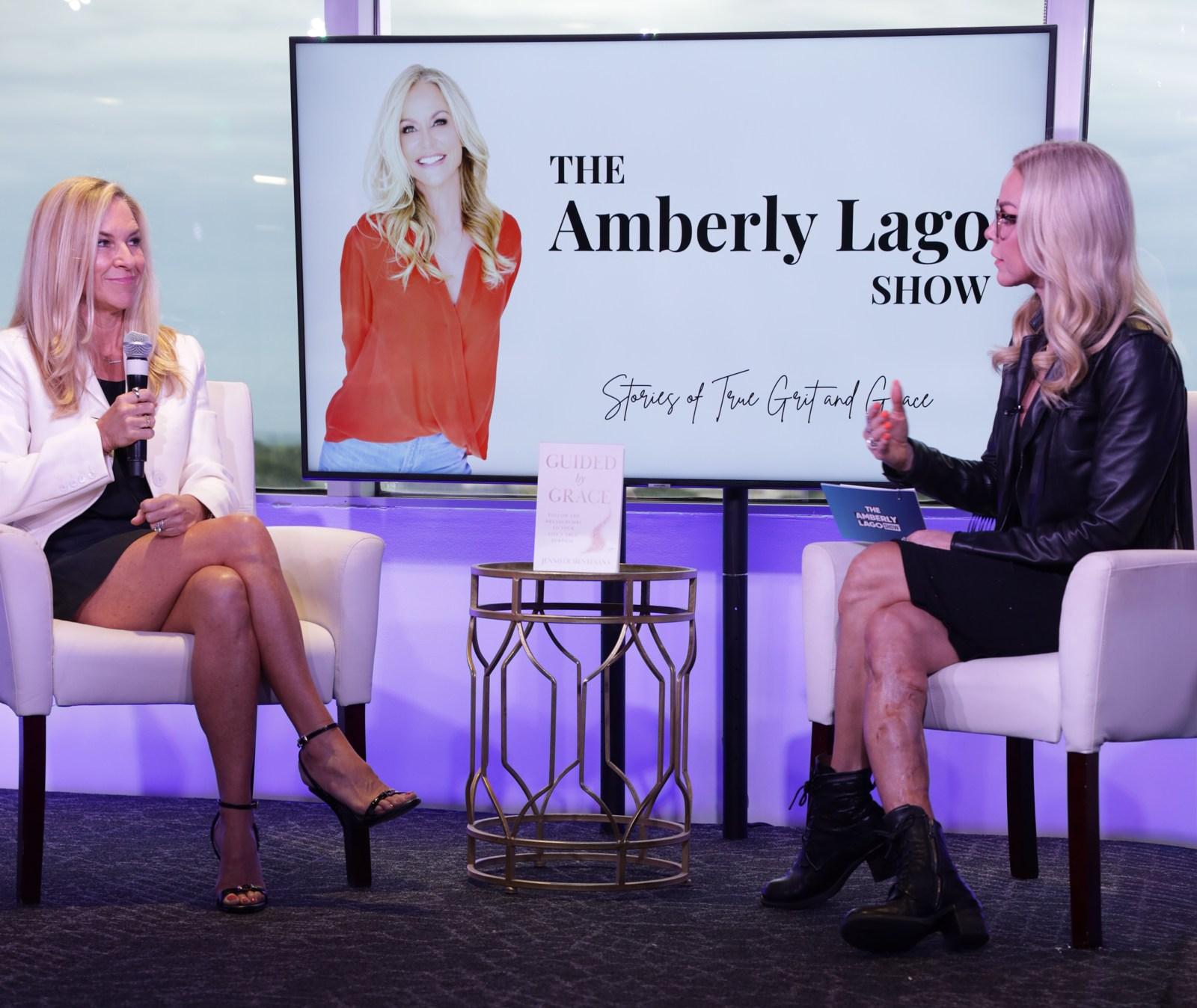
Season 2, Episode 67
Master Priorities to Master Your Life with Jen Du Plessis
A conversation with Jen Du Plessis

About This Episode
"Life of quality over quality of life."
If you struggle with feeling anxiety about all of the priorities you are managing, including communicating with others, I can't wait for you to hear this conversation.
Jen Du Plessis, America's Mortgage Mastery Mentor, helps mortgage loan officers and real estate agents who are overwhelmed, stressed out, and sabotaging their personal lives for the sake of their business to multiply results in record time and have the courage to say yes to their personal lives (which sometimes means saying no to clients).
During fifteen of her 37-year career in the mortgage industry, Jen has been listed in the top 1% of loan officers nationwide; spending 3 years in the top 200 of nationally ranked originators, and has funded over $1 Billion in mortgage loans. She is recognized as an Influencer in her industry as the best-selling author of LAUNCH-How to Take Your Business to New Heights, top podcast host of Mortgage Lending Mastery, and highly sought out and charismatic speaker; speaking on stages with such icons as Darren Hardy, Tony Robbins, and Les Brown.
She has been seen and heard on Good Morning America, Sirius/XM Radio, Voice America, and Mortgage News Network. Jen has been featured in publications such as The Wall Street Journal and The Washington Post; is a regular contributor to Mortgage Executive Magazine and Mortgage Women Magazine and has been recognized with the Women with Vision Award as one of the Top Women in the Mortgage Industry.
In this episode, Jen shares helpful mindsets and re-framing for understanding the truth about your priorities, communication, and managing all parts of your life so that you can thrive and have peace of mind.
Here's what you will learn:
- How Jen got started on her journey (3:41)
- How to manage a successful business and a fulfilling home life with family (11:21)
- How to master priorities to master your life (16:51)
- How to manage stress in communication in business (23:41)
- Tools to address the different messaging systems (31:28)
- How to make little tutorials throughout the day (38:42)
- How she prioritizes her energy (43:21)
Screenshot your favorite part and post to your IG story and tag me @amberlylagomotivation and @jenduplessis so we can see and repost to our stories!
Follow Jen
Mentioned in this episode
- Calendly
- TextMe- Unlimited free texting and calling to any phone
- Kinetic Spark Consulting, LLC: HOME
- 7 Strategies to Transform your Business Mindset - ClickFunnels
Hiitide Book Club: I am excited to share that registration for the True Grit and Grace Book Club is now OPEN!!! https://hiitide.com/crews/true-grit-and-grace
Unlock your highest potential and start living the life you deserve!
Read the True Grit and Grace book here and learn how you can turn your tragedies into triumphs!
Thank you for joining us on the True, Grit, & Grace Podcast! If you find value in today's episode, don't forget to share the show with your friends and tap that subscribe button so you don't miss an episode!
You can also head over to amberlylago.com to join my newsletter and access free downloadable resources that can help you elevate your life, business, and relationships!
Want to see the behind the scenes and keep the conversation going? Head over to Instagram @amberlylagomotivation!
Audible @True-Grit-and-Grace-Audiobook
Full Transcript
Welcome to True Grit and Grace, a podcast designed to empower you to claim your resilience and thrive through life's challenges. I am Amberly Lago, a mindset coach, fitness expert, and bestselling author. Each week, I'll dive deep with the world's brightest thought leaders and elite performers to share tangible tools and practical advice to inspire you to keep your eyes on the prize and forge ahead. So get ready to conquer your fears, heal any trauma, lead with your heart, and elevate your life with grit and grace. Hey, y', all, and welcome to True Grit and Grace. I'm Amberly. And if you're feeling stuck, if you're feeling overwhelmed with your schedule, if you need some clarity, you definitely want to go grab a pen and a paper because my guest today is a life changer. I have Jen Duplasis here, and I hope I said that right. Jen Duplessis, who I met at a Mastermind. She's amazing. She is America's lifestyle master, and she helps sales professionals and entrepreneurs who are overwhelmed in their daily routines. She has a book called Launch. I have it right here. I've read it. I have notes and highlights in it. It's how to take your business to new heights. She is in the top 1% of loan officers nationwide and has funded over 1 billion mortgage loans. She's all about teaching you how to, like, attract rather than chasing. And she's been featured on. In the news on Good Morning America. She's been in Wall Street Journal, Washington Post, and the list goes on and on. And I'm just so happy to have you on the show. Thank you so much for being here, Jen.
Well, thank you, Amberly. I really appreciate it and I appreciate you showing my book. We were just talking in the green room that I probably should be holding my own book, but I don't.
Yeah, here's the Y' all go look her up. Tell them your website right now. So people, before they even listen, they. They can take a note of your website so they can find you.
Yeah, it's Jen duplessis.com. so you'll have that in the show notes. And then if you're watching, you can see how to spell my name. But, yeah, because it's an online, you can't have a space in it, and it normally does have a space, but I'm just delighted to be here. I'm so excited to share as much as I possibly can in the time that we have together.
Well, I've been excited to have you ever since I met you. Okay, I'm going to be honest with you. I was like, oh, mortgage loans. I don't know anything about that. I don't know if I'm going to really connect. When we got into the Mastermind together, and then I got to know you and what you do to help entrepreneurs and salespeople, well, I think you really help everybody. Everyone just get clear with their goals. And I have to say, I think the highlight of 2020 for me was when we got to go to Vegas and I got to meet you in person for the Mastermind and we each got up and we shared a lesson with the group. And let me tell you, I have my notes right here with all the things that I took notes on when you got up to speak. And, you know, sometimes you hear people speak and you're like, oh, that's nice. Well, with you, I was like, oh, my gosh. Everything you said was like, there were so many nuggets of gold in there. But you have an incredible story and you have a heart of gold, and I would love if you could just share a little bit about your story because you grew up with a nickname, and you have really turned, like, adversity into your advantage and really shine bright and share your struggles to strength so that other people can really thrive in life, too. So can you please share just a little bit about your story? Because I think it just it so touching.
Well, thank you. Thank you so much. So I want to start off just by saying that I'm no longer in the mortgage business. I want to make sure that everybody knows that. You know, that was my career in the financial services business. And I believe that in life you learn, then you earn, and then you return. And that's where I'm at now, is where I'm returning back to that community and the community of entrepreneurs and salespeople as well, solopreneurs, that type of thing. But yeah, my story really starts with a great uncle. I mean, not a great uncle, but an uncle who is great. You know, he was like my second father because my father was an alcoholic and my mother was a verbal abuser. So, you know, they just were at each other all the time, you know, and so he kind of carted me around, and that's really where I learned my work ethic. I learned how to be a real estate investor because that's what he was and still is to this day, and really just learned from him. But first of all, he called all of. I'm one of 37 first cousins, Big Catholic family, right? We Just want to make babies. All of us had nicknames. Everybody, He. That's just who he is. And ironically, he just got out of the hospital a couple days ago. 87 years old with COVID Survived it.
Wow. He survived it.
And he had all the nurses in stock stitches because he's just a big jokester. So the fact that he had the names was just a joke. Right. But my nickname was Jenny who ain't got a penny.
And you know what, though? Those nicknames do stick.
Oh, they do.
I mean, they really do. I got so called so many nicknames. I was like, because I was really thin, I was bullied in school and called Annie anorexic and bulimic girl. And may I remember being made fun of at dance because I had a six pack and they were like, ooh, that's so weird. You've got a six pack and you're a girl. And it's like these things that people say, they stick with you. So that Jenny who ain't got a penny.
Yep, it did. And it stuck with me. And of course, because he was a jokester, I just thought it was a joke, right? And so I carried a penny around in my shoe. And every time he said, hey, Jenny, you ain't got a penny, I'd go, oh, no, no. And I'd pull it out and I'd say, I have a penny. I have a penny. And we'd. I didn't understand the implication of it until later, and not really that that was his intent, but it was coupled with the fact that one day he said to me, you know, Jenny, you're going to be just like your father. You're going to be an alcoholic, because alcoholics breed alcoholics. You're going to be just like your mother. You're going to smoke, because when you're around smoking, you smoke, and you're going to be just like them. They're poor, and you're going to be poor, and you're basically going to amount to nothing. And so that was my limiting belief for the largest part of my life, you know, and I'm 57 now, and I would say that was my limiting belief until I was about 47.
Wow.
And so I went through all the success I had in my business, you know, my. In the industry I was in believing that I wasn't worth it. And that's really what perpetuated me to work as hard as I did, because I was going to prove to these people that I am worth it. And they didn't even know that. I was out there trying to do that. It was just what I felt like I had to do because that was my worth is that I'm just going to be better in everything.
And, well, you know what, we share that in common. I mean, because I grew up with alcoholics and a lot in my family, not my mom, but I became kind of a workaholic and an overachiever because I was like, I am not going to be. I am going to make something of my life. I'm going to prove these people wrong who said that I would never amount to anything. And that was my driving force. But I. It was my only sense of self worth when I was achieving. And then when all of that was stripped away, I was like, wait a minute, who. Who am I? Where does my worth come from?
Yeah, yeah. And it's funny you say that. And you know, and of course I know that because you did your training. And I was like, oh, my gosh, you know, because for whatever perception you had of me coming in, mine was like, look at this tall, beautiful blonde woman. And. And you know, wow, she's pretty. And I bet she's a killer. And you know, and all this stuff. And I was measuring already, right? We always.
I think that's human nature, like to.
Well, and especially for someone like us who has always gone, you know, it's competitive and. And the funny thing is both of us have this same kind of history, but also both of us have been, you know, beauty queens and, you know, and it's just kind of cool. But I love what you said because, you know, it is demonstrating your self worth and you are just constantly feeling that. And, you know, my podcast, I have two. But one of the podcasts is Success to Life After Breaking Through Glass Ceilings. And it really came up as I made this transition and retired from lending into what I'm doing now. And it really came up because my identity, my identity was the workaholic, right? The success that was around that. And so even three years ago, when I thought I had passed through this, I started going into that imposter syndrome again and started saying, wait a minute, my identity is being one of the top 200 loan officers in the country. Now, who am I? I have no worse because I'm just one of a gazillion speakers and coaches and podcasters out there, right? So I had to go through. And that's why I actually started the podcast, was to remind myself that it's not just the identity of success, but it's moving ourselves into significance. And Then it became life after. Like, what am I going to do now? Now what am I going to do to serve and feed that need? I have to continue to perpetuate that I'm worth something.
Yeah.
So I've done a lot of personal growth, development over the last three years, spent thousands of dollars at retreats and masterminds and being coached to learn that it's not what I do, it's who I am, you know, and I'm now happy and content with that. But, yeah, it's just a, you know, trials and errors. And so I guess I would just ask your listeners, you know, if you've ever been in a situation where you're just acting like a cat on a marble floor in oil for the sake of your business, you know, at what point are you going to be as good to yourself as you are to your business? And that's what I now speak about.
You shared that it was a turning point for you at one time when you were at a restaurant with your family and you were outside on a call with a client and you looked at the restaurant and you saw your family sitting there eating. And that really hit home for me because I was, you know, after my book launched, I had an incredible publicist, but she was like, you say yes to everything. Say yes, yes, yes, yes to everything. Every podcast, every blog, every, you know, interview, whatever it is, every speaking job, you say yes. And so for two years, I was saying yes to everything, which meant saying no a lot to my family and to myself and to my health care. And every time you say yes to something, you have to think about, what are you saying no to. And when you shared that, it really hit home because I now, like, last night was on the phone at 9:30 and my daughter looked at me and she goes, mom, stop. Get off your phone. And then yesterday my husband was like, it's Sunday. Take a break. And it's really difficult sometimes when you're an entrepreneur. I mean, I used to have hours that were pretty set in stone with my clients. And when I was done with work, I was done. I wasn't on social media. I didn't do that well. Being an entrepreneur and getting a lot of work through my social media, it's like, when do we stop? When do it? And one thing that you teach is to really have those boundaries and to work on time, discipline. And I think that that is essential to really have a fulfilled life running a successful business, but to really make sure that you're not neglecting your family and your health While you're doing it. But how do you do that?
Yeah. Well, I'm going to start with the quote I shared with you when we were in Vegas, which my mom did, which is, we flatter those we scarcely know. We please the fleeting guests, but we deal many a thoughtless flow to those we love the best. And, you know, and this is where, you know, talking about, are you going to be as good to yourself as you are going to be to your business? Because you deserve more than what your business deserves and the sake of. So, for example, with you saying the. Yes, yes, yes. You know, and actually, you know, every year I've got a buzzword, and I think a lot people do like my word for the year several years ago, my word was. It wasn't one word, it was a phrase. Just, I'm not going to be a yes woman. I've got to stop this. I've got to. I've got to really sit back and figure out what do I really, really want. And, and so it boils down to activities are great, but are they this for the sake of doing them, because you feel like that will get you further along as opposed to saying which activities. And we all know with relationships, you know, we say we want great relationships, but we want the right relationships. So we want the right activities. Otherwise it's like eating soup with a fork.
Yeah. You know what, Jen? My, my word this year is quality.
Yeah, there you go.
So that resilience was my word last year. This year's quality, because exactly what you're saying, like, are they the right relationships or is it the right thing that's going to move the needle on your business, but on your life. And on your life. But you were saying, I'm sorry, like eating, eating soup with a fork.
Yeah, you can, you can. You know, we've all done that. We've come home and gone, oh, my God, I'm so exhausted. I know. I worked all day, I was so busy, but I don't know if I got anything done. And I'm not full and I'm not fulfilled internally because I did these activities for the sake of it. And I want to share a couple things. And, you know, I'm writing notes here just to remind me to say some things. When you say quality. Right. I just want to share something with you. My mom was on the phone with me one time and I was telling her, oh, the kids are here and I'm going there and we're doing this and we're going on some trip and blah, blah, Blah, blah. Right. I was in the midst of all this. This chaos that was going on, you know, improving to everybody and all that good stuff. When I made that transition from, you know, stop proving and start living, I thought it was a quality of life. And she even said to me on the phone, she said, honey, you have such a great quality of life because you're doing all these fun things. And it hit me, and I thought, oh, I don't want that. I don't want a quality of life. Because to me, that was keeping up with the Joneses. And I was in the transition of figuring out how do I crack this code on being able to get as much done as I possibly can in a shorter period of time and still have a great business and a beautiful life. And I realized that it was a life of quality. Not a quality of life, but a life of quality that I was seeking.
A life of quality. Yes.
Quality of life. And I felt like that's really the thing that I was chasing. And so you asked.
Isn't it interesting that. Just changing it just a little bit, just shifting your perspective a little bit. I mean, it's kind of like I always say, you know, we can wake up saying, good God, it's morning. Or we can say, good morning, God. Like, it.
Yeah.
Things just a little bit.
Yeah, yeah. And so hopefully that resonates, you know, with everybody. And, you know, like, right now. And I know you're on Clubhouse, right? We're all on Clubhouse now.
Oh, my gosh. It's. I get notified. Do you have your notifications on for Clubhouse?
Well, you have to, because when that one person gets on there that you want to follow, you want to be able to follow them.
I know, but it's very.
It is. It's very distracting. It's something I'm actually working on helping because I know that my clients are going to come to me because we're all sucked in by Facebook. Right. And Instagram and all that. And now here's another shiny object.
And this one is, like, getting to me. It's like I was in the car with my husband yesterday, and then someone pinged me, and I accidentally, like, went into the room, and then they're like, made me a speaker or want to make. And then I was obligated, and I was like, I can't talk right now, but it was like, I want to be able to. But it's like, I always say I really need to work on my boundaries. And when I say that, goodness, the universe gives me so many opportunities to Work on my boundaries, you know, but it is like the new thing.
It is. And this is going to be another priority management, you know, because what I do with my practice is I help people master their priorities so they can master their life. Right. And so there's going to have to be a strategy. With Clubhouse, just as we went through, I was kind of going back and doing some research with Facebook. You know, when we all got Facebook, we were. Everybody was friend, friend, friend. And we're like, yes, yes, yes, yes, yes, yes, yes. And then you get to 5,000 people and you're like, who are half these people? I don't even know who they are. And that excitement. And I think that that's going to happen here, and it's going to take more time to go back and delete and remove and strategize about it than to just say, you know what, let's all just slow down. And then we can speed up instead of speeding up to eventually slow down, which will take more time and energy. And so I'm working on.
There's a sense of urgency. I feel like, oh, my gosh. But yes, when you're an entrepreneur especially, there's just this sense of urgency, like, well, I have to be on the latest and the greatest new thing, and I.
On demand, on versus in demand, there's a big difference, you know, on demand versus in demand.
Powerful, right there.
Yeah. On demand is like working with an amateur, and in demand is with a professional. And the professional will take the extra time, the extra years to have that professional, that specialty that they do, you know, in the sense of a doctor, you know, going to the emergency room is on demand. Seeing a neurosurgeon is in demand because it takes six months just to have the conversation about what's going to happen. Right. And so taking a few extra minutes, a few extra days to not get on clubhouse, so that when you go to clubhouse, it's intentional, and that intention will give you the better results. So it is. Les Brown says this, and I know you love Les Brown too, but he says, if you'll do what's hard, life will be easy. If you do what's easy, life will be hard. So we have to just take the time. And so what I've done is I've gone on Clubhouse, I've gone a couple times, but I'm not succumbing to it because I have to put the boundary up to say, gamify it if you have to. If I go on Clubhouse, I have to have the strategy before I go on Clubhouse. And so the longer it takes me to put the strategy together, the more that entices me to say, what am I losing out on? Rather than the FOMO of, I'm just going to go there, I'm just going to go there and I'm going to be there and I'm going to get sucked in and then you're going, I don't know if I'm getting results. I haven't thought about it. Rather than what I'm doing right now. I just got off the phone with someone who's in Clubhouse and I said, give me a strategy. What have you done? What have you done? And I'm doing the research and what's hard right now, because I want to be on there. I'm missing out. I'm missing out. I want to be on there, but I want to be on there properly, because in the long run, I'll have better results.
I think it's so much about intention. What are your intentions for anything you do, whether it's going on TikTok or posting on Instagram or LinkedIn or going on Clubhouse. But I have to say, I just was on, like, the third time that I was on Clubhouse, someone pinged me. I got in, and Bradley, who I just met when we were in Vegas and I was on his podcast, he brought me up as a speaker, introduced me and told people, you need to know this girl, you need to have her on your podcast. You need to do these things. And from that conversation in that room, I got an email that day to speak at a big event that's for the LA Tribune. And I'm like, wow, that one little ping to go in there got me a speaking gig. So I have this thing where I'm like, yes, I want to be intentional about everything I do. But now it's even more enticing because, like, the third time I'm on, I get a speaking gig out of it. So I'm like, every time it pings the bike, oh, I got to be on that conversation or I got to do this. And what I have done is set up some rooms with some other coaches and we've got room even scheduled out for next month. We should schedule a room, be intentional and strategize a room on Clubhouse.
And I think that's good because again, Les Brown says, you don't have to be great to start, you have to start to be great. And I get that. You know, I totally get that. And I'm not talking about, you know, spending a month to do it. I'm saying just take a day and figure out what is my strategy. What, what will I, you know, do? Because, you know, I actually have a fear of going into a group that has 200 people in it. And now 200 people want to talk to me. I don't have. How am I going to sift through it? What's my strategy to sift through that? Because I don't want to just talk to 200 people because they want to talk to me. I want to intentionally go into this and say, what can we do for one another? How can we contribute to each other? And it just takes a lot of time to do that. And that happened to me on Clubhouse where I had a ton of people. I think I had like 40. Some people say, I want to meet you, I want to meet you, I want to meet you. And all of a sudden that's 40 hours. Right? Well, I think that's where now I'm going to start doing little groups of meeting people.
Yeah, that happened to me too on the first time where I had so many people DM me on Instagram. They're like, I want you on my podcast. Can we set up a 10 minute conversation?
And the podcast, right, a 10 minute.
And then, and then the podcast. And so I just thank God for calendly because I use calendly and I have, you know, 10 minute introduction calls. But also something that has really helped me is I have people text me and so I can have a group text. I have community. I don't know if you use community for texting.
I use Reach. Yeah, I use Reach.
And that help. That helps. That helps too. And by the way, if y' all want to text me, it's 818214, 7378. Go ahead, text me anyway. Yeah, that helps too. But yeah, it can be. It can be a little overwhelming. I just did a talk for a big event. I was a part of a three day event called the Line and I gave my phone number. And then it's always exciting, like right the day after. Sometimes it's more, it's busier than the actual event because you get so many messages on Facebook, Instagram, LinkedIn through my text. And so it does take time to go through all that. And something that you do that really is mind blowing to me and that I want to learn to do more is you have really. And you inspired me, by the way too, because I'm excited to hear what it is.
Because I'm wondering what it is well,
there's a couple of things. You really set healthy, good boundaries for your work schedule. And then there was something I did. I made an introduction to you for a TEDx talk, and I think I sent you the email on a Sunday, and you said, it's Sunday night. I'll get back to this first thing on a Monday morning.
Yeah.
Wow, that was mind blowing to me. I was like, because I need to learn to pause. One of my friends has a tattoo of the pause symbol on her arm to remind her to pause. And I'm like, maybe I need a pause tattoo. But I'm like, one of those people that's like, oh, my God, this is great opportunity. I got an email right now. I got to do this, I got to do that. And you have really taught me. No, set those boundaries of what your work hours are. And I always think about, you know, we teach people how to treat us. We teach people that we are. Yeah, text me anytime. You can text me at three in the morning or whatever. We teach people how to teach us in our personal and our professional lives
to be on demand. We teach people how we. How to be on demand. We're becoming. Well, I can say it, because this is grit, right? We teach people how we can be business prostitutes.
Mm.
That's really what it is. And I hate saying that word because it's not something I normally say, but. But as you're telling me this, you know, I'm thinking, this is what it is. It's like, when do you need me? When do you need me? And that really is the difference between being on demand and in demand. And I think that we. We fail to ask people what their expectations are. So, for example, when you send an email to someone, you know, asking, hey, you know, hey, I saw you at this thing, would it be really. It would be really cool if you could be on my podcast. What is your expectation when I send that email? I don't send it and then go, when's it coming? Come on, respond, Respond. I don't. I know that they have a life, and so I know they'll get back to me. Yet on the receiving side, I'm panicked. Oh, my God. They sent me this thing, and I need to get back to them. And. But the truth of the matter is we don't ask the question. We don't say, when do you need it? When would you like me to get back to you? And that's exactly what happened with that particular email, is that I just wanted to respond and say, thank you so much. I'm so grateful for this opportunity to do this. I'm with my family this weekend. It means a lot to me. But I will get back to you on Monday. And the response is, oh, hey, no worries, I'm busy anyway. Ok. So we just don't ask the question, when do you need it? I was on the phone with a colleague of mine the other day and she said, well, I'll get it to you this afternoon. And I go, you know what, don't stress yourself over getting it to me this afternoon, because even if you got it to me this afternoon, I won't be looking at it until Monday. And that was on Thursday. And she said, oh, thank you. Well, now the quality of what she delivers to me is beautiful versus oh, my gosh, I have to get it done. I have to get it done. And when you do it that way, it poses more questions. Now it's more time. And so I think both sides need to be asking that question, when do you need it? You know, just because you email me doesn't mean it's a priority for me right now. It may have been for you, but nine times out of ten it's not even a priority for them. They're just asking a question and they expect that you'll get back when you can get back. And we fail to see that. And so we stress ourselves out. And what does stress do? Right. The fight or flight, the constant state of fight or flight grows our gut. Right? Right. The cortisone starts happening in our gut. And even though you're all excited today, 15 years from now, it's going to rear its ugly head where you are spending your wealth taking care of your health.
Yes.
Instead, right now, we're wasting our health trying to take care of our wealth. And you're not going to see it till later, but I promise it's going to be there. You're going to see it.
It's unbelievable what stress does to your body. Because I live with complex regional pain syndrome. When I am more stressed, I have more pain in my leg. I feel it to the point where sometimes I'm nauseated. And so sometimes we're not even aware what stress does to our body until our eye starts twitching or we get a headache or our shoulders are tied,
get a heart attack. And that's what happened to my husband. You know, he had three heart attacks in the course of two months and that was. It'll be seven years, March 17th, which is first. First heart attack on St. Patrick's Day. And it is. It's the accumulation of being in this constant state of fight or flight. And all I'm suggesting is take a step back, see what's important, look at your values, look at your family.
And I think that's important to look at your values. And when you know your values and what your priorities are, it's so much easier to make a decision. Like, for me, I had no idea, no idea when I first started my podcast that I would get literally hundreds, I'm not kidding, of people emailing me, texting me, DMing me to be on the show. So much so that I had to create a jotform for them to fill out because I was like, I can't keep track of all of this. And then I had to get really intentional about who I want on the show. And so I had to go, okay, what are my values? What, what are the type of tips and tools I want on the show just so I could get clear? And it would make it easier for me to make that decision. And then of course, you know, Madison, who is my right hand woman, really helps me with all of that. But I think it's really important when you know what your values are and what your priorities are. And I make a list every day. I'm big on the list because I get distracted so easily. I can go down that rabbit hole of, oh my God, how did I get on this website? Or how did I get on this person's Instagram page? I don't even know who they are. Or. And so I think that I love making a list so I can check that off.
Yeah, go ahead. I was going to tell you about the list, but go ahead and ask me the list.
Yeah, I want to know the list. And I also want to ask you about your 5C on cracking the top producer code. But first I want to know about that list.
Yeah. So there's two things I want to tell you about this list. One is a very simple, simple thing. Very simple thing is we all have the ability in our phones and in our, on our computers that when our email comes in, the most recent email does not have to be on top. You can actually, it's kind of silly, but you can, you know, you can sort it. They've got a whole list of how do you want to sort these emails? By last name, by time, by subject, Right.
Oh, my gosh, I'm trying to figure that out right now because I just got this new desktop and I don't know how to do that. So this is great.
I'll Help you in the group. But what I've done is I've reverse engineered that so that the oldest email always is on top.
Oh.
Instead of the newest email. Because what ends up happening is the newest email comes in and you go respond, answer, oh, my gosh. And then you go, you know, look at this kitty cat. And then you go to the kitty cat, and then you got to see five more kitty cats. And then all of a sudden you see something else. You're like, oh, right. And you get all. You get all crazy into it. And so those things on the bottom, you never get to.
Yeah.
Now I have a zero email rule. Every night before I finished up, I'm zeroed out. But. But if you reverse engineer that. And so what ends up happening is you get through all this crazy stuff that you're responding to and reacting to, and then the bottom things you don't get to. And now that person who sent an email that was willing to wait is now going, hey, did you get my email? Hey, that was due. And now panic sets in because you have deadlines you didn't see and you thought, oh, I'll get to it later. But you were so preoccupied with the ones on the top. So reverse engineer that and force yourself to get the other things done first before you get down to the bottom. So that's one thing. And that's why when you sent the intro, I didn't get to it right away because I had other things that had now been priorities. So that's the first thing. Second thing. So I know it's really funny, but I'm going to tell you a laundry story. But when we do laundry, like, we're the dryer, right? So there's two ways that people do laundry. They pull it out and they pull out something and they fold it and they sort of stack it on the laundry and then take it to the room or whatever. Others take the whole pile and then go someplace and fold it and stack it.
Mm. Well, that's what I do. So this is very interesting. Am I doing it wrong?
No, it's fine. It's. What you're doing is fine. But I guess here's my question. Why is it that we don't take out a sock and run it upstairs and into a room and into a drawer and put the sock in and put it back and then go downstairs and then grab a towel and fold the towel and then take it to wherever we're taking and come back and grab a shirt and then take the shirt and go wherever and come Back. Why is it we don't do that when we're doing laundry?
It's just not efficient.
Bingo. So there's this thing called a laundry list of things to do. And when people receive their emails and receive the dings and bings and all this stuff that's happening now, because now it's all DM and texting and not so much email, but then there's still email and all these things that are going on. You're receiving a laundry list because it's. Will you sponsor this? Do you want to speak here? Can I speak there? Did you see this cute little kitty? What do you think about this recipe? Right? Like, all this stuff is coming in, and we function as if we're taking one sock out and putting it away when we go after our emails in that capacity. So to do lists, even handwritten to do lists, because quite frankly, our emails are a to do list. But when we write a to do list, the fact that we write it and it's just whatever comes to mind becomes a laundry list, rather than compartmentalizing the list, compartmentalizing the emails that come in. So if the email says podcast or speaking, it goes into a folder that I will address when I'm in that time block. Because now I can just copy once my bio.
Oh, that's awesome.
I can copy once my bio. Click, click, click, click to all their little pages. Have six or seven of them up and paste, paste, paste, paste, paste. And you're much more effective and efficient. You can get twice as much, five times as much, who knows how much more done by compartmentalizing all those activities. Because you get in a rhythm and it's like, boom, boom, boom, boom, boom. I can get it done much faster. You're compartmentalizing. You're putting all of the things away at one time. So that is.
That's awesome. I love that. So you put all of them. Like, you get them and put them, and then you deal with them all at once. That is incredible.
Set up a rule. Yeah, just set up a rule. And if you don't know how to set up a rule, what, go watch Google, YouTube, something, or just when it comes in, just go drag it, drag it, drag it. Just make sure you have a time block on your calendar that says check all podcast, slash speaker, whatever your topic is, emails. And then you go in and you just address them all at once.
That is incredible. That's really like our friend Greg Reed, who wears a lot of different hats. And I mean, I wear a lot of different hats, and it's going to be. And I like how he talks about. He only focuses on one thing at a time, then he switches the hat, then he does this other. The movie stuff, then he's switches the hat, then he does the mastermind stuff. Because why?
There's no such thing as balance. Yeah.
Yeah, I love that. That's.
Those are two. Just little, little simple things that you can do to get back more time. Because, you know, you know, I own four or five businesses. I don't. I always have to count them. I don't remember how many. So I own four or five businesses. So I have that hat switching as well. And when I get to that hat switching. So can you imagine this? You know, I'm a podcaster. I get, hey, would you be on my podcast or can I be on your podcast? My mindset is, okay, what are the characteristics of someone who can be on my podcast? My mindset is, what is their podcast and what can I talk about on their podcast? Right. And then right in the middle of that, it is an email that says, oh, hey, can you take a look at this contract? The contract? You know, I want to look at this contract. And so I've got my mind here and I got my mind there. And then when it comes to the contract, I might miss something. I might miss something really important.
Well, that has happened to me before where I'm all over the place. And, you know, I had forwarded an email to my assistant and said, you know, about a speaking job. And she had messaged me back, what picture and bio do you want me to send? And I was like, what are you even talking about? Like, I had already like, what, what are you talking about? All over the place. And so also, when you bring on people for your team, it has to be more efficient with. These are always the pictures that you will use. This is the bio that you will use.
That's the first thing I was thinking.
I'm like this, you know, so it's really communication between you and your team and getting to know each other so well that they. They are already going to know what to send and already know what to say on your behalf.
So here's how you handle that. Is everything you do on the computer gets recorded. I leave Zoom up all day and I have one meeting for zoom, unless I have to break it, you know, to have a podcast or whatever. I have one zoom up and I record and stop record, record and stop record. I don't leave the meeting. I record and stop record. And I am creating tutorials all day long. Hey, I just got this request for to be a speaker on this thing. So here's what I'm going to respond to. So go ahead and take a screenshot of this so you can respond to that when I give this assignment to you to respond as if you're me. So go ahead and take a screenshot of that and make a signature for it. And this is how I respond. Click stop recording. Hey, I just got notification that a podcast I'm on is being released. Here's the email. This is what I typically do. I file this and send this, and these are the hashtags, and that's how I do it. So now you go do it. And so by everything you do becomes a tutorial on how to respond to a podcast request, how to respond to a speaking request.
That is awesome. So you leave the zoom up all day. That's amazing.
Yeah. And like, you know, I had it up earlier today. This morning, I do miracle morning. So, you know, by 8 o', clock, I had already done three hours of work, maybe two and a half hours of work. And, you know, and so I was doing tutorials, and then I had a zoom call, so I had to get out of that and go into a new one. But then I went right back in and set another. And there have been days where I have 15, 16 different recordings. Now, I don't have as many recordings as I used to because I have so many tutorials built in. But rather than you saying, hey, let me. Here's the bio, blah, blah, blah, blah, blah. You could do one that says, okay, this is what I do now. I always use this bio. Unless, blah, blah, blah, this is the one I want for this. Whenever, when I'm speaking on a man's podcast, I use this picture. When I'm on a woman I don't know.
Yeah, well, it is. It's different because, you know, like, I'm speaking at a huge event with Heather Monahan and Heather Dubrow and Lisa Nichols, like, all these powerful women. And I didn't want to use my headshot where I'm like, I wanted the straightforward headshot of power. Like, you know what I mean?
So it is. And I have those same things. Yeah. So it isn't that you use the same headshot, but there are reasons. So it's, again, just setting up these tutorials so that you don't have to be distracted by explaining it over and over again.
It's so much distraction time. It's about saving time, getting organized, and again, communication and getting that really clear. And I think that's so brilliant. To record it and send it. That's so efficient.
Questions. It's easier. And if they forget, you just refer them back and they go, oh, yeah, that's right, that's right, yes. Instead of knee jerking me out of this. Because, you know, it's just, I mean, I'm always looking for a more efficient way, you know. One of my friends is Jeff Hoffman and he is the co founder of Priceline and he's the inventor of the kiosks that we use in the airports.
Oh, wow. Okay.
And he's like that. He just has that mindset of, you know, where is the efficiency? And I honestly don't know where it comes from. But no matter what I'm doing, I'm standing with my husband someplace and I'll go, you know, this would be faster if they would be on pharma. And it's just normal for me to see it. And so I get it when people say, I just, I don't know how to do it. So these are three little simple things just you could start doing right now, really to. And the fourth thing I guess is call a friend. Right? And that friend is my core values. Right. So before I do something. Hold on. Does this align with my core values? So, hey, core value of faith, does this align with you? Yes, it does. Okay, I can move forward. Hey, core value of family, does this align with you? If I am going to meet someone they want, the only time they can meet me is at 7 o' clock at night. What do I have going on? Right? Because the choice as an entrepreneur is absolutely, I've got to move my business forward. But I'm telling you, I turned down a speaking gig in Dubai for 50 grand because I phoned my values and said, faith, family. And my third value is stability, both in time and financial stability. And of course, what do you think? I was like, oh, oh, 50,000 Dubai?
Yeah. Oh my God.
International, Right.
I just did the same thing for France.
Turned down, turned it down.
But I wasn't getting paid $50,000 for it, by the way.
Whether it was 20,000 or 10 or whatever. For me, I turned it down because there were. And I don't want to go into all the details, but it was like it didn't measure up. There were some things that were happening in my life at the time. And you know, and I was like, oh, I'm so deflated. I've turned out to buy. Well, while wherever what Dubai was, whatever that time frame was during that time frame, I got a call from Les Brown Jr. Saying, hey, would you be interested in being on our speaking stuff?
Mm.
That paid more than 50,000. Absolutely.
So, you know, I really believe that. I believe that, you know, sometimes we think, oh, my gosh, that door closed, but another one opens. And the same thing happened to me. I was invited to go to the Bahamas to go speak and lead a retreat for five days. And I was like, oh, my gosh, I get the Bahamas, la, la, la. And then I ultimately said, no, because I thought, I can't. I don't want to leave my family for five days. I'd been traveling nonstop for two years in a row, kind of living out of a suitcase. I was like, no, I can't do that. Well, during that time, I got. I think that's when I was offered my TED Talk. And so I was like, that's what I need to be doing. And so I did that instead. Had I been away, I wouldn't have been able to do it. So I think every time, you know, we're always kind of meant. If we have those values and the priorities, we make decisions and what's meant for us really comes along. I think the universe has our back on that. Or as Shannon says, let Gus drive the bus. God, universe, spirit. Yeah, I love that.
I love the Gus, drive the bus. Yeah. And, you know, and I think GPS too. You know, God, purpose and stability or something. I can't remember what it was that I wrote down one day. I was like, you know, God, purpose. I think stability was probably the word. You know, that's my gps. I love that, you know, is God first and then what's the purpose of this and will it create stability? Because that's one of my values. But reflecting back on my story, right, as we were talking about the restaurants and that stuff, and, you know, being on that concrete balance beam, yakking with the client who needed me more than my family, when quite frankly, my family needed me more than my client. I just felt like I needed my client more. Reflecting back on that, it sounded like a good thing to do at the time, but over time, and I can say this now, as I approach 60, right? I can now, I now have the right to say that. But, you know, it's the sustainability that you're going to have. While it seems really good right now, really ask yourself, the pace that I'm going and the chaos that I'm creating and the reaching out and blah, blah, blah, blah, blah, blah. All this, this daily chaos and distraction and Overwhelm and need for. I mean, I ask yourself, are you doing it for ego? Are you doing it for money? Are you doing it because you like it?
It.
You know, and when you go through that, that thing can. Is this sustainable? Is this something you can see yourself doing 5, 10, 15, 20 years down the road if you're younger? Right. And that's where my. The pinnacle or the apex for me was. I can't do this anymore. I can't.
Yeah, well, you know, it's like my husband, because he sees how much pain I'm in every day. He sees, like, I can, you know, put on. Go on stage, put on a smile. I can do my best, give my best. Best to my clients. And then he sees the pain from the crps. And he will tell me, he's like, you can't keep this up. You're pushing too hard. You're doing too much. You can't travel and go all that way for that interview. Or, you know, he. And I hate hearing that, by the way. But I have to ask myself, is it sustainable? And I love that you ask yourself, is it out of ego or do you like it or money?
Yeah, yeah. It's like, I got to make money because everybody else is making money, because I see on Facebook, everybody's making money, but do you need to make that much? I mean, this is. It's a glorification of busyness. It's a glorification of, oh, I'm better, I'm better. I'm better because of this. But honestly, when you get down to the breast tactics, when you're laying on your deathbed, it is not about that. It is about, I wish I did. I wish I could have. I wish I did more of that. It wasn't. It's not, oh, I wish I just made more money. You don't.
Oh, yeah, yeah, for sure. And mine's never been about that. I mean, yeah, I mean, money definitely helps you make a bigger impact, but I've never been motivated with the whole money thing.
Oh, I was. I was. Because I was proving.
Oh, see, I wasn't as much.
Like, money doesn't is that everybody has their own motivator, right? It was, you know, the accolades and the. And the trophies and that's part of my generational thing too. But the accolades and the trophy and the money, and I'm proving to them that I am going to make it now. I don't care about titles. Some people, they go, oh, so you write a book? And sometimes when they say it, I Go, oh, yeah, that's right, I did. I probably should have that here. To what I'm doing and making an impact on people every day. That's why my podcast is called Success to Significance. Right. How do I make an impact on people? How do I get people to understand that this is not sustainable? That there's a better way for you to accomplish your goals in life and in your business? There is a better way than the way that we're all doing it and we're killing ourselves to do it. Which is why you've heard me say, live your legacy. While you're building it, don't wait. Just enjoy it now. And that's one of the most beautiful things about the way that I learned how to crack that code was that, you know, I worked less and I made twice as much. And because I was very specific about what I was going to do on a daily basis and took back control of my life. So, yeah, that's kind of the thoughts.
Yeah, it's. Taking back control of your life is really important because. Because I am an overcoming workaholic and
recovering workaholic.
Yes, I'm. Because I love it. I love it. I love the work. I love what I do. I love connecting with people. I love if I can make an impact. And so I could just do it all day. I just have to stop myself because. Because it will lead to burnout or bad. Yeah. At what cost? And that's something my husband always says, too. At what cost? And so that's something that I ask myself when I was traveling to speak a lot. I would weigh that in. At what cost is this going to be to my health? To go to a conference and speak for three days and breakout sessions and on the stage and standing to do the.
Even in the airplane? Right. I mean, oh, yeah. Now I have to wear compression socks all the time, you know, And I'm freaking out that I'm going to have a heart attack because I don't have compression socks. And so I talked to a lot of people, like, oh, I only do direct flight.
I only do direct flight, too, because it's too hard on me.
I don't anymore. Because I need to be in the plane for two hours and get up and walk around for my health. That's a priority for me. And so I'm willing to take that break. I'm willing to take that break to walk during the break of that to ensure that I have good health.
And see, for me, it's the opposite. I'm like, I can't walk too far in the airport, right? So I'm like, I need a direct flight. I need to get where I'm going.
And then the beauty of it is, what do you want? It's not doing. It's thinking about what is the best course of action. You know, what works for you. And I just. I think we just don't even take the time to think about that. You know, my husband loves direct flights. Get us there. Let's have fun. Ok. But when we get there, I'm going to be in pain. Which do you prefer? That we have a layover and I'm not in pain, so we can have fun and enjoy toes in the sand and phone in hand, Right? Or would you prefer that we get there and I just go? You go down and do that because I have to relax, get my feet up. I've got to, you know, all of that. So I think the important thing here is for you to decide what's best for you. Instead of just letting life live you, you know, you start living life. Right? Because life just lives us all day long.
I could talk to you all day. I'm serious.
Because, I mean, you're.
You're amazing. You really have impacted my life and changed the way that I've done things. And I love the tips that you gave today. Just about the zoom thing, recording all day. That's unbelievable. But your book, y' all check out her book. It really is. I mean, I have it bookmarked and it's. I'm not a very good reader. And your book is really easy to read. And check out her podcast. Tell them where they can find you. Tell them the name of your podcast and if they want to work with you because you have something coming up. I don't know if it started yet, but you have a mastermind and y', all, I have mastermind with her before. She's amazing. Just it being able to pinpoint things that you can do differently in your business and giving you clarity so that you can do things that move the needle on your business. So tell everybody where they. They can find you.
Yeah, I'm giggling because I, when we were together, I go, okay, what do you think I'm going to say? And everybody's like, clarity, clarity. This word I use. But listen, Amberly, don't sell yourself short. I mean, I lear so much from you. I took copious notes. I have four or five pages of notes from you speaking as well. And that's what's so great about a mastermind. You know, when it's done right. Like we do it in a true Mastermind format is, you know, that people really, really gain a lot and you really make these lifelong friends. I hope we'll be lifelong friends, right?
Oh, yeah. You're not getting rid of me.
Oh, no. I'm not letting you break up with me. I mean, gosh, there's a whole bunch of things, you know, I'm all over the place. It's Jen Duplesses everywhere. Sometimes you'll find Jennifer Duplesses and just know you just have to look at me and I pretty much look like all the pictures that are up there. I'm not one of those people because apparently there's a lot of Jennifers around. There is a Jennifer Duplessis in southern Africa, which is, by the way, where my husband's name comes from. It comes from the French part of southern Africa. And there is a Jennifer Duplessis on there who is indicted. That is not me. And you'll see her picture and you'll know it's not me. Okay.
Thanks for clearing that up.
Are you kidding me? But yeah, so sometimes, you know, on Facebook and stuff, I've had to do Jennifer instead of Jen, but I think we pretty much got it. Jen. But you know, my website's Jen duplesses.com you know, certainly reach out and then reach out to us at supportineticsparkconsulting.com supportineticsparkconsulting dot com and my team will disseminate all those emails, requests and things like that. Yes. So I have a mastermind coming up. It's called Business Booster Mastermind and we're starting February 23rd. So I don't know when you're going to be releasing this. So we might be in the middle of it, but you can always go to businessboostermastermind.com and that's once we're done with our first three months, we're going to go into and start another one. So we'll probably have three or four different masterminds that are going throughout the year. So yeah, if you have interest in participating in that, I'd love to have that conversation with you. And then just as a free gift, you can go to genduplesses.com seven strategies. And that's the number seven strategies, plural. And that will give you seven different thought provoking strategies to change your business mindset. And it's sort of all things we're talking about here. What are your values? What are the core values that you have? Who are the people that you're affiliating yourself with and what are the boundaries, you know, and are they really boundaries? Have you set them up? So it'll give you sort of a head start in working the direction we've been talking about here today.
Okay. And Jen, I want to have a room with you on Clubhouse and talk about that. Let's. Let's schedule that, put that in a little file and we'll get that into our strategy. That would be awesome because I think that's something that every. Everyone needs. I'm going to go down. I don't think I've downloaded that, so I need to go download that.
Yeah.
All of this is you guys. If you're out for a run, if you're in the car, you can't write or whatever, just go to the show notes. All of this information will be in the show notes. And if you found value, which I found a lot of value in everything you said, but screenshot this and share it with your friends. Share it on your social media and tag us so we can say thank you and share it as well. Because it's really my goal to empower as many people to be happy and empowered themselves. So let's spread the love. Thank you so much for being here and for taking time to share with us. I'll see you in the Mastermind.
Awesome. Thank you.
Thank you.
Thanks so much for joining us this week on True Britain Grace podcast.
If you. If you like it, please rate it
or share it with your friends.
That would help, too. If you're not yet on the newsletter list, come over to amberlylogo.com and jump on it. While you're there, you can grab a
free downloadable gratitude journal.
And you might just want to check
out my book or even check out my monthly motivational membership. Thanks again for tuning in and we'll see you next week. Sam.
Pain to purpose to joy.
Never Miss a Conversation
New episodes drop regularly. Subscribe on your favorite platform and never miss a conversation.