

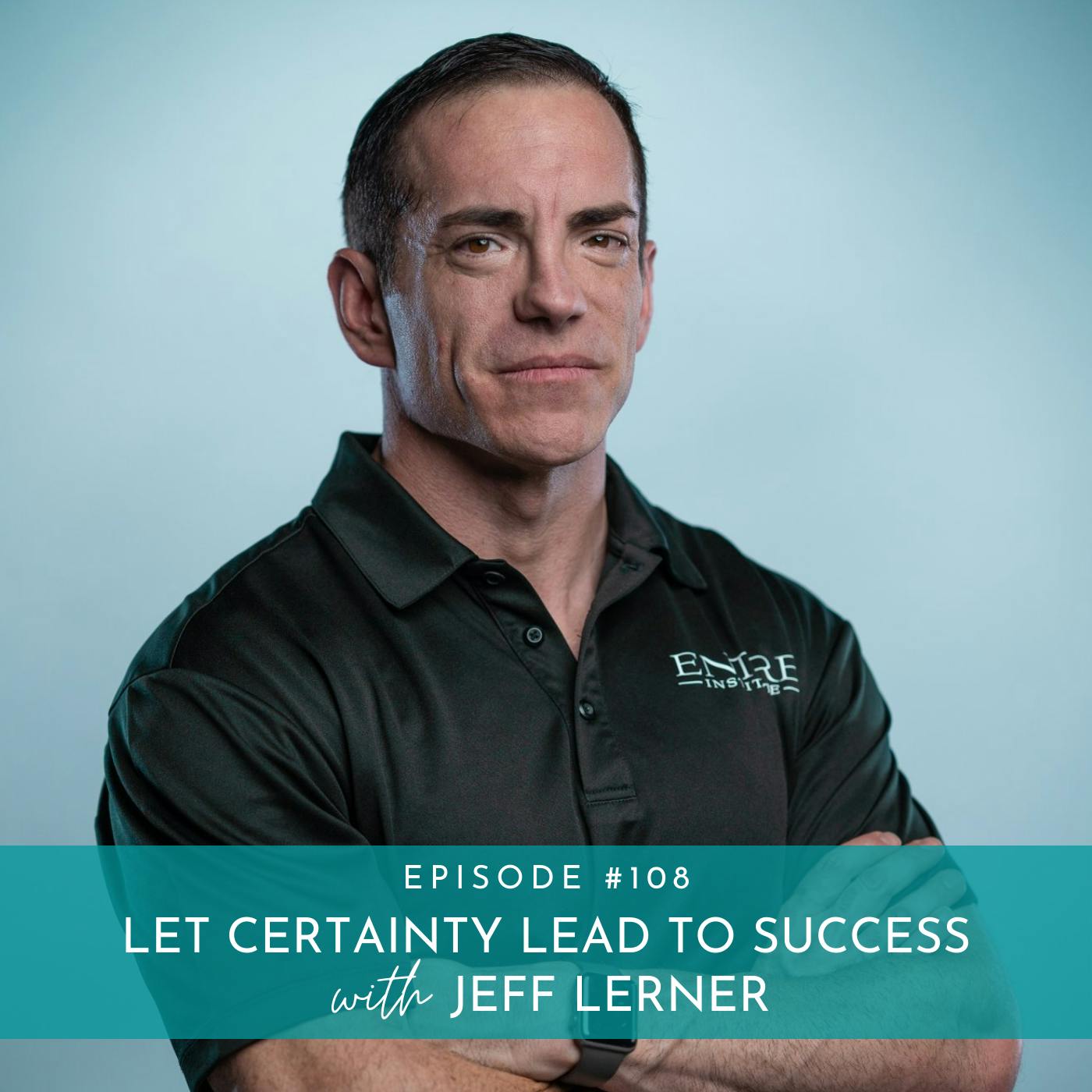
Season 2, Episode 108
Let Certainty Lead to Success with Jeff Lerner
A conversation with Jeff Lerner
About This Episode
"Your hard work puts you where your blessings can find you." Today's guest has an incredible story of making this phrase his reality. If you've ever struggled with finding your path to success, you'll appreciate this episode.
From broke jazz musician to $100 million in online sales… Jeff Lerner's story and message are now inspiring millions. After a decade of building multiple online businesses to over 8 figures and twice landing on the INC 5000 Jeff turned his focus to educating and inspiring entrepreneurs about the power of entrepreneurship in the modern economy. In 2018 he founded ENTRE Institute where over 50,000 students are developing their ENTREpreneurial skills. He is now regarded as one of the most inspirational voices online in business and personal development.
Jeff's interest in entrepreneurship began in his 20s when as a pianist he was often hired to play in the homes of successful CEOs and business owners. In 2008, at age 29, after multiple failed ventures, including a restaurant franchise that left him with a half million dollars in debt, he found his first success online and paid off the debt in 18 months.
He currently maintains an active schedule of speaking events and media appearances while working day-to-day as ENTRE's CEO, hosting the popular "Unlock Your Potential" podcast and YouTube show, and working on his first full-length book. He is married, an active father to 4 children, and still enjoys playing the piano as often as possible.
In this episode, we talk about how to shift your mindset and your skills to create entrepreneurial success, the power of certainty and dedication, and what the road to success really looks like.
Here's what you will learn:
- How the grit Jeff learned from his father pushed him early on (8:21)
- How he found his love for piano while struggling with school and the importance of having a healthy outlet to inspire passiont(15:34)
- How affiliate marketing works and some sales hacks to benefit your income now (25:29)
- The power of positivity and how to turn challenges into opportunities and unlock human potential (32:15)
- Why certainty leads to success and possessing passion is an inexhaustible fuel that drives you to live out your purpose and pursue your dreams(46:21)
Screenshot your favorite part and post to your IG story and tag me @amberlylagomotivation and @jefflernerofficial so we can see and repost to our stories!
Follow Jeff
Links mentioned:
If you are ready to leave your mark by discovering your message and sharing it with the world, you've come to the right place!! Let's work together to build your influence, your impact, and your income! Join the tribe you have been waiting for to activate your highest potential and live the life you deserve! Another Your Unstoppable Life Mastermind is starting soon!!! Early bird countdown starts now! JOIN NOW and let us know you are ready for greatness!
Read the "True Grit and Grace" book here and learn how you can turn tragedy into triumph!
Thank you for joining us on the True, Grit, & Grace Podcast! If you find value in today's episode, don't forget to share the show with your friends and tap that subscribe button so you don't miss an episode!
You can also head over to amberlylago.com to join my newsletter and access free downloadable resources that can help you elevate your life, business, and relationships!
Want to see the behind the scenes and keep the conversation going? Head over to Instagram @amberlylagomotivation!
Full Transcript
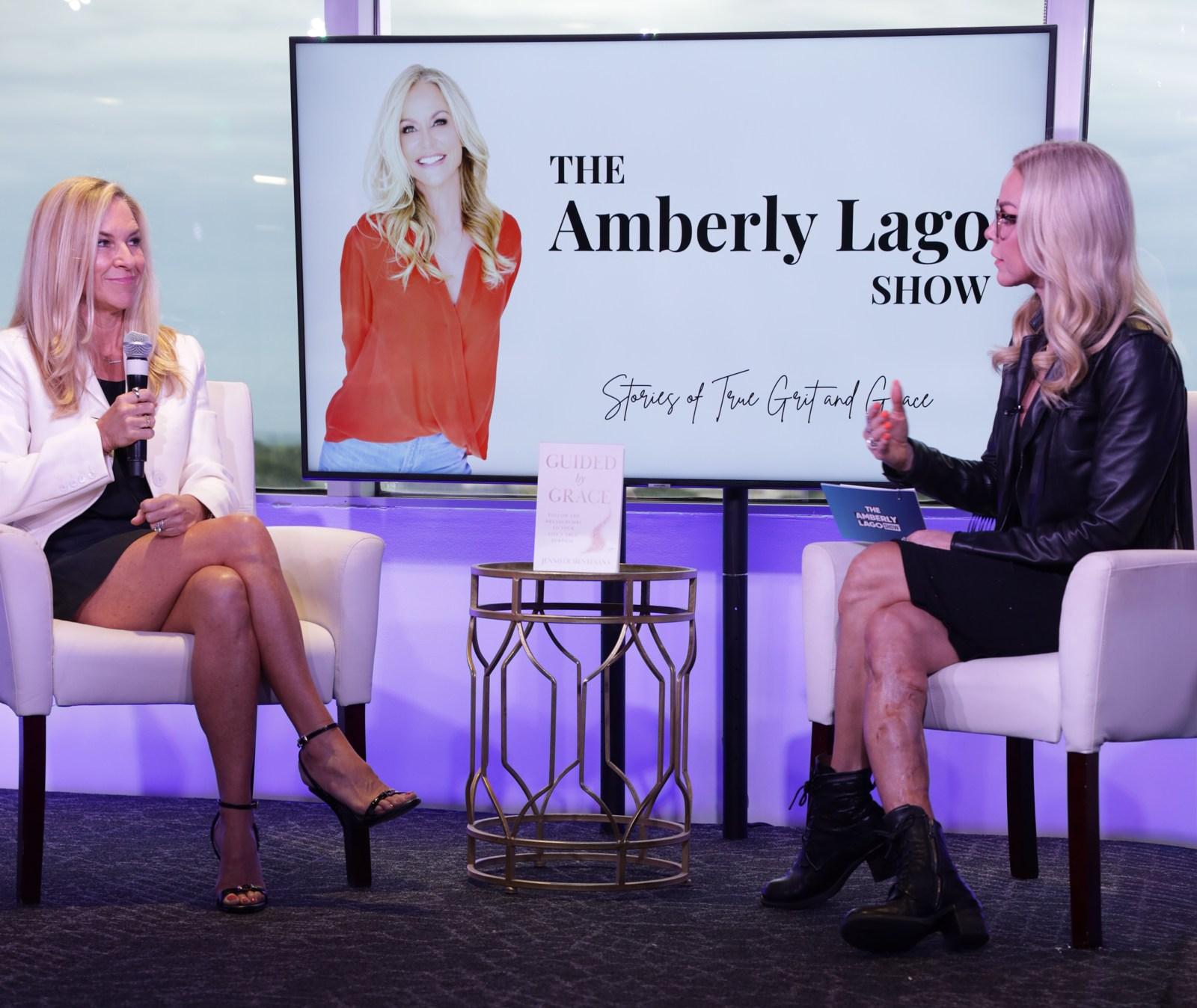
Welcome to True Grit and Grace, a podcast designed to empower you to claim your resilience and thrive through life's challenges. I am Amberly Lago, a mindset coach, fitness expert and best selling author. Each week I'll dive deep with the world's brightest leaders and elite performers to share tangible tools and practical advice to inspire you to keep your eyes on the prize and forge ahead. So get ready to conquer your fears, heal any trauma, lead with your heart, and elevate your life with grit and grace. Hello and welcome to True Grit and Grace. I. I'm Amberly Lago and today on the show I have a good friend of mine. He went from being a broke jazz musician to 50 million in online sales. He is the definition of resilience and grit and integrity. I have Jeff Lerner and his story is inspiring millions around the world and I know it's going to leave you feeling like anything is possible for your own life. He's constantly featured in news media. He's all over the world, traveling, speaking. He's got two books. One of his books is A Hacker's Guide to an awesome Life. And he's also got Millionaire Things Rich People Know but Don't Tell you. He is the CEO of Entre Institute and today I'm hoping he's going to tell us some secrets about how he became so successful. So, Jeff, thank you so much for being here.
I am thrilled and honored and flattered to be here, Amberly, and so excited to reconnect with you. Thanks for having me.
Yeah, well, you know, I recently was a guest on your podcast and the more I got to know you, I was like, oh, we are going to be friends for life. But I have to say I totally got hooked on your YouTube videos. I love your YouTube channel. Y' all go check his YouTube out right now because you are going to learn a lot and you are going to see that he can play the piano. So I really wanted to ask you about your piano playing days and I used to work in a jazz club and that's how I met my ex husband. My ex father in law was a famous pianist. He played with Elvis and the Beach Boys and Frank Sinatra. Have you ever heard of Don Randy?
No, I haven't.
He's, he's old school.
Players. No, there were so many greats too. I'm sorry, I haven't heard of him. I'll look him up though. I love, love me a good old piano player.
Well, you are incredible at playing the piano and I feel like our stories, although they're so different. They're familiar as well because, like, I broke my leg. You actually broke your hand. And that must have been devastating, being a piano player and breaking your hand. So what happened?
Yeah, and it was, it was. It was arthritis, actually. It wasn't a, like a, you know, whatever you call it, a severe injury. It was.
Oh, it was arthritis.
Yeah. And it was. That's undiagnosed. It was basically in my late 20s, it started to hurt. And what I did have, carpal tunnel syndrome, ruled out. And so what was left was either tendinitis or arthritis. And it didn't respond to the way that tendinitis would have. So I just was ultimately left thinking it was arthritis, which is degenerative, and it was a function of overuse. I didn't start playing until I was 16. And so my, you know, sort of what some people would call work ethic, I would call my probably slightly Asperger's esque, obsessive qualities. I pushed so hard. You know, I decided at 16, I want to be a piano player because I don't want to have to get a job someday. And of anything I can think to do that I could possibly make a living at, and that it doesn't make me miserable. Well, I like music. I might as well learn an instrument. And the piano seemed to be the one that paid the best. So it was just. It was very tactical. It was like, oh, I should do that the way some people are like, oh, I should learn to fix a car engine. But it's hard and it's competitive, and there's thousands of people, millions of people that would love to do that for a living, and very few that do. So I actually dropped out of high school and started practicing 8, 10 hours a day my junior year, what would have been my junior year of high school. And frankly, by my mid-20s, I had probably played 20,000 hours of piano in eight years. And there's a phenomenon, biomechanically, that I learned about once I started to have problems, essentially. There's a huge difference, and this is true in really all physical performance athletics as well as the arts. The performance arts. There's a huge difference between starting before puberty and starting after puberty. If you start something after your body has grown and matured and kind of hardened in a way, you just. You haven't baked in certain movement patterns that. So starting at 16, it was really an inevitability that my body was going to break down trying to push as hard as I did to play at an Elite level. You know, if I'd started 10 years
earlier, it's kind of like conditioning. It's conditioning and, and I know that once you have a skill like that, it always, it stays with you. Kind of like riding a bike, you might feel a little rusty at it. But I hadn't danced, tap danced in like 10 years, and I put my tap shoes on and I was able to do a couple of moves.
To the average person, you're probably still a pro.
Well, I don't know about that, but thank you. Yeah, well, you, I think that your combination of your really super high iq. Okay, I can just tell you're smart and your grit. You know, when I was growing up, my dad used to always say, you know, well, I'd rather you have street smarts than book smarts. And I'm like, well, I would rather have both. But I think a combination of all of those things and you being really good with people is like a superpower for you. I mean, you've done incredible work. But I wanted to ask you, where do you think that you have this grit or this passion in you because you are a really hard worker? Where do you think that comes from? Is that something that you grew up and was instilled in you? Did it come from something that happened to you as a kid? Where do you think that came from?
So do you want the feel good answer or do you want the painful answer?
Well, I think behind every highly successful person that there is some sort of pain point that pushed them to where they are today. So I want to. We get, we get real raw and gritty here. So lay it on me.
All right, so you want true grit and grace. I'll talk about the grit. Hopefully your audience will cut me some grace. So here's the thing. I think that hard work as a strategy was modeled for me by my parents. My mom was one of, I think she was the second female partner at one of the biggest law firms in the country. My dad was a self made businessman, became a money manager, managed money for high net worth people. I mean, he managed $10,100,000,000 accounts. He managed money for billionaires. Despite the fact that he was dyslexic and he never finished graduate school. He didn't have an MBA in a world where everyone he competed with did. He was just very, very good at the emotional and psychological side of investing and he understood people. But regardless, they worked really hard. That happened. I grew up watching it and I thought, okay, when you work hard, sustained over long periods of time, Good things can happen. But where I think I took it to another level, and I'm honest enough to say I do believe I have a gear that I operate in that most people don't. In my experience, came out of a lot of. A lot of bona fide pain. I was born with a genetic condition and I was told about. I mean, look, people have genetic conditions, right? Some people have hemophilia, some people have craniofacial, some people have down syndrome. It's like shit happens in your chromosomes, right? Sometimes it's inherited, sometimes it's a mutation. But I think there's a way to let children understand what's going on with themselves, depending on where they are. And I think in my case, I probably understood at an earlier age than was really healthy that I was genetically different because that made it possible for me to take a lot of experiences that happened to me at an early age and convert them. Instead of just having them be experiences that I observed, I converted them into an identity that I lived because, oh, that must be happening because I'm fundamentally different. And so I got bullied a lot as a kid, but I was never able to make it. Oh, I'm getting bullied because they're bullies. It was, I'm getting bullied because I'm genetically defective.
Oh, wow. So it just reinforced that belief that you were defective. Something was wrong with you that.
Exactly. And so I grew up thinking, okay, I don't feel attractive, I feel. I feel ugly. I feel. And you can, I mean, I think we could talk about this. I feel I felt disfigured. Right. I don't know. You have an injury that we've talked about some of those same types of emotions. And I felt like the only way that I was going to be loved or even respected or even just treated well was that I was going to have to outperform people and I was going to have to earn it. And frankly, I was going to have to impress people. And so I took that strategy of hard work coupled with a reasonable. What I recognized was an intellectual capacity, which was kind of the first thing that I felt validated. You know, nobody was saying, oh, he's such a good looking kid, or oh, he's so good at sports. But they were saying, oh, he did finish his math test before the other kids. So I'm like, oh, I get recognized for that if I work really hard and I focus on, you know, cognitive and intellectual pursuits and ultimately artistic pursuits. Because I wasn't an athlete and I hated school then I can earn my way. I can work my way into feeling okay in this world, which is a really hard way to live, frankly.
It is. And you know what? I was, I did the same thing. I became an overachiever. So everything that you're Sharon really resonates. I get that on like a deep, a deep level. And it is a really hard way to live. It's a lot and it's a lot for a young, when you're young. I mean, it's a lot at any age. But when you're young and you're going through puberty and you're getting bullied as well, that's a really tough thing to go through. Did you have anybody to talk to about this or did you confide in anybody about how you were feeling?
I was an only child, which I laid again at a relatively early age. I found out that the reason I was an only child is because. Because my parents had essentially only wanted to gamble one time on having a kid based on my genetic makeup, which only reinforced the identity challenge. It's like, oh, I'm so defective. They could only take the chance of making one of me, basically. And so I didn't have any siblings and I went in terms of people to talk to, I mean, I talked to my parents, but it was just a different time. There weren't strategies and my parents were deeply loving people. But as I came to learn later, through counseling and therapy and parenting classes, wanting to be a good parent for my own children. You know, you reach an age pretty early in life and I think this age gets younger and younger in the modern world where your parents are not the primary influence in your life. Like the average 12 to 14 year old kid, his or her parents are not the primary influence, no matter how good and proactive appearance they are. Because social media especially, but even younger, they just, their friends and their peers have so much more access to them than their parents do.
Yeah, and I know my mom and dad, I spent more time with my track coach and my dance teacher and they were incredible role models for me. And you know, think about the kids. Now I see, oh my goodness, I can't believe what my 13 year old knows. And I'm like, where did you learn that? And she's not even, thank goodness, she's mostly on, on the back of a horse, She's a horseback rider. So mostly she's outside riding a horse all day, hours at a time. But she watches TikTok, she watches YouTube and she learns, she learns a lot of good stuff. But Then there's some things I'm like, oh, my goodness, how did you learn that? You know, she learned. She knows so much more than I did at her age about worldly things that I knew nothing about. And I think that's a lot of social media. When you dropped out of school, were your parents supportive of that?
Yeah. So I. The first time I realized I was pretty good at sales was when I got my parents on board with the idea of me dropping out of high school.
Wow.
I mean, I sold. And bear in mind, this is.
And did you drop out because of the bullying or because you just hated school and you wanted to take piano?
I dropped out because I hated school. At that point, I wouldn't say I was getting bullied a lot because I was so withdrawn. And I had some really good friends at the old school. So my sophomore year, I actually got kicked out of that high school because I was just such a problem, Disciplinary problem, because I just hate it. I just resented. To be honest. I've just had a problem with authority my whole life. I'm like, you are not qualified to tell me what to do. And I'm better at chemistry than you are. I speak Spanish better than you do, so I don't respect you. And so I'm not just not going to follow your dumb rules. It's just kind of. I mean, I'm a lot more normalized now, but as a kid, that's how I was. So I got booted out of that school. Then my junior year, I was sick the first semester. I had mono, and I was like, screw this. I can't go to class. I can't make a friend. I can't. I was at a new school, but I couldn't. I literally couldn't make a friend because I was sick and I was contagious. So I found this old music building that had a piano in it, and they had built a new music building on this campus. And so I just started going to the old music building every day where there was a piano and just in an empty room. And I started teaching myself to play by ear.
Wow.
And I realized, like, oh, my gosh, I don't ever want to go back to class. Like, I'm actually happy doing this. And I know there's people that make a living at it. Whether I end up being Elton John or not, you know, I'm more interested in. Could I do, you know, could I patch together a dueling pianos gig here and a cocktail party there and a wedding gig over here and a club gig over there and actually just survive and not have to report to a boss or a job every day. And as soon as it clicked that I might have the talent to be able to pull that off, I worked really hard. Like, I was done with school, but I just went to my parents, and I was like, listen, what do you want from me? Like, you only had one kid. You put all your eggs in one basket. When you're old and you're looking back on your life, what's going to have made this a really successful endeavor for you, having a kid? And they're like, we just want you to be happy. And I said, okay, well, let me tell you what happy Jeff looks like. And it was not staying in school, and it was not going to college, and it was not getting a job, and it was not working 40 years to try to build up a 401k and get punked around by bosses while I tried to climb the ladder. That wasn't going to be the picture of my happiness. So they were on. They kind of had nowhere to go. They're like, all right, well, you're going to make your bed. You're going to sleep in it. You want to be a high school dropout, you know, let's hope the music thing works out, because if not, you're going to start on the French fryer at McDonald's. But my mom marched me up to school and actually signed the papers to withdraw me.
Wow, you are. I just can picture you talking to your parents, and you're like, oh, I got my way. I am good at sales. Like, you had that entrepreneurial mindset from the beginning, and I think that, too. Like, it's so important. I'm the same. Like, I have to love what I do, or I know I won't stick to it if I don't love it. I know how I am, and I know that I won't stick to it. And so I think that you recognized from a young age, like, what could I do that I love that I could make money at? And that's kind of how I felt about dance. I was like, I can get paid to do what I love. And so I love that. But then when you started, you're a jazz musician, you're doing great at that. When you had, you know, started having issues with your hands and you couldn't play anymore, did you feel like the rug was, like, ripped out from underneath you? Like, what am I going to do now? Am I going to have to go to the fryer at McDonald's? What the heck?
I did. But it was a. It was a mixed blessing and I was able to make peace with it because I had realized by that point that I probably had the natural ability to be a world class piano player. Player. Like, if I had actually started and taken it seriously at five or six years old, I could have been a Carnegie hall piano player. Like, I could have been one of the really great piano players, you know, at a. At a high level. Not saying the best in the world or anything, but like, whatever the piano equivalent of like playing in the NBA is, I probably could have if I had started.
I wish we were. I wish you were. We were at your house because. Or you know what? They can just go to YouTube if you're listening to this. I was blown away when I. When I heard you play piano. I was just. I stopped like everything I was doing, I was clear, like in the moment, just listening to how beautiful it was. If we. You're. He's traveling right now and he's taken time out of his travels to be on the show. So y' all check out his piano playing and his tips as for being a millionaire and very successful entrepreneur too. But I have to say, your piano playing is beautiful. But I think that everything, it seems, has kind of taught you and built you for. Led you for exactly where you are today. Because I know that when you were playing piano, you were playing piano at some people's homes that were, you know, successful entrepreneurs and, and stuff. So you had made friends with people who could kind of guide you in some ways. Um, did that help when you were going through this hard time or how did you start to begin to shift?
Yeah, it did. So through my 20s, as I started to realize I was never going to be as good as I could have been if things had gone differently. What it did was it planted a seed of, maybe this isn't actually the thing that I'm meant to do my whole life, right? Maybe there's some way I can because. And I started looking at, why am I doing this? I'm doing this because I want to have impact, but I'm terrified of connection. So, like, I don't. I would get. I had really bad social anxiety. I'm painfully introverted, which you might not guess, seeing all my content, but I've had to work really hard to develop that muscle. And I thought, okay, so I want. I like to. But I'm not a misanthrope. It's not that I don't like people, it's just that I get exhausted. And I feel. And I've been told that I'm slightly like Asperger's spectrum. So I don't totally understand human action, human interaction in a way that makes it feel natural. So it's, like, exhausting for me to, like, schmooze, right? And so. But music gave me a way to deeply connect with people and be felt and be. You know, people would crowd around and they would sing and they would. And they would, like, kind of love on me. And I got all the benefits of social interaction without actually having to know what I was doing because I could play music. So I'm like, okay, but. But if that's why I'm doing this, that's different from, like, oh, I'm just born with a song to sing. It doesn't even have anything to do with relevance. And I. And maybe fix some other things about my life, because I don't really love being poor. Like, I mean, jazz pianists don't make a great living typically. And I realized I could start a business. And that became so blindingly obvious to me because I was playing in the homes of, like, you mentioned, CEOs, and, I mean, I played solo piano for small dinner events with less than 50, or even sometimes less than 20, even, sometimes less than 10 people in the homes of half a dozen billionaires and probably 50 deca or centimillionaires back in the 90s and early 2000s. Right? So, I mean, I'm playing piano for, like, the guy that owns the Houston Astros and the guy that owns the Houston Rockets and the guy that owns the Houston Texans, like, all the sports teams. I'm playing in the owner's homes. And to a person, every single person who's got this life that anybody would go, oh, my gosh, I would love to have that life. They're all entrepreneurs. They're people that started businesses. And I started looking at them going, okay, they have all the things that I love and some things that I'd love that I don't have. And they don't have to. They get to call their shots. They don't have to go, like, schmooze and work the ladder and play some dumb game they think is beneath them. And I was just. So I started nighttime, I was a piano player. Daytime, I was an entrepreneur starting businesses. And all through my 20s, one after the other after the other, I failed. I failed at 10. Finally, in my late 20s. You know, what I have found in this life is that if you will just keep going, one of my favorite quotes is from St. Augustine. It says, understanding is the reward of faith. Therefore, seek not to understand that thou may believe. Seek to believe that thou may understand. And for me, the belief that I had chosen the road less traveled and that it was headed somewhere good, somehow, some way, and if nothing else, I was going to enjoy the journey a lot more. You know, at least I was. You know, what's that quote about? You know, don't be one of the cold and timid souls who know neither victory nor defeat. Like, I was on the field and I was living that life and it was going to head somewhere. And wherever it was headed was more desirable than the other place where I'm just following society's plan and taking orders. Once I committed to that, there's only one way to commit to that. If you're not all in on that, you're all dead on that. And so I was all in. And so I started business after business after business after business. And sure enough, right at the time when three things converged. My hand, my arthritis got so bad I couldn't play anymore. My last business failure was so big that I was at what I would call rock bottom. You know, I was $495,000 in debt. I had two franchise restaurants that I defaulted on SBA loans and I was just. And I got devote, my wife left me and it was like total rock bottom. But I also discovered the world of online marketing, particularly affiliate marketing at the time, which is a set of skills, direct response copywriting, the art of persuasion, the art of building online funnels, a little bit of technology, how to sell affiliate products, how to find good affiliate products, understanding the difference between a product and an offer, and how to construct offers and how to sales presentations. This whole world of digital marketing that was still in its relative early formation. 2008. This was 2008.
Wow. Okay.
And that all converged at the same time, right? Okay, my wrist is toast, my business is toast. And I found online marketing. So what was I going to do? Well, I know that I'm good at a keyboard, so I just replaced the keyboard with a computer keyboard and I went to town. And I did what I did when I was 16 and I wanted to learn piano, 8, 10, 12, 14 hours a day, pecking away at the keyboard, hunched over, giving myself a neck problem from bad posture. And 18 months later, I paid off half a million dollars in debt with affiliate marketing.
That's incredible. I was actually telling a client of mine this morning, I said, yeah, I'm really excited. I'm going to get to talk to Jeff Lerner today. He's just really. I was telling her about your story and how you got started with affiliate marketing, and a lot of people don't even know what affiliate marketing is. And then just after learning how much, watching your videos and stalking you basically and learning about affiliate marketing more, I was like, oh man, I think I need to ask Jeff to explain affiliate marketing a little bit. And on all those times people have reached out to me, would you like to be an affiliate market? Would you want to do this, be an affiliate for our company? This and that? I've done it once because I didn't want to push a bunch of different brands on people and stuff like that. But the one brand that I really liked, that I did affiliate marketing for, gosh, seeing that money deposited right into my bank with me literally doing nothing to really promote it. I did one post for that thing was nice. It was really nice. But can you explain, first of all to others who might not know what affiliate marketing is, what that is exactly. And then tell me if you think I should be saying yes. More to it, for sure.
So affiliate marketing is just a fancy term for technology applied to the age old business of referrals, right? A referral is just, oh my gosh. I have this friend Amberly, she wrote a great book, you should go buy it. And my referral sends somebody to buy your book. Right. But what if you had a program where I could say, hey, have you heard my friend Amberly? She's got a great book. And they go, oh, that looks so cool. And I go, you want to buy it? Here, here's a link. Go buy it. And because they use that link, you know that I'm the one that sent the referral because it was a link that was unique to me. And so you're gonna go, oh, hey, they bought a book. Here's a few bucks. That's it. Right? It's just a kickback on a referral only because it's tracked their links. You can do it thousands or millions or really an unlimited number of times, and you can have an unlimited number of people doing it. And all the tracking is automated, which makes all the money flow automated, which makes it a super simple way to have a fairly complex marketing organism. So affiliate, it's just a marketing strategy. Right? And so I just did it a whole lot of times in a very strategic and intentional way. And there's a million ways. I mean, again, you watch my videos on YouTube, I think I have. There's several different Videos. It's a bigger subject than you can fit into any one video. But, you know, I cover the gamut pretty well of, like, the different types of affiliate networks and different types of offers and where you can go and how it works and what all is involved. But to kind of glide into your second question, what I'll say is, it's not just about, oh, let me go find products and get links and push my links all over the Internet with spam or social media or email blasts or whatever. Right. Because that's just a really good way
to do a lot of influencers. That's what they do. They like, you look in their profile and it's all affiliate links for about 20 different products.
Yeah. And listen, if you've done the hard work to build a really loyal, large audience and you've built up so much goodwill and you've delivered so much value and you've built so much affinity with that audience that they can tolerate you posting 20 consecutive affiliate links and go, oh, my gosh, I'm so glad that Gary Vaynerchuk is telling me about what organizer he uses. Then, like, great, you should do that, but you'll wear out that goodwill pretty fast.
See, that's why I don't do it. I don't want to. I don't even do. I don't even like promoting any products on my page. Or, in fact, I will. You know, I've had the show for a year and a half, and I thought, I don't want to promote a bunch of commercials and ads and this and that, because I really want to work on just delivering quality, like value, value, value, and then build my audience and then reassess and see what I can do.
I think there's a. I think there's a way. And this is what I got. I got right pretty early on. There's a way that you can enroll your audience in the essence or the essentialness of the promotion. And I think there's kind of just generally a few rules. One is don't promote something that you don't genuinely use. Even if you didn't promote. You know, for example, if somebody said, jeff, you're in an Airbnb right now, how is it that you're like, what gear are you using that allows you to pipe into Amberly's podcast when you're on the road? I would go, oh, man, I've got this trusty blue snowball microphone. I shouldn't turn it because then you can't hear me as well. But I've Got this blue snowball microphone that, you know, folds up real small. And, you know, I got this little stand and I travel with it in my backpack. And, you know, I've gotten it through security enough times. I know they're not going to confiscate it at the airport and whatnot. And, oh, if you'd like to get one, here's a link. Here's an Amazon link to grab one if, you know, it's like, nobody's going to get mad at me for that. Right?
Yeah, Yeah, I like that.
But let me say this. It's also, you can enroll the audience in the idea that, you know, hey, listen, I work really hard to deliver you great content, bring you a ton of value. You know, this is a business for me. I don't have a job. This is my job, which means I don't have a paycheck. And so if you. I appreciate you as my audience member, and if you appreciate me, help me continue to do what I do where, you know, don't buy something because I told you to buy it, but if you're gonna buy something, you can help me by buying it through me, and that helps me continue to do what I do for you. Nobody, I mean, anybody that's offended by that conversation, you don't want them in your audience anyway because they're not a serious person. They're just looking for a reason to be annoyed.
Yes, that is true. Good points on that. And I'm asking the audience to subscribe and download right now.
By the way, here's the thing. I'll say it for Amberly. Amberly works her butt off to do what she does. And Amberly, do you have some side job that we don't know about that pays you six figures for just showing up every day, or is this your livelihood?
Oh, no. Nope, this is it. This is it. Y' all speaking. I'm gonna start that again. It was a rough year through Covid, and I was like, oh, my goodness. I. The speaking was all virtual. And unlike you, y', all, he's like a vlogger. He's. Jeff is a really incredible vlogger, and he's got these very entertaining vlogs that he does. I really. It's Something that my 13 year old has, like, given me the nudge to do more, but it's really harder for me to sit there and look at myself and talk to myself on the camera and doing virtual events and looking at myself in the. In the. He's got a.
For those of you that are Watching. I'm showing you my vlog camera. So here's. Here's how you do affiliate marketing. You say, so I have this Sony. What is it? Sony Zeiss Vario Sonar. See, I'm such a bad. I don't even know what the model number is. Oh, it's a Z. You know, It's a Sony ZV1. I use a Sony ZV1.
Sony ZV1. And you've got fancy little. Is that.
Yeah. So here's what Amberlee's gonna do. Yeah, here's what Amberlee's gonna do. She's gonna go on Amazon, and she's gonna search in Sony ZV1, and she's gonna sign up for the Amazon Associates program, and it's gonna give her a link that she can use to send people to buy Jeff's vlog camera. And she's gonna put it in the description or the show notes of this episode, wherever it appears. And now she's officially an affiliate marketer.
All right, and then I'm gonna just turn into a vlogger, and who knows where that'll lead? Then I'll be some famous YouTuber. You never know where that will go. But you are.
I will say this. I love the vlog. It's. It's a. It's a lot of work. But when your life is being documented, it pushes you, like, to live the life that you would actually want to live if people were watching.
Yeah, you know what? It's so true. I have to say, the other day, so where my daughter rides horses, the trainer has set up, like, a little gym area in the back in the dusty area. And I'm like, I didn't get a gym workout today, and I like to work out every day. And I was like, okay, I'm going to go dust off that equipment and do what I can. I wanted to hold myself accountable. So I was sharing with. Sharing it with my audience. And as soon as I set up the camera to share that with them, I was like, oh, I'm lifting a little more. I'm doing a few more reps. So you're right. It does. It does hold you accountable. But we got off topic because I got a lot more questions about sales and stuff. So I want to know some sales hacks. So the reason I'm asking is because I think that we are all selling kids. They're either like you did when you were young, you were selling your parents on the fact that you wanted to drop out of school and you wanted to play piano. Whether we like it or not, sometimes, you know, sales gets a bad rap, but we all do it, whether we're trying to sell an idea to our partner or we're trying to do an MLM company or whatever it is we're selling. Can. Can you give us some secrets to how you can be a good, good in sales or how you've become such a great sales leader in your company?
Yeah, I would. I mean, I can tell you what's worked for me. I'm not. I've never actually had a sales job like where I got paid for sale on sales commissions. My first commission that I ever earned was as an affiliate marketer and when I was trying to pay off $495,000 in debt. And by the way, it was federally guaranteed SBA loans, which means when you default on them, you're not dealing with the bank. The bank actually calls in its insurance policy with the federal government. And now you're dealing with the U.S. treasury.
Oh, my gosh.
So it's the same as owing half. I was in the same situation I would have been if I don't a half a million dollars in back taxes. So, like, there's nowhere to hide. The government's going to come find you and they are going to get everything you have and they're going to hound you for years, and you're never going to be able to hide, squirrel money away until it's paid. I mean, it's just. It's brutal. So that was the situation I was in. But I was a piano player. I'd never made more than $40,000 a year. What does a guy that's never made more than 40, maybe 50 grand in a year as a piano player do when he was a half a million dollars, you know, to the government? He hustles, he improvises, right? He adapts. And so for me, what I started doing that was different than what a lot of affiliate marketers do is I put a phone number on my opt in page. So everybody goes, oh, I want to build a big email list. And, you know, then I just want to send emails to my big list and make, you know, I'll sell a $5 product 1,000 times and make $5,000 or whatever, right? I put a phone number on every opt in page. So it was like your name, your email address. And I would say, for VIP access, give me your phone number. Who the hell knows what VIP access even means, right? But let's say a third of the people wanted VIP access and they gave me their phone number. I would just call them up, hey, this is Jeff Lerner. You just opted into my page. And I set up an alert system so I would get fast notifications. Remember, I have half a million dollars in debt. I don't have a whole lot of good stuff going on in my life. I'm sitting there waiting. And every opt in notification that comes via email, I'm looking. And if there's a phone number, I'm calling them like right away. And I'm like, hey, that's key is
getting on that opportunity right away. That is key, I think.
And let me say this. I was in a community. So I started learning affiliate marketing inside of a community that had about 40,000 members in almost 200 countries. So it was a big community, worldwide community. Within six months, I was in the top three in this program as far as the amount of commissions I was earning. And consistently for the next year after that, I was 1, 2, or 3 every month. So I immediately put myself in an elite category of less than one out of every 10,000 people simply because I was aggressively looking to get on the phone and have conversations with people when everybody else wanted to hide behind technology and take the easy way. So I was making 20, 30, 50 at 1.100 calls a day because I was able to get up to three or 400 leads a day. And let's say a third of them gave me phone numbers. And I'm calling every single one and introducing myself. Hey, I'll bet you never thought you'd hear from the guy on the Internet whose page you opted into, right? And everybody would tell me, oh my gosh, I've opted into a thousand things on the Internet. Nobody's ever called me. I can't believe I'm talking to the guy in the video. And I would just ask them, like, what are you looking for? How can I serve you? How can I help you if I don't have a service that can help you with what you're looking for? Can you hang on the line, give me 10 minutes or five minutes to do a Google search. I am going to find a solution to your problem while you're on the phone with me. And I would go find something, and as quick as I could, if it had an affiliate program, I would sign up for it, right? Then put in my bank information, and I would say, now I've got your email. I'm going to email you the solution to your problem that you just told me over the phone. And I would get paid if they bought it. Like, I Would do whatever it takes. And wow, I am right now.
You did that that fast.
How many hours a day did you
spend on the phone?
10 or 12 when I started. I mean, I worked 14, but you can't call at midnight, you know. And I even started running ads in the UK and Australia and New Zealand so that I had places I could call at weird hours. In the US middle of the night, 3 o' clock in the morning, I wanted to be able to call Australia, where it was seven o' clock at night or whatever, or six o'.
Clock. Yeah. So you, you're always thinking about. There's not everything is like, everything is as Marie Forleo says, everything is figureoutable, like how much, how. Well, who can't. I can't call because it's midnight, but there's got to be somebody. It's kind of like that said, it's five o' clock somewhere. There's somewhere in the world that you would be able to call.
And to be clear, I would call them on Skype. You could buy international calling minutes Even back in 2008, 2009 on Skype, very cheap. And I'll call. And I had a Skype number set up as a US calling number. And I would just call them on Skype with headphones.
And I still have a Skype account. I never use it. And they're still taking 650 out of my account every. I got to cancel that. So thanks for that reminder. I mean, does anybody still use Skype Internet?
Yeah, it's actually in the digital marketing community, it's not uncommon for people to reach out to you on Skype just because it's such an international. I think WhatsApp has probably displaced a lot of Skype. So Slack has replaced Skype for actual business, internal business communications. And then WhatsApp has largely displaced Skype, I would say, for international chat and message. And then, you know, there's a variety of in zoom, probably for video conferencing or hangouts or.
Yeah. Well, I'm glad you shared how hard you worked for so long because a lot of people will look at you and they look at your life and they see how successful you are and they go, oh, must be nice. And they're like, they don't realize how you worked your butt off for a long time.
It's really nice. It's really nice to know that you've earned and you deserve everything that you have.
That is nice, isn't it? When you appreciate it. So. But you started your company Entre Institute. And you had a webinar, you had a, you know, a few subscribers, and now you have how many subscribers to your bit? Well, first of all, tell us a little bit about your business.
So the really fast version is from 2008 when I started, to 2018 when I started planning the seeds of what would become entrepreneur had a couple different businesses online that were pretty successful. I was an affiliate marketer for about five years. And then I had a digital agency where I used a lot of the same skills that I had used as an affiliate marketer, only I started selling them as a service to businesses to say, hey, I know how to generate leads, I know how to convert customers online. I can help you do the same. And I started helping businesses with online lead generation and online reputation management and so forth. And I started an agency and that agency was actually more successful. I mean, I was a good affiliate marketer and I paid off all my debt and I, you know, did multiple seven, close to eight figures. But the agency is really when I learned how to build a real business, a quote, real business, you know, affiliate marketing. It was me plus maybe a couple virtual assistants. But like, I could never sell an affiliate marketing business, right? Nobody's gonna buy that from me. An agency that's like, that's a company. And in fact, I did end up selling it. It took almost six years and I built it up to, I did about $35 million in sales over six year period. I was the sole owner, you know, roughly 20% profit margin. So I had a great life in six years. And then I sold it for a couple million bucks to a software company that just wanted the customer list. And I started looking at my life and, okay, over the last 10 years, and I had another, a few other businesses here and there online, and they were all reasonably successful. So I'm like, oh my gosh, 10 years ago I was a broke, delinquent jazz musician, divorced, depressed, yada, yada, yada. And now I'm 30. I guess at that time I was like 38, 39 years old. And I'm basically, I can retire if I want. What happened? Like, you know, and then I started looking, I go, it's about the digital economy. There's this whole set of skills now and opportunities that are freely available for everyone, a lot of which don't cost any money or hardly any money to do, but they're not talked about in school. Kids that want to become entrepreneurs or freelancers or side hustlers or creators or influencers or just passion followers, they're just as marginalized as ever. School makes them feel just as ridiculous as ever. School still fails half the kids in the learning system that don't learn the way that school emphasizes through, you know, whatever modalities of learning. And, like, there's still all these problems that a different approach to education and a different emphasis on skills and opportunities in the market could be a really, really positive force in this world. But nobody in education is talking about it. So I started putting out all these content videos, telling people, look, if you feel like you don't have the life that you want because of the choices that you made based on what you were told was the safe option in the world we live in, I'm going to tell you that there's a different set of possibilities. Here's my story, here's what I've done, and here's some free information on how you can do it too. And I just started giving that away. And for almost a year, I was just making hundreds of videos to tell people how I'd done what I'd done. And after almost a year, by summer of 2019, I had had about 2 million people that had seen my videos on Facebook. And I realized, okay. And I was getting. People were like, okay, that's great, but can you teach me more? You know, they all want me to be their mentor, their coach. Jeff, you mentor me, Will you coach me? Will you teach me to. Like, I don't have. I mean, there's. I'm getting like 50 inquiries a day to be their mentor. So I talked to a buddy of mine. I'm like, listen, man, I think there's something here. I think we could have like a new kind of school. I'm going to go hole up in a hotel room and make a course and let's just see if we can sell it. Because I got a 2 million person audience that's been watching my videos. And that course was called the Entre Blueprint. And we sold our first Entre Blueprint, I believe, on July 22, 2019. So it's been just over two years and we've sold. I don't have. I can't say this is an absolute fact, but I'm pretty sure it's the best selling online business course ever. It's sold over 160,000 copies now in two years.
Wow.
And we've built just a whole ecosystem on top of it that has additional courses. We have a coaching program, we have live event, live personal development events. We built a software company so we have our own Funnel builder software that, you know, I think is better than clickfunnels and the other things on the market. Like we've built a whole world now that's, I believe, the world's first all encompassing school for entrepreneurs called Entre Institute. And it's absolutely blown up. We just made the inc 5000 and it's only been two years of product sales. So like we don't even have data. They're grading us from like zero to whatever. So by next year, my goal is to actually be the number one company on the, on the Inc 5000, which, oh my goodness, I don't think we'll have a hard time with. I mean, we grew 4,500% last year from small to big.
And I know you will be. I just know you will be. I really do. I mean, well, here's what I'll say.
We all we do is what we teach. That's it. We build. We use digital tools to scale a business in a way that was inconceivable 20 years ago. And we teach other people how to do it with any business they want. And that's why we're good at what we do.
The first time I met you, you had just launched your software or another part of your software. I think you had just launched it.
Yeah. So we rolled out software in the first quarter of this year and I think that's right around when you and I connected is maybe we were just getting ready to roll it out. You know, we took a year to a year to build it. So again, you know, takeaways here, like, like, I mean, you call it grit and grace, I'll call it grit and faith. Grace for yourself. But the faith and I think faith and grace go together like you have to. You will forgive yourself your mistakes and your stumbles along the way, and you will stay the course if you have the grace on the basis of the faith that you are meant for something great. And I believe that every single person on this earth, you know, Oscar Wilde said, be yourself, everyone else is taken. There's no one who lacks a unique selling proposition. There's no one who lacks a differentiating, you know, proposal in the market. There's no one who doesn't have a unique voice and a unique message, but what we have. And you asked about tips or hacks for sales. Sales. Sales. Get rid of the word sales and simply replace it with certainty. Whoever is the most certain wins always.
I love that. I love that, I love that.
And when you can start to see yourself as a certain Bet, and you'll bet on yourself and you'll bet big. You don't have to worry about the laws of probability anymore, because the laws of probability are an aggregate data set of humans who generally don't believe in themselves. So it's an irrelevant basis for comparison. As soon as you believe in yourself.
Yeah, it's so true. When I launched my very first. First big ticket item, I believed in it so much that every single. And I got. At first I thought, well, I'll have my VA get in and talk. Make a call and talk to me. And I was like, no, I want to talk to them about this because I want to see if they're a good fit for it, not if I'm a good fit for them. I know that it could change their life, but I want to see if they're a good fit, you know. And so I went in with, like, total belief in it. Total. I knew that it could transform their life. And you know what? It sold out, like, in the first week. So that. That really is. It does take believing in yourself. And you do that by just showing up and doing, you know, practicing what you. What you preach every day. And so I. I've said at the beginning of this that I really think that you are the definition of resilience. But what, what is your definition of resilience?
Honestly, I think that resilience, if it's a word that you have to stop and think about or you have to try for, you've probably already missed the boat. You know, we don't talk about, oh, so and so is resilient because they kept beating their heart or, oh, he didn't stop breathing. He could have stopped breathing anytime, but instead he chose to keep breathing. And that guy is resilient. That's not what we say. You're human. You breathe, you're human. You strive, you're human. You believe, you're human, you aspire, you're human, you work. To me, even this, I don't know, it's how we got to a place where grit is not the norm. Look, most people in the world we live in wouldn't have lasted 21 days in the Old West.
Yeah, they just would have their asses
tossed out of the saloon and, like, shot in the street. Like, we've just. To me, it's just about what influences are you allowing to determine how you think. If you limit your influences to the set of resilient, gritty people and ideas that exist in the world and let that be what forms you, then it Won't be this special, magical thing you have to aspire to to be resilient. You just won't be like most of the world because you're not allowing most of the world to influence you.
That is powerful. And that's why I hang out with you. That's like, I want to spend time, more time with you. You're awesome. I know we're running out of time, but I have one more question. Two more questions if you have time. So I know you have Ultimate Millionaire morning routine. I would like to know what your morning routine is. I mean, I know you, and you look like it. If y' all are. If y' all are just listening to this on the podcast, if you see Jeff, you'll know what I'm saying. He's a fan fit dude. He's very. He works out. But what are. What's your morning routine?
So it's interesting you ask that, because I actually changed it two months ago. So when I started Entre, which was roughly September 2018, is when I started putting this content out, one of the things I was really committed to was, I don't ever want anybody to say, oh, well, you were able to be successful with this Entre thing. And again, it wasn't called Entre at first, but as the idea evolved and, like, I'm going to create a school and I'm going to sell courses and we're going to build an institute here. I don't want anybody able to say, oh, well, that doesn't really count as a startup because, you know, you were rich to begin with, or you had a bunch of friends and you just called your friends and you had all these advantages. So, a. I wasn't that rich. First of all, a lot of people think a million dollars is so much money. Not when you're like, 38 and you're like, well, should I retire? Well, no, I'm just gonna be, like, lower middle class for the rest of my life. No, like, or if you live in
la, you can't even hardly buy a house for that.
Yeah, you still need a roommate or something. And so I gave myself a $20,000 budget to start Entre. And the other thing I did is I said, I'm going to be a living example. I'm going to be a daily testimony. This is why I put out so much content. This is why I started a vlog and all this other stuff of what it really takes for the average person who has no advantages. Just like me, when I started to be successful in this world, And I put myself on a routine that was like full on Navy SEAL David Goggins level intensity. And I did it and I ran it and I didn't miss a day for almost three years until beginning of June of this year when I finally reached a point. I said, you know what, I have 200, you know, close to 200 employees. I'll probably do $100 million in sales this year. I think I can sleep in a little bit if I want to because I've proven my point and I doesn't actually have to be this hard. So the routine you're asking about is what I did for almost three years straight when I was building Entre from nothing to the largest non venture backed private education company in the world in less than three years on a $20,000 startup budget that I put on a credit card and just coupled with a whole lot of hard work, right? And that was. I got up at 3:30, 3:30, I got up at 3:30, I was at the gym by 4:30, 10:30. So I'd get up at 3:30, I WAS at the gym by 4:30,. I was, I worked out for an hour. So by 5:40, the gym, my office pretty close to the gym. I'd be at the office by 5:40. I practiced piano for an hour till 6:40, then I'd be home by 7, then I'd shower. My kids would be up by 7, 27:30. I'd spend 30 minutes to an hour with them. I always take my daughter, one daughter to school. Then I'd be at the office by about 8 or sometimes 8:30 if I didn't have a call till 9, then I'd work till 5 or 6, then I'd go home, eat dinner and I had all my meals pre planned and I cook all my, I'd prepare all my food on Sundays and Thursdays for the like. I lived like a machine for three years because I just wanted to prove to people what's possible. And the reason I think this is significant. It's interesting we're having this conversation just right before our conversation I interviewed a guy named Chris Voss on my show who has a book called Never Split the Difference. And he was the lead hostage negotiator for the FBI for over a 24 year career with the FBI. And it was interesting because talking to him, he had that same experience of three years where he got, he went into law enforcement at 23 and he was in the FBI negotiating hostage crisis or training to by 26. And he just said for those three years. I was relentlessly excellent and better than my peers. And it only took him three years to go from being rookie Kansas City beat cop to the best on the SWAT team in the Kansas City police force, applying to the New York City office or applying to Quantico and ultimately working in the New York City Department of Federal Bureau of Investigation. Three years.
Well, you know, because he was relentlessly
excellent for three years and so was I.
Three years it's been since I launched my book. And just non stop like saying yes to everything, like not sleeping in ever. And just recently in the past two weeks, I was like, you know, I think I can just take my foot off the accelerator a little bit and I even have a sticky note. Find joy in the journey. Not that I haven't found joy in the journey, but to really like. I think I've proved it. Like you can go far when you really put the work into it. Your hard work puts you where your blessings can find you. But I tell you, me getting up at 5, 4:45 in the morning, I feel like a loser now compared to 3:30 in the morning.
Now I get up when I'm in town, I get up at 4. And the reason I picked, I knew that for June and July I was going to be traveling for about two thirds of those two months. And it's, I mean just traveling is hard. I've been taking red eyes and flying all over the country. So I finally gave myself permission in the beginning of June this year to say, okay, I made my point. And then, you know, I'm kind of taking the summer off. I think when September hits and the kids go back to school, I'm going to, I'm going to recalibrate around a 4:30 wake up time. But I'm still going to go to the gym, I'm still going to play piano. I'm still going to work my butt off. I might knock off at five instead of six. I might get six or seven hours of sleep instead of five. But I just, people want it to be easy and it just ain't. But it is easy because what's the alternative? Like 40 years of a job you don't love?
Yeah. I would much rather, I would rather work hard and it's something I love because to me it doesn't feel like work when it's something that I love. Yes, sometimes do. Like there are sometimes like for me, the amount of time you spent building your software and your systems and when you talk about click funnels and I'm like, oh, Because I think I've told you I didn't even own a computer four years ago. So it's all overwhelming. But to be able to learn as much as I've learned in the past just four years.
But let somebody take note of that. Amberly, you didn't own a computer four years ago. Now you're a world class professional speaker and social media influencer and podcast.
And you know what? The podcast just hit top 1% globally on Apple. So there you go. You just approach it with curiosity and put in the hard work and have good friends like Jeff to give you advice about affiliate links and you're set. But no, I really do want people to check out the institute because, you know, my youngest daughter is a little entrepreneur and I think she's got a more of probably will go down a path where she would really, you know, it would really do her some good to learn from something like that. Everybody's different. You know, my oldest daughter wants to be a doctor and wants to go to school. So definitely tell people where they can find your books because I know you even have a free download if you guys want to check out his website. Tell people where they can find your books and where they can find you.
So I appreciate that. And actually I need to update that bio. So the book Millionaire Secrets, that's actually not published yet.
It's not.
No. And that's my bad. We need to, we need to make sure that's clear in the bio. But we haven't published yet.
I did click to download it.
Okay, no, so I, we have a free book, a free download called the Millionaire Shortcut.
Oh, okay.
That's an ebook. That's a short ebook. It's like 20 pages long. It gives you the highlights of my story and the specifics of what I did and what you can still do in the modern world to start to convert this energy into income and, you know, essentially how the digital business model works. That's a free download. If you go to my Instagram or my YouTube, my name is Jeff Lerner, official on all the major platforms. And if you go to, let's say Instagram, there's a link in the bio, you can get that book. But my longer book or my, I have a book actually with a major publisher. We're actually changing the name. It's not going to be called Millionaire Secrets, but we do have a book deal. It'll be out in the spring. It's the same publisher, not the company, but the actual person that signed that did the publishing deal for the 10x rule. Cardone is our publisher so it should be a really good big book coming out in the spring. I'll let you know. I'll let your audience know. Or you know and it happens.
That is like the deal.
Let me just say that that was like the worst call to action ever for like, here's how to come find me. I should have just said go to YouTube and search for Jeff Lerner.
No, but I want everybody to find you. I think they will search for you on YouTube, but yeah, Instagram as well. He's on Facebook. He's on LinkedIn too. The only place I don't know if you're on is are you on TikTok?
I am. To be honest, I just, it's just so hard for me to. It's kind of like being an affiliate. I said don't promote products that you don't believe in and use. It's hard for me to promote on platforms that I don't believe in in use. And to be honest, I just hate TikTok. I just, I shouldn't say that. I know I'm supposed to be, you know, egalitarian social media expert, but I just don't like TikTok. So I don't. My team does some stuff with it
that actually makes me feel a little bit better. I just can't seem to get the hang of it. I mean, I haven't posted a uploaded TikTok.
Remember how you asked me about resilience and I said you have to limit your influences inclusive in that statement for me is I don't go on TikTok. Like there's no, there's no content that I'm going to consume on TikTok in those tiny little 15 second bites that are wiring my brain to not have follow through and not have discipline and not have long term focus and not be able to, you know, and only being able to process information in tiny little bits that would rewire my brain to be less effective and productive. So I won't go on the platform. So it's really hard for me to utilize the platform.
Oh, that makes sense to me. It seems like just a big distraction.
Exactly. If it competes with productivity, not only do I not want to do it, I don't really want to encourage other people to do it.
Yeah, I'm happy to hear you say that. Well, I will let you get back to your travels. Thank you for being here. I always love talking to you. I'm fascinated with your story and I know that it's going to inspire a lot of people. They're going to be like, oh gosh, I have no excuses now. I better get to work and just get her done. So thank you so much for being on the show and I look forward to one of these days getting to actually see you in person.
Oh, I know. Well, now that the world is somewhat normal again, I'm sure I'll bump into you at an event. But really, thank you. This has been an event. I'm so glad that I got to come back on or come on your show and reconnect with you. Amberly, I love what you're doing. The fandom here is reciprocal. I'm a big fan of your posts and your content. Just grateful I got to be here to share with your audience.
Thanks so much for joining us this week on True Britain Grace Podcast. If you like it, please rate it or share it with your friends. That would help too. If you're not yet on the newsletter list, come over to amberlylago.com and jump on it. While you're there, you can grab a free downloadable gratitude journal. And you might just want to check out my book or even check out my monthly motivational membership. Thanks again for tuning in and we'll see you next week.
Sam.
Pain to purpose to joy.
Never Miss a Conversation
New episodes drop regularly. Subscribe on your favorite platform and never miss a conversation.