

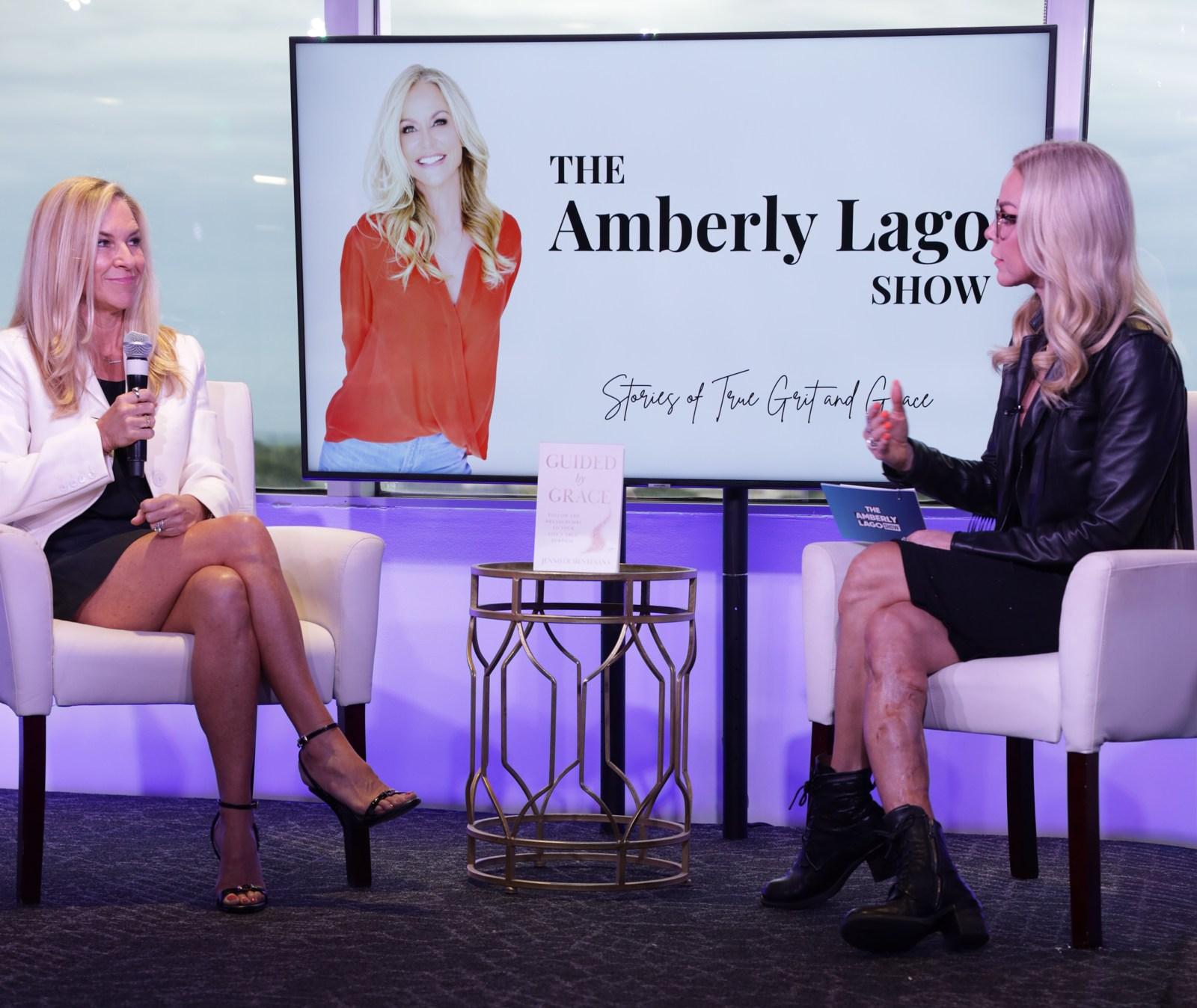
Season 2, Episode 106
From Teenage Felon to Figuring It the F* Out with Sean V. Bradley
A conversation with Sean V. Bradley

About This Episode
"Get the information from the people that have it to the people that need it." Get ready to hear one of the most resilient stories I have ever shared with you on the show. If you've ever felt like too much messed up stuff has happened in your life to be able to overcome it, this is for you.
Sean V. Bradley, CSP is an entrepreneur, published author, speaker and award-winning international trainer. He is a 13-time NADA/ATD convention speaker, FranklinCovey Certified Facilitator and has earned the coveted "CSP" designation in the National Speakers Association. Sean is also a member of the elite "Million Dollar Speakers Group", in the NSA, and additionally a state association speaker and trainer.
Sean has personally trained over 100,000 Automotive Sales Professionals in 3,000 unique roof tops. However, he literally influences hundreds of thousands of professionals, in and out of the Automotive Sales industry, all over the world, through his over 3,000 published articles, his Best Selling Book "Win the Game of Googleopoly", his over 7,000 videos published online, and through his social network of hundreds of thousands of interactive members, fans and followers!
In this episode, we talk about Sean's journey through neglect, abuse, imprisonment, and then into self-development, success, and the power that resilience brings into your life.
Here's what you will learn:
- What it was like for Sean growing up in Brooklyn and Queens (2:31)
- What hustling while going to school teaches you (13:29)
- What Sean learned as a confidential DEA informant (18:20)
- What prison can teach you (26:23)
- How to start on the road to self development (36:10)
- Effective habits and how FITFO works (41:21)
- How to find work life balance (45:14)
- How to use multiplicity (51:21)
- How Scar Food has helped in healing all kinds of scars (58:29)
Screenshot your favorite part and post to your IG story and tag me @amberlylagomotivation and @seanvbradley so we can see and repost to our stories!
Follow Sean
Links mentioned in this episode:
- Mike Zeller
- Execution: The Discipline of Getting Things Done
- Brad Lea
- Scar Treatment for Scars, Acne Scars, & Stretch Marks With Scar Food
- Win the Game of Googleopoly: Unlocking the Secret Strategy of Search Engines
- Forbes Riley
- Grant Cardone
- Tim Storey
- I Was A Teenage Felon - VICE TV
If you are ready to leave your mark by discovering your message and sharing it with the world, you've come to the right place!! Let's work together to build your influence, your impact, and your income! Join the tribe you have been waiting for to activate your highest potential and live the life you deserve! Another Your Unstoppable Life Mastermind is starting soon!!! Early bird countdown starts now! JOIN NOW and let us know you are ready for greatness!
Read the "True Grit and Grace" book here and learn how you can turn tragedy into triumph!
Full Transcript
Welcome to True Grit and Grace, a podcast designed to empower you to claim your resilience and thrive through life's challenges. I am Amberly Lago, a mindset coach, fitness expert, and bestselling author. Each week, I'll dive deep with the world's brightest thought leaders and elite performers to share tangible tools and practical advice to inspire you to keep your eyes on the prize and forge ahead. So get ready to conquer your fears, heal any trauma, lead with your heart, and elevate your life with grit and grace. Hey, thank you all for tuning in today on the show. I mean, I have someone who's so inspiring. The first time we talked, he had me in tears of just gratitude and all that he has overcome. He's really the definition of resilience and triumph over tragedy. I have Sean V. Bradley here. I'm going to try to get through this interview and not cry. But what all he shares and all he does is so amazing. I mean, he went from an ex gang member, ex felon, to having it all. He's got a beautiful wife and family, beautiful children. He is the CEO of Dealer Synergy. He even has it tattooed on his arm, y'. All. He. He is. Oh, my gosh. If you're seeing this or if you're listening, you got to check this out on YouTube because the tattoo is amazing. He's inspired me. We were talking before we hit record to get a tatt tattoo of true grit and grace, but he works. He's got a huge platform through lightspeed. Anybody that works with lightspeed is like, you know, they're the real deal. They're legit. He has got a new. Well, he's the star of a Boss TV's hit show, I Was a Teenage Felon. He's got. He's the host of Against All Odds radio show. And y', all, I could go on and on and on about his book. He's an incredible speaker. Not an average speaker. He's an award winning speaker that speaks globally. Thank you so much, Sean, for being here. Y' all check him out too on Instagram. Just go to Sean V. Bradley and check out what he's doing. Such an honor to have you here. Thanks for joining us on the show. Welcome to the show.
Listen, it is an honor to be on the show and I got to just really appreciate you taking the time and the interest. I got to be very honest with you, as you're going through all that stuff, it's a little embarrassing. It's like on and on and on. But I'm just a regular person, man. I definitely have a unique come up story, but we are all just people. The way I look things, honestly.
Well, we're all just people doing the best that we can. But you have really overcome so much and I'm just so grateful. I have to give a shout out to Mike Zeller, who's amazing and introduced us. And you know what I have to say, when he first introduced us, I went and checked you out and I'm like, this guy's like into cars. He's like a leader, like the top leader and in cars and selling cars. Like what? And then I heard your story and I was like, whoa. And of course it really hit home because we talked about how I have a brother who sits on death row in Texas. And so I would. Could you share a little bit about your days of, of growing up? Because I want people to know that they're struggling, they might be going through a hard time, that they too can rise up from their darkest days and overcome, you know, the shame of maybe some of the things that they've done in the past and rise up. So take us back to. I mean, you were in a gang where you grew up and where you ended up and how you got here.
Yes. Okay, so this is going to be kind of surreal story, but it's, it's real, folks. I grew up in Queens, in Brooklyn, in New York. I'm 45 right now, so do the math. And I grew up in a very unique type situation. My father was abusive to my mother and he was never there as like a deadbeat dad. But my stepfather was way worse. He was an ex Marine that used to torture me. And my mother used to make us do a lot of these physical exercises like, like have like standing like we were arrested for hours or squatting with our palms up for hours. A lot of he would have you
stand there and do that and your mom too.
Oh, that's nothing, girl. He used to shoot my mother up with heroin and chain her to the bed so she wasn't able to leave the bed. He used to beat me with Tonka trucks, like metal Tonka trucks when I was a little kid. And he threatened to kill me and throw me off of a bridge. And how we got out of the situation is the NYPD has. It's not called swat, it's called Emergency Services Unit. It's called esu, not swb, but esu, which is Emergency Service Unit, which is like swat. They had to do a tactical extraction out of the house. And then me and my mom were on the run. Yeah, for. For many years. So I grew up like that. My mom had a lot of mental, emotional luggage. She also gave up on men. So when I was six years old, she got a girlfriend. So that's kind of hard also growing up in New York with a mom that's got a girlfriend. You know, it was. Especially back then, it wasn't as socially accepted as it is. Yeah, I was just very disturbed and broken as a kid. Everybody hated me because I was always miserable and acting out. I got involved in a lot of crazy stuff as a kid. When I was 12 to 15 years old, I was put into a boy's home. My mother didn't want me, so she put me in a boy's home. So for three years, it was in a juvenile facility. And it was like, crazy. You're learning from older kids, and it was like an incubation camp for criminality. I learned so much from there. I was selling, you know, drugs as a kid, but not crazy yet. But when I came home from the juvenile facility at 15 years old, I got more involved in selling drugs and, you know, getting involved in, like, the skateboard and the raving scene, like the underground nightclub techno scene.
And how old were you? You were 15?
15, 16? Yes.
That's crazy to me because I look at my daughter. Well, My oldest daughter's 26. My youngest daughter is. So to look at her and think about what you were doing is just mind blowing. When you needed so much love and support and didn't have that 15 years old already doing underground stuff.
Oh, no, I don't want to go back into this right here for this part. But I was hustling at 6 and 7 years old on the streets of New York, like robbing, stealing, and stuff like that. I just skipped that part just to get into, you know, because we'll be here for three hours.
Yeah.
So back when I was 15 years old, I was starting to sell drugs and stuff like that. When I was 16, I got deep into the rave scene, and I was doing about 100 pills of E. So I was making at 16, 17 years old, like $3,000 in a couple hours at a rave party. Things got a little bit crazy in my senior year. I had joined the Army. I had to get special permission from my mom at 17 years old. And I enlisted in the United States Army, 82nd Airborne. I had my ship date through MEPs, which is the Military Entrance Posturing Station. But in my senior year of high school, I was skating in an abandoned Warehouse with a bunch of my friends. We had a bonfire going. We were drinking and one of the genius people I was with knocked over the bonfire and burnt the warehouse down. Nobody got hurt, it was abandoned, thank God. But it's not like on TV in 1994 when I graduated high school. Many moons ago, there wasn't a thing where you had a choice to either go to prison or go to the military. The military, basically it was point blank. If you had any pending cases, the military wouldn't accept you. So we were trying to, with my attorney, like to talk to the judge and say, look, can you please drop the charges so we could go in. And they at first were doing it as a conditional. The military dropped me because I can't have any conditions. Good news is that the case got dismissed from the state, but not in time. So I lost my ship date. So now I'm homeless. So it wasn't bad. I was living with a girlfriend at the time, so it wasn't like I was on the street. But I didn't have any plans. I planned to go to the army and go into basic training and that. So now I have nowhere to go. No money, legal at least. And so I applied to two universities. Rider University in New Jersey and Rutgers University. I got into both, but I wound up going to Rider. And so I got grants, student loans and a bunch of stuff like that. And. And it's at 18 years old. I turned 18 in August, so I graduated when I was 17. At 18 years old I get deeper involved in the New York club scene. It's very serious. I used to work for. And this is where it's going to. That your audience is going to like, what? Yeah, I used to work at 18 years old at the largest nightclubs in the world in New York City. And actually I used to promote for cross promote for events in London.
So when you were working at these events and you were only 18, did they. Did. Were you saying that you were 21 or how did you. How did you.
Now it's because of my. My connections and resources. So yes, most people are not allowed to go into the club until 21. I was running VIP parties for celebrities, models and importing ecstasy at 18 years old. It was at the time.
Were you taking any drugs or were you mostly.
Yeah, no, I was, I was. I was fully immersed in the rave culture. I don't know if you know what the rave culture is. It's the underground techno parties. So I've never been to a rave.
Can you believe that? I'VE never been.
I've only heard of it. Yeah, no, raves are like the, the 90s version. I think of the hippie. So instead of the Grateful Dead and acid, like sex drugs, rock and roll. It was sex drugs techno when I grew up in the 90s. But it got serious at that time. When I was in my senior year going into college, I was selling bulletproof vests to crack dealers in Queens. I was doing clone cell phones, counterfeit money, all sorts of stuff. So here's where the story gets crazy. I am 18 years old and yeah, the story's not crazy yet. I'm 18 years old and I get arrested by the United States Secret Service for counterfeit money. So again, I get arrested by the United States Secret Service for counterfeit money. The special agent from the Secret Service, I remember his name is Anthony Spera. He pulls me like when he gets to me because it goes from the Woodbridge police to him. He tries to flip me. Now, the way that this works is that back then there's two classifications. If you're a confidential informant versus a cooperating witness, people don't understand the difference. A cooperating witness is somebody that got arrested and flips, meaning that they're going to testify on somebody else to get their time down. That's one classification. Separate from that is what's called an undercover confidential informant. A confidential informant is usually somebody that's paid like an undercover operative that's paid to be able to. There's people that might not even realize that that's what their job is like. You have General Contract Agents, 1099 agents. Well, they have undercover informants for federal agencies. And why is. Because there's something called the United States Forfeiture act. Back in 1995, when I got arrested by the Secret Service, not only, you know, would I be able to get the cases dismissed or what have you, not only would they pay me money, right, they bribed with a ton of money. They, whatever they seize from nightclub wise, I'm entitled to 25% of said forfeiture, up to a quarter million dollars. So let me explain. To put this in perspective, in today's day and age, I don't know what the law is, but let's just say that, you know, I talk to the FBI and I say that Amberly is doing some illegal stuff at her, you, her warehouse, her business for cookies, right? She's got extra special ingredients in her cookies. They raid your warehouse and let's say your warehouse is worth $2 million. Well, guess what? My reward for that information is 25% of that forfeiture capped at a quarter million dollars back then.
Wow.
Crazy, right?
Wow.
So Now I'm an 18 year old kid and I'm at Ryder University. I'm a Russian major. I speak Russian. I'm not Russian, but for the United States military and I was in the United States.
You speak Russian too?
Yes, I study Russian.
You're a little bit scary, man. You're like. You're a genius. Okay, carry on.
So. But I want to kind of frame this so people understand is when I didn't. The next part of the story is really crazy, but it didn't come out of nowhere. For I remember I was. I was trying to listen to the military. I couldn't because I got. I got in trouble, but I got out of it. I then went to college and then joined the rotc, which is the Reserve Officer Training Corps, which is crazy. I couldn't be a private, but I could be a fricking officer in the army. It's nuts the way the rules work. So I'm in Secret Service custody. Long story short, I was getting counterfeit money from some serious people in Bensonhurst, Brooklyn. Italians, we'll leave it at that, right? And so they wanted me to flip on these Italians from Bensonhurst. And I'm not stupid. I want to keep breathing. And plus I have. But I also have a certain code. And it's not what you guys might think it is, but I will never flip on people that I'm part of my crew or that I'm doing business with or that, that, that I. That I wouldn't do anything like that on a street level. You know what I mean? But again, my mentality back then at 18 years old was I didn't care about other people. You know what I mean? I'm not proud of that now. But like, I didn't. If I fight it, if you weren't part of my crew. We weren't making money together. We weren't on the same team. I didn't care what happened to you. So be specific. Let's just say you were one of my brothers in my organization and you did something and you're locked up. Back then I would have no problem reaching out to a DT and saying, listen, I need to get my brother out of prison. Why would I do that? Because I got some information for you. I didn't care. You know what I mean? I had no loyalty to anybody except for me and my crew, that type of stuff. So anyway, and this is a machiavellian strategy from United States Secret Service custody. I told the Secret Service I couldn't help them. I called the DEA on my own. I called the DEA on my own, and I asked for the special agent in charge in New York City. And I basically said, look, I'm sitting here in Secret Service custody. I can't help them on this BS case. But we need to talk. Because I had a lot of information from these nightclubs. And at that time, it was kind of crazy that the DEA was trying to penetrate these nightclubs, because these were the largest nightclubs in the world. In the world. But they couldn't get in. And I used to run the VIP party. So, long story short, the DEA recruited me. Remember, I never got arrested by the dea. The DEA recruited me as an undercover paid confidential informant. So I worked 13 months undercover for the United States DEA.
Wow. I didn't know that part of your story.
Yeah, I wasn't going to talk about it until now, but yeah, so that's part of it. But there's verifications on this stuff. So I worked for 13 months as an undercover informant for the DEA, trained in surveillance, counter surveillance, all sorts of stuff. I worked deep with them. But your first question before about, did I do drugs? At that time, I was young, stupid, and out of control. And some of the activities that the DEA did were unlegal and unethical. And so I figured if these people, the federal government, they're doing some illegal, unethical things, man, Emberly, I was doing crazy stuff. I was ripping off the DEA and they didn't even know it. So I would do what's called control buys. Okay. And what that means is I would basically tell them that I needed to buy 1,000 pills of ecstasy. They would give me $10,000 cash of buy money. I would really get it for $5 a pill. So it's only five grand. So I would tape five grand in my lower back of the money that I robbed. So I was like a double agent. I was still a criminal, doing all my stuff. Stuff and then some. But now I had the resources and I had the skills that I learned from the dea. It was just crazy.
Here's what happened. It's unbelievable. Wow. That you got to that position.
No, it gets even crazier. The case became. It got huge. It became the largest case in United States history for nightclubs and ecstasy. And so Mayor Giuliani got involved in the case because there was NYPD corruption, there was a major murder that was tied to the case. So there Is. Let me explain. I wasn't involved in the murder in any way, shape or form. There was two cases. There's a federal case on the money and the racketeering side. Right. The business. Then there was a state case for murder. And you probably don't even realize. But you know what? This is what I'm about to say. There was a guy named Michael Alig who was a very famous club kid in the early 90s. He was on all the talk shows and stuff like that. He chopped up and killed another club kid. He wasn't gangster. He was actually a. A homosexual club kid. You know, he was. He was very soft and weird looking, platform shoes. But he was in a drug induced thing. He killed his drug dealer slash friend and chopped him up in the river in the Hudson River. Macaulay. Macaulay Culkin played him in a movie called Party Monster. It was actually Macaulay Culkin's last big movie before he disappeared into obscurity. So In I think 2003, Macaulay Culkin had this big movie with a whole bunch of. It was an all star cast. So Macaulay Culkin played him. That guy had his separate state murder case, but he was also in my federal case, you know, in the racketeering case. So this thing got blown up. Long story short, basically what the DEA was paying me for was to be a high level drug dealer, promoter and infiltrate them. I took the de agents to, to world famous boutiques in fifth Avenue, New York City and dressed them. I dressed them, some of them in drag, some of them in club clothes. And I put them on my VIP list and got them into the clubs. And then it was. It was very tactical, strategic, serious stuff. So during this time, it's totally separate from this, some girl called me and said she wanted to buy some drugs for me, Ecstasy. So I went. But now I'm trained to point out, so surveillance and counter surveillance teams and stuff like that. So I knew this is a true story. I knew that this was a setup, totally random. And I basically said to them, you know, look, you're obviously an undercover cop. I don't have anything. You're crazy. And I thought I was good because I didn't sell them anything. My girlfriend at the time was really not smart. They ran up on her because I thought I was fine. And they said, give me the drugs. And she just reached out of her pants and gave them to them. So we get arrested, but they didn't have anything on me, right? So, but I wasn't gonna let her Go to jail. So I said they were mine. We wind up going to jail. The DEA instead of coming and taking me out and just making that go away as they should have because I was working for them, they basically wanted to change my status from confidential informant to cooperating witness. And so it's just a strategic thing on them. I didn't play it. No, no. So I'm in federal custody now and they think that they're gonna put me on ice. I bailed out. They didn't think that I was gonn bailed out. They picked me up again about a couple weeks later.
And how old were you at this time when they picked you up? Like 19. 19.
19 years old. 19 years old. And then they were basically wanting to flip me into the cooperating witness. I pulled the second Machiavellian strategy in my life. I said no way. I didn't trust them. So I went to the owner of these major nightclubs. Remember he's got a federal case with 47 CO defendants. The feds have got a 97% conviction rate. His attorney is Ben Broffman. If you don't know who that is, google him. Ben Broffman is Puffy's lawyer, Michael Jackson's lawyer, Strauss Kahn from France's lawyer, one of the most powerful lawyers in the world. So I reached out to Ben, I said listen Ben, I'm the one that developed the entire case. I could help Peter beat the case. I don't want any money, I just want him to get me the best attorney. So Peter Gation, the target, hired Lee Ginsburg. Lee Ginsburg, if you google him, is another super attorney. He's one of the most powerful federal death penalties in the world. It's my attorney man. The United States government. Folks listening to this podcast, you gotta understand, first of all, my paperwork didn't say the state of New Jersey versus Sean Bradley. My paperwork is intimidating. It said the United States of America versus Sean Bradley. Can you imagine being a 19 year old kid? Secret Service.
The United States of America versus Sean Bradley.
And now they're pissed because I've defected cuz I didn't trust them anymore and I went to their after they spent many millions and millions of dollars on this case and now I'm on opposition. So they threatened me, they threatened my attorney who's a very powerful man to bring the world down. I was facing 20 years like straight in the feds. They were going to bring back the Secret Service case, all this stuff. But we stood our ground and I wound up, I got some funny Stories about prison, too. But I'll get to that. I wound up pleading guilty to four different cases. I have a. The counterfeit charge was a year because I violated probation on that because they gave me a year when I was working for the DEA probation. But when the DEA arrested me, they violated me. So I have a year there. They gave me two years. And here's the kicker, okay? I never got arrested by the dea. You know what I mean? Like, they used the information I gave them to get hired by them to arrest me. I had to plead guilty to 2000 pills of ecstasy, which is the equivalent of 45 pills, kilos of marijuana. So here's the crazy part. There's two crazy parts that our audience knows. One is that I never got arrested by the dea, but they arrested me because they wanted to change my status for them so they could do that, the government could do whatever they want. And second is at that time, there was no schedule in the federal guidelines for ecstasy. So what the United States government could do is what's called an equivalency chart. So even though I never got arrested for marijuana, and they charged me with 45 kilos of marijuana as equivalency charged to the 2000 pills of ecstasy, which they never have possession of. It's just from what I had said to them, which is insane. And they gave me one charge of giving false information to a federal agent because that protected them from nobody being able to call me as a witness for the defense or offense on there. So my charges were, you know, 2000 pills of ecstasy and making, you know, false statements to a federal agent, whatever. So I got two years for that. I had a state case that I got four years on, and then I got a state case for three years. Thank God I have a team of attorneys. They were able to run everything concurrent except for the federal one year. So I could have gotten out in two years from the four year, the three year and the two years. Because state case, you only have to do like a small portion of your time. But after I did my two straight years there, I had to do one year consecutive for the violation. Does that make sense?
Yeah. And you know what? My husband's gonna love listening to this. He was undercover. Maybe I shouldn't even say this. He retired, but he's lieutenant commander with the chp. But before that, he was undercover drugs. So he's gonna totally understand and know who all here. Yeah, he will totally get that. Yeah, yeah. But so you did like a total of what, six years? Was it six years ago, yes.
But I did three years in a juvenile facility. Okay. So from 12 to 15, I was in a juvenile facility. Okay. But I did three years straight from 12 to 15, and then from 19 to 22, I did three years in federal. Mostly federal, but then also in state prison.
So a lot of years of your life, from abuse to some craziness to being locked up.
And it's also confusing. So I want to just touch on two things here. The case was so huge. There's a major movie that I'm in called Limelight. So the director of that huge show, Cocaine Cowboys, which is on Netflix right now, his name's Billy Corbin. He's a famous director. In 2011, there was a huge movie called Limelight that was in the movie theaters on hbo. And it's a real movie. I didn't give any of any authorized information or whatever, so they used none of my stuff. I refuse to be part of that. But I'm in a major part of this huge movie called Limelight. There's two books. One book called Clubland Confidential from Frank Owen, and then one called Chemical Cowboy by the DE agent. So because this sounds sensational, and if I was listening to this, I'd be like, man, there's no way that's gotta be exaggerated. No, there's a movie and two books on this whole case, and it talks about me, my real name and undercover stuff and all that stuff.
Say your real name.
Yes, of course. Which is crazy because the DEA was pissed, so they released all the information and everything.
Oh, my gosh. I did not know that.
Yeah. So, like, and here's even kicker, the movie, right? The movie was done in 2011, but it was from back. From 1996. Since there was no video footage like it is now. There was no, like YouTube and stuff like them. They use footage of me with my orange tie and my orange stuff as an adult in that movie. Crazy, Amberly, crazy. So now let me before we transition. In prison, I was deeply involved in gang stuff. I was liaison between the Italian organized crime and Russian organized crime. In there, I was.
Is that where you learned to speak Russian? Was in prison?
No. It's funny. No. I was a Russian major at Rider University, but that's where I learned how to perfect Russian. And I got better at it. Was in prison. Absolutely. Because I only had a year and a half of Russian language and Russian lit, which is a level 300 course at the university. So, yes, I practiced. And this is funny as hell with the highest ranking Russian organized crime people to Ever touch American soil like Nepomchuk Ivankov and Vladimir Thacko? I became very, very good friends with them in federal prison in Brooklyn and in Allenwood Penitentiary. And fast forward for just a quick second. I actually, after I got out of prison, took six trips to Moscow with these people that I met in prison. It's a long story. All legitimate stuff, by the way. But anyway, when I was in prison, all legit.
All legit in Russia.
Legit was in Russia. Even though these people were gangsters and stuff like that. It's funny, and this is interesting. People say, what changed your life? One of the people that really changed me from my crazy path from illegal stuff and criminal stuff and gang stuff was the guy from the Russian mafia. His name is Adam Tako. This guy was 34 when I met him in prison, and I was 19. And he had two PhDs, he served under two Soviet presidents, and he was a carrying member of the Communist Party. Where would I ever meet somebody like that? And what he had said to me, I'll never forget. He said, what are you doing here? You're only 19 years old, and if you are able to be here, my God, why aren't you looking at doing things? And. And I didn't. People don't understand. When you grow up in Brooklyn, in Queens like that, or like Compton, it's a different world. It is. It is. It is completely different than what most Americans or most people would ever fathom. I had no. No even mindset. No.
You didn't have any great role models that told you you could do more or be the best version of yourself. But I wanted to go back to when you got. So you're. You find out you're going to be locked up. How did it feel at that young of an age being locked up? Were you scared? Were you. I mean, what was the feeling? Were you depressed? Were you like. I don't. Angry or. All of the above.
All of it, but for different reasons. Okay. So I was scared, but not because I'm worried about somebody like, you know, abusing me or something like that in jail. It's. I just. I didn't know when I first got arrested how much time I was looking at. You know what I mean? Like, so I'm worried about that. I did work undercover. So again, you know, there's certain people that don't care that I didn't flip on my people or whatever. Like, it was. It didn't matter. Some people have the ethics that if you flip a rat is a rat or whatever. I don't feel like I'm a rat at all. I've never ratted any of my people again. But again, so I didn't know what was going to happen, so I had those type of thoughts. I was pissed. I was angry because, you know, the DE agents did illegal and unethical things, but I'm the only one that's locked up from that team. I'm pissed because I dedicated my life to this case or whatever. And don't get me wrong, like, you know, I was also young and stupid and selfish. Like I should have been, you know, arrested for something. You know what I mean? Maybe on that one charge that I wound up doing all this time for, I didn't deserve some of that or all of that. But my God, I'm lucky in retrospect that I only did three years and, you know, in prison and three years in a state facility for, I mean, for juvenile, for when I was a kid. So.
Yeah, well, you're lucky that you didn't end up getting in a position where somebody got killed because of you or. You know what I mean? Because in my. What I have seen, like my brother, it ended up leading him down a really, really dark path where unfortunately, someone was killed. And I mean, yeah, I think that you are lucky that you didn't have more time. It sounds like it changed your life. You met the people that you were supposed to meet. That made you shifted your mindset, opened your mind up to new possibilities. Did you. I mean, and it sounds like you had time to perfect your. Your Russian for sure. What did you do? Were you able to start shifting your mindset in prison? Start reading books, start working out? Like, how did you start to become a better person?
You know, I'm embarrassed to say now, especially what I've been doing is that those three years were completely wasted because I was not ready. You know, even the people that I, That I met, I met like two or three extremely influential people that to this day in my life, that their lessons, you know, taught me on how to be the success that I am today. But when I was there, no, I'm embarrassed to say, like I was just. I was crazy. I was trying to. I met people from the meddling cartel. I was looking at it like it was a connection. It was like the frickin. What do you call that? The chamber of Commerce of criminals. You know, like I was getting a PhD in different hustles.
Well, it's like, I think, I feel like you learned, I mean, so much about success in business. Is connections and who you meet. It's relationships. And I feel like at a young age you already had that in some instilled in you about relationship building. It may not have been all the right relationships, but you knew that if you could work on building these relationships, it would take you far. So you're like, oh, I'm in a place. I'm gonna, I'm gonna start building some relationships with the mobsters in here.
Yes, no, a hundred percent. So my folk. And I did read a lot. Like I've. I've been in the hole before. You know, I did 30 days straight in the hall and you know, I've read like 500 page books in one day. You know, I mean like I, I used to read a lot, but again,
I wish go back where you said you spent 30 days in the. Would you say in the hole?
Yeah, in, in, in segregation for. I got into a fight and I spent 30 days. I did more than that. Like I did like you know, three days here, like a week here. But the most I did in One shot was 30 days in the hall. And that sucked. And so I, I read the most when I was in the hall whole. And I would read 500 page plus books in one day because, you know, in like 14 hours straight. What else am I doing? I could read, but they were like, like mind candy, like Tom Clancy, Piers Anthony. They were like fiction books or whatever. I'd never used it for business or success or mindset. I just completely escaped that. Like. So my whole prison stay was just on some gangster shit. It was just, you know.
Really?
Yeah. I was running scams from prison. Amber, listen.
I was. Oh my gosh, that's crazy. I mean, it's just crazy to me. I mean. And my brother has been in the hole or how you say it, and he's actually enjoyed, as hard as that is to say, that reprieve from some of the horrible shit that goes on in prison. Unfortunately, he's. He's there. We just tried. We just. I just talked to one of the lawyers when I was in Texas last time about an appeal trying to get him off death row. But I'm just blown away. When did you start to like get into self development and business and stuff? When you got out of prison?
Absolutely. So when I came out of prison, I was working at Food Town because that was my job that I got as soon as I got out. And I was happy for the first couple days, but I lived with a friend of mine, a really close friend of mine who I'M still friends with today. He's actually on the TV show with me. His name's Billy. And Billy was, you know, he was a drug dealer. And I moved into his studio apartment, and it was very frustrating. I would work 40 hours at Food Town slinging ham and cheese and making, like, less than $200 in a week. And I come home, and this guy's got a bowl of Cheerios, like, out of a movie, and there's chicks all over the house half naked and a pile of drugs there. And I'm like. So I went back to my criminal stuff temporarily. So I went back to Brooklyn, and I got a bunch of things to. To flip and sell.
I was going to ask. It must have been hard. Is it hard to not go back to that?
It wasn't at first, because after three straight years, remember, I was only 22 years old. And so a big chunk of my life was just taken away in prison. And so the euphoria lasted very temporarily. So after I started hustling again, I started making a lot of money. Not like I was before prison, but a lot more money than Futon. I don't know what came over me. I do have faith. Personally, I don't like talking about that stuff a lot because I don't want it to dilute the message. But I don't go to church every Sunday. But I do believe in a God, but I don't know if it was God. I don't know if it was just intuition or if it was the universe, the laws of attraction, but something really internally said to me, you need to stop. So right when I was on fire, like, meaning good, I was doing good. Nothing happened. I just stopped and I moved out. And there's another part of crazy about the story. I moved to Red Bank, New Jersey. Red bank is beautiful. It's like. I try to explain. It's like New York City for one block. It's a small, small place where Geraldo Rivera lives, Navsink River. But it's gorgeous. And I tried to rent a couch for $500 a month. So all I had with my name was a backpack, a Walkman, and $1,000 cash. That's it. And I moved to Red bank, and I answered an ad, and it turned out it was a false ad. I wound up spending $500 a month renting a couch in an apartment. Okay? So I didn't even have my own room. I had a couch that was renting $500. I got a job as a waiter, and I sucked at it. I met my ex wife who's now passed away. She. That's another story we'll get into possibly if we have time. But I did that for about a year and then I sucked as a waiter. So my friend Billy, the drug dealer, he was in the car industry, said to me that, look, you should really sell cars. And I was offended. Like the ex convict, ex gang member thought that car sales was like beneath me, you know, I mean, because they're shady. I thought I got into the industry and I just, I was like a fish to water. It was like hustling on the street while I'm selling.
How many years ago was that now? Because you've been doing this for a long time.
1999. I got into the car industry in 1999 and the first month on the, on the showroom floor, I was salesman of the month, first year salesman, salesman of the year. I crushed it. And I absorbed all of the training from the dealership stuff and some of it was motivational, but from there I self taught. Most people don't know, so I'm glad you asked that question. I taught myself everything from how to design websites, how to do search engine optimization, public speaking, professional development.
Yeah, you know what though? But I have to say, you're a go getter. You, you go after it. So it wasn't like you're self taught, but I feel like, and correct me if I'm wrong, but I feel like you're like, well, I want to be the best at this. So who do I go to? Well, I go to the National Speakers association and I dive into that. So a lot of people want to do things, but they won't take that action step to actually go and do it. And it seems like you're not afraid to jump out of your comfort zone. You're like, what do I need to learn to get to the next level? And you're like, okay, I'm going to do that. So I really applaud you for. You don't know how to do a website. You figure it out and that's through your whole message. Even during the bad times, even when it wasn't so much good stuff going on, you found a way. You always find a way through it. I feel like that's your default, like, oh, this isn't working. Well, what's some other way I can figure it out, man, you and Brad Lee must have some crazy fun stories to talk about car sales.
Yeah. Brad is an amazing guy. And let me share with you one of the things, thank God I'm just surrounded by amazing people. One of the first books that I was given by a major, somebody that's worth like hundreds and hundreds of millions of dollars. His name's Sean Wolfington, very powerful man. He's going to so many companies. He gave me a book, the Purpose Driven Life by Rick Warren. And then another gentleman gave me the book that I was going to mention, the Seven Habits of Highly Effective People. A guy named Gabriel Kratchik from the CEO Orange. Yeah. And if you think about it, the seven habits changed my entire life. The first habit is being proactive, which is the opposite of lethargic, which is what you're talking about, is that you can't just wait for shit to happen. You've got to practically make things happen. But amen.
Oh my gosh. I mean, I can't stress that enough. People. Okay. I just have to say I'm so glad you brought that up because a lot of times what happens is people wait. Like people. If you're listening right now and you're thinking, well, I'm just going to wait for the pandemic to be over and things will go back to normal. It's not going to go back to normal. I don't think resilience is going back. I think it's about moving forward with courage and taking action and not waiting. It's jumping to the next thing like full force. And so I'm so glad you brought that up because a lot of people wait. They wait for, oh, I'm going to wait to be discovered by an agent. I'm going to wait for my book to be a bestseller. I'm going to wait until a publisher wants to, you know, make my book a bestseller. It's like, no, you have to do that. You have to get out there and make it happen. So sorry, I'm so cheering you on for saying that.
No, thank you. Here's what I believe with all my heart and soul. I believe that the best ideas and the best inventions that nobody knows about are in the graveyard. Meaning that that's where the best ideas and the best inventions are. Because most people have never executed or implemented. There's a book, I forgot who the author is called Execution, because that is one of the biggest problems is from idea or concept to implementation. I think one of my superpowers has always been that I can execute in real time. I don't need a ramp up period. I'm able to take a situation, scenario, an idea and execute it, implement it. And you had mentioned before, I have Actually coined the phrase fitfox. You know, I believe in figuring it the fudge out. Or you can use whatever f you want. But FITFO is, that's been my motto on the street in prison, like as a business owner is to figure it the fudge out. And again, the 7 Habits has really helped me with everything from work, life, balance, time maximization, communication. So from reading the book, then I went through the courses, then after getting certified, then I became an actual trainer and facilitator. So we are the only official partner with Franklin Covey in the entire automotive industry. So we are certified to train and to facilitate seven habits. Yeah.
So tell me the seven habits real quick because I have that book, I love that book. For the listeners who are listening, do you know the seven habits?
Yes, but I want to, I got to frame it like this. The whole purpose of the seven habits so everybody understand it's not the seven habits of highly rich people, not the seven habits of highly successful people. It's the seven habits of highly effective people. Because effectiveness are the roots to everything else. Wealth, prosperity, happiness, et cetera. Start with being effective. And so the first three habits are the private victory. What Covey says is that there is what's called the maturity continuum. There's three main mindsets. Codependent people, you make me feel wah, wah, wah, independent people. It's all about me, me, me. And then the nirvana is interdependence. Synergy and interdependence are about collaboration and we. So the seven habits are like a roadmap. The first three habits are the private victory. They teach people how to go from being codependent or dependent to independent. And that's going to be, be proactive. Begin with the end result in mind and then put first things first. Also means be careful of distractions, guys, opportunities. If you successful at those opportunities, three habits, you will be in the independent category. And now what you got to work on is the public victory. How do you go from being independent, all about me, me, me, I, I, I, into about us and we is the next three habits. Think win, win. Seek first to understand and then to be understood. And then synergize. Once you've done that, you will evolve to interdependence, which is the most powerful form of an organization or a mindset or reality. And then the last habit is sharpen the saw. Because again, you can't be focused on just business and money and all that other stuff, but your relationships, your heart, your soul is not in the right place because again, that's like working out at the gym, and your arms are like Popeye cock diesel, but you got chicken gumby legs. So if you don't do a holistic approach to evolution, you're going to be lopsided.
Wow. I love it. So is that one of the reasons that your company is dealer synergy?
Yeah, because I really believe that synergy is one of my favorite words. Synergies, defined as two or more agents that come together are greater than the individual effect. So what that means to me is peanut butter is good, jelly is good, but if you have a peanut butter and jelly sandwich with some milk, you had a banging ass lunch. You know what I mean? So, again, I love that.
And you know what? I see that in everything that you do with the way that you collaborate with people, it's really beautiful. I mean, I'm so honored that I get to be on your show. And I see the relationship you have with Bradley, and I see the relationship you have with Mike Zeller, and I see that how your business is just growing and growing and growing. And then I see the relationship you have with your beautiful wife. And what, y' all been married for 14 years?
Fourteen and a half years, yes.
Yeah. And.
Sorry, strike that. I'm just gonna kill me. We've been together for 14 and a half years. Technically, married for 12 and a half years.
Okay, well, that's good, because I actually had the date of when I got married engraved in my husband's. Oh, that's so smart, y'. All. He's got it tattooed on his wrist. I have to do that.
I had my watch.
Oh, and you have. Oh, that's awesome.
Oh, it's right there. I'll never forget.
That's good. You're a smart man. But I love the way that you, you know, when we talk that you talk about business, but you talk about your family for people that are listening, and they're like, wow, well, that's great. He's just. Look at how successful he is. How does he balance it all? How do you find balance in your life with running this successful company, having this huge platform, doing your speaking, running your own events. Now, you and I want to talk about the show more. You know, you're an author. You've got this show. You have your radio show. How do you find time to balance it all? Do you believe in balance, or do you believe more in alignment? How do you find that work life balance?
Great question. I want to frame this for your audience. So me and my wife, we own 11 companies in five different verticals. We've got four kids from 8, 13, 20. Going to be 21 soon. And 22. We have two pugs. I'm on an airplane before COVID every once a week. Now it's probably every other week I'm on an airplane. Keynoting events I have a radio show. I'm the star of a hit TV show. How do I do it all? Well, first, my wife is one of the most incredible human beings on this planet. She's not just the best wife, she's the best business partner. She is coincidentally a time maximization expert, which is hysterical. So between our training, that's what it is. Me and my wife, my partner in life and at home, are strategically trained and on the same page on how to maximize everything. And one of the things is Covey's third habit, put first things first. This is what I try to live my whole life, is that be careful of distractions disguised as opportunities. Covey has a phrase, follow your big rocks and there's a YouTube video. If you type in Franklin Covey big rocks into YouTube, it'll make a lot of sense to your audience or to you. But what you want to be able to do is understand that if I go in, whether it's daily, weekly or monthly, and I focus on the most important things to do and then fill in everything else, those are little rocks. So that it's just the way that we engage life. So that's the first thing, is that I got an amazing wife. Second, I am trained and my wife is trained in time maximization, not time management. A higher level time management is time maximization. And then I have a staff of people. I've got 20 plus employees that work for me like full time. And then I also have like general contract agents and vendors and consultants. And I have an amazing network. And then I.
Your assistant is great, by the way. I love your assistant. She is on top of it.
That's exactly it is that I've created the resources and the culture that's going to be able to do this. I also have a little hack that I do is I try to multiplicity the time. Let me explain. My oldest daughter, she's 22 years old. She worked three years at a dealership. Now she's been working for me for a year. Her sister, my younger daughter, has now been working at a dealership for a year. She's being incubated. My nephew is being incubated. Incubated. So I have my family involved in the company, you know what I mean? As well, so there's a lot of things that I'm able to do on like, you know, daddy daughter time is now also tied into business so I get more time. My son.
That makes sense. I mean, my daughter IS Act. My 13 year old is actually my photographer and media person at a lot of my events. Even at my last mastermind, I had her there. I was like, you're part of it, you're going to get paid. But you, I want you to be here and do these things. And so I. That's, that's awesome. And my, my husband now is like security. I'm kidding. He's not. But he likes to. We pulled up one time at the studios and he's like, I'm here with Amberly Lago, I'm security. And we pulled away. I'm like, who are you? Like, why? So he's, he's a comic relief. But yeah, I love that you have your family involved so you get to multi. What did you call it?
It's multiplicity. What I'm trying to do is, I'm trying. People say there's only 24 hours in the day. Yeah. But not if you multiply it. Give an example. Health. I had a heart aneurysm about a year and a half ago. And so, you know. Yeah. So it's okay. You know, I mean, like for me, I need to be working out. So I had a personal trainer, my 13 year old, I love it. One of my favorite things to do is my 13 year old, his name is Little Sean. The Sequel. We call him the Sequel. He goes with me and instead of me being separated with my personal trainer, you know, my 13 year old works out with me and my personal trainer. And he loved it because he's got one on one time with me. And it's not just us watching TV or playing video games. We are, we've got a high, high level personal trainer. We do jiu jitsu on Saturdays. I've been training for 30 years in martial arts, but every Saturday we get trained with private lessons with world champions, you know what I mean? In Philadelphia. So what I try to do is I try to get as much out of my time as possible. People are not going to believe this. With my schedule, me or my wife or both of us go to my eight year old's tackle football practice. He has three days a week, three hours a day, and one or both of us are there for the whole time. But what are we doing? We have our chairs, we got the laptop, we got the headset on so when he's doing drills, we're working and we're getting. You know what I mean? That's what made me. Multiplicity. We're able.
I do that, Tim. And my daughter's an equestrian and she's at the barn every. Every day, actually, but she rides with lessons five days a week. And so I go and it's my time to kind of be in nature and breathe. But I can do some things like catch up on social media. But let me tell you, she rides by on her horse and she's looking at me to make sure that I'm watching her or I'm videoing her. So sometimes it's hard to do both at once. But I like to real. There's a person I'm having on the podcast and they have a book called 18 Summers, and it's about. You really only have 18 summers with your kid before they go off to college. And so that really hit home. Like, yes, I want to spend time with my daughter at the barn. I can't always be there, but I try to be. So in that present moment, it's hard because I want to have my laptop and work, but I want to watch her. So there's definitely an art to doing both, for sure. But I love that you work out with your son and working out is such a huge part of your life sometimes. You know, if you're listening and you're not working out, I'm telling you, start doing it right now, today. Not just for your body, not just to prevent heart attacks or aneurysms, but not that, you know, that's your fault. I'm just saying that working out is what helps me mentally get through some of the toughest challenges. It helps with anxiety, it helps build confidence, and it helps combat pain. So, yeah, working out is huge. And I love that you're teaching your son at such a young age that that's an important part. So I have a, you know, future daughter in law for you over here. Just. Just ready for you. Awesome.
Awesome.
I want to know how long you've been, you know, with your. With your synergy, with. You've got your dealer Synergy, Light Speed.
So I started the company 17 and a half years ago. Dealer Synergy.
All right. Okay. Did you. Did you start? Okay. A lot of people might not know what lightspeed is. Of course I do, because I'm like, have talked to Brad and Charlie and everybody at the team and they're awesome. But tell everybody. Can you tell everybody what that is? Because they're going to be like, what is that?
So I have, my main company is it's an eight figure training company. So what I do for a living at Dealer Synergies, my clients are multimillion and multi billion dollar car dealerships in four different countries all over the United States, Canada, Russia and Dominican Republic actually, and also Guam. So five countries. And what we do is we do everything from, you know, sales, training, objections, rebuttals, Internet sales, bdc. We help car salesmen, car sales, women and managers do more, be more and achieve more. So now what Lightspeed is, it's a lms which stands for a learning Management solution. So Lightspeed is a video on demand Training, tracking, testing, certification platform. And about seven years ago, I've known Brad for like 15 years. But seven years ago I signed up for Lightspeed VT. And Brad, I'll tell you, I have the largest lightspeed platform out of any vertical. Bigger than Tony Robbins. Grant Cardone.
Yeah, I was going to say tell, tell. I mean Lightspeed, it's Tony Robbins. It doesn't Dean Graziosi, hasn't he been on there? Dan Fleischman for sure. I know he's there.
Damien John for Shark Tank. Yeah, it's huge. So this is the number one online university in the world and yours is the biggest. Mine is the biggest. I've listen this, I have six. It's called Bradley on Demand. So Bradley man is another company that I own. So Dealer Synergy is the live training, consulting, the online university for Dealer synergy called Bradley on Demand. So Bradley on Demand is my lightspeed platform. Again, Bradley on Demand. And when you go there, you already. I've got 6,500 training modules for every aspect of automotive sales, marketing, CRM, et cetera. I've invested over $6 million cash in my online library. So not the technology Brad owns Lightspeed, just my library of 6,500 training modules that are instructionally designed, produced, final cut. That's over $6 million there. So now I have the online university. I have a company called Bradley Property Management where I have a multimillion dollar real estate portfolio with a bunch of rental properties. I'm also an investor, six figure investor in Cardone Capital and Grant Cardone's real estate fund. I have a company called Sean V. Bradley Inc. That's what all my royalties come from, my book sales. And for my personal speeches that I do from the National Speakers Association Association,
I have another company. You're so brilliant in how you organize all this. I just have to say lucky they
all feed in one of my things I have is I have a company called the Internet sales 20 group. So I have a conference I've been doing for the last 14 years. It's a major huge. I want to go and yeah. It's January. I told you you're invited. Yeah. So we'll listen, we'll talk about that offline. But for sure, absolutely. I'd love for you to come as my guest. You know or if you want to even jump on stage. Whatever you want to do, you're in. That's another company. My wife, she was a major recording artist. 65 million views, 11 major music videos with Grammy nominated recording artist, platinum recording artist. So her Karina Bradley and the record label there. She owns a company called Scarfood major product company in the beauty industry for scars. Her partner is Linda Dunn Carter is one of the global leaders on scar revisions and scar treatment. The African government flew high her to Africa on like a UN delegation to be able to create scar schools in Africa. Can't even make this stuff up. We have a software development.
So have you seen what my leg looks like? I think I need to buy what.
Yeah. So scarf.
I need that scar stuff. I mean well, I'll.
Yeah, I definitely. It really works. It's. I don't know anything about beauty industry stuff but like it's crazy how much her business is just picked up and it's completely online.
Okay. I just want to get clear on this and I'll have to talk to your wife about this. Is it for. It's in the beauty industry but is it for scars? Like acne scars, everything.
So and this is crazy, this is my. I don't even do this all the time but I'll explain to you. So scar food, there's two different things going on. Scar food is the. Is the product line for lotions creams that are organic and vegan based to help out with stretch marks, acne scars, burns, cuts all. It's scar treatment stuff, real stuff. But her partner, her name is Linda Dunn Carter. She invented a technique called the DC method, the Dunn Carter method where she uses a tattoo gun without ink to re scar and re heal and heal it the right way. So my wife is not part of her scar business. She's part of the scar product line. The creams lotions to heal scars. So there's two different levels to this. So I don't know your scar level but there might, you know it might be. You're. You could show me a picture. Yes. So again, you know what I mean. Like I'M not sure what they can do.
I don't know what they can do for that. I don't know what, what they can do for this lady. I mean, I'm scarred, actually. I'm scarred from the hip down. And my skin graft scars on my upper thigh. My plastic surgeon who had to take the skin from my upper thigh and put it on my lower leg said it the best skin graft recovery he's ever seen. So I'm, I'm proud of that and I've just kind of learned to, to accept all my scars.
Amberly, talk to my wife because I'm telling you, they have crazy stuff that they, that they see and, and it actually works. But I don't want to speak what. I don't know what I'm talking about.
Yeah, I just think it's so interesting how you make meet people and I had no idea about that with your wife. And here we are. I'm like, oh, that's another reason we met. I need to talk to your wife about this. That's amazing. I mean, you have, how many businesses in total do you run?
11. 11 companies and three of them are in the multimillion dollar category. One is deep eight figures and the other ones are like, you know, either in the million dollar or they're getting there.
So that is incredible. Well, I want to ask you about your book really quick because you have a book and you help people become more successful. I only knew you had one book though. You have how many books?
One that's published right now. So that's it. So Google, that's, that's the one with the, that looks like Google. So I wrote I'm signed to Wiley Publishing. So it's.
Wiley is awesome.
Thank you. Yeah, I did a book tour with New York City, Louisiana. All over the place. They had the book and the COVID there and it was all over the place.
Congratulations.
Thank you. The book is called Win the Game of Googleopoly. It is a book on. And here's a quick concept. You can't win the game on Monopoly with just Boardwalk or Park Place and damn sure not with like Baltic or Mediterranean. You need to get as much Monopoly real estate. So same thing with your business. If you just show up once on the search engine, that's not enough. The goal, in my opinion, is to show up numerous times in the top 10 listing. Why? Because only 5% of people go to page two. So if you think about it, if you could get more of the Google real estate, you're gonna have Much higher probability of engagement and conversion. So the whole book is about how to crush Google and be able. It doesn't matter what business you're in, product, service, comedian, recording artist, whatever it is that you have. You either need to build an audience, a fan base or prospect list. And to do that, 99% of transactions start on search engines. So again, and what's the first thing people do?
They go and Google something 100%.
So this is a Google domination book. We took how I got signed to this is that I took an undiscovered recording artist, never in a recording studio, and within three years she had 65 million views, performed in front of millions and millions of people on Sirius Satellite M and M's radio station. She's got 11 major music videos with these major people. And we did that all with not only her talent, but with the digital marketing and googleopoly strategy. I work with major label recording artists. I work with professional athletes from the UFC and the NFL. So that's a small piece of my business. But I'm an advanced digital marketer. So that's the book that's out and published. I'm in the process because of my case in the situation, writing a book about my life and that's almost done and that should be out by early 2022. That's when Mike Zeller's flying in paperwork.
Yes.
So by kid, can I talk about the show real quick?
Yeah, I want to hear about the show. Tell us about the show.
The first show is the radio show, the one that I'm going to be interviewing you on after Mike leaves on Thursday, Friday. So the radio show is called Against All Odds. And I Heart Radio has been a sponsor of mine for the automotive industry for years. For my conference, I have the largest Facebook group and the number one podcast in the entire automotive industry. So it's a niche. And so because it's.
That's so important to be in a niche. And you've nailed it.
It really? Yeah. I own the automotive sales space, right? Like legitimately, like one of the major, major influencers. So I Heart Radio came to me and said, my gosh, you're crushing this on a niche level. Why don't you do this on the out level? Now, Grant Cardone has been telling me to evolve out of automotive. Brad Lee's been telling me to evolve out of automotive. I hearts tell me out of this. So they pitched me, you know, starting a radio show with them. So at first, for the, like, we started January 2021, you know, was Our first, you know, going through. And it was nationally syndicated in Los Angeles, the number one radio market in the country. Los Angeles. It was in Rochester, New York. It was in Atlanta, Washington, D.C. and Cleveland, Ohio. Now, I was running, and we were having Saturday and Sunday was our show. We were having about 1.3 million Americans tuning in on a weekly basis to my show for the first six months and the beginning of the third quarter in July, I dropped down to. To only one market because I have all this TV show stuff, which I'm explaining in a second. So now we still have the radio show, but it is only for 104.7 FM in Washington, DC.
Okay, and what is your intention for the show? Tell people what they're gonna get when they listen to it.
So I'm really proud of it. It's kind of like what we're doing right here. I'm interviewing, but reverse. I'm interviewing people that have an amazing story, amazing superpower that can articulate that. So I've interviewed people like Grant Cardone, Tim Story, you know, Forbes Riley. I had multiple NFL, super bowl, you know, people and NBA all Stars, and, you know, recording artists. I have all in every category of amazingness. I talk to these people and I find out, how did they do it? 1. And then I basically, basically have them reverse engineer some tips. The idea, the name of it, is Against All Odds. Most people, like your point that you said earlier in this interview, is they don't execute. And some of it is they don't feel worthy. And really, they don't think that success should be for them. Either they believe that internally or everybody around them is saying, ah, you're crazy. You're wasting time. That's never gonna work. It's never gonna happen. Or they just don't.
Fear holds people back too. Fear of rejection, fear of failing, fear of and if we can just learn to reframe fear to learning and growing. I think it really helps. I think, I think being rejected so many times as a professional dancer. When I was in the dance industry, I mean, I had a successful career, but there were a lot of no's and a lot of rejections. It really helps me just let you look at failure or rejection as redirection and learning and growing and how you can get better. But a lot of people don't have that. They haven't. And fear holds them back. And so I love that you are sharing these people. And I love Tim's story. Well, I love Forbes, and Grant is amazing. So y'. All. His show is Amazing. I'm honored to be on. Thank you so much.
But yeah, I said I can't wait to interview, especially all the stuff that I learned about, like the dancing. And I cannot wait to interview you in a couple days. And so. So I'm going to steal from Bradley and I don't think he's going to mind unless I give him credit. Brad has this statement that I love. If you ask what Brad does, Brad says with light speed, he gets the information from the people that have it to the people that need it. And that's what I really believe my show is about, is I want to be able to get the information from the people that have it to the people that need it. And that's what it is. It's a conduit to be able to bridge those two entities.
I love that you're so much about giving back and being successful, but sharing your success with others so they can be successful too. And I think that's so much a part of, you know, the ripple effect of your heart, your gratitude, your hard work and the blessings that you've experienced. You continue to bless other people. And when can people see this TV show superstar like this is amazing.
Hopefully everybody's still with us because it was a long interview. You know, they heard this, but again, we haven't mentioned it. So it is on Vice tv. The name of the show is I Was a Teenage Felon. And it might sound like a superficial title, but I'm gonna tell you because when I first heard of the show, I was like, it's gonna be cheesy. It's really not. Vice is an amazing, amazing network. It's the fastest growing network on the planet right now. And they're a big news agency and they believe in imprison, reform and they believe in redemption. They believe in evolution. The reason why I chose to do the show, because it wasn't just glorifying this crazy case and all the stuff that's there. They're big on second chances and showing how people could go from some severe craziness to what I'm doing now. And so the show airs every Monday at 10pm on Vice TV. I mean, it's directly, but it's on all cable stations, whether it's Comcast, it's Direct, it's Disc, or it's Verizon fio. So you can watch it there. And it's on all the streaming platforms from Amazon Prime, Apple TV or Hulu. And what's really kind of cool about this is that it's season Two right now. So the show was a hit in season one, and matter of fact, this past Monday was just episode three. So we're in season two, episode three. My episode is called King of Clubs. I'm episode 10, which is the season finale. So I am extremely honored. Not only am I on this amazing show, but I'm actually the entire season finale. And I want to invite you. Here's a cool thing. I don't know what you're doing on November 22, but November 22 is going to be when Vice is going to air my episode, the season finale, live to the world. What I'm doing in Philadelphia is I have a major Hollywood premiere. I have a red carpet premiere. We booked the historic Ritz Theater, and I have some special guest celebrities going to be there. But one of the people is going to be, you know, the star of season one. His name's Seth Ferrante. And Seth went on to. You ready for this? And you should have him on your show, by the way. Seth did 21 straight years in prison. When he was in prison, he got his associates, his bachelor's, his master's degree, wrote eight books, came home and became the writer producer of a Netflix top 10 movie called White Boy, about white boy Rick. So he's going to be on my premiere, too. So I would love it. I don't know what you're doing on November 22nd. I'm old school.
I have my calendar, my paper calendar out, and I'm available November 22nd. So wherever you're going to be, I would love to go.
I'm going to send you the invite. I'm dead. It's a private event. We're going to probably have about 100, 150 people flying in from all over the country. But it's going to be a red carpet premiere for this season finale, and I would be honored for you and your husband to come and just be our guest and just have some fun. So it's gonna be. The event is 9pm to 11pm, because from 10 to 11, we're watching the episode live in the theater. But from 9 to 10, it's gonna be pictures and, you know, private party, yada, yada, yada, a lot of fun. So I'll send you the invite, but I would love it if you guys were able to come.
Oh, my gosh, that would be so amazing. Thank you so much. And I just want to ask one more question. I know we've gone over, and I appreciate you taking the time to do this. One more question. Is There something that you could tell people maybe that you've done to heal that trauma from the abuse when you were younger, how did you move through that? Is there something that maybe somebody who is in a really bad situation because you've done all these amazing things and you, you know, you have a successful business and a beautiful marriage, but how did you heal that deep, deep hurt?
I got to tell you, I wasn't prepared for that question, but I think it's a beautiful question and people don't really ask me that. And so I want to just first be very transparent and say that I'm still healing. I didn't talk to my mother and my father for many, many, many years. I just started talking to my father recently, like in the last six months or so. And me and my mother started to re communicate a couple years ago now. But still we lost many, many, many years. So I want to just say that transparency, I'm still a work in progress. I actually speak to somebody now. We know from first I'm 45 years old and for probably the last couple months because of the pandemic, I'm just doing zooms with a therapist and stuff like that. But it kind of actually helps me to kind of talk to somebody. And I just wanted to just let people know that even. And I'm going to answer your question, but a different way. I still, not only am I trying to get through the trauma as a child, I also have things happen to me.
Now.
I mentioned that my ex wife passed away. It wasn't of natural causes. About five years ago, the mother of my daughter and my ex wife, she committed suicide. And so I bring this up because what people need to understand is that money doesn't mean happiness. Money doesn't mean being safe, Success doesn't mean safe. So yes, I have evolved from being in the projects, in the ghettos, in prison and the convict and all that stuff to wealth and prosperity. But even at that level, I experience pain, suffering, disappointment, fear, anxiety. And so I want people to understand, don't chase money or success. That's why I mentioned the seven habits of highly effective people. Chase effectiveness. Because that's what's going to get you through everything. Now what would I say? You have to be ready. Because my whole life people were trying to shove me in therapy or pills or institutions and stuff and I just wasn't ready. As I got older, you hear this and I don't want to mean disrespect because I don't know if this is what you say to People. But certain phrases are worn out on clubhouse and all over. Find your why, you know what I mean? But I really believe that statement is if your why isn't strong enough to get better or to get healing, then it's never going to happen. You're either going to go through the superficial motions and never get the value or you're never even a start. So for me, I look at my kids and I look at my wife and I just can't fathom them ever going through a fraction of a fraction of the carnage that I went through. And so they're my why. And I'm thinking, far from being a perfect father or husband, guys, I want to be clear about that. I'm so far from that. You know, I just had a horrible day the other day, you know, with my wife and my daughter, you know what I mean? Like I felt like they hated me, you know what I mean? And so I want people to understand, like I'm a real person, you know, like success doesn't take that away. But why I try so hard now is because I want my kids to not have trauma and stress and this and that. I want to be able to see, stop the cycle. Because so many times what I hear and what I see is that we perpetuate a cycle of abuse. Again, I don't want to say anything in a bad way. This whole R. Kelly thing, I am not giving this guy a pass at all. He deserves to be locked up for if he did everything that he did. But the man was abused and molested and all this other stuff. My point being is that unfortunately when people are abused or tortured or put in a certain situation, they tend to perpetuate that negativity and that chaos. So if you want to stop the cycle of craziness, abuse, violence or non productiveness, you have to have a why that's really important. And then work the steps, mate. You ever watch Find an Emo? You know what I mean? That little shark or whatever it is, you know, work the steps. You've got to work the steps. You've got to turn around and first have the conscious decision, I want to get help, I want to stop the pain, I want to stop the hurt. Okay, how am I going to do that? And you have to lay out a plan. Whether it's therapy, whether it's going to church, whether it's meditating, whatever it is for you, what your plan is. Work your plan. And at first it's going to feel awkward, at first it's going to be, why am I doing this, it's going
to suck at first. I'm just going to say it sucks.
Yes. But can I tell you a little tidbit here? Dr. Covey said from the seven habits of high five people, it takes six weeks, not, not 72 hours, not six days. It takes six weeks to make or break a habit. So I encourage everybody that's going through something difficult to just create. Don't worry about next year or even next two months or 90 days out, just come up with a six week commitment for healing. However that is for you. And then I promise you that the day two, day three, like you just said, is going to stay suck or why am I wasting my time? Why am I doing this? But once you get to the sixth week that you've just completed, it's going to become more of a habit and more of a blessing than it is a burden. I hope that answered that answered your question.
Yeah. And I really appreciate your transparency and also your humility. It's really beautiful because as much success as you've achieved, you're like, I'm still a work in progress.
We all got.
I am, we, we all are. And so I just appreciate you coming on and sharing your experience, your strength and your hope. So thank you. Tell everybody the best place if they want to go, grab your book, listen to your show, watch your TV show. If they want to come to your event, your red carpet event. Well, I'm coming to the red carpet event. They want to check out your, your, your program of dealer synergy. Oh my goodness. I think that would be awesome.
I appreciate it. I think the best thing and easiest thing because there's so much going on, is any social platform, it's Sean V. Bradley. I use the V and it's S E A N. So Facebook, Ean V. Bradley, Instagram, Sean v. Bradley, YouTube, EAN v BradleyTV, you know what I mean? And so I have a tremendous amount of content on there. But we will be here for another half an hour if I light out all the things so they could just whatever your favorite social platform is, Facebook, Instagram, LinkedIn or YouTube, just search for Sean V. Bradley and you're going to find a plethora of information and content. If I can have just one thing I want to say, which we didn't talk about and I think it's very important, my heart is that me and my wife started a foundation called help because you can. So we literally own helpbecauseyoucan.com and we've donated, you know, over a million dollars plus to about 47 different charities. And my thing is this, it's part of our social responsibility statement for me and my wife is that I firmly believe that if you are in a position to help, it is your responsibility to help. Why? Because you can. And if people have that paradigm that, you know what, I'm in a position and help doesn't just mean financial, it could be emotional, it could be volunteer volunteering time, it could be money, could be whatever you can. But if you are in a position to help somebody else that needs help, you should not just make it a possibility, you should make it part of your personal mission because you can. I just wanted to say that that's what really drives me and my wife. My wife was homeless as a kid. She was a single mom at 17 years old, single parent at 17 years old again. And she self made as well. So how do you take a kid from the Brooklyn and Queens, ex drug dealer, ex convict, ex gang member, you take a minority female, Latina, right, Puerto Rican, who was homeless for six months as a kid because her dad was incarcerated. She was pregnant at 16 years old, had a baby at 17. And how, when you combine them, bestselling author, radio show host, TV show star, she's a major recording artist, all that other stuff, it didn't happen by accident. I want to leave this message to your audience is that we are in an amazing opportunity. We could create the destiny that we want. It starts first, like Covey says, with what you could visualize, what you can visualize, you have a higher probability of it materializing. Begin with the end result in mind. If you want to. If you don't want to work at a dead end job, you don't want to be miserable, you don't want to be broke, you don't want to have bills, you don't have this, you don't want to have that. Fine, then articulate that. Write that down. Begin with the end result in my what is your life you want? What is the ideal spouse? What is the ideal career? What is the ideal income? Write it down and then figure out how to reverse engineer how to acquire those things. If you put in the effort, like you said before, if you just get off your ass and not be lazy and lethargic and you put the effort in and you don't deviate from your path and be distracted by shiny objects, you will be able to be successful. All of us are, Bradley, all these people. Grant Cardone was a drug addict, you know what I mean? And now he's the undercover billionaire Bradley, you know what I mean, was broke and now he's going to be a billionaire soon, too. How? Because we all had the vision and we all executed on that vision. So I hope that helps somebody. And it's an honor to be on your show and I appreciate you taking the time to get to know me
a little bit more. Oh my gosh, you're amazing. Thank you so much. I can't wait till this comes out. And I can't wait to see see you in person soon. Thank you so much for being on and you guys, thank you. Take a screenshot of your favorite part and share it on Instagram. You can tag me at Amberly Lago Motivation. Tag Sean at Shawn V. Bradley and we'll see you next time. Thanks so much for joining us us this week on True Britain Grace Podcast. If you like it, please rate it or share it with your friends. That would help too. If you're not yet on the newsletter list, come over to amberlylago.com and jump on it. While you're there, you can grab a free downloadable gratitude journal. And you might just want to check out my book or even check out my monthly motivational membership. Thank you. Thanks again for tuning in and we'll see you next week.
Pain to purpose to joy.
Never Miss a Conversation
New episodes drop regularly. Subscribe on your favorite platform and never miss a conversation.