

Season 5, Episode 199
Building a Non-Anxious Life with Dr John Delony
A conversation with Dr John Delony

About This Episode
"We've created a life for ourselves that our bodies cannot exist in, and it's costing us our marriages, it's costing us our kids, it's costing us our nation."
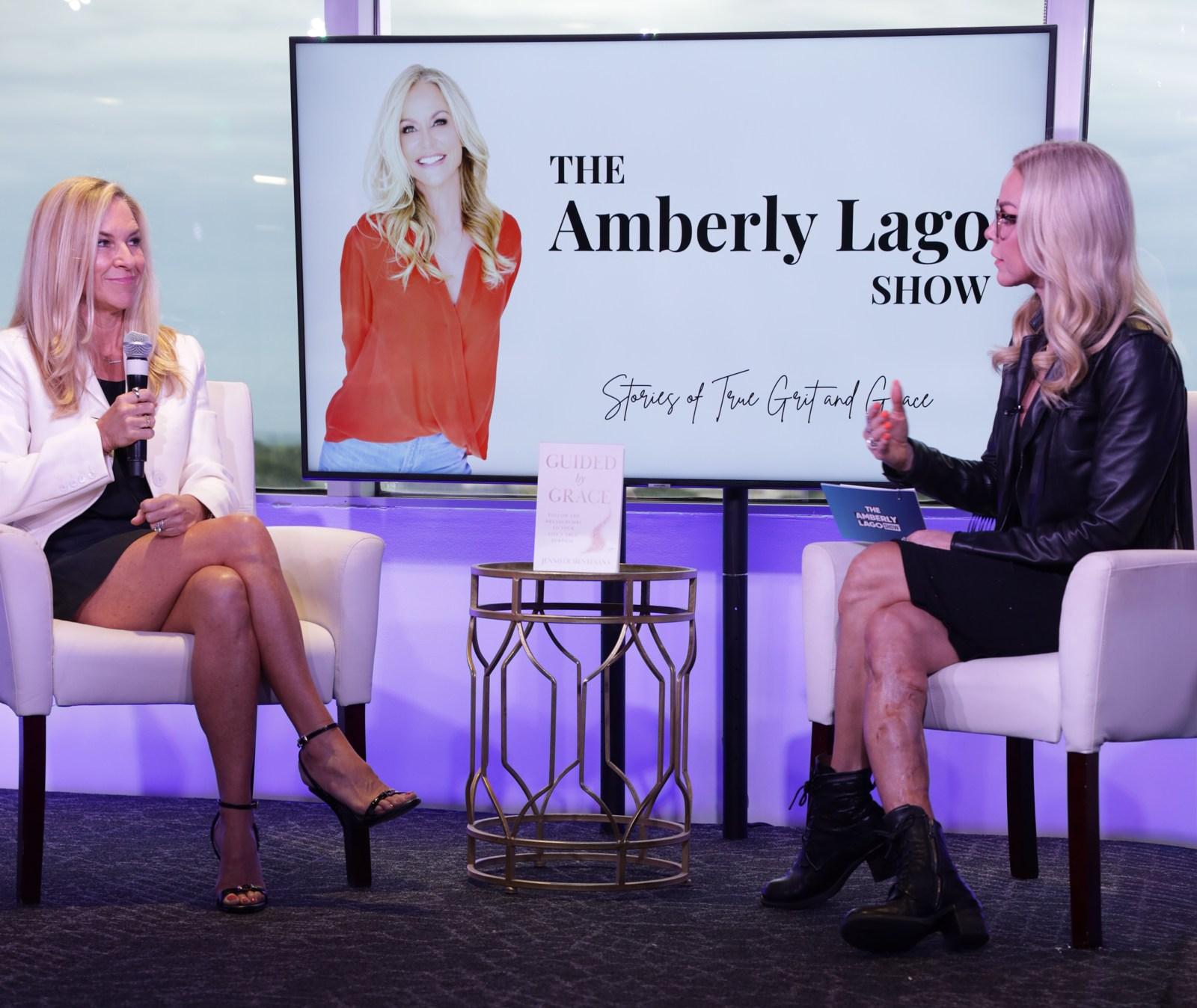
In this episode of The Amberly Lago Show, host Amberly Lago welcomes Dr. John Delony, a best-selling author, mental health expert, and expert in counseling crisis response.
Dr. John Delony holds two PhDs, one in counselor education and supervision and the other in higher education administration. Before joining Ramsey Solutions in 2020, John spent two decades in crisis response, walking with people through severe trauma. Now at Ramsey Solutions, John writes, speaks and teaches on relationships, mental health, anxiety and wellness.
He also serves as co-host of The Ramsey Show, the second-largest talk show in the nation that's heard by 18 million weekly listeners, as well as host of The Dr. John Delony Show. In 2022, John's book" instantly became a #1 national bestseller. You can also find John featured on DailyMailTV, Fox Business and The Minimalists Podcast.
In this inspiring episode, they discuss his upcoming book, "Building a Non-Anxious Life," and delve into topics such as navigating tough decisions, improving relationships, and prioritizing mental well-being. Dr. Delony shares his insights on resilience and offers practical advice for managing anxiety and stress. They discuss important topics related to anxiety such as addiction, social media, exercise and sleep.
Tune in for inspiration and empowerment in managing anxiety and enhancing your life.
Notes:
- Exploring addiction as a symptom (5:15)
- The connection between social media and societal anxiety (8:05)
- Parenting advice for kids interested in social media (16:55)
- Consequences of avoiding anxiety triggers (20:45)
- Understanding why anxiety serves as a bodily alarm (28:55)
- The importance of sleep in bridging despair and hope (41:05)
Links mentioned in this episode:
Follow Dr. John
If you are ready to leave your mark by discovering your message and sharing it with the world, you've come to the right place!! Let's work together to build your influence, your impact, and your income! Join the tribe you have been waiting for to activate your highest potential and live the life you deserve! Join the "Unstoppable Life Mastermind!" and let us know you are ready for greatness! Read the "True Grit and Grace" book here and learn how you can turn tragedy into triumph! Thank you for joining us on the True, Grit, & Grace Podcast! If you find value in today's episode, don't forget to share the show with your friends and tap that subscribe button so you don't miss an episode! You can also head over to amberlylago.com to join my newsletter and access free downloadable resources that can help you elevate your life, business, and relationships! Want to see the behind-the-scenes and keep the conversation going? Head over to Instagram @amberlylagomotivation! Audible @True-Grit-and-Grace-Audiobook Website @amberlylago.com Instagram @amberlylagomotivation Facebook @AmberlyLagoSpeaker
Full Transcript
Thank you for tuning in to the True Grit and Grace podcast. I'm Amberly Lago and I'll be sharing inspirational stories of resilience and empowering ideas to elevate your business and your life, ignite your passion, and fuel your purpose. Hey, Amberly Lago here. Thanks for tuning in to True Grit and Grace. Today I have a real treat for y'. All. I have Dr. John Deloney. He's a best selling author. I have binged his books. He's got a a book called own your past, change your future, redefining anxiety. And I cannot wait for his latest book. It comes out in October. You can pre order it in August. It's called building a non anxious life. He's got not one, but two PhDs and two decades of experience in counseling, chronic crisis response and higher education. His goal is to help you navigate through tough decisions, improve your relationships, and believe you're worth being well. And I am just so honored to have you here with us. He's also got a show called the John Deloney show. Y' all have to tune into that. All of this will be in the show notes so you can find him on social media and his website. But Dr. John DeLoney, welcome to the show.
What's up, Amberly? How are you?
I am so excited to be speaking to. Well, you were a former fellow Texan. Now you're out in Nashville.
They stamp us from birth.
So I think, yeah, well, it's Texan. It's just it stays in your blood. It does, it does. But yeah, I'm so excited to have you here because I feel. Well, I know for myself, I recently even just did a post about having to take kind of a step back and slow things down because I had gotten some panic attacks, anxiety, went for a doctor's checkup and he was like, your thyroid is not working. Your adrenals are fatigued. Like, what the heck is going on? My hair is fought well. It's getting better, I hope. Knock on wood, falling out. But I was like, something's got to give. And I think that in today's world, especially with so much change as a culture, we've created these lives that can not be sustainable. We're trying to do it all. And everything is so fast paced and it's creating a lot of mental health issues. It's creating more anxiety. And so I've been excited to ask you a few questions. Your book, by the way. First of all, you are such a good storyteller. So I have never, like, gotten through like A whole book at one time. I could not put it down. But it really helps break down sort of the myths about anxiety. So first, before we get started, I love that you don't just have a PhD but you have experience like you lived through. You had this life where you were waking up in the middle of the night with your heart racing and you were sick and tired of being sick and tired. So can you tell us a little bit about what was the tipping point that made you go, enough is enough. I've got to do something to change the way I feel?
Yeah. The tipping point was, unbeknownst to me, my wife had called one of my closest best friends in the world and she called two of them and one of them packed his wife and little kid in a car and drove three hours to our house under the idea that our kids were going to meet each other for the first time. But really he was coming to talk to me. And he's a banker, he's a man of very few words, had the same haircut since he was like 4 years old. Still tucks his, I think he tucks his shirt in when he goes to bed. We were out looking and I was explaining all the end of time stuff that I had going on in my head and he looked at me and said, hey, you need to go talk to somebody. You're not all right. And a diff. Another level was he said, and it's not all right for your wife and kids that you're not all right. And really that was the first time I, he left and I was like, that guy sucks and he's this and that. But I, that was the first time I thought maybe this is me. And I trusted him enough to know that I wasn't all right. And I, at that point I had to say, okay, maybe it's not my wife, maybe it's not being a new parent, maybe it's not the, the, all this craziness I can't control and the weather and the, in the world economy and all that stuff that I was focusing on all day, every day, maybe I need to get well. And that it was really a friend that came out and, and called me out on it, but as my wife seeing it and she was kind of at a loss too.
Wow. And you know that's, that was a life changing moment for me too was I had my ex sister in law actually say, can you meet for coffee? And she called me out and I was like, okay, the gig is up, I've got to make a change. And you know, it was a risk for her of she was afraid that she might lose our friendship. But she really, I feel like she really saved my life because I just broke down and cried and said, yeah, you know what? I do, I need help. That was back in 2016. And that's when I got sober. I had, had, I think a lot of times when we have past trauma or a lot of pain, a lot of anxiety, we tend to binge, Netflix, overeat over shop, speed date, drink too much. I mean, that's, at least, that's what I did. I was trying to numb out, numb out the pain.
Addiction's never, Addiction is never the problem. Addiction's always the answer. The problem is beneath the, the addiction. Right? Every single time. And I, I'll tell you this, kudos to your ex sister in law. And I've just made it a life's purpose. If I see somebody going down on a. I'm, I'm willing to risk that relationship to say, hey, I see you and you're not. Okay. I may not give you a prescription on what you got to do. I'm not going to, you know, as my buddies say, like, stop your stupid counseling stuff. I'm not going to do that kind of things. But I will sit with somebody and say, I need you to hear me say, I'm watching you speeding towards a brick wall and this ends bad for you and for your wife and for your kids or for your husband or for whoever. And at any point you want to bail out, I'll be with you. But this is going to end and it's going to end in a supernova. I had that conversation last week with, with a close friend that I just called out of the blue and said, we need to meet. And so I'm willing to risk that. At this point in my life, I just been to too many funerals and done too many memorial services and everybody wishes they had five more minutes, right? And so I'm going to live my life by. I'll take those five minutes.
That's amazing. And you said something very important. You're like, I see you. You know, and I think a lot of times when we're going through a hard time, we just, we do need to feel seen, heard, understood, and knowing that we're not alone. And I think that connection is the opposite of addiction. And I think that we have a lot of loneliness in the world right now despite, you know, these social media connections and, and stuff like that. A lot of people are feeling lonely and we need that connection. And speaking of social media, I'd love your take on this and, like, what it's doing to our culture, to our kids, to us. In your book, there was one part you said, if you need to just unplug cable or delete your social media to get better, then that's what you need to do. And I think that sometimes people do need to take a step back. And because social media can be a monster, it can be a great thing where we can connect and promote things and have fun and. But it can also. I see what it can. I've seen what it has done to my daughter. Look, I've had anxiety before. I'm like, I gotta post. I gotta post. What am I gonna post? I haven't posted in three days. I gotta post. You know, what is your take on social media to what it's doing to our children and to us? Is it good? Is it bad? Should we keep it? Should we stop TikTok? Should we delete it? What should we do?
I can't deny the data that when they started handing these phones out to Everybody in about 2011, 2012, there's a lot of arguments over the mechanics on how and why and dopamine and serotonin, all that stuff. And I'm going to leave that to the hubermans and the med school professors of the world. When I can just look at the data in 2011 or 2012, the anxiety and depression and derivative things like OCD and ADHD shot up almost vertically, the numbers. And if you look back throughout history, it's never done that. This is in. This is a moment in history when I believe my granddad, back when he was born. Gosh, man, I bet he was born in 1910, 1900. They gave him cigarettes when he was a little kid because it calmed kids down, right? It calmed him down. It worked. And they'd say, y' all just go outside and share this. And then everybody realized, oh, my gosh, we're killing these kids. We're killing everybody. I think in 20 to 30 years, we will look back and say, what did we do? So when it comes to kids, I don't use this word lightly, but I think it's abusive to allow kids, this portal into the universe that is run entirely by adults, and it's run entirely by neuroscientists and tech people that are way, way smarter and way more sophisticated than we are. And that portal to a child and say, make good choices is. Is borderline clinically insane, and it's abusive at best. I just can't wrap my head around it as I see, you know, banning books and crap across the country, but then handing these kids smartphones. I mean, it's just madness, right? That's, that's number one for, for an adult. I think we have to look at it. It's no more than a billboard. It is a moving billboard that sits up in a highway. And I think we give it more. It's so good. It's got some good to it. It's got some good stuff. It doesn't, it's just, it's a, it's a, it's an advertising platform. And anything beyond that is us deluding ourselves. And what we don't realize has happened is that we are advertising ourselves to the world and the world is advertising itself to us. Look, look how smart I am. And I, dude, I, I have a social media account. I got multiple ones. It's how I run my business. But also, it's madness. It is madness. It is madness. And so I, I. One of the most common things that we, you said a second ago about, I tell people, just, just stop. Is we've really built, as you mentioned, we've created a world that our bodies can't exist in. And in so doing, we think that we have to have fill in the blank. We think that we have to do all of these things and then figure out how to be well on top of that stuff. And what I'm saying is that's not going to work. And you can do all the breathing exercises and take all the anxiety meds and do all of the yoga and essential oils and all the, like the day retreats, but if you do that on quicksand, it's going to eat your house. And so we have to unplug from the matrix completely. And, and that doesn't mean get off social media. I haven't. That does mean in my house. I put it on a separate phone today.
I think you said that in one of your books. I can't remember.
Yeah, I've got on a separate phone. And today marks the, the, the, the first day that my wife and I have agreed it doesn't leave the car. And so I, it stays in the car 24 7. And if I need to post something, well, I should have thought of that earlier. And I, I will learn in short order to post during work hours when I'm at work. And it will be a tool, the same as I don't carry. If I was a house framer, I wouldn't carry a drill. And a hammer around looking to hit stuff in my living room. That's what it is. And so we just have to stop pretending this is our friend and we have to start looking at the barrenness, as you described, of our true relationships and begin to heal there.
Oh, that is such a good analogy. That's one thing I love that you do in your books too, is you give such great analogies because it really.
I'm not very smart. That's the. I'm not, I'm not very sophisticated. So whenever I'm meeting with my buddies who are all scientists, I'm like, how would you tell that to a fourth grader? And then that's. It usually registers with me, oh, my
goodness, you are brilliant you. And you're so funny and so authentic too. And I love that you share your personal struggles in your books because it makes others who are struggling go, oh,
well, I'm not alone.
Like that. That happens. But there is a solution around that. Okay, but how old are your kids?
13 and 7.
Okay. With a 13 year old. Do they have social media?
No. They don't have a phone? No. And then listen to this.
Every time I feel like an abusive mom, my daughter has a phone. She's got social media.
Every time the kids come to our house, my wife collects their phones and she sends a text to all the parents saying, hey, if you need to get a hold of your kid, text her or text me. A hundred percent of the time, the parents respond, we're so grateful for you. Thank you.
That is amazing.
And they always, always text when the kids are headed home and because their kids won't stop talking the whole way home. And we live out in the country a little bit, but they're just out with my son catching turtles and frogs and whatever. This morning I got home from, from my workout. I was out and took off down a country road. And I got home and my son was. Dad, Dad. A giant bobcat ate one of our chickens yesterday. And so we were trying to trap it and he caught a possum. That's just before school, right in the 21st century. It just sounds ridiculous, but man, it's a, it's a really remarkable way for him to be growing up. And my daughter, too.
Well, I love that. I mean, that's one of the reasons I'm so grateful we moved to Texas because my daughter loves being out in nature, loves going for runs, loves, you know, gardening. And she wants a pet turtle. She wants chickens too, but we can't have Chick. She's every Kind of way. She's been trying to sneak chickens, but Hoa says we can't have chickens.
Oh, boo on that Hoa. They're, they're incredible. And we have more. We have eggs coming out of our ears, man. It's been fantastic.
And, and you know what? She's even trying to convince us to let them live in the house. And I'm like, that's not gonna work.
Yeah, they, they do cha cha. Yeah, 10x what I thought they were going to. So, yeah, I wouldn't do that. I wouldn't do that. Yeah.
But I think that's amazing to that, that your kids can really like. That's how I grew up. We didn't have phones. We didn't, you know.
Well, and let me say this. My, all my, all my degrees, I mean I've got a PhD in education and one in counseling, but even the counseling one was done out of the College of Education. So that's been my world. My wife was Dr. Deloney long before me and she studied teachers. So just speaking to the pedagogical side of things, which is the study of teaching. Right. The science of teaching. There are zero, none, zero studies that suggest handing a kid a Chromebook when they are five somehow makes them smarter, helps them develop any sort of additional skills, cognitively or otherwise. And as quick we can see it happening in front of us, technology is way outpacing our child's ability to grasp. It will be so intuitive in the next five to 10 years, probably two to two to five years, that all of this, all of this insanity in this. If we're get left behind, they're gonna get left behind. They're gonna get left behind. And what we've done is we've created a generation of kid that doesn't know how to problem solve and doesn't know how to be uncomfortable and doesn't know how to be scared and doesn't know how to fail and doesn't know how to do all these things because he just got another video. Another video, another video, another video. And so if you're worried about your kids falling behind, you're worried about your kids not being able to get the lessons or what it. There's just zero, nothing to back that up. And if you really want to go down a rabbit hole, you can look at a lot of the Silicon Valley execs that send their kids to special schools that have no screens through eighth grade. Yeah, that's. And I remember asking one years ago, why don't you put your kid in a School where you use all these iPads and all this stuff. And he looked at me and he goes, that's not. That's not teaching and learning. Teaching and learning is a great teacher and a whiteboard. And I just remember thinking, oh, no. Right. So I quit asking a long time ago what you think about something. I, I was around people in the, in the university setting that were so brilliant and so lovely, and they could, they were so smart and they could pontificate on everything. I quit asking, what do you think? I started just asking, what do you do with your kids? And God tells me what you really believe. And if it's good enough for your kids, then it's probably good enough for mine. So that's just kind of my path. And when I see the people who create this stuff don't let their kids anywhere near it, then I think that's a good roadmap to follow.
Oh, wow. What would you say to parents that are listening that they have kids like me that are on social Media? My daughter's fifth, just turned 15, and she isn't. I mean, I say she's not addicted, but there has to be a little bit of addiction there. You know, it's. I think I'm a little addicted. It's. I, I.
Here's, it's an easy. Here's an easy way to find out. Just take the phone away for 48 hours. That's it.
Okay.
And if they laugh and go outside and play and whatever, then they're not addicted. They don't have a. They don't, they don't have a, A connection issue with their device. But if they start asking you every 30 minutes, hey, can I see this? Can I see this? I need to check on this. And they're itching and they're rolling around on the floor, and they're grouchy, and that, then that, that'll tell you that's. It's just a simple, easy way to find out. It's like me and gummy candies. If I quit for 48 hours, then I'm not really pleasant to be around.
Oh, my goodness. Oh, my gosh. Well, I have a father who has. I want to get into the, the. Your books a little bit in the addiction, not addiction, anxiety. And when someone is diagnosed with, oh, you have anxiety, and they start defining themselves as, well, I have anxiety. That's who I am. And you have a lot of myths about anxiety, so can you share a few of the myths about anxiety?
Yeah, I mean, you named a couple of them, I think it's just criminal. And I'll say, my community, I consider myself a mental health professional. My community. We got so excited and so desperate to be accepted into the academy. And the way to do that was to align ourselves with medical researchers. And so we medicalized human existence. We. We pathologized just daily living. And so we did that. And I'm using some nerdy words, but basically we've just taken normal life. Like the number of times I told a student who came in and said, hey, I'm really depressed. My. I'm a freshman, and right when my dad got home, he moved out of my mom's house, of our house, and he's divorcing my mom. And. And I would say, hey, you're not depressed. You're sad. You've never felt this before, but you're sad, and you should be sad. Your dad just bailed on your family. You should be really sad. Right? Your friend died. You have a huge exam and you haven't studied. Of course you're anxious, your body's trying to get your attention. You don't have a thing. You're not broken or you're not malfunctioning. You're not somehow less than. And so this idea that we started diagnosing people and casting upon them, you have a thing. You are now this thing.
I think that's so doctors can prescribe more prescriptions. Prescriptions. Or do people want to say, oh, well, this is what's wrong with me?
I actually think. I think the. Let me just say that the medical researchers I know are extraordinary people trying to do the absolute. They're trying to perform miracles. And they know that kids grow up with no parents or they're sexually abused or they watch their mom get beat up or whatever. And if they can give a kid a pill and solve that, I mean, you're talking changing the planet. And so I, I, for one second, don't. I'm grateful that people are doing what they can to try to solve that in an instant. The further we go down that. Down that hole, down that path, the less convinced I am that there's going to be any way to heal people other than through relationship. And so some of the myths are, you have a thing, you don't. Your body is just simply trying to get your attention. All anxiety is a smoke alarm, right? It's just trying to get your attention the same as if your house is on fire and the alarms are going off. Nobody runs in and goes, you have an alarm problem. No, your alarms are trying to Tell you your house is burning down. Right. And the frustrating thing about anxiety is if you avoid what you're anxious about, it reinforces it in your body. It makes it stronger. So if it doesn't want you to, you know, see scary stock market data because your body reacts to finance issues and you avoid it. You never check it out. You know, you always avoid, avoid, avoid. Then it wins. And so then the next time it sees a number, it just goes off again. It goes off again. So the only path of healing through anxiety is through it, through the ugly stuff. Right. And so one of the myths is you can run from it. One of the myths is that it's a disease, not disease. One of the myths is that this is all you will ever be. Another one of the myths is it can only be cured with medication. I will say this. I took meds. Meds were extraordinary. They were such a gift. They did not heal my anxiety. What meds did was they turned down the alarms enough so that I could go to a therapist so that I could start exercising every day. I'd become so rattled and so beside myself. They can be an adjunct. Great. But we cast all that on a person who's just going through a tough season or has built a world around themselves that isn't sustainable or been thrown into a world. It's not sustainable. And then we blame the person. We tell them, you're broken. And I'm just sick of the disempowering culture that we have, man. And yeah, I, I, I, yeah, it's, it's a, you, you can tell. It's a, it's a soapbox for me. I'm tired of the helping industries telling people that they are helpless.
Yeah. And then people, I think a lot of times when they're diagnosed with something like that, they take on that role. They and feel like a victim. And I mean, I know I did. I remember when I, after my motorcycle accident and getting through 34 surgeries and every single doctor that I went to was like, oh, I mean, even the gynecolog, you're going to need to be on antidepressants. Your life is over. Like, look at you. You look like you've been through a war zone. Well, one thing I love that you say in your book several, several times is you talk about the importance of going to a therapist or a good friend or your preacher or support group or somebody to go talk it through. But how important therapy is.
You have to, I'm in therapy now. I, you know, I go, it's Incredible.
Me too. It helps.
It's, it's, it's transcendent. And it doesn't mean you're broken. It's, it means you're getting, it's like get going to, to graduate school, you're getting some new tools, you're being able to look at a problem in a new way or you're getting to know yourself or your relationship or your marriage or whatever differently. It's not this dysfunctional. You're, you're, you're failing or you're broken. It's just, that's nonsense.
Yeah. And I'm so glad that you say that. And to me it's a luxury. To me, it's a gift that I can give myself to, to, to do that. I love that you say that. You know, our mental and physical health are one and whole. And I remember when I went to a, there or she was a psychiatrist, she was a psychiatrist and I went to her and I said, look, you know, I really don't want to have to take antidepressants. I just, I don't want to have to take anything. And she's like, I said, I know if I, when I, when I can finally start running in again and I can work out again, I'm going to feel better, that it makes me feel better to be able to work out. She goes, well, if you have to work out to feel better, then that's a problem. You definitely need to be on anti.
Oh my gosh.
I swear. And I never went back to her again. And I felt so broken and I left that appointment in tears and I called my husband and I was like, well, you were right, I am crazy.
Like she should, she should lose her, her license.
Oh, I never went back. It was.
Some recent studies have come out that suggest exercise is front line, should be step one if somebody is working through anxiety or depression. Now obviously when I say depression, obviously there's, there's, there's, there's a spectrum there, right? And so depression can pull you down a deep, dark, black hole. But for most of us who are really struggling, exercise is step one. Get out and move.
Just move.
Go get vitamin D and go. Move. Yes, yes.
Oh yeah. And, and I've had people go, oh, well, I can't, I can't do that. You don't understand. I have so much physical pain. And I said I was in the hospital with my leg held together by rods and completely bed bound. And I asked the doctors to install a pull up bar in my hospital bed so I could at least do some pull ups because I knew it would make me feel.
Amberly's a gangster, dude. I, I've even, I think it was Emily Nagoski talked about folks who say, I just won't. Then will you lay in bed and will you squinch your feet up as tight as you can and hold it for two or three or four seconds and let go? And then when you squint your legs up and go all the way up your body and go back down, do that three or four or five times if you're not going to walk. And by the way, my watch this morning, I've been sick. My watch told me, don't work out today, take it easy, you're running low. And so I went out and I still went outside and I went for a long walk. I went for a long, long walk and I'm at total peace. But if I don't move, I tell you what, man, everything starts going haywire.
I know I had. When I told you, I, I didn't. When I had a panic attack, I didn't even know what it was. I was like, what the heck is wrong with me? Everybody in the restaurant ran over to me. I broke out into a sweat. I was coming back from an event and about to catch a train where I was going to get to sit and not. I took the train because I thought it'll be less stressful than driving. And I did not even know what that was until later. Oh, it is. I, I didn't realize what it was. And I thought, okay, I dodged a heart attack. Thank God I'm okay. Time to get on the train. I was interviewing Bedros Kulian on my show and he was describing what a panic attack was. And in the interview I was like,
that's what that was.
You know, I mean, it's serious. I was like, that's what that was. But just since I've gotten back to basics and you talk about this in your book, about, you know, getting enough sleep, eating right, breathing, meditation, moving my body, prayer. And I love that you talk about prayer and you talk about the serenity prayer. I actually have that written on a plaque over in my office right over here. I've already started feeling better. Not to say the anxiety doesn't come up, but I had gotten to a point where in the middle of the night my heart would just be pounding. Oh, yeah. So talk to us a little bit about what are some things that people can do to. If they're having their heart beating, if they're having. Because you Talk about your, your ecosystem. Tell us, I guess, about what, what do you mean by ecosystem? And how can people take a look at that and make some positive changes today so their life can start to feel a little like, more grounded and better?
Yeah. So I think if, if you think of anxiety as just a smoke alarm, and the way most of us respond to it is our house is on fire, we have an alarm, and we run into the kitchen and we climb up on a ladder and pull the batteries out and we say, we, we're. We're good. And then your house burns down. Right. So if we go with that analogy through anxiety and we say the words out loud, anxiety is not the problem. Just trying to get my attention. Then I'm going to ask myself, what, what, what are those alarms trying to tell me? Which parts of my life aren't all okay? Most of the time, not always, but most of the time, anxiety alarms will ring for one of three or four options. Three or four things. One is your body has identified your disconnected. You're lonely and you can share a bed with somebody you love and be completely alone. You can sit at a kitchen table surrounded by people who love you and be completely alone. Or you can just go home and you live in an apartment and you don't have any friends and you just do work and then you go eat and you go to the store and you go home and you're on that loop like millions and millions and millions of Americans are. And your body is running on ancient technology and it was designed that if it found you in the fields and your tribe had left you, you were probably going to die. So it sounds the alarm. So that's number one. Number two, if you're not safe and we think of safety like abusive relationship, abusive work environment, that's all true. But man, this. And this will be uncomfortable for some listeners. You may, they may, they may roll off your podcast. You can probably just watch them on the little ticker and say, like, ah, this is when they quit. Listen. You know, your brain's divided up into, into different sections. And your frontal lobe, the part of your brain designed for critical thinking, it knows. Are you serious? I can buy that car for seven years with no, no financing. Zero percent. That's a great mathematical deal. And it is. And your amygdala, the part of your brain that's designed to keep you safe, knows if one thing goes wrong at work, we lose that car and we lose the house and we lose our ability to get food. So if you owe people money and this is unpopular. If you owe people money, if you have chaos and clutter, if your house is surrounded by too many books and too many clothes and we have brains wired for scarcity, dropped in the middle of the most abundance ever before in human history. And so it we can tell ourselves that, well, one day I'm gonna. Your brain is overwhelmed, right? Or you have calendars where your 9 year old soccer coach is telling you what you're gonna do for the next 17 weekends of your life. And you're running and running and running and running and running. And if one meeting goes over 10 minutes, your whole domino falls over, right? So if you're living. When I say unsafe, I mean we've put our body in a context where it cannot win and it will try to get our attention, right? And most of us owe a lot of money. We have credit cards, car loans and house mortgages, and we have calendars packed to the hilt. And we have our mother in law still telling us what we're doing for the holidays. We have no boundaries. Of course our body's going to try to get our attention, right? And then that brings me number three is autonomy. If your body knows that you aren't in control of what happens next, it will sound the alarms, get your attention. It's unsafe. The fourth thing is, is like we mentioned earlier, we just, we've stopped honoring our bodies and then we get mad when they don't run, right? It's like we put sand and water in the gas tank of the car and we're getting mad at the car and we never change the oil. We don't take care of this thing. And so if you're waking up and having four monster energy drinks and then a bunch of Twinkies and swinging through the drive through, the machine's not going to run, right? Know what I mean? So when I say ecosystem, I'm talking about the entire world you have crafted for yourself. Or, and I want to be honest here, for hundreds of millions of people across the world, lives they did not craft for themselves, but they were thrust into, they were just woke up and they were tossed into this world where there's an abusive family, a dad who bailed on them, deep abject poverty, mom's got cancer, abuse, whatever, you get thrown into that world, it's not your fault, you didn't cause that. But you're the one that's got to take the steps out, right? And that's hard, it's uncomfortable and it's scary. But whatever it is, that's your Ecosystem, this world. And of course your alarms are going to go off. Mine are too. Right. I don't want to live in a house that doesn't have a fire alarm in it in case the house catches on fire. I just want that alarm to only go off when there's actually true danger.
Yeah. Oh, it's so. So when you put it that way, you're like, oh, well, no wonder I.
Right.
Feeling everybody a little anxious. Yeah.
Or a lot anxious. Yeah.
Or. Or a lot anxious. Yeah. When. And so much about the boundaries. But I think knowing that you can like letting go of what we can't control and controlling what? Like really taking charge of what we can. But okay, let's say somebody is sitting in their car, they're at a stoplight, then all of a sudden they're like, oh my gosh, my heart's pounding. I'm feeling so anxious. Why am I feeling anxious right now? I'm not in a rush. I have, you know, my family with me. I feel safe. I don't. Why is my heart pounding? What would you suggest they do in
that moment when you say that? I remember, I remember pulling into my driveway and the driveway, the garage door came behind me, came down behind me. The car sat in there until that automatic light went off. And it's just, I'm in pitch black, scrolling my phone and my heart is racing so fast as though somebody is coming around the car with a hatchet. And I remember laughing, slash yelling to myself, inside the car, there's nobody coming. Stop. And it wouldn't. Right. It just wouldn't. So when my body does that, when our bodies do that, there's a couple of things. And this is from the crisis response literature. This is me showing up to somebody's house at 2am and they've just realized that their 5 year old kid is no longer alive. Right. At the worst of the worst of the worst, what I would do in that moment is two important things. Number one or three important things. Number one, I got to change my environment asap. I'm going to go for a walk. I'm going to get out of the space that my body has identified as unsafe. That might mean I'm sitting with my wife, who I love more than life itself. And I'm going to tell her, hey, I need to go, I need to go for a walk real quick. I need to go for a jog real quick. Number two is I am going to, if I can have somebody come with me and seek skin to skin contact, whether that's Just holding somebody's hand, putting their hand on my arm. If it's just me, I might put my hands on the back of my neck, I might put my hands on my earlobes. I'm going to create sensation other than in my chest. And then the third thing is when I would walk somebody down the street at 2am holding them on the arm and them barely able to walk, what we would do is we would count cracks in the sidewalk, we would count trees, we would count grass clumps on the ground. And what we are doing is bringing somebody from their panicked future into now. And so after a few minutes of walking, sitting with somebody, or even if you're by yourself walking, when you're breathing and you're like one, there's a second crack, there's a third crack, your body goes, okay, you're safe now. You weren't safe then, you're safe now. And that can be hard when you're driving down the highway, right? And all of a sudden this happens. And you may have to exit and go inside of a gas station and walk up and down the aisle for a second. And we're going to count and we're going to hold our own hand or we're going to pinch our own finger at the end, but we're going to do things that bring us back into the present for a minute. And the frustrating thing about panic attacks is it feels like you're going to die. The good things about panic attacks is they can't kill you. They won't kill you.
Yeah, that is so. That's so helpful. You know what's so crazy is just the other day I walked into my closet and all of a sudden my heart just like. Just like I was, like, anxious and I'm. I stopped and I asked myself the question, where is this coming from? Why is it that when I walk into my closet that I feel this way and I realize, Because I've rearranged my closet and I have all of the clothes that I wear for stage right there in front. So right when I walk in there, it's these beautiful clothes laid out, and they're like my clothes that I have for all these upcoming events. Well, in my mind, I'm like, oh, my God. I'm going to be standing on stage with these legend. I'm going to mess up, like, all the things my head tells me, like, I'm not good enough. They're going to laugh at me. My dad was right. Public speaking is the scariest thing. Why am I doing this? I should just stop. Like, all those things, and I have to go stop. Is this true? But I realized, is that not crazy? Walking into my closet, my heart started pounding like that.
Actually. It's actually beautiful. Here's why. Our brains are designed to detect threats before we even think of. That's how we've stayed alive for all these years. Because we certainly can't fight a grizzly bear or a tiger. And so it walks in and knows, oh, this ends us. This is where it all ends for us. And so it wants to get your attention and back out and keep you off that stage. Because nothing goes wrong if you're not on that stage. And it has no interest. None. Zero interest in. Yeah, but if you take a risk and it pays off, that's not its job. Its job is just to get you to tomorrow and then to get you to the next day. The job is to stay alive, not to thrive. And so that's why it will crave alcohol, it will crave cigarettes, it will crave oxy, it will crave cocaine. Because the goal is not to live this long, fruitful life. The goal is to get to tomorrow and then to get to the next day and then get to the next day. So it will. It will cut off its nose ten years down the road to get to the next day today. And so I actually have come to. When my body tries to take care of me. So one of the counseling. No, no words. Is, why? Never ask a client. Like, why'd you do that? You know, like, I don't. I don't know. The two things you always ask are, tell me. Like, I want you to tell me about this choice you made. Or another question is, what do you think's happening here? So one of the graceful questions I ask myself on a daily basis is, what is my body trying to protect me from? What are you trying to protect me from? And it's a joyful. You've detected something I'm not seeing. Oh, is it my wife? She's awesome. She has been sick today. That's not her rejecting me. That's her not feeling good. We're good. And that's just me going through what is true and what's not through. And it happens so fast, and I've been doing it for so long. But it's just a simple way of being graceful with yourself. Because most of us who are anxious over time, we start getting anxious about being anxious. And now we are in the death spiral, right? We get. We start getting panicky about having a panic attack and man, then, then that's a recipe for disaster.
Yeah. Thank goodness. I have not had a panic attack in a long, long time. And so I know people that really, they have them often. And I mean, by the grace of God, I don't. I don't. I think that if I didn't really wake up and decide that I'm going to have this morning routine that I stick to, that I'm going to, you know. You know, I'm not always motivated. I rely on discipline. And I think that discipline is what allows me to have the life that I have to work out, to eat healthy. And I have to say, there I was, I think I was watching or listening to one of your shows and you were talking about the importance of sleep. And I stayed up till late. Like, I usually try to get in bed by 10. I have a. I have an alarm on my phone that will go off and say, bedtime's approaching, time to get ready for bed. And I was like, I'm going to be a rebel. And I'm just staying up late and I'm getting caught up on some work stuff. At midnight, everybody's asleep and look at me go. And then, of course, I wake up. And my readiness score was like, take it easy today. You know?
That's right. That's right.
But you were talking about sleep and the importance of sleep. And there was a quote you had said. I'm probably messing this up, but something about the bridge from like, hope to despair is a good night's sleep.
Yeah, that. I mean, nothing works without sleep. It's. It's just simply the foundation. I love how Dr. Matthew Walker talks about it. He said over millions of years, there is one thing that makes no evolutionary sense. It is curling up in a ball for one third of the day in the dark and being completely defenseless. Not searching for food and not searching for a mate. That makes no sense. And if evolution had any sense at all, it would have taken that out of our. Out of our needs. Right. We wouldn't need to. Need to do to be defenseless for eight hours, and it hasn't. And so we can look at our own bodies and say, for whatever reason, I gotta do that. And not only do I have to do that, everything starts from there. Now, I do think, and I've been super guilty of this, we went too far about creating these perfect sleep, whatever, like cocoon world, where it's a perfect temperature and the perfect light and the perfect. All that. I think that's probably too far. I got neurotic about it to the point that if I went and stayed at a friend's house or I went on a hunting trip out in the woods or what, I couldn't sleep at all. I just knew I was gonna be up for 48 straight hours or 72 straight hours. That's not healthy either. So I'm learning to be more graceful with just go to sleep and can I say something that's gonna get me into trouble? Don't. Don't let this be.
That's what this show is all about.
This will be on John. I have found that my friends who struggle with panic attacks in short order take that on as an identity. I'm a person who has anxiety attacks. I'm a person who has panic attacks I have taken on as an identity. I'm a guy who just doesn't sleep that well. And when I take that on as an identity, my behavior reinforces that identity. It makes the, the way I live makes it almost impossible to sleep. I'm just a guy doesn't sleep. I'll have another cup of coffee at five in the afternoon. I'm a guy that doesn't sleep. I'm just gonna, I'll eat a full steak dinner at 10 o' clock at night. That's fine. I'm a guy that doesn't sleep, so let's just go to Taco Bell even though it's midnight. Like it just becomes an identity and then it, my behavior reinforces that identity. I'm just someone who has panic attacks. So I just listen to murder podcasts and I stay up till 2am and I wake up and have a whole pot of coffee and I start the whole cycle over again. I'm in a bad, abusive relationship and I don't know a way out and I owe six figures. And your body is screaming at you, you're not safe, you're not safe, you're not safe. And so I do think the most important place to start on all these issues is with identity. A panic attack is a thing that happened to you, that your body just short circuited a bit trying to get your attention. Cool.
Oh, I, and I so agree with you. I so agree with you.
And I mean, we define ourselves by the worst things that ever happened to us. And I think that's a, I think that's a fault. Like I, I really screwed up with kid number one. So what you got?
Kid number two?
Let's move on. So let's, let's, let's, let's, let's stop hanging on to that stuff. We carry those bricks around with us everywhere. Let's set them down and get on to the next.
Oh, yeah. Our words are so powerful. And, you know, I was diagnosed with a nerve disease called complex regional pain syndrome. I don't know if you've ever heard of that.
Yeah.
But I am so careful to. I don't say. I don't even say I have CRPs. I don't want it to define me. Yeah, I was diagnosed with it, but I don't even call myself a CRPS warrior anymore because I don't want to fight that. I'm. That's not. That's not who I am. I want to do so many other things. And, you know, I got in a big discussion with somebody because she was like, oh, you're the girl that had the motorcycle accident. And I'm like, no, I'm so much more than a girl that had a motorcycle accident.
Right.
You know what I mean? I was. I was offended. But I think that's. But I think that it. You're so right. And it's so much about identity, so that's so key. Which might not be easy to do, but possible. And, you guys, we are just, like, tapping into part of what all he shares in his books. I mean, I. Your books. I. And I'm not just saying this, but I. I've always said, I love Brene Brown. She's one of my favorite authors. I love John Gordon. He's one of my favorite people and favorite authors. Now you are right up there with, like, I'm gonna recommend your books to everyone. So y' all go grab his book. I want to ask you about your newest book. How is it a little bit different? Your. Your other book about anxiety was a little shorter. I mean, I actually finished it like. Like that got through it.
I was on the radio co hosting a radio show, and several people called in saying, I've got anxiety, and I've got anxiety, and I've got anxiety. And this is right during the middle of COVID and I'm new to the radio. I don't know how any of this stuff works. And I've just been an educator my whole life, and here I am working for a media company, and during one of the commercial breaks, I took my headphones off, and I looked at my co host, and I was like, man, anxiety's not the problem here. The problem is. And I just. And he said, hey, you need to write that down, because I've never heard anybody say that here at the company. We have this tiny. This. It's basically a business card that you hand out, and it's. It's called a quick read. And it's 60 pages just on a little topic. And so I wrote a quick little 60 to 80 page. My. My buddies call it your pamphlet. My daughter says, that's not a book, dad. And it was just a small little thing. It sold it. It went bananas. It went absolute bananas. My psychiatrist and medical doctors and therapists were buying it by the case and handing it to their clients because it's so simple to read. And so when we came back to the after on your past came out and did well, they said, okay, what's the next book? And really, the most common refrain was, can you explore this thing about anxiety more? Because it was primer, and it's a good way to get into it. And really, as I toured the country over the last couple of years and I've. I've taken a bunch of calls on my show, man, the way we talk about mental health is dysfunctional. I mean, here's the thing. Let's just be super clear and honest. There are more people under the care of a mental health practitioner right now than ever before in human history. There are more people medicated for mental health disorders than ever before in human history. And. And every single disorder is on a rocket ship, straight up when it comes to numbers. When we discovered penicillin, like how I threw me in there, I had nothing to do with discovery penicillin, but when. When we came up with antibiotics, death from infections fell off the map. It was the solution. Right? What we're doing might be helping a bit, but it's not. It's not stemming the tide. So this book is really mean. It's not a book for I'm anxious, so what do I do? That book's been written a thousand times, and you can get that information on blogs and whatever, everywhere. My bigger concern is that underlying sentiment. We've created a life for ourselves that our bodies cannot exist in. And it's costing us our marriages, it's costing us our kids, it's costing us our nation. And so really, the book is an exploration of what is this super anxious life we've built and how do I unplug from it. And what's beautiful is unplugging is not mean. Getting a tiny house and moving into the wilderness in Idaho. You can unplug from this thing in your suburban home, and you can unplug from this thing in an apartment complex. It's simply a choice that says I am going to do things differently so that I can be the best husband and wife and sister and brother than I can possibly be in all the other song and dance that we're doing right now. On top of of quicksand is just not working.
Oh, this is such a much needed book. I mean, and the timing, I'm not kidding you, the timing for me having the opportunity to get, I mean, just to get to talk with you about this because I, I really, let me tell you, I did a post and did a podcast episode saying it's time, I need to, I'm just saying I'm taking a little break from the podcast. It's the first time in over three years that I've ever taken a break. I've released a show every single week for the over three years, but I'm taking a break because I actually fell asleep at the will and thank God my daughter was in the car and she screamed at me, but I was just like pushing, pushing, pushing. Go, go, go. And I was like, okay, this is a wake up call. I don't want to cause anyone harm or hurt or for my daughter to feel unsafe. I can't tell you how many people picked up the phone and called me or texted me and said, amberly, oh my gosh, well, I'm glad you're okay, but thank you so much for keeping it real and sharing that you're. Actually, you need to take a break because you've given me permission to take a break and to slow down a little bit and feel better mentally, spiritually, physically.
I'm proud of you. I, I here, here's what was hard, man. Yeah, I guess it's okay to say this. The Dear during the writing of the book, you know, I'm a science nerd and I did all my nerd research and I went down all the, the, the appropriate trails off into the woods to try to wrap my head around this. I read everything on anxiety I could find. But what I was unprepared for was about halfway through the book, I left my house and I went and checked myself into a hotel for a week because I needed to be away from my wife and kids because I felt it coming. And I realized, dude, I'm not doing any of this stuff. And here I am. Every dream I have has come true. I'm a best selling author. I've, I've, I'm living in a cartoon and I'm not doing any of these things. And let me tell you this, Amberly, this was an important moment for Me. So I was sick over the Christmas break, and it's not uncommon for me when I was working at university, I would always work so hard. I'd run so hot. And then Christmas break would come around and my body would just be collapsed.
Right? I would do the same.
So. So I'm sick. I don't feel good. But I have two things I have to do. Always get another gig and another gig and another gig. And you can never skip a workout. So I'm down in our basement. I've got a gym down in our basement that's obnoxious for as small of a space as it is. And I'm yelling, I'm cheering, because my manager called me and said, hey, we got this speaking gig. And I'm so jazz, I'm so excited. And then he goes, hey, and I think I got this other one, too. And if we land both of these, I mean, these were financial windfalls for us. Big. And I'm cheering down there, and my wife comes down the stairs into the basement, says, what are you doing? What are you yelling about? And I said, I got this gig, and I think I'm gonna get this one. Normally, when she gets upset, she will pull back and she will go collect her thoughts, and then we'll talk. At another time. She didn't do that this time. This time she came at me. She walked up to me and she said, I need you to hear me say this. I'm watching my husband die right in front of me. And she said, we have. And this is a word that terrified me. She said, john. And let me preface it with this. Both of us grew up with nothing. My dad was a cop. Made like 20 something thousand bucks a year. Her parents were teachers. We grew up with nothing. And she looked at me and she said, john, we have enough. And she said, the pie that is our marriage, and the piece of pie that is how much I love you for how much money you make is full. Anything else you go get. And she goes, I'm not going to tell you no. Anything else you go get you cannot say is for me. You cannot say. It's for the kids, for our legacy, because we have enough. Anything else you go get is for your own ego. And then she looked at me. I was. I was. I was sick. I'm lifting. And she goes, and what are you doing? And I said, I'm just working out. And she said, the pie piece, that is how good looking you are. That's full. Anything else you do down here right now while you're sick is about your ego. It's not about us. And then she walked away. And here was the haunting thing. I have two PhDs, I do this for a living thing. I've got a successful show, and on and on. I didn't know what to do next. I didn't know where to go. I don't know what the word enough meant. I don't know what the word I love you. Even though I. I don't know. I didn't know what to do with that. And so I actually took both speaking gigs. I took them both. And I started trying to walk it back and say, okay, where did I get off track here? And so really, this new book is not me talking at you own your past was us sitting. You know, I described it as us sitting out, having nachos and a drink, like just trying to figure out what's going on in your world. And let's take the next best step. This building a non anxious life is me pulling up a bar stool next to you because I'm in this thing with you now. And this is me walking it back saying, how, what do you do next? Right? Where do we go from here? And so this is not me talking at people. This is me walking right alongside you, figuring it out as we go.
Oh my gosh. Thank you so much for sharing that. And I've had the same conversation, almost identical with my husband, who was like, amberly, when is enough enough? He goes, you are killing yourself. And yeah, so I had to have. That was a good conversation. We had hard conversation. So I cannot wait to read this book. And I know we've got to leave, but real quick, before we get off the call, can you tell I know everybody has a little bit different morning routine. Can you share what your morning routine is? I'm just curious to what yours is because you do so much and you make such a positive impact and I like to just learn what successful people like you, what their morning routine is.
I appreciate that. So can I give you the evolution of it? Can I tell you what it was three years ago and what it is right now? Because I think it's instructive. So three years ago I would get up at 5:10. And why 5:10? It was just a random 5:15. Felt like I was sleeping in at 5:00'.
Clock.
Let's be honest, I was really early. So it was just some time between there and as my wife tells me, you're hard to live with sometimes. So I don't really know, but I'd wake Up early and I would grab a cup of coffee and I'd go downstairs and I would hit my little Tibetan bell and I would do my meditation and then I'd do my gratitude journal, and then I would write my little note card on what I was going to do in the day. And then I'd go lift weights, and then I'd go sit in my cold tub and my ice bath, and then I would foam roll. And then I'd go upstairs and be with the kids. And let me tell you what it is now, because that was not sustainable. And I cobbled it together from 50 influencers like, yeah, bro, snap into a slim gym. Let's do in. What I do now is I make sure I get enough sleep. And if I have let myself down like I did last night, I just stayed up too long being an idiot. And so I knew that's going to cost you tomorrow morning. And I've started paying a little more attention to the wearables that I have that say, hey, you need to go real hard today. Or if you go really hard, you're going to cost yourself the whole week. And this is. I'm trying to relearn my body. What it feels like to be tired, what it feels like to be sick, what it feels because I've. I blew past it to the point that I wasn't healthy.
And you're really good at grit. And I feel like there's not many things I can say I'm good at, but I could say I'm really good at the grit. It's learning to give myself grace that I've been. And listen to my body more. Like instead of push, push, push. I always kid around and say, I mean, you've got two real PhDs. I always say, I've got a PhD, PhD and suck it up.
And I just keep going. Yeah, well, there's a fine line between grit and insanity.
Yeah.
And we live in it. Like David Goggins and Cam Haynes. Those guys are amazing. Gonna die real young. And, like, they show me that my body's capable of much more than I thought it could be capable of. But they're also not the road map for the life that I want to live. Right. And so now I make sure I move every morning. I use my Hallow meditation app every morning. And it's a. It's a faith based meditation app that I just adore.
What is it called? I don't know.
That one H A L L O W. It just became, I think, the top app on the planet. They're really remarkable. Serious. Yeah, it's a faith based app made by some, some guys who are Catholic who loved headspace and loved some of mindfulness apps, but just wanted a faith based component to it and love that. Yeah, it's really, it's really remarkable. And I make sure I get that in. I make sure that I touch, I have skin to skin contact hugs with my wife and both of my kids every morning. I make sure I get. So it's just, it's just, it's become a. I get after it in the gym, I work out real, real hard. And how long is your workout? Sometimes it's an hour and 30 minutes and sometimes it's 15 minutes. Sometimes it's 15.
Oh, okay.
It just depends, right?
That makes me feel a little better. Yeah.
But this idea that I've got to have relationship, I've got to have movement, I've got to have meditative time and I've got to have grounding time. And if how I get those four things is going to move and maneuver with the wet ebb and flow of my life. I was with Jocko at an event once and I loved what he said because I was pushing him, like, hey, I know, but how do you know when you're, whether you're sick or whatever? And he said something that was so true. He looked and he goes, you know, you know, you know if you're just sleeping in or you know, if you're just being lazy or, you know, if. No, I'm actually, I don't need to go today. And it was that simple. Permission to like. Yeah, I know, you know what I mean? We, and all of us do, we do. And so, man, I really have, have become infinitely more graceful. I've got to get those things in every day. And that has become the foundation for, for much, much more sustainable life.
Well, thank you so much for being on the show. I love how like you are like total, as my daughter would say, total legitness. Like, you are so. You're so authentic, you're so real, you're so relatable. You break things down in a way that I, somebody like me can understand them. I love your book, your show. I love all that you share on social media. Y' all. Check him out. Is Instagram your or your main kind of place where you hang out on social media?
I didn't have, I didn't have social media when I took this job. And so I'm started from ground zero. And so my, my, my two, two concessions were I'll only use one platform. So Instagram is the one that I post on. And the next rule is nobody can post anything that has not come out of my mouth. And so you can. I don't. We don't have, like, a team of writers making up stuff that sounds deloney. And then the third thing is I will have to have it on a separate phone. So I. Because I can't control myself, I can't compete with those neuroscientists and the IT guys. They're. They're better than me. And so I have to put in some barriers, some boundaries between me and their ability to hack my own brain. Right. So, yeah, Instagram is. It's a place where I just put thoughts out and ideas out and things that I think are hilarious and just trying to put a little more positivity out into the world. Sometimes it gets a little bit heavy, but the world's heavy, but trying to make it a little bit more. A little bit lighter out there.
Yeah, but you're always like, I love the solutions that, that you give and just that it's so relatable.
And so I'm so excited that I think is important. I. I wish that social media has become a play, has always been a place for grenades, and there's not a lot of here's what to do next. And for me, having a picture of what to do next is way more helpful than just yelling about how broken everything is. And so usually I try to pass along something. It's like, hey, here's a thing that I have seen work in the lives of other people, or here's what I'm trying at my house. It may be a disaster, but I'm giving it a go.
I think it's really important to offer. Yeah. What. What's the obstacle? But what's the solution and what's the benefit?
Yeah. Well, I want to thank you for your hospitality. You're so, so kind.
And
many people in. In this space are really want to vacuum up all of the shine and the glory, and you are the opposite. You're a reflector of light and joy. And so thank you so much for being so hospitable. I'm really grateful.
Oh, well, thank you. And I hope that our paths cross someday in person one of these days. But tell people the best place to find you. And I' I'm seriously so excited about your next book. I can't wait to use my.
I'll make sure we. I'll make sure I send you one. Oh, for sure.
Like, right away because I love the.
Right away.
Yeah. Okay, cool.
I'll make sure. We'll send you one. We'll send you one. You can follow me at John Deloney D E L O N Y. Or you can go to john deloney.com for the books and the cards and all that stuff.
Okay. And all the. Those links will be in the show notes. But yeah, you guys are going to. I promise you go get. Grab his book. Seriously one of my favorite authors now. So thank you so much for your time. Y' all go ahead, take a picture, whether you're watching it on YouTube or listening on Spotify or Apple, and just tag me at Amberly Lago motivation and John Deloney. And when I see that, I share it in my story. It just means a lot that you listen to the show. And because of you, you've made this Show a top 1% on Apple. So thank you so much. And thank you, doctor And I hope to see you real soon in person. But thank you.
You are the best, Amberly. Thank you so much.
Pain to purpose to joy.
Never Miss a Conversation
New episodes drop regularly. Subscribe on your favorite platform and never miss a conversation.