

Season 1, Episode 43
Awaken Your Inner Master with Princeton Clark
A conversation with Princeton Clark
About This Episode
Here's what you will learn:
- How Princeton grew through his childhood abuse and trauma (2:15)
- How he navigated and masked his feelings through gang life and drugs and surviving an attempted suicide (7:13)
- The importance of connection in fighting negative thoughts (10:19)
- How everything can change with one word (15:13)
- Princeton's experience with studying the Bible (21:09)
- What would he say to those trapped in victimhood (25:35)
- The importance of consistency (31:41)
- How to build unity and conquer prejudice (38:39)
- How we rise to solve the problem once and for all (45:41)
"Life comes to break the idea of us, so we can break through."
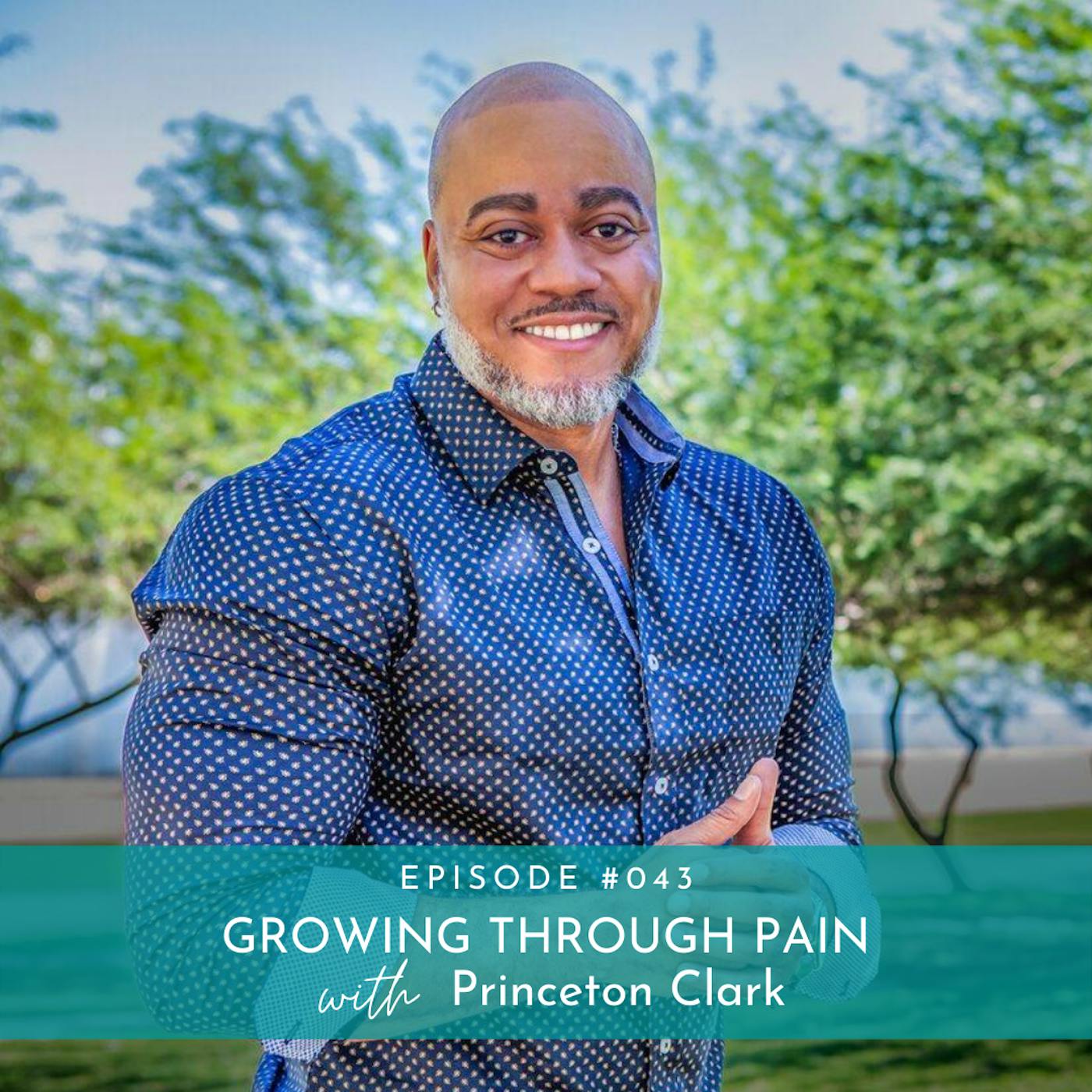
Today's guest on the podcast is someone special. He has overcome some of the biggest challenges anyone faces to become a coach (working with the likes of Tony Robbins and Dean Graziosi) and commit his life to serving others on the path of self-mastery.
After dealing with abuse as a child, being molested, struggling with drugs, and alcoholism, Princeton's life felt shattered. He lost himself and it led him into a deep depression. After a failed suicide attempt at the age of 23, he had a major awakening in his life. It took what he thought was broken and showed him that he had the power to change his story. That's exactly what he did. He chose to become a champion in his life and not the victim!
He had to choose to evolve his life mentally, spiritually, physically, and emotionally. Teaching others self-mastery, and how to evolve in every aspect of their lives is now his main focus. He is an advocate for expedited growth and active responsiveness that manifest optimal results. He has been a coach for the past 16 years, spoken to thousands of people, and is preparing to take things to a new level with the Evolved Mastery platform.
Princeton has a huge heart, an incredible story, and is on a mission to empower others to rise above their pain and grow through it. I loved hearing his perspective, his wisdom, and his heart. And make sure to listen to the end of the show for a special TGAG giveaway!
Get in touch with Princeton:
Mentioned in this episode
Unlock your highest potential and start living the life you deserve!
Read the True Grit and Grace book here and learn how you can turn your tragedies into triumphs!
Thank you for joining us on the True, Grit, & Grace Podcast! If you find value in today's episode, don't forget to share the show with your friends and tap that subscribe button so you don't miss an episode!
You can also head over to amberlylago.com to join my newsletter and access free downloadable resources that can help you elevate your life, business, and relationships!
Want to see the behind the scenes and keep the conversation going? Head over to Instagram @amberlylagomotivation!
Audible @True-Grit-and-Grace-Audiobook
Full Transcript
Welcome to True Grit and Grace, a podcast designed to empower you to claim your resilience and thrive through life's challenges. I am Amberly Lago, a mindset coach, fitness expert, and bestselling author. Each week, I'll dive deep with the world's brightest thought leaders and elite performers to share tangible tools and practical advice to inspire you to keep your eyes on the prize and forge ahead. So get ready to conquer your fears, heal any trauma, lead with your heart, and elevate your life with grit and grace. Well, when I think of my next guest, these words come to mind. Love, unity, hope, and evolved. He's a Self mastery guide, mentor, and teacher for over 16 years. He's got a new book called Awakening youg Inner Master. He's the founder of Evolved Mastery and the host of Evolved Mastery Podcast. He is making global transformation with his nonprofit Unify the World. And along with with everything he does, you can also find him coaching for Tony Robbins and Dean Graziosi, speaking to thousands and being an incredible daddy. So I am so grateful to have you with us today. Welcome to the show, Princeton Clark. I'm so happy to see your smiling face.
Thank you, Amberly. I appreciate you having me on.
Well, I'm just excited. I know. I see all that you're doing, and you are really stepping up as Alicia, who's making great change and transformation, not just with individual people that you coach, but on now, globally, with everything that you're doing. And, you know, a lot of times when we read somebody's bio or we hear what somebody's doing, we're like, oh, yeah, well, that's great. I could never do all those things, but you have really transformed your life. You man, you walk the walk, you talk the talk. You have gone through a lot of trials and tribulations to get to where you are. And one of the things I really love about you the most is that you share so authentically and so openly about all that you've overcome, and that really gives so many people out there hope. And I think with everything going on in the world right now, that is one of the things we really need the most right now is hope and unity. So could you please share a little bit about kind of how you grew up, because you definitely did not have the easiest childhood. Just a little bit how you grew up and kind of take us to where you are now, to how you got to be where you are now.
Sure. First off, thank you for just that beautiful introduction. I think when we look at where I am being able to be in this position with you today. And I think back to where I came from. You know, most people don't know that, but for me, you know, I was abused as a child. Mentally, physically, verbally, and emotionally. I was molested between the ages of 9 and 11. And, you know, for the earliest part of my life, I thought that's just how things were supposed to be. I thought. You know, I never really. Cause back then, a lot of that stuff wasn't talked about like it is now. But I didn't really start dealing with that until about the age of 16. And I remember sitting at my grandmother's house, and we were watching the old talk show, the Phil Donahue show, and they were talking about victims of domestic violence and abuse. And this is really when it was starting to come out more. And I remember sitting there, and there was this older guy, and he was talking about his experience as a child. And it was almost identical to what I had experienced. And I just remembered this. Like, my face got hot, my ears got hot, and I was just angry. Like, I became just enraged because I felt, for the first time in my life, I felt violated. I felt like some part of me or my innocence was taken, and it wasn't fair. But still, after growth through that process, and I always say growing through, not going through, because I believe that my pain was preparation for my purpose, you know, that I had to grow through. After experiencing that, I went into deep depression. And, you know, I hid it very well. Like, no, my. My closest family still didn't know what had happened. They didn't know anything was wrong. And it was a hard time because I had to put on this front for the world pretty much. And on the inside, I was crying. On the outside, I was smiling. I was making everybody else happy. And in the 11th grade, that's really when I started contemplating committing suicide and just ending it all. And I would write it in my notebooks and stuff. And my mom cleaning my room one day, she went in and she found one of the letters. And so her and my dad got together. They talked to me, and they took me to see a psychiatrist who, of course, put me on medication for depression. I took the medication a couple of times and realized that that wasn't gonna change anything. Like, because regardless of how much medication I took, it wouldn't change what happened. It wouldn't change how I feel, because it would only mask it. But being aware of that, you know, I stopped taking the medication. I was like, you know what? You know, I'm not. I'LL figure it out on my own. I ended up barely graduating high school my 12th grade year and that led me.
Did you have any outlets? Did you have sports or did you have. Yeah. Do you feel like that's one of the things? Oh, I was in track two, I was a miler. What did you run?
I was a sprinter and a jumper. Oh, I was pretty good. We won state quite a few times and you know, I was pretty good. I was an all around athlete, you know, and so I did lose myself in sports. That was one way that I maintained for so long because it was just the sense of competition, of worthiness, almost like it gave me this sense of worth. Aside from that, there was nothing else. I didn't have any mentors or people around me that I could talk to. And my entire life I feel like I've had to travel this journey by myself and you know, so once I got out of high school, I ended up on drugs, I started drinking, I ended up participating in gang related activity, you know, and I always tell people I've seen mo. I've seen stuff that most people only see on tv, you know, and I've been in shootouts where bullets were whizzing by my head, like you hear them and I just think about everything that just by grace I was saved from, you know, And I'm just grateful, you know, that although those things happened, you know, I was preserved, you know. Which brings me to. I'm gonna try to condense it. Cause it's a long story and I know our time is limited, but I got married when I was 21, still participating in a lot of that stuff, still drinking and doing all that. But all I knew was I wanted to have a family. I wanted to give my kids something I never had. But what I didn't know at that point was that I didn't even know what love was, you know, how could I give them something that I didn't even embody within myself? I didn't, I wasn't even aware of within myself. And I think that's what a lot of people do. They try to give other people something that they've never had instead of spending that time with themselves, to give it to themselves first, to really love themselves first. But got married, we had kids, we had two. And then right before my, my now 15 year old son was born, my third, my third child, I tried to kill myself. I was sitting in my car, I was struggling with deep depression, still drinking, using drugs and just living that dangerous lifestyle.
And almost like A double lifestyle, because you were trying to function in the world and do the best you could, but using drugs and alcohol to mask all those feelings, probably that you had never really allowed yourself to feel yet and process.
It was my escape, you know?
You know, and it works until it doesn't, doesn't it?
Yeah. It's kind of like the Nightmare on Elm Street. It's like you don't know whether you're dreaming or. You don't know whether you're dreaming or awake because the entire. The entire dream of your life becomes one terrifying movie. It seems like one terrifying dream. And. Yeah. And so at that point, that's when I got to the point where I was like, you know, I'm no good for anyone. I'm no good for my kids, Everybody. The world will be better off without me. And, you know, I put a gun to my head and I pulled the trigger, and the gun misfired. And I say that very smoothly, like it was just this quick process that happened. But I sat there for hours. I pondered over it for a few days, you know, still while smiling and telling everybody I love him. And. But on the inside, being tormented. And I was sitting in my car this particular night, and I put the gun to my head, and I was just. All these thoughts are going through my head of my unworthiness, my worthlessness. And I was like, you know what? I'm done. And I put the gun to my head and I pulled the trigger, and the gun misfired. And I always tell people, even though the literal bullet didn't fire, a conscious one did. Because it was in that moment that I realized, you know, with everything that happened to me, all these other thoughts went through my head. But the biggest realization or epiphany point that came to me at that time in my life was although all these things had happened to me in my life, I wasn't where I was because of what happened to me. I was where I was because of how I chose to respond to what had happened to me. And that one idea. That one idea changed my life because I realized if I could respond in a negative way to create a negative reality, what would really happen if I responded in a positive way and I actually gave a damn about my life? See, because I've been the victim. I played the victim. But what if I decided to be the hero?
What if you decided to be the victor?
Yes, yes.
Instead of the victim. But I want to go back to something, because the. It really hits my heart to hear you share this, because my Stepmother committed suicide. She shot herself about five years ago. Actually, I'm rubbing my necklace right now. This was her necklace, this horseshoe necklace. And I hold this necklace all the time. We didn't know how depressed she was. We didn't know how, how sad and, and really she, you know, mentally ill she was. We didn't know. Do you think that there were any of your loved ones that had any signs of, of there, of you thinking, oh my gosh, you know, he's, he's gonna, he's gonna end it all? Were there any signs or were you putting up that front so well that people had no idea?
There was nobody in my life that knew.
And that's what's so scary, right? Because there are people that you hear about. And I think, I'm so glad we're talking about this, because right now, mental health, with people being still kind of not being able to go to work, working out of their houses, you know, and now being, you know, teaching school while they're working out of their houses, it's. It's hard. I think we really need to do things for our mental health. And so I'm glad you're sharing this because if there's anybody struggling right now, you living through this experience, what would you suggest for them to do if they are really struggling right now for
someone going or growing through, processing through this experience right now? I say find someone that you can talk to. Because the thing is, we as a human species, we were not designed to flow or function alone. We were designed for connection. We were created for connection. And a lot of the times in our lives we allow ourselves, when we think about depression, we allow ourselves to get pulled into this vacuum of depressive thoughts and negative feelings and emotions and ideas, and we send ourselves in. This whirlwind of that takes us down. And the most important thing that I would tell anyone is seek out someone outside of your immediate circle. Find someone non biased to talk to them about what you're dealing with. Find a coach or mentor, someone who's been there, someone who can actually guide you through the process and let it out. Talk about what you're holding onto. Because the longer you wear that mask, the longer you hide behind the pain, you know, and just let it sit there, the more it's gonna bubble and boil and eventually it's gonna start coming out into areas of your life. It doesn't matter how long, how strong your mask is right now, eventually that mask is gonna shatter and people are gonna see the pain. You know, if you don't end it first, you know, but you don't have to let it get to that point. You don't have to be that victim anymore. And I know life, it can be challenging, but I truly believe that, you know, just like what I realized in my own life, all this. I used to say my life was cursed. You know, I've experienced so many things. I used to say my life was cursed. But what I realized after that failed suicide attempt was with every one thing that I had grown through or experienced in my life, there was at least a million people out there experiencing just one of those things. And if I could become the victor, as you said, in my own life, then I could be a champion for them. And so that's where I found my purpose in that. See, a lot of times we think that life comes to break us. It comes to break the idea that we've assumed so that we can break through. See? And people think, oh, this breaking, this breaking that's happening in my life, it's destroying me. No, it's destroying this idea of you. You, but within you. I always say what you are is more powerful than who you are, because who you are is an idea. Your parents, your family, your friends, everybody has an idea of who you are. But what you are is a divine creator here with a divine purpose to create something amazing with your life. And unfortunately, a lot of people don't wake up to what they are, and they get lost in the idea of who they think they are, the idea that someone else has put on them.
And I think a lot of people are discovering what they're made of right now in these moments, because it is easy. Look, I'm guilty of that. I got caught up in this identity of who I was. And, you know, I was the athlete. I was. You know, I was the provider for the family. I was the fitness model. I did all these things, and in an instant, that was all taken away from me, and I had to discover what I was made of, what you know. And so there's a big difference there. And I love that you. You. It's all perspective, isn't it? It's not necessarily what is happening, but how we choose to see how we choose to see it. And I think just by changing just our wording, like I had someone on the podcast and. And he said something that really hit a. I was like, wow, just by changing one word. He was diagnosed with diabetes, and instead of googling living with diabetes, he googled reversing diabetes, and it changed everything. Just like you talk about you're the victim or you're the victor and everything that you have grown through in your life. And so in that moment when everything changed for you and you realized, here's here. I got my chance. I almost ended it all. How did things start to change in your life? How did you go to your kids and say, hey, did you tell them, hey, this is what I just tried to do? I just tried to kill myself?
No, honestly, you know, after that happened, it was a series of events, but after that first happened, you know, and I want to go back to even to what we were saying to other people who were trying to navigate out of it. We always talk about how the next moment isn't promised or the next breath isn't promised and, you know, live your life to be the best, because the next moment is a promise. But for me, it became real at that moment. From the moment that gun misfired, I realized that every breath that I would breathe from that moment was a gift to me. And I said, I'm not going to waste another breath. I'm not going to complain. I'm not going to sit here and worry about things I can't fix. I'm not going to doubt that week. I quit drinking cold turkey. I quit smoking. I quit using drugs. I walked away from gangs. And I isolated myself for a whole year. In the beginning, I didn't tell anybody what I had done because I was still. I guess you could say I had this mass awakening at that point in my life because there was a series of events that happened that following week that just led me into this illumination within my own self. And I took just this deep spiritual journey. For me, it wasn't about telling everybody what I'd done. It was just about becoming something new. And little by little, they started seeing. See, a lot of the times the old me would have wanted to tell people, like, look at what I did. You know, look at how I was suffering. And I made this decision. But at that point, all I wanted to do was focus on where I was going. All I wanted to do was be something different. I wanted to take it and embrace every moment, take every opportunity to embrace the breadth of my being, to create something new. And I guess it was about a year just. I grew up in the Bible Belt of Virginia, in Brookneville, Virginia, and I started studying the Bible. That's all I knew. But I wouldn't go to pastors or go to churches because even pastors in my community had told my family I was a lost cause. I was Worthless, like, he's too far gone, you know, Because I used to be. I'm not who I used to be. Like, I used to be demented. I didn't care, you know, I was like, I was one of those people where if you saw me walking down the street and I just had this look on my face like, you're going to cross the other side of the street if you see me walking towards you. And so I just didn't care, you know? And when I got to that point, I just dove. Like I started studying the Hebrew, the Greek, the Aramaic, I started studying because that's all I really knew to turn to at that time. But I just remember getting to. You know, I always tell people I'm not a religious person, but I ascribe to the message of Jesus, you know, I am a disciple of that message, you know, the message of unconditional love for myself, a love for all things, a love for all people, you know. But I also understand that you can only love other people as deeply as you love yourself, which in turn drove me to repent, to turn back to this idea, this knowing of what I am, so that I can rise to be that example for other people. But along my journey, I ended up going back to school, got my bachelor's in Biblical Studies in Eastern Religion. And I just wanted to understand the basis of everything we say we believe, you know, because I just had this hunger for wisdom at that point. And then I ended up pastoring because I realized in my studies a lot of stuff was taught wrong. And I said, you know what? I'm going to be like Neo in the Matrix. I'm just going to kind of go into the system and I'm going to start uprooting some stuff and really calling some stuff out. Didn't go over so well.
It did
for about five years. And, you know, I got really.
Oh, you're kidding. Well, look, I grew up in the Bible Belt of Texas.
Oh, yeah.
I mean, we went to church every Sunday. And if you miss church, you better. It better be because you're in the hospital or dead. Like, you did not miss church. And so I could imagine that that didn't go over so well for some old timers who were like, whoa, whoa, whoa, whoa, wait a minute, what are you trying to do? So how long you pass for? 5 years. And that's probably one of that journey. I mean, because you're an incredible speaker, I'm sure gave you such a great experience for just getting up in front of people and sharing your Message. Because I think my favorite speakers are a lot of pastors, you know, but tell me what they called you.
The devil. Yeah.
You're trying to share love.
Oh yeah. But they didn't see it, you know, and you know, in America there's almost four. There's, I believe there's a little over 3700 different versions or different denominations, all reading the same book, picking and choosing what they going to believe and what they're going to stake their faith on, you know, but you know, Jesus's message was simple to me. You know, he said his message, he didn't preach. I came to die on the cross. And I don't want to make this a religious conversation, but you know, he didn't preach. You know, I came to die on the cross to save you of your sins. He preached repent, for the kingdom is at hand. That word repentance, to repent in Hebrew or Aramaic is almost like a 180 degree turn. It's a turning away from, it's a remembering, it's a coming back to. So he's ultimately saying, come back to remember what you are. The kingdom is here now. And his entire message throughout the gospels that we see the kingdom is like this. The kingdom is like this. The kingdom is like this. The kingdom is like this. His message was the kingdom. And then he says, seek ye first the kingdom. You know, he's talking about, you know, don't worry about tomorrow, don't worry about what you're gonna eat, what you're gonna wear, any of these things. It says, seek ye first the kingdom and all these things shall be added unto you. Few passages over. He comes back and he says, don't listen to men when they say the kingdom is here, the kingdom is there. For I tell you, the kingdom is in you. That's repentance. Turn back, remember what you are. Remember. If you really understood the power of your belief, the power of your faith, you could tell the mountain to move and it would have to move. Like, do you really know how powerful you are? And that's something that really stuck out to me. Like that's how powerful I am. Like, it rooted in me at that time in my life because I was a blank slate. And from that day when I came to that realization, I looked around and I saw people in bondage not knowing how powerful they were. And so I tried to do it the religious way and go through the system. It didn't work, you know, but I was teaching something complete because a lot of people still want to play the victim. Even in religion, you know, the woe is me. I'm going through this and, you know, I just got to repent from my sins, you know, but sin simply means to miss the mark. You know, it's a. It's a. It's a military term that the Greek soldiers would yell if they shot at a target and they missed the mark. But the mark that people are missing is the mark of love, the mark of loving themselves and the mark of loving all things through gratitude, through faith, you know, and so I tried to weave that into there to really get people to see it, because they say they know it, but they're not embodying the knowing that they say they know. But long story short, I left the church and I really just went deeper spiritually. You know, I started studying meditation, started going deeper into spirituality and my own. My own awakening and that, that whole process. And I stuck to the message. But what I realized was, you know, you can't use a system to change a system. You have to become something new. And I just said, you know what? I just want to take as much love as I can, but I want to go deeper. I want to be so loving that literally, you know, you guys talk about the story of Jesus hanging on the cross, and, you know, he looks out over the same people who had yelled, had yelled at one point, point, hosanna, Hosanna on the highest, who were now saying, crucify him. Crucify him. And he looks out over them and he says, forgive them, for they know what they do. Like, I remember the first time I read that, I said, I want to live that kind of love. Like, I want to be so loving that my light cannot be ignored. And that's what I've done. You know, I always say self mastery. You know, being a self mastery guide, I take people back to the core of their mind, the core of their body, the core of their soul to understand the oneness of it all, the power of it all. And it starts with you. You are the root, I always teach you, are the root to the tree of your life. And if you don't like the fruit, you don't like the broken branches, you don't like what's growing in that tree, you have to go back to the root, go back to the core, go back to the foundation. What are you feeding that root? What are you putting your focus on? What are you putting your thoughts on? What are you putting your emotions and your state on? Because whatever you focus on is what you're going to Grow more of in your tree.
It's so true. It's so true. With negativity or being a victim or I am very conscious of even the words I choose. I live with complex regional pain syndrome, which is actually dubbed the suicide disease. And a lot of people reach out to me and say things like, well, how can you be happy when you're in pain every day? Or how do you exercise? Or how do you stay so positive? Or the latest one I just got through DM was, I don't know how you do it all. And I said, well, first of all, I don't do it all. I reach out for help. And that's one of the things that I have really had to learn the hard way, because I used to try to do it all on my own, but I ask for help. Like you were saying, I think we're meant to connection. We're meant to come together. And I think that also, not just words are powerful, but in what we choose to really focus on is so powerful, the human spirit is so powerful beyond measure. And I always think if I'm having a hard time with something, with a decision, or just feeling like I'm starting to get depressed or I can't find my joy, I always go where I can connect to my higher power, which I call God. And to me, that doesn't even mean church anymore. That means going out in nature and really finding that connection and just being quiet long enough and in peace long enough and getting out of my head and staying in my heart, because, man, our heads can just. I don't know about you, but I can just start thinking and spiraling and feeling distracted. But if I can just remember to stay in my heart, then the answers come, then I feel at peace. And so that takes practice, though, and I think that does take faith. What would you say to someone who's having a hard time right now and they are in that victim mentality where they feel like this is happening to them, Where I always say, this is happening for me. A lot of times people say, well, this is happening to me. You don't understand. All this is happening to me. What would you suggest to someone who's like, my life is so hard, I'm going through so much. I am a victim. What would you say to them?
First off, I would. I want to say I wouldn't downplay their experience. You know, I would say, okay, like, this is clearly a reality. You know, these things are happening in your life. But at some point, just like I had to do with myself, we have to step into our responsibility, our ability to respond. And, you know, I get that. You know, we go through some challenging things and sometimes we want to give up. But right now, in this moment, I think, you know, a lot of people get so caught up in what's happened to them, you know, and what's been created as a result of that. But so we need to stop focusing on the past and even stop focusing on the future. People, if you're struggling right now where you are, you have to get present in this moment. I always say this moment is the most powerful moment in your life. This now moment is the most powerful moment in your life. Because everything, you know, we talk about the past, the past are simply past moments of now in which we chose to respond in a certain way that brought us to this moment. The future is simply future moments of now in which we have yet to create from this now moment. You know, and so if you're out there and you're still playing the victim, you're doing yourself a disservice. It does not serve you to play the victim. It does not serve you to play it small, to just allow yourself to go into that space of just depression and fear and worry. You know, it's not comfortable for you. You know, it's not a happy place. And what I want to ask anyone who is in that situation right now is how much is your life worth to you, not your circumstances? Because, see, change is the only constant. Circumstances are always changing. How much is your life worth for you? See, because until you find value in you and your ability to make change right now and again, a lot of you may feel like I'm by myself. I'm damned if I do, I'm damned if I don't. No matter what happens, this has been my life. But insanity, the definition of insanity, is doing the same thing over and over again, expecting a different result. If you want different results, sometimes you got to push beyond your ego. You got to be willing to step out of that victimized state and circle circumstantial situation that you're in. And you got to find someone who's been there. You have to find someone who's not in that situation, someone who can see the light. Because if you stay in that victim state for too long, you're blinded to possibility. You become a deep pessimist. You stop believing in what's possible. I remember, you know, before my life changed, I remember hearing motivational speakers and just these enthusiastic, you know, individuals sharing their message. And they were always positive And I remember thinking, just from that state, you know what? Nobody wants to hear that crap. Like, who's really that positive all the time? Like, I didn't believe it because I never experienced it. It didn't seem real. It seemed fake to me. You know, I felt like they were doing too much, you know? But then my life changed. I had my own personal awakening. And when I found that within myself, I became relentless, you know, so now it doesn't matter what happens. If I don't see something, I'm going to seek someone who does. You know, I'm not going to stay where I am because I realize that if I stay by myself, I stay in that victim place, then I'm never going to get out of that victim place and I don't have time to be in that place. So if you're in that place right now, I know that it seems hard. I know it may seem like a dark place that you're in right now, but it won't illuminate until you start seeking the light. Which means you have to start seeking circumstances, connections and situations that are much brighter than the situation and circumstances that you're in. And right now, like, we all make excuses, you know, in the beginning, well, I don't have money for a coach or I don't have access to information or I don't know what books to read or whatever. When my life first changed, I was in the same boat. But guess what? I would go to Barnes and Noble and I would read for hours. I started studying human consciousness. I started studying psychology. I started studying conscious psychology, human motivations, like why do people respond the way that they do? Because I knew what I didn't know. I didn't know how to be positive at that point. I didn't know how to be happy. I didn't know how to be loving. I didn't know how to address my emotional or lack of emotional intelligence. I didn't know how to be who I was purposed to be, how to be who I felt like I was meant to be. So I started seeking wisdom in areas that would help me find that. See, and you got to be hungry. You can't complain about your life and not do something to change it, you know, and you have to be consistent. See, I didn't. I didn't come from being in gangs and on drugs and being the angry person after trying to commit suicide that I was to being someone who's gotten to work as a high impact coach with Tony Robbins, Dean Graziosi, and got to impact you know, thousands of lives all over the world. And, you know, I've become an author. Like, I would have never become who I am in the power of what I am right now if I had not been consistent in my war against my own ego, if I had not been consistent against my war against my own excuses, if I had not been consistent against warring against the idea or the reality that I formally created. I had to own my responsibility. I had to own the fact that I played a major role in creating this reality. But with that came the responsibility to create something new, you know, and that's where the brand evolved mastery comes from. You know, evolved. I've evolved through self mastery, and you have to do that too. And it's not going to be easy.
And, you know, I love that you share about consistency, and that is the key. You know, I had somebody message me and they asked, well, I'm a student. How do I stay motivated? And I'm like, here's the deal. You're not always going to be motivated. So it comes down to your daily habits. And a lot of people, you know, might be struggling with, you know, just being in the pandemic with gyms closed or what have you. And it's like, if you make your daily habits, like, for me, morning routine is very. I mean, I start my day off with gratitude. That is one of the ways I got out of the victim mentality and got out of my depression. And people go, gratitude, really? That works? I'm like, no, it really does work. And it's one way that you can shift your mindset. And I love that you said, reach out and find someone. Because, you know, when you're going through something so painful, you feel like you're the only one that no one could possibly understand the pain that you're going through through. But I guarantee you, there is somebody out there that is going through. Their story might not be identical to yours, but it's probably pretty darn close. And so it's so important to surround yourself with, like, look at who you're hanging out with. Because I can guarantee you, if you're hanging out with people who are very negative, who are not inspired, who don't live a healthy lifestyle, pretty soon you're going to start giving yourself permission to start complaining, start gossiping, not be as healthy those things, you start to become just like the people that you surround yourself with. You know, in fact, my daughter was, and she's going to kill me if she hears this podcast she got sent to, to the principal's Office last year. No, sorry, year before last. And I said, she's a good kid. I was like, what happened? And she goes, she loved hanging out with some kids that were getting in a lot of trouble at school, because, man, they were. They were entertaining. And one of the kids was always getting in trouble. Well, pretty soon they all got called in, and because she was hanging out with them, she goes, but, Mom, I didn't do it. I wasn't doing anything bad. I said, well. And she. I said, well, it won't be long before you're doing it because you're hanging out with these people. Then you're going to the principal's office. And that really clicked for her. Of course, she was mad at me after I told her that. But it's so true, you know, like, if. And that's why I think it's important to. Look, if you're in support groups, look at those support groups. Are they really supportive? Are they sharing uplifting, positive messages, or they just there to complain and be doggy downers? And I think it's really important to take a look at that. I know we're running out of time, and I just appreciate your time so much.
Likewise.
Because you do your coaching, you have your book, and I wanted to ask you about your book. First of all, how long did it take you to write your book? I love asking that question because it took me, like, two years to write my book. And I'm always, man.
I initially, it took me two weeks spread out. What? Like, literally, it flowed from me. It was so. It was the funniest thing, because I got to the point where I was like, you know what? I'm going to do an ebook. And I was like, ebook will be easy because it only has to be 10,000 words. And at this point, I was really in my flow. I just started my podcast, and I was just in that vein, and I was just an open, open space right there. And I started writing the ebook. I remember Friday night, and that first night I wrote 10,000 words. And I was like, this is because I wasn't even a quarter of the way done. I was like, this is not going to be an ebook. This is going to be a complete book. And then so throughout the week, this was sporadically, I would spend two hours, three hours here and there. But over the course of two weeks, I guess if I were to put all the hours together, it probably took me about three days to write the book.
Wow. Wow.
But it just flowed from me.
That's amazing. And you know what? I think when you are really aligned with what your purpose is, it does flow for me. I know that something is not right. It's not quite right if I'm struggling to write it. And that comes down to even, like with a post, if I'm doing an event or something and the event organizer is like, hey, we really want you to promote our event and blah, blah. And I'm like, really struggling with it. And like, how do I word this? I have to like a lot of times sleep on it and then let it flow naturally. I don't like to force it. And so I love that it only took you that long to write it and you do so much with now your nonprofit. And that's pretty new. Isn't that pretty new?
Yeah, it's only about two months legitimate right now. We launched it two months ago, you know, in the light of everything that was happening with, you know, injustice. And, you know, I saw as a leader, you know, we always say leaders don't focus on the problems, we focus on creating solutions. And one thing that I saw, you know, everybody talking about racist this, racist that, and I said, listen, I understand what racism is. You know, I grew up in a small town in Virginia where I remember the KKK marching through my town. I've been called a nigger more times than I can even count on my hand. So I understand racism. Racism isn't what's happening right now. Prejudice is what's happening. Prejudice, people prejudging based on stereotypes, ideas, experiences, or lack thereof, knowledge or lack thereof. And so that's the biggest problem is a misunderstanding on a very large scale because of how we've allowed the media to play us and how we've allowed ourselves to get pulled into to the lie. Racism does exist, but the biggest problem right now is prejudice. And the only way to combat prejudice is through education. And I felt like I saw the problem and I wanted to create a solution. And I realized that you can't use the systems to. Again, what I learned earlier in my journey with religion, you can't use the systems to change the system. You have to create something new and you have to do something new. And what I realized is the one thing we had never done, we have never done it is come together in unity, come together in love, saying, what can we do to change this? And what I saw in the. In that time when all this stuff happened around George Floyd and all that, what I saw was a lot of people for the first time, because I think it became real for a lot of people. For the first time, like, this crap really happens.
And people were saying, heartbreaking. Oh, my gosh. It was. Just watch. I had to turn the news off because I would watch the news and just cry. It just breaks my heart that there's such evil out there. And so I love that you are the leader that you are, and you're like, we have got to create something new to come together for love and unity. Can you tell us a little bit about what you do with your nonprofit?
So the slogan is educate, elevate and unify, because our goal is to eradicate the disconnects within humanity. It's not just a black and white issue. So the main project that we're focusing on is called the unity Project. And what we want to do, because we also see the effects of the disparagements in minority communities. We see the lack of education. We see the lack of resources or the lack of knowledge for resources. So one thing that we want to do is start creating free education. You know, we're going to create free education through the Unity Academy, and we're creating a foundation where they can come in and learn how to start their business, learn how to use their voice in a way that's effective, learn how to understand money and finances so they can start creating an economical foundation for those communities, learn how to come together so they can push towards, you know, social legislation, educational legislation, or reform rather, and, you know, all these other areas. And the only way we're going to create change is by educating. So what we want to do, because I grew up in one of those countries where that stuff wasn't there, we weren't taught that stuff. Like, we literally had to go outside to find it. And I want to go in, and I want to help raise their morale. I want to start teaching more about black history. Not in a sense that I think black people need to know what black people have done, but in a sense that I feel like because of that stereotype, the black and the white stereotype, we'll look at what white people have and look at what black people don't have. Let's just say look at what some humans have and what some humans don't have. But to start, you know, Dean Graziosi always says something awesome. He says, you know, you bring people in based on what they want, and then you give them what they need. You know, so it's like, you want to. You want to see. You want to see all the amazing achievements that this culture, this group of people, based on the pigmentation of their Skin created. Okay, here you go. But now let me wake you up to the potential that you have to be the change in your own communities, to be the change. See, because growing up in a community like that, most people in that culture are like crabs in a barrel. Like, they pull each other down. And I grew up in that culture, so I understand why. It's because of this fear. You don't want somebody to be better than you, and it's a defeatist mentality, you know, and it destroys the community. So it's like, why help you if you're not going to help each other? Like, it doesn't make sense, and it's not in every community. But we're creating programs for free education to go in and combat that. And we're going to teach them, you know, leadership skills, leadership principles. We're going to go in and show them what their potential is, what they have the ability to do, what they have access to that they're not aware of, that they have access to. And we're going to eradicate the disconnects there. And we're also creating programs, the Leaders Guild, where we're going to have leaders of all cultures, all colors, creeds, coming together, talking about the disconnects within humanity. And we're going to bring in. Because what I found, even with all the stuff that's happening, you have a lot of my white. I say my white brothers and sisters because everybody's my brother and sister. You have a lot of people saying, what can we do? What can we do? What can we do? And I'm going to be honest, it frustrated the crap out of me when I saw the news and I saw, you know, all of these white people, like, bowing down and praying in front of this group of black people. And they're just kind of standing over them. And I said, we don't need that. No, you reach down, you grab their hand, you tell them to stand up and stand with you. They're not less than you. They didn't do anything to you. You know, and so I'm like, we gotta come together in unity. I think for the most part, we don't need people coming in and saying, oh, I'm so sorry. I'm so sorry. We need people saying, I see what's happening now. What do we do about it? How do we stand together? How do we move? You know, the ultimate apology is action towards progress. You know, it doesn't matter how many people say, oh, I'm sorry. What are you doing? To be a part of the change
Actions speak louder than words. And I think that. But there. I think there were a lot of people that were like, well, what do I do? How can I change? You know, And I think for me, that really, I think change starts in your household, and it starts with how you teach your children. And, you know, and look, I grew up seeing some things in Texas that I didn't like, but I didn't necessarily believe. But I always felt a little bit different. You know, that's one of the reasons I moved out of that small town. But, you know, I do think it's great that you're offering education because, gosh, we all need to learn more. All need to learn how we can reach out and help more. Will this be through an online course or.
Well, for now, because of all the COVID stuff, it's going to be online. We're also, like, we're raising money and everything right now, but we're going to be creating an app that we can put in the palms of people's hands.
That's awesome.
So it'll be free education in the palm of your hand. It's free to join. They'll have to sign up in order to get access. But what we want to do right now is really just create a strong foundation for unity. And I keep saying, even though we are addressing an issue that has black and white as its focus as people, this is not a black and white issue. This is a human issue. We as a species are disconnected, and we base our disconnections on stereotypes. We base our disconnections on the pigmentation of the color of our skin, which is ignorant. You know, we're less than 1% different from each other. You know, that's so crazy to think about. So really just bringing people together, we're going to be pushing for legislative reform, educational reform, and judicial reform so that we can create change in a positive way. Protests are only going to do so much. People talk, they make noise, people pay attention because they want them to be quiet. They make a few changes here and there, then five to 10 to 20 years from now, the same thing happens again. That's not where we create change. The only way we're going to create changes, if we come together as a people and stop waiting for these systems to. To change for us. We have to be the change. And the only way we'll do that is coming together, educating ourselves, using our voice, using our intelligence, and then taking the strides forward so that 100 years from now, they're not talking about the problem, they're talking about those who rose to solve it.
Wow. And you are rising to solve it. I mean, you. You got on this right away. That's the kind of leader you are. You're like, okay, what can I do? And it seems to be your go to or your default, okay, what can I do about this? And I love that you do that. And then will you also have it? Will you be working with law enforcement, too?
Yes. Yes. I'm really excited about that. I actually have a few friends who are in law enforcement. One of them, my friend, good friend Heath Cummings, he actually quit the police force. Cause he saw so much corruption. And then he ran for the select board in his town in Massachusetts and he won. Now he's over that police department and he's cleaning stuff up out there, you know, so people like that. But I think it's important. I know our time is winding down, but I think it's important to have everybody as a part of this conversation who is kind of being used as a scapegoat or as an excuse for why people make the decisions they make. And I think there's a lot of great police officers out there who love what they do. And I have to put it into the perspective of these people are human, just like us, just like any other profession. They go to their jobs. Who knows what's happening at home, what struggles they've had, you know, but they come, they're already stressed out. And then we create an even more tense situation where now they fear for their lives. And you put a parent, you know, let's say a lot of these officers are parents now. Good people, great people. Now they're thinking with everything that's going on, you know, I have children at home, I have a wife at home, I have family at home. They're going to be even more on guard. Which makes it dangerous because if they have to think it's me or you, it's going to be you. And it doesn't mean that, oh, it's you because you're black. It means it's you because you put me in a situation where I fear for my life. Like, I don't know what's going to happen, but I do know I want to go home to my family, you know, And I think a lot of stuff is being misconstrued. And we're creating a space where we can have some very tough conversations. And I'm not one for picking sides. I see the problem. And I always tell people, if we're not talking solutions, I don't want to Talk about it. It's a waste of my breath. It's a waste of my time. But we got to create a space for these conversations. So I'm looking forward to bringing people within politics, police officers, people from different communities who have different perspectives, who don't understand privilege or racism or prejudice and don't really understand how to navigate that and communicate through it. We want to bring that together, unify it in love, and say, what can we do to be the difference? That's what I'm looking for. Leaders who are saying, what can we do to be the difference?
Well, I love that. And, you know, my husband retired a few years ago, but he was a lieutenant commander with a highway patrol, and. And he's best friends with a lot of people who are still, you know, actively on duty. And they said it's tough right now. Yeah, there are good cops, and there are some that got some bad seeds. So I think it's great that you're creating a place where people can educate themselves and learn and. Yeah. You know, and create some reform, definitely. You know, I think that's so important. So tell me, what is your definition? Because I think we need some resilience right now. What is your definition of resilience?
My definition of resilience is continuously evolving in the face of change to become a better version, a more expanded version of yourself. You know, like to be resilient, it's just because we understand change is the only constant. You know, I don't believe in being stuck, because stuck is an idea. It's what happens when we stop moving. But evolution is a constant movement forward, you know, and so evolving continuously in each moment to be an expanded or evolved version, a new version of yourself. That's what resilience means to me.
Oh, that is beautiful. I love that. And where can people find your book?
Right now it's on Amazon, and you just look it up. You can look it up by my name, Princeton Clark, or you can look it up at Evolved. Excuse me, not evolve Mastery, but you can go to my evolvemastery.com website, but it's on Amazon, and it's just awakening your inner master. The journey of your. Excuse me, can't talk right now. The journey of self mastery. You know, awakening your inner master. The journey of self mastery. It's on Amazon, and I actually have some copies here, and I wanted to tell you I'm going to be sending you two copies, one for you and one for you to give away to one of your listeners that tunes into this podcast.
I love that, okay, so how do we pick who gets the copy? Whoever reaches out and reaches over to you on first and says, hey, I listened. I want that copy.
How do you know they have to go the challenges for them if they're listening to this podcast. Go rate this podcast, show some love, give a review, and we're going to do a drawing from all the names that come in that leave a review and just show love to the podcast. And also shoot a message on your Instagram for your podcast. And we're gonna select names, we're gonna do a name drawing. So if you wanna get a copy of this book, you know what to do. Go show some love, show some support. Because, Amberly, you're doing an amazing job and I believe that it needs to be recognized because you're such a beautiful light in the world. So in order to get registered in the drawing for the book, they gotta show you some love. Show you some love.
Oh, thank you. You are the most generous person. I am serious. Thank you so much. That is so nice. So generous of you.
So. Wow.
Yeah. Well, you are such a light in this world and I love all that you are doing and just stepping up the leader that you are, leading with love and sharing your experience, strength and hope so that others can heal and learn and evolve. It is just a beautiful thing. Y' all go check out his book. Book and check out. I love even looking at your Instagram because you've put some transformational pictures on there from what your life was before to what it is now. So follow him on Instagram is evolved mastery. If you just put your name and also that will be in the show notes. So if you're listening to this and you're driving or whatever, you can always check back in the show notes and you can find. I'll have his website, his book link and places you can follow him on social media. So thank you so much for being and sharing your light. I just, I loved our time together. Thank you.
Thank you. I appreciate you so much. And to all of you out there, I love you. I send you grace, love, peace to your life as you navigate your own journey foreign.
Thanks so much for joining us this week on True Britain Grace Podcast. If you like it, please rate it or share it with your friends. That would help too. If you're not yet on the newsletter list, come over to Amberly Lago.com and jump on it. While you're there, you can grab a free downloadable gratitude journal. And you might just want to check out my book book or even check out my monthly motivational membership. Thanks again for tuning in, and we'll
see you next week.
Pain to purpose to joy.
Never Miss a Conversation
New episodes drop regularly. Subscribe on your favorite platform and never miss a conversation.