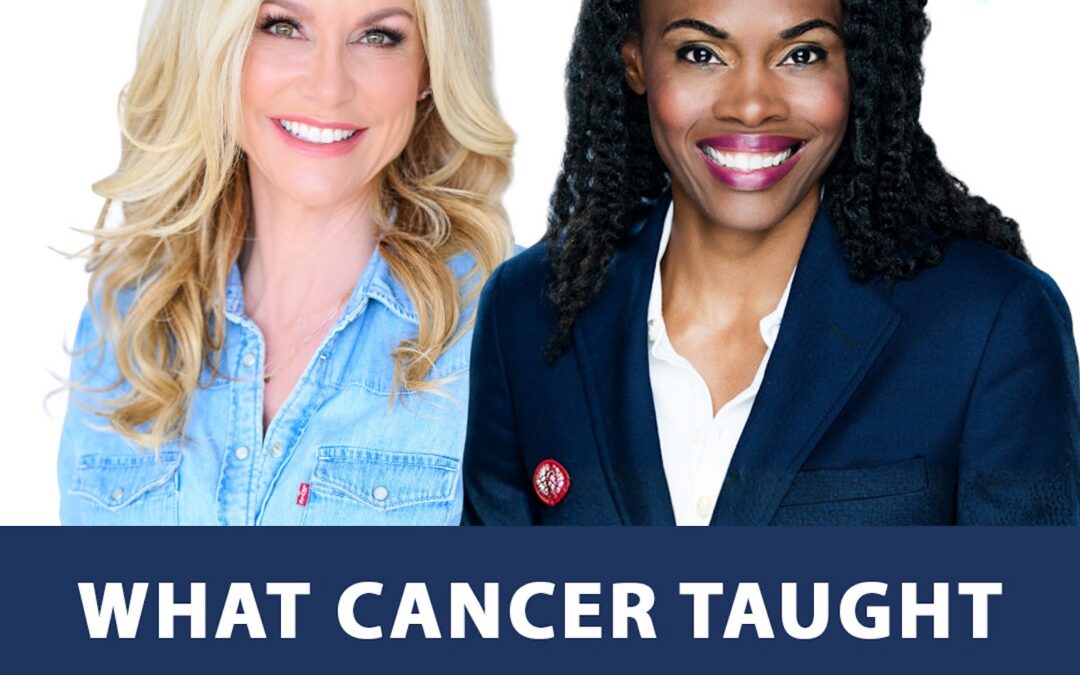
I’ve interviewed a lot of incredible people over the years, but every once in a while, someone comes on the show and leaves me sitting there thinking about the conversation long after we stop recording. That was definitely the case with Chaunté Lowe.
Chaunté is a four-time Olympian, Olympic bronze medalist, 12-time U.S. national champion, American record holder in the high jump, TEDx speaker, and breast cancer survivor. On paper, her accomplishments are extraordinary. But what moved me most during our conversation was the wisdom she gained through some of the hardest seasons of her life.
This conversation was about resilience, identity, faith, and learning how to keep moving forward when life doesn’t unfold the way you expected.
Here’s what landed most for me from our time together.
Your Current Circumstances Don’t Have to Determine Your Future
Chaunté grew up surrounded by challenges that could have easily convinced her that her future was limited. She experienced poverty, domestic violence, and addiction within her family. Yet instead of allowing her environment to define her, she became fascinated by people who were already living the kind of life she hoped to create.
One of the stories she shared was about watching Olympian Florence Griffith Joyner compete when she was just four years old. Something clicked for her in that moment. She didn’t know how she would get there, but she knew she wanted that kind of future. That vision carried her through years of hard work, setbacks, and uncertainty.
I loved hearing her talk about looking beyond her circumstances and finding examples of people who were already doing what she hoped to do. It’s such an important reminder that sometimes we need to borrow belief from someone else’s example until we’re able to build our own.
Fear Gets Smaller When You Face It
One of my favorite moments in the conversation came when Chaunté talked about helping her daughter work through fear before a volleyball tournament. Her daughter was terrified. Like any mom, part of her wanted to protect her child from discomfort. But the athlete in her knew something important: confidence comes from experience, not avoidance.
She shared a simple insight that applies to all of us. So often, the fear of doing something is much bigger than the experience itself. Once we step into the situation, we realize we’re more capable than we thought.
That lesson showed up again when she talked about her cancer journey. As athletes, we’re used to believing that hard work can solve almost anything. Then life hands us something we didn’t choose and can’t control. For Chaunté, that diagnosis forced her to fight a very different battle. She discovered that the biggest challenge wasn’t happening in her body. It was happening in her mind.
Instead of allowing fear to take root, she became intentional about what she focused on. She looked for stories of survival. She reminded herself of what was possible. She coached herself through the uncertainty one day at a time.
The People Around You Matter More Than You Think
Something else that really resonated with me was Chaunté’s perspective on community. When she was going through treatment, she didn’t have a huge support network nearby. Most of her family lived across the country. Rather than waiting for community to find her, she started creating it. She shared her story online, connected with people who understood what she was facing, and allowed herself to be vulnerable enough to receive support.
She also talked about something I think many people need to hear: people can’t support what they don’t know exists. Sometimes the first step toward connection is simply being honest about what we’re carrying. That opens the door for healing, encouragement, and relationships that might never have happened otherwise.
This entire conversation left me feeling inspired and grateful. Chaunté’s story is proof that resilience isn’t something we’re born with. It’s something we build through the choices we make when life gets hard.
If you’ve been facing a challenge that feels overwhelming, if fear has been keeping you stuck, or if you’re walking through a season that looks nothing like what you planned, I think this episode will encourage you as much as it encouraged me.
Tune in to hear the full conversation. I have a feeling you’ll walk away with a renewed perspective on what’s possible.
About Chaunté Lowe
Chaunté Lowe is a four-time Olympian, Olympic bronze medalist, 12-time U.S. national champion, TEDx speaker, breast cancer survivor, and one of the most accomplished high jumpers in American history. Through her speaking, advocacy, and powerful personal story, she inspires audiences around the world to face adversity with courage, faith, and resilience.
Connect With Chaunté Lowe
Instagram
https://www.instagram.com/chauntelowe
Website
https://www.chauntelowespeaks.com
Thank you for joining us on The Amberly Lago Show: Stories of True Grit and Grace! If you find value in today’s episode, don’t forget to share the show with your friends and tap that subscribe button so you don’t miss an episode!
And if you’re craving deeper connection and support, I want to personally invite you to join the waitlist into my Unstoppable Life Mastermind. It’s a community of incredible women who are ready to step into their purpose—writing their books, getting on more stages, launching podcasts, and sharing their message in a bigger way. If you feel called to increase your influence, impact, and income while being surrounded by women who truly support you, this might be the room you’ve been looking for.
Connect With Me:
instagram.com/amberlylagomotivation
Website
Grab my bestselling books:
Get on the waitlist for the Unstoppable Life Mastermind:
My favorite for health and wellness:
Listen to The Amberly Lago Show:
Subscribe so you never miss an episode!
Transcript:
Amberly Lago (00:00)
Can you describe to somebody like being an athlete what that does for your mindset?
Chaunte Lowe (00:06)
I think that that’s what sports does for us. Like whether it’s getting in front of a boardroom, whether it’s, you know, getting on a stage and speaking in front of 5,000 people, we have to understand the fear of doing the thing far surpasses. I think that the lessons, you know, obviously time management, confidence, talking to just different people, figuring out who you are, where your limitations are, and understanding that your current limitations are not your permanent limitations.
Amberly Lago (00:35)
What would you suggest to somebody who has a lot of fear? What’s one first step that they could do to get past the fear?
Chaunte Lowe (00:43)
When we have a goal, giving ourselves the proper amount of time to refine the skills, to develop the knowledge, to make sure that we could prove to ourselves that when the time comes, I will be ready because I’ve already done it before, in a safe environment, away from the spotlight, away from the scary situation. Nerves are one thing, but the debilitating fear comes because you haven’t proven it to yourself yet.
Amberly Lago (01:11)
Thank you for tuning in to the Amberly Lago Show. I am all smiles today and already have goosebumps because this is a dream come true to have this amazing lady, ⁓ this hero on the show today. Especially, you know what, we’re going to talk about what losing can teach you about winning. Today’s guest is the definition of resilience, courage, and unstoppable determination.
Shantae Lowe’s a four-time Olympian, Olympic bronze medalist, 12-time U.S. national champion, and the American record holder in the women’s high jump. She’s represented the United States on the world stage for nearly two decades and is one of the most decorated high jumpers in American history. But her most powerful victory didn’t happen on the track. And Shantae was diagnosed with a triple negative breast cancer, one of the most aggressive forms of the disease.
Y’all, she’s gone through everything, including a double mascectomy, ⁓ and thought through one of the hardest seasons of her life, all while continuing to inspire millions with her courage and her faith. Today, she’s not only a world-class athlete, but also an incredible speaker. Y’all have got to go see her TED Talk right now. It’s amazing. It made me cry, it made me laugh, it made me like love how she dances on stage. She’s an advocate. She’s an
incredible mama and a voice of hope for so many facing adversity. ⁓ y’all, she is just if you need ⁓ some inspiration, some tools for resilience, you’re in the right place and you are in for a real treat. So welcome to the show.
Chaunte Lowe (02:56)
Thank you. Thank you. You’re making my cheeks hurt from smiling. Just coming from you, it hits a whole new level. ⁓ I have admired you for so long. I was so glad when we got introduced by a couple mutual friends and ⁓ just hearing your story did the same for me. It made me not so much laugh, but a lot of tears and a lot of hope, a lot of resilience. And so it’s an honor to be here with you today.
Amberly Lago (03:18)
my goodness. And and you know, we were already talking. I’m like, I have to hit record. So we’re gonna talk. And I’m like, yeah, we were talking business stuff and how we’re gonna meet. And and you know what? I think we’re gonna be best friends because I’m gonna be moving close to you soon. But your story, everything about you, and I told you I stalked you and I have pages of questions, but I I just wanted to start with you have literally like
literally jumped over bars your entire career. But cancer put a very different kind of bar in front of you. And what was the moment you realized this might be the toughest competition or time of my life? Yeah.
Chaunte Lowe (04:00)
Always been extremely resilient, extremely positive. And I think like, like, even going into the diagnosis, I was like, okay, this is gonna be one of those moments where, you know, I kind of get smacked into shape, like, okay, I gotta eat better, gotta exercise, gotta do all the things. And so even going into ⁓ from the time period where I got the biopsy to the time where I got the diagnosis, I’m like, okay, it’s gonna be fine. I go into the doctor’s appointment, and then I hear those words, you have cancer. And I mean
It could have smacked me. I did not expect those in a thousand years. Matter of fact, I was so positive it wouldn’t be cancer that my kids were actually in the car. And so when I left that apartment, I’m having to go to the car and just put on this fake, brave face of complete mask. And I and I I knew that no amount of I guess, no gold medal, no championship, nothing that I like spent so much of my life working towards was going to help me in that moment.
Amberly Lago (05:01)
Well, in that moment, I mean, I love that you talk about you you have ha you had resilience, but I think a lot of that started at a very young age for you, which probably helped in that time you probably didn’t realize that all that adversity you were going through as a child would help develop you all those years on the track and the running, the blood, sweat, tears on the track. I ran track, I know, man. I had the mo I learned
A lot ⁓ about mindset being an athlete. Yeah. But all everything that you had done your whole life and been through was gonna help you in this moment with cancer. ⁓ I want people to understand like how was it when you were a child and you were going through adversity, what was it that made that made that
made you resilient instead of going the opposite way and turn into relying on drugs or overeating or whatever advice would be. What do you think helped you when you were going through challenges as a kid?
Chaunte Lowe (06:10)
Yeah,
so when I was younger, ⁓ we grew up in a home where there was domestic violence, poverty, drug addiction. I mean, you name it, we went through it. I remember h coming home from school and like people make fun of it now. You see on TikTok or Instagram, like, yeah, the struggle food. I was like, yeah. I remember those those plain tortilla, th those nachos with the cheese on it, you put them in the microwave, that was my thing. You know, or the a the sugar sandwiches. You don’t know, you don’t know struggle till you put some sugar on two pieces of wonder bread.
And ate it. But but, you know, in those times I had a lot of joy because I would see the shows on the TV like like the Cosby show or those different families where you could see a life outside of your environment. And one thing that I’ve been talking to my husband about quite a bit lately is that I have always found people who did things. Not people who talked about doing things, but people who actually did things. And when
If I found somebody who, if I wanted to be married and and knew that I wanted to have a long-lasting marriage, I’m looking at my aunt and uncle who’ve been married for 50 years. I’m not looking at my environment. Or if I wanted to like grow really long hair, I’m not asking the the person that loves to wear their short pixie. I’m looking at the girl with the hair down her back. And so I’m constantly trying to look past my circumstances. I always looked past my circumstances.
the goal. And I always felt like ⁓ wisdom is not necessarily just knowing what to do. It’s understanding that somebody else has done it successfully before you. And if you could put your foot in step with the steps that they’ve taken, then you should expect that success for yourself first. So I didn’t understand why I thought that. I just knew that’s how I felt. And so from a young age I was always looking for those people that inspired me and I would like emulate them.
And I’d copy them and I’d move like they moved. And I think that that’s how I started building resilience because I started seeing results.
Amberly Lago (08:13)
My goodness. I’m telling you, when you are talking, I I have goosebumps again. Because I relate to so much of what you’re saying and grew up in a household that was similar. And I always looked, maybe I was in fantasy land, but I always looked outside of my environment and thought, well, what’s the best thing that could happen? Or what can I do? And what you said.
makes such sense for anybody listening, whether they are going through a cancer battle right now or whether they’re an entrepreneur trying to figure out their next steps, seek counsel, not opinion. And I say seek counsel like from from exactly what you just said, from somebody who has done it. And I love, and I promise we’ll get back to the cancer stuff in a minute, but I have to just say something about your TED talk. I love how you storytell.
You are such an incredible speaker. I mean, you can feel the the passion and the joy come out of you when you speak and you tell a story about somebody that was really like you were like, they’re a they’re an Olympian. Can you share a little bit about the person for you that really kind of led you into thinking, well, she can do it, maybe I can do it too. Yeah.
Chaunte Lowe (09:25)
Wow.
So, as I’m looking for those examples, I watched the Olympic Games, as many of us do. And it was different. It wasn’t a separate app. I mean, back in the day, the Olympics would shut down your television like day in and day out, the families gathering together, watching these amazing athletes. And I remember watching my first Olympics at the age of four. And I see this lady, she comes out. I mean, the sun is beaming on her face, her hair is flowing. Like I’m looking at her nails. I was like,
Mommy, I didn’t know nails could grow that long when she has these long nails. They’re painted in designs red, white, blue, gold. And I’m just like, wow, like just looking at her was like a sight to behold. And then she gets on the track, presses her hands down into that red rubber bib on her chest. And then when that gun went off, this woman took off so fast. And I’m looking at the other woman, I was like, they’re trying, but she’s
powerful. I’m like watching each step. And even though they’re trying, it looks like they’re trying harder, the power forced her down a track. And then she just kept winning and kept winning and kept winning. And I was like, I don’t know what this is. I don’t know how to get there, but I know this is exactly what I want for my life.
Amberly Lago (10:54)
My goodness. Now ⁓ Flojo. Yeah. She was the one that wore the one legged pants, right? yeah. Yeah. Yeah. So what I it just I’m smiling so big because ⁓ I had one of my doctors tell me, because my right leg is completely scarred up. He’s like, well, you know, maybe you could get some pants like Flojo and you could just cover that up. And now I’m like, well, now I want to show those scars. Yeah. I’m earned them.
But yeah, isn’t that amazing that you saw her and you’re like, okay, I want to do that. So what was the advice your mom gave or gave you when you were like, mom, how do I do that?
Chaunte Lowe (11:35)
She told me I’m four, remember. She’s like, it will take perseverance and hard work. What four-year-old do you know that knows what perseverance means? And so, like, you know, hard work I wasn’t afraid of, but perseverance, I was like, okay, but I want to be her today. Like, little kids, we have no patience. I was that child that like had und like undiagnosed ADHD. So I’m like, you know, always moving. Yeah.
Amberly Lago (12:01)
See you.
Chaunte Lowe (12:03)
And so sitting and waiting for years for it to happen, that didn’t sit well with my four-year-old heart. So I immediately started running in the parking lot, practicing and pretending that I’m her. And, you know, I felt like like in that moment, I didn’t understand that that vision, it it like seeing her attached to my heart. I didn’t understand the hardships that I was about to go through. I didn’t understand, you know, the trials that I was about to face. But
Every time that those trials came, because I’m once again looking beyond my circumstances, that trial to me felt temporary. But me getting to that Olympic stage, that felt like the permanent goal. And so it gave me what my heart needed to get through the hard moments because I f I always had hope that there was something else on the other side of it.
Amberly Lago (12:49)
⁓
I think it it sounds so much like pain pushed you until purpose pulled you. You know. and running track, man, and and running track in Texas when it was a hundred percent humidity and hot and my coach yelling at me, get off the track, throw up and then keep running. Yes. Yeah. Yeah.
Chaunte Lowe (13:12)
Well
you ran ran track. You didn’t play track, you ran track.
Amberly Lago (13:15)
⁓ girl, I I set a a record in the state of Texas for running the fastest mile, just saying. I mean
Chaunte Lowe (13:23)
Wait, wait, go ahead, tell everybody what your time was, ’cause we need to know that.
Amberly Lago (13:27)
⁓ I don’t remember. I should remember. You know what? My mama remembers. I gotta ask my mama. I I’m sure that that has been broken like whatever the time was. That doesn’t matter. A million years ago. Cause but I mean I I’m grateful for those moments running track because it did help me as an entrepreneur. What are
Some of it and I’m sure it helped you get through one day at a time through your cancer treatments. Yeah. Can you describe to somebody like ⁓ being an athlete what that does for your mindset? Yeah.
Chaunte Lowe (14:08)
⁓ you know, I’ll give you an example of my daughter. She played, she started playing volleyball when she was around 12 or 13. And we took her to her first big tournament. And she went for did she go? She was she afraid to go the first day? They were gonna start her, and she was terrified. I mean, she’s talking to me, mommy. You hate me. You’re just trying to make me you. She’s going crazy. And
I, you know, the heart me wanted to be like, baby, we don’t have to go. But the athlete in me understood that she was just afraid of the competition. She was afraid of the unknown. And I knew that she was making a mountain out of a molehill. So I knew that if I took her to the competition that day and forced her to face that fear, number one, she wouldn’t have that same fear next time. Number two, she would overcome it and she’d have the pride in the strength that she has. And number three, next time she feels like that.
She’ll be able to recognize it and understand that the fear of doing the thing far surpasses what it actually felt like doing it. She went to the volleyball tournament, did amazing. And then the next day she was excited to go back. And so I think that that’s what sports does for us. Like whether it’s getting in front of a boardroom, whether it’s caught talking to a client that seems out of reach, whether it’s, you know, getting on a stage and speaking in front of 5,000 people.
We have to understand that the fear of doing the thing far surpasses what it’s like to actually get up on that stage. And so I think that the lessons, you know, obviously time management, confidence, talking to just different people, ⁓ but figuring out who you are, where your limitations are, and understanding that your current limitations are not your permanent limitations. You can continually grow and push the envelope and
And so I think that that’s what sports does for us.
Amberly Lago (16:04)
you are so good. I could listen to you all day. And you know what? I I’d I so agree. I don’t know about you, but when I used to run track, my coach would have me sit at the front of the bus with her and she’d be talking to me the whole ride. You know, other girls were in the back, she’s like, We’re depending on you to get us the distance. You know, he would yell me out of class at school and say, hey.
I’d be in science class and she would come knock on the door. I need to talk to Amberly. She’s like, she would say, Hey, we we’re counting on you. You need to get us to district. It’s up to you. So I felt like so much pressure and the fear of not winning, not disappointing my coach, ⁓ all of that before I would run, I would actually be so scared. I would throw up. ⁓ You did that too sometimes? Yeah.
Chaunte Lowe (16:55)
Saying. Yeah.
The sometimes and especially with ours, the pressure would come at practice because our practice was so hard. So sometimes even before practice, knowing what’s coming, yeah. I would at beginning in the early days, I would. Yeah.
Amberly Lago (17:10)
Yeah. And then and I would be so nervous until the gun went off and I would run. And then it was like then it was peace. ⁓ a little bit of peace. But then also it’s like that with speaking on stage for me. I get nervous and I d I do push ups and prayer backstage and then the nerds leave me as soon as I get on stage and start talking.
And I was just talking to my dad yesterday and I I travel a lot and he goes, ⁓ airports, they scare me. It scared me. I I get so nervous at airports. And I said, Well, dad, the more you do it, the easier it gets, the less fear and you just focus on, well, what can I do? Well, what’s next? And so I think e everything that you just said applies to everything that we do in life, whether it’s going through an airport, getting on a stage, or running around a track. I Yes.
You were so amazing. ⁓ what would you suggest to somebody who has a lot of fear? What’s one first step that they could do to to get past the fear?
Chaunte Lowe (18:12)
Yeah. So I think a lot of times we have that fear. And let’s just say it’s a performance fear, right? ⁓ we we are afraid that we’re not gonna be able to rise to the occasion when the time comes. And a lot of times, ⁓ like with sports, we learn practice. You don’t go to the track ⁓ tryout the first day and then the next day run districts. There are several days where you have to show up, you have to push your limits, you have to understand the proper technique.
And we don’t do that in life. We we think that that’s just for children when they’re preparing for a game, and we don’t understand that the practice is also for us for what we want to accomplish. So when we have a goal, giving ourselves the proper amount of time to refine the skills, to develop the knowledge, to make sure that we could prove to ourselves that when the time comes, I will be ready because I’ve already done it before in a safe environment, away from the spotlight, away from
d you know, the scary situation. And a lot of times we don’t, we don’t do that. We don’t do that anymore. And so yeah, nerves are one thing, but the debilitating fear comes because you haven’t proven it to yourself yet.
Amberly Lago (19:23)
that’s so good. That’s so good. And ⁓ going back to your daughter, that’s amazing that she’s an athlete too. But when you said ⁓ do you hate me? When I had my daughter start a new school, she’s like, Mom, do you hate me? Why are you doing this to me? And then every day got a little bit easier. I think there’s a lot of fear and it was just practicing, like you said, and every day got a little easier.
In those moments, I’m gonna skip ahead a little bit and in the moments of fear maybe of the unknown or what when you were diagnosed with cancer, especially being an athlete and you know, as athletes we are so reliant our whole life on our bodies and in control of kind of what what we do and how we perform based on how much we practice, what we
Chaunte Lowe (20:19)
Yeah.
Amberly Lago (20:20)
How
much we sleep, how much we recover. And then being diagnosed with something like that, it almost I’m sure did it feel like your whole identity was kind of ripped away, like, wait a minute, this can’t be me. Don’t you know I’m an athlete? I don’t get cancer. Yeah. Is that is that kind of how you felt?
Chaunte Lowe (20:39)
Yeah, at first, but I like to think of that journey as the refiner’s fire. So at initially when I got the diagnosis, I was upset because I’m like, I’ve done all the right things. I don’t drink, I don’t go out to clubs, I don’t smoke, I don’t and I’m just like I’m realizing there’s a whole bunch of I don’ts. There was not a lot of I do. I w I didn’t figure out what my body needed to to fight cancer. I didn’t make sure that like I didn’t do the research. There’s tons of research out.
On what we could do, what causes cancer, what fights cancer, what protects our body, what protects our cells, how we care for our immune system. I didn’t do any of the things. And so in that moment, I always like to say, like on the other side of the really hard, horrible things, there’s an epiphany. And and all of a sudden we could see clearly, and I realized, my gosh, it could be regret, but if I if I change that regret and say,
I should have done this and I should have did that. And as long as I’m alive, I still have time to do it. And so I call it the refiners, I call it the refiners fire because in the midst of that battle, all of a sudden I was very clear about what was important and what I need and what wasn’t. And I love getting the medals and I love having the championships. And don’t get me wrong, I still like to win. But when it comes down to it, my family support.
My faith, what does the Bible say about me in times of sickness and and in health? what research is supporting me and what’s on my side? And then the biggest battle, which I did not anticipate, was not the battle in my body, it was a battle in my mind. I 100% had to figure out how to fight, fight for what’s in my mind. And so I did what I like to, I did two things. Number one, all the the the fear.
You’re gonna die. You’re not gonna make it. I immediately pulled those out like weeds. Immediately. I could not allow those thoughts to take root. But what I needed to make sure I replaced it with something. And I replaced it with what ⁓ are there stories of people who have survived because of cancer? I mean have they have they survived despite the cancer? What did they do? Why are you going to make it? And I’m literally talking to myself. So you talk about your coach.
Sitting you at the front of that bus and telling you what you need to do in the race. When you the more that you do it as you’re running that race, you’re telling yourself, okay, first lap, I’m just gonna settle in the middle of the pack and then I’ll start picking people off one by one. You know, you have your strategy. You start self-coaching. That’s exactly what I started doing in my cancer journey. I’m self-coaching. And it’s great to have external coaches, and we love our external coaches, but the greatest coaches teach you how to coach yourself as well.
Amberly Lago (23:30)
That’s
so good. Yeah. ⁓ I still every day have learned to talk to myself instead of listen. Because man, I got that inner critic that will tell me, see, Amberly, you’re walking with a limp. Just get back in bed. Who the who do you think you are? And I it’s so that’s so great. I’ve never heard that. A good coach teaches you how to coach yourself. Yes. Yeah. that is so powerful. So in the moments you get the
breast cancer diagnosis and you had a double mastectomy. Yeah. Did you go through a period of time where you also had to kind of get your confidence back as a woman? And I’m asking that selfishly because I know with all the scars and everything that I had, I really was like, Who am I? Like I am so I hated myself and hate’s a four letter word in our family.
Did you go through a period where you had to gain your confidence? ⁓ I mean you saved her head your hair her hair fell out. Yeah. ⁓ fingernails.
Chaunte Lowe (24:37)
Yeah.
Yes. It it was yes, there was definitely there was a time period where I really struggled, you know. I had been growing my hair natural. So, like, even though I used the example in the beginning, it’s great because I purposely sought out a girl with back, like lower back length hair. And I’m like, what do you do? How do you get your hair to grow? And she was like, Girl, I don’t put any heat on it and I don’t color it and I don’t dye it and I don’t permit. So I did that and my hair grew long.
I loved it. And then I got diagnosed with the with the cancer. And I’m like doing the cold caps, trying to save my hair. I’m reading the the documents and they’re telling me that the chemotherapy that I took was associated with permanent hair loss, like permanent alopecia forever. And so that’s why my heart went out when the whole Jada Pinkett thing went out. I was like, girl, I understand. But it’s but it’s because of like just the thought that it will be forever. Like even now.
These eyebrows completely drawn on with the little beard thing that my husband uses, I just, you know, do those on. I don’t really have eyelashes anymore. Those didn’t come back. So I’m cold capping my head, trying to save my hair, and it’s just ⁓ it’s sliding off my scalp. So I know I have to I have to shave my head. And I’ve I didn’t know who I was. I knew that I was gonna look in the mirror and not recognize my face. And then with the mastectomy,
you lose complete feeling. So, like completely numb from armpit to collarbone, you know, you feel nothing. And so, ⁓ being a woman, a large part of the intimacy is is there. So I’m like, okay, am I gonna have a completely different dynamic with my husband now? It’s terrifying. It it it’s terrifying. And I think one thing that really helped me.
Is having people around me, and this is where the community aspect comes in to remind you, number one, that you’re more than your appearance. You’re so much more than your appearance. You’re a beautiful soul inside of a body. You’re more than your appearance. But the second thing is helping you understand you’re still beautiful. And that was monumental for me, where my daughters are looking at me and they’re like, ⁓ mommy, you’re so pretty. You look like the Wakanda warrior.
And ⁓ and then, you know, my husband just being very ⁓ I don’t even even to this day I don’t know if he was faking, but like more people would like look at me when we were out and he starts saying, Stop looking at my woman, you know, like but he was doing it like I think you know, they might have been looking at me like, that lady looks crazy, but he’s looking at her like, I know she’s fine, you better stop looking at her. And it helped
Amberly Lago (27:30)
I love that. I mean, I d I think that, you know, my husband loved me and loved my scars before I could love myself. Yes. And that helps, man. We’ve got some good men, don’t we? We do.
Chaunte Lowe (27:45)
Pick right, ladies, pick them right.
Amberly Lago (27:47)
Yeah, yeah. And I just will say I have to tell you one thing real quick. After my accident, when I was well enough to get out of the hospital and I was at a Starbucks and I have my leg propped up on a chair because I couldn’t have it down and it’s all scarred up. And this guy walks past me that I used to work with and he goes, my gosh, what happened to you? And I said, I had a motorcycle accident. He goes, ⁓ good thing I didn’t marry you, or I would divorce you its clothes like that. And I was just like,
Well, good thing I never even went on a date with you.
Chaunte Lowe (28:18)
What?
Amberly Lago (28:20)
So I was like, we have good men. ⁓ we really do. But I understand too, like losing your hair. I didn’t lose all my hair, but I lost a lot of my hair and I had a big like bald patch in the back of my head because I was in a coma for so long. And when I got out of a coma, it was like one huge dreadlock that had to be cut out. And how that affects you, like and and I remember thinking, what, my husband thinks I’m hot or
Yeah. What? You know, and so I love that you talk about the community. And I had somebody say, Well, to me, that community is everything. And I had somebody tell me, like, you know, well, how do you get through all the pain that you have every day? And I told her about community. And she goes, Well, you’re lucky that you have community. And I said, Well, your hard work puts you where your blessings can find you. And so you gotta give value.
Chaunte Lowe (28:50)
Yeah.
Amberly Lago (29:19)
What is a tip you can give someone to might be sitting here going, Well, I’m glad she has community and a husband, I got nobody. What’s the first tip they could do? Take?
Chaunte Lowe (29:31)
To be honest, when I started, I really didn’t have a huge community. I had my husband. I was three thousand miles away from my cousins, my grandma, my mom, like never had my dad in my life. I’m 3,000 miles away from everybody. So all I had was my husband and my and my kids. And even you have to understand, our husbands are also struggling with us. So it’s not like they can
They can be there as much as they can and there might be moments, but you cannot put all that on them. So what I started doing to create community is I started reaching out on Instagram. Like I started posting pictures, I started being really transparent. And I think, yes, it’s scary. Share what you’re only comfortable sharing, but you have to be brave enough to be vulnerable to where people that are also going through it.
are in a position to be able to help you because a lot of times we’re too afraid to share what we’re actually going through and nobody knows we need help and we’re walking around hurting and bleeding and wishing somebody would notice, but at the end of the day, people can’t read minds. And so Yeah. And so just being brave
Amberly Lago (30:43)
Yeah, I’m sorry. Go ahead. Well, no, I love that you started, you know, getting online and sharing your story and getting online like took courage to get online when you know I don’t I don’t think I I didn’t even have an Instagram account that bought it when I started. It was just and so
Chaunte Lowe (30:45)
No, go ahead, go ahead.
Amberly Lago (31:09)
I when I did decide I started sharing and I think that is a great tool to build ⁓ real connections. Like I’ve met some friends that are best friends of mine now, ⁓ through Instagram, you know, through sending them a DM and you never know where that’s gonna lead. And so I think that’s great to to to be authentically you and allow yourself to be vulnerable enough.
⁓ what do you take what do you say to someone who says, Well, I can’t be vulnerable. I’m not I’m afraid to do that. What what’s the first step they could take?
Chaunte Lowe (31:43)
Think that you know, being vulnerable just in by yourself, journaling. So writing the stuff down in a place where nobody else will see it, you’ll be able to articulate how you’re feeling. And then maybe you could pick and choose. Well, I don’t feel comfortable sharing this, but I do feel comfortable sharing this. And sometimes just being there for somebody else who’s going through the same thing will give you the answers for what you need to do for yourself.
And so even sometimes when I don’t have somebody that I need to talk to, I imagine that I’m giving advice to somebody who’s my in my same exact situation. And that helps that helps me sometimes. So ⁓ doing that and then sometimes talking to a stranger, somebody that might not know your name, might not know who you are, but maybe they give good advice. If there’s a way for you to safely and anonymously talk to somebody and get advice, that’s a great way to do it as well.
And I know like the forum, some people use Reddit or whatever. Sometimes getting that advice from other people without them knowing who you are is a great way ⁓ to find that community.
Amberly Lago (32:50)
⁓ you are so good. Everything that you say. I’m like, I need to be saying I’m gonna listen this in and take notes. It’s just so good. Well you started you’re a you’re a
Chaunte Lowe (33:04)
Inspire
me. So that’s what it is.
Amberly Lago (33:06)
⁓
my gosh, no. Like everything that you say, I’m just like, yes, yes, yes. Well, ⁓ you you d you got this community when you started reaching online and then you’re like, I I’m really reaching people. Like yeah, I want and you wanted people to know, like check themselves for cancer. Like we gotta know about this. We gotta get it out there because it’s
One of my best friends just went through cancer treatment and had surgery and I was out in California staying with her. I mean it’s it’s wild. ⁓ you said you wanted your story to save lives. When did you realize your platform was bigger than sports?
Chaunte Lowe (33:48)
I think that it was the moment that people started reaching out to me. I had shared the story. You know, we we all around October, we hear about breast cancer, we see the pink bows and the banners online. We share it because we’ve and we feel good about ourselves because we’ve shared it. I was the same way. But even before I was going through that, I’m sharing this information. I still never once thought it could be me. Like I I maybe like when I’m 50s, 60s, this happened in my 30s. And
And like I in that moment when I was diagnosed, I’m like, if it could be me, then it could be anybody. And ⁓ my goodness, thank you, God, that I was checking. Thank you that I caught it at a stage one. Actually, I think the time I initially found it, it had to be like a stage zero. But I was misdiagnosed. I was told that it was a lymph node and to come back in six years. And
Just listening to my body and you know, I didn’t. I didn’t listen. I came back in 11 months and the the nodule that I was feeling tripled in size. So that’s when it was a stage one. But ⁓ goodness you checked. Thank goodness. And that that’s what I say. And so now the the heart behind sharing my story and getting the information out is because what if there’s somebody else who’s not checking?
Amberly Lago (34:58)
Thank goodness.
Chaunte Lowe (35:12)
Or somebody that’s ignoring it. And I understand that we’re moved by stories. And earlier you were talking about, you know, me being a storyteller. It’s because I remember being in kindergarten and I had this teacher named Mr. Backelman. And the way that he would read those Dr. Seuss books, I still remember it. I’m a grown woman. It the way that you tell stories, I felt happy, I felt excited, I wanted to read because of how he told stories. And so when I go on stage or when I create content.
I also want to tell stories that inspire people to feel and move. And I understand that those stories could save lives. So that’s why I was like, okay, I don’t care if it’s embarrassing. I don’t care if I, you know, other people wouldn’t want to share. I’m sharing it because it’s going to move people. It transcends race. It transcends gender. It transcends all of the things that are dividing us right now. And it’s a way of bridging the gap for somebody who might need the information.
Amberly Lago (36:08)
and when you share, it’s joy. Like I just feel joy from your beautiful heart. Where do you think joy comes from?
Chaunte Lowe (36:18)
Well,
I believe joy comes from the Lord, but it’s funny. when I was competing, I’m watching different athletes and you can go and the Olympics is a great time to do this, especially track and field. You’re watching the athletes and I I remember I I learned this before Usain Bolt, but I’ll just say this. You watch Usain Bolt and you see all the other runners, they’re stiff and they’re nervous and they’re getting ready and they’re getting angry and trying to hype themselves up. And then you see Usain Bolt talking about you know
Doing all the things, dancing in front of the camera, and he has joy. And then this man goes and breaks a world record. And the other guys trying their hardest, stiff. And in my own competition, I learned that when I was not joyful, I was stressed, I was stiff, I was not relaxed, and I wasn’t able to execute and perform. But when I had the joy and I’m dancing and I’m doing backflips and acting like a nut, I did my best. And so I realized that having that joy.
That was when I was the strongest. And so I started carrying that into every aspect of my life. I believe that my joy is my strength. And I like being strong. So I take the joy wherever I go and I try to give it to as many people as possible. As you do too. I see the book.
Amberly Lago (37:34)
Well,
you know what? I have to say, our mutual friend John Gordon’s the one who gave me the title for my book. Wow. Like years ago. He’s like, Amberly, I’m really good at titles for books and your next book needs to be called Joy Through the Journey. You talk about joy a lot. You’re all about joy. And so it was a sticky note on my laptop for years. And then a publisher called. So yeah, he’s the one. He’s all mutual friend who I love dearly.
⁓ but yes.
Chaunte Lowe (38:06)
What? You wanna know something funny? So I told him a title that I had for a book. And then and I was because I didn’t know that he was good at doing titles. I was like, hey, I’m thinking, you know, I’m about to write a book, I’m trying to write a book. What do you think about this title? He goes, ⁓ I’ll call you later. So apparently my title wasn’t good enough.
Amberly Lago (38:27)
But you know what? He will call you and he will tell you he’s the title. He’s so good. Yeah.
Chaunte Lowe (38:33)
The metal was bad.
Amberly Lago (38:37)
It’s like, no, not that.
Chaunte Lowe (38:39)
That’s
that’s how it was. He was like, ⁓ how about I call you and we could work on that?
Amberly Lago (38:46)
That is awesome. Well, and I love one of my favorite things about you is how you present the stories that you tell from stage, ⁓ but also like the joy that you have, yes, but that you do a little dancing on stage. I am all about that. Like I am like, yes, yes, yeah. Because you can feel the audience feels your energy. Yeah. Yeah. ⁓ well, and I say joys from the Lord as well.
But I also say like there’s sometimes I need to like get out of my environment and I feel more joyful, like when I’m in nature or something like that. If there’s somebody sitting there going, Well, I I don’t know how to get joy. I love seeing the joy that she has, but how can I get a little? What would you suggest?
Chaunte Lowe (39:36)
Yeah, so that’s another one of those lessons you learn from doing sports. You understand you. And so a lot of times we don’t sit with ourselves quietly, or we don’t pay attention when something makes us laugh out loud, or, you know, maybe you’re watching those videos in the morning and you’re crying, but they’re happy tears, you know. We don’t pay enough attention to who we are and understand who we are. And so I always like to talk about, you know, you have to do the thing that makes your heart smile. And
You have to purpose once you figure out what that thing is, try a lot of things. But once you figure out the thing that makes your heart smile, do it every day or schedule it into your day, whether it’s five minutes, 15 minutes, you know, 60 seconds, do it. And so ⁓ I’ll give you two examples. Number one, I love to dance, just as you mentioned, I dance every day. In my garage, I have these mirrors, and I’m I’m gonna tell you how I got the mirrors. I never tell people this, but.
There was a neighbor that was refurbishing their house and apparently they had a whole bunch of like closet door mirrors. And I just picked them up and put them in my garage. And so my whole garage is a wall of mirrors. And I get in my garage, put my headphones on, have them right here, and I just dance. I dance and I dance off beat. I could dance on beat, but I love dancing offbeat. It makes me feel good. ⁓ and then I I’ve been having a really hard time. I’ve been struggling.
with working out. I’ve been like, I had to take a year off completely because I’ve I’ve been going for 20, 25 years solid. So I needed to like let my body reset. And so I took a whole year off and getting back started has been hard. And I’ve been starting doing the long slow runs and I was like, I don’t like this. And then I started sprinting and I found the joy again. I was like, ⁓ I have to find what makes my heart smile. So
Amberly Lago (41:32)
Yeah. That is so good. I love that. And I love to dance too. I w you know I was a professional dancer. I didn’t know that. Yeah.
Chaunte Lowe (41:41)
No,
I did know that. I did know that.
Amberly Lago (41:44)
My very first music video was with MC Hammer. Stop. I’m not I’m really aging my dating myself on that, but yeah. I mean, I love to dance and so I just saw the moves in you and I was like, You’re gonna go out dancing, maybe dancing.
Chaunte Lowe (42:05)
Yes. Wait, no, take me out dancing. I’ll come to Tex actually I’m in Texas right now. Where are you? Girl, I’m in Dallas right now.
Amberly Lago (42:10)
I’m in Dallas.
Chaunte Lowe (42:15)
I am. I’m at the Sheridan, Dallas. ⁓
Amberly Lago (42:18)
⁓ my goodness, I should have messaged you and said I will come to your hotel and record this in person. I think
Chaunte Lowe (42:22)
Since
That’s why we picked this day. I forgot that. That’s why we picked this date because I was gonna be here in Dallas. ⁓
Amberly Lago (42:32)
⁓ my goodness. Okay. We’re we are destined to like get together. Yes. ⁓ Okay. I know we are almost out of time. I got just a couple more questions. Okay. You’re amazing. How did being a mother influence how you fought through treatment and recovery?
Chaunte Lowe (42:38)
Yes.
Yeah. I think that seeing my kids, first of all, immediately having my kids, ⁓ it changes who you are. No longer are you only responsible for yourself. When I was young, I mean, I wanted to jump out of planes, I wanted to do all the things. The moment I had my kids and I genuinely had someone to live for, it it made me a lot more cautious, a lot more reserved, a lot more protective because I understood that in order for them to be okay, I had to be okay.
And that kicked in the high gear during my cancer journey. I I I it wasn’t even like selfishly like I want to be here. It’s like I have so many things to teach them that I have not taught them yet, so many lessons. And the great thing about it is it transformed my life from just like living in the moment to being intentional with every single day. And ⁓ just looking at their faces and
thinking about their futures, I want to be there for them. So like when I don’t want to do the things that I know will make me healthy and well and make sure that I’m here for a long time, I just think about them and it makes it easy. Making the decision to have the surgery was easy. Making the decision to go through grueling treatment was easy because I wanted to be there for them.
Amberly Lago (44:11)
⁓ yeah, I think it’s finding that thing that you’re like, I am here because I need to teach them how to come up. Yeah. I I I love that my kids are my biggest inspiration as well. ⁓ I love that you have faith and I I do too. And it’s I don’t know, I couldn’t do I wouldn’t be here if I didn’t have faith. In fact, my husband tells me all the time, God just keeps spitting you back out. He just won’t die. But
How did your faith carry you through the moments when you felt uncertain?
Chaunte Lowe (44:44)
It it it was everything because you know, I’ve been a Bible reader ever since I was a kid. It’s funny, I gave my first Bible I got when I was six years old and I gave it to my son and I just randomly saw it and it didn’t have the cover on it. So I took it back. I was like, You’re not taking care of my Bible. But but you know, within the words of the Bible, I I believed very young that every word of the Bible was true and that God is exactly who he says he is. So when I talk about putting those good things in
I went to God’s promises about my health, about my body, about things that I could declare because I believe that there’s truth in scripture. And ⁓ one of the scriptures that I started quoting and I wrote on my wall, I would look at it first thing every day that I woke up is I shall live and not die to declare the works of the Lord forever. And I made a promise with God. I was like, God, if you let me live, I will.
Amberly Lago (45:40)
Green
Chaunte Lowe (45:42)
your testimony no matter where I go, you know, and and he’s he’s faithful. He’s been faithful to his promises. I’m so happy to be here. And he held up his end of the bark and I hold up mine and I couldn’t do it without him. I I would be nothing. And I don’t think that I would have won the battle for my mind had I not had those promises to hold on to.
Amberly Lago (46:03)
⁓ that’s beautiful. Yeah. I I don’t know if you’ve ever had someone say this to you, but I’ve I talk about God. I can’t I mean I talk about God when I speak. I I’m not sometimes I’m not even planning on it, but it just it comes out and I’ve had people come up to me and say, Thank you for not being afraid to talk about God and I’m like, ⁓ my goodness. No, I’m not afraid to talk about God. Yeah. Yeah. No, no.
Chaunte Lowe (46:30)
It did happen. I think like one time, now I’m always respectful, whatever stage I go on. So it’s not like somebody’s gonna bring me in and then I’m just gonna go on a 45 minute, you know, sermon. I I’m not gonna do that. But ⁓ they asked the question. I looked to the meeting meeting planner, I was like, Do I have permission to share? And the meeting planner was like, Yeah, absolutely. And I just went in and I’ve shared and it
It felt so good and so many people said thank you. I mean, it’s probably the most people who was ever come up to me after an event was that one, which surprised me. Yeah.
Amberly Lago (47:07)
Well, I I’ve seen you speak and I am gonna continue to binge your speaking. And I told you and started this interview that you inspire me in every way. I mean it’s it’s mutual. ⁓ I’m just like in awe of everything that you do and the kind of speaker that you are and the impact that you’re making. ⁓ what do you hope people say about the way that you live?
And the message that you share.
Chaunte Lowe (47:38)
I think
Think that what I want is that when other people are in their darkest moment, that how I look to other people where like they’ve done it, so I know that I could do it too. And this is how, I want to be that for other people. I want for somebody to be in their that it no, I don’t want them to be in their darkest moment, but if they find themselves in their darkest moment, I hope that my story inspires them out of the dark into the light.
And then I hope that they then in turn are able to do it for somebody else and so forth until we have a world that’s so lit up that it rivals the sun. No, ⁓ that but that is genuinely my hope. And honestly, you’ve been that for me when we first got introduced and I got the opportunity to go and look at your story and understand what you went through and then how you tackled it and saw a lot of myself and my story in you.
⁓ the same thing you’re saying, you have been a huge inspiration for me. You’ll continue to be. I’m like, yes, we’re gonna be friends. We have to like I like her. I’m keeping her. And I didn’t even know you ran track. So
Amberly Lago (48:50)
Yeah.
there there’s like an instant connection when you know somebody ran track. Yes. And he really ran, like they had the coach that I
Chaunte Lowe (49:00)
Because
our sport is everyone else’s punishment. Yes.
Amberly Lago (49:04)
You are so right.
Chaunte Lowe (49:06)
Yeah. We punish ourselves on purpose to get better, to challenge ourselves. And so everyone else they do our sport as punishment.
Amberly Lago (49:14)
⁓ wow. Do you know I’ve never heard that? Really? ⁓ my it no, I’m like, it is so true. Well I am excited to to continue following your journey and excited for a future book. Can’t wait to I’ll have to have you back on in the studio when you have your book. Or maybe maybe when it comes out I’ll be in Florida and we can do it in person. That would be nice. ⁓ but where where is the best people? I want
Chaunte Lowe (49:16)
Really It’s true though.
Amberly Lago (49:41)
I’m gonna be shouting your name off the rooftops. Where’s the best people can find you and all that you’re doing? ⁓ you’re speaking, whether they wanna hire you to speak at the event, they just wanna binge all of the stuff to in geach and you share, what’s the best place for people to go to? So I
Chaunte Lowe (49:59)
Say the best place right now to reach me cur directly is Seantalow.com on my website. If you want to interact with some of the content, see a little behind the scenes of what I’m doing, Instagram. If you want to know what’s on my mind, LinkedIn, but I’m not as good on LinkedIn as I should be. So maybe Instagram and yeah, but that’s and then you know, I guess a lot of people they just Google. They Google and they find the videos that they wanna watch. So I do have the TED Talk out there, but they’re
More condensed than collected on my website. So
Amberly Lago (50:31)
Yeah. my gosh. And no, if you Google her name, it’s just like page after page after You’ll be there for a few days or more. But no YouTube also, you’ve got some incredi I mean, you’ve been featured. I didn’t even get into all the different things you’ve been featured. But you were just so incredible. Thank you so much for coming on the show. Thank you for inviting me. my goodness. You I’m just blown away and heard so many things that I’m like
Chaunte Lowe (50:55)
Wait.
Amberly Lago (51:01)
I’m writing that down. I’m writing that down. But thank you. And I know everybody that was listening ⁓ got so much out of this. And you know what? I love when y’all share this on your social media. Like if you sh take a snap screenshot and tag both of us on Instagram, when I see that I share it too. ⁓ let’s show Shantae some love. ⁓ I just appreciate you being in being here to listen. Shantae, thank you again for being here.
And thank y’all for tuning in. It’s because of you, this is the top one percent podcast. So I appreciate you tuning in when you could be here or, you know, anywhere but here and you’re here listening. So we will see you next week. Okay. Thank you, Shantae. Thank you.